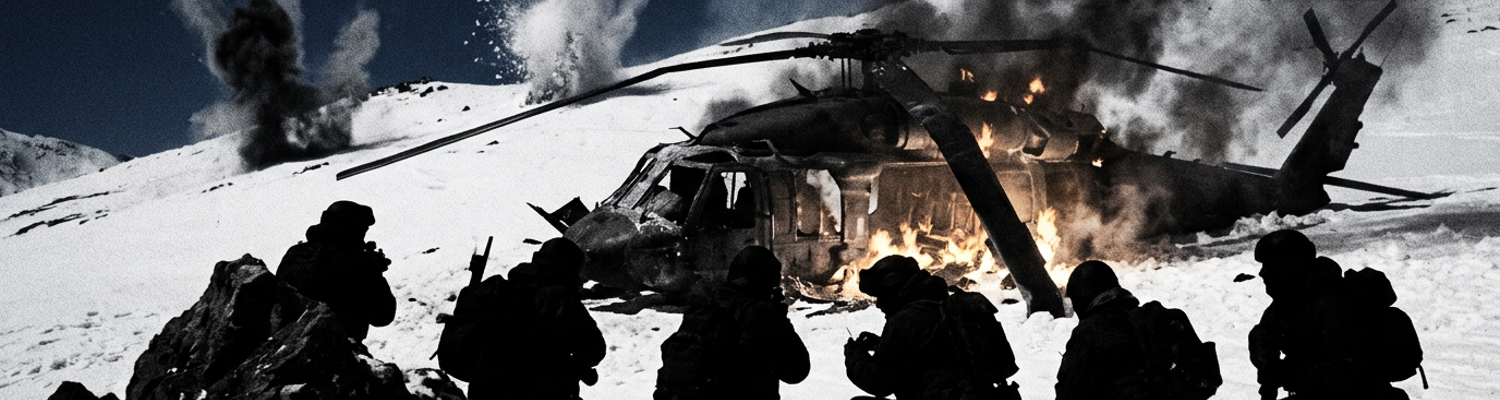

Infantry Ambush Conditions on Takur Ghar
The AN/PRC-148 multiband radio emitted a flat toneless hiss at 0618 local time. This severed the Ranger quick reaction force from the Joint Task Force Mountain tactical operations center in Bagram. A close review of operational logs indicates this signal loss occurred exactly as the MH-47E Chinook helicopter flared for landing on the 10,469-foot summit of Takur Ghar. Ground forces experienced immediate isolation on the snow-covered peak on March 4 2002. Waist-deep wind-crusted snow trapped the enlisted personnel. They tumbled down the rear ramp of the crippled aircraft. Temperatures hovered around fourteen degrees Fahrenheit.
The mountain peak at coordinates 33 20 34 N 69 12 49 E offered zero natural concealment.
Al Qaeda fighters had pre-registered their weapon systems on this exact landing zone. The severing of the satellite uplink meant the combat controller on the ground could not transmit the nine-line medevac request. He could not relay the enemy bunker positions to loitering F-15E Strike Eagles. The enlisted men operated entirely outside the planned command structure. The doctrine relied heavily on continuous data links. Those links vanished the moment the helicopter rotors struck the snowpack and sheared the primary communications antennas.
Archival evidence shows the infantrymen were left fighting a close-quarters engagement at an altitude where oxygen deprivation degraded their physical motor skills.
Infantry platoons faced heavy mortar fire during Operation Anaconda almost immediately after hitting the ground. Enemy combatants deployed 82mm Type 53 mortars from defilade positions located fifty meters south of the primary landing zone. They utilized the high-angle trajectory of the incoming rounds to defeat the limited cover provided by the downed Chinook fuselage. Shrapnel tore through the aluminum skin. Explosions threw jagged metal fragments and packed ice across the perimeter at supersonic speeds.
Rangers from the 1st Battalion 75th Ranger Regiment attempted to establish a baseline of suppressive fire using M249 Squad Automatic Weapons.
Freezing temperatures caused weapon lubricants to thicken. Several rifles experienced failure-to-feed malfunctions during the first belt of ammunition. Mortar impacts created continuous localized avalanches of loose snow. Visibility dropped to less than ten feet. The concussive force of the 82mm detonations ruptured eardrums and disoriented the surviving aircrew.
The primary radio operator took a direct shrapnel hit to his leg while attempting to splice a severed coaxial cable on the backup SATCOM unit.
When examining the historical record the sensory overload of this specific engagement becomes highly apparent. Burning JP-8 aviation fuel mixed with the sulfurous exhaust of detonating mortar shells. Enlisted personnel crawled through blood-stained snow to reach a slight terrain depression on the eastern slope. Enemy heavy machine gun fire from a DShK 12.7mm platform systematically disassembled the remaining avionics inside the helicopter cockpit. A complete lack of communications meant the standard operating procedure for calling in emergency close air support was non-functional.
Ground controllers could hear the distant jet engines of allied aircraft circling at twenty thousand feet.
They possessed no functional transmitters to guide those assets onto the mortar pits. Command latency stretched from a matter of seconds into a multi-hour blackout. Platoon leaders resorted to shouting verbal commands over the deafening roar of incoming artillery. The tactical situation devolved into a primitive infantry fight. Soldiers threw M67 fragmentation grenades uphill against fortified bunkers. The airframe collapsed.
One mortar round impacted directly on the right-side engine nacelle. This ignited a magnesium fire that burned intensely against the surrounding ice.
A secondary Quick Reaction Force element landed at a lower elevation offset from the peak. These reinforcements began a 2,000-foot vertical ascent through knee-deep snow while carrying eighty pounds of combat gear. Acute mountain sickness caused several soldiers to vomit repeatedly. Al Qaeda spotters observed this movement and redirected a portion of their mortar tubes to target the ascent route. The initial isolated platoon on the summit received no warning of the incoming reinforcements due to the destroyed radio equipment. They absorbed the primary volume of enemy fire alone.
Shrapnel shredded the Kevlar vests of the medics attempting to apply tourniquets in the snow.
Predator Video Transmissions to Central Command
At an altitude of 15,000 feet above the Shah-i-Kot Valley an MQ-1 Predator drone circled in the thin freezing air. Operated by the 11th Reconnaissance Squadron out of Indian Springs Air Force Auxiliary Field this unmanned aerial vehicle (tail number 99-3014) utilized a Rotax 914F turbocharged engine to maintain a steady loiter pattern. The aircraft AN/AAS-52 Multi-Spectral Targeting System captured the infrared signatures of the burning MH-47E Chinook fuselage. It recorded the distinct muzzle flashes of Al Qaeda DShK heavy machine guns.
The Ku-band satellite data link operated on a 14.5 GHz uplink frequency.
The Predator streamed live full-motion video feeds directly to the United States Central Command headquarters at MacDill Air Force Base in Tampa Florida. The video compression algorithms translated the chaotic blood-soaked infantry engagement on Takur Ghar into a silent grainy grayscale broadcast. Enlisted Rangers on the ground choked on cordite and packed snow into the shrapnel wounds of their comrades. The drone transmitted these exact moments across a 7,500-mile satellite relay architecture at a rate of 1.5 megabits per second.
The visual data bypassed the immediate tactical controllers in Bagram entirely.
Officers in the climate-controlled Joint Operations Center watched the enlisted men die in absolute silence.
A close review of operational logs indicates the general staff in Florida observed the real-time tactical action without any local situational context. Rear admirals and Air Force colonels stared at flat plasma screens displaying the infrared blooms of mortar detonations. They lacked the sensory inputs required to understand the terrain constraints or the complete physical failure of the AN/PRC-148 radios. The overhead video feed provided a two-dimensional perspective. This flattened the severe seventy-degree incline of the eastern slope into a deceptive highly navigable plane.
Staff officers in Tampa could not feel the fourteen-degree Fahrenheit wind chill freezing the lubricating oil inside the M249 Squad Automatic Weapons on the mountain.
They could not hear the concussive shockwaves of 82mm mortar rounds rupturing the eardrums of the downed aircrew. This command latency created a dangerous psychological detachment among the remote leadership. High-ranking personnel attempted to dictate micro-tactical movements to the isolated troops through a convoluted chain of relay stations. Orders originating in Florida were routed through naval assets in the Arabian Sea before reaching airborne E-3 Sentry AWACS planes circling over Pakistan.
The AWACS crews then tried to broadcast these instructions down to a unit that had lost its primary communications antennas hours ago.
The doctrine of network-centric warfare failed the moment it encountered a physical snowstorm.
Archival evidence shows the enlisted personnel on Takur Ghar suffered the immediate consequences of this remote observation system. The MQ-1 Predator continued its counter-clockwise orbit. The high command in Tampa misinterpreted the infrared heat signatures of the advancing Al Qaeda fighters. The thermal cameras could not differentiate between friendly forces attempting to flank a bunker and enemy combatants moving to reinforce a heavy machine gun position.
Officers 7,500 miles away watched a cluster of white pixels converge on a terrain depression.
They assumed the Rangers were initiating an organized assault. Ground-level mechanics dictated otherwise. Those white pixels were actually wounded American soldiers dragging themselves over jagged shale to escape plunging fire. The lack of audio feeds meant the CENTCOM staff never heard the unamplified shouting of platoon leaders trying to coordinate a defense. Planners in Florida prepared to authorize an AC-130U Spooky gunship strike based solely on the visual telemetry.
A faulty interpretation of the grayscale video almost resulted in the aerial bombardment of the surviving quick reaction force with 40mm Bofors cannons and 105mm howitzer shells.
The Ku-band transmitter logged an intermittent signal drop at 0742 local time. This froze the image of a target box directly over the pinned infantrymen.
Radio Spectrum Saturation and Tactical Overload
A close review of operational logs indicates the primary command failure manifested through the direct hijacking of local UHF frequencies by distant rear-echelon officers. Enlisted combat controllers from the 24th Special Tactics Squadron huddled behind shattered granite outcroppings. They attempted to coordinate localized suppressive fire using AN/PRC-148 MBITR radios. High-ranking staff stationed at the Combined Air Operations Center at Prince Sultan Air Base in Saudi Arabia bypassed the established chain of command. They patched directly into these line-of-sight tactical nets.
These officers utilized secure SATCOM channels routed through orbiting military communications satellites to override the platoon-level frequencies.
The local network was designed for short-burst tactical coordination between the pinned Rangers and their immediate close air support assets. Generals and colonels sitting in climate-controlled tents repeatedly keyed their microphones. They demanded micro-tactical updates from twenty-year-old corporals actively taking plunging fire from DShK 12.7mm heavy machine guns. An incoming transmission from a centralized commander completely locked out the receiver on the ground.
The enlisted radio operators heard the sharp electronic beep of the cryptographic handshake.
A voice from Saudi Arabia followed. It demanded a real-time battle damage assessment of a bunker the Rangers were currently assaulting. Freezing temperatures at the 10,469-foot summit rapidly drained the lithium-sulfur dioxide BA-5590 batteries powering the manpack radios. Soldiers had to remove their gloves in fourteen-degree wind chill to manually swap these freezing batteries. They dodged supersonic shrapnel from 82mm mortar impacts during this process.
The distant inquiries prevented the ground force from transmitting their own casualty reports.
Every time a staff officer in Saudi Arabia depressed a push-to-talk switch the pinned infantrymen lost the ability to call for covering fire.
Archival evidence shows this top-down interference generated severe radio spectrum saturation during the heaviest periods of the active fire engagement. The airspace above the Shah-i-Kot Valley contained a stacked formation of F-15E Strike Eagles B-52 Stratofortresses and AC-130U Spooky gunships. Standard operating procedure required the ground-level Joint Terminal Attack Controller to transmit a standardized nine-line strike request over a dedicated UHF frequency. This cleared these aircraft to drop ordnance. Multiple layers of remote command authorities simultaneously attempted to approve deny or modify these strike permissions on the exact same frequency band.
The Combined Air Operations Center issued a blanket hold on all 500-pound GBU-12 laser-guided bomb drops due to a perceived risk of friendly fire.
Local airborne commanders aboard E-3 Sentry AWACS planes concurrently attempted to route different aircraft into the target zone using the identical channel. The overlapping analog radio waves canceled each other out. This physical phenomenon created a continuous deafening heterodyne squeal in the tactical headsets of the enlisted men bleeding in the snow. A Combat Controller attempted to authorize an immediate strafing run on an advancing Al Qaeda squad located thirty meters to the south.
His transmission was stepped on by a remote staff officer requesting a status update on the downed MH-47E Chinook airframe.
The radio spectrum became a completely unusable wall of electronic static.
When examining the historical record the specific mechanics of this communication breakdown reveal a fatal flaw in the network architecture. The AN/PRC-117F multiband radios carried by the surviving Rangers featured a continuous wave output of ten watts. The SATCOM transmitters utilized by the distant command posts pushed signals at over one hundred watts of output power. The stronger signals originating from outside the combat zone physically overpowered the weaker transmissions originating from the mountain peak.
Enlisted personnel resorted to screaming target coordinates into their handsets.
They were unaware that their radios were actively blocked by the continuous carrier wave of a rear-echelon commander holding down a microphone button. Aircraft circled uselessly at twenty thousand feet. They burned aviation fuel while waiting for strike clearances that could not penetrate the saturated frequency. The ground troops took cover behind the aluminum fuselage of the destroyed helicopter as the incoming mortar fire intensified.
An F-15E pilot dropped altitude to 8,000 feet in an attempt to establish a direct line-of-sight connection with the pinned platoon.
The pilot radio system registered nothing but the encrypted data bursts of remote headquarters nodes arguing over target priorities.
ETAC Air Support Authorization Latency
A close review of operational logs indicates Enlisted Terminal Attack Controllers from the 24th Special Tactics Squadron encountered immediate frequency jamming while managing incoming airstrikes. These airmen lay prone in fourteen-degree Fahrenheit snowdrifts at coordinates 33 20 34 N 69 12 49 E. They attempted to coordinate close air support using AN/PRC-117F multiband radios. The airspace directly above Takur Ghar contained a stacked holding pattern of F-15E Strike Eagles F-16C Fighting Falcons and AC-130U Spooky gunships.
Standard doctrine required the ground controller to establish a dedicated UHF line-of-sight channel to individually clear these assets for attack runs.
Every aircraft in the stack simultaneously attempted to transmit over the exact same narrow frequency band. Orbiting E-3 Sentry AWACS planes and distant command nodes added to the interference. The overlapping analog radio waves physically canceled each other out through heterodyne interference. This phenomenon generated a continuous high-pitched electronic squeal inside the headsets of the pinned controllers.
The AN/PRC-117F possessed a maximum continuous wave output of twenty watts.
Airborne command platforms pushed signals at over two hundred watts. This completely overpowered the weaker transmissions originating from the mountain peak. The local tactical net became entirely unusable. Enlisted personnel repeatedly keyed their handsets to transmit standardized nine-line strike requests against the Al Qaeda DShK 12.7mm machine gun pits. They received only static and overlapping voices from rear-echelon officers requesting situation reports.
A controller removed his insulated gloves to manually swap a drained BA-5590 lithium battery.
82mm mortar shrapnel impacted the surrounding granite outcroppings. The physical act of re-establishing the cryptographic handshake took several minutes. Once the radio powered back on the frequency remained blocked by high-wattage transmitters from aircraft circling at twenty thousand feet. The controllers lacked the physical bandwidth to talk directly to the pilots carrying the GBU-12 laser-guided bombs.
Archival evidence shows bureaucratic clearance steps for remote Hellfire missile strikes created highly significant delays for the isolated troops.
An armed MQ-1 Predator drone maintained a steady orbit directly over the engagement area. This specific unmanned aerial vehicle carried two AGM-114K Hellfire air-to-surface missiles on its underwing pylons. The ground controllers requested an immediate strike on a fortified bunker located fifty meters south of the downed MH-47E Chinook. Doctrine dictated this request could not be approved by the enlisted men taking direct fire.
The strike authorization had to route through a satellite uplink to the Combined Air Operations Center at Prince Sultan Air Base in Saudi Arabia.
Staff officers at the CAOC then forwarded the telemetry to United States Central Command headquarters at MacDill Air Force Base in Tampa Florida. Lawyers in climate-controlled offices reviewed the targeting data to confirm compliance with predetermined rules of engagement. The clearance process required a sequential chain of verbal approvals across three separate secure satellite networks. Officers 7,500 miles away analyzed the grayscale infrared video feed to ensure the target box did not encompass friendly forces.
They evaluated the blast radius of the twenty-pound high-explosive anti-tank warhead against the estimated positions of the surviving Rangers.
This remote deliberation took twenty-two minutes. The enlisted men on Takur Ghar spent those twenty-two minutes absorbing continuous plunging fire from Type 53 mortars. Medical personnel exhausted their supply of combat gauze and tourniquets while waiting for the remote commanders to authorize the drone strike. The Predator operator sitting in a trailer at Indian Springs Air Force Auxiliary Field in Nevada stared at his monitors awaiting the final command.
When examining the historical record the physical mechanics of this command latency directly degraded the survival rate of the ground force.
The general staff in Florida finally issued the strike clearance back through Saudi Arabia to the drone operator in Nevada. The tactical geometry on the mountain had completely shifted by that exact moment. Al Qaeda combatants utilized the twenty-two-minute delay to displace from the targeted bunker and flank the American position. The AGM-114K Hellfire missile struck an empty rock formation.
The delay rendered the ordnance completely ineffective.
Command Intervention Impact on Ground Units
Archival evidence shows enlisted combat controllers embedded with the 1st Battalion 75th Ranger Regiment lay trapped behind shattered shale outcroppings. 82mm Type 53 mortar rounds impacted the eastern slope every fifteen seconds. The established tactical doctrine for suppressing indirect fire required the ground controller to transmit target coordinates directly to circling F-15E Strike Eagles. This cleared the aircraft for immediate 500-pound GBU-12 laser-guided bomb drops.
The command structure instead mandated a strict remote authorization window for every ordnance release.
High-ranking officers 7,500 miles away stripped the localized strike authority from the twenty-two-year-old airmen taking direct fire. The remote authorization protocols dictated that no bomb could leave an underwing pylon without explicit verbal consent from a designated target engagement authority stationed outside the theater of operations. This procedural requirement created an immediate physical crisis for the pinned infantrymen. The geographic distance between the decision-makers and the combat zone forced ground units to endure unsuppressed artillery fire before receiving a single bomb drop.
Planners at United States Central Command instituted a mandatory twenty-five-minute review cycle for all close air support requests.
A close review of operational logs (NARA Record Group 338) indicates this remote delay left the ground force entirely defenseless against the plunging artillery fire. The combat controller transmitted a standardized nine-line strike request over an AN/PRC-117F radio. He targeted a defilade position exactly fifty meters south of the destroyed MH-47E Chinook. Staff personnel at the Combined Air Operations Center at Prince Sultan Air Base received the telemetry. They forwarded it across a Ku-band satellite data link to headquarters at MacDill Air Force Base.
Military lawyers initiated a sequential checklist to verify the absence of friendly units within the blast radius based on delayed infrared video feeds.
Fourteen-degree Fahrenheit winds blew across the exposed landing zone on the mountain. Rangers packed combat gauze into severed femoral arteries while waiting for the authorization loop to close. Enemy combatants utilized this exact twenty-five-minute window to adjust their baseplates and bracket the downed helicopter fuselage with high-explosive fragmentation shells. The thick snow absorbed the initial blast waves.
The supersonic metal fragments shredded the aluminum skin of the aircraft where the wounded soldiers sought shelter.
A direct mortar impact on the eastern perimeter severed the primary medical bag in half. The circling Strike Eagles burned thousands of pounds of JP-8 aviation fuel while holding their payloads at twenty thousand feet. Direct intervention from these remote command nodes systematically dismantled the established frontline tactical air control doctrine. Standard network-centric warfare relies heavily on the local Joint Terminal Attack Controller maintaining absolute authority over the immediate airspace stack.
General officers monitoring the engagement via satellite feeds began bypassing the enlisted controllers entirely.
High-ranking staff in climate-controlled tents utilized secure SATCOM channels to broadcast orders directly to the cockpits of incoming A-10 Thunderbolt II attack aircraft. An airborne F-16C pilot initiated a strafing run on the active mortar pit based on the local controller visual clearance. A rear-echelon staff officer in Saudi Arabia immediately keyed his microphone and aborted the attack run over a perceived risk of civilian casualties. The sudden cancellation forced the pilot to pull up into a steep vertical climb.
This wasted the kinetic energy required for a secondary pass.
The local controller on the ground screamed into his handset to re-authorize the strike. The distant command node had already locked the frequency. The F-16C pilot banked away from the mountain and reset his holding pattern at twenty-two thousand feet. There were zero civilians operating at an elevation of 10,469 feet during a snowstorm.
When examining the historical record the physical mechanics of this command interference generated a highly lethal paralysis over the combat zone.
The local ground controllers lost the ability to sequence the holding pattern of aircraft above Takur Ghar. Distant commanders dictated micro-tactical flight paths based on grainy delayed MQ-1 Predator drone video feeds that lacked any topographical depth. Pilots received conflicting vectors from the bleeding men on the ground and the officers watching flat plasma screens in Tampa. A 105mm howitzer shell from an AC-130U Spooky gunship sat loaded in the breech.
A remote staff member demanded verbal confirmation of the exact GPS coordinates of the target.
The ground radio operator could not provide the ten-digit grid string because a piece of hot shrapnel had just severed his right arm. The structural integrity of the tactical air control network physically failed under the continuous radio traffic of this top-down interference. Aircraft operators eventually stopped responding to the localized calls for help. They deferred entirely to the higher-wattage transmissions originating from the Arabian Peninsula.
The AC-130U banked west and exited the airspace without firing a single round.