
Flight Line Autopsy at Ky Ha Airfield
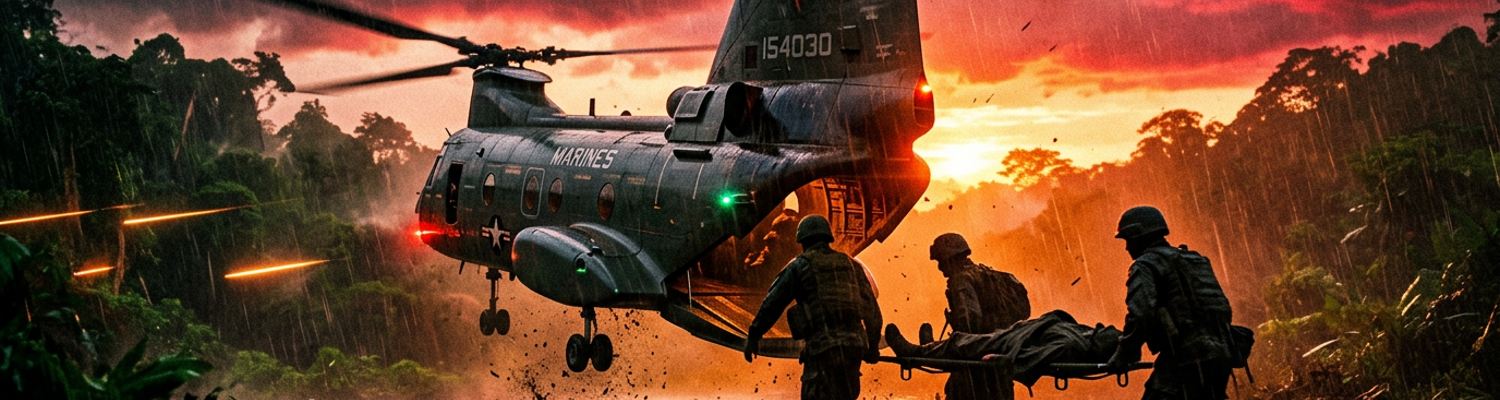
Radios failed across the contested landing zones near Duc Pho, severing communication with higher headquarters and forcing flight leaders to coordinate emergency medical evacuations entirely on their own initiative. Marine pilots had to rely on visual hand signals and local aircraft relays, flying their transports down through low clouds into jungle clearings without real-time clearance from the command bunker. Flight crews descended into muddy paddies against heavy automatic weapons fire, loading critical casualties before climbing rapidly to escape the surrounding treelines. Post-mission inspection of Marine Aircraft Group 36 airframes returning to Ky Ha Airfield revealed extensive ballistic damage across multiple squadron assets in late January 1967. Ground crews rushed across the pierced steel planking of the runway as turbine engines wound down, confronted by punctured aluminum fuselages, shattered cockpit glass, and wounded Marines lying on litters inside the cargo compartments.
Corpsmen rushed into the blood-stained cargo compartments to carry out the wounded while maintenance chiefs and safety officers began cataloging the structural destruction on the flight line. Operational debriefs tallied the downing and severe combat damage of CH-46A Sea Knight and UH-1E helicopters, alongside severe casualties among dedicated medical evacuation aircrews. Technicians counted dozens of heavy-caliber bullet holes through rotor blades, tail pylons, and fuel cells, noting where rounds had missed vital mechanical control rods by fractions of an inch. Crew chiefs pointed out shattered instrument panels, ruptured hydraulic tubes, and severed control cables where armor plating had failed to stop armor-piercing machine gun fire. Ballistic hits had penetrated thin cabin floors at upward angles, wounding door gunners, disabling internal electrical wiring, and leaving several helicopters unable to maintain level flight without emergency manual override inputs from the pilots.
Mechanics stripped away damaged access panels to inspect those crippled control linkages and discovered a critical shortage of replacement parts on the base. Warehouses at Ky Ha lacked spare transmission components, fresh hydraulic lines, and factory armor kits needed to return so many damaged helicopters to operational status quickly. Repair teams resolved the shortage by removing intact parts from wrecked airframes parked behind sandbag revetments, using hand tools to strip components from machines that were damaged beyond immediate repair. Technicians labored under portable floodlights with wrenches and rivet guns, patching aluminum panels and splicing cut wiring looms by hand throughout the night. Maintenance chiefs then signed temporary conditional flight releases, certifying each patched airframe for combat duty while warning squadron commanders that mechanical tolerances were stretched to their absolute limits.
Pilots adjusted their casualty extraction tactics to accommodate those strained mechanical systems and prevent the loss of remaining airframes. Flight leads eliminated solo evacuation runs into contested territory, requiring armed UH-1E gunships to lay down suppressive fire around pickup zones before any transport descended. Tactical officers established mandatory radio relay stations on nearby coastal hills so that frontline crews would not lose contact with forward air controllers during extractions under fire. Crew chiefs installed extra machine guns in cabin doorways and bolted salvaged steel plate over exposed fuel lines to give their aircraft additional protection against ground ambushes. Flight crews loaded fresh ammunition belts, checked their engine oil levels, and stood by their patched machines on the flight line for the next emergency evacuation launch.
Structural Battle Damage and Hydraulic System Failures
Turbines spooled up to full power across Ky Ha as flight crews lifted those patched machines off the pierced steel planking and headed straight back into heavy automatic weapons fire near Duc Pho. Enemy rifle squads concealed along the treelines targeted the low-flying transports as they hovered above the mud, sending streams of 7.62-millimeter rounds ripping through thin aluminum hulls. Ballistic forensic assessments identified severe vulnerabilities in unarmored auxiliary fuel lines and primary hydraulic boost packages aboard early-model CH-46A helicopters. Designers had routed these pressurized fluid lines and auxiliary lines along the cabin ceiling and lower hull frames without protective steel deflector plates, leaving vital control hardware exposed to ground fire coming from below. Rounds tearing through the underside of the fuselage sliced into these unshielded lines, dumping gallons of red hydraulic fluid across cargo decks and starving flight control actuators of operating pressure within seconds.
Bullets struck along the upper fuselages as the climbing helicopters tried to gain altitude, punching through the top compartments while hydraulic fluid drained out of the severed lower lines. Small-arms penetration through transmission wells and rotor synchronizing shafts caused rapid dual-system hydraulic depletion, triggering catastrophic flight control surface lockups. Shrapnel and shattered gear teeth tore through the primary and secondary hydraulic tubes running side by side through the narrow pylon tunnels, draining both backup reservoirs at the same time. Cockpit warning lights flashed red across instrument panels as system pressure gauges dropped to zero, stripping pilots of all power assistance to their cyclic sticks and collective levers. Flight controls immediately froze in place, leaving pilots wrestling against immovable mechanical linkages while their helicopters pitched down toward the jungle canopy.
Pilots threw their entire physical weight against the locked cyclic sticks to force the helicopters into survivable descent angles before the rotors lost synchronization. Crew chiefs in the rear compartments shouted warnings over intercom headsets as spinning drive shafts ground against severed bulkheads, filling the passenger cabins with acrid smoke and burning mineral oil. Damaged aircraft dropped steeply toward rice paddies and swampy clearings, hitting the soft earth on their rear landing gear before collapsing into the mud under heavy mortar and machine-gun fire. Squad members scrambled out of cabin doors under fire to drag stretchers and wounded Marines into drainage ditches, using trenching tools and rifles to form perimeter defenses around the smoking wrecks. Surviving transport crews maintained their defensive perimeter until armed UH-1E gunships arrived overhead to suppress enemy gun emplacements and clear paths for follow-on extraction flights.
Mechanics from MAG-36 accompanied the recovery teams that reached those contested landing zones, hooking up heavy steel cables to drag the crippled airframes away from enemy mortar range. Inspectors cut through crushed engine pylons with hand tools and torches back at Ky Ha, documenting how single rifle bullets had penetrated unarmored transmission housings and severed both hydraulic circuits simultaneously. Maintenance officers sent urgent technical reports back to repair depots in Da Nang, requesting immediate structural retrofits, external armor plates for transmission bays, and separated routing for redundant hydraulic tubes. Ground crews at Ky Ha took matters into their own hands while waiting for factory modifications, cutting ballistic nylon blankets and scrap armor plate to wrap around the exposed hydraulic boost assemblies on every flyable helicopter. Technicians bolted these improvised shields into place inside the transmission wells, refilled the hydraulic systems with fresh fluid, and pushed the reinforced airframes back onto the launch pads for the next wave of evacuations.
Monsoon Cloud Decks and Southern Quang Ngai Geography
Flight crews strapped into these reinforced helicopters and immediately ran into heavy sheets of rain as they crossed into southern Quang Ngai Province. Northeast winter monsoon weather trapped rotary-wing flight elements beneath dense cloud decks below 200 feet along the mountainous approaches to Nui Dang. Gray fog and torrential downpours rolled down the rugged granite ridgelines, blocking horizon lines and cutting forward visibility to less than a quarter of a mile. Marine pilots stared through water-streaked windshield wipers and worked their controls constantly to keep their heavy transports from drifting sideways into hidden peaks and ridgeline trees. Navigation instruments provided little help in the steep valleys, forcing aircrews to fix their eyes on muddy river bends and tree branches rushing by just beneath their landing wheels. Altimeters fluttered wildly as drafts swept over the slopes, leaving pilots with only seconds to spot obstacles and wrench their flight sticks upward to clear rocky outcroppings.
Mountain ridges funneled the descending transports into narrow valley corridors where the cloud ceiling dropped almost to the canopy tops. Severe ceiling and visibility limits forced aeromedical evacuation pilots into predictable low-altitude contour flight profiles directly over concealed Viet Cong defensive sectors in Duc Pho District. Flight leads had to thread their helicopters along the bottoms of winding riverbeds and drainage cuts because climbing even fifty feet higher meant entering dense fog clouds. Rotor wash ripped through bamboo groves and waterlogged elephant grass, giving ground observers advance warning of incoming evacuation flights long before the aircraft came into visual range. Guerilla fighters set up interlocking firing positions along the elevated banks of these natural travel lanes, mounting automatic weapons in camouflaged bunkers aimed straight down the known flight paths. Flight crews had no room to maneuver left or right around these ambush sites without banking their rotor blades straight into the rising hillsides.
Rounds hammered through the cargo floors as the low-flying helicopters passed directly over the camouflaged bunkers. Viet Cong gunners fired point-blank bursts into the engine compartments and cockpits, exploiting the fixed paths that the winter storms forced the Americans to fly. Pilots kept their throttles open and skimmed ten feet above the muddy paddies, enduring steady hits rather than pulling up into the blind mountain fog where midair collisions and ridge crashes were almost certain. Door gunners returned continuous machine-gun fire into the dripping treelines, watching muzzle flashes erupt from concealed firing pits and brush piles along both sides of the trail. The constant rattle of small-arms fire and the heavy vibrations of rotor blades skimming tree branches made cockpit communication almost impossible, forcing pilots and copilots to communicate through hand signals and nods as they tracked the smoke markers rising from the extraction sites. Copilots monitored temperature gauges and fuel consumption while pilots wrestled their controls against gusting valley winds, guiding their shaking airframes toward the perimeter markers laid down by beleaguered infantry units.
Smoke grenades popped along the swampy clearing edges, giving the incoming pilots their only visual landing reference through the driving sheets of monsoon rain. Marine riflemen held security around the perimeter under intense sniper fire, carrying wounded comrades on canvas stretchers toward the designated touchdown spots. Transport pilots flared their rotor discs hard over the wet ground, settling their rear wheels into knee-deep mud while keeping their engines at high power to avoid sinking into the soft rice paddies. Crew chiefs and medical corpsmen leaped into the rotor wash to drag bleeding casualties across the cargo ramps, strapping litters onto floor brackets as bullets chipped away at the tail assemblies and outer fuselage skins. Flight leaders watched the worsening weather descend along the slopes of Nui Dang, realizing that every minute spent on the ground risked trapping their aircraft below zero visibility or stranding them under focused enemy mortar bombardments. Pilots pulled their collective levers upward the instant the ramp latches secured, climbing steadily back into the low overcast and following the same bullet-swept river routes back toward the coast.
Entrenched Viet Cong Fire in Third Battalion Sectors
Infantry companies of the Third Battalion, Seventh Marines encountered fortified Viet Cong bunker networks and interlocking automatic weapons kill zones during search operations as the sound of departing helicopter engines faded into the overcast. Guerilla fighters had constructed mutually supporting log bunkers deep within earthen berms and bamboo thickets, concealing firing ports behind brush piles. Machine-gun crews concealed inside these earthworks held their fire until point squads advanced into clearings, then opened up from multiple angles with crossfire. Marine riflemen threw themselves into irrigation ditches and waterlogged rice paddies, returning rifle fire while navy corpsmen crawled forward to treat wounded men pinned in the open. Company commanders quickly recognized that the dense jungle canopy left no open ground for standard landings, forcing them to select small clearings filled with tree stumps and bamboo for emergency casualty pickups. Forward air controllers on the ground popped colored smoke grenades into the tiny jungle openings, radioing coordinates to rescue flights as sniper rounds chipped the mud around them.
Pilots spotted the colored smoke markers rising through the drizzle as inbound UH-1E gunships and medical evacuation transports sustained concentrated small-arms crossfire while attempting hovering extractions in tightly constricted jungle landing zones. Rotors clipped protruding branches and vines because the jungle clearings offered barely enough room for a single airframe to descend. Transport pilots could not set their landing gear down into the deep mud, forcing them to hold stationary hovers just above the ground with their engines whining at high power. Viet Cong gunners targeted the hovering helicopters from concealed pits on three sides, sending heavy streams of automatic weapons fire into cockpits and passenger compartments. Bullets shattered windshields and punctured fuel cells, wounding crew members while medical corpsmen below dragged canvas litters toward the open cabin doors. Crew chiefs and door gunners hung out of their hatches to return suppressive fire with M-60 machine guns, spraying the brush lines to drive back enemy rifle squads.
Gunship pilots rolled their UH-1E Hueys into steep diving passes over the treelines, firing 2.75-inch rockets directly into the enemy bunker embrasures to silence the crossfire. Explosions shattered the log roofs of the bunkers and threw up clouds of red dirt, temporarily suppressing the automatic weapons fire along the clearing perimeter. Marine riflemen on the ground used that brief pause to lift their wounded comrades across the muddy rice dikes and pass them up into the vibrating helicopters. Litter teams slid casualties onto the cabin floor plates while crew chiefs grabbed stretchers and secured them against bulkhead brackets under constant sniper fire. Shrapnel and rifle bullets continued to tear through fuselage skins, severing auxiliary wiring bundles and damaging hydraulic boost assemblies as the transport pilots maintained their hover. Crew chiefs yelled over the intercom that all wounded Marines were aboard, clearing the pilots to break contact before enemy mortars could zero in on the extraction site.
Transport pilots hauled upward on their collective levers, pulling emergency power from the laboring turbine engines to lift out of the jungle pocket. Rotor wash flattened the surrounding elephant grass and bent bamboo stalks as the helicopters climbed vertically past the tree canopy under parting bursts of small-arms fire. Copilots scanned their instrument panels for dropping oil pressure and fluctuating hydraulic gauges, nursing damaged flight control systems as the aircraft cleared the ridgeline. Infantry squads left on the ground collapsed their defensive perimeter back into the tree line, preparing to assault the remaining bunker positions with satchel charges and rocket launchers. Marine commanders directed artillery fire and naval gunfire onto the enemy supply trails, cutting off Viet Cong reinforcement routes while the evacuation flights sped toward coastal hospitals.
Tactical Doctrine Revisions for Low-Visibility Evacuations
Hospital corpsmen at coastal medical facilities received dozens of critical casualties from those battered flights, working through the night to stabilize gunshot wounds while maintenance officers tallied the ruined airframes back at Ky Ha. Staff officers examining flight logs and ballistic inspection sheets recognized that piecemeal extraction runs into fortified enemy positions were destroying aircraft faster than maintenance depots could patch them. First Marine Aircraft Wing and MAG-36 leadership mandated synchronized fixed-wing ordnance and rotary gunship prep fires prior to all emergency medical evacuation attempts. Marine attack aircraft delivered heavy loads of 250-pound high-explosive bombs and napalm canisters against treelines ringing the pickup clearings, while armed UH-1E gunships swept directly behind the bomb blasts to rake perimeter brush with continuous machine-gun bursts and 2.75-inch rockets. Forward air controllers coordinated these strikes from light observation planes, relaying compass headings and impact coordinates to keep bomb fragmentation patterns away from friendly infantry foxholes. Flight leaders circled their transports at designated aerial holding points until the final gunship rocket run was completed, ensuring that rescue crews never descended into active landing zones without heavy suppressive fires pinning down enemy machine-gun pits.
MAG-36 commanders incorporated these aerial coordination rules into permanent tactical standing orders to eliminate the hazards of isolated rescue missions. Assault support doctrine instituted mandatory dual-aircraft extraction profiles, higher minimum weather thresholds, and expedited engineering retrofits for vulnerable hydraulic routing. Flight regulations barred transport helicopters from entering hostile extraction sites alone, requiring a designated wingman to orbit above the landing clearing to track incoming ground fire, relay position reports to command posts, and dive in to rescue the primary aircrew if enemy bullets knocked an airframe into the rice paddies. Strict weather thresholds raised operational landing limits to a minimum 500-foot ceiling and one full mile of forward visibility, forbidding pilots from descending through mountain gaps when thick monsoon clouds obscured the ridgelines. Infantry battalion commanders had to expand their perimeter lines and carry casualties across open terrain to broader landing clearings rather than asking transport pilots to attempt blind vertical hovers inside deep jungle ravines. Aircrews strictly adhered to these elevated weather limits along the southern Quang Ngai hills, refusing low-altitude contour approaches that channeled vibrating airframes into pre-sighted automatic weapons ambushes.
Mechanics at Ky Ha tore into battle-damaged fuselages across the flight line, working day and night to harden vulnerable internal components before the aircraft flew another extraction mission. Technicians bolted heavy steel deflector plating directly onto structural framing inside the lower hull, shielding exposed auxiliary fuel pipes and primary hydraulic boost packages from small-arms rounds fired from below. Depot specialists in Da Nang and factory representatives from the Boeing-Vertol Corporation delivered engineering kits designed to separate the primary and secondary hydraulic circuits. Ground crews stripped out the parallel hydraulic tubing runs that had previously shared the same unarmored ceiling wells, rerouting the backup fluid lines along opposite fuselage bulkheads so that a single bullet could not sever both circuits simultaneously. Riggers installed ballistic nylon blankets over the transmission wells and rotor synchronizing shafts, creating an extra layer of puncture resistance around critical drive components. Flight engineers hooked high-pressure test carts up to the reworked hydraulic circuits and ran the turbine engines through extensive ground checks, clearing the modified airframes to return to combat flight operations over Duc Pho.