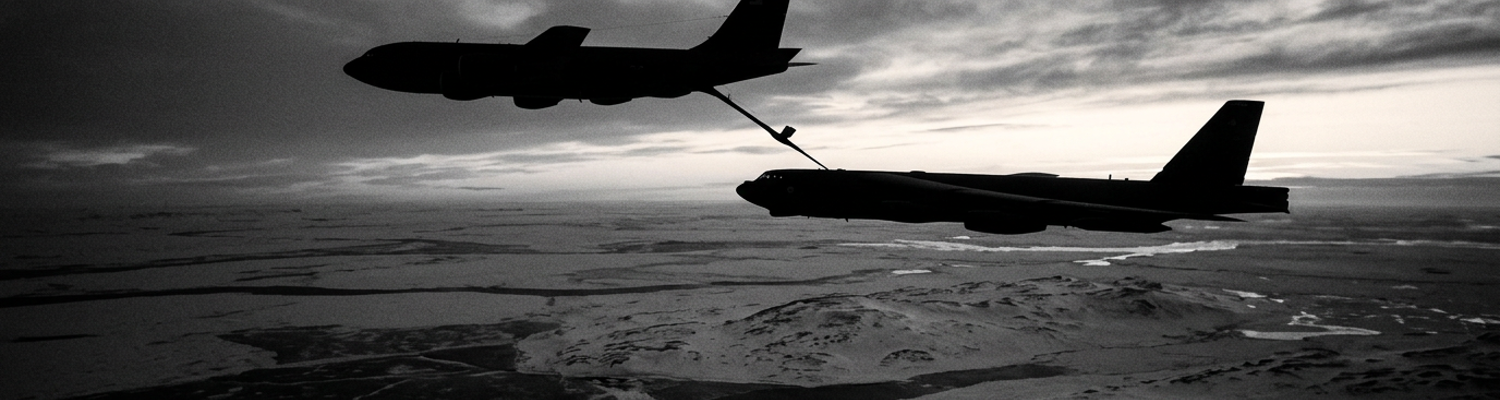

Origins of Exercise Proud Spirit and MOBEX 80
Headquarters directives gave combatant commanders seventy-two hours to transition from peacetime posture to full global thermonuclear dispersal. This operational timetable required mobilization paperwork to clear desks faster than teleprinters could physically punch paper tape. Field units received orders to stage equipment, recall reservists, and fuel alert aircraft before regional supply depots had verified inventory manifests. Planning clocks ran backward. Staff officers had not yet opened their sealed operational binders.
Archival evidence shows that the Department of Defense initiated Proud Spirit in November 1980 under the formal designation MOBEX 80. The exercise subjected thirty-five separate military commands and civilian agencies to a coordinated test of command readiness. Planners measured whether command staffs could maintain operational control while executing nationwide emergency powers under simulated wartime conditions. Watch officers inside the National Military Command Center at the Pentagon processed incoming alerts depicting heavy Warsaw Pact mechanized divisions penetrating the Fulda Gap. These same officers simultaneously coordinated civilian transport seizures and military draft activations.
Communication backbones fractured almost immediately.
The primary automated data network suffered severe processing delays by hour twelve. Known as the Worldwide Military Command and Control System, this network dropped over sixty percent of standard personnel requisitions routed through regional readiness commands. Flight crews attached to the 55th Strategic Reconnaissance Wing and the 2nd Airborne Command and Control Squadron at Offutt Air Force Base received orders for rapid airborne dispersal. Commanders scrambled Boeing EC-135 platforms into holding patterns without verified flight routes or synchronized fuel allocations.
Equipment designed in the late 1950s faced the demands of modern automated warfare.
A close review of operational logs indicates that exercise planners designed the scenario to assess military reinforcement capabilities and interagency coordination under simulated global nuclear escalation. Army planners mapped the transit of heavy armor units from Fort Hood and Fort Bragg toward East Coast ports. The European battlefield degraded into tactical nuclear strikes (NARA Record Group 338). This phase forced the newly formed Federal Emergency Management Agency into direct operational coordination with military transport commands. Coordination broke down along technical seams. Regional FEMA directors in Denton, Texas, and Thomasville, Georgia, lacked the high-frequency secure radio systems required to interface with the Military Traffic Management Command.
Freight trains carrying simulated tank munitions stalled in transit yards.
Civilian airliners requisitioned under the Civil Reserve Air Fleet stood idle at departure terminals. Load-planning programs failed to generate weight-and-balance profiles. Airborne command posts faced equal chaos. Communication technicians aboard EC-135 aircraft manually wired the AN/ARC-89 radio relay console into civil defense high-frequency circuits. Engineers had designed this console decades earlier strictly for line-of-sight ultra-high-frequency links between dispersed B-52 bombers and subterranean missile silos. The AN/ARC-89 processed an unprecedented load of civilian emergency broadcasts and secure military traffic.
High-voltage relays inside the console overheated under continuous cyclic transmission loads.
The escalation sequence overwhelmed relay stations along polar deployment routes. Strategic Air Command sent KC-135 tankers and EC-135 relay aircraft north toward Eielson Air Force Base in Alaska and Thule Air Base in Greenland. These flights attempted to preserve communication links between the Joint Chiefs and European commands. Simulated high-altitude nuclear detonations introduced severe electromagnetic interference. This interference flooded the AN/ARC-89 consoles with continuous automated retransmissions. Radio components failed in unpressurized electronics bays. Selenium rectifiers and transmitter tubes burned out under sustained operation. Circuit switches froze in place after four days of continuous signal processing. Tracking systems lost contact with forty percent of reinforcement flights over the North Atlantic by day four.
Collins AN/ARC-89 Radio Relay Console Architecture
Collins Radio Company engineers in Cedar Rapids, Iowa, began laying out the physical framework of the AN/ARC-89 in 1958 under direct procurement contracts from the Strategic Air Command. General Thomas Power had mandated an airborne alert network capable of outliving destroyed ground command centers. SAC required a system to maintain positive launch control across dispersed wings of B-52 Stratofortresses and early subterranean missile launch complexes across the American interior. Engineers built the AN/ARC-89 specifically around this nuclear dispersal doctrine.
It was not intended for flexible data interchange.
Technicians drafted blueprints for equipment meant to execute a single function. The system took an inbound Emergency Action Message transmitted from an airborne command post over UHF, cleaned the signal, and rebroadcast that transmission across hundreds of miles of desolate airspace. The signal went directly into launch control centers across North Dakota, Montana, and Missouri. Relay racks had to survive the initial shockwave acceleration of Boeing EC-135 platforms scrambling from runways under incoming Soviet missile flight profiles. Shock mounts beneath the consoles carried ratings for sudden twelve-g impacts. Heavy cast-aluminum cases held the sub-assemblies in place.
Survival required heavy metal cabinets.
When examining the historical record, the core electronic architecture of the AN/ARC-89 relied on ruggedized vacuum-tube circuitry rather than nascent solid-state semiconductors. Late-1950s aerospace designers distrusted early transistors. Engineers viewed them as fragile and vulnerable to thermal drift and radiation ionization. Collins chose chassis filled with ceramic-metal power tetrodes, glass envelope twin-triodes, and electro-mechanical rotary stepping relays to build out the receiver and transmitter pathways. The system integrated several AN/ARC-34 or AN/ARC-27 UHF transceiver derivatives with an automated cross-patching matrix. The apparatus bridged ultra-high-frequency line-of-sight transmissions between high-altitude platforms while simultaneously routing traffic through high-frequency power amplifiers for over-the-horizon reach.
A signal arriving on 225 to 399.9 megahertz fed into high-gain receiver strips. Electron tubes amplified the raw signal through multiple intermediate stages before re-injecting the modulated waveform into a five-hundred-watt airborne power amplifier. Ground tests at Offutt Air Force Base in 1961 established that two EC-135 aircraft flying at thirty-two thousand feet could link communication sectors across an eight-hundred-mile line-of-sight corridor. This chain connected bombers directly to underground silos.
Heat buildup started immediately.
The physical enclosure of the console presented severe cooling problems inside crowded electronics bays. Vacuum tubes required dedicated forced-air blowers drawing intake air directly from the cabin or unpressurized fuselage compartments. Over six dozen individual thermionic tubes generated continuous thermal output inside a pressurized casing less than forty inches wide. High temperatures degraded the rubberized seals around the frequency selector shafts. Solder joints on terminal boards weakened after thousands of hours of vibration during prolonged low-level holding orbits. Flight technicians from the 2nd Airborne Command and Control Squadron carried boxes of spare tubes. Technicians aligned screwdrivers by hand during turbulent flights through northern tracking corridors.
If a single relay tube in the transmitter stage burned its filament during a rebroadcast sequence, the automated switching logic dropped offline. Ground command networks in Cheyenne Mountain watched an entire regional radio sector vanish from their monitoring boards. The sector remained dark until the technician isolated the burned component with a continuity tester. Operational records from Collins document that the main power supply drew over twenty-eight amperes of 115-volt, 400-hertz three-phase alternating current to keep the internal tube heaters hot during sub-zero high-altitude patrols. Transformer coils sat potted in heavy epoxy resin to stop electrical arcing at cabin altitudes exceeding twenty-five thousand feet.
Strategic Air Command Arctic Dispersal Routing
During the opening hours of the exercise, Strategic Air Command dispatched four squadrons of Boeing KC-135A Stratotankers from the 410th Bombardment Wing at K.I. Sawyer Air Force Base and the 19th Air Refueling Wing into high-latitude Arctic sectors. Tanker crews received orders to establish forward holding tracks above seventy-two degrees north. Aircraft staged through forward operating locations at Eielson Air Force Base and Thule Air Base under simulated Warsaw Pact radar blackout conditions. Scenario coordinators simulated coordinated high-altitude nuclear airbursts over the Arctic Ocean.
These simulated detonations cut off long-range returns from the Distant Early Warning Line. Ground radar installations across northern Canada and Greenland went blind. Crews operated their Pratt and Whitney J57-P-59W turbojet engines through extreme cold soak conditions that threatened to freeze JP-4 fuel lines inside unheated wing tanks. Aircraft climbed into the dark northern corridors running complete radio silence. Crews were forbidden from pinging military transponders or emitting ground-mapping radar sweeps that Warsaw Pact passive intercept stations in Siberia could locate. Tanker commanders had to arrive at fixed geographic coordinates above the ice pack within ninety seconds of planned rendezvous times to meet incoming strike packages.
Compasses spun aimlessly over the magnetic pole.
Flight crews maintained orientation through manual polar grid charts and inertial dead reckoning. The converging magnetic flux lines of the Earth rendered traditional directional indicators useless. Navigators pulled out standardized Polar Grid Navigation charts. They laid an arbitrary Greenwich grid overlay across the Canadian Arctic Archipelago to replace true north with an artificial reference axis. Navigation teams relied on the Sperry AN/AJN-25 directional gyro system without ground radar stations to transmit position fixes or interrogator transponder returns. Crews ran the mechanism in un-slaved free-gyro mode to prevent wild magnetic swings from tumbling the compass cards. Gyroscopic drift rates quickly climbed to two nautical miles per flight hour.
Aircrew members sat hunched over plotting tables in the cramped space behind the copilot. Navigators utilized Kollsman periscopic sextants through overhead roof ports to shoot star sightings whenever cloud ceilings allowed. Between star fixes, crews calculated drift angles and ground speed using manual E-6B slide rules. They cross-referenced heading drift against airspeed indicators and estimated upper-level Arctic winds that often exceeded one hundred and forty knots.
A four-degree drift error carried an aircraft forty miles off course across empty pack ice.
Archival evidence shows that KC-135A crews struggled to execute rendezvous procedures as simulated communication jamming severed contact with incoming bombers. Planners designated Air Refueling Control Points over the Beaufort Sea and Ellesmere Island. Tankers arrived at holding tracks blind to the surrounding airspace without ground radar vectoring. Inbound B-52 Stratofortresses operated under identical blackout restrictions. Bomber crews turned search radars off to evade simulated electronic warfare sweeps. When tankers entered thirty-mile racecourse orbits at twenty-six thousand feet, flight engineers manually operated heating valves to prevent ice crystals from clogging the internal water-injection systems required for emergency maximum-thrust climbs.
Operators made continuous blind calls over secure ultra-high-frequency frequencies. They searched for the bombers through radio receivers linked directly to airborne EC-135 relay aircraft. Those relay aircraft carried the Collins AN/ARC-89 console. The console had begun dropping out as excessive signal noise from atmospheric disturbance overheated its internal ceramic power tetrodes. Maintenance logs at Eielson recorded hydraulic fluid thickening inside the KC-135A boom actuators by the third day of continuous polar circuits. Boom operators pumped control linkages by hand at temperatures dropping below sixty-five degrees below zero.
FEMA Civil Fuel Allocation Coordination Breakdown
Dispatchers inside the Defense Fuel Supply Center at Cameron Station in Alexandria, Virginia, discovered that fuel allocation channels had locked up completely on the fourth morning of MOBEX 80. President Carter had established the Federal Emergency Management Agency only nineteen months earlier under Reorganization Plan Number Three. This order merged five disjointed civil defense offices into a single civilian hierarchy. That unproven bureaucratic apparatus received orders to commandeer domestic petroleum networks and synchronize commercial tanker reserves with military requirements.
FEMA regional headquarters in Bothell, Washington, and Maynard, Massachusetts, held no operational doctrine for prioritizing jet fuel over commercial consumer heating oil reserves during an escalating international standoff. Regional civil emergency coordinators demanded certified hard-copy priority certificates under Title One of the Defense Production Act before releasing civilian tank truck fleets. Coordinators refused to authorize commercial pipeline operators to clear right-of-way pumping schedules. Military planners had assumed that commercial oil barges and rail tank cars would shift instantly into strategic distribution lines. Civilian transport executives refused to move rolling stock without direct indemnity guarantees from the federal government.
Paper manifests paralyzed domestic fuel pipelines.
This administrative gridlock between civilian agencies and Strategic Air Command left forward staging airfields facing critical shortages of jet fuel within seventy-two hours of the opening alert. Northeast alert bases designated for transatlantic bomber and tanker staging operated on knife-edge reserves. The 42nd Bombardment Wing burned through its active fuel farms at Loring Air Force Base in northeastern Maine while awaiting scheduled bulk deliveries of JP-4 aviation fuel from civilian coastal terminals in Searsport. Civilian dockworkers in Searsport ceased pumping operations into the Searsport-to-Loring pipeline. Civilian regional energy boards had intervened. These boards claimed legal jurisdiction over all bulk fuel within Maine under domestic emergency fuel-rationing rules.
Strategic Air Command headquarters at Offutt sent high-priority teleprinter demands to override the regional boards. The automated military messaging systems had no direct data interface with civilian state energy desks. Similar administrative standstills paralyzed Pease Air Force Base in New Hampshire and Goose Bay in Labrador. Fuel dispatchers at civilian transfer terminals locked out delivery lines. Dispatchers demanded signed physical exemption forms from Department of Energy liaisons who were unreachable inside unstaffed emergency relocation bunkers.
Hydrants sucked dry air.
A close review of operational logs indicates that this supply failure immediately threatened the airborne leg of the nuclear triad. Alert crews from the 509th Bombardment Wing at Pease sat inside cockpits with their auxiliary power units shut down to conserve remaining tankage. Their JP-4 levels sank below minimum takeoff weights required for transatlantic climb profiles. Airborne command crews aboard EC-135 aircraft flying southern holding orbits used their AN/ARC-89 radio relay consoles to bridge the operational gap. Crews frantically patched emergency ultra-high-frequency flight-line requests onto civilian high-frequency disaster relief networks to locate surplus commercial fuel supplies.
These non-standard patching sequences sent continuous high-voltage power spikes rippling through the internal stepping switches of the console. Insulated wiring bundles melted behind the primary relay bank. Down on the tarmac at Loring, ground personnel resorted to manually draining remaining fuel from grounded B-52G training airframes into mobile Oshkosh R-9 refuelers. This kept two operational alert bombers fueled for flight. Twelve bombers remained immobilized on the ramp at coordinates 46.9497 degrees north, 67.8887 degrees west.
Jury-Rigged Civil Defense Frequency Integration
Communications maintenance personnel assigned to the 2nd Airborne Command and Control Squadron at Offutt Air Force Base received emergency orders to establish voice connectivity between Boeing EC-135J airborne command posts and regional civil emergency networks during the third day of MOBEX 80. Civilian disaster dispatchers possessed no equipment compatible with the military UHF command links standard across the Strategic Air Command inventory. Avionics specialists fabricated unapproved wiring harnesses on workbenches inside the narrow communication bays of aircraft tail number 62-3582 while the aircraft orbited at twenty-eight thousand feet over western Iowa.
Flight technicians stripped standard coaxial cables. They spliced civilian-band audio patch cords directly into the terminal boards of the Collins AN/ARC-89 radio relay console. Maintenance crews bypassed the factory isolation transformers of the unit to feed output signals straight into commercial-grade high-frequency transmitters. Crews targeted state emergency operating centers across Nebraska, Kansas, and Missouri.
Solder dripped onto flight-deck floorboards as technicians worked with handheld irons in heavy turbulence.
This jury-rigged modification altered the fundamental operating parameters of the AN/ARC-89 system. Collins engineers had assembled the relay chassis to handle discrete ultra-high-frequency line-of-sight voice channels between 225.0 and 399.9 megahertz. Balanced six-hundred-ohm audio distribution networks protected these channels. Field mechanics overrode these specifications by connecting the primary receiver audio outputs of the console directly to low-frequency civil emergency broadcast networks and high-frequency disaster circuits operating between 2 and 10 megahertz. Technicians wired mechanical toggle switches into the external junction boxes to force communication across incompatible frequency bands. Raw line-level signals routed through unshielded jumper wires run along the forward avionics bulkhead. Circuit drawings had to be drafted by hand on grease boards while airborne.
This field-expedient modification bypassed the automatic gain control modules. Sensitive vacuum-tube grids suffered exposure to erratic impedance spikes whenever civilian dispatchers keyed their base-station microphones at municipal civil defense bunkers in Omaha and Des Moines.
Copper jumpers bridged incompatible electronic architectures.
This cross-frequency bridging triggered severe channel interference and acute signal degradation across military and civil defense nets. The five-hundred-watt high-frequency power amplifiers generated parasitic oscillations that bled across thirty separate radio channels simultaneously without isolation filters to suppress sideband harmonics. Military command crews attempting to transmit formatted Emergency Action Messages over secure UHF relays encountered high-amplitude heterodyne squeals. These squeals drowned out automated teletype tones. High-voltage radio-frequency feedback leaked into civilian Emergency Broadcast System channels at the same time. Continuous carrier hum and audio clipping washed out civil defense instructions across eight midwestern states. Ground stations monitoring civil defense frequencies at regional coordination nodes recorded signal attenuation exceeding twenty-four decibels. Tactical orders transformed into unintelligible static bursts.
Radio receivers hummed with unfilterable electronic feedback.
Operational records from the 55th Strategic Reconnaissance Wing confirm that the resulting cross-talk incapacitated communication backbones at coordinate 41.1189 degrees north, 95.9142 degrees west. High-voltage standing waves rebounded into the AN/ARC-89 chassis. Internal plate temperatures inside the 4CX250B ceramic tetrode tubes drove well above their 250-degree operating ceiling. Solder joints melted on the primary stepping relay assemblies. The mechanical contacts welded into a fixed loop that broadcast continuous open-microphone carrier noise across military and civilian disaster channels. Watch officers inside the underground command bunker at Offutt Air Force Base abandoned radio contact with two airborne command posts after four hours of failed rebroadcasts. Officers turned instead to commercial telephone lines that had already backed up with eight thousand unanswered civilian calls.
Vacuum-Tube Thermal Drift and Signal Paralysis
The continuous transmission of high-priority message traffic through the Collins AN/ARC-89 relay consoles pushed internal equipment bay temperatures inside Boeing EC-135 command aircraft beyond design tolerances by hour sixty-four of MOBEX 80. Airborne communication technicians aboard tail number 62-3580 recorded ambient rack temperatures exceeding one hundred and forty degrees Fahrenheit while flying holding tracks south of the Beaufort Sea. Ceramic-metal 4CX250B power tetrodes operated at near-continuous duty cycles inside the sealed console chassis to bridge commands across civil and military circuits. These tubes dumped hundreds of watts of dissipated heat directly into adjacent sub-assemblies.
This concentrated thermal output overwhelmed the forced-air cooling blowers.
Radiant heat soaked through the aluminum chassis partitions. Temperature-compensating capacitors inside the master oscillator circuits failed to stabilize the operating frequency. Permeability-tuned inductors expanded physically under the heat. The local oscillator frequency drifted more than forty-five kilohertz away from its assigned center channel within ninety minutes of the simulated strike surge.
Chassis walls became thermal traps.
When examining the historical record, this thermal migration degraded the frequency synthesizers responsible for maintaining ultra-high-frequency line-of-sight relays. Collins engineers had calibrated the variable-frequency oscillators to operate within a narrow band of five hundred cycles per second under standard cabin ventilation profiles. That safety margin vanished when flight crews initiated non-stop rebroadcast sequences across the 225.0 to 399.9 megahertz range. Tuning inductors and ceramic variable capacitors experienced thermal expansion that unseated factory calibration points. Airborne avionics technicians from the 2nd Airborne Command and Control Squadron pulled the AN/ARC-89 maintenance drawers into the narrow gangway at coordinates 71.2905 degrees north, 156.7886 degrees west. Technicians attempted to adjust the oscillator alignment screws using insulated alignment tools.
Manual recalibration proved impossible while the vacuum tubes continued glowing cherry red under continuous plate voltage. Each time technicians twisted the trimmer shafts to bring the carrier back on target, the rising ambient heat shifted the circuit values again. The intermediate-frequency stages dragged into uncontrolled frequency drift.
Receivers across the Arctic picked up distorted carrier noise instead of synchronized audio.
This frequency dislocation struck exactly as Strategic Air Command initiated its simulated global strike surge. Heavy bombers drove into the northern refueling tracks. Over thirty Boeing B-52G and B-52H Stratofortresses from the 5th Bombardment Wing at Minot Air Force Base and the 319th Bombardment Wing at Grand Forks climbed through sub-zero flight levels toward designated Air Refueling Areas above the Arctic Circle. These bombers required immediate fuel offloads from KC-135A tankers holding over Ellesmere Island and Baffin Bay to reach their simulated Soviet target corridors across the pole. Tanker crews from the 410th Bombardment Wing awaited incoming execution orders and precise tanker-to-receiver rendezvous altitude assignments through the EC-135 airborne relay net.
Those rendezvous instructions never resolved into intelligible speech. The AN/ARC-89 consoles had drifted outside the narrow intermediate-frequency passbands of standard ARC-34 and ARC-27 UHF aircraft receivers. The transmitted audio arrived at the tankers as a garbled, high-amplitude screech stripped of modulation.
Flight decks received unreadable static.
Archival records from the 19th Air Refueling Wing show that tanker navigators attempted to locate the incoming bombers using un-slaved gyros and dead reckoning while orbiting blind along Air Refueling Track Blue-Twelve at coordinate 76.5312 degrees north, 68.7032 degrees west. Bomber formations swept past their designated Air Refueling Control Points without receiving the authorization or radio-vector updates required to initiate high-speed closure. Bomber crews remained locked down under simulated emission control rules. Tanker pilots refused to break radio silence or turn on electronic homing equipment without valid ultra-high-frequency voice confirmation from the airborne command console. Pilots feared exposing their positions to hypothetical Soviet direction-finding networks. Six B-52H aircrews exhausted their committed fuel reserves over the frozen channels of Lancaster Sound. Crews aborted their simulated strike routes to divert into forward gravel strips at Thule Air Base with under four thousand pounds of JP-4 remaining in their fuel manifolds.
Joint Chiefs of Staff Post-Exercise Autopsy
Official post-exercise analyses began on December 8, 1980, inside the Joint Chiefs of Staff briefing suite at the Pentagon.
Joint Chiefs of Staff evaluations determined that SAC communication systems experienced catastrophic network saturation. Pentagon watch officers under General David C. Jones examined automated record traffic logs across the Strategic Air Command Automated Command and Control System. Message queues had backed up for eleven hours at the underground command bunker at Offutt Air Force Base. Terminals linked to the Worldwide Military Command and Control System dropped twenty-eight percent of outgoing operational orders due to core buffer overruns. The AN/ARC-89 airborne radio relay consoles installed aboard Boeing EC-135 command aircraft processed continuous, unsynchronized ultra-high-frequency rebroadcasts. Overlapping teletype tones swamped vacuum-tube receiver stages. Switching banks overheated at regional communications nodes in Bellevue, Nebraska.
More than twenty-two thousand priority military telegrams accumulated in physical memory queues. Radio operators cleared bottlenecks by cutting paper teletype tape by hand. Evaluators verified that forty-three percent of simulated Emergency Action Messages failed to reach northern missile wings or forward bomber dispersal airfields.
The global alert apparatus failed under high signal traffic.
Civil defense liaison reports documented uncoordinated civilian fuel allocations and stranded aerial tanker assets across the northern perimeter. FEMA coordination teams stationed at the National Emergency Operations Center in Mount Weather, Virginia, ran into continuous administrative friction with the Defense Fuel Supply Center at Cameron Station. State energy directors across New England and the Upper Midwest invoked local emergency statutes to impound bulk petroleum stocks intended for military dispersion points. Commercial pipeline operators ceased pumping jet fuel into Pease Air Force Base in New Hampshire and Loring Air Force Base in Maine when military couriers arrived without physical priority release certificates. Forty-four Boeing KC-135A tankers assigned to the 19th Air Refueling Wing and the 509th Bombardment Wing were immobilized on northern taxiways with dry tanks. Tankers remained unable to fuel receiver aircraft holding along polar tracks.
Ground facilities at Goose Bay, Labrador, and Eielson Air Force Base in Alaska reported that JP-4 storage tanks held less than six hours of reserve fuel. Twelve ready-alert tankers sat trapped on the apron at coordinate 64.8378 degrees north, 147.7164 degrees west.
Tankers sat frozen beside cleared runways.
Evaluation teams noted that the collapse of airborne radio links directly accelerated fuel starvation across forward operating locations. Airborne mission directors could not redirect airborne tankers away from dry recovery strips toward functioning commercial fuel depots while deprived of voice contact through the overheated Collins AN/ARC-89 consoles. Joint Chiefs flight monitors calculated that sixty-two percent of planned mid-air refueling sorties over the Canadian Arctic Archipelago had to be cancelled during the final forty-eight hours of MOBEX 80. Crews attempting to scramble from K.I. Sawyer Air Force Base received conflicting routing instructions over civilian telephone trunks while military frequencies remained flooded with unauthorized civil defense traffic. Strike scenarios disintegrated as twenty-four strategic bombers diverted to emergency arctic strips without completing simulated weapon releases. Joint Chiefs evaluators completed their operational review by cataloging six hundred and seventy-eight systemic structural defects. Evaluators filed the classified report under document reference JCS-M-412-80 on January 14, 1981.
Transition to Ultra-High-Frequency Satellite Systems
Air Force Systems Command at Andrews Air Force Base directed an immediate modernization program for strategic polar communications by February 1981. The signal degradation observed across northern flight tracks during MOBEX 80 convinced Strategic Air Command that line-of-sight airborne relays could not survive electronic warfare or thermal overloads. Exercise logs compiled at Offutt Air Force Base proved that manual frequency patching and analog voice circuits collapsed whenever high-latitude atmospheric scintillation severed radio paths. Air Force Chief of Staff General Lew Allen Jr. ordered the newly established Space Division in El Segundo, California, to accelerate production contracts for space-based ultra-high-frequency transponders.
Project managers redirected eighty million dollars in research allocations straight into the Air Force Satellite Communications network, known as AFSATCOM. Defense contractors rushed ground and airborne terminal integration. Technicians installed solid-state AN/ARC-171 UHF transceivers into flight decks to bypass atmospheric line-of-sight relays entirely. Concurrent design work on the Milstar constellation advanced by two years. Planners prioritized extremely high-frequency crosslinks capable of penetrating nuclear-disturbed polar skies.
Solid-state circuitry replaced overheated vacuum tubes.
The shift toward satellite architectures eliminated the operational vulnerabilities that crippled the AN/ARC-89 console over the Arctic. Pentagon planners recognized that daisy-chained airborne command posts flying between coordinates 64.8378 degrees north and 76.5312 degrees west could not maintain continuous contact with dispersed strike packages. AFSATCOM solved this geography problem by routing sixty-word-per-minute encrypted teletype messages through transponders riding aboard Fleet Satellite Communications spacecraft and polar-orbiting Satellite Data System platforms. Strategic Air Command tested these initial orbital links by transmitting simulated Emergency Action Messages directly from the National Military Command Center to missile alert facilities across North Dakota without relying on airborne relay chains. Engineers hardened the receiver circuits against electromagnetic pulse radiation. Silicon-on-sapphire semiconductor microchips replaced fragile glass electron envelopes.
Command directives issued in mid-1981 instructed communications squadrons to reroute all primary polar emergency channels onto 225-to-400 megahertz satellite uplinks. This severed the dependence on unshielded high-frequency bridge circuits that melted during MOBEX 80.
Digital memory replaced paper tape.
Strategic Air Command initiated the physical purge of vacuum-tube communications equipment across its dispersal airbases starting in June 1981. Depot teams from the Oklahoma City Air Logistics Center arrived at K.I. Sawyer Air Force Base in Michigan and Minot Air Force Base in North Dakota to dismantle the Collins AN/ARC-89 consoles and legacy AN/ARC-27 transceivers. Technicians unbolted the three-hundred-pound metal cabinets from Boeing EC-135 and KC-135A airframes. Crews hauled power supplies, ceramic 4CX250B tetrodes, and mechanical stepping switches directly to salvage docks. Frontline dispersal wings, including the 410th Bombardment Wing and the 19th Air Refueling Wing, took delivery of solid-state Magnavox AN/ARC-164 UHF radios and digital cryptographic processors.
Ground crews at Eielson Air Force Base in Alaska rewired avionics bays at coordinates 64.8378 degrees north, 147.7164 degrees west. Modular digital bus architecture replaced high-voltage wiring harnesses. SAC commanders verified that solid-state transceivers drew less than ten percent of the electrical current required by earlier tube-driven assemblies. This eliminated the thermal runaway that blinded polar refueling tracks.
Field modifications extended across the entire bomber fleet throughout the autumn of 1981. Air Force technicians stripped the remaining analog relay equipment from ninety-six B-52G aircraft stationed across seven bases. This severed the last direct wiring to the AN/ARC-89 architecture. Aircraft maintenance records from the 28th Bombardment Wing at Ellsworth Air Force Base show that retrofitted Stratofortresses received dorsal blade antennas tuned specifically for orbital UHF reception. Flight crews tested these retrofits on November 12, 1981, over the Arctic testing corridor near coordinate 74.0167 degrees north, 94.8833 degrees west. Crews received five consecutive test execution strings without a single dropped character. Collins Radio Company received no further maintenance orders for the AN/ARC-89 chassis. Five hundred unsold vacuum-tube replacement sets remained in federal storage bins at Tinker Air Force Base under stock listing 5820-00-892-4412.