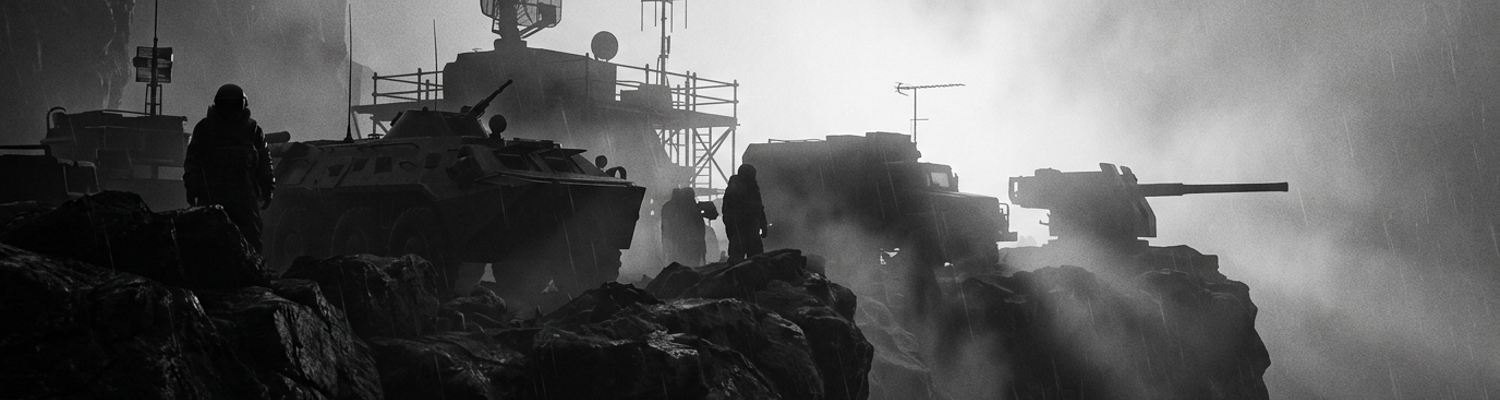

Reconnaissance Engagements on Mist-Choked Ridgelines
A close review of operational logs indicates an emergency burst transmission cut across the tactical frequency of the 3rd Marine Division at 0755 hours on April 24, 1967. Patrol callsign Groucho reported an immediate ambush. Heavy machine-gun fire originated from concealed bunkers near grid coordinates XD 802443. Captain J.B. Hendrickson monitored the regimental net at the Khe Sanh Combat Base. He ordered an immediate hold on pre-planned artillery fires. Fire direction centers needed to determine if any members of the point team remained functional. Point men had walked directly into interlocking fields of fire. Four Marines lay pinned flat behind decomposing red clay embankments. Surviving riflemen stripped fragmentation grenades from their load-bearing harnesses. Transmission squelches ceased when direct fire snapped the team's AN/PRC-25 whip antenna. This severed communication with Khe Sanh's fire direction center.
Every planned fire-support coordinate became useless in less than three hundred seconds.
Archival evidence shows these patrol elements belonged to Company B, 3rd Reconnaissance Battalion. They operated across the narrow razorback terrain northwest of the main airstrip. These men moved in five-man hunter-killer configurations. Slopes routinely exceeded fifty degrees. Dense elephant grass and broken basalt outcroppings forced team members into single-file formations. Knife-thin ridge crests eliminated options for lateral dispersion. Lieutenant Philip Sauer divided his reconnaissance assets across the high ground leading toward Hill 861 and the northern approaches to Hill 881. Each point squad carried ninety-pound field packs. These packs contained extra M16 magazines, dry rations, and spare dry-cell batteries (BA-386/U) for their frequency-modulated radios. Moisture degraded the rubber gaskets on the team's optical rangefinders. Foot travel averaged less than four hundred meters per hour along the razorbacks. A single misstep caused an uncontrolled slide into ravines filled with thick brush and bamboo.
Tactical visibility along the forward trace dropped to absolute zero.
When examining the historical record of that morning, severe monsoonal cloud decks rolled across the Laotian border. They blanketed the approaches to Hill 881 North and Hill 861. Actual visibility fell to under thirty feet. Water vapor condensed instantly on cold steel rifle barrels. It blocked the optical sights of the team's XM148 grenade launchers. Thick stratus clouds settled directly on the ridgeline crests. Airborne forward air controllers from Marine Observation Squadron 6 flew blind. F-4B Phantom strike packages sat grounded on the alert pads at Da Nang. Acoustic distortion caused by the dense cloud base made locating incoming small-arms fire almost impossible. Rifle reports echoed off adjacent canyon walls. Marines could only spot muzzle flashes when North Vietnamese gunners fired from distances shorter than twenty feet. Aimed rifle fire at normal engagement ranges became impossible. Wet paper map sheets tore in half inside plastic sleeves. Squad leaders attempted to verify compass azimuths without magnetic interference from iron ore deposits in the ridge rock.
This zero-visibility ascent drove the reconnaissance point straight into the prepared forward complexes of the North Vietnamese Army 325C Division. Regiment 95 and Regiment 101 of the 325C spent several weeks converting the hills into subterranean defensive positions. They dug two-man spider holes and interconnected trench systems. Mutually supporting bunkers featured heavy two-foot ironwood logs covered in layers of packed soil. Heavy Soviet-pattern 12.7mm DShK antiaircraft guns occupied camouflaged pits blasted out of rock. Gunners sited them to fire horizontally along the razorbacks rather than skyward. Forward observation posts belonging to the 325C Division allowed North Vietnamese gunners to track the slow climb without revealing their own firing positions. Company B's point scout triggered a tripwire connected to a cluster of cast-iron stick grenades. Three fortified positions opened fire simultaneously. They raked the ridgeline with 7.62x39mm automatic fire from Chinese-manufactured Type 56 assault rifles and Maxim-pattern heavy machine guns. Marine riflemen fired their M16s on three-round bursts. High-velocity 5.56mm rounds failed to penetrate the three feet of compacted earth and rock protecting the enemy firing slits.
Defensive Encirclement and Fragmentation Casualties
Basalt bedrock offered no entrenchment depth against fixed machine-gun emplacements.
When examining the historical record of Company B's forward push, two camouflaged North Vietnamese bunkers positioned forty yards apart opened grazing fire. They targeted an exposed forty-five-degree rock shelf. Soviet-designed 7.62x54mmR SG-43 Goryunov wheeled machine guns swept the approach lanes in crossing diagonal arcs. Steel-jacketed rounds passed eighteen inches above the stone surface. Lead riflemen flattened themselves against the open basalt face. They could not advance or slide backward without exposing their torsos to direct line-of-sight fire. Copper bullet jackets shattered against the dark volcanic rock. High-velocity stone chips and lead spall sprayed into the faces of the pinned point scouts. Lance Corporal Michael Deroche attempted to work an M72 light antitank weapon into an elevated firing angle from behind an eroded ledge. Automatic fire severed the weapon's fiberglass casing before he could extend the inner tube. Every attempt to elevate a rifle muzzle above twelve inches drew concentrated three-to-five-round bursts from the log-reinforced embrasures higher up the crest. Tactical maneuver along the primary axis of the ridge stalled completely within three minutes of the opening volley.
The high ground held every line of sight.
Archival evidence shows North Vietnamese forward observers spotted the pinned elements almost immediately. They registered pre-sighted 82mm Type 53 smoothbore mortars situated in defilade behind the reverse slope. High-explosive mortar bombs plunged into the exposed shelf at fifteen-second intervals. They detonated on surface contact with the basalt rather than burrowing into soft soil. Cast-iron casings fragmented into jagged shards. These metal pieces bypassed the side gaps of standard-issue Marine M-1955 flak jackets. Penetrating metal splinters struck eight men across the two forward fire teams within ninety seconds. This caused deep abdominal punctures, shredded extremities, and traumatic amputations. Hospital Corpsman Third Class Donald R. Long crawled through direct rifle fire along the jagged stones. He dragged men by their web gear into shallow depression pockets. He applied field dressings and aluminum-backed chest seals to sucking thoracic wounds. Pressure dressings quickly saturated with blood. Shrapnel severed femoral arteries and tore brachial muscle groups. Blast overpressure ruptured eardrums. Hot smoke filled with sulfur dioxide displaced breathable oxygen along the rock shelf.
Blood slickened the bare stone beneath the wounded.
A close review of operational logs indicates surviving squad leaders abandoned the advance. They consolidated an isolated, circular defense along an unshaded contour three hundred meters below the ridgeline crest. Riflemen used folding M1943 entrenching tools to scrape shallow scrapes into packed red clay and fractured shale. Soviet-built RPD light machine guns maintained non-stop fire. Digging tools snapped against buried basalt seams. The perimeter boundary consisted of low berms of loose shale measuring less than six inches in height. Gun teams positioned two functional M60 machine guns on the northern and southwestern perimeters. They established overlapping sectors. Gunners rationed their remaining 7.62mm linked ammunition to strict three-round bursts. The position possessed zero overhead foliage and zero natural defilade. Marines stripped bandoliers from casualties to redistribute twenty-round magazines. They cleared weapon jams caused by red clay dust blowing across the firing mechanisms. Field radio operators operated on low-power battery reserve. They maintained hand contact with the base of the antenna to prevent snapped metal parts from breaking tactical link with Khe Sanh's artillery coordination team.
At 0808 hours, nineteen wounded Marines occupied an unfortified circle measuring thirty yards across.
Tactile Blackout Triage on Cliffside Shelves
Dead space offered the only buffer against direct high-angle fire.
Archival evidence shows that at 0812 hours, Hospital Corpsman Third Class Donald R. Long and two junior corpsmen began dragging casualties. They moved them into a thirty-foot-wide erosion swale seventy yards below the ridgeline. Seasonal monsoon runoffs had hollowed out this geological depression along grid coordinate XD 801442. It sat five feet beneath the lip of the surrounding basalt plateau. That five-foot vertical drop created an immediate dead-space pocket. It deflected flat-trajectory 7.62x39mm rounds and heavy 12.7mm machine-gun bursts overhead into open air. Long prioritized the swale floor because crumbling shale banks blocked direct line of sight from North Vietnamese Army positions anchored on the crest of Hill 881 North. Severely wounded riflemen from Company B were hauled downward by their flak jackets. They slid over rain-soaked clay. Corpsmen arranged them head-to-toe along the muddy drainage trough. Pack straps broke under the deadweight of waterlogged utility uniforms. No sandbags or structural lumber existed on the cliff face. Corpsmen piled abandoned canvas field packs and deflated equipment rolls along the rim to catch ricocheting shrapnel.
Fog blanketed the shelf in near-total darkness.
When examining the historical record, dense cloud banks dropped over the mountain. They mixed with heavy black powder smoke to reduce visibility across the shelf to zero. Unit commanders enforced total light discipline to deny North Vietnamese gunners an aiming point in the mist. Flashlights, battle lanterns, and lensatic compass illuminators stayed off. Navy corpsmen diagnosed lethal trauma through bare skin contact alone. Bare fingers slid across saturated cotton fatigues to locate the telltale bubbling of open pneumothorax wounds. They identified severed pleura by the warmth and rhythmic frothing of blood escaping torn thoracic walls. Sucking chest wounds felt like warm, wet vacuums pulling against cold fingertips. Corpsmen wedged fingers into compound fractures to determine if bone fragments had severed brachial or femoral arteries. They distinguished bright, pulsing arterial sprays from dark venous pooling purely by fluid pressure and heat against their palms. Men experiencing hemorrhagic shock could not be checked for pupillary response or skin pallor. Diagnosis relied entirely on the speed of a thready radial pulse counted in silence.
Snipers fired at the sound of tearing cloth.
A close review of operational logs indicates North Vietnamese marksmen positioned on outcroppings forty yards north maintained harassing fire into the swale. They targeted any metallic clicks or human rustling. Working in complete blackout, corpsmen stripped grease-coated foil from sterile field dressings using their teeth. Hands slick with blood and grit struggled to secure rubberized tourniquets above traumatic limb amputations. They tightened friction buckles solely by tactile muscle memory. Plastic wrappers from battle rations served as makeshift occlusion seals over penetrating chest wounds. Strips of three-inch adhesive tape slapped blind across wet ribcages held them down. Adhesive failed on mud-caked skin. Corpsmen tied the tails of standard Carlisle dressings tightly around torsos. They felt for the expansion of the diaphragm to avoid suffocating the casualty. Every sudden shift of a wounded Marine risked attracting a two-round burst from an unseen Type 56 rifle above. By 0817 hours, corpsmen stabilized eleven casualties without using a single match or flashlight beam.
Five Minute Tactical Air Request Window
The cloud base sat eighty feet above the shale.
A close review of operational logs indicates ground radio operators established emergency contact with an airborne Forward Air Controller at 1410 hours. The controller flew a Marine Observation Squadron 6 aircraft circling through the mountain overcast. Static roared across the tactical air net on 38.30 megahertz. Dampness penetrated the rubber seals of the AN/PRC-25 transceiver. Corporal Thomas Barnes hand-cranked the channel selector knobs with grease-slicked fingers. He worked to overcome the severe signal dampening caused by dense fog and surrounding basalt rock. Above the ridge, the single-engine O-1B Bird Dog banked into turbulent cloud decks. These clouds obscured the jagged terrain contours of northwestern Quang Tri Province. The pilot could not spot the mountain through four hundred vertical feet of solid stratus clouds. He relied entirely on erratic needle deflections from Khe Sanh's low-frequency directional transmitter. Barnes repeatedly tapped the rubber-sheathed push-to-talk switch. He cleared broken bursts of high-frequency squeal until the pilot confirmed audio lock through his David Clark flight helmet. The airborne observer held his aircraft in a descending left-hand orbit. He descended blindly through the mist until mountain turbulence bounced the airframe toward the ragged ridgelines.
Standard fragmentation safety margins ceased to exist.
Archival evidence shows ground commanders made the immediate tactical choice to authorize ordnance delivery within two hundred meters of the surviving Marine foxholes. Standard Marine Corps strike doctrine mandated a minimum separation of five hundred meters for five-hundred-pound low-drag high-explosive bombs. Fin-retarded Mark 82 Snakeyes required even wider buffers to prevent lethal frag patterns from striking friendly lines. Steel casings on these Mark 82 munitions dispersed jagged casing fragments at four thousand feet per second across a three-hundred-meter lethal radius. North Vietnamese assault elements pressed automatic fire into the shallow defensive scrapes from positions less than a football field away. Holding to normal doctrine guaranteed the perimeter would be overrun. Captain Hendrickson transmitted emergency command approval over the tactical line to waive all standard standoff protocols. He accepted the direct risk of friendly concussion trauma, ruptured tympanic membranes, and shrapnel wash. Attack coordinates were radioed up to two incoming McDonnell Douglas F-4B Phantom II strike jets from Marine Fighter Attack Squadron 115. These jets stacked at seven thousand feet above the weather deck armed with fin-retarded bombs and twenty-millimeter cannon pods.
Visibility on the ground depended entirely on chemical color.
When examining the historical record, ground spotters stationed along the northern perimeter boundary pulled M18 pyrotechnic smoke canisters from their field bags. They needed to construct a visual mark line. The spotters selected green and violet canisters rather than standard white smoke. White smoke would dissolve instantly into the surrounding monsoonal cloud deck. Cold moisture degraded the olive-drab sheet-metal bodies of the grenades. Marines stripped frozen military-grade friction tape from the zinc-alloy spoons with bayonet blades. Three spotters crawled along the loose basalt rim. They spaced six canisters across eighty yards of broken shale. The intervals were designed to paint an unmistakable visual barrier for the diving pilots. Steel safety pins bent against wet receiver rings. Riflemen pried the cotter pins open with steel knife edges while keeping their torsos flat against the clay. Each M18 canister contained twelve ounces of burning biphenyl-based dye mixture. This mixture reached four hundred degrees Fahrenheit within three seconds of primer ignition. It threatened to ignite dry canvas uniforms and blind the spotters in heavy chemical fumes if popped prematurely. The spotters gripped the spring-loaded release levers in their palms. They waited for the airborne controller to call the final dive run down the mountain slope.
The lead Phantom dropped its nose through the clouds at three hundred knots.
Pyrotechnic Smoke Discrepancies in Mountain Inversions
Chemical pyrotechnics failed under saturated mountain air.
Archival evidence shows squad leaders along the northern perimeter of Hill 881 North initiated visual marking procedures at 1412 hours. They needed to separate their defensive line from the 325C Division bunker network forty yards up-slope. Marine spotters pulled the split pins from standard M18 colored smoke grenades. They released spring-loaded safety levers that tripped the internal M201A1 percussion primers. Potassium chlorate and sulphur fuel burned inside the cylindrical tin bodies at three hundred and fifty degrees Celsius. This vaporized synthetic dyes through four exhaust ports stamped into the metal top covers. Riflemen threw two violet canisters twenty yards downslope to delineate their own outer defensive ring. Corporal Barnes tossed a single red canister directly toward a fortified North Vietnamese log bunker sixty yards north along the razorback. Ground spotters intended to establish a clear color-coded barrier before the orbiting McDonnell Douglas F-4B Phantoms committed to their fifty-degree delivery dives. Hot chemical slag bubbled against wet shale. Thick plumes hissed into the rain. They vented twenty pounds of dye-saturated vapor in less than forty seconds. The burning mixture melted through dead vegetation and scorched the cold clay.
Cold atmospheric pressure pinned the chemical plume to the earth.
When examining the historical record of regional weather patterns across the Annamite Range, a sharp thermal inversion layer hung suspended at an elevation of seven hundred and fifty meters. It sealed cold, saturated fog beneath a warmer, stagnant air mass. Monsoonal moisture ran at ninety-eight percent relative humidity. This prevented the thermal energy of the M18 pyrotechnics from generating vertical convective lift. Violet and red dye clouds failed to punch upward into standard marking pillars. The chemical smoke hit the dense inversion barrier. It cooled within seconds and spread outward as a flat, horizontal fog bank across the saddle. Diffused light penetrating four hundred feet of stratus clouds altered the physical refraction spectrum reaching the cockpit of the circling O-1B Bird Dog above. Airborne forward air controllers looking down through mist, water droplets, and swirling cordite smoke could not distinguish the red target marker from the violet defensive perimeter. Synthetic pigments scattered against water vapor droplets. They blended into an ambiguous, slate-tinted grey wash that rolled evenly over both the Marine swale and the enemy machine-gun pits.
A three-word radio omission reversed the strike axis.
A close review of operational logs indicates the airborne controller in the Bird Dog radioed the ground team on 38.30 megahertz. He requested confirmation of the marker color currently visible on the mountain slope. Corporal Barnes depressed the push-to-talk switch on the AN/PRC-25 transceiver. He stated over the squelch-heavy air net that red smoke marked the hostile bunker line while violet identified the forward friendly foxholes. Static bursts cut the transmission mid-sentence. Moisture shorted the radio handset contacts. In the cockpit above the ridge, the flight officer heard only the transmission segment identifying red smoke on the northern rock face. He misidentified a drifting pocket of violet dye as the target smoke. The pilot acknowledged smoke in sight. He cleared the lead strike Phantom to deliver Mark 82 Snakeye ordnance directly onto the colored plume nearest the ridge break. Ridge-top observers could not hear jet engines through the deadening cloud floor until the aircraft cleared the ceiling at three hundred knots. They assumed the flight lead had tracked the red marker up the slope. Flight instruments guided the descending Phantom directly toward the friendly defensive coordinates at grid XD 801442.
Skyhawk Ordnance Delivery at Friendly Lines
Two attack jets broke the ceiling at four hundred knots.
Archival evidence shows two Douglas A-4E Skyhawks from Marine Attack Squadron 223 diverted from an orbit over the Demilitarized Zone. They executed a high-angle descent through a narrow fissure in the monsoonal stratus layer at 1414 hours. Flight lead Major Robert Miller aligned his attack run on an emergency close air support vector of two hundred and twenty degrees. He descended through forty-knot crosswinds that sheared off the Laotian frontier. Cloud cover had settled to within two hundred feet of the ridgeline. This left less than four seconds of visual acquisition time between break-out and bomb release. Cockpit altimeters spun counterclockwise. The pilots pulled their throttles back to combat power. They used the ragged tree stumps along the lower saddle to verify elevation. Miller tracked the discolored bank of chemical smoke clinging to grid coordinates XD 801442. He set his dive angle at forty-five degrees while the airframes shuddered under severe mountain turbulence. Both aircraft operated at the extreme mechanical limits of their dive-recovery envelopes. They banked hard right to avoid slamming into the sheer western cliff face of Hill 881 North.
Visual ground acquisition occurred at eighty feet above the terrain.
When examining the historical record of ordnance release, the lead Skyhawk dropped two Mark 82 five-hundred-pound low-drag high-explosive bombs from its centerline multiple ejector rack. Altitude measured barely one hundred and eighty feet. Ordnance crews at Chu Lai had fitted these munitions with instantaneous M904 mechanical nose fuzes. They calibrated them to detonate on initial contact with solid rock before casing penetration could occur. Both weapons separated cleanly from the bomb rack. They struck the exposed basalt shelf forty-five yards northwest of the swale where Hospital Corpsman Third Class Donald R. Long treated abdominal wounds. Following bomb release, the wingman pressed his stick trigger to fire twin Colt Mk 12 twenty-millimeter automatic cannons. He expended three hundred rounds of high-explosive incendiary ammunition into the ridge rock. Tracers punched through the shale in half-second bursts at a cyclic rate of one thousand rounds per minute. They chewed a linear impact trench eleven yards outside the perimeter of the collection point. Spent twenty-millimeter brass shell casings and steel link fragments tumbled from the aircraft belly pans. They clattered directly onto the blood-soaked canvas packs ringing the medical ledge.
Basalt shattered on impact.
A close review of operational logs indicates the simultaneous detonation of one thousand pounds of Tritonal explosive generated an instantaneous peak overpressure. This pressure exceeded twelve pounds per square inch across the open swale. Shock waves tore through the dead space. They lifted prone Marines off the mud and ruptured the eardrums of surviving squad leaders. The blast displaced fifty tons of fractured rock. It sheared jagged fragments from the shelf lip and hurled shale shards horizontally across the triage ledge at three hundred feet per second. Red clay and pulverised volcanic stone showered directly onto the exposed, treated wounds of the casualties. This buried tourniquets, Carlisle bandages, and plastic occlusion packs under an inch of burning particulate. Corpsmen threw their bodies across the chests of unconscious riflemen to shield open chest cavities from falling rock debris. They absorbed stone impacts across their backs and flak jackets. Acrid gray cordite fumes, sulfur dioxide, and vaporized mud rolled over the rim. This displaced oxygen inside the swale and triggered violent respiratory spasms in the wounded men.
Hostile automatic fire from the northern razorback ceased completely at 1416 hours.
Immediate Survival Responses and Coordinate Adjustments
Rock fragments rained downward for six straight seconds.
Archival evidence shows the immediate aftermath of the initial Tritonal detonation at 1416 hours. Walking wounded and Navy corpsmen threw their physical torsos across the stretchers and mud scrapes. They shielded thirty non-ambulatory Marines from the airborne basalt debris. Falling stone chunks weighing up to fifteen pounds plummeted back into the swale along grid coordinates XD 801442. Jagged bomb casing fragments traveling at subsonic terminal velocities accompanied them. Hospital Corpsman Third Class Donald R. Long locked his arms around a comatose rifleman with bilateral leg fractures. He absorbed four jagged rock strikes across his M-1955 flak jacket. These strikes cracked the internal fiberglass plates. Lance Corporal Michael Deroche bled from superficial shrapnel lacerations across his neck. He covered two chest-wound casualties with his own upper torso and field pack. Flying basalt gravel slammed into exposed limbs and unprotected heads. This inflicted concussions and heavy contusions on five ambulatory Marines acting as human barricades. These men held their protective positions without shifting until the heavy clatter of falling rock subsided across the thirty-foot drainage swale.
The second Skyhawk banked for its release run.
A close review of operational logs indicates the wingman flew ninety seconds behind the flight leader. He rolled his A-4E into a forty-degree dive vector to drop two remaining Mark 82 low-drag bombs onto the rising dust plume. Down in the cratered swale, Corporal Thomas Barnes cleared sulfur residue from the microphone diaphragm of the AN/PRC-25 radio. He broadcast an immediate emergency abort across 38.30 megahertz. Barnes depressed the transmission lever with mud-caked knuckles. He transmitted four successive cease-fire wave-offs to the airborne tactical air controller. Static hiss crackled through the moisture-damaged receiver. The forward air controller inside the orbiting O-1B Bird Dog caught the broken distress call eighteen seconds before the second Skyhawk reached its pickle-switch release altitude of eight hundred feet. Flight controllers relayed the abort command on high frequency. They ordered the trailing attack jet to haul back on the flight stick and pull out of the canyon. The A-4E pulled seven positive gravities as its Pratt and Whitney J52 turbojet accelerated over the ridge. It jettisoned its unreleased ordnance payload into an uninhabited ravine three miles west across the Laotian border.
Shock waves shredded the perimeter triage station.
When examining the historical record of the medical collection point, explosive overpressure had torn away the provisional field treatments administered during the morning engagement. Plastic occlusion dressings taped across sucking chest wounds peeled backward under the twelve-pound blast wave. This allowed ambient mountain air to re-enter open thoracic cavities and trigger acute tension pneumothorax in six casualties. Sterile intravenous drip assemblies hung from broken bamboo stakes snapped under falling shale. This sheared fourteen-gauge polyethylene catheters directly at the vein puncture sites. Clear normal saline and serum albumin pooled uselessly into the red clay mud as vinyl fluid bags burst open from stone impacts. Long and two surviving platoon corpsmen crawled through the dust to replace compromised chest coverings. They wiped coagulated red clay away from open ribs using combat utility shirts before reapplying fresh foil wrappers and three-inch adhesive tape. Corpsmen inserted large-bore decompression needles into the second intercostal spaces of three suffocating riflemen. They vented trapped pleural air until rhythmic lung sounds returned. New IV access was drilled directly into femoral and saphenous veins with fresh supply lines stripped from casualty packs. This re-established fluid resuscitation before irreversible hypovolemic shock could set in.
Corpsmen counted seven functional plasma units remaining in the perimeter.
Close Air Support Protocol Revisions
Two Boeing Vertol CH-46A Sea Knight helicopters pushed through twenty-knot wind shear.
Archival evidence shows these aircraft from Marine Medium Helicopter Squadron 164 attempted casualty extraction along the southeastern shoulder of Hill 881 North at 1428 hours. Ceiling heights shrank to sixty feet above the volcanic ridge. Pilots Captain Kenneth Gross and First Lieutenant Paul Douglas depended on momentary, three-minute fissures in the cloud deck to navigate the descent. Saturated vapor clogged the exterior air intake screens of the twin General Electric T58-GE-8 turboshaft engines. This dropped turbine efficiency by eight percent as compressor blades fought heavy air density. Crew chiefs dropped sixty-foot steel hoist cables through the open aft hell-hole. Severed limbs and fractured spines among the twenty-four casualties made winching impossible across the forty-five-degree basalt slope. Gross banked his aircraft into a nose-low attitude. He settled the two rear landing gears onto a twelve-foot shale ledge. He held the nose gear suspended forty feet above open space. Corpsmen and walking wounded hauled sixteen non-ambulatory casualties into the rear cargo ramp in one hundred and eighty seconds. Zero-visibility fog closed over the ridge. This forced the second helicopter to execute an instrument-only climb out toward the field hospital at Khe Sanh.
Rotor downwash blew red clay into open chest wounds.
A close review of operational logs indicates the near-catastrophic ordnance drop prompted 1st Marine Aircraft Wing evaluators to overhaul Forward Air Controller target marking doctrines across mountainous sectors of Military Region 1. Flight leaders from Marine Observation Squadron 6 immediately prohibited low-angle visual diving runs below cloud decks under eight hundred feet. They established rigid procedural minimums for O-1B Bird Dog observation aircraft. Aircraft vectors had to maintain a constant horizontal separation of at least one thousand yards from known friendly positions when deploying 2.75-inch aerial marking rockets tipped with WP white phosphorus warheads. Tactical air coordinators recognized that mountain thermals and cold inversion layers systematically pulled pyrotechnic smoke horizontally along razorback contours rather than allowing vertical columns to form. Flight crews operating near the Laotian border received instructions to calibrate optical marks against surveyed geographical features. They used Khe Sanh Combat Base's AN/TPQ-10 ground-based radar tracking antennas to cross-verify aircraft positions before issuing dive clearances to strike packages. Strike aircraft entering narrow drop corridors had to establish attack headings aligned with the defensive perimeter axis. This ensured any early munition releases landed in down-slope dead space rather than along defensive trench lines.
Precision replaced visual guesswork above the fog.
When examining the historical record of subsequent engagements on Hills 881 South and 861, 3rd Marine Division headquarters formalized a mandatory dual-verification protocol for all visual marking signals inside a two-hundred-meter perimeter. Infantry commanders were barred from transmitting the specific color of deployed M18 smoke grenades over unsecured high-frequency radio channels. Tactical net rules required the forward ground observer to transmit only a generic notice of smoke deployment. They stated that a pyrotechnic signal was burning on the slope. The orbiting tactical air controller or strike flight lead was required to locate the plume visually and call the observed pigment down to the ground station over the radio. Ground radio operators then cross-checked the pilot's report against the physical canister pulled from their equipment harness. They confirmed the engagement only after an exact color match was authenticated. Any variance between the pilot's visual report and the canister's physical dye lot produced an immediate wave-off. This prevented North Vietnamese counter-marking tactics and atmospheric color shifts from directing ordnance onto friendly fighting pits. Operational directives distributed to every battalion communications officer on April 26 made an unverified smoke delivery an immediate court-martial offense.