
World War I Origins and Galvanic Firing Systems
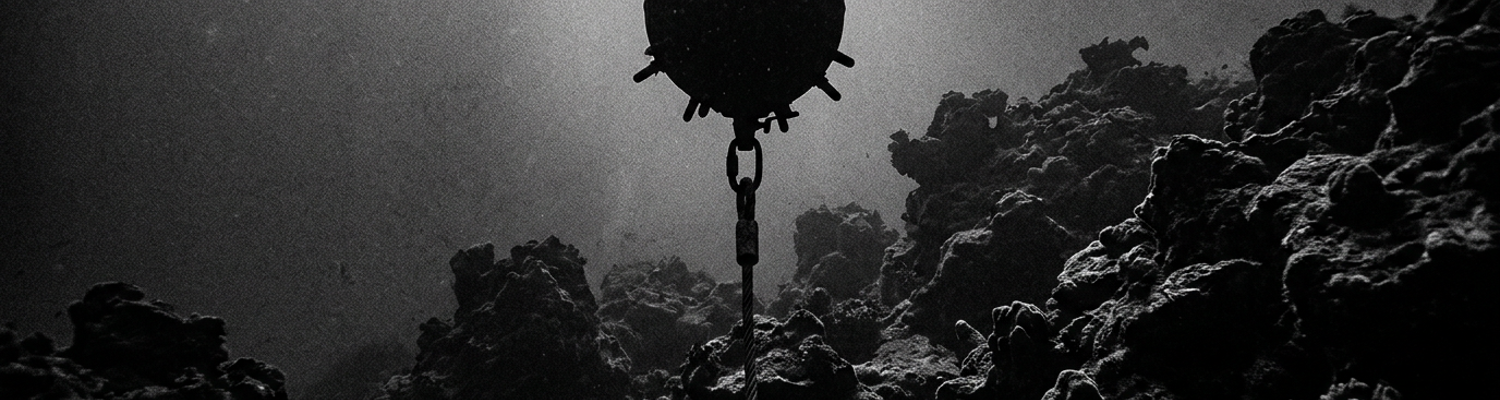
Archival evidence shows the Mark 6 naval mine was engineered exclusively for the North Sea. It was a thirty-four-inch steel sphere containing three hundred pounds of cast TNT. The United States Navy Bureau of Ordnance initiated project development in April 1917. Commander Simon P. Fullinwider led the design group in Washington. They required an explosive device capable of securing unprecedented depths against German submarines. Over one hundred commercial contractors manufactured components. They did not know the assembled weapon's nature. By the summer of 1918, minelayers dropped seventy thousand units across the North Sea Mine Barrage. Bureau of Ordnance documents from naval testing at New London showed the weapon relied on an automated plummet and mooring wire system. This allowed the buoyant sphere to float at pre-set operational depths between forty and two hundred forty feet. An eight-hundred-pound cast-iron box anchored it to the seabed.
Bureau engineers built the weapon around an unproven electrical phenomenon.
Standard mechanical contact mines required a direct collision. This physical limitation left massive gaps between weapons at sea. Inventor Ralph Browne submitted a different solution to the Bureau of Ordnance. He designed a galvanic antenna circuit that transformed the ocean into a battery. Technicians fitted the Mark 6 with an eighty-five-foot copper wire extending upward toward a small copper float. A matching lower antenna dropped beneath the case. Steel submarine hulls brushing the copper wire generated an electrical charge of approximately 0.4 to 0.8 volts. This micro-current traveled down the insulated wire into an internal polarized galvanometer relay mounted inside the central mechanism compartment. Closing this sensitive relay switched current from internal dry cell batteries directly into an electric squib. The squib initiated the fulminate of mercury detonator. The main TNT charge fired within twenty feet of the target. Early deployments revealed severe design flaws. Violent North Sea wave action rubbed copper leads against brass mooring brackets. This friction created false galvanic charges. An estimated four percent of deployed units detonated immediately after arming.
Corrosion crippled the electrical wiring before a target ever approached.
A close review of operational logs indicates the galvanic wire was only the outer perimeter of the firing array. Direct physical impact triggered a secondary chemical horn system distributed across the upper hemisphere of the steel casing. Five malleable lead horns projected from the shell. Each housed a sealed glass ampoule filled with concentrated potassium bichromate electrolyte. A small carbon-zinc electric cell dry cup rested beneath each glass vial. It was wired in series with the detonator circuit. Striking the soft lead horn with a force exceeding one hundred pounds bent the outer metal sleeve. This force shattered the interior glass ampoule. The freed liquid electrolyte immediately saturated the carbon and zinc plates. A burst of electrical current reached the Mark 1 electric primer in milliseconds. Ordnance assembly records reveal warehouse drops easily fractured the brittle glass vials during pre-deployment staging. Corrosive fluid released into the dry chambers. This killed the electrical contacts before the mine entered the water.
ABDACOM Naval Strategy and Sunda Strait Barrier Planning
A close review of operational logs indicates strategic coordination among the four Allied powers unraveled rapidly. Delegates at the Arcadia Conference in Washington finalized the structure of the American-British-Dutch-Australian Command in the first week of January 1942. British General Sir Archibald Wavell took command of a joint theater spanning thousands of miles of ocean. Naval control fell to American Admiral Thomas C. Hart. He operated out of a headquarters facility established at Lembang in the highlands of West Java. Hart inherited an under-equipped force of four separate navies. They operated without common signaling books. They lacked secure tactical radio frequencies. Ammunition calibers did not match. Command orders passed through Dutch telegraph lines and British wireless links before reaching individual ship captains. Transmission delays reached up to fourteen hours. Dutch Vice Admiral Conrad Helfrich assumed command on February 12. Operational priority shifted from fleet preservation to aggressive area denial.
Allied planners understood the remaining surface warships could not stop the Japanese Southern Expeditionary Force.
The perimeter collapsed to the Java coastline. Naval mines became the sole weapon capable of inflicting continuous attrition without expending active warships. Static explosive fields had to replace lost surface combatants. Planners in Batavia designated the Gaspar Strait at 2 degrees 50 minutes south latitude as a primary defensive barrier. They designated the Sunda Strait at 5 degrees 55 minutes south latitude as a secondary choke point. Retaining these channels shielded the open sea lines running into the Indian Ocean toward Colombo and Fremantle. Vice Admiral Jisaburo Ozawa commanded the approaching Japanese task groups. If his cruiser divisions breached the Sunda Strait between Java and Sumatra, the entire southern supply convoy corridor would fall under direct naval gunfire. The bathymetric profiles of these channels presented severe physical barriers to conventional minelaying. Sunda Strait narrowed to twelve nautical miles at its neck. Underwater volcanic ridges and steep coral slopes dropped abruptly from twenty fathoms to depths exceeding one hundred fathoms.
Ripping tidal currents swept through the passage at speeds between five and six knots.
They reversed every twelve hours. Mark 6 mooring cables were calibrated in 1917 for the steady three-knot swells of the North Sea. They faced hydrodynamic drag forces that pulled the buoyant spheres far below their lethal operational depth of twelve feet. No standard naval doctrine accounted for anchoring contact mines along volcanic drop-offs. The burden of establishing these minefields fell on an improvised collection of auxiliaries and Dutch colonial vessels. Surviving American tenders and fleet tugs evacuated south from the bombed ruins of Cavite Navy Yard in late December 1941. They towed barges laden with salvaged naval stores. Among this cargo were several hundred crated Mark 6 naval mines. Their original zinc-carbon wet cells were desiccated. Their copper antenna reels oxidized from transport in unventilated holds. Naval planners at Surabaya assigned these salvaged American stockpiles to the Dutch naval minelayer HNLMS Krakatau. This 985-ton vessel was built for coastal mining operations.
Surabaya Naval Yard Adjustments for Shallow Littoral Waters
Archival evidence shows the torpedo shop at the Marine Etablissement in Surabaya operated without replacement parts for American ordnance. Dutch naval machinists and evacuated mechanics from the United States Asiatic Fleet dismantled the hydrostatic arming assemblies of salvaged Mark 6 units inside the humid torpedo repair bays. Built for cold Atlantic depths, the weapon relied on a phosphor-bronze bellows. Seawater pressure compressed this bellows to physically unlock the mechanical firing gear once the mine sank past twenty feet. The salvage crates arrived from Cavite caked in tropical corrosion. Green verdigris and calcified salt deposits stiffened their internal bellows. Technicians placed each delicate bellows onto belt-driven metal lathes. They turned down scarred brass guide sleeves by fractions of a millimeter. Mechanics carefully compressed the tempered bronze spirals on bench vices to lower their resistance. This reset the trigger thresholds. They replaced deteriorated leather gaskets with hand-cut rubber seals stripped from civilian automotive inner tubes.
Workers tested each reassembled hydrostatic unit inside water-filled pressure cylinders.
They pumped the cylinders manually up to nine pounds per square inch to guarantee arming along shallow coastal shelves. Dozens of failed pressure tests flooded the workshop floor with oily saltwater. The bathymetry of the northern shelf presented an immediate mechanical failure point. Standard Bureau of Ordnance deployment charts required mooring depths of forty to one hundred fathoms. The shoals ringing Madura Strait averaged less than twenty fathoms. Saltwater seeped through the wooden packing crates during open-sea lighterage. The coils of five-sixteenth-inch galvanized steel wire rope became brittle and oxidized. Indonesian dockyard laborers and American ordnance ratings hauled the stiff cables across wooden sawhorses. They unwound the plummet drums by hand. Wire snips cut away frayed exterior strands. Riggers drove marlinspikes between the inner wire cores to splice new eyelets into the shortened lines. They bound the splices with soft annealed iron wire. Heavy drop-forged cable clamps were bolted at fixed sixteen-fathom intervals.
Every measurement required precise calculation.
Setting the line two feet too long left the buoyant thirty-four-inch steel sphere bobbing visibly on the surface for Japanese spotter planes. Cutting it two feet too short pulled the contact horns below the keel depths of approaching light destroyers. Spliced wire tore open the work gloves of every man on the line. Ocean currents through the funneling channels of East Java threatened to pull the modified mines out of their operational geometry entirely. Ripping tidal currents through the narrow western passage of Madura Strait reached peak velocities of five to seven knots. This created severe hydrodynamic drag against the large steel spheres. Standard eight-hundred-pound cast-iron anchor boxes routinely skidded across hard coral plates and packed volcanic sand when subjected to these cross-currents. Yard engineers solved this displacement by fabricating external ballast shoes out of industrial scrap. Machinists sheared scrapped sugar mill machinery and discarded artillery counterweights into raw iron blocks. They arc-welded these auxiliary frames directly to the exterior walls of the anchor castings.
Technicians added three hundred pounds of deadweight to each assembly.
Welders attached flat mild-steel outrigger fins along the anchor baseboards. This created broad mechanical plows designed to dig into the seabed under horizontal current drag. Work crews loaded forty-eight re-weighted anchor assemblies onto rail flatcars. The flatcars rolled toward the minelaying berths at Pier 4 during the air raid of March 1.
Tjilatjap Port Bombardments and Shrapnel Impacts
When examining the historical record, the evacuation port of Tjilatjap on Java's southern coast became the final operational bottleneck for fleeing Allied forces. The port sat at 7 degrees 44 minutes south latitude and 109 degrees 00 minutes east longitude. Twin-engine Mitsubishi G4M1 bombers of the Japanese Navy 21st Air Flotilla flew staging sorties from captured runways at Kendari and Bali. They executed low-altitude bombing sweeps across the narrow harbor inlet flanking Nusa Kambangan Island. Japanese aircrews targeted the congested berths. Supply transports, Dutch motor launches, and American auxiliaries lay moored hull-to-hull. Repeating waves of land-based bombers dropped 250-kilogram general-purpose bombs directly into the dockside handling sectors between February 25 and February 28. Explosions ripped through corrugated warehouse roofs where uncrated naval weapons sat waiting for transport. The physical geography of the inlet trapped shipping against steep volcanic bluffs.
Disperse maneuvers were impossible.
Bomb splinters tore into exposed deck machinery and severed shore-to-ship refueling pipelines. Shrapnel peppered the loaded mine rails at five-minute intervals. Surviving American tenders evacuated south from Cavite. They towed barges laden with salvaged naval stores. Several hundred crated Mark 6 naval mines sat on open decks. Their original zinc-carbon wet cells were desiccated. Copper antenna reels oxidized from transport in unventilated holds. Naval planners assigned these stockpiles to the Dutch minelayer HNLMS Krakatau. The 985-ton vessel was built for coastal operations. Crews rolled the thirty-four-inch steel cases down wooden skid ramps. They loaded them onto iron mine rails in heavy rain. Near-miss bomb detonations penetrated the thin steel shells of the Mark 6 mines lashed to the open superstructures of supply craft. The fragments compromised the watertight integrity of the casings.
Chemical Burn Triage and Acid Horn Fractures
A close review of operational logs indicates medical officers encountered a trauma pattern rarely seen in conventional fleet actions. Splinters from near-miss bomb detonations penetrated the thin steel shells of Mark 6 mines, but the primary devastation came from the weapon's chemical horns. Each five-pound lead horn held a sealed glass phial filled with concentrated potassium bichromate solution. Bomb fragments sheared off the soft lead sleeves. This crushed the internal ampoules. Pints of corrosive electrolyte atomized directly into the air alongside jagged iron shrapnel. Shipboard doctors treated blast casualties aboard the auxiliary depot vessel Zuiderkruis. Deep lacerations were actively corroded by the chemical wash. The acidic fluid penetrated open vascular beds within seconds. It generated severe chemical burns that charred muscle tissue. The chemical reaction resisted standard irrigation with saline. Triage stations quickly ran out of neutralizing sodium bicarbonate washes.
Corpsmen excised chemical-soaked flesh with scalpels under emergency lantern light.
Ship hulls shook from ongoing detonations. Amputations happened directly on iron mess tables. Allied naval commanders issued emergency sortie orders on February 28 to seal the deep-water seaward channel before Japanese pursuit forces could close the trap. Surviving Dutch and American mine details laid barrier lines across the five-fathom shallows of Teluk Penju and the outer harbor mouth. Crewmen operated manual winches under direct strafing passes by Mitsubishi A6M2 fighters. They wrestled three-hundred-pound Mark 6 spheres down slick deck tracks into the ship's wake. Hydrostatic arming pins were pulled by hand on open fantails. Automatic release gear jammed from bomb-blast distortion. Technicians hastily adjusted mooring cables to twelve fathoms. They calculated that setting the barrier across the southern approaches would force oncoming Japanese cruiser formations into offshore shoals. Minelaying crews worked without fighter cover. They rolled eight mines every ten minutes. Bomb geysers soaked the mechanical timing relays on the remaining unlaid inventory. The final anchor assembly dropped into the harbor channel at 1615 hours.
Performance Failures in Shallow Tropical Currents
Archival evidence shows the galvanic firing system failed completely when exposed to the turbulent littoral shelf of the Java Sea. Designed for deep North Sea waters free of nearshore detritus, the eighty-five-foot copper antenna relied on clear electrical separation between the buoyant upper copper float and the lower steel hull of an approaching vessel. Heavy monsoon surf stirred thousands of tons of volcanic silt and riverbed mud into suspension along the shallow bar off Rembang. Wave action drove the buoyant copper cables downward. The bare wire pressed against shifting mud banks in depths under twelve fathoms. Suspended conductive minerals and dense silt beds created an immediate path of electrical continuity to the seabed. This bridged the gap between the copper conductor and the grounded iron mooring box. The false circuit pushed current straight into the sensitive internal galvanometer relays. Electric squibs tripped. Mark 6 casings detonated spontaneously in blinding surface geysers. The barrier fields stripped bare. Allied defense coordinates were signaled to Japanese reconnaissance aircraft.
Anchors failed to hold the sea floor.
Hydrodynamic drag shattered the physical mooring arrays of the surviving fields. Reversing tidal torrents between Java and Sumatra funneled through the bottlenecks at velocities reaching six knots. This exerted constant horizontal leverage against the broad surface area of the thirty-four-inch steel spheres. Bureau of Ordnance design specifications rated the standard five-sixteenth-inch galvanized mooring cable for vertical suspension in static shelf water. It was not rated for continuous lateral stress. Water pushed the spherical cases downward. Spliced wire ropes sawed against iron guide sheaves and sharp coral outcroppings. Frayed steel strands snapped under tension. Freed from their eight-hundred-pound anchor castings, buoyant spheres ascended rapidly to the surface. Strong westerly drift currents swept dozens of active weapons out of the controlled military exclusion channels into open shipping corridors. Unmoored explosives scattered along the navigation paths into Tjilatjap.
Equatorial sea life neutralized whatever steel remained submerged.
Warm hypersaline waters of the Java coast attacked the firing mechanisms with extraordinary biological speed. Water temperatures averaging eighty-four degrees Fahrenheit accelerated the colonization of submerged steel by barnacles, tubeworms, and calcareous algae. Thick layers of marine growth enveloped the outer casings within seventy-two hours of deployment. The growth packed into the microscopic gaps between the five malleable lead horns and their threaded seats. This dense biological casing formed a shock-absorbing buffer that altered the mechanical physics of the detonation system. Japanese landing craft and shallow-draft patrol boats collided with the horns. The calcified crust absorbed the kinetic energy of the hull strike. The soft lead sleeves failed to bend past the threshold required to shatter the internal potassium bichromate glass ampoules. Thick bacterial slime fouled the exposed electrical contact terminals. The copper leads insulated. The firing circuit opened permanently. Patrol sweeps conducted by the Royal Netherlands Navy off Madura on March 2 logged eleven inert Mark 6 spheres washed ashore on the mudflats of Ujung Piring.
Technological Obsolescence and Transition to Influence Firing
When examining the historical record, surrender orders arrived before the remaining weapons could reach the water. Dutch Rear Admiral Pieter Koenraad issued scorched-earth demolition directives across the naval yard at Surabaya on March 3, 1942. The yard sat at 7 degrees 12 minutes south latitude and 112 degrees 44 minutes east longitude. Allied ground forces faced capitulation at Kalijati. Ordnance disposal ratings found hundreds of unlaid Mark 6 units filling warehouse tracks at the Marine Etablissement. Demolition details loaded sledgehammers and acetylene torches to destroy internal components before Japanese ground echelons entered the perimeter. Sailors bashed in the soft copper casing shells. They severed internal wiring harnesses. They pulled the wet batteries from their compartments to crush them beneath iron prybars. Munitions lighters towed seventy-four assembled Mark 6 spheres out into the harbor channel. Sailors opened Kingston valves to sink the barges directly into the forty-foot ship basin. Ordnance teams jammed thermite canisters into dry dock storehouses. Three-hundred-pound TNT fillers ignited until explosive casings burst along their welded seams.
Similar scuttling orders swept through Tanjung Priok on March 5.
American and Dutch crews dumped ninety unmoored spheres into the oily harbor slips before detonating blasting caps to collapse the concrete loading quays. Handling the weapon under direct air attack had become a liability the fleet could not survive. Naval inspectors found the lead horn design transformed every minelaying deck into an active blast zone. The five soft lead horns protruding from the upper casing required only one hundred pounds of kinetic force to buckle. Shockwaves from near-miss bomb drops delivered by land-based Mitsubishi G4M1 bombers flexed ship superstructures. High-velocity blast overpressures crushed the malleable lead sleeves without direct metal contact. The freed acid immediately flooded the dry carbon-zinc cups. Internal electric primers armed while the mines were still locked on the launching rails. Minelayers operating under fire became high-risk explosive platforms where any fragment strike could wipe out an entire ship. Galvanic copper antennas fouled propellers during evasive maneuvering. Bare wire wrapped against rudder posts and steel hulls to complete accidental electrical circuits. Minelayers blew out of the water before deployment began.
Direct hull contact was no longer acceptable for modern naval interdiction.
Allied technical branches abandoned galvanic contact weapons in direct response to the operational collapse across the Dutch East Indies. Naval Ordnance Laboratory engineers in Maryland analyzed field reports documenting the failure of mooring wires in Sunda Strait. They reviewed the premature detonations caused by suspended volcanic mud off Madura. Future weapons design rejected buoyant spheres, fragile glass electrolyte phials, and exposed physical antennas. Production lines pivoted toward influence firing mechanisms. Passive magnetic dip-needles, fluxgate magnetometers, and acoustic hydrophone receivers replaced physical triggers. Solid-state firing circuits detected the magnetic signature of a steel hull or the low-frequency vibrations of spinning propulsion screws. The vessel did not need to physically graze the weapon. New designs such as the Mark 12 and Mark 25 settled directly on the seabed as bottom mines. Cable plummet reels were removed. The Navy began casing influence weapons inside cylindrical shapes adapted for aircraft bomb bays. Minelaying tasks shifted away from slow coastal craft to long-range B-17 and B-24 bombers. Ordnance engineers at White Oak finalized the change by standardizing electronic search-coil triggers that ignored silt conductivity. The operational lineage of the 1917 galvanic circuit terminated.