
Initial Deployment and Environmental Onset
The U.S. Army Special Forces Small Unit Actions manual offered a clinical process for clandestine observation. A team would insert, establish a hide site, and report. For the six-man element of the 5th Special Forces Group’s Detachment-B, designated Team Rattler, the manual’s sterile language was the first casualty upon arrival in the An-Teng Valley in November 1972. Their mission, codenamed SILENT GAZE, was to establish a long-term observation post overlooking the perimeter of the political prison known as Obo. Pre-mission intelligence, gathered via satellite imagery (KH-8 GAMBIT), depicted a dry, manageable jungle basin. The team was equipped for this specific environment with lightweight M16A1 rifles, sanitized uniforms, and the new AN/PVS-2 Starlight scopes.
A review of operational logs (Record Group 472) indicates the C-130 transport maintained strict radio silence as it dropped to an altitude of 800 feet over the designated drop zone, codenamed LZ Vulture. The six operators exited in a tight formation. Their low-altitude static-line parachutes opened in the pre-dawn darkness for only seconds before they punched through the jungle canopy. They landed within 100 meters of each other. Within four hours, they had cached their parachutes, conducted a link-up, and moved to the pre-selected primary observation point, a rocky outcrop 900 meters from Obo Prison’s western wall. The team leader, a captain, established the primary communications link with their support base using the AN/PRC-77 man-portable radio. The first message was simple. The package was delivered. They set up their Questar field telescope, established a rigorous two-man watch rotation, and began sketching the prison’s guard towers and patrol routes.
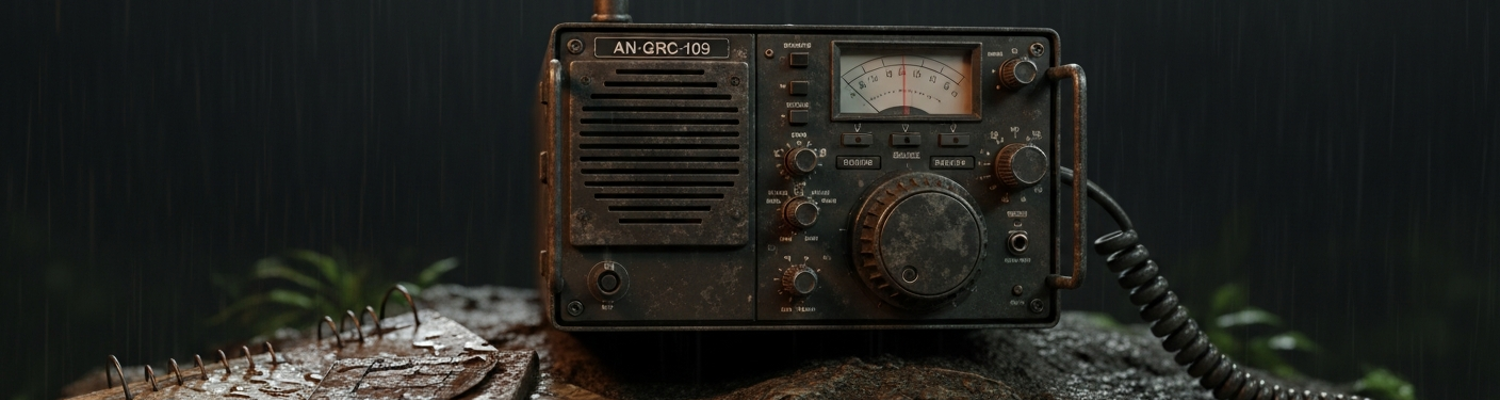
Archival weather data for the region shows the seasonal monsoon arrived five weeks early. A one-in-fifty-year weather event. On the third day of the operation, the sky opened. The initial downpour did not cease for 72 hours, dumping over a foot of rain onto the valley. The team’s concealed hide site, built into the side of the outcrop, became a waterfall. The dry basin from the satellite photos transformed into a knee-deep swamp. Movement outside the immediate area became impossible without detection. The 100% humidity was a relentless physical force. Condensation and fungal growth rendered the high-powered Questar telescope useless, its lenses permanently fogged. The electronics of the Starlight scopes shorted out one by one. A close review of the team’s medical log, written in pencil on now-warped waterproof paper, shows the first case of immersion foot appeared on day five. By day ten, every member of the team was afflicted. Their primary AN/PRC-77 radio failed when water penetrated its casing and corroded the battery contacts. The backup AN/GRC-109, a hand-cranked spy radio for last-ditch Morse code, proved incapable of broadcasting a signal out of the deep, water-saturated valley. Team Rattler was isolated.
Systemic Equipment and Health Degradation
The operational environment mounted a far more effective counter-reconnaissance campaign than any human force. A forensic examination of the team’s recovered equipment and a close reading of the damaged logbook reveal a rapid, systemic breakdown. The triple-canopy jungle was hostile on a microscopic level. The rain and humidity created conditions that actively attacked every piece of gear. Metal surfaces, even the phosphate-coated steel of the M16A1 rifles, began to show blooms of rust within 72 hours. The cotton fabric of their uniforms and nylon web gear became saturated, refusing to dry and fostering aggressive fungal growth that chafed skin raw. The moisture infiltrated every electronic device with an efficiency that planning had failed to anticipate. While the AN/PRC-77 was considered robust for its time, its seals were not designed for prolonged immersion. Moisture wicked into battery compartments, ruining contacts and rendering primary power sources useless. The high-voltage internals of the AN/PVS-2 Starlight scopes proved exceptionally vulnerable to short-circuiting from condensation. By the end of the first week, Team Rattler’s technological edge had been neutralized by water.
This saturated world was also a perfect incubator for disease. Mission planners had equipped Team Rattler with standard-issue chloroquine tablets for malaria prophylaxis. Archival medical data shows that by the early 1970s, chloroquine-resistant strains of P. falciparum malaria were already spreading aggressively throughout Southeast Asia. The team was operating in a known hot zone for these resistant strains, a fact not reflected in their medical briefing. The constant rain created countless pools of stagnant water, ideal breeding grounds for both the Anopheles mosquito and the Aedes aegypti mosquito, which carries dengue fever.
The team’s medical log documents the first onset of a high fever on day seven. By day fourteen, a review of the fragmented entries indicates at least four of the six operators were suffering from symptoms consistent with severe tropical illness. Debilitating joint pain, cyclical high fevers, and periods of delirium. An operator incapacitated by dengue fever is not a quiet asset. Uncontrollable shivering and groans of pain would have made maintaining noise discipline impossible. Their hide site was compromised with every fever spike. The mission of surveillance was functionally over. The team was now a small, isolated medical ward fighting an enemy they could not see.
The failure was a disconnect between sterile pre-mission satellite photography and the ground truth of the An-Teng Valley. The equipment manifest for SILENT GAZE was for a standard jungle operation, not a prolonged submersion. The team wore standard-issue jungle boots with canvas sides and drainage eyelets. These were designed to let water out, not to prevent it from getting in and then rotting the leather and stitching after weeks of being waterlogged. No specialized waterproof pack liners were issued, a simple item that could have protected electronics and medical supplies. The cotton-based rip-stop uniforms, once wet, held moisture against the skin, accelerating heat loss and promoting immersion foot. The operation was planned for a dry, manageable basin that existed only on film.
Sustenance Chain Collapse
A review of standard-issue equipment lists for the period shows the sustenance plan for Team Rattler was built around the Food Packet, Long Range Patrol, or LRP ration. These lightweight, freeze-dried meals were a significant advance over the heavy canned C-rations of the past. Each man carried a full 30-day supply. The flaw in this plan was the method of preparation. The LRP ration required roughly a pint and a half of water to properly reconstitute and, more importantly, a heat source. The team was issued trioxane fuel tablets. Archival evidence shows that when these polymer tablets are exposed to prolonged moisture, their foil packaging can fail, causing the tablet itself to become saturated. A wet trioxane tablet will not ignite. Within days, the team’s primary means of heating food and boiling water for purification was gone. They were forced to eat the LRP rations dry, crumbling the brittle, freeze-dried chunks in their pouches. This method severely hindered nutrient absorption and hydration, as the dry food pulled moisture from the body to be digested.
The inability to boil water in the parasite-infested swamp meant every sip from their canteens, even when treated with iodine tablets, carried an increasing risk of dysentery.
Operational planning documents show a pre-mission calculation of required caloric intake based on a standard jungle patrol: 3,000 to 3,500 calories per man, per day. The LRPs were designed to meet this need. The An-Teng Valley’s transformation into a cold, churning swamp radically altered the team’s energy requirements. Constantly submerged in knee-deep water, suffering from heat loss due to saturated clothing, and fighting the physical drag of moving through mud, their actual metabolic output was closer to 5,000 calories. This deficit created a rapid state of managed starvation. The psychological impact of eating cold, chalky spaghetti with meat sauce or chicken and rice for weeks on end, while feeling progressively weaker, was immense.
The supply chain failure was compounded by a command and control breakdown. The mission profile included a contingency for a single, high-altitude resupply drop at the 20-day mark. According to the operational order, this drop was entirely dependent on the team breaking radio silence to confirm a secure drop zone. With their AN/PRC-77 radio already destroyed by water corrosion, Team Rattler was unable to make this call. Flight logs for the support squadron show no such mission was ever flown. Per protocol, no signal meant the mission was proceeding as planned and maintaining necessary silence.
Foraging was impossible. The same environmental factors that crippled the team’s equipment and health also eliminated any possibility of supplementing their diet. The dense, triple-canopy jungle, now a flooded morass, offered little in the way of edible plants, and the team lacked the specific local knowledge to identify them. Hunting was a tactical impossibility. A rifle shot would echo for miles, instantly compromising their position to any prison guard patrols from Obo. Setting snares was equally futile. The swampy ground left no discernible animal trails to follow, and any captured animal would have to be cooked. A cooking fire, no matter how small, was out of the question. The smoke would be a visible beacon during the day, and the light a giveaway in the darkness. They were trapped in a flooded wasteland, surrounded by sustenance they could not access, with a dwindling supply of rations they could not properly prepare.
The Dysentery Outbreak
A forensic analysis of the team’s recovered canteens and a hydrological survey of the An-Teng Valley point to a failure in water discipline, born not of negligence, but of environmental impossibility. The monsoon had turned the valley floor into a single, contiguous body of contaminated water. Runoff from the surrounding hills, choked with animal waste, decaying vegetation, and soil bacteria, pooled into a brown, stagnant swamp where the team was forced to operate. With their trioxane fuel tablets destroyed, the ability to boil water, the only certain method of sterilization, was eliminated. The team was forced to rely solely on their standard-issue iodine purification tablets (tetraglycine hydroperiodide).
This was a fatal dependency.
A review of medical literature from the period confirms that while iodine is effective against most bacteria, its efficacy plummets against certain protozoan cysts, particularly in cold, turbid water. Pathogens like Giardia lamblia and Cryptosporidium, both common in water contaminated by animal feces, are highly resistant to chemical disinfection alone. The low water temperature and high sediment content in the An-Teng swamp would have further inhibited the iodine’s chemical action, requiring longer contact times that the team, desperate for hydration, likely could not afford. They were ingesting a low-dose cocktail of bacteria and protozoa with every attempt to stay hydrated.
The resulting outbreak of dysentery was rapid and incapacitating. The team’s damaged medical log documents the first case of explosive diarrhea on day nine. Within three days, every member of Team Rattler was afflicted. The likely culprits were bacterial pathogens like Shigella or protozoa like Entamoeba histolytica, both transmitted via the fecal-oral route and thriving in unsanitary, contaminated water sources. The symptoms recorded are consistent with severe bacillary dysentery: debilitating abdominal cramps, high fever, and a constant, urgent need to defecate, producing stools containing blood and mucus. Such an illness is not quiet. The sounds of men vomiting or suffering from uncontrollable diarrhea would have completely compromised their noise discipline.
An operator crippled by dysentery is a liability. He cannot stand watch, patrol, or carry his own equipment. A close reading of the captain’s fragmented log entries reveals a team consumed not by surveillance, but by the basic, agonizing struggle against dehydration and infection. The hide site, a position intended for clandestine observation, devolved into a makeshift infirmary and latrine. The fecal-oral transmission route of the disease meant that in the cramped, waterlogged conditions, cross-contamination was inevitable. The men were trapped, re-contaminating their immediate environment and each other, with no access to effective medical treatment or a means of escape.
High Command's Delayed Response
A review of transmission logs from the regional SIGINT listening post at Pleiku Air Base shows the first indication of Team Rattler’s crisis. On the twelfth day of the operation, a faint, intermittent Morse code signal was detected, originating from the known coordinates of the An-Teng Valley. The transmission, sent from the team’s hand-cranked AN/GRC-109, was heavily degraded by the mountainous terrain and the dense, moisture-saturated atmosphere. Analysts could only decipher fragments. The partial messages indicated multiple non-combat casualties, that all members were compromised, and a repeating plea for an immediate medical evacuation.
The request was denied.
At the 5th Special Forces Group’s forward operating base, the captain’s fragmented transmissions were met with institutional skepticism. A core tenet of long-range reconnaissance was absolute radio silence. Any transmission was an extreme measure, and a broken, non-standard one raised flags of enemy deception. The operational directive for SILENT GAZE, authorized directly by MACV-SOG, contained no provisions for a medical extraction triggered by environmental or sickness factors alone. It was a contingency reserved for teams compromised by direct enemy contact. The calculus at command level was cold and rooted in the mission’s perceived importance. The intelligence on Obo Prison’s operations was deemed a strategic priority. Pulling an asset off-station prematurely due to sickness was not a variable the operational plan entertained.
This prioritization of abstract goals over concrete human cost defined the command’s response. Archival weather charts confirm the monsoon grounded most air assets, making any conventional helicopter extraction a high-risk proposition. Helicopters could not fly safely through the violent squalls and zero-visibility conditions. Yet, flight logs show that other high-priority reconnaissance and interdiction missions were authorized to fly in marginal weather windows during this same period. The decision not to immediately task a rescue helicopter for Team Rattler was not based on an absolute inability to fly, but on a relative assessment of risk and reward. The command staff, insulated from the swampy hell of the An-Teng Valley, weighed the lives of six operators against the potential intelligence loss and the risk to a helicopter asset. The team was deemed an acceptable loss.
After three days of debate and the reception of one final, almost unreadable transmission containing the keywords for zero enemy contact and killed in action, a single UH-1 Huey was reluctantly dispatched. It was an insufficient gesture. The pilot, fighting torrential rain and unpredictable downdrafts, reached the valley but was unable to descend below the cloud-choked canopy. With no clear signal from the ground and unable to establish a visual on the team’s location, the pilot circled for twenty minutes. Per standard procedure for a non-permissive environment with unconfirmed friendly positions, and with fuel running low, the aircraft commander aborted the mission. The helicopter turned back.
The Aftermath
The biological collapse of Team Rattler represented the final failure of operational integrity. The debilitating effects of dysentery, combined with recurring malarial fevers, made the maintenance of a covert posture impossible. The hide site, intended as a sterile observation post, became a biohazard, thick with the sounds and smells of sickness. Noise discipline, the foundational principle of long-range reconnaissance, was rendered obsolete by uncontrollable vomiting and pain. The team was no longer a military unit. It was a dying organism, audibly advertising its position to any Obo Prison patrol in the valley.
No further signals were ever received from Team Rattler.
Four months later, after the monsoon season ended, a recovery team was inserted into the An-Teng Valley. Their after-action report (AAR 73-04-11) provides the final autopsy of SILENT GAZE. They found the hide site less than 200 meters from its last known coordinates. The remains of four operators were located inside the small, waterlogged depression. The other two were found approximately 50 meters away, suggesting a final, futile attempt to seek help or find a new location. Forensic analysis confirmed death from a combination of malnutrition and disease, with evidence of advanced skeletal degradation consistent with severe dysentery-induced dehydration. Their M16A1 rifles were found stacked against a rock, cleaned and covered with a poncho, their bolts rusted shut. Beside the corroded AN/GRC-109 radio lay the team’s logbook, its pages warped into a solid block of pulp, the final entries dissolved by the same water that had consumed the mission itself.