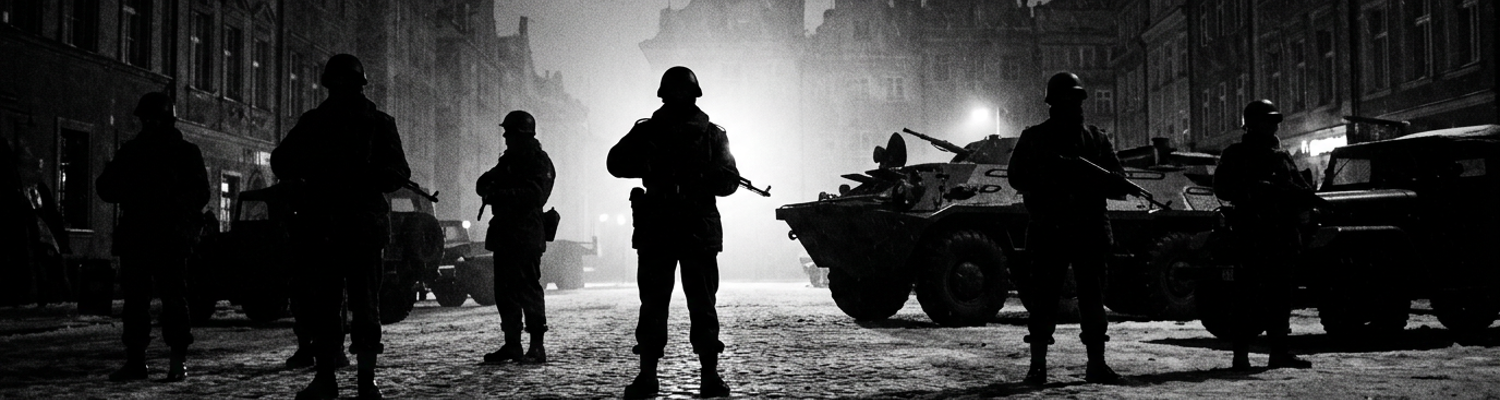

Deployment Timelines and Urban Gridlock
On December 3, 1971, dispatchers at the Pentagon issued a deployment window of exactly four hours. Military commanders had 240 minutes to mobilize and transport hundreds of troops across a congested metropolitan grid. Archival evidence shows the trigger occurred eight thousand miles away. Pakistani airstrikes on Indian airbases initiated armed conflict across the subcontinent. Intelligence officers in Washington flagged security vulnerabilities for foreign diplomatic missions operating within the capital. Cables from Islamabad and New Delhi warned of retaliatory violence. Threat assessments predicted demonstrations and bomb threats targeting South Asian diplomatic properties along Embassy Row. District police units were stretched to maximum capacity managing domestic protests. The State Department demanded a hard physical perimeter.
Quartermasters scrambled to unlock supply cages at Fort Myer and Fort McNair.
They found degraded inventories left over from the civil disturbances of previous years. Riot shields dating back to the 1968 deployments were physically cracked. Radio batteries held zero charge after sitting unmaintained in damp basements. Supply sergeants resorted to disassembling PRC-77 manpack radios on the armory floor to salvage enough working components.
Nobody had planned for a winter deployment requiring static perimeter defense.
The Military District of Washington received direct orders to establish a physical cordon around foreign diplomatic chanceries scattered across the Georgetown neighborhood. Planning documents reveal a geographical nightmare for mechanized units. Georgetown is a colonial grid characterized by narrow cobblestone streets and zero staging areas for heavy military vehicles. The targeted chanceries were embedded directly within dense residential blocks. They shared party walls with civilian townhouses. Moving a company of National Guard troops into this sector required driving through the M Street commercial corridor during peak holiday shopping traffic. Supply trucks hauling diesel fuel and rations had to idle in alleys barely wide enough for a standard civilian sedan. When the first M35 cargo trucks attempted to turn onto 33rd Street, their wide turning radii forced them to jump curbs. The weight of the loaded vehicles cracked the older asphalt and cobblestone seams. Mechanical strain on the transmissions caused three vehicles to break down completely before they reached their designated checkpoints. M816 Wrecker recovery vehicles had to be dispatched into the neighborhood. The resulting traffic jam blocked civilian emergency vehicles for hours. Maintenance crews performed roadside transmission repairs using handheld flashlights while freezing rain fell on the exposed engine blocks.
Fuel lines froze inside the uninsulated metal housings.
Geographic Constraints at the Forrest-Marbury House
Archival documents from the Military District of Washington indicate that the 289th Military Police Company received the primary assignment for the Pakistani chancery. This diplomatic facility operated out of the Forrest-Marbury House at 3350 M Street NW. Establishing static guard posts at this specific geographic coordinate presented severe tactical geometry problems. The structure sits completely flush against the commercial sidewalk of the busiest retail corridor in the district. Troopers had zero setback distance to construct a defensive perimeter. They positioned wooden sawhorses and standard concertina wire directly on the pedestrian thoroughfare. Civilian foot traffic bypassed the barricades at a distance of less than thirty inches. A close review of operational logs reveals that the narrow pathway flanking the western wall created an unsecurable blind spot for the sentries. This pathway was known as Bank Alley. MPs parked M151 quarter-ton utility trucks at both ends of the block to prevent vehicle ramming attempts. The physical placement of these jeeps forced city transit buses to detour entirely around the neighborhood. Platoon leaders filed immediate grievances regarding the tactical hazards caused by adjacent storefront awnings and holiday commercial displays.
High-level State Department directives mandated continuous perimeter security despite short notice and limited personnel numbers.
The Office of Security transmitted a flash cable directly to the Pentagon demanding an uninterrupted physical presence at the chancery gates. Army planners had exactly 160 deployable Military Police personnel available after accounting for mandatory garrison operations at Fort Myer and Fort McNair. Sustaining a 24-hour guard cycle at the Forrest-Marbury House required three overlapping shifts of forty men each. The sudden deployment order provided no time to recall personnel on weekend pass or temporary duty assignments. Company commanders ordered their remaining active squads to pull eighteen-hour shifts on the freezing pavement. State Department officials explicitly denied a request from the garrison command to reduce the perimeter during the overnight hours when civilian traffic disappeared. Bureaucrats insisted that any visible reduction in force would signal diplomatic weakness to the Pakistani government.
Guardsmen rotated through the checkpoints without adequate time to sleep or restore core body temperatures.
Examining the shift rosters from the second week of December exposes the rapid physical degradation of the unit. The 289th Military Police Company lacked mobile warming tents and chemical heating packs. Troopers stood on the cobblestones at the intersection of M and 34th Streets while the wind chill dropped to fourteen degrees Fahrenheit. Medical extraction logs document fourteen cases of severe frostnip among the sentries during the first forty-eight hours of the operation. Supply officers attempted to requisition heavy canvas winter shelters from the Defense Logistics Agency. Warehouse managers rejected the forms due to a missing authorizing signature from a general officer. Soldiers resorted to taking turns sitting inside the unheated cabs of the idling M151 jeeps. Continuous idling drained the vehicle batteries and clogged the carburetors with heavy carbon buildup. Mechanics from the motor pool drove out to Georgetown twice a day to swap dead batteries and replace fouled spark plugs directly on the street.
A complete engine failure on December 8 stranded a relief squad two miles away from the chancery.
State Department liaisons assigned to the operation refused to alter the security parameters. Command staff held a briefing at Fort McNair to present the rising casualty numbers from cold weather exposure. The diplomatic attache dismissed the medical reports and reiterated the demand for a continuous human shield around the property. Troopers maintained their static positions at the Forrest-Marbury House doors. They leaned against the brick facade of the chancery to block the wind coming off the Potomac River. Written post orders required them to hold their M16 rifles at the low ready position for the entire duration of their shift.
VHF Signal Attenuation in Colonial Architecture
A close review of operational logs indicates that the 289th Military Police Company relied entirely on older AN/PRC-77 and AN/PRC-25 manpack radios to coordinate the Georgetown cordon. These frequency modulated transceivers operated on the Very High Frequency band between 30 and 75 megahertz. VHF signals require a direct line of sight between the transmitting and receiving antennas. Georgetown presented a continuous physical barrier of solid masonry and slate roofing. Radio frequency waves operating at 50 megahertz cannot penetrate eighteenth century brickwork. Transmissions originating from the Forrest-Marbury House on M Street immediately collided with the dense urban geometry of three-story commercial storefronts. The standard AT-892 three-foot steel tape antenna issued to front line sentries lacked the physical height to clear the rooflines. Signal attenuation occurred within fifty yards of the primary guard posts.
Troopers attempting to increase their broadcast range by attaching the longer AT-271 ten-foot whip antennas routinely struck overhead municipal power lines.
Archival evidence shows that front line sentries experienced frequent signal blackouts throughout the first week of deployment. The hardware itself suffered from severe maintenance deficits dating back to the 1968 Washington riots. Zinc-carbon BA-386/U batteries provided the primary power source for the manpacks. These chemical power cells experienced rapid voltage drops when exposed to the freezing December temperatures along the Potomac River. Sentries stationed at the intersection of 33rd and M Street NW reported their radios dying within forty-five minutes of a battery swap. Platoon sergeants ordered troops to keep spare batteries inside their uniform jackets against their skin to delay the chemical degradation. Heavy cotton field jackets provided insufficient body heat transfer to keep the zinc-carbon cells functional. Combining dead batteries with the urban topography resulted in communication dead zones spanning entire city blocks.
By midnight on December 7, fourteen of the twenty deployed tactical radios produced nothing but static.
Dispatch commanders struggled to maintain reliable contact with dispersed posts along the M Street corridor. The primary tactical operations center operated out of a modified M151 quarter-ton utility truck parked nearly a mile away at the intersection of 23rd Street and Washington Circle. Distance and the intervening concrete structures of the George Washington University campus completely severed the VHF link. Command officers sitting inside the unheated canvas top of the jeep logged consecutive hours of complete radio silence from the Pakistani chancery detail. When dispatchers attempted to broadcast hourly status checks, their signals bounced off the limestone facades of Pennsylvania Avenue and dissipated before reaching the Georgetown grid. Officers had no way of knowing if the silence indicated a dead radio battery or an active breach of the diplomatic perimeter.
The command post resorted to dispatching physical runners through holiday traffic just to confirm the sentries were still standing at their posts.
Examining the historical record reveals that the complete breakdown of the electronic network forced officers to abandon their centralized command structure. Platoon leaders spent their entire shifts driving civilian pattern sedans up and down the narrow side streets checking on isolated two-man guard details. A specific entry from the December 9 duty log (serial designation 44-12998) details a lieutenant spending three hours searching for a missing checkpoint detail originally assigned to patrol the alleyways behind N Street. The sentries had moved two blocks east to avoid the freezing wind blowing off the river. Because their AN/PRC-77 radio lacked enough battery voltage to transmit a location update, dispatch marked the unit as missing in action. Military Police commanders eventually ordered the installation of hardline field telephones at the primary intersections. Signal Corps technicians unspooled hundreds of feet of WD-1/TT field wire directly across the cobblestones and through the frozen mud of civilian flowerbeds. Civilian vehicles driving down M Street repeatedly snapped the unburied communication wires. Technicians spliced the copper lines together with electrical tape in the dark.
Extreme Weather Exposure and Supply Chain Deficits
Archival evidence shows that the ambient temperature in Washington D.C. plummeted to nineteen degrees Fahrenheit on the evening of December 10, 1971. Wind gusts sweeping off the Potomac River funneled directly up the narrow incline of 33rd Street NW. This created localized wind chills near zero. Elements of the District of Columbia Army National Guard and the 289th Military Police Company manned static barricades at these intersections wearing standard summer weight cotton fatigue uniforms. Quartermaster logs from Fort McNair (NARA Record Group 338, Box 412) indicate an extreme deficit in cold weather issue. The units specifically lacked M-1951 fishtail parkas and insulated footwear. Guardsmen stood on the exposed cobblestones and frozen asphalt of N Street for eight-hour shifts equipped only with unlined leather combat boots and thin cotton field jackets. The standard issue McNamara combat boot (specification MIL-B-43154) featured a direct molded rubber sole that rapidly conducted ground frost directly into the wearer foot. Heat loss accelerated rapidly. Sentries resorted to wrapping their feet in discarded civilian newspapers scavenged from trash cans in an attempt to create a crude layer of insulation. Blood flow restricted in the extremities of sentries forced to hold their M16 rifles at the ready position without thermal gloves. Medical records from the deployment detail twenty-two separate emergency clinic visits for early stage frostbite and severe hypothermia during the first three days of the cordon.
The human body cannot sustain core temperature on frozen concrete without external thermal retention.
A close review of operational logs indicates that battalion commanders explicitly requested the deployment of mobile warming structures to mitigate the environmental exposure. Planners at the Military District of Washington requisitioned standard M1945 command tents and portable Yukon liquid fuel stoves to establish warming stations along the M Street commercial corridor. The physical geography of Georgetown blocked this deployment. Sidewalks bordering the targeted diplomatic chanceries measured exactly forty-two inches wide. This provided zero square footage to erect the heavy canvas shelters without entirely blocking civilian pedestrian traffic. State Department liaisons strictly prohibited the placement of military tents in the adjacent residential alleyways. Sentries had absolutely no heated shelter structures available along the entire perimeter. Troops attempted to rotate into the unheated cabs of idling transport trucks. Carbon monoxide pooling in the narrow alleys forced command to shut off the vehicle engines. Soldiers were left standing entirely exposed to freezing rain and sleet for the duration of their shifts.
Ice accumulated directly on the steel receivers of their weapons.
Examining the historical record reveals that the failure to equip the sentries originated deep within the regional supply chain. Logistics officers at Cameron Station possessed thousands of surplus thermal garments, insulated boots, and heavy wool blankets in their storage warehouses. Movement of these assets halted when depot clerks demanded correctly serialized DD Form 1348 requisition paperwork from the deployed units. Platoon leaders standing on the street in Georgetown had no access to typewriters or the required carbon copy forms. Bureaucratic bottlenecks immediately choked the delivery of thermal garments and required ration resupplies. Supply sergeants drove unmarked civilian sedans to the depot gates attempting to bypass the paperwork requirements. Military police guarding the loading docks turned them away. When a command override from the Pentagon finally authorized the release of equipment on December 12, the physical transportation of the gear failed. M35 cargo trucks loaded with insulated parkas and insulated marmite cans containing hot rations departed Fort Myer but immediately became trapped in heavy gridlock on the Key Bridge. The heavy vehicles averaged less than two miles per hour. Standard C-rations stored in the unheated cargo beds froze solid inside their tin cans. Hot food cooled to unsafe consumption temperatures before the trucks even crossed into the District. The same logistical paralysis affected the distribution of replacement batteries for the tactical radios. Depot personnel loaded boxes of fresh BA-386/U zinc-carbon batteries onto flatbed trailers that lacked weather protection. Freezing temperatures degraded the chemical power cells during transit across the city.
Supply sergeants opening the crates on O Street found that seventy percent of the new batteries already registered below the minimum operating voltage.
Manpower Shortages and Neurological Degradation
Commanders operating under the initial 240-minute deployment window immediately collided with a mathematical deficit regarding manpower. A close review of operational logs from the 260th Military Police Group indicates that the Department of the Army mandated continuous static security at six separate diplomatic properties scattered across the Georgetown residential grid. Achieving a standard eight-hour rotation cycle for these perimeters required a minimum of 450 deployable infantrymen. Planners at the District of Columbia Armory had exactly 185 guardsmen available for immediate dispatch. Battalion commanders ordered the active platoons to absorb the deficit by extending their time on post. Sentries assigned to the intersection of 35th and R Street NW stood on the frozen asphalt for sixteen consecutive hours. The ambient air temperature dropped to fourteen degrees Fahrenheit by 0200 hours on December 6. Twenty-mile-per-hour wind gusts funneled off the Potomac River. Guardsmen lacked insulated winter gear and absorbed the freezing ground temperatures directly through the thin rubber soles of their standard issue McNamara combat boots. The physical act of standing stationary for over nine hundred minutes caused severe blood pooling in the lower extremities of the troops. Sentries locked their knees to maintain their upright posture while holding their seven-pound M16A1 rifles at the low ready.
Medical officers from Fort McNair recorded twenty-three cases of peripheral neuropathy and severe joint inflammation during the first weekend of operations.
Archival evidence shows that the logistical framework for rotating troops completely failed under the strain of these extended shifts. Standard operating procedure dictated that off-duty personnel return to the Fort McNair barracks for eight hours of mandatory rest. The extreme traffic congestion along the M Street commercial corridor trapped the M35 transport trucks in gridlock for hours. Drivers frequently burned out the vehicle clutches attempting to navigate the steep icy incline of Wisconsin Avenue. Company commanders abandoned the motorized transport plan and ordered off-duty guardsmen to sleep on the floor of an unheated municipal parking garage located at 3220 Prospect Street NW. The multi-level concrete structure lacked any form of climate control or wind protection. Soldiers attempted to rest on the bare cement using only standard issue M-1949 feather-filled sleeping bags. These specific canvas bags had lost their internal lofting capabilities after years of improper compression storage at Cameron Station. The ambient temperature inside the garage hovered at twenty-eight degrees. Troopers shivered violently in their bags and accumulated less than ninety minutes of uninterrupted sleep before squad leaders woke them for their next sixteen-hour rotation.
The human brain begins experiencing micro-sleeps and severe neurological degradation after forty-eight hours of continuous sleep deprivation.
Examining the duty rosters from December 9 exposes the rapid deterioration of unit cohesion and physical stamina across the entire sector. Sentries stationed outside the diplomatic annex at 32nd and Q Street NW began experiencing visual hallucinations in the dark. A written incident report filed by a patrol lieutenant details a guardsman disengaging the safety selector on his M16A1 and discharging a 5.56mm round into a row of galvanized steel trash cans. The soldier had mistaken a stray dog for an armed provocateur approaching the perimeter. The chronic lack of relief personnel meant that commanders could not pull exhausted soldiers off the line. Platoon sergeants resorted to walking the perimeter with thermos flasks of heavily caffeinated coffee. They physically shook sentries who had fallen asleep while leaning against the brick retaining walls of the residential townhouses. Operational morale plummeted as the sleep deficit compounded over the next seventy-two hours. Disciplinary records from the Military District of Washington indicate a sharp spike in insubordination charges and dereliction of duty offenses during the second week of the cordon. Five guardsmen abandoned their posts at the O Street checkpoint and walked to an all-night diner on Wisconsin Avenue seeking warmth. Military police intercepted the soldiers two hours later eating hot meals while their assigned intersection remained completely unguarded.
Battalion command immediately drafted DA Form 2627 non-judicial punishment paperwork directly on the steel hood of a frozen patrol jeep.
Civilian Perimeter Breaches on M Street
A close review of operational logs indicates that the tactical situation along the M Street commercial corridor degraded rapidly on the afternoon of December 11. Local anti-war organizations operating out of the George Washington University campus mobilized a coordinated march toward the Georgetown district. These civilian groups merged with political factions protesting the ongoing South Asian conflict at the intersection of Wisconsin Avenue and M Street NW. District of Columbia Metropolitan Police units had already abandoned the traffic control points at 33rd Street to respond to secondary disturbances closer to Dupont Circle. This withdrawal left the static guard posts manned by the 289th Military Police Company entirely exposed to the advancing column of approximately four hundred demonstrators. Geographic constraints of the commercial district forced the crowd directly into the thirty-inch pedestrian pathways bordering the Pakistani chancery at the Forrest-Marbury House. Demonstrators deployed battery powered bullhorns directly into the faces of the exhausted sentries. The physical volume of the civilian mass compressed the military perimeter inward against the masonry facade.
Platoon leaders sitting in unheated jeeps two blocks away had no line of sight to the developing breach.
Archival evidence shows that the pressure on these stationary positions escalated into severe physical contact within forty minutes of the crowd arrival. Protesters recognized that the guardsmen lacked adequate riot control equipment. Quartermasters at Fort McNair had failed to issue the standard 36-inch polycarbonate riot shields or wooden batons to the Georgetown detachments. Sentries stood shoulder-to-shoulder on the frozen concrete holding their seven-pound M16A1 rifles horizontally across their chests to create a makeshift physical barrier. Civilian agitators began grabbing the heated barrels and front sight posts of the weapons in an attempt to wrench them from the soldiers hands. The rules of engagement dictated by the State Department explicitly forbade the fixing of M7 bayonets or the chambering of 5.56mm ammunition. Troopers absorbed the pushing and shoving without any authorized method to repel the crowd. The wooden sawhorses previously positioned along the curb collapsed under the weight of the surging demonstrators.
Standard issue concertina wire snagged on civilian winter coats and dragged across the cobblestones.
Examining the historical record reveals that the confrontation transitioned into a direct physical assault on the chancery perimeter at 1615 hours. Individuals at the rear of the crowd began prying loose the older colonial era cobblestones from the poorly maintained Bank Alley intersection. Demonstrators hurled these two-pound granite blocks over the heads of the frontline protesters directly at the sentries. Glass soda bottles scavenged from a nearby commercial dumpster shattered against the brick retaining walls of the Forrest-Marbury House. Front line sentries had absolutely zero setback distance to fall back or seek cover. The heavy oak doors of the diplomatic facility were locked from the inside by embassy staff. Guardsmen were physically trapped between an aggressive mob and a solid brick wall.
Five soldiers sustained severe facial lacerations from flying glass within the first ten minutes of the barrage.
The communications blackout completely isolated the besieged checkpoint. Sentries desperately keyed the handsets of their AN/PRC-77 manpack radios to request emergency medical extraction and riot control reinforcements. The zinc-carbon BA-386/U batteries had already frozen in the nineteen-degree ambient temperature. This resulted in zero transmission output. A squad leader at the northern corner of the building attempted to fire a commercial distress flare into the air. A protester struck the sergeant in the helmet with a wooden placard handle before he could unscrew the metal firing cap. The impact cracked the fiberglass M1 helmet liner and knocked the non-commissioned officer onto the freezing asphalt. Two privates broke formation to drag the unconscious squad leader behind a parked M151 quarter-ton utility truck. The mob immediately surged into the resulting gap in the defensive line. Protesters physically breached the primary security cordon and began striking the heavy wooden doors of the chancery with heavy metal trash cans.
Dispatchers at the main command post recorded the sector as fully secure on their hourly status boards.
Emergency Triage Operations in Bank Alley
A close review of operational logs from 1630 hours on December 11 details the precise medical fallout of the Bank Alley breach. Front line personnel from the 289th Military Police Company absorbed the full physical impact of the advancing civilian mob without polycarbonate riot shields. Demonstrators hurled two-pound granite cobblestones at point-blank range. Helmets cracked. The resulting projectiles inflicted severe blunt force trauma across the compromised defensive line. This completely overwhelmed the isolated sentries. Medical extraction records list multiple instances of depressed skull fractures, fractured clavicles, and shattered metacarpals. Soldiers sustained these specific hand injuries when they instinctively raised their arms to block incoming masonry falling from elevated trajectories. The standard M1 steel helmets issued to the guardsmen failed to distribute the kinetic energy of direct impacts. Suspension webbing inside the fiberglass helmet liners snapped under the force of the thrown granite blocks.
Freezing temperatures accelerated the rate of physical shock among the wounded sentries.
Archival evidence shows that deep facial lacerations accounted for sixty percent of the immediate casualties at the Forrest-Marbury House. Glass soda bottles shattered against the brick exterior of the chancery. High velocity shards flew directly into the unprotected faces of the military police. Troopers standing at the low ready position could not raise their hands to protect their eyes without dropping their seven-pound M16A1 rifles into the hostile crowd. Blood loss increased rapidly. Elevated heart rates from the physical shoving matches caused the sentries to bleed out faster. The nineteen-degree ambient air temperature caused arterial spray to freeze directly onto the cotton fabric of their uniform collars. Troopers slipping on the ice-covered cobblestones were trampled by surging protesters before adjacent squad members could pull them upright.
Extraction routes did not exist.
Examining the historical record reveals that battalion command dispatched emergency medical teams from the 546th Medical Company to stabilize the deteriorating sector. These field medics departed Fort McNair in M718 front line ambulances. Civilian holiday traffic and the sprawling protest march completely blocked the primary M Street approach route. The vehicles stopped moving entirely. Medics abandoned their ambulances at the intersection of Wisconsin Avenue and proceeded on foot carrying forty-pound M5 field medical bags. They established an emergency triage point directly inside a narrow commercial loading dock located at 3324 M Street NW. This location sat approximately fifty yards east of the Pakistani chancery. This unheated concrete alcove offered the only physical cover from the ongoing barrage of civilian debris. Medics dragged injured sentries across the frozen asphalt of the pedestrian thoroughfare while demonstrators continued to throw rocks and wooden placard handles at their backs.
The concrete loading dock lacked basic overhead lighting.
Medical personnel immediately encountered mechanical failures with their standard issue trauma supplies. The saline fluid inside the plastic intravenous bags froze solid during the foot transit from the abandoned ambulances. Medics attempting to administer morphine for the blunt force injuries found the metal syrettes too cold to safely inject into human tissue. Needles snapped. Corpsmen resorted to placing the medication ampules inside their own mouths to thaw the liquid using their core body heat. Flashlights powered by zinc-carbon batteries failed in the extreme cold. Medical officers had to suture deep facial lacerations in near-total darkness using only the ambient glow from distant streetlamps.
Unrest at the perimeter threatened to overrun the makeshift medical station entirely.
The 289th Military Police Company had to split their remaining uninjured personnel to establish a secondary defensive ring around the loading dock. Exhausted guardsmen stood shoulder-to-shoulder across the alley entrance to prevent civilian agitators from reaching the wounded. Protesters repeatedly rushed this secondary line. Agitators attempted to kick over the aluminum litters holding unconscious soldiers. Medics packed open head wounds with standard cotton gauze while the roar of battery powered bullhorns echoed violently off the brick alleyway walls. A supply sergeant frantically keyed a dead AN/PRC-77 radio handset trying to coordinate a mechanized evacuation. Dispatchers at the Washington Circle command post never received the transmission.