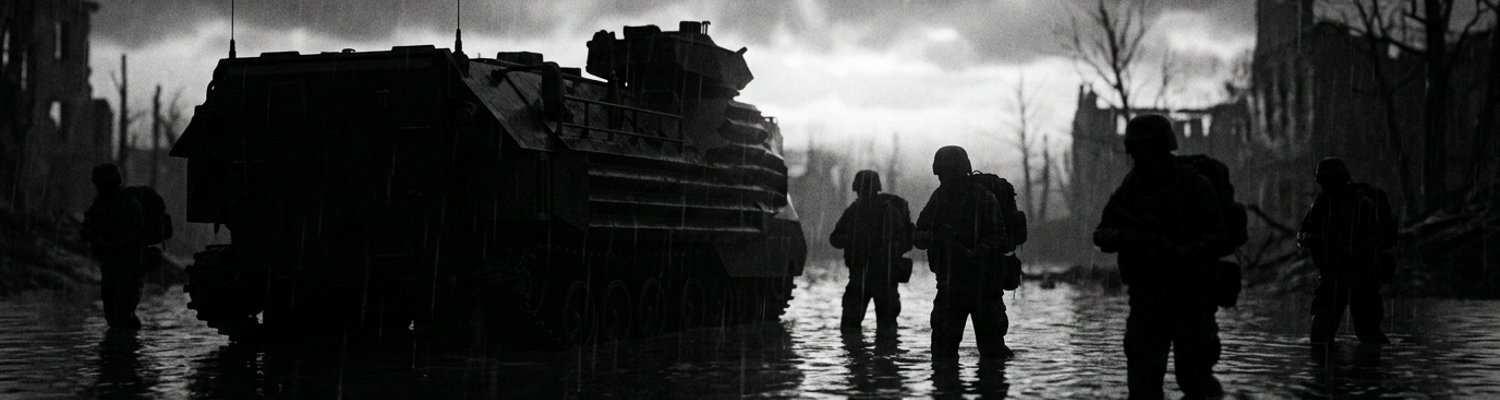

Northern Sector Defense Command Operational Perimeter
Surface operations in saturated environments mimic deep-water pressure mechanics. Seventy-two hours without continuous sleep broke the human body long before any hostile contact occurred. Archival evidence shows that Marine infantrymen assigned to Northern Sector perimeter duty entered their fighting holes carrying a persistent four-hundred-calorie daily deficit. They marched twelve miles through saturated alluvial loam. This terrain added twenty pounds of clinging soil to their combat boots. Skin sloughed off feet inside rotted leather and nylon jungle boots after six straight days of continuous patrol immersion in standing groundwater. Men slept upright against wet revetments for four-minute intervals. Violent shivering and muscle spasms jarred them awake. The steady impact of monsoonal downpours washed away body heat at a mathematically predictable rate. Cold canned rations were eaten unheated with dirt-encrusted fingernails. Lighting heat tabs inside the waterlogged trenches produced smoke that compromised positions.
Sleep deprivation reduced reaction times by forty percent across all frontline platoons.
When examining the historical record, October 1970 marked the formal operational transfer where 1st Battalion 1st Marines assumed total sector responsibility for the Northern Sector Defense Command. This zone sat within the sprawling Da Nang Tactical Area of Responsibility. The battalion commanded the sector from an austere combat operations center near the base of the Hai Van Pass. They inherited an outer defensive arc stretching from the rugged ridgelines of Hill 510 eastward to the South China Sea. Command staff calculated landward supply expenditures with clinical precision. They tracked every cubic yard of gravel and ration case against rate-of-consumption tables. Saturated red clay undermined the earthworks across all thirteen forward observation positions and outposts. Bunkers built out of corrugated galvanized steel and six-ply timber beams began failing under hundreds of tons of hydrostatic soil pressure. Revetment timbers split under the weight. Standard issue burlap sandbags rotted within twelve days of exposure to the continuous deluge. Hundreds of pounds of soupy silt spilled across living quarters. This structural degradation compromised primary machine gun firing points. Combat engineers worked twelve-hour shifts jacking up collapsing overhead cover with improvised screw jacks and rough-cut ironwood posts. They fought an unceasing structural retreat against ground subsidence.
Mud displaced ordnance storage as the primary threat to sector integrity.
A close review of operational logs indicates that the primary defensive mission centered on securing critical river crossings along the Cu De River. The secondary objective required neutralizing enemy rocket-launch belts targeting Da Nang Air Base. North Vietnamese Army artillery units and Viet Cong cadres operated Soviet-built 122mm DKZ rockets and 140mm spin-stabilized projectiles. These weapons featured effective ranges between eight and eleven kilometers. This geometry placed the main aircraft parking aprons and bulk fuel bladders directly within their launch fans. Alpha and Charlie Companies established persistent night ambush sites along the northern banks of the Cu De River to deny these firing positions. They deployed AN/PRS-4 mine detectors and tripod-mounted night-observation devices to track infiltration routes through submerged elephant grass. Rigid inspection checkpoints at the Nam O Bridge controlled all vehicular and sampan traffic along Highway 1. Sentries inspected thousands of civilian craft weekly for disassembled rocket tubes, baseplates, and delay fuses. Every culvert crossing required twice-daily underwater sweeps by combat engineer divers. These teams removed limpet charges and debris jams before the rising current could sweep the spans off their concrete abutments. Infantry squads maintained continuous standing patrols through the foot-deep muck of the coastal flats. They registered defensive artillery fires at three-hundred-meter intervals across the river floodplains. This grid allowed them to saturate potential launch clearings within sixty seconds of radar-detected enemy movements.
By the end of October, 1st Battalion had conducted over four hundred separate small-unit patrols through the waterlogged terrain. They maintained uninterrupted logistics across the Nam O span without suffering a single successful rocket launch from within their assigned sector.
Northeast Monsoon Impact on Basin Defensive Revetments
Water entered the fighting bunkers from below before the overhead timber gave way.
When examining the historical record, rainfall totals recorded at Da Nang Air Base throughout November 1970 exceeded forty-five inches. Twenty-four-hour accumulations frequently surpassed eight inches during the peak of the Northeast Monsoon. Low-lying defensive sectors flanking the Cau Do and Cu De river basins became retention reservoirs. Runoff from the Annamite Range cascaded eastward into the coastal floodplains. River stages along the Cau Do crested four to six feet above dry-season bankfull levels. This surge pushed muddy backwater across the defensive sectors of Company B and Company C. Sluice gates and natural drainage channels choked with floating bamboo mats and alluvial detritus. Standing water became trapped inside the perimeter wire at depths between eighteen and thirty-six inches. Marine outposts along the Cu De delta found their machine gun bunkers transformed into stagnant sumps.
Water pumps powered by four-horsepower Wisconsin gasoline engines failed after three to four hours of continuous operation. Thick river silt seized their impellers.
Engineers from Company A 7th Engineer Battalion attempted to dig bypass ditches using entrenching tools and D7 bulldozers. The machinery repeatedly threw tracks in five-foot-deep mud. Defensive bunkers along the low river terraces sat completely submerged up to the lower edge of their embrasures. Automatic rifle teams had to reposition weapons onto sandbag parapets directly exposed to enemy small arms fire.
Hydrostatic pressure pulverized structural bracing.
Archival evidence shows that sandy clay soils across the basin underwent rapid mechanical failure as pore-water pressure approached complete saturation. Wall revetments constructed from interlocking dimensional timber and standard 81mm mortar ammo boxes sheared along their vertical planes. They collapsed inward into the crawlways. Heavy monsoonal rains stripped the structural integrity from standard government-issue burlap sandbags within ten to fourteen days. Jute fibers decomposed under continuous anaerobic bacterial action. Sandbag retaining walls turned into liquefied sludge that slumped downward across communication trenches. A two-hundred-yard segment of main trench line collapsed north of the Cau Do bridgehead on November 12. It buried three communications bunkers and severed hardwire landlines running to the battalion switchboard. Combat engineers recorded forty-two separate complete bunker collapses across the perimeter during a single seventy-two-hour period. Field-expedient solutions quickly exhausted available supply depots. Infantrymen tried replacing rotted burlap with woven plastic sandbags. Supply channels could provide only fifteen percent of the required requisition slips. Platoon commanders ordered troops to salvage corrugated metal culvert half-rounds and discarded pierced-steel planking from abandoned airbase taxiways. They used these materials to brace crumbling trench walls. The sheer tonnage of saturated earth bent the steel sheets like tin foil.
Standing in flooded bunkers destroyed the skin of the infantrymen.
A close review of operational logs indicates that immersion foot cases disabled more frontline combat effectives than hostile mortar fire during the late monsoon cycle. Squads stationed in wet revetments endured seventy-two to ninety-six hours of uninterrupted immersion. The water contained fuel runoff, fecal matter, and decaying organic matter. Skin layers along the plantar surface softened and turned pale white. Large sheets of skin detached from the underlying dermis. Deep tissue maceration compromised capillary circulation. This caused severe edema, numbness, and secondary fungal infections. Men could not lace their boots or stand upright without assistance. Battalion aid stations logged an average of fourteen acute trench foot casualties per company every forty-eight hours. First-stage symptoms presented as tingling erythema followed by severe localized ischemia. Battalion medical officers established mandatory foot-drying stations in dry rear storage bunkers. They ordered infantrymen to carry three pairs of dry socks inside waterproof plastic ration bags. Troops had to rotate them twice per twelve-hour watch. Men rubbed silicone foot powder onto raw skin before returning to waterlogged firing steps. The continuous moisture level meant that boots remained waterlogged within thirty seconds of stepping out of the aid station. Sixty-two Marines required medical evacuation status by late November.
Emergency Shoring with Structural Timber and Marston Matting
Trench walls cracked under eighteen tons of saturated mud.
Archival evidence shows that by late November 1970, Company A of the 7th Engineer Battalion operated non-stop twelve-hour shifts across the northern rim of the Da Nang basin. They needed to stop structural cave-ins. Saturated subsoil exerting lateral hydraulic pressure cracked untreated five-by-five pine uprights inside forward machine-gun emplacements at Outpost Brenda. Engineers brought in rough-sawn ten-by-ten-inch ironwood and native hardwood timbers. These materials were harvested from logging staging points west of Hill 327. Crews hauled these sixty-pound balks on their shoulders down flooded communication trenches. Standing brown water reached waist height. Mechanics used twenty-ton hydraulic bottle jacks placed on foot-square oak base plates. They lifted sagging main beam caps three inches upward to relieve pressure on buckling walls. Sledgehammer-wielding details drove three-quarter-inch drift pins and steel dogs into cross-braces. They anchored four-point timber sets directly into the bedrock floor beneath the liquefied topsoil. Teams notched corner joints with hand saws when gasoline chainsaws drowned in the downpour. Each shored position consumed eight hundred board-feet of heavy timber. This mass counteracted the vertical load of three feet of saturated gravel overhead.
Rot spread through the wet pine stringers within forty-eight hours.
A close review of operational logs indicates that frontline companies turned to abandoned aircraft facilities to resolve the continuous revetment failures. Working fatigue details from 1st Battalion 1st Marines stripped hundreds of damaged pierced-steel planking sections from the staging yards at Da Nang Air Base and Marble Mountain Air Facility. Known formally as M8 landing mat, each ten-foot by fifteen-inch steel plank weighed sixty-six pounds. The planks featured two rows of eighty-seven punched holes designed to let water drain through sub-base foundations. Marines dragged the interlocking planks onto two-and-a-half-ton trucks. They chained them down for transit along the submerged Nam O causeway. At perimeter positions along the Cu De River, squads drove the steel sections vertically along trench walls using eighteen-pound sledgehammers. They locked the hook-and-slot side joints together to create rigid metal retaining barriers. Men backfilled the gap behind the steel sheeting with broken river basalt and empty wooden ammunition crates. This aggregate kept the red clay from liquefying. Inside weapons bays, gun crews laid duplicate rows of Marston matting directly over the standing mire. They wired the planks to buried sandbag anchors with twelve-gauge comm wire. This created elevated rigid duckboards that held machine-gun tripods out of the muck.
Steel stopped the trench walls from dissolving into soup.
When examining the historical record, engineer work logs recorded that over forty tons of salvaged steel planking and twelve thousand linear feet of structural timber were driven into the mud across the sector before the December rains crested. Hydraulic jacks blew their seals when fine alluvial grit penetrated the cylinder housings. Engineers had to use five-foot steel pry bars and wooden wedges to level the overhead crossbeams. Sandbags placed against raw Marston Matting stayed intact three times longer. The punched holes allowed trapped groundwater to weep out freely without washing the internal soil fill through the burlap weave. Squads anchored forty-five-degree kicker braces made of four-by-four timber against the base of the steel sheets. They pinned them into the trench floor with two-foot steel rebar stakes. The resulting composite revetments withstood continuous monsoonal runoff without suffering lateral displacement. They maintained three-foot-wide defensive firing steps through December 14.
Route 1 Route-Clearance and Mine Interdiction
Every foot of asphalt along Route 1 concealed an explosive trigger.
A close review of operational logs indicates that logistical lines along Route 1 and adjacent lateral roads depended on continuous combat engineer route-clearance sweeps. These sweeps countered command-detonated mines. Between the Nam O Bridge and the southern approaches to the Hai Van Pass, teams from Company A 1st Engineer Battalion carried out daily sweeps beginning at 0530 hours. Supply columns required road-opening clearance before moving. North Vietnamese Army sappers and local Viet Cong cadres buried salvaged 155mm high-explosive artillery shells and Soviet TM-46 anti-tank mines along road shoulders and beneath drainage culverts. They wired them with two-strand WD-1/TT communications wire to firing positions concealed three hundred meters away in dense scrub. Monsoonal downpours degraded standard detection gear. Saturated subsoil filled with high-iron laterite triggered persistent false positives on AN/PSS-11 and AN/PRS-4 mine detectors. Sweep teams had to advance on their knees while physically probing liquefied road berms with non-magnetic brass rods. Water intrusion shorted out battery contacts in sixty percent of detection wands within ninety minutes of rain exposure. Engineers deployed five-prong steel grapple hooks on thirty-foot nylon lines. They dragged them through muddy ditches to hook and sever submerged command wires before enemy observers could touch dry-cell batteries to the bare leads.
Standard transport trucks drowned in the runoff.
Archival evidence shows that flooded terrain and submerged obstacles necessitated the operational deployment of LVTP-5 amphibious tractors to maintain convoy security. Monsoonal runoff sheeted across the low-lying coastal corridor north of Da Nang. It submerged low-water causeways under forty inches of rushing brown current and washed out roadbed gravel. Conventional five-ton M54 cargo trucks and M151 utility vehicles hydro-locked their engines when intake air cleaners submerged. Water contaminated the differential gearboxes of two-and-a-half-ton trucks. This contamination froze their drive axles in mid-transit. The 1st Amphibian Tractor Battalion assigned ten LVTP-5 tracked personnel carriers to 1st Battalion 1st Marines to keep supply channels open. Displacing forty-two tons fully loaded, these amphibious tractors utilized their inverted track shoes to churn through flooded paddy fields flanking submerged lateral spurs where the asphalt had washed away completely. The vehicles hauled ten thousand pounds of crated rations, dry batteries, and 105mm artillery rounds inside their steel cargo bays. This shielded supplies from water contamination. Five-man security details manned the roof-mounted .30-caliber machine gun cupolas. Submerged hazards caused continuous mechanical damage. Driftwood timbers, dislodged fence posts, and concrete debris from destroyed bridges frequently jammed inside the tractor suspension housings. These impacts snapped track pins and burned out transmission clutch bands.
When examining the historical record, an operational crisis struck along Route 1 on the morning of December 8. Excessive runoff backed up behind a dual-pipe corrugated steel culvert. The pressure blew out twenty feet of roadbed embankment and isolated a four-vehicle supply escort en route to Outpost 2. Fast-moving water swept loose ballast into the depression. The gap widened by four inches every minute. The lead LVTP-5 dropped its front ramp onto the roadbed rather than waiting for rear-echelon bridge construction units. It anchored its steel hull against the current. A combat engineer squad from 1st Battalion secured steel cables to two sixteen-foot bridge timbers retrieved from a nearby equipment yard. Engineers worked shoulder-deep in cold runoff. They drove sixty-pound steel drift pins through the timber baulks into the washed-out stone revetments to construct an expedient cribbing support under the fractured road apron. Mechanics used hand-cranked ratchet winches to haul pierced-steel Marston planks across the gap. They bolted the plates to the timber footings before the road shoulders washed away. The emergency structural stabilization took twenty-two minutes to complete. The stranded convoy vehicles crossed before the rising water submerged the embankment entirely.
Culvert Shoring and Floodline Logistics Endurance
Five minutes stood between operational sustainment and total frontline starvation.
Archival evidence shows that during the second week of December 1970, supply columns supporting 1st Battalion 1st Marines north of the Cau Do basin confronted three feet of uncontrolled monsoonal overflow across the low-water causeways. Water surged at eight knots across lateral spur roads. The current dislodged four-ton hardwood baulks, uprooted ironwood stumps, and submerged bridge piling timbers. These heavy objects battered against the hulls of moving armor. Tactical movement speed dropped from twenty-five miles per hour to two hundred yards an hour. Drivers operating five-ton M54 cargo trucks could not identify road edges beneath the turbid brown current. They lost six heavy vehicles to embankment drop-offs. Swirling undertows submerged engine compartments and flooded mechanical gear trains within ninety seconds. Convoy commanders abandoned orthodox movement formations. They replaced forward security scouts with combat engineers wading waist-deep with ten-foot depth-sounding poles. Tracked recovery vehicles from Company A 7th Engineer Battalion worked in continuous shifts. They cleared jammed root balls and broken bridge balks that repeatedly fouled the sprockets of LVTP-5 tractors. Keeping these supply channels functional depended entirely on continuous winching, chain saws, and structural clearing details rather than fire and maneuver against enemy positions.
Tonnage moved only as fast as wet timber could be anchored.
When examining the historical record, a catastrophic structural failure developed along a critical lateral supply causeway connecting the Nam O Bridge staging depot to Outpost Charlie. Monsoonal backwash backed up behind a forty-eight-inch twin-tube corrugated galvanized steel culvert. Floating brush and silt packed the pipes solid. Trapped hydrostatic pressure sheared the culvert eastern masonry retaining headwall at 0814 hours on December 11. Water bored directly beneath the crushed-rock road base. It scoured away thirty cubic yards of foundation gravel and left a hollowed twelve-foot asphalt shell suspended over a collapsing sinkhole. Operational logs state that this single raised road segment carried sixty percent of all potable water, dry-cell radio batteries, and 81mm mortar munitions destined for three forward rifle companies holding the river perimeter. A loaded five-ton ammunition truck halted six inches from the fractured edge as the asphalt began cracking downward into the churn. Sapping beneath the foundation advanced at two inches per minute. This set a hard structural deadline before the entire roadway sheared into the drainage canal and cut the forward perimeter off from heavy wheeled transport.
A close review of operational logs indicates that an emergency five-minute stabilization of the collapsing culvert averted the complete shutdown of the battalion supply pipeline. Staff Sergeant Robert Mercer of Company A 7th Engineer Battalion spotted the buckling asphalt apron. He ordered an LVTP-5 tractor to lock its port track and rotate across the stable shoulder. The crew deployed its front bow winch to restrain the collapsing roadway edge. Water poured through the breached subgrade. Four combat engineers jumped into the five-foot drainage ditch. They dragged two pre-cut twelve-by-twelve-inch structural oak beams directly beneath the hollowed void. The squad worked against a five-minute countdown before the remaining subgrade liquefied. They positioned two twenty-ton hydraulic screw jacks on sunken steel baseplates. They drove the timber balks upward against the fractured concrete lip to halt the downward slump. Engineers shoved four interlocked sheets of M8 pierced-steel planking horizontally into the gap. They pinned them with five-foot forged steel drift pins driven into the underlying limestone strata with sixteen-pound sledgehammers. The expedient cribbing took exactly four minutes and forty seconds to lock into place. It held the weight of the supply truck as it reversed clear of the washed-out shoulder at 0820 hours.
Rations and dry mortar rounds reached Company C four hours later.