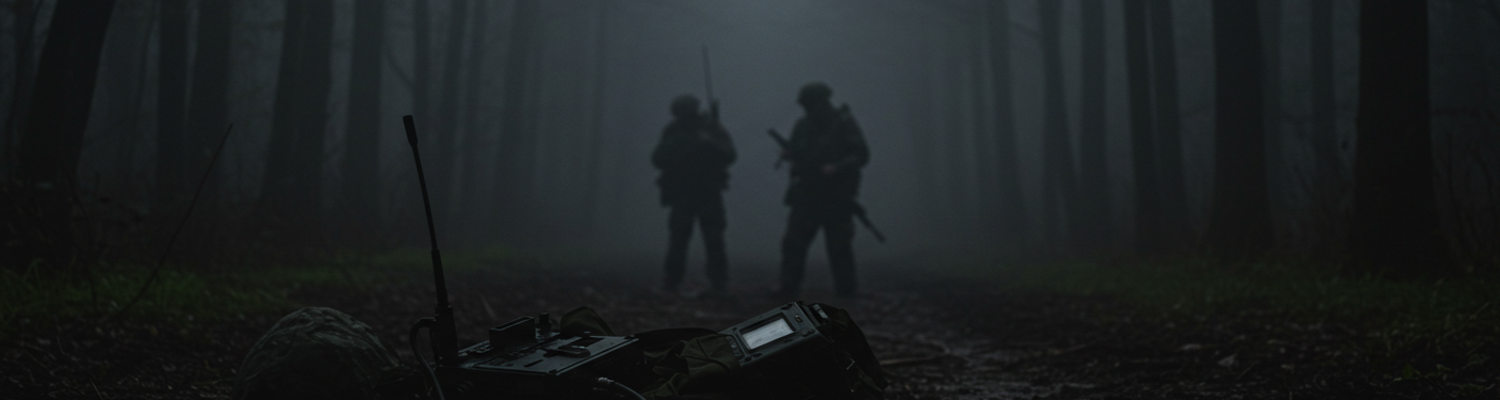

The directive for exercise IRON HAMMER landed at the 10th Special Forces Group operations center in Bad Tölz with an impossible deadline. Less than seventy-two hours to execute. A close review of the operational logs from the 1967 NATO war game (NARA Record Group 338, Entry A1 45) shows a timeline dictated by the abstract schedule of a high-level strategic simulation, not tactical necessity. Operational Detachment Alpha 541 was ordered to move from a cold standby status to full mission readiness, conduct planning with fragmentary intelligence, and be inserted behind simulated enemy lines before the third sunrise. This compression of the pre-mission sequence guaranteed procedural shortcuts. Equipment checks were truncated. Mission rehearsals became rushed walk-throughs on a sand table. The clock was the first enemy.
A clandestine insertion into friendly territory. The chosen method was a high-altitude, low-opening parachute jump at night. The C-130 transport flew a blacked-out profile, approaching from the west and using the terrain of the Bavarian Alps to mask its radar signature from West German air defense networks. The drop zone was a small clearing in the dense Bavarian Forest, kilometers from the Czechoslovakian border. To simulate a true behind-the-lines infiltration, almost no US commands within West Germany were notified. ODA 541 was to avoid all contact. They were ghosts in their own backyard. The operational order specified that contact with a West German Border Guard patrol was to be treated as a mission compromise. The friction was immediate. The aircrew flying the mission had to file a false flight plan, a bureaucratic deception that put the pilots' careers at risk if the flight's nature was exposed. A primary parachute showed a packing flaw minutes before the jumpmaster’s command, forcing a frantic, last-second switch that frayed nerves before the ramp dropped.
Their objective was inside a simulated post-nuclear environment. Planners had designated a 10-kilometer diameter circle on the map as having been struck by a low-yield tactical nuclear device. ODA 541’s target, a railway switching yard, was positioned at ground zero. The rules for operating within this fallout zone were absolute. They were required to wear full Mission-Oriented Protective Posture (MOPP) gear for the duration. All natural water sources were considered lethally contaminated, forcing the team to carry their entire supply. The mission manifest indicates each man carried over 20 pounds of water alone.
The team’s communications sergeant was ordered to keep his primary AN/PRC-25 radio powered down. Exercise controllers ruled that the electromagnetic pulse from the simulated detonation would have destroyed most electronics. The team had to rely on burst transmissions from a secondary, specially shielded transmitter. This created a communications blackout that left the team commander isolated, unable to report progress or call for support. The entire construct was designed to test the physical and psychological limits of the operators under the most extreme conditions imagined by Cold War strategists.
Upon landing, the priority for ODA 541 was twofold: establish security and assess the simulated radiological environment. Warsaw Pact doctrine anticipated the aggressive exploitation of tactical nuclear strikes. Soviet motorized rifle regiments were expected to push through contaminated zones with calculated speed. ODA 541’s intelligence briefing included projections of enemy T-62 columns advancing through the very forest they now occupied. To counter this, the team had to determine the boundaries of the lethal fallout zone. The team’s Weapons Sergeant unholstered his IM-174/PD Radiacmeter, a standard high-range survey instrument. The bulky device was difficult to operate while wearing the thick rubber gloves of their MOPP-4 ensemble. Condensation fogged the meter’s glass in the cold Bavarian air, making readings a slow process.
The plan was already failing.
A review of after-action reports reveals a cascade of equipment failures that began the moment the team hit the drop zone. The HALO jump had compromised their primary defenses. The heavy impact of landing had been unforgiving on their gear. The Sargent First Class leading the team reported that the charcoal-impregnated liners of at least four overgarments had ripped at the knee and elbow joints. This rendered their chemical and radiological protection notionally useless. The rubber seals on their M17 protective masks, having become less pliable in the freezing temperatures at altitude, failed to create a perfect seal on at least three operators. This was a catastrophic failure. It exposed them to the simulated threat and caused the mask’s eyepieces to fog over from their breathing, reducing visibility to near zero. A gloved-hand inspection of the team’s primary AN/PRC-25 radio revealed a hairline fracture near the battery casing latch, a direct result of a hard landing. Though the radio still powered on, this damage compromised its water resistance.
These equipment problems had a severe impact on the team’s initial capabilities. The compromised MOPP suits and faulty mask seals meant that, per exercise rules, the team was technically neutralized within minutes of insertion. The team commander decided to disregard the simulated exposure, reasoning that documenting the equipment failures for the after-action report was of greater training value than declaring the mission a failure. The practical effects could not be ignored. The fogging lenses of the M17 masks made navigating the pre-dawn forest nearly impossible. Movement was reduced to a stumbling pace. Soldiers constantly had to halt to wipe their lenses, further exposing their skin to the contaminated air. The damage to the AN/PRC-25’s casing forced the communications sergeant to wrap the lower section in tape, a makeshift repair he knew would not hold. Every step of their infiltration was now slower, more hazardous, and undertaken with equipment they could no longer trust. The mission’s timeline was now unattainable.
Operational logs for IRON HAMMER reveal the communications blackout was not a controlled element, but a multi-layered systems failure. The team’s communications sergeant found himself fighting a losing battle. His primary AN/PRC-25 radio was only the first domino. The mission’s reliance on secure communications hinged on a secondary burst transmission device, a TSEC/KY-8, designed to send encrypted, compressed data packets to an overhead relay aircraft. This device was the team's only approved method for contacting higher command. The KY-8’s 1960s-era electronics had been fatally damaged by the shock of the HALO insertion. When the comms sergeant attempted to power the unit, he was met with silence. He had no way to report the equipment failures, the compromised MOPP gear, or their position.
The team was electronically deaf and mute.
This internal failure was compounded by an external one: a breakdown in intelligence sharing between the Army’s G2 staff and the Defense Intelligence Agency. Archival analysis of inter-agency message traffic shows the DIA, using its own simulated signals intelligence assets, had obtained information that fundamentally altered the tactical picture. Their assessment (DIA Assessment 67-B-1138) indicated that opposing Warsaw Pact forces had changed their doctrine. Instead of pushing armored columns through the blast radius, the simulated enemy was now predicted to bypass the most contaminated areas, treating the fallout zone as a flank security buffer and heavily mining its periphery. This intelligence, which turned ODA 541’s planned infiltration route into a massive minefield, never reached the team. It was held at the DIA level, deemed a strategic-level product and caught in the bureaucratic friction of classification between separate intelligence networks. The 10th SFG planners at Bad Tölz, and by extension ODA 541, were operating off a 48-hour-old intelligence summary that was now incorrect.
They were walking into a trap they could not see, based on information they were never given. The cumulative effect was the complete isolation of ODA 541. With no ability to transmit or receive, they were trapped in an information vacuum. The team leader faced an impossible choice. The physical evidence on the ground began to contradict his mission briefing. Instead of the churned mud of tank tracks, his point man found tripwires. Instead of signs of a rapid advance, they found hastily dug defensive positions facing inward, toward the blast zone. Every instinct screamed that their intelligence was wrong. His orders were explicit: proceed to the objective. To follow his orders meant marching his team into a suspected minefield. To disobey them and alter the route, without the ability to communicate his reasoning, constituted a severe breach of operational protocol that could end his career.
The first crack of a simulated enemy sniper rifle sent half of ODA 541 diving for the muddy forest floor. Exercise umpires’ notes indicate the opposing force sniper was positioned nearly 600 meters away, a difficult shot down a logging trail. For the ODA, this was a tactical disaster. They were caught in the open, encased in clumsy MOPP-4 gear, and pinned. Standard doctrine called for returning suppressive fire to cover a flanking maneuver. But doctrine had not accounted for faceplates fogged with condensation and rubber-gloved hands struggling to operate rifle safeties. The team leader, unable to communicate through his mask, relied on hand signals. Two men laid down a wild, inaccurate base of fire while two others tried to crawl to a flanking position. The effort was futile. Their movements were slow and loud. Their vision was obscured. Within minutes the umpire declared the flanking element neutralized by a second sniper shot.
It was a failure of established procedure. The team leader made a decision that would feature prominently in the after-action report: he ordered the use of smoke. This was a violation of exercise parameters, which assumed that within a nuclear strike zone, any smoke would be contaminated. He reasoned that a notional compromise of their position was better than the certain elimination of his entire team. The thick white smoke broke the sniper’s line of sight, allowing the team to pull back into the dense woods. Here, the core of Special Forces training took over. With no ability to call for support, they became their own self-contained counter-sniper unit. They did not try to out-shoot the OPFOR element; they used the terrain to disengage, melting into the forest.
Evasion now took on a new, more hazardous dimension. Their retreat had pushed them deeper into the area designated as highly radioactive. The team’s Weapons Sergeant, carrying the cumbersome IM-174/PD Radiacmeter, now became the most important man on the team. The device, a simple ionization chamber with a needle gauge, was not designed for nuanced navigation. It provided a raw, un-calibrated reading of gamma radiation dose rate. Per procedure, the team should have been skirting the edge of this zone, but their mission objective lay in its center. The team leader ordered the Weapons Sergeant to take point, a deviation from normal tactical formations. What followed was a slow, agonizing process of radiological navigation. The sergeant would move forward fifty meters, take a reading, and then signal with his hands. A flat palm for clear, a fist for high radiation. The entire team followed in his footsteps, tracing a path not of least resistance, but of least radioactivity. The mission log shows they were forced into a winding route that more than doubled their planned movement time.
This reliance on a single piece of 1960s-era electronics highlighted the tension between high-level planning and ground-level execution. The NATO planners had drawn a simple circle on a map. For the men of ODA 541, that circle was a lethal labyrinth. Every creek bed and gully showed a higher reading on the Radiacmeter, as notional radioactive particles would have collected there. They were forced onto higher ground, exposing them to potential observation. Encased in MOPP gear, the physical exertion was immense, leading to dehydration and exhaustion. The team’s medic began monitoring the men not for wounds, but for heat stress. The reliance on individual initiative became absolute. The team leader had to trust his Weapons Sergeant’s interpretation of the flickering needle on a radiacmeter, while the sergeant had to trust his own ability to find a safe path through an invisible threat.
An examination of the after-action reports from ODA 541 reveals that the physical environment attacked their equipment with a ferocity planners had not anticipated. The most immediate failures involved the team’s primary defense: their filtration systems. The M17 protective masks became a liability. Exposed to the freezing temperatures of the jump, the mask’s rubber face seals lost their pliability. Upon landing, at least three operators could not achieve a proper seal. This allowed cold, damp air to leak in, causing the eyepieces to fog with condensation almost instantly. The operators were functionally blind. Simultaneously, the impact of the landings tore the charcoal-impregnated fabric of their MOPP overgarments at the knees and elbows, shredding the notional protection against radiological particles. The team commander, assessing the situation, ordered the team to proceed, judging the value of documenting these equipment failures to be greater than aborting the mission.
The environment was now a direct combatant. This degradation of basic equipment had a direct kinetic impact. Pinned down by sniper fire, an operator on the support element raised his M16A1 rifle to return fire only to have it fail. The weapon experienced a failure-to-feed stoppage. A close inspection by the team’s weapons sergeant determined the cause. A slurry of fine Bavarian mud, pine needles, and congealed rifle lubricant (LSA) had worked its way into the action. The bolt carrier group, made sluggish by the freezing mixture, lacked the force to fully strip a new round from the magazine. The soldier’s attempts to perform immediate action drills were disastrously slow. The thick fingers of his MOPP-4 gloves could not properly grasp the small charging handle, and he fumbled while attempting to hit the forward assist. For twelve seconds, he was unable to return fire, fighting his own equipment instead of the enemy.
Beyond weapons and protective gear, the conditions systematically dismantled the team’s sensitive electronics. The cold, damp forest air was the primary enemy. Binoculars were rendered useless, their lenses fogging over the moment they were brought up to the warm area around the mask’s eyepieces. An attempt to use a rifle scope was similarly thwarted by condensation. The team’s IM-174/PD Radiacmeter proved highly susceptible to the cold. A review of the mission log shows its batteries drained at more than twice the expected rate, forcing the team to conserve its use. The simple act of reading the device’s analog needle gauge became a challenge, viewed through a fogged mask and under the low light of the dense forest canopy. Every piece of technology meant to give the soldiers an edge was systematically compromised by the physical reality of their operating environment.
The request for extraction was initiated seventeen hours behind schedule. The surviving members of ODA 541, having reached a pre-designated emergency extraction point, finally established a stable communications link. Their request was simple: immediate exfiltration. The approval from the 10th SFG operations center at Bad Tölz was instantaneous. The problem arose when the request was passed from the Army to the U.S. Air Force. Archival message traffic reveals a sharp jurisdictional conflict. The designated extraction asset, an HH-53 Super Jolly Green Giant, belonged to the 67th Aerospace Rescue and Recovery Squadron, an Air Force unit operating under a separate chain of command. Air Force regulations required a DD Form 1972, a Joint Tactical Air Strike Request, to be completed before launching an aircraft into a high-threat exercise area. The ODA, with its damaged burst transmitter, had no way to provide the detailed data required. The 10th SFG liaison officer argued that this was a personnel recovery mission, not an airstrike, but the 67th ARRS operations desk refused to deviate from standing orders.
For four hours, the helicopter sat on the tarmac at Ramstein Air Base while officers from two different services argued over paperwork.
The second layer of friction began the moment the HH-53 arrived on station. The Air Force Pararescue team, or PJs, onboard operated under their own rigid protocols concerning radiological environments. Per USAFE Regulation 355-7, which governed the handling of exposed assets, the PJs were forbidden from allowing potentially contaminated personnel onto their aircraft without field decontamination. The PJ team leader insisted that ODA 541 conduct a full M258A1 kit decontamination before they would lower the jungle penetrator. A frantic radio exchange, documented in the comms log, shows the ODA team leader refusing. His men were exhausted, their MOPP suits were torn, and they had two members with simulated injuries. The decontamination procedure, a multi-step process, would take over twenty minutes per man, leaving them exposed and stationary. The ODA commander saw it as an unacceptable tactical risk; the PJ team leader saw it as a non-negotiable safety protocol. The Super Jolly Green Giant burned fuel in a holding pattern five klicks away, its crew caught in a procedural standoff with the men they were sent to rescue.
This tactical paralysis was compounded by a strategic dispute at the main exercise headquarters. As the argument over decontamination raged, the ODA commander reported seeing OPFOR patrol activity near the primary landing zone. He recommended shifting to the alternate LZ, a clearing two kilometers to the north. His direct observation was relayed up the Army chain of command, where it collided with a conflicting assessment from the Defense Intelligence Agency. The DIA liaison officer, citing simulated signals intelligence that showed no enemy radio traffic in the sector, declared the primary LZ secure. Archival notes show the DIA analyst dismissing the ODA’s report as a possible misidentification. The Army G2 intelligence officer, trusting the direct observation of his special operations team, insisted the threat was real. With tactical and strategic intelligence in direct opposition, the exercise director was left with two contradictory versions of the truth. The Air Force pilot, receiving conflicting orders, refused to proceed. He would not risk his aircraft and crew until the intelligence picture was unified and the contamination rules were clarified. ODA 541 was left completely stranded, trapped not by the enemy, but by the irreconcilable doctrines of the organizations meant to support them.
The consolidated after-action report for IRON HAMMER ran over 300 pages. The post-mission analysis was brutal. Debriefing sessions, held in a windowless conference room at the newly formed Special Operations Command Europe, were a case study in institutional friction. Representatives from the 10th Special Forces Group presented a timeline that detailed equipment failure, compromised intelligence, and a support structure that obstructed the mission. They pointed specifically to the four-hour delay in extraction caused by the Air Force’s insistence on a DD Form 1972, arguing the form was designed for pre-planned airstrikes, not for recovering a compromised reconnaissance team.
It was a clash of operational cultures. The commander of the 67th Aerospace Rescue and Recovery Squadron countered by presenting his unit’s own regulations, which made no distinction and required the form for any high-threat area flight to ensure proper risk assessment. The Defense Intelligence Agency liaison officer faced pointed questions about the suppressed intelligence. Archival notes from the debrief show he defended the agency’s actions by stating the intelligence was a strategic product, derived from simulated signals intercepts, and that disseminating it to a tactical team was outside their standard procedure without further validation. The 10th SFG operations officer argued that the ODA on the ground was the ultimate validation source and that the failure to pass the information constituted negligence. The analysis revealed a series of organizations that were not truly cooperating, but were co-located while executing their own distinct, and often contradictory, procedures.
The standoff over decontamination protocols during the final extraction became a central exhibit. The Air Force PJs were following USAFE Regulation 355-7 to the letter. The ODA commander, in turn, was following his own mandate to protect his exhausted and injured men. Both were acting correctly according to their own service’s doctrine. The paralysis that resulted demonstrated that in a joint environment, service-specific doctrines could cancel each other out, leading to total inaction. No single commander at the tactical level had the authority to override the regulations of another service, even in a life-or-death situation. Authority was diffuse, leaving pilots and team leaders to argue over rulebooks while the mission failed.