
Fort Bragg Murders and the Extremism Crisis
Radios lost signal across the dispatch grid outside Fayetteville, cutting frontline patrol officers off from regional headquarters and forcing them to advance through the dark pine woods on their own initiative. Deputies followed tire tracks into a dirt turnout near Campbell Avenue, where they located the bodies of Jackie Burden and Michael James lying beside a parked car. Neo-Nazi paratroopers from the 82nd Airborne Division had murdered the two Black civilians near Fort Bragg in December 1995. Shooters fired a nine-millimeter pistol at close range to earn spider-web tattoos, which served as physical proof of a racial killing within their white supremacist clique. Detectives tracked the spent shell casings and vehicle descriptions back to Specialist Randy Meadows, who confessed to driving the vehicle and identified Private James Burmeister and Private Malcolm Wright as the shooters. Cumberland County deputies joined military police investigators at the base access control points, presenting arrest warrants to pass the gates and search the company barracks of the 82nd Airborne Division.
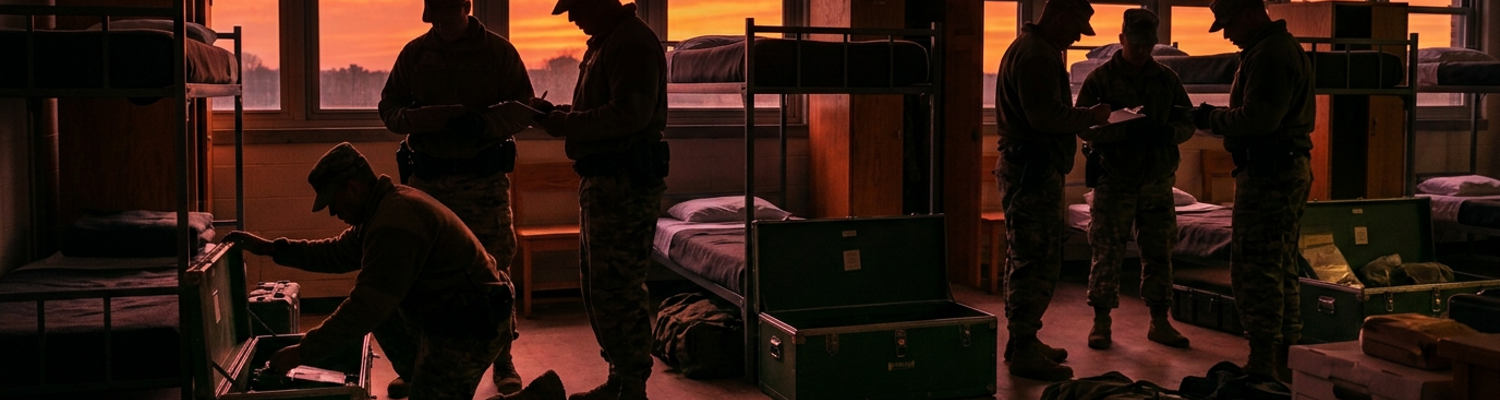
Barracks footlockers opened under police flashlights to reveal Nazi battle flags, Ku Klux Klan recruitment flyers, and bomb-making instructions stacked directly alongside regulation uniforms and military field gear. Criminal investigations exposed white supremacist skinhead cells operating inside garrison barracks despite theoretical equal opportunity doctrines. Official military regulations assumed that classroom lectures on racial harmony and written non-discrimination pledges would automatically maintain order across all ranks. Reality inside the barracks proved that junior soldiers openly distributed hate literature, displayed swastikas on their personal clothing, and organized off-post group meetings without facing disciplinary action from their unit leaders. Company commanders and first sergeants had spent years misinterpreting Defense Department directives, assuming that passive participation in hate organizations counted as protected private speech rather than a direct threat to good order and discipline. Military police packed the seized extremist materials into cardboard evidence boxes, secured the suspects in transport vans, and delivered the physical findings to regional commanders.
Cardboard evidence boxes landed on the desks of senior commanders at the Pentagon, causing an immediate institutional crisis. Secretary of the Army Togo D. West Jr. faced intense public and congressional pressure to determine the extent of extremist infiltration across the service. Lawmakers on Capitol Hill pointed to the stark gap between the clean, integrated force described in official training manuals and the violent extremist cells operating inside operational paratrooper units. Congressional committees summoned defense officials to testify about command negligence, while civil rights organizations warned that unaddressed white supremacist organizing inside the armed forces created an active danger for surrounding civilian towns. Secretary West met with senior generals and civilian legal advisors to address the crisis directly, reviewing the Fort Bragg case files alongside decades of outdated military equal opportunity regulations. West created a specialized task force of senior officers and civilian experts, ordering them to design a comprehensive plan to uncover ideological extremism across every military base.
Officers assigned to the new task force translated that plan into deployment orders and prepared to conduct unannounced inspections across major installations worldwide. Teams of senior officers and criminal investigators packed audit binders and boarded transport flights to posts across North Carolina, Georgia, Germany, and South Korea to inspect barracks, examine command logs, and interview personnel at every rank. Field teams received explicit instructions to bypass routine paperwork and search directly for unauthorized symbols, hate literature, and extremist tattoos during sudden physical formations. Senior leaders ordered garrison commanders to unlock every personal storage locker, review every disciplinary file, and report every confirmed instance of supremacist activity directly to Washington. Inspectors arrived at their designated airfield gates, entered the company areas, and initiated physical sweeps through the living quarters.
Charter of the Jordan Task Force
Investigators pried open wall lockers and pulled down unauthorized posters across dozens of company bays to carry out the sweeping mandate issued by the Department of the Army. Secretary Togo D. West Jr. formally chartered the Task Force on Extremist Activities under the leadership of Major General Larry Jordan to oversee this worldwide inquiry. West instructed Jordan to bypass standard public relations filters and assemble an independent team of general officers, equal opportunity directors, and criminal investigators. Jordan took charge of the operation from the Pentagon, establishing dedicated inspection detachments with direct communication lines back to the Army Secretariat. Specialized detachments carried travel orders authorizing immediate, unannounced entry into barracks, motor pools, and training grounds across military installations worldwide. Jordan ordered his inspectors to document every infraction in writing and disregard attempts by garrison commanders to smooth over racial incidents or minimize extremist presence.
Inspectors carried standardized audit binders into company areas, executing directives to assess garrison discipline, gang activity, and white supremacist networks across worldwide installations. Teams deployed across major posts in the continental United States, Germany, and South Korea to cross-reference military police blotters with local civilian arrest records. Field investigators examined bunk areas for extremist handbills, checked latrine walls for gang graffiti, and reviewed physical fitness formations for unauthorized skinhead tattoos. Inspectors questioned junior enlisted personnel in private rooms to map out how extremist cliques operated alongside street gangs inside routine duty sections. Interviews revealed that white supremacist soldiers frequently shared living quarters with targeted minority soldiers, exploiting lax night supervision to intimidate recruits and run off-post recruiting networks.
Records retrieved from company orderly rooms exposed stark operational disconnects between official non-discrimination manuals and real-world unit command climates. Published army regulations directed commanders to conduct mandatory equal opportunity training and display non-discrimination policies on unit bulletin boards. Task force members sought to expose operational disconnects between official non-discrimination manuals and real-world unit command climates by confronting commanders with physical evidence from their own barracks. Company captains and first sergeants admitted to investigators that theoretical manuals provided zero practical instructions on how to handle covert extremist organizing or hate symbols. Unit leaders explained that they routinely ignored extremist literature and hate speech because ambiguous regulations led them to believe such conduct fell under protected free speech. Jordan used these admissions to document that published doctrine gave field commanders no clear authority or uniform guidelines to discipline soldiers participating in supremacist activities.
Major General Larry Jordan consolidated the interview transcripts, police blotters, and inspection logs inside temporary field command offices established at each post. Survey specialists on the team distributed questionnaires to thousands of active-duty soldiers across multiple continents, collecting anonymous data on racial incidents, gang presence, and safety in barracks environments. Inspectors cross-checked these survey responses against disciplinary dockets to identify installations where local leadership systematically underreported extremist behavior. Jordan compiled the statistical charts, barracks photographs, and command interviews into a comprehensive briefing portfolio for defense leadership. Task force officers packed the final evidence binders into secure transit cases and prepared to transport the findings directly to Secretary West at the Pentagon.
Worldwide Installation Audits and Soldier Surveys
Couriers stacked the heavy transit cases inside Pentagon conference rooms as analysts cross-referenced field reports gathered across twenty-eight domestic and overseas installations. Inspection teams had deployed across posts throughout the United States, Germany, and South Korea, bypassing standard base escorts to assess frontline living quarters and unit records directly. Auditors examined company duty rosters, military police blotters, and guard logs at major hubs such as Fort Hood, Fort Bragg, and forward outposts along the Korean Demilitarized Zone to evaluate base discipline. Inspectors found that garrison commanders maintained polished administrative files and certificates of compliance that concealed active racial friction inside barracks and off-post gathering spots. Field investigators countered these sanitized command records by setting up secure processing rooms inside installation gyms, dining facilities, and chapels to interview active-duty personnel without their chain of command present.
Major General Jordan oversaw these direct field surveys and confidential hearings, gathering testimony and written evaluations from over seven thousand six hundred soldiers. Task force officers distributed standardized survey forms without names, social security numbers, or unit designations to guarantee anonymity and encourage candid reporting across all ranks. Enlisted personnel filled out questionnaires behind folding privacy screens, answering detailed prompts about white supremacist recruitment, racial slurs, and gang symbols inside company work areas and motor pools. Investigators pulled selected soldiers into soundproof offices for private interviews, cross-checking written survey responses against physical evidence retrieved from barracks dayrooms. Witnesses detailed how organized skinhead cliques marked communal furniture, circulated racist magazines during late-night barracks watches, and pressured new arrivals into attending private off-post gatherings.
Questionnaires documented widespread lower-enlisted awareness of extremist literature and tattoos that unit leaders routinely failed to flag. Junior troops reported that hate tracts from neo-Nazi groups and white supremacist mail-order houses sat openly on nightstands and dayroom tables without drawing corrections from squad leaders. Soldiers pointed out swastikas, iron crosses, and spider-web patterns inked onto the arms and necks of their peers during daily physical fitness formations. Company commanders and first sergeants observed these markings during routine uniform inspections and morning roll calls, yet they consistently bypassed the displays without entering disciplinary notes in personnel files. Officers explained to investigators during post-survey debriefs that unclear regulations led them to treat hate symbols as protected private speech rather than violations of good order and discipline. Inspectors logged these command admissions as concrete proof of a doctrine disconnect, showing that field leaders lacked practical guidance to confront extremist displays.
Audit teams assembled the thousands of survey sheets, interview transcripts, and inspection photographs into detailed installation portfolios before closing down their field collection sites. Major General Jordan compiled the statistical findings into master briefing charts, contrasting confirmed hate literature and skinhead recruitment efforts with official unit blotters that showed zero reported racial incidents. Inspectors verified that the disconnect did not stem from rogue battalions alone, but reflected an army-wide breakdown in administrative reporting and garrison oversight. Officers stamped the completed evidence volumes with classification markers, packed them into metal containers, and loaded them aboard transport planes bound for Washington. Jordan delivered the completed audit portfolios directly to Secretary West at the Pentagon, laying out the raw survey tallies and barracks evidence on the conference table for emergency review.
Disciplinary Disparities Under Article 15 Punishments
West examined the binders spread across the conference table, reviewing the raw tally sheets compiled from twenty-eight worldwide garrisons. Survey data exposed sharp racial and rank disparities in how company and field-grade commanders administered Article 15 non-judicial punishments. Company captains and battalion commanders applied non-judicial powers with broad personal discretion, stripping rank and docking pay from junior soldiers behind closed office doors without standard courtroom oversight. Disciplinary logs showed that lower-enlisted soldiers faced maximum pay forfeitures and grueling extra duty for minor infractions like uniform discrepancies or missed curfews, while senior noncommissioned officers received informal warnings for identical lapses. Auditors cross-referencing personnel records noticed that these non-judicial punishments fell overwhelmingly on young Black and Hispanic soldiers compared to their white peers. Analysts marked red brackets across company ledgers where minority service members received immediate career-ending reductions in rank for minor infractions.
Auditors followed these ledger notations into base legal archives to compare company punishments against formal trial dockets. Investigators identified that minority service members received disproportionate non-judicial sanctions compared to formal court-martial referrals. Official military doctrine framed Article 15 as an administrative tool meant to correct minor lapses swiftly without saddling a soldier with a criminal record. Frontline commanders bypassed formal court-martial referrals because formal trials required rigorous evidentiary thresholds, independent military judges, and active representation by defense counsel. Company commanders chose summary Article 15 proceedings instead, acting simultaneously as investigator, prosecutor, judge, and jury inside the unit orderly room. Court-martial referral sheets remained relatively balanced because legal staffs screened out weak evidence, but closed-door Article 15 dockets concentrated the vast majority of demotions and financial penalties on minority troops.
Soldiers detailed the daily fallout of these closed-door penalties during private interview sessions with the task force. Troops reported that squad leaders and company commanders tolerated open displays of hate symbols, white supremacist literature, and skinhead tattoos among white peers while immediately punishing Black soldiers for subjective infractions like bad attitudes or disrespect. Soldiers explained to task force interviewers that filing an equal opportunity complaint only triggered administrative retaliation, since the same commanders who issued arbitrary Article 15 punishments controlled all internal grievance channels. Enlisted personnel avoided reporting racial harassment altogether, convinced that garrison leadership enforced the military code as a weapon of racial control rather than a standard of objective justice. Jordan carried these sworn statements back to the Army Secretariat alongside the raw statistical charts.
General Dennis Reimer and civilian defense leaders reviewed the disparity charts, recognizing that unchecked commander discretion had severed trust between the junior enlisted ranks and unit leadership. Task force members urged immediate structural reforms to strip unmonitored punitive power away from isolated company commanders. Action officers drew up new directives requiring mandatory legal reviews by judge advocates before commanders could finalize field-grade Article 15 punishments. Jordan handed the completed policy packets to Pentagon legal divisions, initiating systemic revisions to Army Regulation 27-10 to enforce standardized oversight across all military justice dockets. Officers inside these legal divisions carried the completed policy packets into executive conference rooms, integrating the Army findings into broader federal reviews conducted by the White House Initiative for One America.
Federal Integration and Civil Rights Benchmarks
Policy directors examined the task force records to evaluate systemic racism across all federal departments, comparing the military barracks audits with civilian employment and law enforcement data. Federal civil rights monitors used the military interview logs to understand how racial bias persisted inside closed federal institutions despite official non-discrimination manuals. Executive staff members laid Army disciplinary sheets alongside civilian justice metrics to measure how minority citizens experienced government authority under uniform standards. Civilian investigators recognized that the violent extremism discovered at Fort Bragg was not an isolated breakdown of local police work, but part of a wider national struggle with organized hate groups infiltrating federal services. Researchers pulled archival ledgers from defense repositories to cross-reference the 1996 military justice statistics against federal civil rights benchmarks, including the 1972 Department of Defense Inequality of Justice report.
Statisticians analyzing the 1996 survey data found that Black service members still faced non-judicial Article 15 punishments at rates nearly double those of their white counterparts, mirroring the exact statistical imbalances recorded twenty-four years earlier. Federal monitors highlighted that the armed forces had spent two decades issuing equal opportunity brochures while leaving the absolute disciplinary discretion of company commanders completely intact. Historical comparison charts demonstrated that without mandatory external legal checks, theoretical regulations on fair treatment never translated into equal protection on the barracks floor. Federal auditors stamped these comparison charts with official review seals, handing the thick binders back to Pentagon policy teams for urgent structural evaluation. Analysts zeroed in on these administrative breakdowns, identifying persistent structural loopholes in how the Department of Defense documented, tracked, and punished ideological hate crimes.
Review teams discovered that the Uniform Code of Military Justice contained no distinct criminal charge for bias-motivated offenses, forcing base prosecutors to record cross-burnings, racial assaults, and neo-Nazi graffiti under generic articles for vandalism or disorderly conduct. Garrison commanders held absolute authority over whether an incident entered official police blotters or stayed hidden as minor internal misconduct, allowing unit leaders to bury evidence of white supremacist activity to protect their personal promotion prospects. Investigators noted that military criminal databases operated in total isolation from federal and state law enforcement registries, preventing local police from tracking skinhead soldiers who moved between civilian towns and military posts. Army records systems failed to flag soldiers sporting white supremacist tattoos or distributing neo-Nazi tracts, treating extremist membership as protected personal expression until blood was already spilled. West summoned his top legal counsel and military provost marshals to close these operational gaps across every branch of the armed forces.
Action officers drafted mandatory reporting directives that required garrison commanders to log all suspected hate incidents directly into centralized defense databases and alert civilian federal authorities. Policy teams revised Department of Defense directives to define active participation in white supremacist groups as a punishable breach of discipline rather than an administrative discretion issue. Provost marshals established dedicated liaison desks with the Federal Bureau of Investigation, setting up real-time information exchanges to track extremist skinhead activity both on post and in surrounding civilian jurisdictions. Legal divisions delivered the finalized regulatory package to the Armed Forces Policy Council, locking in binding hate crime reporting protocols across every service branch. Officers on the Armed Forces Policy Council accepted the regulatory package and routed its enforcement mandates straight to the Army Secretariat.
Revisions to Army Regulation 600-20 Command Policy
Personnel planners and legal officers gathered in Pentagon workrooms to dismantle the vague, decades-old guidelines that had crippled garrison discipline. Theoretical training doctrines had previously treated racial extremism as a quiet interpersonal dispute suitable for informal counseling, leaving field commanders blind to organized skinhead cells operating inside active-duty units. Policy writers eliminated that gap by replacing passive equal opportunity advice with binding command-and-control instructions that defined extremist ideology as a direct assault on military readiness and combat cohesion. Senior leadership codified these adjustments into enforceable administrative mandates, stripping company captains of the unmonitored discretion that had allowed white supremacist paratroopers to flourish in garrison barracks. Commanders lost the power to shield these barracks extremists or bury hate incidents behind closed orderly room doors.
Company captains and battalion commanders faced strict legal obligations to report every verified hate incident directly to installation provost marshals and the Criminal Investigation Command. Base legal offices and regional inspector general desks received duplicate copies of every incident notification, cutting off the backroom deals where officers shielded favored soldiers to protect their own unit performance scores. Federal investigators cataloged each report into centralized defense databases, creating an unbroken tracking system that prevented skinhead soldiers from transferring their extremist ties to new duty stations unnoticed. General officers enforced these reporting rules by punishing commanders who failed to log confirmed supremacist activity, turning what had been an optional administrative choice into a compulsory duty requirement. Captains applied these compulsory requirements against a newly defined list of prohibited soldier conduct.
Pentagon lawyers drew precise lines between passive ideological beliefs and active extremist participation, outlawing the distribution of hate literature, the collection of organizational dues, and the public demonstration of supremacist loyalty. Garrison authorities revoked base access for civilian hate organizers and warned active-duty personnel that attending off-post neo-Nazi rallies or skinhead meetings would result in immediate administrative separation. Disciplinary boards received streamlined discharge authorities that bypassed prolonged grievance hearings, allowing commanders to process soldiers who violated these prohibitions for rapid expulsion under other-than-honorable conditions. Sergeants used these streamlined discharge authorities to scrub garrison living quarters and motor pools of all unauthorized material. Print shops ran high-speed presses to produce tens of thousands of updated blue-bound copies of Army Regulation 600-20, shipping the binders to company supply rooms across North Carolina, Georgia, Germany, and South Korea.
Sergeants convened mandatory unit formations on the company asphalt, reading the revised policy line by line before leading unannounced sweeps through squad bays. Inspectors pried open personal wall lockers, took down Confederate flags and swastikas tacked to bunk posts, and confiscated stacks of white supremacist tracts hidden beneath bunk mattresses. Company clerks logged every seized flyer and recorded every supremacist tattoo onto formal charge sheets, delivering the evidence files to base prosecutors to begin immediate separation proceedings. Military police escorted the separated soldiers out the main gates, permanently removing the extremist threat from the active-duty ranks.