
The Harbor Guardian's Gambit
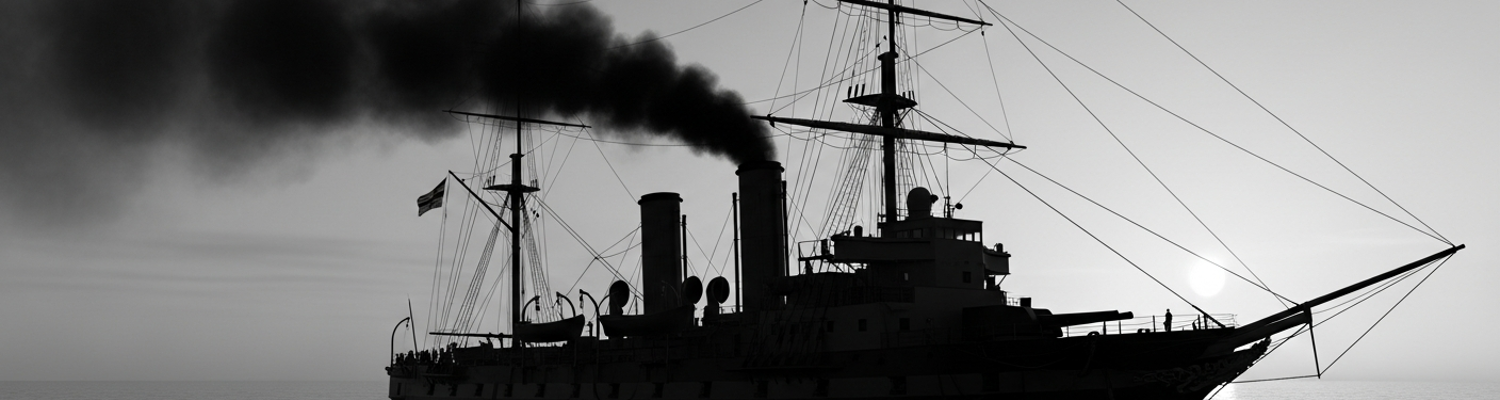
The United States Navy emerged from the War of 1812 with a hard-won confidence in its sailing frigates and the men who fought them. Victories in single-ship actions had built a powerful service identity around seamanship and gunnery. Yet, the strategic reality of the Royal Navy's suffocating coastal blockade forced a technological reckoning. The inability to consistently sortie from major ports like New York and Baltimore exposed the limitations of wind-dependent warships. Into this environment stepped Robert Fulton, an inventor who had already proven the commercial viability of steam with his vessel, the Clermont. Backed by a group of influential New Yorkers forming the Coast and Harbor Defense Association, Fulton convinced a U.S. Congress, and subsequently a presidential committee, to fund a radical new type of warship. Its design was a direct response to the tactical problem of breaking a close blockade. Fulton engineered a catamaran, or twin-hulled ship, with a single large paddlewheel housed in a protected central channel. This design shielded the fragile propulsion system from enemy cannon fire. The 120-horsepower steam engine itself was located below the waterline, another critical defensive measure. Armed with a massive battery of thirty-two 32-pounder guns and protected by wooden walls five feet thick, the USS Demologos was conceived as a mobile, steam-powered floating fortress, capable of moving at a projected five knots against wind and tide to savage any blockading squadron.
Launched on October 29, 1814, the ship, renamed Fulton after its designer’s death in early 1815, represented a singular solution to a specific problem. Its operational career was brief and uneventful. The Treaty of Ghent, ending the war, was signed before the vessel could be tested in combat. Its sea trials in 1815 demonstrated a speed of 5.5 knots, a respectable achievement, but its heavy consumption of cordwood for fuel made it an logistical nightmare unsuited for the blue-water cruising expected of the Navy’s sailing fleet. Naval leadership, including the powerful Board of Navy Commissioners, viewed the vessel as an academic success but a practical anomaly. Their official reports praised its potential for harbor defense but underscored its unsuitability for projecting American power across the globe. It was a specialized tool, not a replacement for the wind-powered frigates that were the backbone of the fleet. After its initial trials, the Fulton was relegated to service as a receiving ship at the Brooklyn Navy Yard. Its life ended abruptly on June 4, 1829, when a powder magazine explosion destroyed the vessel entirely. For nearly two decades following, the Navy’s leadership, dominated by sail-era veterans, focused little attention on steam, viewing it as an unreliable, expensive, and mechanically complex technology with limited strategic application beyond coastal waters.
The Hull and the Gun
The Navy’s cautious doctrine began to shift in the 1840s, driven by two separate but converging technological advancements that solved the core problems of early steam warships. The first was the perfection of the screw propeller. Early steam warships, like the Fulton and the later paddle frigates USS Mississippi and USS Missouri, relied on large, exposed paddlewheels. These wheels were highly vulnerable to cannon fire and their placement on the sides of the hull prevented the ship from mounting a full battery of broadside guns, the primary measure of a warship’s power. Swedish-American inventor John Ericsson, having been rebuffed by the British Admiralty, brought his designs to the United States. His work on the USS Princeton, launched in 1843, produced the world’s first screw-propelled warship. The propeller was located at the stern and below the waterline, protected from enemy shot. This single change freed the hull for a complete row of gunports, allowing a steamship to deliver the same weight of broadside as its sailing counterparts. The Princeton proved the superiority of the screw, decisively beating the transatlantic paddle steamer SS Great Western in a widely publicized race. The demonstration offered a vision of tactical freedom afforded by independent steam propulsion. A tragic February 28, 1844 accident involving the bursting of a new 12-inch cannon, the "Peacemaker," killed Secretary of State Abel P. Upshur and Secretary of the Navy Thomas Gilmer aboard the Princeton. The disaster, however, was a failure of ordnance, not propulsion, and the underlying technology of the screw propeller was vindicated.
Simultaneously, Lieutenant John A. Dahlgren of the U.S. Navy was revolutionizing naval ordnance at the Washington Navy Yard. Spurred by the accidental explosion of a gun during testing in 1849, Dahlgren applied rigorous scientific principles to cannon design. He systematically studied the pressures generated by ignited powder within a cannon's bore, taking casts to measure deformation after repeated firings. He observed that the highest pressures occurred at the breech. His new guns were cast with a distinctive curved shape, thickening the metal at the rear and tapering smoothly toward the muzzle, an appearance that earned them the nickname "soda bottles." This design equalized the strain on the weapon, allowing it to safely fire much larger and heavier explosive shells than previous cannons. Traditional solid shot was designed to punch holes in a wooden hull and create deadly splinters. Dahlgren’s shell guns were designed to shatter the enemy ship’s structure entirely. The impact of large explosive shells on wooden hulls was devastating, rendering ships armed with older batteries of 32-pounder carronades obsolete. By the early 1850s, Dahlgren’s reliable and powerful shell guns, particularly the 9-inch and 11-inch models, became the standard armament for the U.S. Navy, fundamentally altering the calculus of naval combat.
The Screw Frigate Ascendant
The synthesis of Ericsson’s screw propeller and Dahlgren’s shell gun created a new class of warship and forced a fundamental shift in naval doctrine. The expansionist mood of the 1850s and the desire to project American power abroad provided the political will. In 1854, under the guidance of Secretary of the Navy James C. Dobbin, Congress authorized the construction of six large, steam-powered screw frigates. The first of this class, USS Merrimack, launched on June 15, 1855, under the supervision of Naval Constructor John Lenthall, embodied the new naval reality. Displacing over 3,200 tons, the Merrimack was a formidable vessel. It carried a full rig of sails for long-range cruising but also housed two powerful horizontal direct-acting steam engines connected to a two-bladed screw propeller, giving it a top speed approaching 12 knots under combined power. This allowed it to maneuver in battle without regard for the wind, a decisive tactical advantage over any sailing ship. Its armament consisted of a heavy battery of Dahlgren shell guns, including twenty-four 9-inch guns on its main gun deck, supplemented by other 8-inch and 10-inch shell guns on its spar deck. These weapons gave it a weight and destructive power of broadside that no sailing ship-of-the-line could match or withstand.
The Merrimack and its sister ships, Wabash, Roanoke, Niagara, Colorado, and Minnesota, rendered the classic wooden sailing warship obsolete. The Navy’s doctrine, once centered on single-ship actions and commerce raiding by sail, now shifted toward a strategy built around these powerful steam frigates. They could act as independent squadron flagships, hunt down enemy vessels, and project power across oceans with a speed and reliability sail could not provide. They were not merely auxiliary steamers but front-line capital ships that fully integrated the era’s most advanced propulsion and weapons systems. The commissioning of the Merrimack on February 20, 1856, marked the true birth of the modern steam-powered U.S. Navy. The era of cautious experimentation that began with the Demologos was over. The Navy now possessed a fleet of warships that combined the endurance of sail with the tactical freedom of steam and the overwhelming firepower of the shell gun. This transformation, watched closely by European navies, set the immediate stage for the next revolution in naval warfare. The hull of the scuttled USS Merrimack would soon be raised by the Confederacy and, clad in iron, would re-emerge as the CSS Virginia, a vessel destined to prove the vulnerability of all wooden ships, steam-powered or not, to the inexorable march of technology.