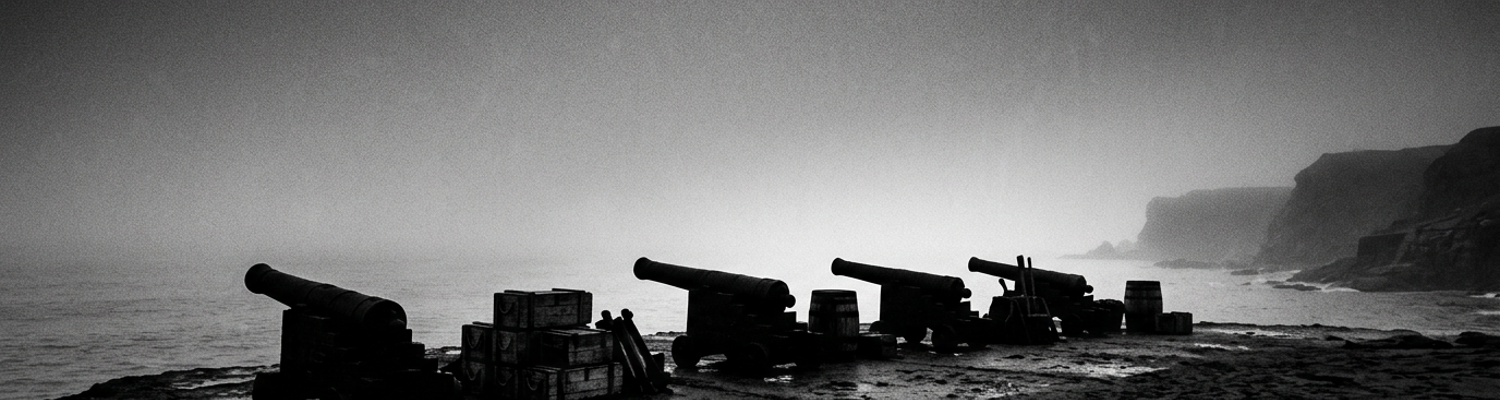

Coastal Anti-Access Conditions Along the Rio Grande
Primary manifests compiled at the Brazos Santiago supply depot in mid-May 1865 cataloged four 12-pounder field guns and two brass mountain howitzers. Quartermasters counted twelve thousand rounds of .577 and .58 caliber lead projectiles. Five hundred wooden crates of paper-wrapped powder cartridges sat on the docks. Over nine hundred Enfield Pattern 1853 and Springfield Model 1861 rifled muskets waited for distribution. Steamer transports including the Clinton and the Wauconda deposited this combat payload directly onto the barrier island. These ships outfitted Colonel Theodore H. Barrett's mixed brigade. This unit comprised elements of the 62nd United States Colored Infantry, the 34th Indiana Veteran Volunteer Infantry, and unmounted troopers from the 2nd Texas Cavalry. Field returns listed sufficient powder and ball to break any organized Confederate cavalry division west of San Antonio.
Water dictated every tactical limitation long before rifles were fired.
Archival evidence shows that the sixty-mile tract separating Point Isabel from Brownsville functioned as a natural denial system. It was not an open march route. Lieutenant Colonel David Branson's detachment from the 62nd USCT faced a terrain matrix defined by the Laguna Madre fluctuating sea level. Sudden wind tides flooded the coastal flats with up to two feet of hypersaline brine. Movement inland required traversing narrow sandy cordons flanked by sprawling salt-grass marshes. These marshes consisted predominantly of Spartina spartinae. Deep mud bogs concealed within the grass trapped artillery carriages and pack animals up to their axles. Between the Point Isabel staging depot and Palmito Ranch, narrow natural causeways cut through the tidal wetlands. Moving columns funneled into predictable single-file tracks. A single horse-mounted Confederate outpost under Captain William N. Robinson could monitor Barrett's entire forward axis of advance. Direct engagement was unnecessary. Flank security became physically impossible across the saturated flats. Union commanders kept their regiments pinned to the central road bed. Any sudden change in gulf tides threatened to cut off direct retreat back to the Brazos Santiago crossing.
The Gulf environment attacked the infantry weapons from the inside out.
A close review of operational logs indicates that coastal salt spray and persistent maritime fog ruined the serviceability of infantry arms within forty-eight hours of debarkation. Regiments carrying the British Enfield Pattern 1853 rifle-musket encountered severe mechanical seizures. Sea air reacted with the weapons carbon steel. Salt crust formed inside the lock mechanisms. Red iron oxide welded the tumbler, sear, and mainspring together. Unblued barrel interiors pitted rapidly under corrosive residue. Ammunition storage failed under the same environmental exposure. Standard infantry ammunition consisted of combustible paper cartridges bound with string. These held sixty grains of black powder beneath an elongated Pritchett or Minie ball. High relative humidity and saturated cartridge boxes turned this ungreased paper into damp pulp. Soldiers attempted to tear the wet paper with their teeth during reload cycles. The powder charge broke open into a sticky paste. This paste fouled the rifle bore. It refused to ignite under the hammer percussion strike.
Company officers in the 34th Indiana documented that damp percussion caps failed at rates exceeding forty percent during test firings along the dunes. Salt crystals wedged between the copper cap walls and the rifle cones. This prevented the firing pins from striking a clean spark into the flash channel. Soldiers scraped their lockplates with bayonet tips. They oiled their breech plugs with rancid pork fat drawn from travel rations. These field modifications could not reverse the chemical breakdown of damp potassium nitrate inside the saturated cartridge boxes. Inspection rolls for Barrett's brigade completed on May 11, 1865, confirmed a high failure rate. Thirty percent of the small arms in the ranks were mechanically compromised before the first skirmishers deployed toward Palmito Ranch.
Federal Surf-Lightering Operations Off Brazos Santiago
Archival evidence shows that deep-draft naval transports arriving from New Orleans drew twelve to sixteen feet of water. This forced them to anchor three miles out in the unsheltered roadstead off Brazos Santiago Pass at 26 degrees 04 minutes North, 97 degrees 09 minutes West. Western Gulf Blockading Squadron gunboats patrolled this exposed outer anchorage. The screw steamer USS Sciota maintained a constant watch. Naval officers oversaw chartered shallow-draft lighters attempting to ferry stores across the outer sandbar. Moving tons of equipment over that barrier depended entirely on low-freeboard scows and modified centerboard schooners. Civilian steam tugs such as the Mustang provided the only reliable towing power. Water depth above the shifting bars rarely exceeded seven feet at high tide. It frequently dropped below four feet when northers or strong southeast winds drove the seas into churning breakers. Incoming swells lifted these flat-bottomed craft. Their timber keels slammed down onto the hard sand bottom. This action bent iron rudder pintles and shattered sternposts. Steam capstan gears stripped under the strain. Manila towlines four inches thick snapped under sudden wave surges. Lighters drifted directly into the surf zone. Breakers rolled the hulls and cast cargoes into the water.
Heavy swells regularly broke hulls in the surf line.
A close review of operational logs indicates that the physical survival of the garrison depended on direct underway replenishment of potable water from offshore ships. Brazos Island possessed no fresh springs. Shallow wells yielded only undrinkable brackish sludge. The base condenser unit suffered constant boiler scale failures. Naval water tenders and supply schooners carried sixty-gallon oak casks and heavy iron tanks. These containers held river water from the Mississippi. Ships shuttled this water across hundreds of miles of open gulf. Quartermaster crews lashed these wooden casks together with hemp rope. They pushed them overboard from offshore lighters. Work details hauled the buoyant strings through the foaming tide toward the sand spits. Rolling fifty-pound tierces through heavy salt spray caused split staves. Gulf brine contaminated drinking supplies before work details could drag the water casks up the beach. Company quartermasters counted on a daily ration of three pints per man. Seepage and brine contamination frequently reduced available freshwater by half before distribution commenced.
Saltwater ruined food and powder before it ever reached the supply tents.
When examining the historical record of Colonel Barrett's forward staging area, subsistence and ordnance stores decayed on the damp landing stages. Deep-bellied supply steamers discharged wooden crates of hard bread and barrels of salt pork. Desiccated vegetables and zinc-lined powder chests landed on wet temporary barge docks anchored at the edge of the pass. Sudden squalls repeatedly submerged the low wooden platforms beneath eighteen inches of tidal wash. This dissolved the flour paste in hardtack barrels. It rotted the canvas covers over the artillery ammunition boxes. Ammunition crates containing paper cartridges for .577 Enfield and .58 Springfield rifles absorbed ambient moisture directly off the saturated deck planking. Ordnance officers at Brazos Island recorded thirty-five hundred damaged cartridges during the second week of May alone. Four hundred pounds of cannon powder fouled by salt encrustation inside damp shipping casks sat useless on the docks. Barrett's forward supply depot retained less than ten days of dry combat rations. Field orders directed the infantry to advance toward Palmito Ranch.
Palmito Ranch Engagement and Tactical Stasis
When examining the historical record of the march inland, combat operations began in dense darkness on the night of May 11, 1865. Lieutenant Colonel David Branson led two hundred and fifty men of the 62nd United States Colored Infantry. Fifty unmounted troopers from the 2nd Texas Cavalry marched alongside them across the channel from Brazos Island. Wet sand and tidal wash filled the infantry brogans. This dragged down the pace of advance along the Rio Grande levee. Contact occurred outside White Ranch before sunrise on May 12. Confederate pickets under Captain William N. Robinson observed the column. They engaged Union scouts before pulling back toward Palmito Ranch. Branson's soldiers pushed through dense thickets of blackbrush and mesquite. They drove Robinson's cavalrymen from their campsite. Union troops burned raw beef rations and captured several pack horses. Rising midday temperatures and accurate skirmish fire from Robinson's regrouped detachment soon stalled the Union drive. Branson lacked water rations. He faced mounting rifle fire across open pastures. Branson pulled his men back to White Ranch to wait for reinforcements. Colonel Theodore H. Barrett arrived at daybreak on May 13 with two hundred veteran soldiers from the 34th Indiana. He assumed field command. Barrett immediately ordered a second push past the smoking ruins of Palmito Ranch toward San Martin Ranch.
Confederate cavalry counterattacked from the chaparral without warning.
Archival evidence shows that Colonel John Salmon Ford struck Barrett's right flank at three in the afternoon. Ford brought three hundred mounted troopers and a battery of field guns. A sweeping bend in the river and dense brush at 25 degrees 56 minutes North, 97 degrees 17 minutes West hid their approach. Confederate artillery under Lieutenant O. G. Jones opened fire with six-pounder smoothbores. They delivered canister and solid shot down the exposed length of the Federal lines. Solid shot chewed through the dirt levee. The iron balls decapitated willow saplings. Clouds of dry caliche dust blinded the Union skirmishers. Panic swept through the 34th Indiana. Shell fragments ripped open haversacks and splintered musket stocks along the river road. Barrett ordered an immediate retrograde movement across the mud flats. He directed the 62nd USCT to form a fighting rearguard. Company officers in the 62nd deployed their men across an eight-hundred-yard line in the tall salt grass. They held fire until charging Confederate horsemen entered within fifty yards. Repeated cavalry rushes disintegrated under deliberate volleys of .58 caliber ball. Black infantrymen kneeled in salty mud to reload. They kept the single extraction corridor open along the river.
Ford's troopers lacked the ammunition to press their advantage.
A close review of operational logs indicates that the Confederate pursuit failed due to total physical exhaustion. Men and horses collapsed in the salt flats outside Brownsville. Ford's troopers had galloped fifteen miles through suffocating heat and deep mud. This blew out their mounts. Many horses colicked on the road behind them. Carbine and pistol cylinders clicked on empty chambers before the fighting reached the coastal flats. Confederate cavalrymen carried an average of less than six rounds of ammunition when the counterattack began. The supply depot at Brownsville held zero surplus lead or powder to replenish them. Expanding salt-grass marshes slowed the pursuing horses to a crawling walk. Barrett's rearguard remained in tight formation. They fired measured volleys from behind natural sand hummocks. Barrett fell back toward the protective artillery envelope of gunboats anchored off Brazos Santiago. Fresh Federal units waited there in coastal entrenchments. Ford called off the cavalry pursuit at dusk. He dismounted his companies at Palmito Hill to collect forty Federal prisoners before night fell.
District of Texas Command Collapse and Ordnance Mutinies
When examining the historical record of Confederate headquarters in Houston, Major General John B. Magruder attempted to preserve the District of Texas defense grid. He issued a series of emergency directives. Between May 18 and May 25, 1865, Magruder drafted Special Orders. These directed coastal commanders at Galveston, Sabine Pass, and the mouth of the Brazos River to maintain their coastal artillery emplacements at all costs. Operational logs from Fort Magruder and the Redoubt at San Luis Pass survive in the archives. Located at 29 degrees 04 minutes North, 95 degrees 07 minutes West, these outposts received specific instructions. Directives ordered garrison artillerymen to lash iron pintle rings and swab the rifled bores of 32-pounder coastal guns. Crews were to protect 8-inch smoothbore Columbiads mounted on barbette carriages. Magruder instructed district quartermasters to concentrate artillery horses along the Galveston, Houston, and Henderson Railroad line. The plan required evacuating heavy field pieces inland toward Navasota if Federal naval forces forced an entry into Galveston Bay. Confederate general officers drafted these paper deployments while telegraph wires snapped. Courier routes severed across the state.
The orders went unread by men already abandoning their earthworks.
Archival evidence shows that Confederate coastal gunners refused to stand watch over their works. Battery crews at Fort Point on Galveston Island stripped the bronze friction primers from the ready-boxes. They spiked the touchholes of three heavy 24-pounder smoothbore iron cannons with hardened steel files. The men threw the remaining powder cartridges into the salt surf. Inspecting officers attempted to arrest deserters on May 21. Entire companies belonging to Colonel Philip N. Luckett's command dropped their muskets. They walked north toward the mainland causeway. Saturated marsh tracks around Virginia Point filled with infantrymen carrying their personal blankets and captured cavalry carbines. They ignored commands from field-grade officers. These officers possessed no food, coin, or functional authority to stop them.
Authority dissolved into armed theft.
A close review of operational logs indicates that the disbandment quickly shifted from simple desertion into systematic mutiny. Men targeted public arsenals across coastal and central Texas. In Houston, retreating soldiers smashed the iron locks on the Confederate district ordnance depot along Buffalo Bayou on May 22. They pried open pine shipping crates. The mob seized three hundred Austrian Lorenz rifles, sixty thousand paper cartridges, and five hundred pounds of rifle powder. Violence spread inland along the stage lines toward Austin and San Antonio. Armed veterans of Brigadier General Thomas N. Waul's and Colonel Xavier Debray's commands descended upon the Texas State Arsenal at Austin on May 24. This facility sat at 30 degrees 16 minutes North, 97 degrees 44 minutes West. Rioters chopped open heavy oak doors with felling axes. They overcame the token militia guard. The men carted off six hundred imported Pattern 1853 Enfield rifles, fifty Sharps carbines, and forty cases of lead pistol balls.
Disbanding regiments looted their own supply trains down to the axle grease.
When examining the historical record of the Confederate ordnance works at San Antonio and the secondary supply caches along the Colorado River, soldiers seized pack mules. They took wagons, leather harnesses, and artillery caissons to transport stolen goods home. Groups of mounted troopers traded stolen army revolvers to frontier shopkeepers for cornmeal and bacon. Others sold kegs of black rifle powder to civilian traders along the San Antonio road for ten cents on the dollar. Quartermaster stores containing shoes, wool blankets, and salt meat were emptied before sundown. The Trans-Mississippi Department possessed zero functional ordnance reserves between the Sabine River and the Rio Grande by May 26. General Edmund Kirby Smith inherited empty armories and vacant defensive works.
Border Intelligence and Imperial Mexican Interactions
Archival evidence shows that Brigadier General James E. Slaughter maintained an active diplomatic channel with General Tomas Mejia. Mejia was the Imperial Mexican commander holding Matamoros for Emperor Maximilian. Slaughter operated from Confederate district headquarters at Brownsville near 25 degrees 54 minutes North, 97 degrees 29 minutes West. He initiated direct courier runs across the Rio Grande throughout the first three weeks of May 1865. This completely bypassed the collapsed departmental hierarchy in Houston. Mejia commanded an Imperial garrison of two thousand men. This force comprised Mexican conservative infantry, French infantry detachments, and Austrian foreign legionnaires supported by river gunboats. Slaughter crossed the international boundary under formal military escort. He conferred with Mejia at the Matamoros customs house. These bilateral meetings focused on tracking Union troop transports debarking at Brazos Santiago Pass seventeen miles to the east. Imperial scouting parties patrolling the south bank between Bagdad and Matamoros provided Slaughter with continuous updates on Federal movements. They relayed sightings of Union supply steamers and lightering activity over the sandbar. They reported the deployment of infantry detachments from the 62nd United States Colored Infantry. Slaughter sought formal guarantees of political asylum for high-ranking Confederate officers. He dangled the prospect of surrendering intact artillery batteries and cavalry mounts to Mejia's forces rather than yielding them to Federal authorities.
The border river became an illicit commercial corridor.
A close review of operational logs indicates that Confederate quartermasters, military contractors, and private cotton factors orchestrated an emergency transfer of stored cotton. They needed to clear the warehouses before Union infantry could close the road from Palmito Ranch. Long columns of heavily loaded wooden freight wagons choked the dirt approaches to the ferry landings along the levee. The wheels ground deep ruts into the soft river silt. Laborers operated timber capstans and manila ferry cables. They hauled broad-beam flatboats laden with five-hundred-pound compressed cotton bales across the sluggish, three-hundred-foot-wide river channel. Civilians and off-duty soldiers shuttled over five thousand bales of Texas upland cotton into the custody of commercial firms in Matamoros between May 15 and May 28. These included British and Spanish brokerages operating under Imperial protection. Private owners paid ferry fees in gold coin. Confederate Treasury agents failed to collect export tariffs because their printed currency held zero exchange value. Mexican stevedores stacked the bales along the southern riverfront. River sloops and shallow-draft steamers transported the cargo downriver to the open roadstead at Bagdad for transfer to European merchant ships.
Discipline disintegrated as the profits were pocketed.
When examining the historical record of the Brownsville depot during the final ten days of May 1865, Slaughter and his immediate staff directed the evacuation of public ordnance. Government property went directly into Imperial Mexican hands. Quartermaster personnel systematically emptied the district arsenal near Fort Brown. They loaded crates of Enfield rifle cartridges, kegs of blasting powder, harness sets, and leather cavalry gear onto wagons bound for the ferry slips. Teamsters drove government mule trains, caissons, and over four hundred cavalry horses straight into the river. They swam the mounts across to the Mexican shore. Mejia's purchasing agents paid immediate silver coin for each serviceable animal. Confederate personnel rolled two brass 12-pounder mountain howitzers and a pair of 6-pounder field guns onto ferry rafts on May 26. They ferried the weapons across to the Matamoros side. Imperial artillerymen took formal possession of the pieces. Confederate officers divided the resulting specie among departing staff members. Some deposited funds in foreign commercial accounts. The public storehouses along the Rio Grande sat empty when Federal troops entered Brownsville on May 30.
Ford and Slaughter Armistice Negotiations
Archival evidence shows that on May 17, 1865, Brigadier General James E. Slaughter and Colonel John Salmon Ford dispatched cavalry emissaries east from Brownsville toward the federal lines at Brazos Santiago. Captain W. H. D. Carrington led the flag-of-truce detachment down the muddy river road on gaunt horses. They crossed the salt-grass scrub toward Point Isabel under orders to initiate communication with Colonel Theodore H. Barrett and Brigadier General Egbert B. Brown. Carrying formal dispatches under a white cloth tied to a cavalry saber, Carrington's riders crossed the tidal flats of the Laguna Madre. They sought to arrange an informal suspension of hostilities. Both Ford and Slaughter recognized that their tactical success at Palmito Ranch four days earlier had secured no strategic leverage. Union naval vessels continued to patrol the Gulf approaches. Fresh federal infantry occupied the trenches on Brazos Island. Rumors confirmed the collapse of Confederate armies east of the Mississippi. Slaughter instructed Carrington to propose a localized standstill. This would prevent further troop movements, cease perimeter skirmishing, and halt Union gunboat fire while senior officers awaited official surrender terms from departmental headquarters.
Neither side possessed the rifle cartridges to fight another engagement.
A close review of operational logs indicates that the Union command at Brazos Santiago accepted the truce overture without formal written protocols. Barrett and Brown faced immediate supply constraints. Souring water stores and fouled small-arms ammunition limited their ability to launch another inland march through the coastal marshes. Emissaries met at an isolated outpost between the lines. They established an informal demarcation zone. This pinned Confederate cavalry pickets to the western side of Palmito Hill. It restricted Federal patrols to the immediate perimeter of Point Isabel and Brazos Island. Under this unwritten agreement, pickets ceased discharging small arms across the salt lagoons. Sentries lowered their weapons at forward outposts. Both commands suspended combat operations along the Rio Grande corridor. Slaughter used this operational pause to shield his demoralized garrison from sudden Federal probes. He managed the total dissolution of his regiments in secret.
Paper vanished into ash before federal pickets advanced.
When examining the historical record of the Western Sub-District of Texas headquarters in Brownsville, systematic destruction of military records began on May 21. District adjutants supervised the burn details. Staff officers and enlisted clerks gathered four years of administrative records from filing presses inside Fort Brown and private commercial offices along Elizabeth Street. Orderlies hauled wooden crates of district correspondence into the open courtyard behind the post hospital. They fed iron heating stoves and open trash bonfires with operational logs, quartermaster requisitions, court-martial transcripts, and intelligence ledgers. Clerks slashed bindings with pocketknives. They burned company muster rolls listing conscripted cavalrymen alongside payroll sheets detailing overdue specie disbursements. Ford and Slaughter targeted specific documentation for complete incineration. This included confidential dispatches coordinating illegal cotton shipments to European merchants and encrypted correspondence with Mexican Imperial General Tomas Mejia. Special couriers selected limited strategic files. These included departmental codes and senior personnel rosters. They packed these surviving bundles into tin dispatch cases before swimming them across the Rio Grande to Matamoros for private concealment.
Black smoke drifted over the town plaza for forty-eight hours. Chimney flues choked on charred paper scraps. Confederate officers emptied the post safe by the morning of May 28. They threw unburned voucher stubs into the river current. They abandoned Fort Brown without leaving a single intact company ledger or ordnance inventory for the advancing Federal provost marshals.
Trans-Mississippi Department Dissolution and Kirby Smith Surrender
Archival evidence shows that by late May 1865, General Edmund Kirby Smith abandoned departmental headquarters at Shreveport. He traveled by carriage and horseback across East Texas toward the gulf coast. His command evaporated during his transit. Lieutenant General Simon Bolivar Buckner had already negotiated preliminary capitulation terms in New Orleans on May 26 without Smith's direct presence. Buckner responded to mass mutinies and deserted earthworks across Louisiana and Arkansas. Reaching Houston on May 27, Smith discovered that the army he claimed to lead had melted away into farmsteads and pine barrens. Depots sat empty. District commanders fled their posts. Local garrisons plundered their own powder magazines before heading home.
An entire military department vanished while its commanding general rode south through empty pine woods.
A close review of operational logs indicates that on June 2, 1865, Smith boarded the Union side-wheel steam gunboat USS Fort Jackson. The vessel rode at anchor in the outer harbor of Galveston at 29 degrees 20 minutes North, 94 degrees 45 minutes West. The two-thousand-ton naval steamer functioned as the offshore diplomatic stage. It was outfitted with a 100-pounder Parrott rifle and eight 9-inch Dahlgren smoothbores. Smith stood in the ship wardroom alongside naval commander Captain B. F. Sands and Union Brigadier General Peter J. Osterhaus. Osterhaus acted as the direct representative for Major General Edward R. S. Canby. Smith formally signed the surrender instruments for the Trans-Mississippi Department. This document ratified the New Orleans convention. It transferred control of all remaining Confederate military property, coastal batteries, naval craft, and public arsenals across Texas to Federal authority. Ink dried on paroling schedules listing roughly forty-three thousand troops. Barely five thousand men held together under any semblance of military discipline between the Sabine River and the Rio Grande. Smith affixed his signature to the formal surrender parchment. He collected civilian clothes. He prepared for immediate self-imposed exile in Mexico.
Paper pledges signed in Galveston Bay meant nothing six hundred miles south along the Rio Grande.
When examining the historical record of the Brownsville garrison, complete operational dissolution preceded any arrival of Federal paroling officers. Brigadier General James E. Slaughter and Colonel John Salmon Ford watched their command structure collapse completely between May 26 and May 28, 1865. Approximately twelve hundred men assigned to the Western Sub-District of Texas simply walked away from Fort Brown. This included troopers of the Cavalry of the West and unattached artillery batteries. No Federal provost marshal was present within one hundred miles to process official parole certificates or record veteran rosters. Without these standardized printed documents, Confederate veterans moving through Federal lines faced immediate detention as unauthorized armed guerrillas or common horse thieves. Subsistence distribution stopped completely. District quartermasters possessed neither salt pork nor cornmeal to issue marching rations. They had transferred edible livestock, baggage wagons, and draft mules across the river to General Tomas Mejia in exchange for Mexican silver.
Soldiers broke camp without a single ounce of hard bread in their haversacks. Gaunt troopers turned their skeletal horses north. They faced a hundred-and-fifty-mile trek through the waterless thorn scrub of the Wild Horse Desert toward the Nueces River. Without army vouchers or edible rations, men stripped mesquite beans from branches. They slaughtered stray cattle along the riverbanks to survive the heat. Some crossed the river into Matamoros to enlist as mercenaries in the Mexican Imperial army. Others traded their Enfield rifles to border civilians for dry corn and canteens of muddy well water. Brigadier General Giles A. Smith's Federal brigade marched into Brownsville on May 30. They discovered vacant redoubts, stripped bunks, and smoke still rising from the hospital trash pits.
Federal occupation patrols recovered forty-eight broken pack saddles, six decomposing mules in the river mud, and zero pounds of flour.