
Smoke over Komam-ni and the Broken Line
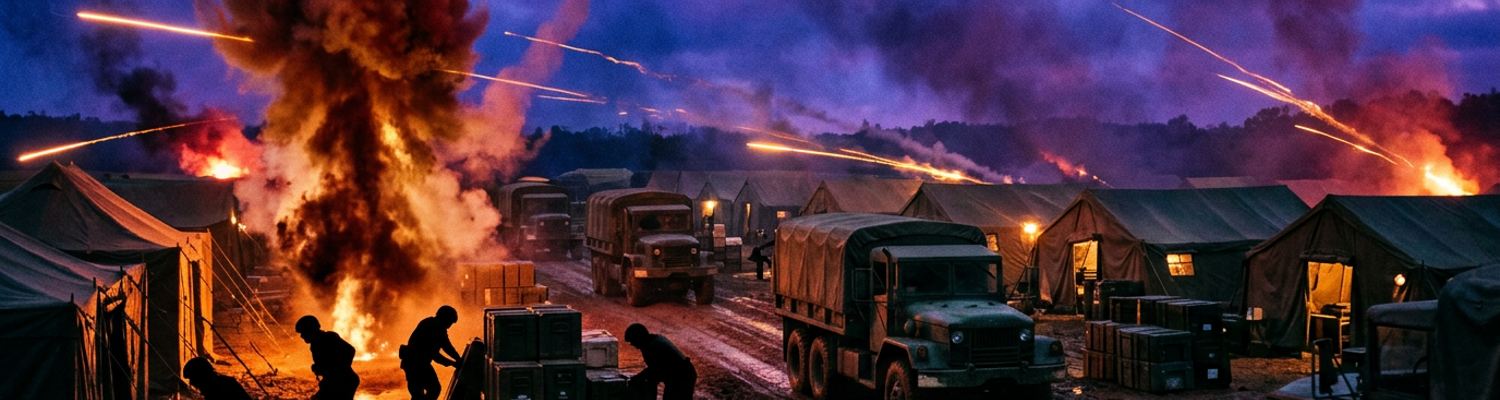
Telephone lines running between the Komam-ni forward supply dump and 25th Infantry Division headquarters went completely dead, forcing the isolated quartermaster detachment to take command of its own sector. Daybreak on September 1, 1950, revealed thick gray smoke drifting across the depot railhead after the North Korean 6th Division tore through frontline positions during their midnight breakthrough along the Nam River. Shrapnel and stray machine gun bursts chewed through supply tents, setting stacks of wooden dunnage on fire and puncturing dozens of fuel drums that leaked gasoline across the dirt yard. Quartermaster clerks, mechanics, and petroleum handlers dropped their carbon paper manifests, grabbed M1 rifles and carbines, and took up firing positions behind barricades made from stacked sandbags and ammunition boxes. Armed supply troops peered through the lifting river mist toward the gravel road leading to Haman, watching scattered groups of retreating soldiers run past with reports of enemy assault squads advancing directly behind them.
Mortar shells from those advancing squads began slamming into the staging area just behind the improvised barricades. High explosive blasts tore through the open assembly field where hundreds of Korean Civilian Transportation Corps porters stood waiting with their wooden A-frame pack boards. Shrapnel splintered cargo pallets, threw up geysers of wet soil, and ignited bundles of canvas tarpaulins. Civilian carriers dropped their wooden pack frames and scattered toward the drainage ditches along the rail line to escape the bombardment. Supply sergeants ran into the open to halt the panicked flight with hand signals and shouted directions toward covered trenches, but sustained mortar fire fell directly across the road and drove the remaining porters completely away from the depot. Abandoned pack boards loaded with heavy cargo lay overturned in the mud across the entire departure yard, leaving the detachment without the specialized mountain carriers required to haul gear up the roadless, near vertical ridges.
Infantry battalions holding the rocky crests and razorback spurs of Sobuk-san suffered the immediate impact of this logistical collapse on those near vertical ridges. North Korean infiltrators slipped across the lower ravines to sever the footpaths winding up the mountain, cutting off all scheduled deliveries of small arms ammunition, potable water cans, and combat ration cases to the rifle companies defending the peaks. Riflemen on the summit had already emptied their canteens during hours of close quarters midnight combat. Machine gun crews rapidly expended their final belts of thirty caliber cartridges against fresh enemy probes pressing up the slopes. Wounded men lay in shallow scrape trenches under the morning sun without clean dressings or saline bottles while company commanders sent runners down the steep gullies in desperate attempts to reestablish a supply line.
Runner reports confirming the total encirclement of the peaks reached Komam-ni within hours, forcing the quartermaster staff to abandon routine supply procedures and record the harsh operational realities of the breakthrough. Supply officers used grease pencils to sketch new defensive sectors across their acetate map boards, noting in their logbooks that civilian carrier networks could not survive mortar bombardment without dedicated armed escorts. Depot mechanics dragged fifty caliber heavy machine guns out of storage lockers, welding improvised pedestal mounts onto the steel beds of two and a half ton cargo trucks to transform them into armored escort vehicles. Drivers and ammunition handlers loaded these modified trucks with belted machine gun rounds, five gallon water cans, and crates of combat rations. The armed convoy gunned their engines and pushed down the fire swept road toward the base of Sobuk-san to break the siege.
Perimeter Stabilization along the Main Supply Route
Tanks of the 89th Tank Battalion and the 27th Infantry Regiment spearheaded aggressive counterattacks along the Masan to Haman supply corridor to smash the enemy ambushes blocking the newly readied supply convoy. Infantry squads advanced alongside M26 Pershing and M4A3 Sherman tanks, firing their rifles into roadside irrigation ditches to flush out concealed North Korean machine gun crews. Mortar teams from the 27th Regiment set up baseplates on the road shoulders, lobbing high explosive shells into scrub covered ravines where enemy snipers commanded the gravel highway. American tank gunners traversed their turrets to blast fortified enemy roadblocks with canister shot and high explosives, clearing tangled logs and overturned carts from the right of way. These relentless counterattacks systematically pushed the North Korean 6th Division infiltrators back into the hills south of the road, establishing a narrow but open corridor for vehicle traffic between Masan and the forward fighting lines.
Soldiers from the 25th Quartermaster Company established improvised fighting positions alongside rail spurs and road shoulders to hold this freshly opened transit lane against renewed enemy ambushes. Troops dragged heavy wooden ties from the railway tracks and stacked them into interlocking breastworks, filling the gaps with river rocks and wet ditch soil to stop incoming bullets. Mechanics and supply clerks dug two man foxholes into the steep road shoulders, mounting water cooled thirty caliber machine guns on sandbagged parapets to cover the adjacent rice paddies. Hand cranked field telephones linked these isolated roadside outposts to the Komam-ni supply depot, allowing sentries to report enemy movement along the drainage canals immediately. Drivers and petroleum handlers took turns scanning the brush lines with carbines, firing short bursts at enemy scouts attempting to crawl back toward the roadbed and sever the supply route a second time.
Sergeants conducted initial damage surveys of smoldering cargo dispersal yards and burning supply pallets at the perimeter edge as enemy resistance along the road receded into the distance. Supply teams walked past smoking bomb craters to assess the wreckage, finding rows of wooden cargo pallets reduced to charred timbers and melted steel banding. Heat from the burning pallets had ruptured multiple drums of motor oil and diesel fuel, spreading soot and black grease across the open transfer yard. Soldiers shoveled gravel and sand over smoldering ration crates, pulling intact cases of canned meat and cartons of dry biscuits away from the active flames. Warehouse specialists checked stencil markings on charred wooden dunnage to identify which shipments of small arms ammunition and medical supplies had survived the morning bombardment. Clerks logged every destroyed stack on clipboards, compiling an exact inventory of emergency supplies required to replace the materials incinerated during the attack.
Clerks carried these completed manifests into the depot command tent, where staff officers frantically recorded the operational lessons learned during the morning breakthrough. Staff personnel typed immediate reports stating that open cargo dispersal yards suffered catastrophic destruction under enemy artillery fire, recommending that future depots scatter supply pallets into dug in revetted bunkers. Logistics officers noted that civilian porter columns could not operate without dedicated armed guards, making it essential to train quartermaster personnel in direct infantry tactics and perimeter defense. Mechanics documented that standard soft skinned trucks were completely inadequate for contested mountain corridors, filing requests for heavy armor plate to bolt onto truck cabs and engine blocks. Supply handlers immediately loaded five armored cargo trucks with salvaged water cans, ammunition crates, and combat rations to test the newly secured route. Drivers gunned their engines and steered the convoy out through the railhead gate, heading west down the cleared corridor toward the frontline positions at Haman.
Emergency Salvage of Strafed Motor Transport
GMC CCKW two and a half ton ammunition trucks from an earlier morning supply run blocked the narrow roadbed three miles west of Komam-ni, bringing the advancing relief column to an abrupt halt along the steep embankment. Enemy fighter passes and automatic weapons fire had riddled the cabs, shattered the windshields, and blasted open the sheet metal cowls of these forward transport haulers during the initial dawn breakthrough. Mechanics from the quartermaster company jumped down from their escort vehicles with wrenches, pliers, and heavy jumper cables, scrambling across the sloping dirt shoulders to inspect the ammunition crates still stacked in the splintered wooden cargo beds. Drivers bypassed the shot out dashboards by reaching beneath the steering columns, stripping rubber insulation from exposed wires with pocketknives, and twisting hot battery cables directly to starter terminals to crank the flooded six cylinder engines. Soldiers hammered pinched copper lines straight with brass punches, bridged cracked distributor caps with friction tape, and plugged shrapnel tears in gas tanks using tapered wooden pegs coated with thick chassis grease. These hasty field expedients successfully restarted three of the stranded haulers, leaving several other ammunition trucks completely immobilized with blown fuel systems and shattered wheel hubs.
Rifle bullets from North Korean snipers concealed along the surrounding brush ridges cracked against the steel cabs as quartermaster mechanics began stripping the dead vehicles to repair those damaged fuel systems and wheel hubs. Quartermaster soldiers crouched behind cast iron engine blocks and dual rear tires for cover, calling out needed parts while keeping their carbines ready to return fire. Mechanics used open end wrenches to unbolt undamaged Zenith carburetors from burned out engine bays, transferring the clean assemblies onto trucks whose fuel air mixers had been shattered by rifle fire. Working parties crawled beneath bullet torn chassis to unscrew unbroken fuel lines, splicing the salvaged metal pipes into working fuel pumps with short sections of rubber hose and twisted safety wire while dust kicked up by enemy rounds showered their fatigues. Tire squads wrestled heavy hydraulic jacks across the gravel, unbolting flat and shredded tires from wheel hubs and bolting on undamaged assemblies salvaged from trucks whose frames had broken in the crash. This aggressive cannibalization returned two additional supply trucks to working order, leaving only three ammunition carriers resting overturned in a deep drainage ditch.
Steel tow cables and heavy logging chains provided the recovery team with the mechanical leverage needed to pull those overturned vehicles clear of the rocky mountain ditch. Mechanics crawled down the steep ravine to wrap heavy chains securely around the rear axle housings and leaf spring shackles of the tilted ammunition haulers, avoiding damaged frame horns that might snap under load. Drivers positioned two running two and a half ton trucks bumper to bumper on the sound gravel roadbed, linking their front winches and rear pintle hooks into a tandem tow bridle to maximize traction. Riggers anchored steel snatch blocks to thick railway ties driven into the road shoulder, doubling the pulling power of the winches and preventing the tow vehicles from sliding sideways into the gully. Winch drums groaned and steel cables tightened under heavy tension as both trucks engaged their transfer cases in low gear, slowly hoisting the three heavy trucks out of the muck and upright onto the roadway. Supply drivers quickly checked the steering linkages of the rescued haulers, confirmed that the artillery ammunition in the wooden cargo beds remained intact, and formed all recovered vehicles into a single column behind the lead gun truck to continue the push toward Haman.
Refugee Screening and Defile Security Hazards
Quartermaster drivers eased their clutches into first gear before coming to a dead halt against a mass of frightened civilians choking the narrow corridor leading toward Haman. Thousands of Korean families fled southward away from the burning outskirts of the town, jamming the one lane dirt track with wooden oxcarts, hand pushed barrows, and heavily loaded A-frames. Quartermaster troops jumped down into the dust to establish an impromptu checkpoint, shouting orders and using rifle butts to push frantic refugees away from the hot truck radiators and onto the soft mud shoulders. Severe civil military friction erupted along the roadblock as frightened villagers pushed back against the perimeter, desperate to escape incoming artillery strikes that were shaking the nearby hills. Escort soldiers maintained fixed bayonets along both flanks of the convoy to prevent the frantic crowd from swarming the cargo beds and tearing open the rations or ammunition crates. Division guidelines strictly prohibited any civilian movement through the active combat corridor toward Masan until every individual could be cleared by security personnel.
Soldiers pulled military age men out of the refugee pack to check their clothing, skin, and personal bundles for signs of enemy activity. Inspectors made civilian men strip off their loose white cotton jackets to examine their shoulders for the deep purple bruises and chafing typically left by heavy ammunition harness straps and rifle slings. Interpreters closely questioned suspicious travelers about local geographic details, exposing northern accents that did not match the southern Kyongsang dialects of local valley residents. Several searches uncovered North Korean soldiers dressed in stolen peasant garments, concealing Soviet made hand grenades inside woven rice sacks and dismantled submachine guns rolled tightly inside sleeping mats. Guards immediately seized these disguised infiltrators, binding their wrists behind their backs with insulated field telephone wire and forcing them to sit in the roadside ditch under the guns of an armored truck. Depot officers logged the names and captured items into intelligence rosters before loading the prisoners into the rear of an empty recovery vehicle for transfer to division headquarters.
Drivers switched off all incandescent headlights as twilight faded and the supply column reached the steep mountain defiles east of Haman. Strict blackout regulations governed the entire gorge to prevent North Korean mortar spotters on the surrounding ridges from targeting the ammunition laden vehicles. Truck crews relied solely on faint red cat eye blackout markers and ground guides walking ahead of front bumpers with white luminous tape pinned to their backs. Soldiers hauled abandoned oxcarts, rock slides, and dead draft animals off the narrow rock ledge, throwing the debris down the steep gorge to keep the single lane open for transport trucks. Mechanics used pickaxes and shovels to clear jagged boulders away from the inside rock walls so truck fenders would not shear off in the darkness. The quartermaster column throttled slowly through the cleared cut, maintaining continuous forward speed until the lead truck rolled directly into the defensive perimeter of the frontline battalions at Haman.
Catastrophic Class I and V Depletion Rates
Battalion supply sergeants met the halted trucks with frantic demands for small arms rounds and drinking water, showing depot personnel the piles of splintered, empty wooden crates scattered across the perimeter. Infantry companies defending the valley floor and surrounding ridge lines had burned through thirty caliber rifle ammunition at record breaking expenditure rates while repelling midnight human wave assaults by the North Korean 6th Division. Riflemen firing their M1 Garands and Browning Automatic Rifles had expended thousands of eight round clips into the dark ravines, filling their foxholes with spent brass as wave after wave of enemy infantry surged across the rice paddies. Machine gun teams had fired belt after belt of linked fifty caliber ammunition until hot barrels warped, burning through company stockpiles in a desperate effort to sweep infiltrators out of the roadside irrigation ditches. Mortar crews dropped their final sixty millimeter high explosive and illumination rounds down smooth steel tubes to break up enemy penetration columns, exhausting their basic unit loads in just four hours of continuous firing. These unprecedented expenditure rates completely drained the forward ammunition pits, leaving frontline rifle platoons holding their shallow foxholes with only the partial clips remaining in their web belts.
Riflemen on the rocky slopes of Sobuk-san had emptied their web belts while simultaneously burning through every emergency water can and ration box in their forward positions. Baking granite outcrops radiated intense late summer heat that parched infantrymen who had already drained their personal canteens hours before dawn to wash gunpowder grit from their cracked lips. Squads scraped the bottom of their fighting pits for the last drops of lukewarm water from battered five gallon cans, fighting off severe dehydration as they hauled sandbags and bandaged shrapnel wounds under persistent sniper harassment. Flattened combat ration cartons and punctured tin cans littered the shallow trenches, showing that the isolated summit garrisons had consumed their entire reserve of subsistence supplies during the night encirclement. Weary soldiers tore open empty cardboard ration sleeves searching for leftover crackers or sugar packets, finding nothing but dry dust and discarded wax paper wrappers. Company commanders reported that their troops were collapsing from heat exhaustion along the steep switchbacks, prompting quartermaster clerks to note in their logbooks that mountain fighting doubled normal water consumption.
Quartermaster crews countered this immediate exhaustion of forward ammunition and water reserves by rushing unmanifested replenishment loads straight from the cargo beds to the combat lines. Supply sergeants tossed aside standard requisition forms and carbon paper manifests, choosing raw delivery speed over proper military bookkeeping as they pushed fresh crates of rifle cartridges, machine gun belts, and mortar shells directly into waiting arms. Drivers and infantry working parties formed human chains across the gravel road shoulders, heaving heavy wooden boxes and sloshing five gallon water cans onto canvas tarps for immediate haulage up the mountain trails. Logistics officers scribbled rough tonnages in grease pencil on their truck dashboards, documenting that rigid supply regulations had to yield to instant, unrecorded distribution when defensive lines teetered on total collapse. Ammunition bearers immediately strapped the uninventoried wooden crates to packboards and headed up the rocky slopes, moving as fast as their legs could carry them to replenish the empty firing pits above. Mechanics and armed escorts quickly turned the emptied cargo trucks around on the narrow roadbed, gunning the engines to speed back toward the Komam-ni railhead for another emergency haul before enemy mortar squads could reseed the corridor.
Collapse of Standard Logistical Accountability Procedures
Truck drivers slammed their transfer cases into neutral as the empty vehicles rolled past the smoldering revetments of the Komam-ni railhead depot. Inside the perimeter, standard Quartermaster Corps ledger tracking and formal supply requisitions had completely broken down under the impact of continuous mortar barrages and direct infantry attacks. Bound accounting books, triplicate voucher pads, and authorized signature cards lay scattered across muddy floorboards or burned inside splintered administrative crates. Supply specialists trained to record every stock number, batch code, and division account before releasing gear found themselves completely unable to maintain standard property book accountability while shrapnel tore through the sorting sheds. Frontline companies needed ammunition and rations within minutes, making peacetime ledger entries and division level requisition forms completely useless. Supply officers tossed aside the charred filing folders, recognizing that strictly enforcing property regulations during an active perimeter breakthrough would starve the rifle companies fighting on the ridges.
Company clerks and supply sergeants responded to the lost ledgers by hauling olive drab portable typewriters out of damaged field chests and balancing the heavy machines on stacks of wooden ration crates. Metal keys hammered against carbon ribbons as the clerks rapidly typed field damage memorandums to document what the morning assault had obliterated. Clerks typed continuously despite nearby rifle fire, documenting destroyed consignments of lubricating grease, field rations, and small arms ammunition before smoke blackened the sheets beyond recognition. Dust from the blast cratered rail yard drifted into the mechanical gears of the typewriters, causing keys to stick and forcing clerks to clear the typebars with toothbrushes and rifle cleaning fluid. Supply sergeants signed their own initials to these typed damage lists, certifying that destroyed ammunition lots and abandoned equipment were combat losses rather than items stolen or abandoned through negligence. These typed emergency memorandums bypassed standard review boards, serving as the sole surviving administrative record of the depot equipment before the paperwork was shoved into waterproof rubber map pouches.
Rubber map pouches held the few formal damage summaries, but outward cargo transfers operated entirely through informal handwritten issue receipts scribbled on scraps of brown dunnage paper. Frontline runners from the 27th and 24th Infantry Regiments sprinted into the depot with urgent verbal demands for thirty caliber clips, mortar rounds, and dry rations, completely lacking the official authorization signatures required by army regulations. Supply sergeants bypassed all signature rules, handing full ammunition crates directly to the mud covered runners as fast as the men could lift them off the loading platforms. Infantrymen slung bandoliers across their shoulders and balanced heavy wooden ammunition boxes on their backs without waiting for any quartermaster officer to stamp a release slip. Depot personnel jotted down the runner company designations and rough crate counts with grease pencils on torn cardboard flaps, keeping these informal chits in canvas sandbags pinned beneath spare mortar shells. Logistics crews loaded the remaining ammunition directly into the waiting cargo beds, sending fresh supply runners back down the gravel tracks toward the forward foxholes with whatever ordnance they could carry.
Physical Exhaustion and Psychological Strain in Combat
Truck drivers slumped over their steering wheels the moment the loaded vehicles pulled away, fighting off the crippling effects of severe sleep deprivation after seventy two hours of continuous round the clock haul missions. Operating two and a half ton trucks along narrow, rutted gravel roads under total blackout conditions had pushed every motor pool soldier to the brink of physical collapse. Bloodshot eyes strained against the dark, causing exhausted drivers to experience waking hallucinations of phantom roadblocks and enemy ambush teams lurking in empty drainage ditches. Several supply haulers drifted off the crowned roadbeds and high centered on muddy embankments when drivers experienced micro sleeps behind the wheel, forcing recovery teams to yank them awake and muscle the steering wheels back into line. Ammunition handlers at the railhead suffered equal physical degradation, their blistered, trembling hands dropping ninety pound wooden artillery crates onto the ground as torn muscles gave out under the relentless strain of lifting thousands of rounds without rest. Company sergeants walked down the vehicle lines shaking men violently by their combat jackets, splashing cold water across dirty faces and shoving dry coffee grounds into dry mouths to keep the crews conscious enough to turn the trucks around for the next run.
Clerks and warehouse specialists stationed along the perimeter struggled with profound psychological shock after being thrust into violent, close quarters defense of the forward supply dumps. Trained strictly as typists, mechanics, and petroleum handlers, these support troops had never anticipated engaging enemy assault squads at point blank range with rifles and hand grenades. Men sat frozen behind sandbag revetments, staring blankly at the bullet riddled bodies of North Korean infiltrators caught in the barbed wire only twenty paces from the gasoline storage bladders. Shaking hands fumbled with eight round en bloc clips, and many young soldiers suffered violent nausea, hyperventilation, and catatonic stupors after daylight revealed the grisly results of the night fighting. Noncommissioned officers had to move down the trench line to physically pull terrified supply clerks off the dirt floor, forcing fresh carbines into their limp fingers and talking them through the basic mechanical steps of reloading and clearing jammed bolts. Company officers quickly realized that rear area personnel lacked the psychological conditioning required for perimeter warfare, noting in their logbooks that support units needed immediate integration with experienced combat veterans to prevent paralyzing panic during surprise ground assaults.
Aidmen established an emergency triage station directly inside the forward supply dispersal points to treat the casualties of these surprise ground assaults, laying wounded quartermaster soldiers onto canvas stretchers balanced across stacks of dry ration boxes. Shrapnel from incoming mortar rounds and automatic weapons fire had inflicted severe blast trauma, puncture wounds, and heavy arterial bleeding among the logistics troops defending the loading docks. Aidmen worked under grease stained canvas flies, cutting away blood soaked utility shirts with surgical shears and packing gaping chest wounds with sterile petroleum gauze to prevent collapsed lungs. Corpsmen twisted olive drab web belts into makeshift tourniquets around shattered limbs, scribbled morphine administration times in grease pencil on the foreheads of unconscious patients, and hooked clear bottles of blood plasma to wooden tent poles. Wounded supply personnel who suffered severe gasoline burns from ruptured fuel bladders received topical dressings and immediate shock treatment alongside soldiers bearing concussive blast injuries from exploding ammunition pallets. Triage officers designated three emptied cargo trucks as temporary casualty transport haulers, directing walking wounded and stretcher cases into the wood slatted beds for the bumpy, high speed run back down the fire swept corridor toward the division clearing station at Masan.
Raw Damage Memorandums and Immediate Operational Lessons
Quartermaster officers turned away from the churning dust of the departing ambulance trucks heading to Masan to begin typing the first raw battlefield damage reports inside the splintered depot office. Captains and lieutenants hammered out emergency memorandums on portable typewriters, assessing the severe structural vulnerability of unfortified division forward dumps placed along the open valley floor. Exploding mortar shells had proved that open air pallet yards and canvas supply tents offered zero protection for critical stocks of fuel drums and artillery shells. Staff officers detailed how North Korean gunners systematically ignited entire rows of crated ammunition because Komam-ni lacked bulldozed earthen revetments, dispersed storage pits, or sunken blast bunkers. These handwritten and typed damage sheets warned that future division forward supply points would face total annihilation unless logistical dumps were immediately partitioned behind thick soil ramparts and separated by several hundred yards of broken terrain.
Clipboard manifests recorded an equally alarming operational failure in the complete collapse of the civilian carrier lines during the height of the enemy bombardment. Critical assessments documented how hundreds of Korean porters dropped their heavily loaded wooden pack frames and fled into the scrub hills the moment enemy mortar rounds struck the trails leading to Sobuk-san. Supply sergeants noted that relying exclusively on unarmed civilian laborers without integrated military security escorts instantly cut the lifelines of the isolated rifle battalions on the ridges. Officers emphasized in their damage files that Korean pack units required dedicated squads of armed American or South Korean soldiers to protect the columns, direct movement under fire, and suppress roadside snipers. Logistics planners entered an urgent operational requirement into the division record, stating that civilian carrier groups had to be organized into disciplined military formations with assigned security teams before any further mountain supply missions could be attempted.
Steel scrap piles behind the motor pool provided the physical evidence for the next set of urgent recommendations regarding convoy hardening. Company mechanics reported that thin sheet metal truck cabs and soft canvas tops left drivers completely unprotected against roadside machine gun ambushes and shrapnel bursts along the Masan to Haman road. Maintenance sergeants demanded the immediate shipment of boiler plate, sandbag kits, and dual purpose pedestal gun mounts so depot welders could encase every cargo hauler in field expedient armor plating. Memorandums urged division headquarters to mandate ring mounted heavy machine guns on at least one out of every three supply trucks, transforming vulnerable cargo lines into self defending armed columns. Depot leaders also insisted that forward quartermaster installations could no longer maintain separate administrative perimeters, demanding full tactical integration into surrounding infantry defensive sectors with shared interlocking fields of fire and coordinated mortar support.
Infantry cross training stood out as the most painful lesson typed onto the carbon copy report sheets before the ink even dried. Quartermaster clerks, mechanics, and warehouse loaders had been forced to drop their logbooks and defend foxholes with rifles, exposing a severe lack of combat skills under point blank enemy assault. Supply officers urged the immediate establishment of mandatory weapons qualifications, grenade training, and squad level defensive drills for all rear echelon logistics personnel across the division. Clerks gathered the finished memorandum sheets, stapled the multiple carbon copies together, and sealed the official loss tallies inside waterproof canvas courier pouches. Dispatch riders kicked the starter pedals of their olive drab motorcycles, grabbed the sealed courier bags, and sped out through the depot gate to deliver the urgent operational reports directly to the division command post.