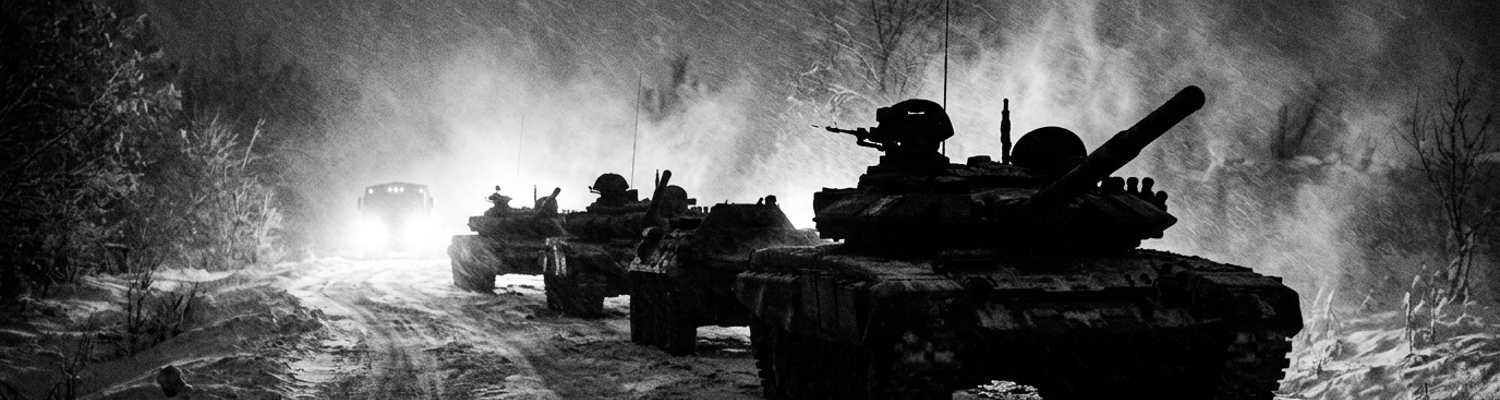

Pentagon Fiscal Audits and Maneuver Damage Claims
A post-exercise equipment audit compiled in early 1973 documented 412 major vehicular accidents. Thirty-two service members died. One hundred eighty-four armored personnel carriers suffered catastrophic mechanical failure across the frozen secondary routes of West Germany.
Ledgers from the Office of the Assistant Secretary of Defense tracked financial losses down to individual depot work orders (DoD Contract File 73-A-419).
In sub-zero Bavarian conditions, motorized elements of the 1st Infantry Division and the 2nd Armored Cavalry Regiment consumed vehicle parts at triple the peacetime projection. Mechanized crews attempting cross-country maneuvers through snowdrifts near Grafenwoehr sheared off hardened steel drive sprockets. They snapped torsion bars on frozen ruts. Coolant mixtures lacked proper dilution for sustained sub-zero temperatures. The liquid froze inside aluminum engine blocks. This cracked M113 power packs before infantrymen dismounted for simulated contact.
Tracked vehicles attempted to negotiate ice-slicked inclines along secondary roads between Bamberg and Bayreuth.
Tracks lost traction entirely. The spinning metal threw steel pins and burned out Detroit Diesel transmissions. Pentagon accountants faced unprogrammed procurement bills running past six million dollars. They had to replace shattered road wheels, cracked engine casings, and depleted European pre-positioned war reserve stocks.
Cold steel and black ice destroyed infrastructure across the entire maneuver corridor.
Archival evidence shows that local administrative offices across Upper Franconia received thousands of civilian incident reports within the first seventy-two hours. Staffed jointly by Bundeswehr liaison officers and US Army claims adjusters from the European Claims Service, district centers in Ansbach and Wuerzburg cataloged property destruction files under NATO Status of Forces Agreement provisions. Sixty-ton M60A1 Patton tanks and M113 armored carriers slid uncontrollably down rural cobblestone alleys. They demolished century-old half-timbered barns. They flattened municipal water hydrants. They leveled private stone perimeter walls.
Rural bridges engineered for light farm wagons cracked across their keystones under the passage of heavy mechanized columns (Bavarian Ministry of Transport File 88-2).
German municipal authorities filed urgent formal complaints regarding sheared curbstones, severed municipal gas conduits, and crushed underground drainage pipes throughout dozens of Bavarian villages. Adjusters spent eighteen-hour days taking photographic evidence of plowed-under winter wheat fields. They measured track gouges in private timber stands. They rubber-stamped structural repair petitions from German burgomasters.
The bill arrived in Bonn and Washington simultaneously.
When examining the historical record of settlement disbursements, compensation payments for Exercise Certain Shield surpassed all prior autumn maneuvers. Department of Defense claims commissions processed immediate indemnity vouchers totaling over thirty-five million Deutsche Marks. This settled civilian claims across Bavaria and Hesse. Federal Republic finance officials enforced cost-sharing protocols. The United States Treasury absorbed seventy-five percent of all adjudicated third-party damages directly from overseas operational budgets.
Heavy tracked columns operating on secondary asphalt routes stripped the friction surface off hundreds of kilometers of regional roads.
Frozen roadbeds turned into broken rubble. Bavarian road maintenance departments demanded immediate wire transfers to fund specialized heavy asphalt-laying machinery. Spring thaws would soon turn fractured transit corridors into impassable mud channels. U.S. Army Europe comptrollers reallocated training appropriations into emergency municipal road repair accounts. They issued direct bank drafts to regional road maintenance syndicates in Nuremberg.
POMCUS Depot Vehicle Draw During Exercise Certain Shield
Flight manifests indicate that the United States Air Force Military Airlift Command initiated the human pipeline on January 5, 1973. C-141 Starlifter flights landed every ninety minutes into Rhein-Main and Echterdingen (MAC Flight Manifest 44-912).
Over 10,000 troops from the 1st Infantry Division and VII Corps command elements departed Fort Riley, Kansas. They carried only personal field gear, duffel bags, and small arms. Commercial buses and olive-drab tactical trucks shuttled these personnel through freezing sleet across Rhineland-Pfalz and Baden-Wuerttemberg.
Their objective centered on POMCUS storage sites positioned throughout Kaiserslautern, Mannheim, and Germersheim.
Long-term war reserves waited inside unheated corrugated steel warehouses. Tactical doctrine assumed that prepositioned equipment could be uncrated, fueled, and road-ready within forty-eight hours of boot impact on German soil. Arriving soldiers formed unheated work details in temperature zones hovering near fifteen degrees below zero. They broke perimeter warehouse door seals frozen solid to the asphalt thresholds. Depots held rows of crated M113A1 armored personnel carriers, M60A1 medium tanks, and M151A2 utility quarter-ton trucks. The vehicles sat packed under protective cosmolene compounds and dry-nitrogen seals.
The mobilization timetable allowed zero margin for mechanical warming.
When examining the historical record of depot work orders, severe mechanical deterioration struck the inventory within minutes of ground crews cracking the hull hatches. Equipment drawn from storage sites faced immediate battery failures and fluid leaks caused by sub-zero Central European temperatures. The standard twenty-four-volt electrical arrays relied on dual twelve-volt 6TN lead-acid batteries. These collapsed instantly under initial starter draws.
Freezing temperatures cracked the vulcanized hard-rubber casings.
Diluted electrolyte solutions leaked across battery trays. Synthetic rubber and Buna-N nitrile seals throughout hydraulic steering units and final drives had hardened into brittle plastic during years of static storage. Once starters engaged cold flywheels, high-pressure lines ruptured at hose crimp fittings. Gallons of red petroleum-based hydraulic fluid dumped across warehouse concrete floors (Ordnance Maintenance Log 73-01).
Radiator gaskets split as frozen ethylene-glycol mixtures resisted circulation. Heater hoses blew off aluminum Detroit Diesel 6V53 power blocks. Mechanized crews attempting to fill primary fuel systems found that sub-zero condensation had produced frozen water crystals in depot supply drums. This choked out inline secondary fuel filters on M113 armored personnel carriers.
Freezing diesel fuel gelled inside fuel injector nozzles before engine blocks achieved operational temperature.
Archival evidence shows that rapid theater deployment protocols bypassed extended pre-operational maintenance checks on motorized equipment. Army Field Manual timetables prioritized rapid convoy departure speeds over technical inspections. Division mechanics discarded standard forty-four-step preventive maintenance services mandated by technical manuals. Dispatch officers ordered convoy captains to bypass twenty-four-hour oil analysis tests. They skipped track pin tension torquing and full brake-band adjustments to keep pace with the scheduled road march into Northern Bavaria.
Commanders signed equipment transfer acceptance manifests without conducting test drives longer than fifty meters within depot parking compounds.
Unchecked mechanical assemblies entered public roadways with dry transmission housings, misaligned steering differentials, and dry-rotted brake hydraulic seals. At POMCUS Depot Miesau alone, logistics officers stamped release forms for two hundred armored vehicles in a single twelve-hour shift. They issued vehicles with low hydraulic fluid levels directly into blinding sleet. Unit mechanics recorded that six out of ten M151 jeeps departed staging pens with flat-spotted nylon-ply tires. These vibrated steering linkages loose within twenty kilometers of highway transit.
M113 Armored Carrier Failures on Icy Bavarian Roads
A close review of operational logs shows that the standard T130E1 track system installed on the M113A1 armored personnel carriers turned into a direct liability. This occurred the moment mechanized columns transitioned from highways onto secondary Bavarian routes.
These track systems utilized dual-pin shoes fitted with vulcanized rubber pads engineered strictly for temperate road travel and cross-country dirt.
Elements of the 2nd Brigade, 1st Infantry Division advanced along secondary highways like the B26 between Schweinfurt and Bamberg. Daytime freezing rain and nocturnal temperatures dipping to negative eighteen degrees Celsius coated the narrow asphalt surfaces in thick black ice. Flat rubber pads could not penetrate the glazed surface. The friction of spinning twelve-ton aluminum hulls melted the surface glaze into a thin water film. This eliminated all coefficient of friction.
Drivers lost directional steerage on minor five-percent road inclines near Hassfurt.
Fully loaded personnel carriers slid broadside into road drainage canals and telephone poles.
Rubber offered zero bite on German ice.
Archival evidence shows that rapid driver attempts to counter slide angles generated mechanical breakdowns within vehicle drive trains. Mechanized drivers overcorrected on slick cambers by pulling hard on individual steering control laterals. They locked one track while feeding maximum throttle into the other. A spinning track suddenly caught dry frozen aggregate or stone curbing on rural shoulders.
The instant torque shock snapped track guide horns and separated end connectors.
The entire track assembly threw off the road wheels into roadside snowbanks (Maintenance Battalion Report 701-A). Allison TX-100 automatic transmissions bore the brunt of these dynamic shocks. Torque converters overheated as Detroit Diesel 6V53 engines redlined under sustained slippage. Planetary gearsets burned out and clutch plates charred within minutes.
Maintenance reports filed by the 701st Maintenance Battalion recorded fifty-seven M113 carriers abandoned along rural patrol routes between Coburg and Kronach during the first forty-eight hours of maneuvers. Blown transmission seals, stripped final drive gears, and frozen mud packed tight inside the hull sponsons until idler wheels completely seized.
Cast metal fractured under the strain of frozen mud.
When examining the historical record of theater supply requisitions, the root cause of this mobility failure traced directly to the complete absence of winterized track accessories. Doctrine dictated that tracked vehicles operating in sustained sub-zero European conditions should be refitted with steel ice grousers. These cleated metal teeth bolted across the track links to bite directly into hard-packed ice and frozen earth.
POMCUS depot supply managers had stripped these specialized attachments from forward equipment war stocks during late 1960s budget cuts.
They categorized winter track kits as non-essential reserve hardware. Frontline units like the 1st Battalion, 63rd Armor and attached mechanized infantry companies discovered their vehicle basic issue items contained only standard smooth-faced track components. Not a single grouser kit existed per company. Mechanized platoons attempted improvised field solutions. They cut steel rebar or drove hardened bolts through rubber track pads.
These makeshift cleats sheared clean off against the frozen granite cobblestones of Upper Franconia within three kilometers of road march.
Divisional transport came to an immediate halt across regional patrol sectors. Without ice grousers to provide purchase on rolling terrain, tracked convoys stacked up behind lead vehicles that had spun across narrow two-lane roadways outside Lichtenfels. Convoy commanders ordered vehicle crews to dismount and scatter ashes from local wood stoves beneath their treads in an effort to crest three-degree road rises. By January 12, mechanical recovery teams possessed neither the operational heavy recovery vehicles nor the spare final-drive assemblies needed to retrieve the immobilized fleet from rural ditches.
Wheeled Convoy Collisions and Civilian Traffic Casualties
Dispatch records reveal that the VII Corps motor pool suffered dozens of catastrophic rollover events within thirty-six hours of leaving staging areas around Nuremberg and Schweinfurt.
The primary supply workhorse, the M35A2 2.5-ton cargo truck, possessed an air-over-hydraulic brake system. This locked drive axles unevenly on frozen asphalt. POMCUS issue yards had mounted standard non-directional cross-country tires on these vehicles. Formulated from synthetic rubber compounds that hardened into rigid discs in sub-zero temperatures, these treads lacked siping to channel away meltwater.
Drivers downshifted to slow their descent along the winding secondary slopes of the Steigerwald hills.
Rear tandem dual wheels broke traction instantly. Unladen cargo beds swung sideways into ninety-degree jackknifes. Driveline universal joints snapped. Loaded supply beds flipped into drainage culverts.
Accompanying M151A2 utility vehicles fared worse.
The A2 variant featured a revised semi-trailing arm suspension to mitigate the rollover tendencies of earlier models. Slick roads negated the mechanical update. Drivers tapping drum brakes on ice-glazed crown roads caused the rear wheels to tuck inward under dynamic weight transfers. The quarter-ton utility trucks pitched end-over-end into frozen ditches. Out of seventy-two M151 vehicles dispatched by the 1st Infantry Division Support Command on January 11, twenty-four suffered structural frame damage or rollover destruction along the B22 corridor between Bamberg and Wuerzburg (Division Support Command File 11-04).
Cast iron brake drums locked solid against frozen steel hubs.
Archival evidence shows that these uncontrolled slides transformed military convoys into lethal obstacles for local West German motorists. Morning factory shift workers driving lightweight Volkswagen Beetles, Opel Kadetts, and Ford Taunuses shared the narrow, unlit rural roads around Schweinfurt with sixty-truck supply columns. Civilian drivers rounding blind curves on glazed rural roads encountered broadside tactical trucks wedged across both lanes of travel.
Bavarian state police files recorded that municipal salt reserves had been exhausted by continuous freezing rain forty-eight hours before heavy tactical movements commenced.
On secondary route B26 outside Hassfurt, an ammunition transport belonging to the 1st Supply and Transport Battalion lost directional stability on an icy curve. It crushed an oncoming Volkswagen sedan beneath its transfer case. Near Bad Kissingen, an M35A2 loaded with diesel fuel drums slid broadside down an eight-percent grade on Bundesstrasse 287. It crushed an oncoming Opel Rekord against a reinforced concrete bridge abutment. The collision killed the two civilian occupants inside.
USAREUR incident files logged eighteen major collisions between sliding transports and civilian vehicles during the first week of maneuvers.
This resulted in seven civilian deaths and thirty-four severe injuries across Lower Franconia. The heavy Rockwell front axles and channel-steel bumpers of standard military transports struck civilian passenger compartments at windshield level. They bypassed the crumple zones of West German passenger cars entirely.
Cold steel sheared through sheet metal without decelerating.
When examining the historical record of the 793rd Military Police Battalion, operational logs show escort units completely lost control of transit corridors during sudden blizzard conditions on January 13. Heavy whiteout squalls reduced forward visibility to under five meters across the higher elevations of the Rhoen Mountains. Tactical vehicle drivers drove blind. Military police elements assigned to escort ammunition convoys lacked salt spreaders, functional vehicle tire chains, and heavy-duty wrecker support.
Convoy control points established along Autobahn A3 collapsed.
Civilian commuter traffic and thirty-ton supply convoys intermingled on glare ice. Rotating red emergency flashers mounted on MP quarter-ton utility trucks failed to pierce blowing snowdrifts. Three separate incidents occurred where rear-guard supply trucks rear-ended the escort vehicles assigned to guide them. Emergency dispatch frequencies jammed with distress traffic. MP patrol teams abandoned fixed intersections to pull their own overturned patrol vehicles out of frozen ditches outside Hammelburg. At 0300 hours on January 14, VII Corps provost marshals recorded eleven immobilized tactical convoys stranded along secondary routes. Military police units could not reach twenty-six separate collision sites across the maneuver grid.
Bavarian Farmland Destruction and Maneuver Corridor Bottlenecks
Archival evidence shows that tactical dispersal protocols ordered by VII Corps commanders triggered catastrophic soil damage across Lower Franconian agricultural zones.
Between Schweinfurt and Gerolzhofen, motorized infantry companies of the 1st Battalion, 16th Infantry swung off icy secondary roads into fallow fields. They intended to disperse vehicles according to tactical doctrine against simulated aerial strikes. Winter weather had produced a deceitful terrain crust. Frost penetrated only eight centimeters deep into the topsoil. The underlying heavy clay remained fully waterlogged from persistent December sleet.
Twelve-ton M113A1 armored personnel carriers running standard 38-centimeter-wide T130 tracks broke through the frozen top layer within seconds.
Steel track shoes ground deep into saturated subsoil. They excavated half-meter trenches across private winter barley and rye acreage. Below the plow layer, vehicle ground pressure shattered generations-old networks of porous clay drainage pipes installed by regional farming cooperatives. These subsurface tile networks collapsed under the track weight. Subterranean runoff backed up.
Hundreds of hectares of cultivated farmland transformed into standing, frozen bogs.
Subsurface drainage systems collapsed across entire farm sectors within minutes of tactical dispersal (Agricultural Assessment Report 73-B).
Archival evidence shows that column leaders attempting to evade these field quagmires created paralyzing gridlocks along regional transit networks. Near Muennerstadt and Bad Kissingen, reconnaissance patrols from the 2nd Armored Cavalry Regiment found local asphalt routes blocked by stalled civilian traffic and snowdrifts. Convoy officers ordered scout sections to bypass chokepoints by cutting across narrow unpaved farm lanes designed exclusively for light tractors.
Concealed beneath forty centimeters of fresh snow, drainage ditches flanking these rural tracks gave no visual warning to drivers peering through narrow periscopes.
Armored hulls slipped sideways off the hidden berms. They bottomed out on their bellies with tracks spinning helplessly in frozen mud slurry. Company commanders dispatched forty-ton M88 recovery vehicles to extract the immobilized carriers. The heavy wreckers broke the asphalt shoulders of connecting secondary roads. They threw their own tracks into the ditch beds.
Tactical supply convoys stacked up bumper-to-bumper behind the disabled recovery equipment.
Supply runs between forward assembly areas and depot fuel points ground to an absolute halt. Fuel bowsers stranded along Bundesstrasse 287 in fifteen-kilometer traffic jams. Diesel engines idled continuously to prevent fuel lines from freezing solid.
Heavy recovery vehicles blocked the narrow farm bypasses they had been sent to clear.
When examining the historical record of municipal claims, mechanized units caused severe structural destruction inside historic Franconian population centers. Narrow cobblestone streets inside towns like Volkach, Prichsenstadt, and Bad Windsheim could not accommodate the wide hulls of M60A1 main battle tanks and armored personnel carriers traveling in whiteout conditions. Track sponsons sheared off steel highway guardrails. They knocked over cast-iron municipal street lamps. They flattened private stone perimeter fences.
On approach routes into rural hamlets, armored vehicles struck dry-stone retaining walls engineered to stabilize steep hillside vineyards.
Tons of rubble collapsed across village thoroughfares. In three separate incidents near Hassfurt, thirty-ton vehicles crossed arched sandstone bridges rated for light agricultural carts. The keystones cracked. Bavarian civil engineers prompted immediate closures.
Town councils and district administrators in Kitzingen and Rhoen-Grabfeld convened emergency midnight sessions.
They drafted formal diplomatic protests to the Bavarian Ministry of the Interior in Munich. Burgomasters dispatched municipal road crews to position snowplows across village entry gates. They refused entry to American tactical columns until Bundeswehr liaison officers arrived on the scene to enforce alternate routing. Civilian claims adjusters recorded fifty-two formal municipal protest petitions from Franconian town halls before the exercise completed its seventy-second hour.
Cold-Weather Doctrinal Revisions and Logistical Reforms
Theater command documents indicate that United States Army Europe issued binding overhaul directives to combat service support commands across West Germany by late spring 1973.
POMCUS depot management fell under immediate regulatory overhaul at storage sites in Miesau, Mannheim, and Kaiserslautern. Technical orders mandated that theater reserve equipment could no longer sit in unheated storage pens without dedicated arctic winterization kits installed prior to mobilization alerts.
Supply depot personnel received instructions to purge standard petroleum lubricants from M113A1 personnel carriers and M60A1 tanks.
They replaced them with MIL-L-10295 sub-zero internal combustion engine oil rated for continuous operation at negative forty degrees Celsius (USAREUR Technical Bulletin 43-0139). Mechanics replaced hardened Buna-N synthetic seals across steering differentials and final drives. They installed cold-resilient fluorocarbon polymer gaskets engineered to withstand rapid thermal shock. Maintenance crews installed dual-circuit engine block pre-heaters.
They mandated that twenty-four-volt electrical systems replace standard wet-cell units with heavy-duty 6TN dry-charged batteries.
These batteries faced four-hour load-bank tests before vehicle logbooks received dispatch stamps. Warehouses restocked steel ice grousers as mandatory basic issue items. Depot staff bolted cleated track shoes onto every third track link of outbound armored hulls before staging drivers engaged starters.
Cold engines faced mandatory seventy-two-hour run-in checks inside heated inspection bays before leaving depot gates.
Archival evidence shows that VII Corps operational planners redrafted the exercise rulebook to separate armored steel from civilian thoroughfares during adverse weather. Under revised theater directives governing future Reforger deployments, division commanders lost the unilateral authority to commit tracked formations onto regional German transit routes during declared winter precipitation emergencies. Operational guidelines established hard environmental cutoffs.
Whenever regional meteorological stations recorded ground temperatures below freezing accompanied by freezing drizzle, sleet, or heavy snowfall, all heavy tracked vehicles faced immediate road march bans.
M60A1 main battle tanks, M109 self-propelled howitzers, and twelve-ton M113 carriers were restricted to the secure confines of major military training areas like Grafenwoehr, Hohenfels, and Wildflecken. They were confined to designated cross-country maneuver belts that avoided civilian pavement entirely. Convoy clearance officers received explicit orders to halt tactical columns at designated assembly staging areas whenever route reconnaissance sections reported black ice formations along primary Bundesstrassen. This included heavily traveled corridors like the B22 and B26.
Heavy tracked recovery vehicles could no longer use narrow secondary farm roads as bypass routes without written authorization from corps-level mobility control centers.
Ice grounded the armor.
When examining the historical record of theater diplomacy, Headquarters USAREUR negotiated formal bilateral training safety accords directly with the West German Federal Ministry of Defence and the Bavarian Ministry of the Interior. Signed in Bonn in October 1973, these bilateral pacts dismantled the uncoordinated unilateral march clearances that had paralyzed Lower Franconian municipal centers during Certain Shield.
The accords established permanent joint civilian-military traffic coordination cells across Military District VI.
Bundeswehr Feldjaeger detachments physically co-located with the US Army 793rd Military Police Battalion inside regional operations centers at Nuremberg and Wuerzburg. Joint patrol teams took over movement scheduling forty-eight hours before any convoy phase commenced. They cross-referenced tactical convoy manifests with civilian road maintenance timetables. Bavarian state police dispatchers gained direct telephone patches into American division tactical operations centers.
German district administrators gained the legal power to veto military transit over municipal arch bridges and secondary roads with grades exceeding four percent.
German municipal road syndicates secured dedicated priority logistics lanes. Local salt spreaders and heavy civilian snowplows treated highway surfaces ahead of tactical wheeled movements. German police cruisers equipped with blue emergency beacons led every tactical march element through suburban bottlenecks.
The United States Army European Claims Service simultaneously embedded claims adjudicators directly within forward maneuver battalions.
They processed structural bridge cracks and field compaction damage within twenty-four hours of an incident. Federal Republic authorities stationed liaison officers inside division logistics nodes. They verified that military cargo trucks carried heavy hardened-steel link chains for all drive axles before crossing municipal boundaries outside Schweinfurt.