
National Intelligence Estimate 4-1-78 Warning Revisions
Archival evidence shows that NATO based thirty years of defense policy on a mobilization calendar that no longer existed by April 1978. Planners at Supreme Headquarters Allied Powers Europe drew up battle scripts assuming between fourteen and thirty days of advance strategic notice before any armored thrust reached the Fulda Gap or the North German Plain. Early warning relied heavily on the mechanical friction of the Soviet railway network. Bureaucrats in Moscow had to transfer heavy flatcars from the civilian Ministry of Railways to military control before any invasion. They needed to reroute commercial freight across thousands of miles of track. Divisional trains assembled at fixed transshipment hubs like Brest near the Polish border. Railway wheelbases shifted from standard European gauge to Russian wide gauge at these specific chokepoints.
Western intelligence analysts tracked these rigid markers through overhead film passes and electronic intercept stations scattered across West Germany.
Signals intelligence networks monitored dispatch orders and diesel engine allocations from the Baltic ports down to Soviet marshalling yards. NATO combat divisions calculated their entire reinforcement pipeline around this presumed multi-week lag. Commanders expected ample warning to draw heavy armor from prepositioned POMCUS depots. The declassification of National Intelligence Estimate 4-1-78 invalidated those deployment timetables.
Intelligence officers reviewing the completed assessment discovered that Soviet modernization programs had turned forward-deployed formations into self-sufficient strike forces.
The Group of Soviet Forces in Germany and the Northern Group of Forces in Poland were equipped to assault western positions with under forty-eight hours of detectable warning. Combat engineers buried hardened fuel pipelines directly into eastern operating locations. Field depots at Eberswalde and Juterbog held thirty days of pre-positioned Class III fuel and Class V artillery ammunition (NARA Record Group 338). Division commanders in the Soviet 8th Guards Army possessed the transport assets and organic maintenance units to roll straight out of vehicle sheds into assault corridors. They did not need to wait for rail reinforcements.
A surprise blitz could launch out of routine division-level field maneuvers.
This compressed warning threshold forced the United States and NATO to gut their passive surveillance architectures. Routine satellite photography provided by KH-9 Hexagon spacecraft was inadequate. The predictable orbital overflight tracks and a film-ejection return cycle delivered canisters back to earth days after combat units departed their staging grounds. Intelligence priorities shifted toward direct sensor collection against the Baltic, Belorussian, and Carpathian Military Districts. Collection managers demanded persistent coverage of tactical communication nodes and alert status changes across frontal aviation airfields in the Kaliningrad exclave. Task forces scrambled to assemble airborne sensor packages capable of scanning hundreds of kilometers laterally.
Strategic Air Command Operations at RAF Mildenhall
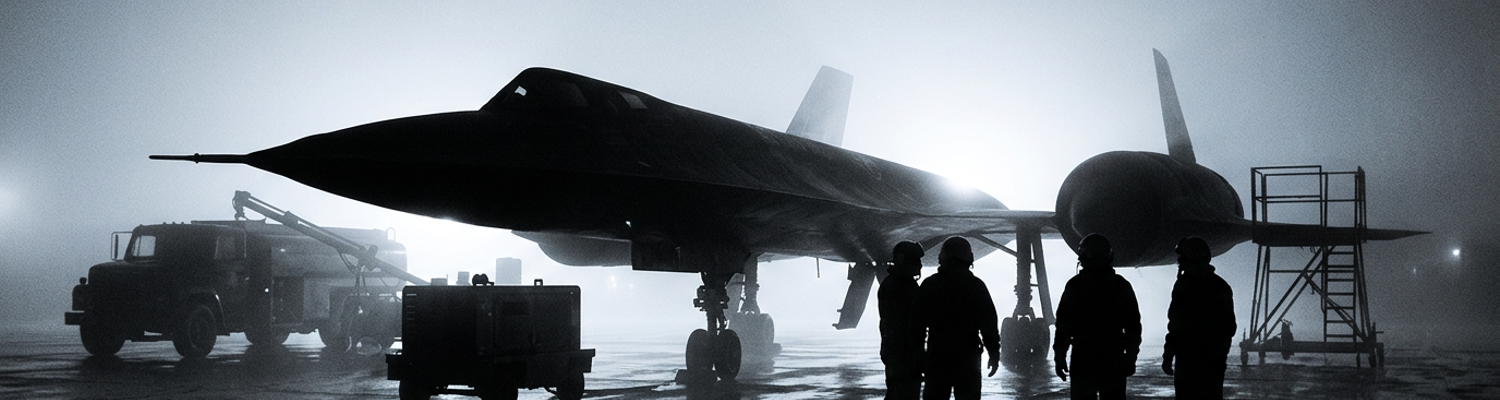
A close review of operational logs indicates that Strategic Air Command assigned this collection burden directly to Detachment 4 of the 9th Strategic Reconnaissance Wing. The unit operated out of RAF Mildenhall in Suffolk, England. Ground crews worked in reinforced hangars dealing with the raw mechanical obstinacy of the SR-71 Blackbird airframe. Before every sortie directed against the Soviet Red Banner Baltic Fleet, technicians pumped hundreds of gallons of specialized JP-7 fuel into tanks. The tanks wept continuously onto the tarmac until thermal expansion sealed the fuselage at supersonic speeds.
Maintenance teams spent thirty-five maintenance hours servicing dual Pratt and Whitney J58 turbojets for every single hour the aircraft spent in the air.
Mechanics replaced carbon seal rings and torqued scorched titanium skin panels beneath high-pressure nitrogen rigs (Technical Order 1-SR71-2). Planners stationed Detachment 4 at Mildenhall because the airfield sat within striking distance of the Baltic theater. The detachment penetrated the naval redoubts surrounding fleet headquarters at Baltiysk and the repair drydocks at Kronstadt. Standby teams maintained round-the-clock readiness to cycle aircrews through pressure-suit checkouts and inert gas purges.
Flight crews converted these surveillance requirements into a standardized mission profile known as the Baltic Express.
Operating at altitudes between seventy-five thousand and eighty thousand feet, the Blackbirds swept eastward across the Baltic Sea to monitor amphibious task force mobilization patterns. Sensor operators monitored specialized side-looking airborne radar systems alongside the Optical Bar Camera. They exposed thousands of feet of high-resolution film to image naval bases along the East German, Polish, and Soviet coastlines. Intelligence analysts at the National Photographic Interpretation Center relied on these passes to catalog the exact loading sequences of Polnocny-class and Ropucha-class tank landing ships berthed at Swinoujscie and Baltiysk.
Tactical doctrine dictated that any Warsaw Pact thrust into Denmark required immediate naval assault brigades to bypass NATO defensive lines.
Tracking vehicle staging areas on concrete loading quays became an urgent priority. The reconnaissance package gathered synthetic aperture radar imagery through heavy cloud cover. The radar documented vehicle concentrations, crane movements, and diesel fueling operations across entire naval yards in a single flight leg. Peacetime transit constraints forced Detachment 4 into predictable flight paths along international airspace corridors. Western diplomatic agreements strictly prohibited supersonic overflight of continental Europe. Neutral Sweden and Finland fiercely guarded their territorial boundaries against unauthorized incursions.
The SR-71 required a turning radius of eighty to one hundred nautical miles at Mach 3.
This created severe navigational choke points within the narrow sliver of neutral water running past Bornholm and Gotland. Crews entered a tight geographic slot over the Skagerrak and Kattegat straits before entering the Baltic basin. Pilots could not alter their headings or stagger their arrival times. Warsaw Pact air defense networks in East Germany, Poland, and the Soviet Baltic Military District detected the incoming Blackbirds as soon as they lit their afterburners over the North Sea. Soviet radar operators at early-warning installations near Liepaja established firm electronic tracks within minutes. They passed targeting vectors directly to S-200 Angara missile batteries and alert interceptor squadrons of MiG-25 and Su-15 fighters stationed along the shoreline.
Diplomatic Flight Corridors and Sensor Restrictions
When examining the historical record of northern European operations, the physical width of the international flight corridor between Swedish Gotland and Soviet-controlled territory near Baltiysk rarely exceeded fifty nautical miles. At an operational velocity of Mach 3.2, the SR-71 consumed nearly thirty-five miles of airspace every sixty seconds. A standard twenty-five-degree bank angle at eighty thousand feet generated a turn radius between eighty and one hundred nautical miles. Any evasive maneuver would immediately breach foreign borders.
Swedish airspace along the eastern coast of Oland formed strict, non-negotiable boundaries.
Finnish defensive borders across the Gulf of Finland presented similar rigid constraints. Flight crews assigned to Detachment 4 received direct orders to prevent boundary penetrations. Pilots flew razor-thin transit paths while pulling sustained G-forces over open water. Swedish Air Force radar stations at Rorum tracked these predictable arcs in real time. They frequently vectored JA 37 Viggen interceptors out of Ronneby to lock their fire-control radars onto the Blackbird during its deceleration arc south of Gotland.
Flight crews held no field authority over their onboard sensor systems.
The White House Situation Room and the National Security Council directly governed the operational activation points of onboard ELINT packages and side-looking airborne radar arrays. Planners designated specific geographical waypoints down to exact seconds of latitude and longitude (NSC Directive 42-B). The Reconnaissance Systems Officer received authorization to throw the sensor power toggles only at these precise coordinates. Active radar units projected gigawatts of directional radio-frequency energy across hundreds of miles. The beams swept directly through Soviet naval yards at Baltiysk, Klaipeda, and Riga.
Tactical commanders in Washington feared that uncoordinated high-power radar illumination might trigger Warsaw Pact early-warning intercept protocols.
Strict directives required sensor sweeps to begin and terminate at fixed coordinates. This blindfolded the airframe until the aircraft hit pre-approved geographic gates. State Department communications cables preserved from the 1978 crisis demonstrate that administrative bottlenecks repeatedly sabotaged active intelligence gathering. Diplomatic clearance for active radar collection required multi-agency sign-offs between the Pentagon, the State Department, and allied foreign ministries whenever tensions spiked over Soviet naval movements.
These coordination packets routinely stalled in Washington review loops.
The Blackbird sat idling on the runway at Mildenhall during these administrative delays. Ground-abort schedules were dictated by strict aerial refueling tanker rendezvous windows over the North Sea. Detachment 4 launched missions without active radar clearance in hand to meet these tanker timings. Aircrews flew the entire Baltic track at full operational speed. They burned dozens of tons of specialized JP-7 fuel while their radar arrays sat inert inside unpowered chine bays. Intelligence photo-interpreters received zero active radar data across thousands of square miles of naval anchorages. They retrieved only baseline passive electronic intercepts from an eight-hour supersonic sortie.
Sub-Arctic Thermal Cycles and Optical Sensor Failures
Archival evidence shows that flight manuals authored in the dry heat of Beale Air Force Base never accounted for the wet, salt-laden chill of the North Sea basin. Mach 3 cruise pushed external skin friction up to six hundred degrees Fahrenheit. This baked the titanium fuselage and quartz viewing panes of the forward Technical Objective Camera bays. Descending off the Baltic track required an abrupt throttle chop. The aircraft bled speed and altitude straight into the freezing maritime inversion layers hovering over Denmark and eastern England.
Extreme temperature shifts during descents through maritime air caused severe condensation on Technical Objective Camera glass.
Surface metal dropped hundreds of degrees in under ten minutes. The heavy quartz windows chilled faster than internal resistance heaters could equalize the core glass temperature. Cold, moist ambient air struck the outer framing. This blanketed the camera glass in thick condensation that hardened into opaque frost crystals. Mission photo interpretability ratings collapsed entirely.
High-resolution film rolls exposed during secondary tracking runs emerged from Mildenhall processing trailers as milk-white silhouettes.
The film showed zero identifiable details of dockyard cranes or submarine pens at Baltiysk. In-flight environmental control systems struggled to manage condensation inside pressurized sensor bays during high-humidity approaches. Technicians relied on the Hamilton Standard air-cycle cooling pack to redirect engine bleed air through heat exchangers. This flooded the equipment bays with dry nitrogen and conditioned air. Penetrating the low-level stratus deck over East Anglia forced saturated coastal vapor past intake vent ports and around degraded silicone bay gaskets. Moisture overloaded the internal water separators.
The drying capacity of the desiccant canisters exhausted within minutes of initial descent.
Water droplets condensed rapidly on the cold aluminum skin of the unheated equipment shelves. The liquid pooled across the wiring bundles that powered the optical prism drives and camera shutter solenoids. Electrical shorts burned out high-voltage focus coils inside the sensor packages before recovery teams could attach external nitrogen purge carts. Maintenance specialists repeatedly opened bay doors at Mildenhall to find standing water collecting inside lens barrels. The moisture corroded the gold-plated pins of the main avionics junction boxes.
Northern European freeze-thaw cycles produced frequent data-link dropouts and degraded electronic intelligence recording systems.
Flight paths forced the aircraft from sub-zero stratospheric cruising altitudes down through wet, freezing boundary layers. This stressed mechanical tape transports inside the passive radar intercept bays. Ground-station receiver arrays stationed across northern West Germany and eastern England suffered from rapid freeze-thaw cycles. The temperature swings cracked coaxial cabling and altered antenna feed impedance. These shifts triggered sudden data-link dropouts between the airborne transmitters and signals intelligence collection posts at RAF Feltwell.
Live downlinks garbled and telemetry packets dropped completely.
Onboard magnetic tape heads contracted inside the chilled chine bays. The metal components stretched mylar tape reels out of alignment and snapped brittle recording ribbons mid-mission. Electronic warfare analysts attempting to catalog Warsaw Pact radar emissions from Klaipeda and Liepaja received useless parity errors. They processed broken audio tracks stripped of high-frequency pulses. Technicians from the 9th Reconnaissance Technical Squadron logged multiple Baltic missions as total collection losses. The recording heads froze solid thirty seconds after the aircraft decelerated over the Skagerrak.
Corrupted Radar Returns and Naval Breakout Alerts
A close review of operational logs indicates that unconditioned air within the side-looking airborne radar bay produced catastrophic signal degradation during an autumn Baltic Express run. Rapid atmospheric cooling during the descent from eighty thousand feet overwhelmed the desiccators protecting the radar transmitter housing. Moisture condensed across the interior face of the antenna radome. Water droplets formed an irregular film across the dielectric panels. This refracted synthetic aperture radar pulses as the beam swept sideways toward the Soviet coastline.
The corrupted receiver circuits generated wide clusters of dense, high-reflectivity returns across a fifty-mile swath of the central Baltic basin.
Intelligence duty officers at United States European Command headquarters in Stuttgart received the digitized radar recordings within ninety minutes of the aircraft touching down at Mildenhall. Watchstanders mapped the synthetic target clusters against normal shipping lanes. They concluded that the radar had tracked dozens of large displacement hulls steaming west in tight formation. European Command analysts immediately feared the Red Banner Baltic Fleet had initiated an unannounced amphibious breakout. Tactical intelligence summaries focused on the primary Soviet naval installations inside the Kaliningrad naval base complex and the outer anchorages at Baltiysk.
These secure roadsteads housed the bulk of the Warsaw Pact amphibious assault force.
The inventory included Project 775 Ropucha-class tank landing ships and Project 773 Polnocny-class medium landing craft assigned to lift the 336th Separate Guards Naval Infantry Brigade. Standard Soviet war plans scheduled these amphibious task forces to storm the Danish island of Bornholm and the beaches of Zealand. The objective was to blow open the Danish straits before NATO could mine the exit corridors. The newly arrived radar film indicated that the deep-water berths at Baltiysk were barren. This suggested the landing craft had cleared the Pillau strait under cover of electronic jamming.
Allied Forces Baltic Approaches headquarters at Karup reacted by escalating its theater monitoring postures.
Duty officers placed West German Federal Navy fast attack craft squadrons at Flensburg on standby. Air wings at Jagel and Karup prepared reconnaissance aircraft for low-level verification sweeps. Flight lines at Nordholz readied Breguet Atlantic maritime patrol planes to drop sonobuoy barriers across the Fehmarn Belt and the Bornholm Gat. Command staff prepared for direct naval contact in international waters. Coastal radar stations along the Danish islands began active search operations. They tracked commercial merchant vessels to isolate suspected trailing escort groups of Krivak-class frigates.
Specialists in the imagery interpretation section of the 9th Reconnaissance Technical Squadron halted the alert sequence.
Technicians working at Mildenhall loaded the raw side-looking airborne radar film onto high-magnification split-beam light tables to evaluate the physical grain of the emulsion (File Ref: 9RTS-78-104). Human interpreters quickly detected geometric banding aligned directly with the aircraft flight track. This anomaly was inconsistent with moving surface vessels. Legitimate maritime radar returns at Mach 3 produced recognizable Doppler shifts and distinct V-shaped hydrodynamic surface wakes. Both elements were completely absent from the film. The apparent armada consisted of static signal smears caused by internal condensation rings distorting the radio-frequency energy at the radome faceplate.
Reconnaissance Doctrine Revisions After the 1978 Crisis
Archival evidence shows that the near-mobilization of October 1978 exposed structural paralysis within the command pipeline linking the National Security Council to airborne reconnaissance platforms. Strategic Air Command rules of engagement required the White House Situation Room and State Department legal desks to grant individual operational approval. An SR-71 crew needed this clearance before switching on active side-looking radar emitters or electronic intelligence suites along the Baltic track. This centralized bureaucratic loop created multi-hour transmission delays between the Joint Chiefs of Staff in Washington and Detachment 4 at RAF Mildenhall during high-tempo Soviet fleet maneuvers outside Baltiysk and Klaipeda.
Reconnaissance officers sat strapped into cockpits on the Mildenhall taxiway awaiting teleprinter authorization codes.
Soviet Baltic Fleet naval infantry loaded onto Ropucha-class amphibious transports hundreds of miles away during these delays. Emergency sensor clearances eventually cleared civilian administrative desks in the Pentagon. Incoming Blackbirds had already passed their pre-planned deceleration gates over the Skagerrak by the time the orders arrived. This left wide swathes of the Warsaw Pact coastline completely unmonitored during the most critical tactical phases of the standoff. European Command staff officers lodged formal protests with the Joint Chiefs. They pointed out that an adversary mobilizing on a forty-eight-hour timeline would overrun Danish defense works before diplomats approved the radar switches.
Lockheed engineers and Air Force logistics specialists immediately redesigned the environmental control loops across the SR-71 fleet.
The goal was to eliminate maritime moisture shock. Rapid descents from eighty thousand feet down into the saturated North Sea boundary layer had repeatedly overwhelmed the desiccant beds. This coated optical lenses and radar radomes in heavy frost. Technicians at the Palmdale maintenance depot engineered an emergency retrofit package. They installed dedicated electrical resistance heating blankets directly around the Technical Objective Camera optical frames and sensor viewing ports (Modification Order 78-SR-11). Ground crews at Mildenhall modified the Hamilton Standard air-cycle cooling pack.
Mechanics added internal thermostatic bypass valves and rerouted warm engine bleed air.
This blanketed the forward chine equipment shelves during high-speed descent profiles. These retrofitted heating circuits maintained internal sensor bay temperatures at a stable sixty-five degrees Fahrenheit. The system kept ambient air above the local dew point as the aircraft plunged into coastal low-pressure troughs over East Anglia. The false naval breakout alarm forced Allied Command Europe to scrap its existing early-warning alert matrices. Surveillance doctrine prior to the 1978 crisis permitted a single high-resolution synthetic aperture radar sweep showing displaced warships to trigger immediate theater-wide readiness escalations.
Supreme Headquarters Allied Powers Europe overhauled these operational rules.
Revised directives went to Allied Forces Baltic Approaches at Karup. The new protocol barred watch officers from declaring tactical alerts based solely on automated radar detections or isolated overhead imagery. Command centers instituted strict tactical indicator matrices. These required mandatory cross-verification across at least two independent sensor disciplines before dispatching intercept forces. Synthetic aperture radar tracks showing hostile vessel concentrations now required simultaneous corroboration. Verification had to come from land-based signals intelligence arrays at RAF Feltwell, intercept stations along the West German border, or visual confirmation passes conducted by West German Federal Navy Breguet Atlantic patrol planes operating out of Marinefliegergeschwader 3 at Nordholz.