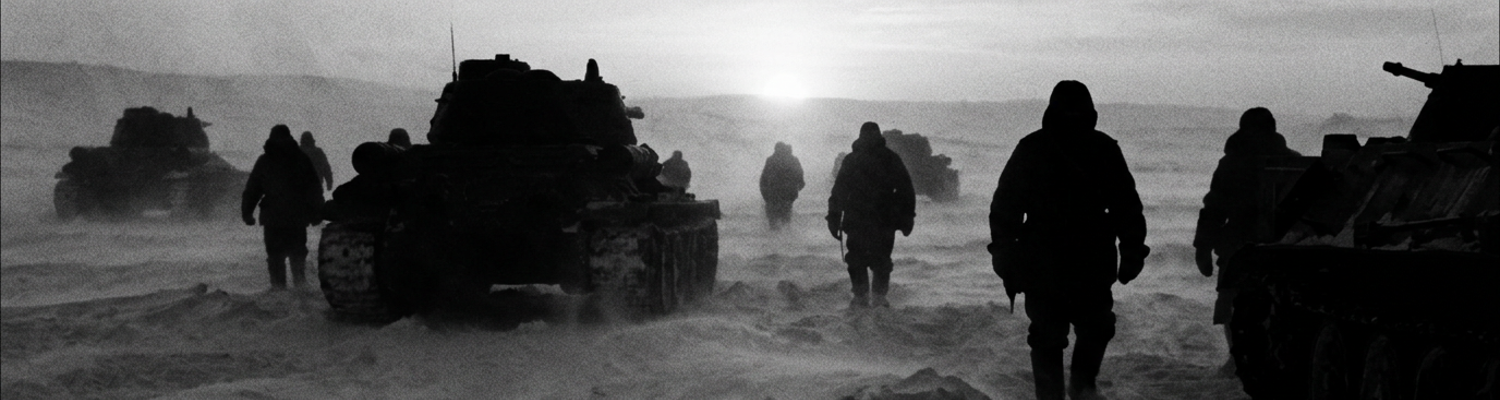

The Imjin River Defensive Line in January 1951
A close review of operational logs indicates that physical exhaustion broke combat efficiency across the line before the first Chinese bugle sounded across the valley. Men marched over seventy miles southward along cratered dirt trails without hot food. Their boots soaked with sweat. That sweat turned to ice inside rubber shoepacs the instant movement stopped. In makeshift command dugouts scraped into the ridgelines, company commanders worked by candle stubs. They tried to complete casualty requisitions and ammunition expenditure reports with fingers swollen to twice their normal size. Ink froze inside fountain pens. Field desks sat perched over wet mud. Riflemen outside shivered in shallow scratch trenches. They chewed frozen C-rations until their gums bled.
Men dropped asleep while standing upright on perimeter watch.
Archival evidence shows that by January 1, 1951, a dry Siberian anticyclone plunged temperatures across northern Gyeonggi Province to twenty-five degrees below zero Fahrenheit. Cold of this magnitude destroyed standard operating doctrine. Standard issue weapons failed mechanically. Lubricating oil thickened into an adhesive sludge. This caused the bolts of M1 Garand rifles and Browning Automatic Rifles to jam midway through their cycling stroke. Mortarmen found that the bipods of their 60mm and 81mm tubes snapped under shock. Cold steel became brittle. The hydraulic recoil mechanisms of 105mm M101 howitzers seized. They refused to return the barrel to battery after discharging. Artillery crews built gasoline fires directly beneath the gun carriages. Digging standard foxholes in the frozen granite earth required C-4 plastic explosive. Entrenching tools simply bent or broke against ground that had frozen solid to a depth of nearly three feet.
The Imjin River froze solid enough to support loaded four-ton trucks.
When examining the historical record of the Chinese Third Phase Campaign, this ice eliminated the river as a water barrier. US Army I Corps held responsibility for defending the secondary withdrawal routes north of Seoul. They strung the 24th Infantry Division, the 25th Infantry Division, and the Republic of Korea 1st Infantry Division across defensive sectors designated as Line Golden and Line Nevada. General Frank W. Milburn established his command posts along the main north-south axis through Uijeongbu and Munsan-ni. Opposing them, the Chinese Peoples Volunteer Army 39th and 50th Armies bypassed prepared artillery kill zones. Infantry columns marched directly across the frozen surface of the river under cover of night. Supply routes ran back to dry ration depots at Yongsan. Trucks running north along Route 1 suffered fuel line freeze-ups. Moisture condensed and turned to ice pellets inside the carburetors.
Battalion commanders faced strict Eighth Army directives requiring hourly written disposition reports. Field telephone wire became brittle. It snapped whenever tracked vehicles crossed the lines. Radios running on dry BA-48 batteries lost over seventy percent of their operating life within twenty minutes of exposure to the open air. Mess sections burned diesel-soaked sand inside cut-down oil drums to keep engine blocks from cracking. Squad leaders rotated men into covered holes every fifteen minutes to check feet for white, waxy patches of third-degree frostbite. Forward outposts of the 19th Infantry Regiment took direct small arms fire from Chinese infiltration teams wearing padded white uniforms by midnight on January 2. Frozen riflemen cleared jammed extractors using bayonet tips in the dark.
Bureaucratic Gridlock at the Uijeongbu Railhead
Six miles behind the front, supply trains sat frozen on the tracks.
A close review of operational logs indicates that at the Uijeongbu marshaling yards, sixteen standard-gauge steam locomotives and over eighty freight cars stood motionless under two feet of powdered snow. Steam boiler valves cracked when temperatures dropped past minus twenty degrees Fahrenheit. Train crews burned creosote-soaked cross-ties along the ballast just to keep water injectors clear of solid ice. Rifle companies of the 21st and 19th Infantry Regiments clawed into the ridgelines five miles north without dry socks or hot food. Pallets of 10-in-1 ration packs, five-gallon jerrycans of 80-octane gasoline, and winter shoepacs sat chained to flatcars. Korean National Railroad switchmen fled south along Route 3 toward Seoul on January 2. They left the track hand-switches frozen solid in position and blocking the main rail sidings. US Army 2nd Quartermaster Depot detachments lacked heavy yard cranes to unload the wooden crates manually without power winches. Dispatchers refused to clear train movements southward. They would not authorize forward distribution without signed cargo manifests stamped by Eighth Army officers who had already evacuated their staff sections across the Han River.
Paperwork stopped the food.
Archival evidence shows that peacetime supply manuals governed every crate inside the Uijeongbu warehouse complex. Depot officers enforced Army Regulation 700-10. They demanded that unit supply sergeants provide triplicate company survey vouchers. These vouchers needed battalion commander signatures and explicit line-item counts of previously consumed B-rations before releasing emergency C-rations or 5-in-1 combat rations. Field commanders from the 24th Infantry Division arrived at the depot loading docks by jeep. Their faces were black with soot and their uniforms caked with frozen mud. Quartermaster clerks rejected handwritten emergency requisitions because the standard forms lacked carbon-copy receipts or proper ordnance supply codes. Accountable property officers feared personal financial liability for missing inventory during post-combat property audits. Requisitions sat unapproved inside wooden desk trays. Clerks used charcoal braziers to thaw bottles of black stamping ink. Every single delivery of dried beans, canned meat, and five-gallon cans of winter motor oil required three distinct voucher endorsements. The requisitioning company commander, the regimental S-4 officer, and the depot property custodian all had to sign.
Men were starving ten miles away.
When examining the historical record, this bureaucratic bottleneck severed line units along the Tokchon-Uijeongbu corridor during the exact hours the Chinese 39th Army pressed its assault. Company commanders sent armed runner teams down the icy cuts of Route 3 to plead directly for field rations. Depot clerks turned the runners back empty-handed because frontline supply personnel lacked official War Department rubber stamps. Three flatcars carrying fifty-five-gallon drums of winter-grade lubricating oil and crated 60mm mortar ammunition sat under armed guard from the 728th Military Police Battalion at the rail siding. The guards were ordered to prevent combat infantrymen from foraging or requisitioning supplies by force. Snow accumulated on the canvas tarpaulins covering three hundred thousand field rations. Forward rifle platoons shared a single can of frozen pork and beans among four men. The Uijeongbu depot commander ordered rail crews to couple emergency switch engines to his personal administrative rolling stock by midday on January 3. He chose this over routing cargo gondolas north to the frontline transfer points.
Class I Rations and Frontline Caloric Deficits
Canned rations froze into solid steel-clad blocks before supply trucks reached the ridgelines.
Archival evidence shows that ambient temperatures of minus twenty-five degrees Fahrenheit wrecked the structural stability of the standard Army C-ration during the retreat toward Line Nevada and Line Golden north of Uijeongbu. Each individual M-unit contained a moisture ratio exceeding seventy percent. These units included wet items like ham and lima beans, meat and spaghetti, or corned beef hash. The cold penetrated the wooden crates stacked on open GMC CCKW trucks. That internal liquid expanded by roughly nine percent inside the sealed tinplate containers. The resulting hydraulic pressure split the crimped lateral seams and warped the flat lids. This shattered the hermetic vacuum seals. Sub-zero winds rapidly desiccated the exposed meat. Minor daytime temperature fluctuations allowed blowing road dust and engine soot to penetrate the fissures. This caused spoilage and introduced rot. Riflemen from the 19th Infantry Regiment tried to force open the unruptured cans. They discovered that their standard P-38 folding openers bent and sheared against the solid blocks of ice. The broken metal sliced bare fingers and left the food completely inaccessible.
Men broke their front teeth on frozen lard.
A close review of operational logs indicates that frontline combat in sub-zero Korean weather demanded an intake of at least 4,500 calories per day to sustain physical output. Forward rifle companies across the 24th Infantry Division received fewer than 1,200 usable calories in every operational cycle. Uncontrollable shivering burned through bodily glycogen reserves at an alarming speed. Infantrymen swung pickaxes against frozen granite, dragged communication wire, and stood four-hour perimeter watches. Cold-induced diuresis accelerated physical collapse. Troops could not ingest ice without lowering their core temperatures to dangerous levels. Line platoons discarded entire wooden crates of the accompanying B-unit confections. The frozen sugar bars and compressed biscuit crackers were hard enough to shatter dental work and offered zero moisture.
Foxhole fires became the frontline soldiers only tool against starvation.
When examining the historical record along the 25th Infantry Division sector near Koyang, survival forced troops to ignore strict tactical light discipline. Eighth Army standing operating procedures banned open flames within observation distance of Chinese Peoples Volunteer Army outposts. Infantrymen repeatedly risked mortar barrages to thaw their meat. Soldiers scooped shallow pits into the frozen dirt floors of their two-man fighting holes. They filled the hollows with Korean soil saturated in leaded 80-octane gasoline siphoned from idling two-and-a-half-ton trucks or vehicle fuel lines. Lighting this fuel-soaked dirt created a crude, slow-burning brazier. The fire filled the revetment with thick, greasy fumes. Riflemen balanced the split cans of corned beef hash or meat stew on M1 Garand bayonets thrust into the flames. They turned the metal continuously in an attempt to liquefy the contents. The petroleum soot blackened the outer half-inch of meat into an unpalatable, fuel-flavored charcoal. The core of the ration remained frozen solid at zero degrees. Pine scrub scraped from the ridgelines sparked loudly in these perimeter fires. Plumes of smoke rose into the clear night air. This drew direct 60mm and 82mm mortar fire from Chinese 39th Army spotters.
Exhausted squad leaders stopped issuing disciplinary reprimands for unauthorized perimeter fires.
Mechanical Failure of Small Arms Receivers
A close review of operational logs indicates that the mechanical failure of infantry weapons occurred before Chinese forces reached grenade range during the defensive stands of January 2 and 3 along the Uijeongbu corridor. War Department maintenance doctrine had trained the 24th Infantry Division to clean weapons with standard issue Preservative Lubricating Oil, Special. This oil met specification USA 2-126. Ambient temperatures fell below minus twenty degrees Fahrenheit across the frozen valleys of Line Nevada. This petroleum-based mixture underwent severe chemical separation. The lighter solvent components evaporated. Heavy paraffin waxes and mineral distillates remained behind. These thickened into a rigid, amber lacquer across every metal friction point. This sticky residue bound the dual locking lugs of the rotating bolt directly to the inner raceways of the forged receiver body inside the receiver wells of M1 Garand rifles and M1 Carbines. The operating rod cycled rearward under gas pressure tapped from the barrel port. It hit an immovable wall of gummy grease that arrested the mechanism less than one inch into its travel stroke.
Standard field lubrication acted as an adhesive.
Archival evidence shows that company officers in the 19th Infantry Regiment at Hill 214 faced an impossible Ordnance conflict. Technical Manual 9-2800 strictly forbade line infantry from stripping protective oil from weapons surfaces. The manual threatened court-martial for soldiers who operated small arms completely dry. Dry metal was the only surface that functioned in forty-mile-per-hour Siberian winds. Desperate squad leaders stole cans of leaded vehicle gasoline from transport pools. They fully submerged disassembled Garand receivers, operating rod springs, and carbine slide mechanisms into open buckets. This washed away the petrified Army lubricant. Stripped bare, the unlubricated steel parts scraped against each other with grinding friction. This created micro-abrasions that seized when condensation from a rifleman breath froze instantly over the exposed ejection ports.
Clean steel welded itself to blowing ice.
When examining the historical record of the PVA 39th Army penetration of the 21st Infantry Regiment outpost line near Chupa-ri, the congealed grease created an even deadlier mechanical failure inside the bolt interior. The free-floating firing pin within the Garand bolt body relies entirely on unrestricted forward momentum when released by the hammer strike. That pin rides through a narrow cylindrical bore less than three-tenths of an inch wide. Thickened petroleum sludge trapped within that internal bore absorbed the kinetic energy of the falling hammer at twenty-four below zero. The mainspring became brittle from extreme cold and suffered reduced elastic rebound. It failed to drive the hammer home with specified striking velocity. The firing pin crept forward. It left tiny, shallow impressions on the brass without crushing the explosive compound. It failed to indent the primer cup of standard .30-06 M2 ammunition with the forty inch-ounces of kinetic energy required for reliable detonation.
The hammer dropped with a dry metallic click.
Rifles turned into non-repeating single-shot carbines as perimeter positions dissolved under night assault. Soldiers who experienced misfires had to manually cycle the action. They planted weapon buttplates into the frozen earth and kicked the operating rod handles downward with the heels of their rubber shoepacs to clear unspent rounds. This brute-force clearance consistently snapped the brittle extractor claws clean off the bolt face. Swollen cartridge cases wedged permanently inside the chamber. Men fighting from shallow fighting pits along the frozen ridges were left holding heavy steel weights. They frantically pried at brass case rims using M1 bayonets. Chinese infantry armed with dry, unlubricated PPSh-41 submachine guns cleared the perimeter trenches.
Crew-Served Weapon Breakdowns and Ruptured Jackets
Water froze solid inside the machine gun barrels before the gunners could chamber a belt.
Archival evidence shows that weapon crews defending the secondary ridges above the frozen Imjin River faced immediate catastrophic structural failure with the Browning M1917A1 water-cooled machine gun. Technical manuals specified filling the seven-pint tubular jacket with an equal mix of water and denatured alcohol or issue ethylene glycol to survive sub-zero weather. Depot detachments at Yongsan had exhausted all alcohol-based antifreeze shipments by the final week of December. They sent north only standard five-gallon water cans and unthinned motor oils. Ambient temperatures along the 24th Infantry Division defensive line sank to twenty-four below zero. Untreated water inside the heavy steel cooling jackets turned into dense ice within twenty minutes of a sustained ceasefire. The trapped liquid expanded outward with massive hydraulic force. Thin sheet-steel outer casings bulged. Bronze end-caps fractured at the threaded trunnions. Jacket seams tore open from the receiver bracket to the front muzzle packing gland. Ice filled the internal clearances. This froze the barrel directly to the casing and prevented the half-inch backward recoil stroke required to unlock the bolt and cycle ammunition. Heavy weapons platoons of the 19th Infantry Regiment found their primary defensive automatic weapons transformed into cracked, useless iron tubes. They spewed frozen slush the instant a single live cartridge discharged.
Gun jackets split open down their weld seams with loud mechanical cracks.
A close review of operational logs indicates that frontline machine gunners turned to desperate field expedients to keep their weapons from locking up completely. They lacked functional coolant and fought sub-zero winds. Gun teams assigned to both the M1917A1 and air-cooled M1919A4 systems resorted to continuous dry-firing and manual cycling during perimeter night watches to generate mechanical friction. Soldiers stood over tripod mounts. They racked the retracting slide handles rearward and dropped the firing pins against empty chambers every sixty to ninety seconds. Squad leaders calculated that continuous metal-on-metal contact would generate sufficient surface warmth across the bolt raceways, barrel extension, and driving spring tube. This would prevent residual petroleum grease from hardening into hard amber wax.
This improvised friction heating degraded internal components.
When examining the historical record across the 25th Infantry Division sector at Line Nevada, dry-cycling brittle, cold-crystallized steel caused immediate, catastrophic structural wear. Striking the firing pin repeatedly against an empty chamber without the cushioning brass primer of a live .30-06 round shattered the narrow striker tips inside the bolt body. The hardened steel sears and cocking levers ground together dry. This stripped critical thousandths of an inch off mechanical engagement notches. Frictional heat generated by rapid manual racking warmed the immediate contact points along the barrel extension just enough to draw blowing snow into the receiver. The moisture instantly refroze into glaze ice over the belt feed pawl and cartridge extractor. Chinese infiltration platoons attacked the 27th Infantry Regiment positions near Chupa-ri. Gunners slammed loaded fabric belts into feed ways only to experience immediate weapon stoppages on the initial burst. Brittle firing pin tips snapped off on the first round. Chambers that had been cleared of protective lubrication suffered severe barrel throat erosion within the first two hundred rounds of rapid fire. This stripped the rifling and allowed bullets to keyhole wildly across the valley floor.
Exhausted three-man gun crews stripped weapon assemblies with bare hands in total darkness. They pried stuck bolt components loose with bayonet tips while metal froze directly to human skin. The forward company positions lost thirty-five percent of their operational automatic fire capability before midnight on January 3. This left interlocking defensive fires full of blind dead zones. Enemy assault platoons exploited these gaps without taking a single round of machine gun fire. Ordnance inspection teams condemned forty-two split M1917A1 water jackets in a single twelve-hour reporting cycle at the regimental collecting point north of Uijeongbu. Replacement parts did not exist on any supply train north of the Han River.
Rocket Launcher Ignition Failures During Night Probes
The rocket gunners pulled the triggers and nothing happened.
Archival evidence shows that weapon teams fielding the M20 3.5-inch rocket launcher suffered systematic ignition failure across the entire 24th Infantry Division perimeter north of Uijeongbu. Technical doctrine designed the system to detonate an electric squib inside the M28A2 high-explosive antitank rocket via an electrical impulse. This impulse routed through the grip contact mechanism and rear barrel latch. At twenty-four degrees below zero, the dry cell batteries stored within cold-weather battery packs suffered complete chemical cessation. They shed operating voltage until the circuit could not deliver the minimal current needed to bridge the ignition wire. Condensation from thermal differentials coated the spring-loaded copper contact arm on the rear barrel band with a microscopic layer of clear ice. That frozen film acted as a non-conductive dielectric barrier between the launcher body and the rocket tail assembly contact ring. Battery current trickled through the circuit. The solid-grain propellant sticks inside the rocket motor remained cold-soaked past their chemical flashpoint. They refused to combust when exposed to the weak spark of the squib.
Dry cell output dropped to zero within fifteen minutes of exposure to the freezing wind.
When examining the historical record of the Chinese Peoples Volunteer Army night probes on January 2, frontline infantry squads along Line Nevada found themselves stripped of their only man-portable antitank and bunker-clearing weapon. Patrols from the Chinese 116th Division pressed forward under mortar concealment. They pushed small-unit infiltration teams directly against the outpost line of the 19th Infantry Regiment 3rd Battalion near Hill 214. Enemy combat engineers rapidly occupied dry-stone farm huts. They threw up log-and-earth breastworks across the frozen irrigation ditches. They set up water-cooled Maxim machine guns that pinned down two American rifle platoons in enfilade. Rocket launcher teams crawled through the crusted snow to within forty yards of these fortified positions. They loaded M28A2 rockets into the sixty-inch aluminum barrels and squeezed the trigger grips repeatedly. Tubes remained inert. Squads facing armored probes along the frozen roadbed of Route 3 had zero capacity to halt approaching mechanized armor. Infantrymen had to break contact or scramble across bare, open fields while trying to reach throwing range with hand-thrown white phosphorus grenades.
Rocket crews kept backup dry cells inside their wool shirts against bare chest skin to preserve chemical warmth.
A close review of operational logs indicates that this physical warmth dissipated within seconds of inserting the batteries into the launcher handle. At the outpost line held by Company K of the 21st Infantry Regiment, two-man rocket teams cycled through night watch rotations. They reported six consecutive misfires while trying to destroy a reinforced machine gun nest blocking the company withdrawal route. The assistant gunner continually scraped the copper contact pins of the launcher with the serrated edge of an entrenching tool to clear away frost glaze. Blowing powder snow re-iced the exposed terminal before the gunner could re-seat the rocket. Field commanders received urgent radio requests for replacement dry cells from forward platoons. Regimental ammunition supply points held only uninsulated open wooden crates of frozen batteries shipped north without protective vapor-barrier wrappings. Left without anti-armor capability, defensive perimeters collapsed inward along the ridgeline cuts. Squad leaders cleared fortified positions through frontal infantry assaults using bayonets and M26 fragmentation grenades.
Ordnance officers at the Eighth Army rear collecting station logged seventy-four complete M20 ignition assemblies as non-functional due to battery freeze-outs before dawn on January 3.
Battalion Aid Stations and Traumatic Shock Management
Blood froze inside the rubber intravenous delivery tubes before fluid reached a vein.
A close review of operational logs indicates that frontline medical personnel within the 24th Infantry Division lost their primary means of acute pain suppression during the first hours of the withdrawal from the Imjin. Technical doctrine instructed company aidmen to treat penetrating wounds and traumatic amputations with standard-issue Tartrate Morphine syrettes. Each contained a half-grain of narcotic solution sealed inside a collapsible tin reservoir equipped with a pre-attached hollow needle. At twenty-four degrees below zero, that aqueous narcotic solution solidified into a rigid, amber gel. Aidmen attempting to depress the small tin tubes along the snowbound slopes near Chupa-ri found the needle bores blocked by crystallized chemicals. Mechanical pressure against the hardened tubes simply split the soft alloy walls. Corpsmen placed two to three glass-sheathed syrettes directly into their own mouths to make the medication liquid again under active fire. They held the chilled units under their tongues and against their inner cheeks. This melted the congealed analgesic using oral body heat. This practice caused chemical burns and oral numbness when cracked ampoules leaked into the mouth. It remained the sole field method capable of restoring the analgesic to an injectable liquid state before a casualty died of neurogenic shock.
Medics kept the narcotics against their own gums to stop the liquid from re-freezing.
Archival evidence shows that unheated battalion triage shelters experienced an immediate failure of fluid resuscitation doctrine. Standard shock management relied on the Army-Navy civilian blood derivative kit. This was a two-part package containing a vacuum-sealed bottle of desiccated normal human plasma flakes paired with a matching bottle of pyrogen-free distilled water. Operational procedures required the medic to connect both containers using an internal double-ended transfer needle. The partial vacuum inside the plasma bottle pulled the water through a rubber connector hose and reconstituted the dry proteins. Unheated canvas GP-medium tents operated by the 19th Infantry Regiment Medical Company north of Uijeongbu offered zero thermal protection. M-1941 Yukon space heaters sat cold due to leaded gasoline gumming up the burner carburetors. Ambient temperatures inside the triage space dropped to fifteen below zero. This froze the distilled water supplies into dense blocks of solid ice. Expanding ice shattered the non-tempered glass bottles. Frozen shards spilled across the duckboards and rendered the desiccated plasma powder unusable.
The double-ended needles broke against solid cylinders of ice inside the bottles.
When examining the historical record across the Line Nevada sector, the absence of fluid expanders turned routine traumatic wounds into fatal shock events. Severe blood loss triggered immediate peripheral vascular collapse. External exposure worsened this condition and contracted surface veins until they vanished entirely beneath the skin. Battalion surgeons attempting intravenous cutdowns on shivering casualties found that chilled scalpel blades tore stiffened connective tissue. The core body temperatures of the casualties dropped below ninety degrees Fahrenheit on bare canvas stretchers set directly over frozen soil. Warming blankets sent forward from division medical supply depots had become saturated with blowing snow during transit on open three-quarter-ton weapons carriers. They froze stiff into rigid sheets. Medical officers at the 21st Infantry Regiment aid station near Tongduchon logged sixty-eight traumatic casualties between midnight and dawn on January 3. They recorded forty-one deaths directly attributable to irreversible hypothermic shock rather than fatal trauma to primary organs.
Evacuation Bottlenecks and Litter Jeep Mechanical Failures
Cracked cylinder blocks turned frontline casualty transport into static wreckage.
Archival evidence shows that quarter-ton 4x4 utility trucks modified with welded angle-iron litter racks failed across the entire 24th Infantry Division perimeter within forty-eight hours of the temperature drop. These vehicles carried two external stretcher tiers mounted directly over the hood and rear passenger compartment. This exposed both wounded men and mechanical assemblies to direct sub-zero gales. Maintenance sections lacked ethylene glycol to maintain the forty-percent antifreeze concentration demanded by field operation manuals. Drivers left engines idling continuously to prevent freeze-ups. Forty-mile-per-hour winds funneling down the Imjin River corridor rapidly cooled the lower radiator tanks below the freezing threshold of plain water. Ice slush formed inside the narrow brass honeycomb cores. This arrested coolant circulation. Internal coolant jackets expanded violently. They fractured the cast-iron cylinder walls along the side water distribution rails and popped the core freeze plugs clean out of the engine castings. Vehicles stalled along single-lane oxcart trails between Chupa-ri and Tongduchon. Their drive wheels wedged into fourteen-inch-deep frozen ruts. These ruts sheared off steering knuckle joints when recovery teams attempted to tow the dead chassis using three-quarter-ton trucks.
Litter patients remained strapped to the hoods of dead vehicles while temperatures sank to twenty-four below zero.
When examining the historical record of the 21st and 19th Infantry Regiments, wounded infantrymen faced evacuation delays lasting three to four full days before transport to forward surgical units could be secured. Battalion aid stations operating out of unheated earth bunkers near Route 3 were designed to hold casualties for less than three hours before rearward dispatch. The total collapse of motor ambulance movement severed evacuation chains. Over two hundred litter cases were stranded in frontline dugout shelters. Forward surgical installations displaced thirty-five miles south toward Anyang to avoid encirclement by advancing Chinese 39th Army columns. The 8055th Mobile Army Surgical Hospital was among them. This left only isolated clearing stations north of Seoul. Casualties with open abdominal wounds and compound femur fractures lay on freezing canvas litters piled directly on dirt floors. They were wrapped in single wool blankets that offered no thermal barrier against the frozen ground. Secondary wound trauma developed rapidly. Localized capillary blood flow halted. Viable muscle tissue turned gangrenous. External cold drove human core temperatures down into severe clinical hypothermia. Frontline medical logs indicate that multiple litter casualties died of exposure while waiting seventy-two hours for ambulance clearance that never arrived.
Every cleared trail was blocked by abandoned machinery.
A close review of operational logs indicates that regimental surgeons repeatedly notified Eighth Army coordinators that litter evacuation by standard wheeled vehicles had ceased functioning entirely along the secondary ridges. Administrative directives from division headquarters continued to require written tri-service transfer slips and property accountability forms for every empty stretcher exchanged at regimental collecting points. Stretcher bearers attempting to carry wounded men by hand across four miles of broken granite terrain collapsed from physical exhaustion within four hundred yards. Heavy Dodge WC-54 motor ambulances sent north to bridge the gap suffered frozen differential grease. They snapped rear axle shafts on frozen boulders and jammed the single-track withdrawal corridor north of Uijeongbu. Line companies of the 24th Division abandoned forty-eight non-ambulatory casualties in makeshift field bunkers under the care of volunteer aidmen armed only with small arms and frozen plasma bottles by the morning of January 4.