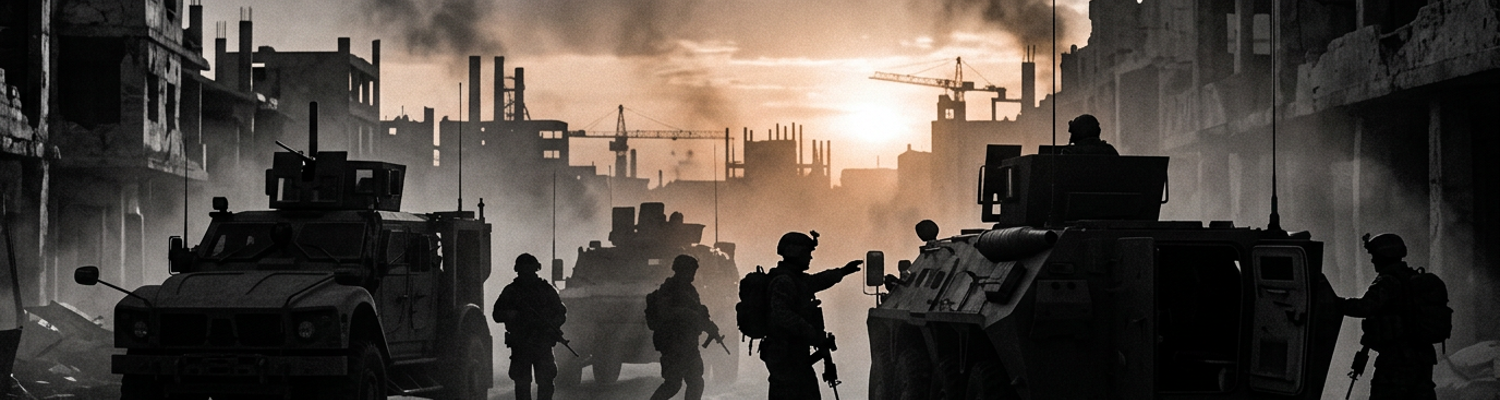

National Street Armored Withdrawal Tactics
A close review of operational logs indicates that more than five thousand Somali militia combatants held dominant firing positions throughout the city grid against approximately five hundred allied troops during the dawn hours of October 4, 1993. Hostile fighters occupied nearly every masonry structure overlooking the egress route. They established an uneven ratio of ten to one. Elements of the 2nd Battalion, 14th Infantry Regiment encountered dense small arms fire along National Street after breaking out from the Task Force Ranger perimeter. Heavy Kalashnikov volleys converged from rooftops and shattered concrete storefronts. Drum fed RPD machine gun fire swept the intersections. Unguided RPG 7 rockets impacted the asphalt as the mechanized column pushed west toward the K 4 roundabout. Lead Malaysian Condor armored personnel carriers sustained continuous surface impacts against their welded steel armor.
They suffered structural penetrations from high explosive anti tank rounds.
These impacts ignited interior cabins and disabled drive shafts. Riflemen from Charlie Company, 2 14 Infantry returned fire through vehicle firing ports and open top hatches. They expended thousands of 5.56x45mm rounds to suppress snipers positioned on multi story cinderblock buildings flanking the four lane transit corridor. Mechanical stress caused radiators to boil over. Cockpits filled with steam and coolant odor while rounds repeatedly shattered vision blocks.
Armor alone could not halt the barrage.
When examining the historical record, standard field doctrine mandated that casualties be evacuated using four man litter teams to stabilize spine and pelvis injuries before loading patients into dedicated medical transport. Unrelenting hostile fire forced medics to abandon doctrinal dismounted litter carries during movement. Incoming 7.62x39mm rounds striking the macadam eliminated any possibility of medical specialists maneuvering on foot alongside the vehicles without taking immediate losses. Shrapnel from air bursting rocket propelled grenades peppered the asphalt. Ricochets skipped beneath vehicle undercarriages at knee level along the gutters. Battalion medical personnel recognized that pausing the armored column to assemble folding litters and execute doctrinal manual transfers meant remaining static inside pre sighted kill zones for three to five minutes per casualty.
Interiors of the Malaysian Condors were engineered to transport only six to nine personnel including crew.
They were already packed with double their rated capacity of wounded Rangers and aircrew members. Medics inside the troop compartments had exhausted their supply of morphine, IV bags, and compression dressings. They operated in near total darkness while kneeling on floors slick with motor oil and blood.
Movement was the only defense.
Archival evidence shows that field expedient measures supplanted standard evacuation methods in real time. Infantrymen lashed wounded personnel directly to the exterior hulls and engine decks of armored personnel carriers to sustain withdrawal speed. Soldiers stripped nylon ratchet tie downs, five hundred and fifty pound parachute suspension cord, and vehicle cargo webbing to bind injured men across the sloped armor plates. Combat casualties lay exposed atop boiling steel engine covers radiating heat up to two hundred degrees Fahrenheit. Drivers maintained speeds of twenty to twenty five miles per hour through street barricades, burning tires, and concrete rubble. Grunts secured themselves with single arm holds around hatch rims and antenna mounting brackets. They fired M16A2 rifles with their free hands to keep militia gunners from acquiring stable sight pictures.
This improvised configuration prevented the convoy from decelerating to a halt.
Stopping would have exposed the lightly armored wheeled transports to close range anti armor volleys. Convoy vehicles reached the outer perimeter checkpoints of Mogadishu Stadium at 0630 hours. Pakistani military doctors and American triage teams severed the nylon lashing lines with combat shears. They unloaded twenty two exterior mounted casualties directly onto tarmac triage tarps.
Exterior Armor Casualty Transport Dynamics
Steel under fire turned lethal without a single bullet penetrating the hull.
A close review of operational logs indicates that the rear engine compartments of the Malaysian Condor armored personnel carriers generated extreme heat profiles during sustained low gear operation. Water cooled OM 352A turbo diesel engines pushed exhaust manifold and deck plate surface temperatures beyond two hundred degrees Fahrenheit. Vehicles idled and lurched across rubble choked corridors. Casualties laid prone across these metal surfaces suffered direct contact thermal injuries through their combat uniforms within minutes. Synthetics in standard issue desert camouflage uniforms and load bearing nylon melted into open flesh. This produced second degree burns across thighs, buttocks, and torsos that intermingled with shrapnel lacerations.
Battalion medical logs compiled later that morning at the Pakistani field hospital recorded widespread blistering on the dorsal surfaces of wounded personnel.
This heat transfer disrupted standard diagnostic measures. Combat medics found it impossible to check peripheral circulation or accurately evaluate hemorrhagic shock. Radiant deck heat artificially flushed pale skin and accelerated localized edema. It mimicked high fevers while obscuring the hypothermia typically accompanying severe blood loss.
Ratchets and tie downs slipped off blood slicked metal.
Archival evidence shows that drivers in the Malaysian mechanized column executed aggressive evasive maneuvers to clear street blockades near the Hawlwadig intersection. These movements generated sudden lateral forces that threatened to toss unrestrained casualties onto the roadway. Riflemen from Charlie Company, 2nd Battalion, 14th Infantry leaned directly out of open troop hatches and draped their bodies across the sloped superstructure. Men wedged combat boots into exterior grab handles and pioneer tool racks. They hooked arms over exhaust shrouds to lock themselves down.
These soldiers used their body weight to physically pin screaming, wounded comrades against the vibrating armor plate.
Vehicles swerved at twenty five miles per hour around smoking tire barriers and anti tank craters. Gun recoil rattled through their shoulders as they returned fire single handed with M16A2 rifles to suppress rooftop snipers. They wrapped their free arms around the tactical vests and belts of injured Rangers to stop them from sliding under the turning wheels of trailing six wheeled vehicles.
Open armor offered no sanctuary from direct rifle volleys.
When examining the historical record, battalion medical personnel were forced to carry out emergency interventions completely unprotected atop these exposed decks while under interlocking automatic weapons fire. Somali riflemen firing Soviet pattern 7.62x39mm weapons from two story masonry apartments targeted any movement on top of the vehicles. They struck the Condor hulls inches from the wounded. Medics knelt upright in this crossfire to locate severed femoral and brachial arteries. They worked entirely without cover. Tourniquet application required two hands. Corpsmen abandoned their personal weapons and disregarded incoming sniper rounds while wrapping muslin cravats and windlasses across shattered limbs.
Pulverized plaster and hot carbon grit blew across open compound fractures.
This contaminated sterile dressings as soon as packages were torn open with teeth. Medics held manual pressure on spurting arterial wounds with their bare palms. They braced against the bucking metal roof until the convoy crossed through the entry gates of Mogadishu Stadium.
Pakistani Stadium Casualty Collection Point Operations
A close review of operational logs indicates that the withdrawal from the Olympic Hotel sector collapsed directly into an intermediate casualty collection point. This station was established inside the Pakistani Stadium compound at 0645 hours on October 4, 1993. The stadium functioned as the fortified forward headquarters for the Pakistani UNOSOM II Brigade. It was a sprawling concrete sports complex located northeast of the city center along 21st October Road. Shattered Malaysian Condor transports rolled through the concertina wire barriers on shredded run flat tires. They trailed diesel smoke from punctured cooling lines, broken axle housings, and bullet riddled engine cowlings. Drivers slammed warped brake drums to an abrupt halt across the interior tarmac.
Infantrymen jumped down to detach casualties lashed to the exterior decks.
Fluid lines ruptured across several steering knuckles. Hot transmission oil and blood dumped into the drainage gutters. United Nations command officers feared targeted mortar impacts or militia rocket propelled grenades from surrounding neighborhoods. They diverted sixty four wounded American soldiers and Malaysian crewmen out of the open field into the western grandstand.
Exposed concrete provided the only ballistic shield available.
Archival evidence shows that Battalion Surgeon Captain Frank Sweetser led 2 14th Infantry combat medics in converting austere concrete locker rooms into a working triage station beneath the reinforced grandstands. Sweetser encountered an unventilated sports dressing room coated in dried mud, human waste, and stagnant water. It was entirely devoid of running taps or operational electrical lines. Medics used combat knives to slice open crates of field dressings. They quickly strung battery powered chemical light sticks from rusted rebar loops hanging out of the ceiling slabs. Two evaluation teams formed under Sweetser's direct orders to separate catastrophic vascular trauma from secondary fragmentation wounds.
Field grease pencils marked priority codes onto the foreheads of incoming casualties.
They designated urgent surgical candidates with red letters across bare skin. Bandage shears cut away shrapnel mangled desert camouflage uniforms. Personnel set up three simultaneous emergency airway stations directly on top of rotting wooden locker benches. They used handheld suction bulbs and plastic cuffed endotracheal tubes.
Supplies of sterile gloves and surgical shears ran out in forty minutes.
When examining the historical record, casualties were arrayed across debris covered concrete floors due to a complete lack of medical cots and baseline holding facilities. Prior mission planning had anticipated an immediate handoff to rear echelon hospital units at the airfield. This left the forward teams without standard canvas litters, folding cots, or clean wool blankets. Over forty severely injured soldiers lay shoulder to shoulder on the unwashed masonry. Their bare skin pressed against pulverized plaster, sand drift, and spent shell casings.
Strips of hundred mile an hour tape secured one liter bags of normal saline and Ringer's lactate to overhead water pipes.
Walking wounded from Charlie Company held plastic intravenous fluid bladders above their fallen comrades. They manually squeezed the vinyl bags to accelerate volume resuscitation for men in deep hemorrhagic shock. Hypothermia set in rapidly as body heat drained into the cold foundation slabs. Corpsmen covered shivering casualties with discarded vehicle tarpaulins, tactical nylon vests, and severed foam vehicle cushions.
Blood and saline runoff pooled around the floor drain covers.
Pakistani medical officers entered through the western blast portal with five gallon water cans, sterile gauze rolls, and boxes of morphine sulfate ampules at 0725 hours. Medics immediately initiated reassessments on thirty eight pressure dressings applied during vehicle transport along National Street. They replaced saturated field dressings with broad abdominal pads and elastic bandages. Manual sphygmomanometers recorded systolic blood pressures directly onto strips of white adhesive tape pasted across the soldiers' sternums. Sweetser conducted emergency needle thoracostomies on two soldiers exhibiting tension pneumothorax. He inserted fourteen gauge angiocatheters through the second intercostal space along the midclavicular line to vent trapped pleural air.
Ambulance trucks began loading stabilized critical cases for final transfer down the coastal transit corridor to the 46th Combat Support Hospital by 0750 hours.
Locker Room Emergency Medical Improvisations
A close review of operational logs indicates that Somali militia barricades along 21st October Road completely cut off the stadium from the intermediate staging base at the Mogadishu shoreline. Heavily armed Habr Gidr elements controlled the exterior intersections with recoilless rifles and truck mounted DShK heavy machine guns. This prevented ground evacuation ambulances and resupply trucks from delivering replacement medical cargo. Inside the damp grandstand dressing rooms, 2 14th Infantry corpsmen confronted an absolute shortfall of intravenous fluids. Casualty volume outpaced stock levels within thirty minutes. Captain Frank Sweetser ordered personnel to strictly restrict remaining one liter bags of lactated Ringer's and normal saline. They withheld crystalloids from casualties who still possessed a detectable radial pulse.
Medics reserved the dwindling plastic fluid bladders exclusively for men slipping into uncompensated cardiovascular collapse.
Corpsmen salvaged used plastic intravenous lines to keep entry lines open across dozens of vascular access sites. They cut off contaminated needle hubs with trauma shears and trimmed tubing down to six inch extension segments. Personnel cleaned plastic luer lock connectors with povidone iodine swabs. They re spiked the shortened gravity lines into fresh bags to bridge fluid delivery across multiple patients sequentially.
Sterile supplies were gone by 0715 hours.
Archival evidence shows that standard aluminum SAM splints and wire ladder supports had already been consumed during the breakout along Hawlwadig Road. Combat medics dismantled wooden locker benches and scavenged structural debris from the concrete corridors to immobilize severe compound fractures caused by tumbling 7.62x39mm ball ammunition and mortar shrapnel. Corpsmen split cracked pine planks with entrenching tools. They carved crude rigid splints to brace flail limbs and shattered femurs. Sterile roller gauze was exhausted. Soldiers stripped torn desert camouflage blouses, dirty cotton undershirts, and canvas web gear off wounded men to bind these wooden slats against fractured extremities.
Medics unbolted two inch wide nylon ratchet tie downs and heavy cargo lashing straps directly from the interiors of the damaged Malaysian Condors.
Corpsmen ratcheted the mechanical steel buckles down directly across axillary and inguinal junctional bleed sites where standard combat tourniquets could not physically bite. They wrapped the coarse nylon webbing over thick wads of unraveled uniform fabric. These makeshift mechanical pressure apparatuses held constant, crushing tamponade over shredded femoral arteries. This halted high volume blood loss while casualties lay shivering on the wet concrete slabs.
Ratchets clicked until the arterial pulses beneath them stopped.
When examining the historical record, battalion medical personnel abandoned standard United States Army doctrinal staging protocols. Traditional categorization formulas failed to address the sheer density of trauma presenting simultaneously. FM 8 55 field manuals outlined tiered priority schemes based on delayed, urgent, and expectant categories designed for mass casualty events backed by dedicated field surgical hospitals. Sweetser threw these formal staging models out entirely. He established an aggressive triage framework governed purely by the immediate physiological presence of acute hemorrhagic shock.
Medical staff bypassed documentation logs.
They evaluated men solely by central capillary refill, altered cognitive responses, and carotid tone. Soldiers retaining palpable peripheral pulses were shunted directly against the perimeter masonry walls with simple compression bandages. They were denied crystalloid bags and pain management. Every functional pair of hands, surgical clamp, and remaining intravenous line went toward soldiers manifesting systemic vascular shutdown from penetrating torso wounds and torn major vessels. Pulseless patients presenting dilated pupils and agonal respirations were designated non salvageable on the spot. This allowed medics to redirect remaining hemostatic dressings and airway equipment to patients hovering on the threshold of decompensated shock.
Survival depended on whether a wrist artery still jumped under a medic's thumb.
Battlefield trauma records show that forty two casualties were sorted and stabilized under this modified circulatory regime within a seventy minute window. Sweetser utilized three pairs of curved Kelly hemostats to clamp exposed, spurting brachial vessels directly in the open wounds. He left the steel instruments locked in place under heaps of vehicle canvas while the casualties waited for air evacuation. Medic teams rotated through the dim grandstand. They manually checked the improvised nylon tie downs every eight minutes to ensure localized pressure had not slipped during patient transfers. Outside the concrete portals, Pakistani armored vehicles periodically fired coaxial machine guns into nearby intersections to keep militia snipers from penetrating the outer walls of the sports complex.
The first wave of UH 60 Black Hawk helicopters touched down on the central soccer pitch by 0805 hours.
Litter teams lifted the stabilized patients directly off the bloodstained locker room floor and transferred them toward surgical suites at the primary port facility.
Immediate Tactical Casualty Log Documentation
Paperwork began before the smell of cordite left the locker room.
A close review of operational logs indicates that battalion administrative staff compiled hand written tactical casualty rosters in the stadium locker rooms within hours of perimeter consolidation. Company clerks and S 1 personnel from the 2nd Battalion, 14th Infantry Regiment pulled green military field notebooks and casualty feeder cards from their rucksacks. They sat on overturned ammunition crates beneath dripping water pipes at 0830 hours on October 4, 1993. Perimeter security elements had just locked down the outer blast gates along 21st October Road. This established a closed sector that allowed administrative tracking to begin. Staff sergeants used ballpoint pens and indelible grease pencils to cross reference entries against blood smeared identity tags.
They sorted Task Force Ranger assault elements, 10th Mountain Division infantrymen, and Malaysian armored crewmen.
Men pressed wet notebook pages against their knee boards. They cataloged casualty names, roster numbers, social security digits, and primary weapon serial numbers before evacuation flights arrived. Battalion Surgeon Captain Frank Sweetser provided direct anatomical assessments to the scribes. Scribes transcribed urgent surgical tallies across ruled legal pads to determine loading manifests for outgoing aircraft bound for coastal medical facilities.
Ink ran across sweat soaked paper.
Archival evidence shows that these hand scribed logs recorded severe extremity trauma, shrapnel penetration from RPG 7 airbursts, and profound hypovolemia as dominant injury patterns. Scribes marked fragmentation wounds across forty seven percent of the entries. They documented where Soviet manufactured PG 7M and OG 7V rockets had detonated against second story concrete lintels and external vehicle armor plates. Jagged steel casing fragments had peppered dismounted soldiers from above. Metal shards drove into necks, shoulders, and unarmored armpits. Severe extremity trauma filled page after page of the tactical registers.
High velocity 7.62x39mm rounds and hot iron debris shattered radius, ulna, and femur bones.
These impacts created compound fractures that severed major circulatory pathways. Notes recorded profound hypovolemia across dozens of urgent surgical candidates. They documented systolic arterial pressures dropping below seventy millimeters of mercury. Medical scribes logged peripheral pulse failures, cold skin temperatures, and blue lips. Soldiers suffered circulatory collapse from uncorrected internal bleeding and severed deep femoral arteries.
Standard equipment doctrine collapsed inside the urban corridors.
When examining the historical record, battalion documentation recorded how the loss of organic litter assets paralyzed traditional casualty collection points during urban movement. Standard operational doctrine required four man teams to carry rigid canvas and aluminum folding litters to intermediate collection nodes behind the frontline trace. Heavy weapons fire along National Street shattered that protocol within minutes of contact. Rocket propelled grenade impacts ignited the exterior sponson racks where Charlie Company carried spare folding litters. Nylon fabrics burned and light metal frames bent into useless scrap. Dismounted riflemen attempting to set up casualty collection points inside masonry courtyards near Hawlwadig Road were pinned down without carrying devices.
Moving an immobilized soldier required four riflemen to grasp poncho corners or uniform collars.
They dragged casualties through rubble while drawing automatic weapons fire. This manual hauling drained sixty percent of a squad's direct suppressive firepower. It stranded wounded men behind vehicle tires and halted tactical momentum across the entire assault corridor. Battalion records completed at 1115 hours listed twenty nine non functional litters abandoned along National Street.
Validation of 1992 Urban Combat Warnings
A close review of operational logs indicates that the triage reports drafted inside the stadium locker rooms directly confirmed the findings of the 1992 President's Council of Advisors for Science and Technology regarding dismounted urban operations. The 1992 assessment had explicitly warned the Pentagon that modern built up environments would drastically elevate casualty counts among dismounted infantry through high angle fire and fragmentation dispersion. Captain Frank Sweetser and the 2 14th Infantry medical staff cross checked trauma cards against physical injuries. The trauma patterns aligned with the council's technical models. Somali militiamen firing 7.62x39mm rifles and PG 7 rockets from two and three story concrete rooftops had struck soldiers through exposed openings in their body armor.
This produced catastrophic peripheral vascular trauma and shattered bones.
Analysis from that 1992 study regarding multi axis projectile fire inside narrow street corridors had forecasted the exact injury patterns written across the battalion scribes' notebooks. Severe fragmentation across unprotected shoulders, severed femoral arteries, and rapid hemorrhagic shock dominated the reports.
Council projections matched the wounded infantrymen lying across the concrete.
When examining the historical record, peacetime doctrine mandating protected, multi echelon evacuation timelines completely collapsed under high density urban counter fire. United States Army Field Manual 8 10 established a rigid sequence of medical evacuation. It dictated point of injury stabilization followed by tracked armored transport to a battalion aid station inside sixty minutes. Somali militia tactics wiped out that structured schedule along National Street and the Hawlwadig corridor. Habr Gidr gunners established interlocking kill zones across primary avenues using drum fed RPD machine guns and RPG 7 launchers. They downed two MH 60 Black Hawks and crippled ground elements.
Evacuation timelines disintegrated immediately.
Standard armored ambulances could not penetrate the barricaded grid without suffering hull penetrations from shaped charge warheads. Aeromedical helicopters could not land in narrow alleys swept by continuous automatic fire. The doctrinal sixty minute evacuation standard stretched into a fifteen hour static defense. Casualties were stranded in unfortified rooms where trauma worsened without surgical stabilization.
Doctrinal evacuation corridors vanished under incoming small arms fire.
Archival evidence shows that patient survivability relied entirely on decentralized medical improvisation rather than formal logistical support pipelines. Habr Gidr ambushes along 21st October Road severed supply lines linking the stadium casualty collection point to rear echelon medical depots at the shoreline base. This cut off deliveries of blood expanders, sterile dressings, and splints. Combat medics and riflemen bypassed formal operational procedures to invent survival measures on the spot. Corpsmen unbolted mechanical nylon cargo straps and ratchet assemblies from damaged Malaysian Condors. They cranked the steel buckles over groin and armpit junctional wounds where standard issue tourniquets could not compress severed femoral or axillary vessels.
Soldiers chopped stadium locker benches into wooden slats using entrenching tool blades.
They bound the raw pine against compound fractures with shredded cotton blouses and suspension line. Standard resupply convoys never crossed the militia barricades. Decentralized field expedient methods replaced formal intravenous resuscitation protocols as crystalloid fluids ran out. Captain Sweetser and battalion medical personnel confronted an immediate depletion of one liter lactated Ringer's bags. They rationed surviving fluid containers exclusively to soldiers without detectable peripheral pulses. Corpsmen severed used intravenous tubing with trauma shears. They shortened the plastic lines to six inch conduits and cleaned connectors with povidone iodine to cycle single fluid units across multiple patients in hemorrhagic shock.
Medics locked steel Kelly hemostats directly onto spurting brachial arteries inside open tissue wounds.
They left the surgical clamps attached beneath vehicle canvas while loading casualties onto helicopters. Survival depended on these ad hoc modifications executed by medics kneeling on wet concrete slabs rather than scheduled delivery from distant field hospitals. Battalion medical records transcribed at 1145 hours registered eighty two percent of severely wounded personnel stabilized using non standard hardware and field altered lines before strategic flights transported them to naval vessels offshore.
Emergence of Modern Frontline Trauma Doctrine
Peacetime medical doctrine failed along the unpaved streets of Mogadishu.
A close review of operational logs indicates that the breakdown of conventional medical response along National Street exposed fundamental flaws in the military's adherence to civilian Advanced Trauma Life Support guidelines. Prior to October 1993, doctrine required field corpsmen to execute standard civilian airway, breathing, and circulation assessments directly at the point of wounding, regardless of hostile fire. Charlie Company riflemen and Task Force Ranger casualties fell under concentrated RPG 7 barrages and RPD machine gun crossfires. Medics attempting dismounted interventions were pinned down or hit within seconds. Halting an armored column to stabilize spines or administer crystalloid bags turned combat vehicles into static targets for Somali gunners firing from second story concrete rooftops.
These catastrophic evacuation failures provided the primary empirical foundation for Captain Frank K. Butler and military medical researchers drafting the initial Tactical Combat Casualty Care protocols published in 1996.
The newly formulated doctrine severed tactical medicine into three operational phases. These phases were Care Under Fire, Tactical Field Care, and Tactical Evacuation Care. Butler's framework established that the best medicine on the battlefield was direct weapon suppression. It directed combatants to return fire and extract casualties from the active kill zone before attempting medical treatments.
Direct pressure alone failed to stop femoral arterial spurts under fire.
When examining the historical record, casualty data recorded by Captain Frank Sweetser at the Mogadishu Stadium triage station accelerated the military adoption of point of injury tourniquets and aggressive external hemorrhage control. Cold War era medical doctrine taught that tourniquets were a dangerous last resort bound to cause ischemic tissue necrosis and unnecessary limb amputations. Sweetser's scribes recorded that compressible extremity trauma accounted for the overwhelming majority of preventable battlefield deaths among soldiers surviving initial blast impacts. Muslin cravats and improvised wooden windlasses proved incapable of maintaining arterial tamponade during dynamic vehicle movements through Hawlwadig Road. Medics were forced to bolt nylon ratchet cargo straps across inguinal and axillary junctional zones to arrest systemic blood loss on shaking Condor decks.
Analysis of these 2 14th Infantry casualty cards demonstrated to military trauma boards that rapid arterial occlusion preserved life without guaranteeing limb loss.
This directly reversed forty years of institutional resistance. This post action medical evaluation initiated Pentagon research programs. These programs culminated in the standard fielding of windlass Combat Application Tourniquets, hemostatic gauze dressings, and mandatory self aid tourniquet pouches for individual riflemen.
Red Cross emblems on white vehicle doors invited immediate anti armor fire.
Archival evidence shows that the armed withdrawal along 21st October Road established vehicle borne non standard casualty evacuation as an unavoidable reality of modern asymmetric warfare. Peacetime planning had relied entirely on dedicated M113 armored ambulances and unarmed aeromedical evacuation helicopters operating inside a protected sixty minute window. Somali militia tactics completely dismantled that concept. Dense multi axis small arms fire and rocket propelled grenades downed two Black Hawks and made marked ambulances instant targets. This prevented dedicated evacuation assets from entering the contested urban core.
Infantry riflemen from the 2 14th and Malaysian armored crews survived solely by converting mechanized fighting platforms into ad hoc ambulances.
Wounded soldiers were shoved into crowded Condor troop compartments. They were laid across blistering engine decks or lashed with parachute cord to sloped exterior hulls while drivers pushed through burning tire barricades at twenty miles per hour. This improvisational response proved to military planners that fighting vehicles, cargo trucks, and gun trucks would inevitably replace dedicated medical platforms during high intensity urban combat. Ground commanders absorbed the fact that tactical elements must train to treat, secure, and transport casualties on organic combat vehicles without expecting specialized medical evacuation units to arrive under fire.
Battalion records logged the final casualty transfer at 1215 hours.