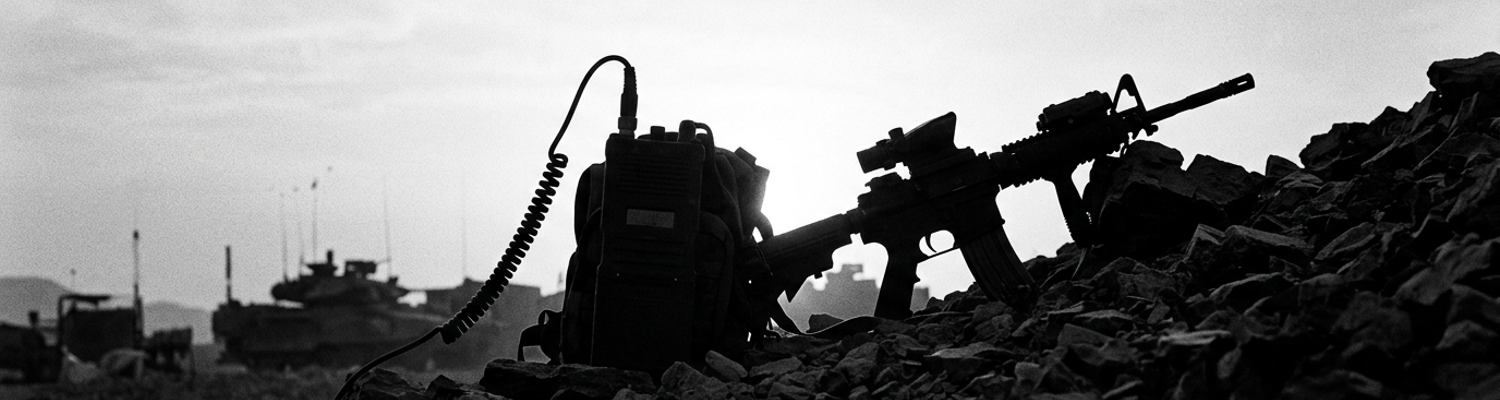

Special Forces Reconnaissance Doctrine in Zabol Province
Inserting twelve men across two hundred square miles of jagged mountains with seventy-two hours of organic water was a known logistical impossibility.
In June 2004, elements of 3rd Special Forces Group deployed into the rugged ridges of Zabol Province. They targeted the Deh Chopan district for deep reconnaissance patrols. When examining the historical record, this area north of the Tarnak River represented the most physically unforgiving sector in southern Afghanistan. Jagged granite peaks rose beyond eight thousand feet. Narrow gorges restricted all vehicle mobility. Teams moved entirely on foot. Operational Detachment Alpha 313 took the lead in infiltrating these high-elevation corridors. They hunted for regrouped Taliban fighters. These fighters used the mountain passes between Uruzgan and Zabol. Each soldier carried over one hundred pounds of gear. This included heavy body armor, thermal optics, ceramic rifle plates, and AN/PRC-117F multiband radios. Bulky stacks of BA-5590 lithium sulfur dioxide batteries weighed down the radio operators. Climbing these near-vertical scree slopes under triple-digit summer heat drained the detachment hydration reserves within hours. They ran out of water well before reaching observation posts overlooking enemy staging areas.
The terrain broke human bodies long before any enemy rifle fired.
Mission planning relied strictly on theoretical operational doctrine. This doctrine presumed continuous satellite-linked close air support coverage in austere environments. A close review of operational logs indicates that staff officers at the Combined Joint Special Operations Task Force in Bagram drafted the mission profiles. They used standard doctrinal templates from field manuals. Under this institutional doctrine, a small reconnaissance element could safely infiltrate hostile territory far beyond standard artillery ranges. Orbiting aircraft provided an impenetrable security umbrella. The operational assumptions treated close air support as a continuous guarantee. It was never viewed as a contested asset. Planners expected Fairchild Republic A-10 Thunderbolt II attack jets and Boeing AH-64 Apache gunships based at Kandahar Airfield to respond instantly to any emergency signal. These assets were scheduled to arrive overhead within twenty to thirty minutes. This doctrinal construct depended on an absolute technical requirement. Flawless, uninterrupted satellite communication between the team on the ground and air control hubs hundreds of miles away had to exist.
Doctrinal manuals treated satellite connectivity as an unbroken constant.
Archival evidence shows that this theoretical doctrine failed to account for basic terrestrial physics. The mountains surrounding Deh Chopan created severe geometric line-of-sight masks. These rock formations obstructed low-elevation satellite trajectories. Detachment communicators attempted to aim directional antennas at geostationary satellites positioned over the Indian Ocean. Sheer stone faces repeatedly cut off the uplink. Ground teams carried AN/PSC-5 Spitfire terminals and field-expedient whip antennas. Maintaining a satellite-linked data track required stationary positioning on exposed ridgelines. Enemy observers could spot them immediately in these locations. Descending into defilade or defensive draws for concealment instantly severed tactical satellite connectivity. The team became unable to transmit digital nine-line medical evacuation requests. They could not summon strike aircraft. Headquarters planning models showed unbroken coverage rings across the province. The physical environment reduced those coverage zones to sporadic, unpredictable windows. Staff planners had designed an operation around theoretical doctrine written in air-conditioned classrooms at Fort Bragg. Twelve soldiers were left isolated on rock faces with dead radios and no air assets assigned directly to their sector.
At 0600 on June 24, ODA 313 started its ascent up Ridge 2911 without an active satellite link.
Commercial Transceiver Procurement and Waveform Incompatibility
Federal procurement files from the FY2004 Defense Contract Action Data System showed fast-tracked acquisitions for commercial off-the-shelf UHF satellite transceivers.
Special Operations Command acquisition authorities in Tampa processed urgent operational needs statements. The Combined Joint Special Operations Task Force in Afghanistan submitted these requests to equip reconnaissance teams operating in remote sectors. Standard military-grade radio pipelines for tactical satellite terminals like the AN/PSC-5D could not meet the production volume needed. Remote bases across Regional Command East and Regional Command South expanded rapidly. Contract officers turned directly to civilian vendors. They issued rapid-purchase delivery orders under simplified acquisition procedures to buy modified commercial transceivers. These modified units promised five-kilohertz narrow-band channel access over civilian-leased transponders and military UHF satellite constellations. Defense logistics records reveal that dozens of these unhardened systems went straight from domestic shipping crates into tactical rucksacks at Fort Bragg. 3rd Special Forces Group boarded transport aircraft for Bagram shortly after. Procurement specialists approved the line items without conducting formal environmental stress screening. They skipped integration audits with theater air-support communications architecture.
Expedited delivery schedules took precedence over military hardware standardization.
Archival evidence shows that these off-the-shelf transceivers carried structural design compromises. These flaws surfaced immediately in the high-altitude heat of Zabol Province. Commercial handheld terminals depended on fragile power amplification modules. Engineers designed these modules for urban flatlands rather than high-elevation heat dispersion. In the Deh Chopan valley, ambient temperatures on exposed shale reached 115 degrees Fahrenheit. This drove the internal junction temperatures of the transceiver amplifiers past their operational limits within minutes of sustained data transmission. The units lacked reinforced casing gaskets. Fine Afghan dust penetrated the external interface ports. This dust short-circuited the direct-current power feeds from the BA-5590 battery adapters. Special Forces communicators attempted to run low-power voice traffic back to the forward operating base at Qalat. The commercial gear suffered from poor phase noise performance and low receiver sensitivity. Ground detachments discovered that the modified commercial transceivers could barely hold an orbit lock on the aging Ultra High Frequency Follow-On satellites. Ground operators lost connection whenever they moved even a few yards behind vertical ridgelines.
Component-level failures disabled the hardware before contact occurred.
The fielded commercial radios lacked hardened waveform compatibility with tactical strike aircraft aloft in theater. This created cross-tier communications blind spots. A close review of operational logs indicates that the commercial transceivers functioned strictly on fixed, non-hopped UHF satellite frequencies or generic civilian line-of-sight channels. Orbiting strike aircraft operated on jam-resistant electronic counter-countermeasures architectures. This included United States Air Force A-10 Thunderbolt IIs and carrier-based F/A-18C Hornets. Tactical jet cockpits relied exclusively on the Have Quick II frequency-hopping UHF waveform and SINCGARS frequency-hopping VHF protocols. Pilots used these to exchange flight data and voice coordinates with ground controllers. The commercial off-the-shelf sets lacked the cryptographic microprocessors required to join Have Quick II nets. They also lacked precise time-of-day clock synchs. ODA 313 required immediate close air support against entrenched machine-gun positions on Ridge 2911. The detachment had no means of placing a direct voice transmission into the flight helmets of pilots circling ten thousand feet overhead.
Radio operators on the ground were forced to establish a patched, multi-hop relay.
Ground teams transmitted plain-text or basic-encrypted coordinates back to a fixed base operations center in Kandahar. They waited for tactical air control party operators to re-enter those targeting points into military-spec Link 16 datalinks or Have Quick frequencies. This secondary relay introduced dead time into targeting handoffs. Taliban fire pinned down the team during this delay. Air Force strike packages flew holding patterns over the Arghandab river basin. They were unable to receive updated nine-line briefs. The soldiers on the granite rocks below swapped dead battery packs. They attempted to cycle power on locked commercial screens. Department of Defense equipment registry manifests confirm a high failure rate. By mid-July 2004, eight out of ten commercial UHF transceivers issued to Task Force 31 had been permanently withdrawn from frontline service. Uncorrectable frequency drift across the 225-to-400 megahertz spectrum rendered them useless.
Atmospheric Interference and Cryptographic Key Handoff Failures
Thermal updrafts rising off the arid scree fields of Zabol Province severely distorted tactical communications channels.
When examining the historical record, daytime temperatures on the canyon floors surged past 110 degrees Fahrenheit. Superheated air masses collided with dense, freezing stratospheric currents. These currents sheared over the eight-thousand-foot peaks of Deh Chopan. These extreme temperature gradients generated severe tropospheric ducting. Localized ionospheric scintillation occurred across the lower atmosphere. Tactical Ultra High Frequency satellite signals operate across the standard 225-to-400 megahertz spectrum. They depend on clean line-of-sight paths through the ionosphere to reach geostationary orbit. High-altitude atmospheric anomalies over the southern Afghan mountain terrain degraded tactical UHF satellite signal propagation. The narrow-band microwave radio waves scattered before they could exit the troposphere. Suspended mineral dust from valley thermal winds introduced heavy phase jitter. Continuous signal attenuation followed. Radio operators on Ridge 2911 watched signal strength meters on their AN/PSC-5 Spitfire transceivers plunge. The display dropped from five bars down into baseline background static.
The satellite transponder could not parse incoming digital packets through the shifting thermal boundary layer.
Archival evidence shows that field communicators attempted to counter this atmospheric scattering. They repeatedly adjusted portable Tri-vec AV 2040 folding crossed-yagi antennas on loose scree. Every slight angle adjustment failed to overcome the atmospheric multipath fading. Dense air layers shearing along the granite ridgelines caused this fading. The UHF Follow-On satellite transponder positioned over the Indian Ocean required a minimum carrier-to-noise density ratio. Forty-three decibels per hertz was necessary to sustain a coherent digital data stream. Tropospheric refraction continually bent and dispersed the transmission footprint. Received power levels fluctuated wildly between twenty-eight and thirty-five decibels. Detachment communicators were attempting to push 16-kilobit voice and nine-line situational reports through five-kilohertz narrowband channels. Atmospheric distortion physically choked these channels. Signal lock dropped every few seconds. Audio packets dumped into blank noise intervals.
Severe tropospheric distortion created an impenetrable radio dead zone.
A close review of operational logs indicates that an institutional scheduling conflict turned a weak signal into total system failure. At 0001 Zulu on June 25, the automated cryptographic cycle for Regional Command South executed its scheduled operational variable rollover. Communications security doctrine required tactical transceivers to purge expired Traffic Encryption Keys. The radios then had to advance to the next pre-loaded digital key variable. Cryptographic rollover and handoff errors abruptly severed real-time voice and data links between the patrol and higher command echelons. Base stations at Kandahar Airfield and the Combined Joint Special Operations Task Force headquarters in Bagram switched their terminal encryption processors. They moved to the new key variable at the top of the hour. Up on Ridge 2911, ODA 313 experienced a bit-synchronization failure on its primary AN/PSC-5 terminal. The degraded UHF satellite signal caused this precisely during the cryptographic handoff sequence.
The radio processor misread the inbound parity bits and zeroized its working memory.
Attempts to manually push backup key variables encountered fatal electronic parity rejections. Operators used the KYK-13 electronic transfer device and the AN/CYZ-10 Data Transfer Device for this task. The crypto module on the transceiver locked ground operators out of the VINSON voice secure net. It also locked them out of the Advanced Narrowband Digital Voice Terminal protocol. The detachment lacked a direct, uncorrupted satellite path to request an over-the-air rekey from Bagram. Detachment communicators had no way to resynchronize their cryptographic state with the theater network. Voice links vanished at once. Short-burst data relays and the blue force tracking feeds tying ODA 313 to orbital strike assets disappeared. Duty officers at the Kandahar joint operations center saw the digital position marker freeze. It then disappeared from command displays. The radio set emitted a flat, continuous unkeyed tone.
Defensive Engagement Against Superior Numbers at Deh Chopan
Ridge 2911 offered no natural defilade.
Archival evidence shows that the cryptographic link collapsed at 0001 Zulu. The twelve soldiers of ODA 313 occupied an isolated, knife-edge spine above the Daychopan valley with dead transceivers. Across the northern draw, an entrenched insurgent force exceeding seventy fighters held prepared fighting positions. They carved these positions directly into limestone outcroppings. Tactical intelligence logs declassified years later confirmed these fighters belonged to a regional insurgent network. Local warlord Mullah Rahim commanded this specific element. They were heavily equipped with PKM general-purpose machine guns and RPG-7 shoulder-fired rocket launchers. Soviet-era DShK 12.7mm heavy machine guns were secured to tripods behind dry-stone sangars. Mortar crews operated Chinese-manufactured Type 63 60mm tubes. These tubes were pre-registered on the bare rock approach where the twelve-man reconnaissance element lay pinned down. Radio attempts to establish direct line-of-sight relays to the secondary base at Qalat failed repeatedly. Intermediate granite peaks blocked line-of-sight VHF signals. The twelve Green Berets faced interlocking fields of fire spanning five separate elevation tiers across an eight-hundred-meter front. They were equipped only with standard individual M4A1 carbines, two Mark 48 light machine guns, and three M203 grenade launchers.
Seventy-four rifles held the high ground against twelve men.
When examining the historical record, standard special operations doctrine dictated specific actions for reconnaissance elements encountering superior opposing numbers. They were supposed to immediately pull back behind the suppressive fires of dedicated close air support packages. Orbiting strike assets over Zabol Province delivered zero ordnance to the fight. The detachment lacked functioning datalinks or Have Quick secure voice channels. They could not pass terminal attack control nine-line coordinates to orbiting A-10s or AC-130 gunships holding thirty miles away over the Arghandab basin. ODA 313 was forced into a desperate, improvised perimeter defense on the exposed ridgeline. Special Forces soldiers scraped through razor-sharp scree with their combat knives. They constructed three shallow, hasty fighting positions arranged in an ad-hoc triangular thirty-meter perimeter. The detachment was exposed to plunging fire from three cardinal directions. They stacked loose shale rocks, ballistic body armor plates, and ruined radio chassis into chest-high breastworks along the bare drop-offs of the ridge. Ammunition conservation rules took effect instantly across the line. Detachment riflemen shifted fire selectors from burst to semi-automatic. They rationed 5.56mm magazines. Insurgent gunners walked heavy machine-gun tracer fire straight into the rock parapets from four hundred feet above.
Canteen bladders ran completely dry by mid-morning.
A close review of operational logs indicates that insurgent squads began aggressive bounding maneuvers. They moved along dead-space ravines on the eastern flank. Their objective was to sever the only viable withdrawal path down toward the valley floor. Armor-piercing 7.62x54mmR rounds shattered the rocky outcroppings. This drove jagged stone splinters into the perimeter. It inflicted secondary fragmentation lacerations on both the assistant weapons sergeant and the junior medical sergeant. Detachment leaders directed their single Barrett M82 .50-caliber rifle against the primary DShK sangar at seven hundred meters. They fired calculated single shots at muzzle flashes to temporarily suppress the incoming heavy fire. Tactical air control party assets were unreachable. Offboard artillery fire from the 105mm howitzer batteries positioned at Qalat was well out of range. The twelve men absorbed repeated RPG-7 high-explosive volleys. These detonated directly against the rock face above their positions. Survival on the crest depended entirely on strict sector discipline. Pinned team members rotated between dressing open blast wounds and manually reloading empty magazines under continuous incoming fire. Three separate insurgent flanking probes were driven back at fifty yards. The detachment used point-blank carbine fire and 40mm high-explosive grenades launched into the ravines to repel them.
By 1130, the detachment was down to three magazines per rifleman and zero operational radios.
Doctrinal Reform and Beyond-Line-of-Sight Communications Remediation
Paper doctrine disintegrates under fire.
A close review of operational logs indicates that after-action reviews drafted at Bagram Airfield in July 2004 singled out specific lethal operational risks. Substituting non-hardened commercial systems for dedicated military satellite communications architectures was the primary failure point. Combined Joint Special Operations Task Force-Afghanistan convened its formal investigation into Ridge 2911. Investigators examined the charred remains of commercial handheld chassis recovered from the perimeter. Hardware inspections conducted by technical intelligence personnel uncovered catastrophic thermal breakdown. The unfiltered silicon power amplifiers in the commercial transceivers had melted. Engineers engineered these civilian components for climate-controlled domestic networks rather than high-elevation combat zones. They suffered rapid thermal runaway whenever operators attempted sustained high-wattage voice transmissions. Missing military-standard environmental gaskets allowed powdered calcium carbonate dust to foul internal circuit boards. This triggered direct-current short circuits. Civilian architectures also lacked the radio-frequency filtering needed to operate adjacent to powerful aircraft jammers. This left transceivers deaf to satellite downlinks. Command authorities concluded that relying on unhardened civilian satellite channels to coordinate frontline air support placed isolated reconnaissance patrols in extreme peril. Staff directives barred all operational detachments from carrying commercial-grade transceivers into denied areas without formal equipment certification from theater communications directors.
Commercial convenience cost tactical survival.
Archival evidence shows that the engagement forced revisions in theater tactical standing operating procedures. The new rules mandated redundant high-frequency radios for isolated detachments operating outside conventional support umbrellas. Standard deployment checklists had previously allowed patrols to rely on single-point satellite connections. Planners treated high-frequency systems as obsolete heavy gear. Task Force 31 commanders altered deployment criteria across Regional Command South before the end of July. Revised tactical standing operating procedures were issued from Kandahar Airfield. Under these new rules, no twelve-man element could cross a forward operating base perimeter without at least one dedicated, man-packable high-frequency transceiver system. Detachments received Harris AN/PRC-150(C) advanced tactical radio sets. These served as a mandatory beyond-line-of-sight voice and data bridge. Line-of-sight satellite links collapsed whenever sheer rock faces occluded orbital paths. High-frequency transceivers allowed communicators to exploit near-vertical incidence skywave propagation. Ground teams bounced high-frequency radio waves off the F2 layer of the ionosphere at steep angles between two and twelve megahertz. This technique bypassed eight-thousand-foot granite massifs entirely. Operating protocols required detachments to pack field-expedient copper wire antennas, AS-2259 directional masts, and dipole cut kits in addition to standard VHF loadouts.
Tactical doctrine discarded the assumption of continuous orbital coverage.
When examining the historical record, this regulatory pivot fundamentally reorganized detachment-level pre-mission communications rehearsals. Communications sergeants assigned to 3rd Special Forces Group were pulled from staging compounds in Bagram. They had to complete mandatory seventy-two-hour refresher courses on field-expedient high-frequency propagation and manual Morse code keying. Detachments prepared to deploy into isolated pockets of the Hindu Kush or the southern mountain corridors. They were forced to establish verified, encrypted two-way high-frequency links back to the base operations center at Qalat before receiving flight manifests for infiltration. Cryptographic key distribution procedures underwent similar operational overhauls. Theater signal officers ended the practice of executing bulk cryptographic variable rollovers at arbitrary mid-operation time stamps. They instituted twenty-four-hour overlapping key validity windows. This prevented automated zeroization incidents during active combat contact. New regulatory instructions were distributed across theater commands in autumn 2004. These instructions classified high-frequency skywave capability as an absolute go-or-no-go operational prerequisite for any patrol deploying outside range of organic 105mm artillery batteries.