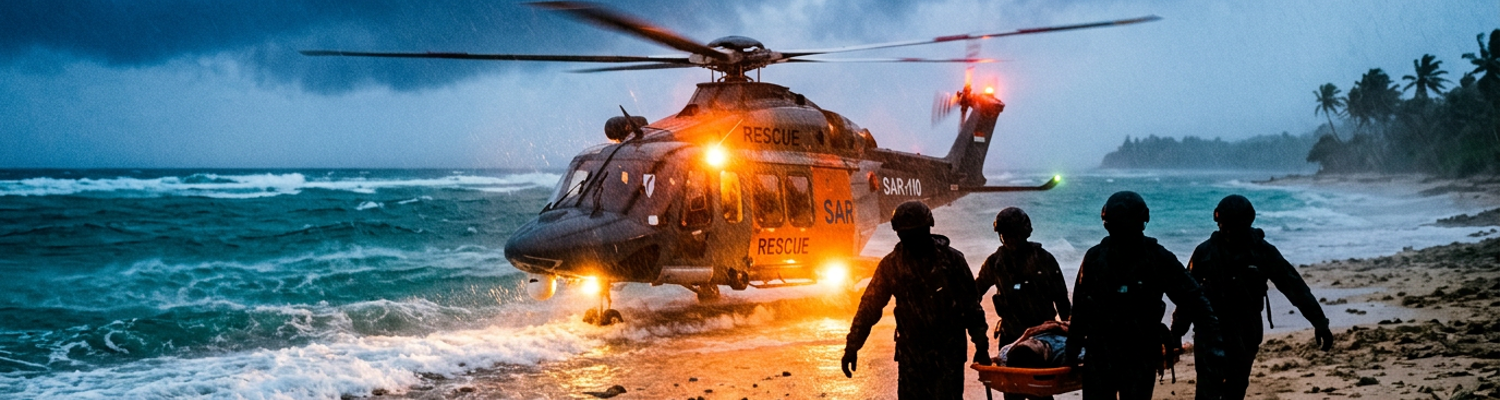

Bell HU-1A Deployment in the Ryukyus
Saltwater spray and seasonal typhoon squalls struck the isolated outposts, coral reefs, and jagged limestone ridges stretching across the Ryukyu archipelago. Tropical humidity, corrosive ocean mist, and torrential monsoon rains corroded metal fuselages, stripped protective paint, and grounded conventional military aircraft across southern island airfields. Rugged hills and dense subtropical vegetation left almost no level clearings for conventional emergency landings, forcing rescue parties to rely entirely on rotary-wing aircraft. Piston-driven engines struggled in the dense, moisture-laden air, regularly suffering vapor locks, fouled spark plugs, and sudden oil pressure drops during critical overwater flights. Mechanics spent dozens of maintenance hours replacing corroded cylinders and rebuilding clogged carburetors for every single hour a piston helicopter managed to remain airborne. Disabled piston utility planes and grounded reciprocating helicopters accumulated along dirt runways, leaving remote island settlements and radar outposts cut off from emergency transport during rough seas.
Headquarters US Army Ryukyu Islands replaced high-maintenance piston utility aircraft with the turbine-powered Bell HU-1A Iroquois. Lycoming T53 turboshaft engines gave the new Bell airframe an immediate operational advantage over older piston engines by delivering steady power without the complex valves, pushrods, and carburetors that constantly malfunctioned in tropical dampness. Ground crews at Kadena and surrounding airfields removed nonessential equipment to reduce weight, balanced the two-bladed rotor systems, and bolted specialized litter racks directly to the cabin floor to prepare the aircraft for regional flights. Salt encrustation quickly emerged as a serious mechanical problem, because ocean brine coated the compressor blades during low-altitude coastal hovers and caused engine power degradation. Technicians resolved this vulnerability by instituting regular freshwater engine wash procedures and applying corrosion-inhibiting compounds across exposed magnesium parts immediately after each coastal mission. Flight crews test-flew the retrofitted turbine machines along coastal waters, confirming that the utility helicopter could sustain steady flight speeds and maintain hover positions in strong offshore winds.
Commanders directed this proven rough-weather capability toward emergency requests from distant archipelagos that lacked modern doctors and runways. The Office of the High Commissioner Health, Education, and Welfare Department mandated regular aeromedical evacuation coverage connecting outer islands to central medical facilities. Civilian dispensaries on Miyako, Yaeyama, and smaller coral outcroppings had previously depended on small coastal boats that took days to navigate heavy ocean waves. Army medical personnel secured stretchers, oxygen bottles, and emergency medical kits inside the cargo compartment of the HU-1A, converting the utility cabin into a functional air ambulance. Pilots established designated emergency landing coordinates on packed-dirt village clearings, sandy beaches, and school courtyards where local residents placed burning lanterns or white cloth panels to mark wind direction.
Medics ran across those improvised landing zones through rotor downwash to receive trauma patients, expectant mothers, and venomous snakebite victims. Aviators lifted the fully loaded aircraft into the air, monitoring fuel levels closely as they navigated over ocean waters back toward central military medical centers on Okinawa. Turbine heat and cabin vibrations challenged aircrew endurance during these long flights, but the steady turboshaft engine kept the helicopter moving forward through tropical headwinds that previously grounded piston aircraft. Hospital personnel prepared rooftop helipads and unloading ramps at Camp Kuwae to receive incoming casualties immediately after touchdown. Orderlies transferred litters directly into waiting ambulances, carrying critically ill islanders into advanced treatment rooms while ground crews refueled the HU-1A for its next flight.
Turbine Engine Wear in Subtropical Environments
Technicians disconnected the fuel lines and immediately inspected the air intakes, discovering that Lycoming T53 turboshaft engines suffered severe compressor blade corrosion and salt encrustation from constant maritime flight paths. Flights across ocean water forced the helicopter to cruise through dense maritime air filled with microscopic saltwater droplets. These saline particles entered the engine inlet at high velocity, striking the spinning axial compressor blades and evaporating instantly against the hot metal surfaces. Thick mineral crusts formed over the leading edges of the blades, disrupting smooth airflow into the combustion chamber and reducing overall engine efficiency. The narrowed air passages forced pilots to pull higher collective pitch and burn extra fuel to maintain cruising speed during critical patient transfers. Exhaust gas temperature gauges climbed toward dangerous operating limits during these long overwater return flights, threatening sudden power loss if crews pushed the helicopter past its structural tolerances.
Mechanics and maintenance personnel instituted demanding freshwater compressor wash cycles and accelerated inspection schedules to combat tropical humidity and prevent those dangerous temperature spikes. Ground crews positioned pressurized wash carts alongside the landing pads as soon as the rotors stopped spinning. Specialists attached flexible delivery hoses to the engine intake manifold, mixing demineralized fresh water with chemical detergents in steel tanks to break down the hardened salt glaze. The starter motor cranked the cold turbine at low speeds while pressurized fluid sprayed across the rotating compressor stages, stripping mineral residue from the metal blades. Runoff water flowed through the bottom drain valves into collection pans, turning cloudy white with flushed sea salt and soot. Crew chiefs tested the drainage with chemical indicators, repeating the washing process until the runoff showed no remaining salt traces before they cleared the helicopter for operational readiness.
Inspectors dismantled the outer engine cowling panels every twenty-five flight hours under the accelerated schedule to examine parts that daily freshwater flushes could not completely protect. Optical borescopes revealed pitting on the steel rotor disks, corrosion on the magnesium gearbox housings, and severe erosion along the stator vane edges. Constant humidity exceeding eighty percent caused condensation to settle inside inactive turbines overnight, accelerating chemical corrosion between dissimilar metals wherever salt residue lingered in microscopic cracks. Maintenance teams applied thin coats of corrosion-inhibiting oil over exposed stator vanes and replaced damaged magnesium gearbox housings with updated aluminum components that resisted saltwater pitting. Technicians hand-polished minor blade scratches with fine abrasive cloths to remove stress concentrations before micro-fractures could spread across the metal under centrifugal force. Specialists rejected any compressor wheel displaying pits deeper than strict factory tolerances, tagging the damaged assembly for complete depot overhaul and bolting a replacement module into the engine bay.
Wrenches turned across the mounting brackets as technicians secured the replacement turbine into the forward fuselage. Test pilots climbed into the cockpit immediately after the cowling latches clicked shut, running the Lycoming T53 through static power checks on the Kadena tie-down pad. The turboshaft engine spun to maximum continuous operating speed, producing full rated power without abnormal vibration or elevated exhaust readings. Flight medics reloaded emergency litters, oxygen bottles, and splint kits into the clean cargo cabin while the rotors idled on the asphalt. Dispatch officers handed updated weather coordinates to the pilots for an urgent evacuation call from an outlying island in the southern chain. Aviators pulled the collective pitch lever, lifting the refurbished helicopter into the misty offshore breeze toward the open sea.
Field Modifications for Island Aeromedical Evacuation
Rotor blades sliced through the maritime air as the helicopter approached remote outer islands where unimproved coral airstrips and sandy beaches served as emergency landing zones. Violent rotor downwash churned up thick clouds of crushed coral, pulverized limestone, and salty sand as the aircraft settled toward the ground. These abrasive airborne mineral particles threatened to gouge the high-speed turbine compressor blades and degrade engine power within minutes of ground contact. Ground mechanics designed improvised intake dust and salt filters to protect turbine engines during landings on unimproved coral airstrips and beaches. Maintenance personnel constructed these protective barriers from layered wire mesh, porous polyurethane foam, and sheet metal brackets scavenged from damaged utility vehicles. Technicians clamped the custom filter housings directly over the engine air intakes, creating a physical shield that trapped coral dust and sea salt while directing clean air into the combustion chamber.
Engine cowlings held firm under the added weight of the filter assemblies, yet the interior cargo cabin presented severe physical obstacles for aeromedical evacuation missions. Factory utility configurations left the helicopter deck completely flat and devoid of dedicated trauma equipment, forcing medics to place stretchers directly on the bare metal floor. Low floor positions prevented medical attendants from kneeling comfortably, monitoring vital signs, or administering injections while the aircraft shook in turbulent coastal winds. Glass medicine containers and intravenous fluid bottles rolled across the ribbed decking during sudden altitude changes, risking impact fractures and spilling vital treatments. Flight medics and maintenance crews unbolted the standard floor fittings at Kadena Air Base to reconfigure the entire cargo compartment for in-flight medical care.
Special Action Force Asia medics and crew chiefs fabricated cabin alterations, including jury-rigged saline bottle suspension racks and modular litter mounts, to replace the removed factory fittings. Crew chiefs cut sections of hollow steel piping and aluminum angle brackets, assembling tiered, modular litter mounts that fastened directly to floor tie-down rings with quick-release locking pins. These modular racks held stretchers horizontally along the cabin walls, elevating the patients above the vibrating floor and creating an open working aisle along the center of the compartment. Medics shaped spare electrical conduit and heavy wire into overhead suspension racks, bolting the frames to structural ceiling ribs above each stretcher position. Padded clips held glass saline bottles and plasma containers securely in place overhead, maintaining continuous gravity-fed intravenous lines even when offshore air currents jolted the helicopter airframe.
Saline solution flowed steadily through rubber tubing into patient veins as the modified helicopter lifted off from a remote beach clearing on Miyako. Attendants stood upright in the cleared central aisle, adjusting wound dressings and administering emergency medications without tripping over equipment on the floor. Outside the cabin, the improvised mesh and foam filters stopped airborne coral grit and salt spray from penetrating the engine inlet, allowing the Lycoming turboshaft to generate full continuous power. Pilots verified steady exhaust gas temperatures on their instrument panels and guided the aircraft across the ocean passage toward Okinawa. Ground crews wheeled gurneys directly to the landing pad at Camp Kuwae the moment the skids touched the pavement, sliding patients out of the modular racks and carrying them into surgical triage.
Typhoon Flights and High-Frequency Radio Blackouts
Surgeons closed the trauma bay doors behind the arriving stretchers while flight crews pumped fresh aviation kerosene into the helicopter under rapidly darkening skies. Tropical depressions regularly swept up from the warm waters of the Philippine Sea, churning the ocean into towering swells and creating severe medical emergencies across remote island settlements. Crews flew critical triage evacuations during monsoon squalls and tropical storms without regional radar coverage across the Nansei Shoto chain. Pilots navigated the aircraft through blinding sheets of rain by tracking magnetic compass headings, elapsed flight times, and barometric altimeters across hundreds of miles of open water. Violent vertical wind shears slammed against the rotor mast, repeatedly dropping the laboring helicopter hundreds of feet toward the crests of rolling waves below. Aviators hauled back on the collective lever and braced their boots against the anti-torque pedals to keep the machine upright while downpours battered the plexiglass windscreen.
Radio headsets crackled with deafening static as friction from driving rain built up massive electrical charges across the aluminum skin of the fuselage. Severe atmospheric interference caused high-frequency radio blackouts that cut off flight crews from receiving hospital updates at Naha. Pilots clicked microphone buttons repeatedly across designated military calling channels, but only shrill bursts of electromagnetic noise answered through their padded flight helmets. Flight medics worked inside the dark, pitching cabin over hemorrhaging patients and venomous snakebite victims without direct guidance from doctors stationed at base hospitals. Co-pilots recalculated fuel burn rates by flashlight on grease-pencil clipboards, logging estimated arrival times while flying completely blind to shifting wind directions and closed runways. Crew chiefs leaned out into the moisture through the sliding cargo doors, scanning through rain squalls for exposed reef breaks and isolated island silhouettes that could confirm their dead-reckoning position.
Limestone headlands suddenly materialized out of the low storm clouds as the helicopter descended through the base of the ocean fog. Pilots flared the airframe over an unpaved coral strip, aiming the nose landing light through sheets of surface runoff to spot deep mud and windblown debris. Medics jumped onto the drenched ground the instant the steel skids touched down, running toward local islanders who sheltered an injured road worker under waterlogged canvas tarpaulins. Constables and village volunteers helped carry the litter through churning mud puddles, sliding the trauma victim directly into the modular tier racks before the squall worsened. Crew chiefs latched the cargo doors tight against the driving gale while the pilot pulled maximum available turbine power to lift off over fringing palm trees. Rotor downwash flattened coastal scrub grass across the shoreline as the heavily laden aircraft climbed back into the darkened clouds for the return leg across the open sea.
Instrument needles bounced across the vibration-dampened panel as the climbing helicopter punched into another wall of turbulence above the maritime channel. Rainwater seeped through aged rubber windshield seals, dripping across the center console while the aviators held their compass heading through zero-visibility cloud layers. Static hiss continued to paralyze the high-frequency radio receiver, leaving the crew unable to announce their inbound patient status or request emergency runway lighting from air traffic controllers. Pilots spotted the distant, rotating beam of the northern Okinawa coastal lighthouse through an unexpected gap in the rain bands, confirming their landfall coordinates without radar guidance. Flight controls responded with steady hydraulic pressure as the pilots banked the helicopter into the wind and followed visual landmarks toward the paved arrival apron. Skid tubes settled firmly onto the flooded concrete tarmac, allowing medical orderlies to sprint through the downpour and wheel the stretcher toward surgical care before the turboshaft engine spun down.
Civilian Dispatch Disputes Under USCAR Authority
Turbine blades clicked as metal components cooled on the wet tarmac, leaving ground crews to document another surge in flight time on the helicopter logbooks. Military authorities restricted sortie approvals to limit peacetime flight hours and mitigate airframe fatigue across outer-island supply routes. Long overwater flights pushed the airframe through severe salt air and buffeting turbulence, warping skin panels and loosening structural rivets along the tail boom. Flight commanders examined monthly maintenance ledgers and discovered that humanitarian evacuations were exhausting allotted engine lifespans far faster than projected under standard operating budgets. Every hour spent cruising over maritime passages brought the helicopter closer to mandatory depot overhauls, consuming costly spare parts and taking the machine off front-line tactical standby. Command staff responded by raising authorization thresholds, requiring administrative sign-offs before any crew could unchain the helicopter from the flight line for civilian transports.
US Civil Administration of the Ryukyu Islands military officers clashed with local Ryukyuan health directors over rigid civilian evacuation dispatch guidelines. Local physicians on remote islands faced sudden medical emergencies, including hemorrhagic fevers, complicated childbirths, and severe head trauma, with no advanced surgical facilities to treat them. Ryukyuan health officials insisted that the turbine helicopter represented the only reliable transportation when stormy seas halted civilian cargo boats and inter-island passenger ferries. Military administrators countered that Army aviation assets existed primarily to maintain theater defense readiness rather than operate as a routine public ambulance fleet. Bureaucratic criteria demanded that island doctors exhaust all local civilian vessels and secure multiple administrative endorsements before headquarters would authorize an emergency flight. Strained telephone calls and telegraph messages crackled between Naha administrative offices and remote island clinics as patients slipped into critical condition while awaiting flight clearance.
Ryukyuan health directors challenged these delays during joint committee meetings at USCAR headquarters, demanding streamlined procedures that prioritized saving human lives over mechanical flight quotas. Military officers defended the flight ceilings by pointing to the limited supply of spare turbine engines and the punishing salt corrosion that degraded airframe metal during long overwater runs. Officers argued that uncoordinated dispatches along outer-island supply routes burned through critical flight reserves and left military units without rotary-wing support in the event of regional hostilities. Health directors countered by documenting cases where rigid dispatch criteria forced islanders to attempt dangerous sea crossings in small wooden fishing boats through heavy ocean swells. Both sides eventually hammered out revised dispatch checklists, but final approval power remained firmly in the hands of USCAR military duty officers.
Pilots waited beside their aircraft at Kadena Air Base while staff officers scrutinized medical request forms and fuel expenditure charts under the revised checklist system. Mechanics kept engine intake plugs in place and ground-power cables connected until a signed sortie authorization reached the airfield operations shack. When an urgent call met the strict administrative criteria, ground crews pulled away the wheel chocks and pilots ran through their pre-flight checklists to launch the helicopter into the offshore winds. The helicopter lifted off the apron with its cabin configured for emergency litters, burning fuel across the same outer-island routes that command staff sought to limit. Technicians wheeled out fresh battery carts and fuel hoses as soon as the helicopter returned, readying the machine for whatever mission the military command approved next.
Transition to Civilian Air Rescue Networks
Battery cables sparked against the access panels as ground crews connected the external power supply, keeping avionics alive while maintenance officers reviewed the soaring flight expenses. Subtropical humidity and constant salt encrustation continued to eat into the aluminum fuselages, corroding tail boom rivets and exhausting operational funding with every medical launch across the archipelago. The Bell helicopter had proven its durability in rough weather, but years of low-level maritime cruising had taken a severe toll on its mechanical systems. Technicians spent entire shifts stripping blistered paint, replacing seized bearing assemblies, and swapping eroded turbine impellers just to keep a handful of utility airframes flight-worthy. Severe mechanical wear and operational costs prompted the phased handover of regional medevac duties to domestic maritime safety and disaster teams. Military planners recognized that using tactical turbine helicopters as full-time civilian ambulances depleted spare part inventories and tied down assets needed for general Pacific theater logistics. Headquarters staff therefore initiated a joint transition protocol, establishing technical benchmarks and operational schedules to transfer air ambulance assignments to Japanese civil authorities.
Maritime Safety Agency flight crews arrived at military airfield aprons to observe emergency dispatch procedures and study navigation logs covering the Nansei Shoto chain. Army aviators walked their civilian counterparts around the UH-1 airframe, pointing out structural stress cracks, showing how salt air degraded control linkages, and explaining the dead-reckoning flight paths needed during high-frequency radio blackouts. Ground mechanics demonstrated the daily freshwater compressor washes, the cleaning of jury-rigged intake dust filters, and the rapid reconfiguration of cabin floor tracks for folding stretchers. Japanese aviators flew joint familiarization runs aboard the utility helicopters, practicing low-altitude maritime approaches into narrow coral landing zones and unlit island pastures. Civilian rescue planners incorporated these military flight profiles into their own operating manuals, purchasing commercial helicopters with corrosion-resistant coatings and setting up dedicated fuel depots across the outer islands. Communication officers linked local island police stations and village clinics directly to civilian air-sea rescue centers, bypassing the cumbersome military clearance channels that had previously delayed critical patient flights.
Civilian dispatchers gradually assumed primary control of incoming medical distress calls as domestic maritime bases established round-the-clock standby alerts. Domestic search and rescue teams took over daily evacuation runs from the remote Yaeyama and Miyako island groups, proving that their new flight detachments could handle stormy weather and open-ocean navigation. The final transfer of archipelago aeromedical responsibility was completed ahead of the formal May 1972 reversion of Okinawa to Japanese administration. Army crew chiefs unbolted the fabricated saline suspension racks and modular litter tiers from the UH-1 cargo cabins, wiping down the stained metal floors and reinstalling standard troop benches. Ground crews rolled the salt-weathered utility helicopters into maintenance hangars for deep structural inspections, sheet metal patching, and engine rebuilds. Aviation mechanics bolted the access panels shut, pulled the chocks, and towed the veteran aircraft onto parking revetments to await their reassignment to standard military utility missions.