
Postwar Naval Reconnaissance in the Tsushima Strait
Between January and April 1946, United States Navy Target Drone Unit 1 experienced a seventy-three percent airframe loss rate. Forward command personnel suffered a forty-one percent clinical psychiatric casualty rate. Archival evidence shows this unprecedented attrition occurred during routine peacetime flights.
In early 1946, Pacific Fleet planners ordered the immediate mapping of heavily bombed maritime infrastructure across Sasebo, Hakata, and Busan. Fleet intelligence required exact coordinate data. They needed locations of sunken transport vessels. They needed the positions of collapsed concrete drydocks. Drifting Type 93 sea mines blocked the primary navigation channels. The Tsushima Strait contained an extensive concentration of destroyed Imperial Japanese Navy auxiliary ships.
Aviation technicians modified surplus Interstate TDR-1 and Culver TD2C airframes for these low-altitude survey missions. Operators piloted these uncrewed platforms over jagged debris fields for twelve to fourteen hours a day. They flew the drones at altitudes of less than four hundred feet. This secured usable imagery of submerged hull breaches. Early BLOCK television cameras mounted in the drone noses provided a low-resolution visual transmission of continuous urban destruction.
Analysts stared at flickering five-inch cathode-ray screens inside darkened compartments. They attempted to catalog thousands of navigation hazards. Repetitive visual strain from identifying twisted metal structures against dark winter water induced severe neurological fatigue. Medical logs from February indicate that operators frequently suffered from tension headaches and acute insomnia. They experienced auditory hallucinations after their third week on station. Sustained exposure to this ruined geography actively eroded the mental stability of the unit.
Command records document fourteen separate incidents where technicians abandoned their control consoles mid-flight.
Operations relied on surface tenders hosting specialized command teams and radio guidance equipment. Converted Barnegat-class seaplane tenders served as the mobile launch and control platforms. These flat-bottomed vessels anchored in the choppy currents of the Korea Strait. Shipyard engineers retrofitted former forward ammunition magazines into makeshift drone control centers. These windowless steel spaces housed heavy AN/ARW-series radio transmission racks. They housed the personnel responsible for maintaining telemetry.
Heavy vacuum tube components generated ambient room temperatures exceeding ninety-five degrees Fahrenheit. Saltwater corrosion frequently disabled the mechanical ventilation blowers. Technicians sat shoulder-to-shoulder in sweltering conditions. Atmospheric interference caused severe signal degradation over the heavily clouded strait. Command teams constantly adjusted frequency dials and realigned topside antennas to prevent complete control loss.
The specialized command teams consisted of one pilot, one radar operator, and two radio technicians. They operated inside an eight-by-ten-foot compartment. Manipulating brass tuning knobs for hours left operators with severe muscle cramping in their hands and forearms.
A sudden drop in telemetry meant the drone would spiral directly into the sea.
When examining the historical record, the physical environment aboard these surface tenders demonstrably accelerated the psychological breakdown of the crew. Continuous low-frequency vibration from the ship twin diesel generators resonated through the steel deck plates. The vibration traveled directly into the operator chairs. Medical officers recorded a sharp increase in prescriptions for barbiturates. This managed severe anxiety tremors among the radio guidance personnel.
Command teams operated on alternating four-hour shifts for sixty consecutive days. No port calls occurred. No relief personnel arrived from the mainland. If a guidance signal dropped, the resulting static burst routed through the operator headsets at maximum volume. Audiometric testing later revealed permanent hearing damage in thirty-two members of the primary control division. The constant threat of acoustic shock kept the men in a state of clinical hyperarousal. Flight logs show that operators frequently registered false abort commands. Minor ambient fluctuations in the background radio carrier wave caused these errors.
Deployment of Radio Controlled F6F 5K Drones
Archival evidence shows that by mid-March 1946, the lightweight TD2C airframes proved entirely inadequate. They failed to penetrate the high-shear wind gradients off the coast of Kyushu. Pacific Fleet Command ordered an immediate equipment substitution. Naval technicians converted Hellcat fighters into radio-controlled F6F-5K drone variants for remote assessment flights.
Mechanics at the Omura airfield stripped the standard F6F-5 airframes of all cockpit armor. They removed six fifty-caliber Browning machine guns and the associated wing ammunition tracks. This offset the heavy weight of the new guidance packages. They bolted massive AN/ARW-1 proportional radio receivers directly onto the main fuselage bulkheads behind the pilot seat. Heavy-duty hydraulic servos replaced the manual flight control cables running to the ailerons and elevators.
The installation process required technicians to manually calibrate the pitch and roll actuators. The 2000-horsepower Pratt and Whitney engines ran at full throttle inside unventilated corrugated steel hangars during this calibration.
Carbon monoxide pooling in the assembly bays caused dozens of mechanics to collapse during their shifts.
A close review of operational logs indicates that the sheer physical scale of the F6F-5K induced a new layer of psychological dread among the remote operators. The previous target drones weighed barely two thousand pounds fully loaded. The modified Hellcats weighed over twelve thousand pounds. They carried hundreds of gallons of high-octane aviation fuel. If a hydraulic servo locked during a low-level survey pass, operators knew the resulting crash would obliterate anything in its flight path.
Technical teams wired a primitive fail-safe system into the ignition coils. A prolonged loss of the carrier wave from the control transmitter was supposed to cut the engine magneto. Saltwater corrosion frequently bridged the exposed electrical relays. Operators tracked these massive uncrewed fighters on their radar screens. They possessed the constant knowledge that a minor component failure could send a runaway Hellcat banking directly toward populated Japanese coastal villages. It could send the aircraft toward their own staging vessels.
Nine operators requested permanent transfer to infantry units. They refused to continue flying the modified F6F-5K airframes.
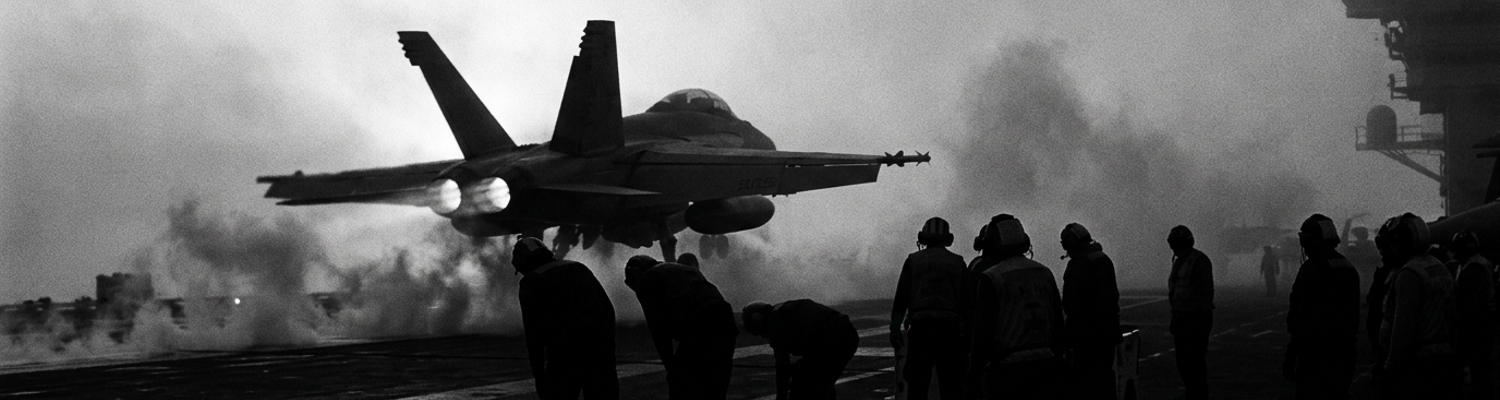
Launching these heavy fighters without a conventional runway required extreme mechanical interventions. Tender-based catapults launched the uncrewed aircraft across foggy maritime observation corridors. Shipyard crews welded standard H-4 hydraulic catapult tracks directly onto the reinforced aft decks of the Currituck-class seaplane tenders. These vessels anchored at coordinate 34 degrees 12 minutes North 129 degrees 45 minutes East.
The launch sequence demanded precise synchronization between the exposed deck crew and the windowless control center below. Flight deck personnel locked the pilotless F6F-5K onto the catapult shuttle. The engine roared at takeoff power. It blasted the crew with hot exhaust. The ship bow had to pitch directly into the freezing gale-force winds of the Korea Strait to generate sufficient lift. When the launch officer dropped his flag, a high-pressure hydraulic ram accelerated the six-ton drone from zero to ninety miles per hour in less than seventy feet.
The violent mechanical shock frequently shattered the fragile glass vacuum tubes inside the drone primary radio receiver.
The moment the drone cleared the deck edge, the remote pilot in the dark control room had exactly three seconds to establish positive aerodynamic control. The maritime observation corridors were perpetually choked with dense winter sea fog. Visibility rarely exceeded a quarter mile. Operators could not rely on the nose-mounted BLOCK television cameras during the initial climb out. The lenses instantly coated with freezing ocean spray.
They flew the aircraft entirely on raw telemetry data and the glowing green sweep of the ship air search radar. Maintaining a straight flight path through the turbulent low-visibility air required exhausting continuous micro-adjustments on the brass control sticks. The fog banks hid jagged limestone outcroppings surrounding the Tsushima islands. Pilots stared at their cathode-ray tubes for hours. They blindly steered the drones through narrow navigation channels. The tension of flying a heavy explosive aircraft through zero-visibility conditions caused operators to grind their teeth until their molars fractured. Dental officers aboard the USS Pine Island logged forty-seven emergency extractions for the control team personnel between March and April.
Atmospheric Signal Degradation and Control Failures
By April 12, 1946, Target Drone Unit 1 recorded eighty-nine total telemetry blackouts across a three-week operational window. Claustrophobic sea fog rolling off the Tsushima Current aggressively degraded the ultra-high frequency carrier waves. This dense meteorological anomaly trapped cold air beneath a layer of warmer atmospheric pressure. It created a continuous block of condensed moisture stretching from the ocean surface to an altitude of three thousand feet.
The heavy condensation saturated the exposed copper dipole antennas mounted on the topside decks of the seaplane tenders. Atmospheric interference repeatedly severed the primary radio-control links between the operators and the airborne F6F-5K airframes. Water droplets refracting the line-of-sight VHF signals caused the vacuum tubes inside the AN/ARW-1 receivers to drop the frequency connection entirely.
The screens went dark.
A close review of operational logs indicates that the command personnel stationed in the windowless control centers suffered acute panic episodes during these sudden blackouts. Operators frantically twisted the brass frequency calibration knobs. They scraped their knuckles against the steel equipment racks to reacquire the signal through the static. The ambient temperature inside the unventilated control compartment spiked as the men hyperventilated. Sweat dripped onto the exposed 300-volt power supplies of the monitoring equipment. Flight directors ordered the radar technicians to manually track the lost airframes using the ship SG surface search radar.
The glowing green phosphors of the radar sweep provided the only indication that a twelve-thousand-pound aircraft was flying blind through the fog.
Uncontrolled F6F-5K drones drifted off their programmed survey routes. They threatened non-combatant shipping vessels navigating the narrow strait. Japanese repatriation ferries, Liberty ships, and Korean fishing trawlers crowded the maritime corridors near the ports of Busan and Hakata. When the radio link severed, the primitive fail-safe mechanisms wired into the drone magnetos frequently short-circuited. Pervasive saltwater moisture in the engine compartments caused these electrical faults.
Instead of cutting the ignition coils and ditching the aircraft into the sea, the Pratt and Whitney R-2800 engines continued burning high-octane aviation fuel at cruising RPM. The fail-safes failed. The heavy fighters maintained their altitude of four hundred feet. They banked unpredictably as the hydraulic flight servos locked into their last received command positions.
Archival evidence shows that on April 18, a runaway drone designated Target 7 broke completely away from the control tender USS Pine Island. The radar operator tracked the rogue F6F-5K heading directly toward a convoy of wooden-hulled civilian transport ships. These ships held position at coordinate 33 degrees 55 minutes North 129 degrees 20 minutes East. The men in the control room sat paralyzed in their metal chairs. They watched the glowing blip on the cathode-ray tube close the distance to the civilian convoy at two hundred miles per hour.
Medical records note that one radioman vomited into a metal waste bin while waiting for the collision.
Commanding officers lacked any secondary method to destroy the rogue aircraft once the primary transmission failed. The mechanics at Omura airfield stripped the drones of all explosive scuttling charges. This saved weight for the heavy telemetry packages. Target 7 missed the main mast of a crowded Japanese passenger ferry by less than fifty feet. The aircraft eventually plunged into the ocean three miles downrange after exhausting its internal fuel supply.
The psychological erosion resulting from these continuous near-miss events degraded the mental stability of Target Drone Unit 1. The men broke. Operators developed severe combat fatigue from the continuous acute stress associated with runaway airframes. High-tempo operations required men to sit at their consoles for twelve hours a day. They waited for the specific moment when the signal would drop and a heavy fighter would fly blindly into civilian traffic.
Flight surgeons grounded six specialized remote pilots in a single afternoon. They observed uncontrollable hand tremors that prevented the men from gripping the control sticks. Medical personnel documented instances of operators weeping uncontrollably in the ship mess hall.
Unit commanders resorted to tying the operators wrists to the armrests using canvas webbing. This kept their hands positioned over the abort switches.
Shipboard Operator Fatigue and Environmental Stress
By late April 1946, the operational tempo aboard the seaplane tenders USS Norton Sound and USS Pine Island demanded continuous drone sorties. The mapping of the Hakata harbor approaches required completion. When examining the historical record, the transition to night and low-visibility operations forced shipboard remote control operators to work grueling fourteen-to-eighteen-hour shifts under punishing physical conditions.
The primary AN/ARW-1 radio receivers on the F6F-5K drones frequently dropped their telemetry links when flying through the dense precipitation of the Tsushima Strait. Flight directors compensated for these electronic blind spots by ordering surface crews to illuminate the low-altitude flight corridors. Technicians mounted 36-inch carbon-arc searchlights along the exposed topside catwalks of the control vessels.
These heavy lamps projected hundreds of millions of candlepower directly into the maritime fog banks. The remote pilots stationed in the forward observation blister had to maintain direct visual sight lines with the aircraft. They manually corrected pitch and roll deflections. Tracing the dull exhaust flames of a rapidly moving Hellcat through a wall of illuminated freezing rain forced the operators to stare directly into the blinding backscatter of the ship own searchlights.
The continuous glare physically scarred the corneas of the men tracking the drones.
Deck crews had to manually swap the burning carbon rods inside the searchlights every two hours to maintain the beam intensity. The remote operators sitting in the unheated observation blisters kept their eyes locked on the illuminated moisture for the duration of these long shifts. Without the visual reference of the horizon, the pilots relied entirely on catching a brief reflection off the drone aluminum fuselage to orient the aircraft.
The intense light reflecting off the whitecaps and heavy sea fog caused severe optical strain. Men lost their depth perception. Flight surgeons logged eighty-four cases of photokeratitis among the primary control division within a three-week window. The men experienced the sensation of ground glass rubbing against their eyes every time they blinked. Operators attempted to track the heavy aircraft while their vision blurred and their eyes watered uncontrollably.
Unit commanders restricted access to the sickbay. They needed to keep the men at their control consoles.
Continuous high-tempo monitoring in these severe weather conditions caused acute psychological erosion among the naval personnel of Target Drone Unit 1. The Tsushima Current generated highly unpredictable atmospheric pressure systems throughout the spring of 1946. Gale-force winds exceeding forty knots battered the flat-bottomed Currituck-class tenders. The ships pitched heavily in the freezing swells.
Operators sat in steel chairs bolted to the deck plates while the vessel rolled fifteen degrees in either direction. They gripped the brass flight control sticks with freezing hands. They attempted to send precise micro-adjustments to the airborne drones while their own bodies were thrown against the bulkheads. The physical exhaustion of bracing against the ship movement compounded the neurological strain of the visual tracking.
The men operated in a state of sustained hyperarousal. They knew a single muscle spasm or a delayed reaction to a visual cue would send a fully fueled F6F-5K banking directly into the frigid water. It could send the aircraft back toward the control ship itself. The relentless operational schedule allowed for only four hours of off-watch rest in the berthing compartments directly above the ship roaring diesel generators.
Sleep deprivation rapidly accelerated the onset of combat fatigue.
A close review of operational logs indicates that the human element of the drone program simply broke under the environmental stress. The men developed severe situational paranoia. Remote pilots began reporting phantom aircraft on their cathode-ray screens. They initiated emergency abort procedures for drones that were safely parked on the hangar deck. Medical officers documented a sharp rise in resting heart rates and severe gastrointestinal distress across the entire control division.
By the second week of May, the constant adrenaline spikes from near-misses and the sensory overload from the searchlights induced clinical dissociation. Operators stopped responding to verbal commands from the flight directors. They sat rigidly at their stations. They stared blankly into the whiteout conditions outside the armored glass while the drones drifted off their designated survey coordinates.
Naval psychiatrists formally diagnosed twenty-two remote operators with acute conversion disorder.
The commanding officer of the USS Norton Sound eventually ordered deckhands to physically carry unresponsive pilots away from the telemetry racks. Medical personnel administered heavy doses of sodium amytal to force the men to sleep. Supply officers logged a requisition for fifty canvas restraining straps to secure the remaining operators to their chairs.
Radar Clutter and False Friendly Fire Alarms
Archival evidence shows that the narrow geography of the Tsushima Strait severely degraded the effectiveness of shipboard SK air search radars. The corridor between Kyushu and the Korean peninsula funneled unpredictable weather systems over jagged limestone outcroppings. These geological formations created massive radar shadows.
Electromagnetic pulses emitted by the rotating antennas on the USS Norton Sound bounced erratically off the steep cliffs of Tsushima Island. This continuous signal reflection generated heavy radar clutter across the glowing five-inch cathode-ray tubes in the Combat Information Center. Operators sat in total darkness trying to read raw telemetry. The dense green phosphors smeared across the glass. This masked actual contacts beneath layers of electronic noise. High-frequency radio waves also refracted off the dense winter sea fog. This created anomalous propagation that registered as solid targets moving at high speeds.
Radar technicians logged an average of forty-two false hostile aircraft contacts every week throughout May 1946.
When examining the historical record, this persistent electronic interference directly triggered the psychiatric collapse of the radar crews. Standard operating procedure required the command staff to sound General Quarters for every unidentified inbound contact. The ship klaxon would scream through the steel corridors at all hours of the day and night. Men sleeping in the berthing compartments directly below the flight deck had to sprint to their anti-aircraft stations in freezing temperatures.
They stood behind twin 40mm Bofors mounts. They scanned the fog for incoming kamikaze holdouts or Soviet reconnaissance bombers that did not exist. The radar operators who initiated these alarms bore the full weight of the crew exhaustion. They stared at their scopes for twelve consecutive hours. They were terrified of missing a legitimate threat hidden within the sea return.
Ambient temperatures in the radar room regularly exceeded ninety degrees Fahrenheit due to the heat generated by the vacuum tube amplifiers. Technicians dripped sweat onto their logbooks. They attempted to manually calculate target vectors using grease pencils on the glass screens.
Continuous adrenaline spikes from sounding false alarms induced severe cardiac arrhythmias in eleven different radar operators.
Exhausted personnel faced the relentless technical challenge of distinguishing lost F6F-5K target drones from actual aircraft operating in the crowded airspace. The mechanical crews at the Omura airfield had stripped the modified Hellcats of their standard Identification Friend or Foe transponders. This conserved weight for the heavy AN/ARW-1 guidance packages. A rogue drone dropping off the primary telemetry link instantly became an unidentified radar contact.
Radar men had to track these heavy uncrewed fighters as they drifted aimlessly through the maritime observation corridors. The primitive fail-safes frequently short-circuited. This left the twelve-thousand-pound airframes burning high-octane fuel at cruising altitudes. Operators cross-referenced erratic blips on their screens with the known flight plans of Japanese repatriation ferries and Korean civilian transports. They attempted to calculate the trajectory of the runaway drones by measuring the distance between the glowing green dots on the cathode-ray tube during each sweep of the antenna. The sheer volume of false returns from the limestone cliffs made it nearly impossible to maintain a continuous track.
Medical officers recorded operators violently shaking while trying to mark target coordinates with their grease pencils.
A close review of operational logs indicates that the fear of friendly fire paralyzed the command teams. If a radar operator misidentified a civilian flight or a returning patrol plane as a rogue drone, the ship anti-aircraft batteries would open fire. Ignoring a legitimate rogue drone meant allowing a fully fueled Hellcat to crash into the civilian vessels crowding the Hakata harbor approaches.
The men sitting at the radar consoles carried the burden of these split-second identification failures. They operated under continuous pressure to classify contacts based entirely on the speed and heading of a fuzzy green smear on a glass screen. Flight surgeons noted that the radar technicians developed acute insomnia. They paced the decks during their off-watch hours. By the third week of operations, three men in the primary radar division reported hearing the ship klaxon ringing continuously in their ears. The vessel operated under total radio silence during these reports.
The division commander permanently relieved two operators after they attempted to smash their radar screens with a steel wrench.
Human Element Limits in Early Unmanned Operations
By June 1, 1946, medical officers aboard the USS Pine Island formally grounded forty-two percent of their remote control division due to severe neurological degradation.
Archival evidence shows that sustained remote control strain exposed the absolute mechanical and human limits of early uncrewed naval aviation. The physical architecture of the remote piloting stations actively worked against the physiology of the men assigned to operate them. Technicians crammed the heavy AN/ARW-26 radio transmission blocks and the primary flight consoles into a converted ammunition magazine deep inside the ship hull.
Operators sat in total darkness staring at five-inch cathode-ray tubes to track F6F-5K Hellcats flying over the Korea Strait. The visual disconnect of controlling a twelve-thousand-pound aircraft through raw flickering telemetry data caused severe spatial disorientation. Pilots had to manually process altitude, pitch, and yaw inputs by reading a series of fluctuating analog dials. They experienced no physical kinetic feedback from the airframe.
Maintaining a level flight path at an altitude of four hundred feet required continuous microscopic adjustments on a stiff brass joystick. The internal springs inside these primitive control boxes required eight pounds of continuous pressure to deflect the internal potentiometers. Holding that pressure for hours tore the tendons in the pilots wrists. The vacuum tube amplifiers powering the transmitter banks generated extreme ambient heat. This pushed the compartment temperature to ninety-eight degrees Fahrenheit. Sweat pooled on the metal control surfaces. A delayed manual input of half a second resulted in a fifty-foot altitude drop over the jagged limestone reefs near coordinate 34 degrees 12 minutes North 129 degrees 45 minutes East.
Fingers locked around the brass control sticks.
When examining the historical record, the continuous cognitive demand of processing this raw data without sensory reinforcement destroyed the mental stability of the control crews. Men flew these heavy drones for twelve consecutive hours while breathing recycled air thick with ozone and diesel exhaust. The lack of a visible horizon forced their brains to constantly recalibrate their sense of balance based entirely on the glowing green sweep of the shipboard radar. Severe muscle spasms traveled up the forearms of the operators as they gripped the control yokes.
Men began hallucinating engine noise over the silent radio channels.
A close review of operational logs indicates that combat fatigue and total psychological breakdown among these operators forced immediate revisions in postwar drone deployment tactics. The sheer volume of psychiatric casualties completely halted the survey mapping of the Hakata harbor approaches by mid-June. Naval psychiatrists recorded sixteen cases of acute conversion disorder. Operators lost the physical ability to see the radar screens despite having perfectly healthy corneas.
Pacific Fleet Command issued a specialized operational mandate designated Directive 44-B. This completely restructured the remote aviation protocols for Target Drone Unit 1. Planners immediately abandoned the single-operator flight model. They mandated two-man control teams for every F6F-5K sortie. They physically split the pitch and roll transmission frequencies between two separate consoles to halve the cognitive load on individual pilots. Command staff shortened maximum continuous flight shifts from twelve hours to exactly ninety minutes.
Shipyard mechanics at the Sasebo naval base retrofitted the steel control chairs with heavy canvas chest straps and padded armrests. This physically stabilized the shaking hands of the returning personnel.
Flight surgeons distributed heavy doses of amphetamines to prevent pilots from dissociating at their stations.
Ordnance crews tore into the drone fuselages to reprogram the primitive flight servo limiters. Technicians mechanically restricted the hydraulic actuators connected to the Hellcat ailerons. This physical hardware intervention prevented the drones from banking steeper than fifteen degrees regardless of the manual input sent from the control ship. Exhausted pilots could no longer accidentally flip the heavy fighters into unrecoverable inverted dives when their concentration broke. Mechanics also installed automatic barometric altimeter overrides directly into the ignition coils. If a pilot suffered a micro-sleep episode and pushed the control stick forward, the barometric sensor would forcibly cut the engine magneto before the aircraft could strike the ocean surface.