
Pre-War Aeromedical Evacuation Theory
Pre-war U.S. Army aeromedical evacuation manuals were documents of pure theory. They promised a swift, orderly system for removing casualties from the battlefield. This doctrine, codified after limited experiments in the 1920s and 30s, had never been tested at scale. Planners envisioned a system optimized for the temperate climates and developed infrastructure of Europe. The framework was built on a series of core assumptions. It presumed the availability of prepared landing strips near forward medical stations. It anticipated casualties would be stabilized before facing relatively short flights. The doctrine foresaw a predictable, linear flow of wounded from the front, to the airfield, and to a rear-echelon hospital.
That model would completely disintegrate in the Persian Corridor.
A review of Air Transport Command (ATC) logs from the period shows a core deficiency. The doctrine fundamentally misunderstood patient physiology under transit stress. The working theories of the late 1930s were based on moving stabilized patients in the moderate weather of North America. Planners assumed that a soldier, once treated and deemed transportable on the ground, would remain so in the air. Little consideration was given to the physiological impact of vibration, non-pressurized altitude changes, and extreme temperature shifts inside an aircraft fuselage. Hypoxia was considered a known but manageable issue. The planning failed to account for how it would compound with other stressors. There was no substantive preparation for the effects of extreme heat on burn victims or the impact of turbulence on patients with compound fractures. Medical kits were standardized with basic supplies like plasma, morphine, and oxygen. They lacked specialized equipment to manage patients actively degrading due to the flight environment itself. The flight nurse's primary role was seen as comfort and basic monitoring, not active intervention against conditions created by the transport.
This assumption of patient stability was a central miscalculation.
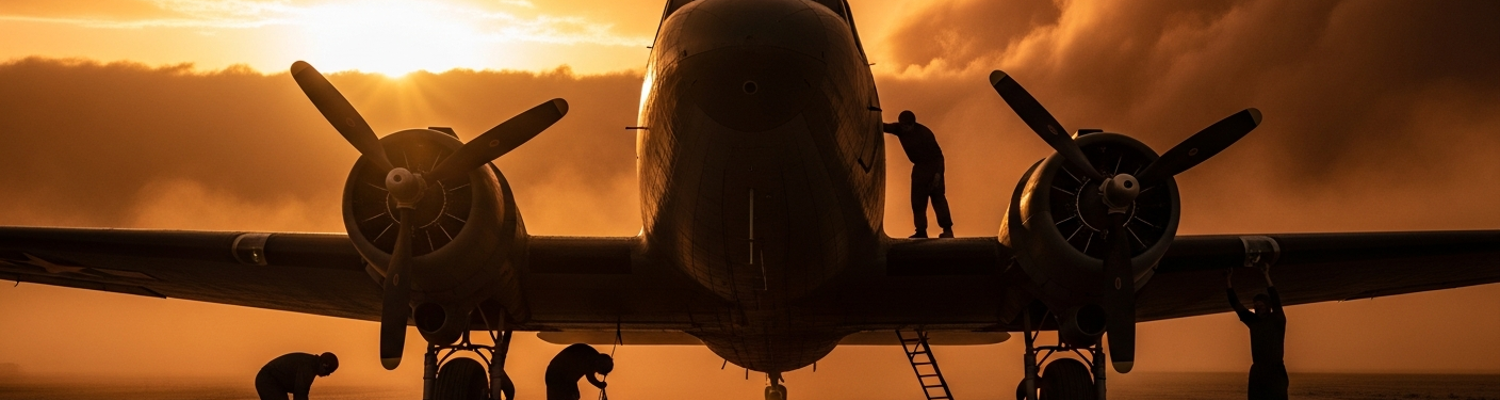
The system relied on the Douglas C-47 Skytrain. It was a cargo aircraft. Not an ambulance. Its design, adapted from the civilian DC-3, prioritized durability and hauling capacity. Military modifications included a strengthened cargo floor and a large door for loading equipment or paratroopers, not for the gentle handling of wounded men. In its medical configuration, the C-47 could hold 18 to 24 stretchers. It lacked any significant environmental controls. The fuselage was uninsulated. The thin metal skin did little to protect patients from the searing heat of a desert runway or the cold at altitude. There was no cabin pressurization, making every foot of altitude gained a trial for patients with chest or head wounds. The aircraft’s heating system was rudimentary and often ineffective. Its Pratt & Whitney R-1830 engines, while reliable, created a constant, punishing vibration that could worsen injuries and shock. The standard electrical system was not designed to support advanced medical devices, had any been available. Every element of the C-47’s design was focused on getting cargo from point A to point B. The fact that the cargo was now living, wounded human beings was an adaptation, not the primary design intent.
Persian Corridor Environmental Hostilities
Operational logs from the Persian Gulf Command highlight the most persistent adversary. It was not enemy action, but the environment itself. Relentless dust, a feature of the region’s infamous shamal winds, presented a dual threat. For pilots of the C-47, these storms could reduce visibility to zero with terrifying speed. A routine visual flight could become a desperate instrument-only gamble in a region almost devoid of radio navigation aids. The fine, abrasive particulate matter was also a mechanical problem. Maintenance records (Record Group 18, AAF) show it worked its way into the oil and fuel systems of the C-47’s Pratt & Whitney R-1830 radial engines. It scored cylinder walls and fouled carburetors. This led to a constant state of repair and a heightened risk of in-flight engine failure. The dust sandblasted plexiglass cockpit canopies, slowly frosting the view even on clear days. Pilots were forced to fly with side windows open for a better look during landings, further exposing them to the elements. For the wounded soldiers strapped to litters in the cargo bay, a dust storm meant a canceled or diverted flight. This condemned them to extended periods in rudimentary holding facilities where their conditions could degrade beyond recovery.
Daily temperature fluctuations were severe. On the sun-baked airstrips at ports like Abadan, daytime temperatures frequently exceeded 120°F. The uninsulated aluminum skin of a C-47 on the tarmac could become hot enough to cause second-degree burns. Inside, the cabin temperature could soar to over 140°F, a lethal environment for casualties suffering from shock, blood loss, or severe burns. Dehydration was a constant threat to both patients and flight nurses. This heat also attacked the aircraft. It caused hydraulic fluid to thin and leak. Tires became prone to bursting. Engines were pushed toward overheating during takeoff. Within hours, the same flight could climb over the Zagros Mountains, where altitudes of 14,000 feet were common. Here, temperatures inside the unpressurized, unheated fuselage would plummet to sub-zero levels. Hypothermia became the new enemy, a particular danger for patients in shock or those sedated with morphine. A wounded man could begin his journey at risk of heatstroke and end it in danger of freezing to death.
The physical distance between frontline medical stations and airfields was a formidable obstacle. The journey was not a simple transfer. It was an overland trek across unpaved, poorly maintained tracks designated as roads. Archival evidence shows casualties were typically transported in Dodge WC-54 ambulances or on litters in the back of standard 1.5-ton trucks. These vehicles offered minimal suspension and no protection from the elements. For a soldier with compound fractures or internal bleeding, this journey was hours of jarring agony. Every rut and rock on the path threatened to undo the work performed at the aid station. The constant vibration could shift broken bones, dislodge clots, and plunge a stabilized patient back into shock. The vehicles kicked up their own clouds of choking dust, contaminating wounds. This pre-flight transit meant that medical teams at the airfields often received patients whose condition was far worse than their paperwork indicated. This placed an immediate and heavy burden on the flight nurses before the aircraft’s wheels ever left the ground.
Doctrinal Failure and Mortality Rates
A statistical review of aeromedical operations within the Persian Gulf Command reveals a patient mortality rate that invalidated pre-war projections. Planners, basing models on evacuations in temperate climates, had anticipated an in-flight mortality rate of less than one percent. The operational records from units flying the Persian Corridor show a number that was consistently and alarmingly higher. The environment’s effect on both patient and aircraft was the core of this disconnect. The combination of extreme heat, punishing vibration, and the physiological stresses of altitude changes meant that patients deemed stable on the ground were often in acute distress minutes after takeoff. A study of flight nurse logs (NARA Record Group 338) indicates that shock was the most frequent and deadly complication. Body temperatures plummeted at altitude after being subjected to 140-degree heat on the tarmac. Hemorrhages from wounds that had been controlled on the ground would frequently reopen due to the constant, jarring vibration of the airframe. The long transit times, a result of the vast distances and mechanical attrition, extended this period of suffering.
The machines were dying.
Archival maintenance logs for Air Transport Command squadrons in the region show a sharp increase in aircraft attrition directly attributable to environmental factors. The C-47’s twin Pratt & Whitney R-1830 Twin Wasp engines were highly susceptible to the challenges of the Corridor. The primary culprit was dust. The fine sand ingested during takeoff and landing on primitive airstrips acted as a grinding compound within the engine cylinders. This led to premature wear on piston rings, scored cylinder walls, and a subsequent loss of compression that reduced engine power. Maintenance crews at bases like Abadan and Mehrabad documented a recurring need to change oil at intervals far shorter than recommended. The lubricant would become contaminated with abrasive particulate matter. This dust also fouled carburetors and clogged fuel and oil filters, increasing the risk of in-flight engine failure. Heat was a compounding factor. The extreme ambient temperatures pushed the air-cooled engines to their operational limits during takeoff and climb, causing overheating that could lead to failure. The result was a diminished fleet of available aircraft, which in turn created a dangerous backlog of casualties awaiting evacuation.
The rulebooks were useless.
The established aeromedical guidelines, found in Army field manuals written with European battlefields in mind, were inadequate for the Persian Corridor. These documents provided standardized procedures for loading patients and general in-flight care. They contained no specific protocols for managing casualties under the environmental duress encountered between the Persian Gulf and the Caspian Sea. There was no doctrinal guidance for flight nurses on how to mitigate hyperthermia for burn patients baking in a sealed metal fuselage. There were no sufficient directives on fluid replacement schedules to combat severe dehydration. The manuals treated hypoxia as a known factor of altitude but failed to account for how it would amplify shock and trauma in a non-pressurized cabin that was simultaneously freezing cold. Flight nurses and medical technicians were forced to innovate. They developed their own informal procedures born from experience. They learned to soak blankets in water and drape them over litters to cool patients, to secure extra water supplies, and to administer sedation with extreme caution. This ad-hoc doctrine, passed by word-of-mouth from one crew to the next, was a direct response to a failure of institutional foresight.
Field Improvisations C-47 Modifications
A detailed analysis of Air Transport Command maintenance logs reveals a series of unauthorized modifications made to the Douglas C-47 Skytrain. The aircraft’s Pratt & Whitney R-1830 engines were suffocating on the fine particulate dust. The standard air intakes offered minimal protection. Ground crews at depots like Abadan, facing a shortage of replacement parts and a growing backlog of grounded aircraft, were forced to innovate. They scavenged burlap sacks, quartermaster-issue canvas, and even discarded uniform scraps. They soaked these materials in oil and stretched them over wire frames to create crude but effective pre-filters for the engine carburetors and oil coolers. Similar measures were taken for the cabin, where dust was a direct threat to patient health. Flight nurses documented the fabrication of gauze and cheesecloth screens, often wetted with precious water. These were fitted over the C-47’s few cabin air vents to reduce the amount of airborne particulate matter inside the fuselage during takeoff and landing.
The engines were choking.
This battle against dust was matched by a fight against temperature. The C-47’s uninsulated aluminum fuselage acted as an oven on the ground and a freezer at altitude. On tarmacs where temperatures exceeded 120°F, the internal cabin could reach 140°F. Medical and maintenance personnel developed their own environmental control systems. A review of flight nurse diaries describes the most common technique: soaking wool army blankets and canvas tarpaulins in water and hanging them from the litter stanchions inside the aircraft. This created a rudimentary evaporative cooling system. As the C-47 gained altitude and air flowed through the unsealed fuselage, the evaporating water could reduce the ambient temperature by a few degrees. To combat the inverse problem of sub-zero temperatures over the Zagros Mountains, crews would stuff bulkheads and line the fuselage floor with any insulating material they could find, from spare blankets to packing crates. It was an attempt to trap what little heat the aircraft’s system produced.
Navigating through the frequent and blinding shamal sandstorms presented a challenge that required collaboration between flight, medical, and quartermaster units. The Persian Corridor lacked the robust network of radio navigation aids common in other theaters. Most flights were dependent on visual landmarks. When a sandstorm erupted, it could reduce visibility to zero in minutes. Pilots had their basic instrument panel, but flying blind through sandstorms over mountainous terrain was outside the scope of standard training. Operational logs point to the development of ad-hoc instrument flight procedures shared between crews. Medical and quartermaster officers, whose duties frequently involved flying as passengers, became integral to these informal crews. They often acted as secondary observers, assisting with dead-reckoning calculations and time-and-distance computations called out by the pilot. Quartermaster units on the ground were tasked with sourcing scarce materials, while medical personnel provided input on the physiological limits of patients enduring these turbulent flights.
Logistical Reality Versus Washington Summaries
The White House Map Room summaries from 1944 show a strategic perspective detached from conditions in the Persian Corridor. These documents, compiled for President Roosevelt and senior staff, were exercises in abstraction. Their purpose was to provide a high-level overview of the global war effort. For the Persian Corridor, this meant a near-exclusive focus on strategic tonnage, the gross weight of trucks, tanks, and raw materials delivered to the Soviet Union. A typical summary might note that 282,000 long tons of cargo transited the Corridor in July 1944. This figure represented a logistical triumph at the grand strategic level. The maps and reports tracked the flow of supplies from the ports of the Persian Gulf up the Trans-Iranian Railway, reducing the immense friction of the theater to colored lines and columns of figures.
This focus on aggregate tonnage created a blind spot.
Nowhere in these high-level summaries was there a meaningful metric for the availability of medical supplies at the unit level. The successful delivery of a thousand tons of steel to the Soviet Union was a visible, reportable victory. The absence of a single 10-ounce bottle of specialized hydraulic fluid for a C-47’s landing gear, or a shortage of sterile plasma for a flight nurse at Mehrabad airfield, was a detail too granular to register. Archival evidence from Air Transport Command medical units shows a persistent shortage of items considered routine elsewhere. Flight nurses’ logs repeatedly document a lack of sufficient sterile water, intravenous saline solutions, and high-quality burn dressings. While the overall supply of morphine was adequate, the needles required for its administration were often in short supply. This meant that while Washington saw a supply chain functioning at peak efficiency, an Air Evacuation Squadron flight surgeon saw a medical crisis born of scarcity. The system designed to measure logistical success was incapable of detecting its most significant failures at the tactical edge.
The problem was most pronounced in aircraft maintenance. The Douglas C-47 was being systematically dismantled by the Corridor’s environment. The ingestion of abrasive dust into the Pratt & Whitney R--1830 engines necessitated constant repair and parts replacement. The priority for cargo space on incoming transport flights was given to complete strategic assets for the Soviet aid program. Maintenance logs from the Persian Gulf Command are a testament to the resulting scarcity. There was a chronic lack of replacement engine cylinders, pistons, and carburetors. The specialized fittings and flexible hoses for the C-47’s hydraulic and oil systems, baked brittle by the heat and sandblasted by dust, were nearly impossible to acquire. Ground crews were forced to cannibalize already damaged aircraft, creating a downward spiral of fleet readiness. While the Map Room tracked the delivery of hundreds of new aircraft to the Soviets, the American units supporting that mission were often unable to fly because they could not source a single replacement fuel pump or a set of uncontaminated spark plugs.
Operational Learning and Future Preparedness
A post-action analysis of the Persian Corridor’s high attrition rates forced a re-evaluation of aeromedical planning. The environment was now recognized as a primary antagonist that doctrine had to address. A review of U.S. Army Air Forces and subsequent U.S. Air Force planning documents from the late 1940s shows new, specific requirements emerging from the lessons learned in Iran. Future specifications for transport aircraft intended for medical evacuation included mandates for advanced engine air intake filtration systems. This was a direct response to the engine wear caused by fine particulate dust. The struggle against temperature extremes inside the C-47’s fuselage led to new requirements for independent cabin environmental controls, including dedicated heating and cooling systems. This was a result of reports from flight nurses detailing the twin dangers of hyperthermia on the ground and hypothermia at altitude. The training for flight crews was also altered. The ad-hoc instrument flying and dead-reckoning skills developed by pilots to survive the corridor’s sandstorms were formalized into training modules for operations in low-visibility, undeveloped theaters.
Field reports were now a form of intelligence.
The chasm between the strategic tonnage figures in Washington and the shortages experienced by flight crews on the airstrips of Abadan prompted a revolution in logistical assessment. A close examination of post-1945 supply chain doctrine reveals the implementation of more granular and responsive tracking systems. The Army and the newly independent Air Force moved away from measuring logistical success by the gross weight of cargo delivered. The new philosophy focused on mission-critical parts availability at the squadron and even the individual aircraft level. A maintenance officer in a future deployment would not just report a grounded aircraft; the system was designed for them to report the specific component failure, which could then be tracked with high priority through the supply chain. Medical logistics underwent a parallel transformation. Field-level requisitions for specific items like sterile saline or burn dressings were given a new weight in the supply system. This ensured that the known medical needs of a specific theater’s patient population, as reported from the field, would not be lost in bulk supply statistics.
The experience in the Persian Corridor, combined with similar lessons from the China-Burma-India theater, reshaped American aeromedical doctrine. A study of Army Field Manuals and Air Force regulations from the 1950s onward shows a move away from a single, universal evacuation procedure. The concept of a Theater-Specific Aeromedical Plan became a foundational principle. Before deploying forces, planners were required to produce a detailed analysis of the operational area, covering climate, terrain, endemic diseases, and available infrastructure. This pre-deployment assessment would dictate the type of evacuation aircraft deployed, the contents of medical kits, and the specialized training crews would receive. The improvised flights over Iran became a foundational case study. Post-war doctrine accepted a new premise. Every theater presented unique medical and mechanical challenges. These had to be solved before the first casualty was loaded. The Persian Corridor experience became a required case study in Air Force Manual 55-2, ensuring the lessons paid for in dust and engine oil were not forgotten.