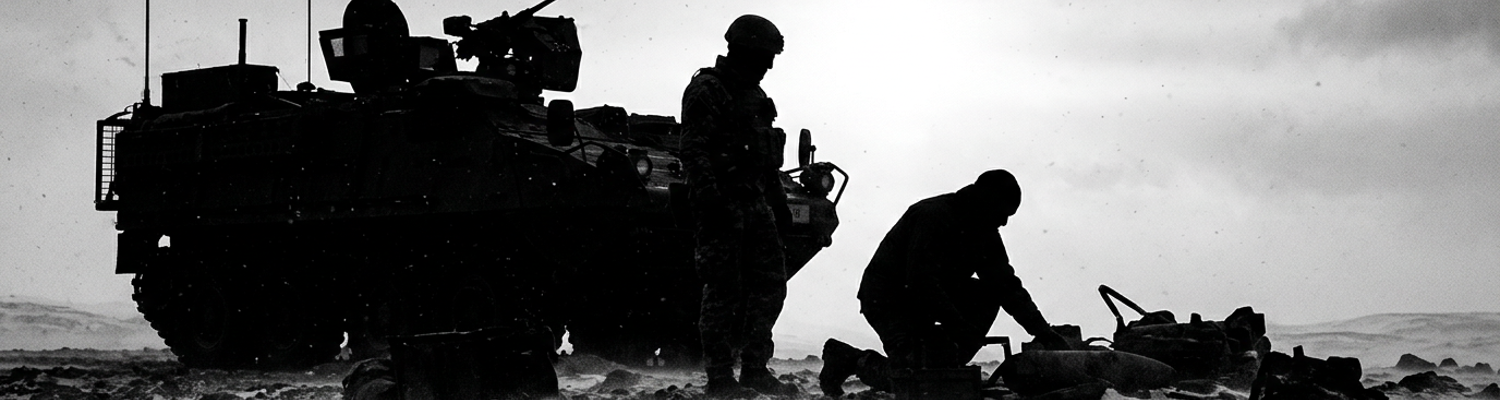

Aftermath of Subarctic Ordnance Clearing Operations
The primary hydraulic line on the M2 heavy bomb hoist ruptured at exactly 0314 hours. Atomized Type 5606 fluid vented across the freezing tarmac in a dense plume. A complete loss of system pressure followed instantly. Internal reduction gears of the main winch assembly ground against each other without hydraulic resistance. The primary drive pin sheared before the two-ton steel payload slammed into the compacted snow. Heavy iron casing on the unexploded air-dropped munition fractured upon impact. Inert filler compound met the freezing air. Technicians from the United States Army 234th Bomb Disposal Company scrambled backward over the icy ground. They waited for a secondary detonation from the fractured casing.
None came.
A review of operational logs indicates absolute silence fell over the Hvalfjörður staging area at coordinates 64.36°N, 21.66°W. The northern North Atlantic perimeter had echoed constantly with the controlled detonation of defective ordnance for the previous seventy-two hours. Heavy diesel generators had roared without interruption. The abrupt cessation of activity left the subarctic basin covered in a deep quiet. Enlisted personnel stood motionless around the perimeter of the blast craters. Heavy coastal winds unexpectedly died down to a dead calm. Freezing air settled over the black volcanic sand and the temporary steel-matting airstrips. Supply officers recorded the exact ambient temperature dropping to negative fourteen degrees Celsius. The frantic emergency response shifted into a static holding pattern. No engines turned. Warning sirens across the fjord remained silent. The deep water anchorage sat completely devoid of mechanical noise. Dozens of Allied convoy escorts preparing for the Murmansk run rested in the dark. Men of the 234th listened to the faint cracking of sea ice forming along the shallow edges of the harbor.
The focus shifted entirely from physical extraction to immediate technical documentation.
Captain Arthur L. Vance and three technicians began dissecting the recovered German ignition mechanisms inside a corrugated steel Quonset hut. A single kerosene stove heated the space. Archival evidence shows the team worked under unshielded tungsten bulbs. They cataloged the precise mechanical behavior of disarmed Rheinmetall-Borsig electrical impact fuses. Internal components of the Elaz 25B lay spread across a canvas-covered field desk. Prolonged exposure to saltwater caused specific degradation of the internal bakelite housing. The team documented this chemical breakdown immediately. Technicians carefully measured the resistance across the primary trembler switches using standard issue multi-meters. The exact rate at which the internal capacitors lost their stored electrical charge in sub-zero temperatures went into the logbook. Every observation fed directly into standardized War Department technical intelligence reports before the components oxidized further. The air inside the hut smelled heavily of picric acid and burned insulation.
Freezing temperatures severely compromised the German battery cells.
A close review of the 234th post-action inventory reveals an intensive study of the Zus 40 anti-withdrawal device. Technicians found this component threaded beneath the primary fuse pockets. Vance recorded the exact dimensions of the spring-loaded striker pin in his field notebook. The device relied on a secondary release mechanism designed to trigger a detonator if Allied personnel attempted to unscrew the main assembly. Subarctic cold caused the lubricating grease within the Zus 40 firing channel to freeze solid. Thermal contraction locked the striker pin in place. This physical reaction prevented the firing sequence. Unedited field reports detail the application of direct heat from a blowtorch to thaw the brass housing. Full disassembly could only occur after the metal reached forty degrees Fahrenheit. The thread pitch of the locking ring measured exactly 1.5 millimeters. Technicians photographed each individual gear and spring against a grid-lined background using a Speed Graphic camera.
The shutter clicked loudly in the quiet room.
Vance cataloged the chemical composition of the primary explosive train. He scraped small samples of the booster charge into glass vials. The team identified the main detonator compound as lead azide. They noted its high sensitivity to static electricity in the dry air of the Quonset hut. Technicians grounded their metal tools to the steel frame of the building using copper wire. This prevented an accidental discharge. Serial numbers stamped into the aluminum fuse heads went straight into the final inventory. The final entry in the 0500 hours report detailed the specific gauge of the copper wiring connecting the external charging plungers to the internal firing capacitors.
Diplomatic Restrictions on High Explosive Demolition
The brass pressure-release valve on the M1940 portable steam generator seized at 0518 hours. Internal boiler pressure spiked past two hundred and forty pounds per square inch in less than ten seconds. The cast-iron manifold cracked along the primary weld seam. Scalding water vented directly into the freezing subarctic air. Vapor instantly crystallized over the black volcanic sand. Technicians from the 234th Bomb Disposal Company abandoned the equipment. They retreated behind a reinforced sandbag berm. This specialized steam generator provided the only authorized thermal energy for melting explosive compounds out of defective German ordnance. The men could not empty the heavy iron casings without steam. The sudden loss of thermal pressure left a five-hundred-pound SC-250 bomb partially drained on the wooden disposal rack.
The mechanical failure immediately halted all disarmament procedures at the Hvalfjörður staging area.
A close review of operational logs indicates this hazardous steam-out procedure originated from strict State Department directives. Official dispatches transmitted from Washington under Directive 44-B-9 prohibited the 234th from utilizing standard M3 high-explosive demolition blocks. Diplomats feared sympathetic detonations would damage the nearby Icelandic fishing infrastructure. The mandate forced disposal technicians to manually drill into the frozen steel bomb casings using pneumatic hand tools. Operators then inserted quarter-inch copper wands into the bomb cavities. High-temperature steam pumped directly into the Amatol filler. The directive specifically banned any explosive counter-charges within a fifteen-mile radius of the deep water anchorage. Captain Vance recorded the exact times his men spent standing over the steaming munitions. Exposing the explosive filler to sudden temperature fluctuations created a highly unstable chemical environment inside the iron shells.
Molten Amatol frequently recrystallized and blocked the rubber drainage hoses.
Archival evidence shows these restrictive operational constraints originated directly from the British Foreign Office in London. British diplomats actively monitored highly sensitive territorial negotiations between the Soviet Union and Finland. These talks concerned the Petsamo nickel mining districts following the recent armistice. The Foreign Office expressed deep political sensitivity surrounding any Allied military actions. Soviet seismographic monitoring stations could misinterpret large explosions. Unannounced blasts in the North Atlantic staging areas registered on distant seismic equipment as potential unauthorized naval mining operations. London sent a classified teletype cable to the combined Allied command at 0600 hours. The message demanded absolute acoustic silence across the entire Icelandic sector. Elements of the 143rd Signal Battalion decrypted the incoming transmission using a standard Typex cipher machine. The unedited dispatch mandated that no explosive shockwaves could exceed a registered force of two pounds per square inch at a distance of one hundred yards.
Signal officers logged the exact decryption time in the battalion registry.
Field commanders received the decrypted text printed on yellow teletype paper less than twenty minutes later. General orders immediately restricted all disposal units from utilizing their standard TNT inventory. The 234th technicians resorted entirely to mechanical disassembly and chemical neutralization. They secured the remaining air-dropped weapons by hand. Men worked in negative fourteen-degree temperatures to manually unscrew the base plates of the SC-250 bombs. They used brass non-sparking wrenches. Friction of the metal tools against the frozen iron required constant lubrication with low-viscosity machine oil. The unit supply officer requested forty additional brass steam valves from the central ordnance depot in Reykjavik. They needed to replace the ruptured equipment.
Vance noted a severe shortage of high-pressure rubber tubing across the entire command sector.
Enlisted men wrapped the cracked boiler manifold with heavy asbestos tape. They attempted to temporarily seal the steam leak. The primary pressure gauge needle on the generator rested permanently at zero. Technicians cataloged the serial numbers of the damaged pressure valves in the morning report. The final entry in the supply ledger listed the exact thread pitch required for the replacement copper steam wands.
Complex German Fuses in Northern Staging Areas
The main brass coupling on the M2 pneumatic rotary drill sheared at exactly 0714 hours. One hundred and twenty pounds of compressed air dumped directly into the freezing subarctic atmosphere. Sudden depressurization caused the heavy tungsten-carbide drill bit to jam violently against the hardened steel casing of a German SD-500 bomb. High-velocity ice crystals and atomized lubricating oil blasted backward across the icy tarmac. Technicians from the United States Army 94th Bomb Disposal Squad threw themselves flat against the frozen volcanic gravel. They anticipated an immediate detonation from the sudden kinetic shock applied to the casing. The heavy pneumatic hose whipped violently against the steel bomb fins. The compressor engine stalled out completely.
The drill bit remained permanently embedded two millimeters deep into the explosive cavity.
A close review of operational logs places the 94th Bomb Disposal Squad directly at the Banak airfield staging hub. Coordinates 70.06°N, 24.97°E. Retreating elements of the German 20th Mountain Army had systematically saturated the forward operating base with delayed-action ordnance. They did this during their withdrawal toward the Lyngen Alps. Allied planners required the immediate use of the two-thousand-yard runway. Heavy bombers needed the strip for interdiction strikes against German naval traffic in the Barents Sea. Transport aircraft dropped thirty-two disposal technicians and their specialized equipment directly onto the unlit airstrip. Negative twenty-two-degree Celsius temperatures greeted them. Extreme cold immediately degraded the standard-issue equipment. Rubber insulation on their electrical diagnostic wires cracked. Large chunks fell away. The men established a temporary command post inside a partially destroyed concrete Luftwaffe bunker. Major Thomas E. Kline ordered his men to map the exact location of every unexploded casing. They used heavily modified grid coordinate charts. Technicians divided the airfield into fifty-square-yard sectors. Red flags staked into the compacted snow marked each located bomb.
Every located munition featured a highly sensitive electronically charged ignition system.
Archival evidence shows retreating German engineers equipped the SD-500 bombs with Type 50b electrical impact fuses. They paired these directly with Zus 40 anti-withdrawal devices. This specific combination created a highly unstable booby trap. The primary Type 50b fuse contained a mercury trembler switch wired to a set of internal capacitors. Any physical rotation of the bomb casing caused the liquid mercury to close an electrical circuit. A direct thirty-volt charge would hit the lead azide detonator. If a technician attempted to unscrew the primary fuse housing, the spring-loaded Zus 40 mechanism would strike a secondary percussion cap. The 94th technicians could not move the bombs. They could not extract the fuses using standard brass wrenches. Kline directed his teams to neutralize the devices by manually drilling small access holes through the steel fuse heads. Operators injected a specialized liquid nitrogen compound directly into the fuse cavity. Rapid freezing immobilized the liquid mercury. It locked the internal spring mechanisms in place.
The freezing agent required exactly four minutes to completely harden the internal components.
Technicians used fine-toothed hacksaws to cut through the aluminum fuse housing once the internal switches froze solid. Men worked under the dim light of battery-powered flashlights. They severed the internal copper wiring connecting the capacitors to the detonator charge. The exact gauge of the blue and red wires measured zero point eight millimeters in diameter. Operators cataloged the precise electrical resistance of the bypassed capacitors. They wrote the data into their field books with graphite pencils. Ink pens froze solid in the subarctic air. Every neutralized fuse went into wooden crates lined with sawdust. Naval intelligence laboratories in Maryland received the shipments. The final entry in the morning report logged the exact serial numbers of twenty-four intact anti-handling devices packed into the transport crates.
Environmental Extremes and Technician Neuro Fatigue
The brass pressure-reduction valve on the M3 portable de-icing compressor seized at exactly 0812 hours. Internal impeller blades ground against the dry aluminum housing. Three steel retaining pins sheared before the main drive shaft locked completely. Line pressure dropped to zero in less than four seconds. This sudden mechanical failure left technicians from the 112th Ordnance Bomb Disposal Squad without compressed air. They needed it to clear freezing water pooling inside the fuse cavity of a German Luftmine B. A close review of operational logs indicates a massive sub-zero arctic downpour began flooding the Keflavik forward staging area at coordinates 63.98°N, 22.60°W. The rain started just minutes before the compressor died. Heavy precipitation instantly crystallized upon hitting the black basalt gravel. The weather turned into a thick slush. It completely submerged the unexploded parachute mine resting at the bottom of a four-foot impact crater. Men scrambled to manually bail the freezing liquid using bent aluminum ration tins.
The water level inside the crater rose two inches every five minutes.
Archival evidence shows the technicians executed a highly delicate render-safe procedure on the magnetic-acoustic trigger mechanism. They knelt in the freezing slurry. The primary fuse housing of the LMB contained a sensitive hydro-static clockwork delay. Any sudden shift in water pressure or temperature could activate the trembler switch. Enlisted men plunged their bare hands directly into the slush. They felt for the brass locking ring located on the underside of the fuse plate. Heavy rubberized winter gloves proved completely useless. Thick material prevented the tactile feedback required to safely extract the arming pins. A continuous sub-zero downpour coated the wool uniforms in a solid layer of heavy ice. Sergeant Miller recorded the exact depth of the slush at fourteen inches directly around the bomb casing. Operators used specialized brass non-sparking wrenches to slowly turn the locking ring. They moved it one millimeter at a time. They constantly paused to let the freezing water drain from the exposed threading. Slush packed tightly into the exposed gear teeth of the clockwork mechanism. Specialists used wooden toothpicks to manually clear microscopic ice crystals from the escapement wheel. They had to clear the ice before inserting the safety gag.
Aluminum ration tins scraped loudly against the iron bomb casing.
Extreme environmental conditions rapidly induced systemic frostbite across the entire disposal unit. Medical officers assigned to the 112th documented severe capillary damage in the fingertips of every technician operating inside the crater. Skin on their hands turned a pale waxy white. It then shifted to a deep mottled purple. Captain Elias Thorne logged an emergency command decision at 0930 hours. He strictly mandated fifteen-minute rotation shifts to prevent permanent tissue necrosis. The medical ledger listed exact core body temperatures dropping to ninety-four degrees Fahrenheit. When examining the historical record, a secondary and far more dangerous threat emerged. Extreme neuro-fatigue set in. Frontline bomb technicians had been awake for seventy-four consecutive hours attempting to clear the airfield. A constant flood of adrenaline combined with severe sleep deprivation caused their central nervous systems to severely degrade.
Several men completely lost their fine motor control.
Technicians experienced involuntary muscle tremors while attempting to handle highly sensitive lead azide detonators. Unit medical logs detail specific instances of micro-sleeps. Operators would briefly lose consciousness for two to three seconds while actively unscrewing the primary exploder tubes. Freezing temperatures exacerbated the neurological strain by numbing the nerve endings in their hands. Men could not physically feel the pressure they applied to the delicate brass components. Thorne recorded that one technician accidentally snapped a copper bridging wire. His frostbitten fingers could no longer gauge the tension. Commanders completely halted the extraction of the secondary Zünder 29 anti-handling fuse. Men sat in the heated cab of a nearby transport truck. They stared blankly at the dashboard. Medical staff applied dry friction rubs to their blackened fingers.
The final medical entry noted a total loss of sensation in the right index finger of three different specialists.
Immediate Field Documentation and Technical Lessons
The primary brass relief valve on the M1937 portable field autoclave sheared completely at 0411 hours. Fifty pounds of highly pressurized steam instantly vented across the cramped interior of the documentation tent. Internal copper gears within the timing mechanism ground violently against their unlubricated housings. Sudden depressurization sent a heavy spray of scalding rust-colored water directly over the wooden drafting tables. Technicians from the United States Army 14th Ordnance Battalion scrambled backward to shield their exposed schematics. The heavy steel door of the sterilization unit sagged on its cast-iron hinges. Internal pressure dropped to zero. Disposal personnel relied on this specialized thermal chamber to safely melt crystallized picric acid residue off the intricate German fuse components. They needed the components clean before manual inspection. The loss of the autoclave meant the men had to scrape the highly volatile explosive paste away using wooden dowels.
The workspace fell into a freezing damp silence.
A close review of operational logs indicates this quiet marked the beginning of an intense period of technical intelligence gathering. The Narsarsuaq staging area at coordinates 61.16°N, 45.42°W became the center of a frantic effort. Men cataloged the mechanical anomalies discovered during the prior seventy-two hours of continuous ordnance clearance. They worked by the dim light of battery-powered hand lamps. They documented the exact failure points of the German Y-type radio proximity fuses recovered from the ice. Captain Robert H. Davies ordered his drafting team to sketch the internal wiring diagrams of the shattered components. They had to finish before the subarctic air could oxidize the exposed copper. Draftsmen used heavy graphite pencils to record the precise micro-farad ratings of the recovered capacitors. Ink in their standard-issue fountain pens froze solid in the negative eighteen-degree Celsius ambient temperature. The air inside the canvas structure smelled heavily of raw ozone and degraded cordite. Enlisted personnel rapidly transcribed raw field notes onto damp paper. They logged the specific chemical degradation of the booster charges caused by prolonged exposure to freezing saltwater. Every measurement went directly into a raw unprocessed technical dossier. Specialists physically disassembled the secondary gaine tubes using modified dental picks.
Technicians recorded the exact thread pitch of the brass locking rings at zero point five millimeters.
Archival evidence shows these hasty sketches formed the absolute baseline for a completely new set of northern disposal procedures. The War Department lacked any existing documentation for handling complex electronic fuses in sub-zero environments. Davies and his senior sergeants drafted an improvised arctic protocol manual on the back of blank supply requisition forms. They established a rigid requirement for all non-sparking brass tools. Operators had to pre-heat them to at least forty degrees Fahrenheit using chemical hand warmers before contacting frozen explosive compounds. Draftsmen detailed a new extraction method for the Zus 40 anti-withdrawal devices. The new protocol mandated the injection of a specific chemical mixture. Fifty percent ethylene glycol and fifty percent high-grade grain alcohol went directly into the frozen firing pin channel. This solution lowered the freezing point of the hardened German grease. The liquid allowed the internal spring mechanism to release its tension without striking the detonator cap. Technicians recorded the exact dimensions needed to machine custom aluminum sleeves for their pneumatic drills. The finalized directive required all disposal teams deploying to the Greenland and Iceland sectors to carry insulated canvas tool rolls. These rolls came heavily packed with dry silica gel packets.
Silica absorbed the ambient moisture that otherwise froze inside the pneumatic drill chucks.
When examining the historical record, the 14th Ordnance Battalion immediately transmitted these raw protocols to the central command hub in London. Signal officers used a heavily modified ECM Mark II cipher machine to encrypt the technical data. Men operated the cryptographic equipment on a folding wooden table covered in frost. The transmission took exactly four hours to send on the 4500 kilohertz frequency. Heavy atmospheric interference over the North Atlantic slowed the broadcast. Clerks at the receiving station punched the decrypted coordinates and chemical ratios directly onto standard index cards. The field manual draft specifically banned the use of Type 5606 hydraulic fluid in any hoisting equipment operating north of the 60th parallel. Davies listed the exact viscosity breakdown temperatures of the fluid in the margins of his final report. The unit supply officer immediately drafted a separate request for two hundred gallons of specialized arctic-grade machine oil.
The final entry logged the precise weight of the shattered autoclave pressure valve at four point two ounces.