
Field Casualties and Ambush Triage in Vietnam
Shrapnel sliced clean through the backpack antenna of the tactical radio set, severing voice contact with battalion headquarters and forcing the pinned rifle squad to defend the perimeter through hand signals. Machine gun fire from three concealed positions cut across the narrow dirt cart path, pinning twelve men inside muddy drainage ditches beside a defoliated tree line. Mud, cordite smoke, and burning brush filled the air as the squad leader signaled his two fire teams to return suppressive fire with their automatic rifles. Frontline combat medics crawled through the crossfire to treat severe blast trauma, penetrating shrapnel wounds, and acute combat stress reaction under hostile fire in South Vietnam. Bandages soaked through within seconds against deep arterial punctures, forcing the medics to pinch torn blood vessels with bare fingers while automatic weapons fire splattered wet red clay across their backs. Shell fragments continued to clip the bamboo stalks above their helmets, driving grit directly into open chest cavities as caregivers worked frantically to maintain patent airways.
Cardboard triage tags fluttered against the wet utility jackets of the wounded as medics tied wire fasteners through buttonholes while mortar rounds continued to bracket the clearing. Grease pencils skipped across the rain soaked paper cards to record tourniquet application times, morphine doses, and the location of visible penetrations. Battlefield medical tags and preliminary field records routinely omitted documentation of neurological trauma and concussive blast injuries. Medics had neither the time nor the diagnostic equipment under active fire to evaluate closed head injuries, cracked skulls, or inner ear hemorrhages. Men who sat staring blankly into the jungle canopy without speaking, completely immobilized by nearby grenade detonations, received tags marked only with notes about minor surface scratches or mud contamination. Evacuation priorities dictated that only actively bleeding soldiers secured the first available hoist cables dropped from hovering rescue aircraft.
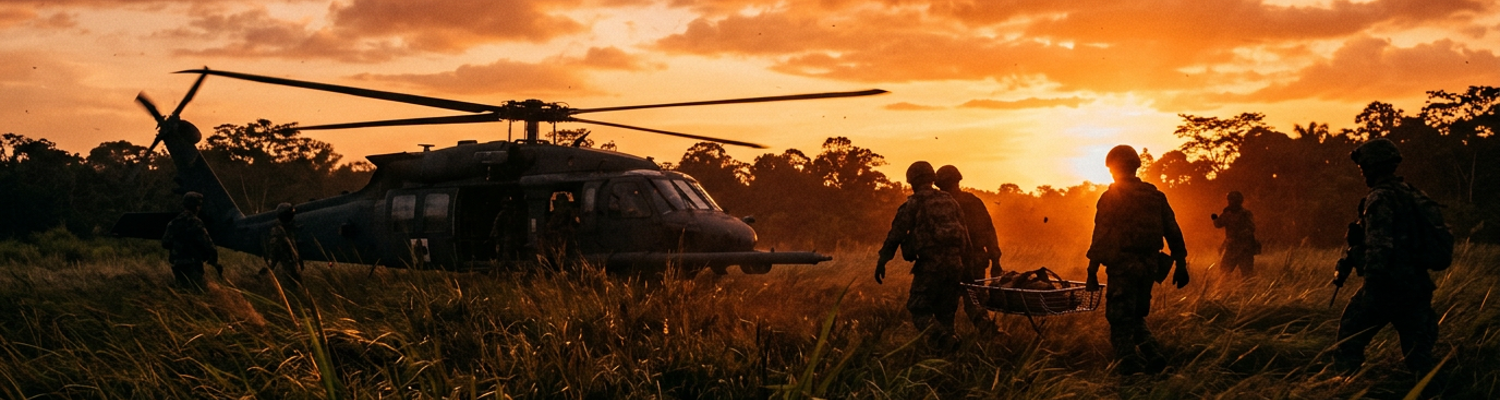
Helicopter skids crushed the tall elephant grass as two air ambulances landed under protective machine gun cover to load the casualties. Crew chiefs pulled the wire litters aboard across blood streaked aluminum decks while the walking wounded clambered into open troop doorways behind them. Flight medics monitored pulse rates and adjusted intravenous plasma bags during the fifteen minute flight to the third surgical hospital at Bien Hoa. Triage teams on the hospital tarmac rapidly separated the arrivals according to the grease pencil markings scrawled on their cardboard tags. Orderlies wheeled soldiers with visible shrapnel lacerations straight into pre operative bays for emergency surgical debridement, while infantrymen showing only severe tremors, speech loss, or blank stares were steered toward temporary cot rows set up inside corrugated metal holding sheds.
Surgeons closed open flesh wounds with heavy nylon sutures and issued basic pain tablets before discharging ambulatory patients from the recovery tents within thirty six hours. Manpower deficits across front line battalions created constant administrative pressure to clear hospital beds and replenish depleted rifle companies. Surviving infantrymen were frequently returned to forward combat duties prior to receiving comprehensive physical or psychiatric stabilization. Medical officers cleared concussed riflemen for full duty because their physical motor skills appeared intact and their medical records contained no documented neurological deficits. Company first sergeants signed receipt rosters on the supply pads, assigned fresh magazines, and loaded the trembling soldiers directly onto transport trucks heading back toward forward firebases. Truck tires spun in the red gravel as the convoy rolled out through the base camp gates, carrying men with ringing ears, unresolved blast concussions, and unhealed flesh back into the dense jungle patrol sectors.
Disciplinary Friction and Administrative Discharges
Infantrymen survived weeks of additional ambushes and bunker sweeps across those forward sectors before their twelve month combat tours expired and military charter flights carried them back to domestic bases such as Fort Hood, Fort Carson, and Fort Bragg. Soldiers coping with untreated physical trauma, blast headaches, and severe combat fatigue faced severe disciplinary friction upon rotating back to domestic military installations. Domestic installations enforced rigid peacetime standards that required pressed cotton uniforms, daily parade ground formations, and strict adherence to barracks schedules. Combat veterans suffering from sudden acoustic startle reactions, sleep loss, and chronic pain from unextracted shrapnel clashed constantly with garrison non commissioned officers who treated missed formations and erratic behavior as deliberate insubordination. Company first sergeants logged repeated infractions on daily duty blotters and marched the combat returnees into battalion headquarters for formal disciplinary proceedings.
Battalion commanders used non judicial punishment under Article 15 of the Uniform Code of Military Justice to strip rank, dock pay, and assign hard labor to combat veterans who missed morning roll calls or broke barracks curfews. Army unit commanders made extensive use of non judicial punishment and Chapter 10 administrative discharges to purge troubled combat veterans instead of convening medical evaluation boards. Convening a formal medical evaluation board required comprehensive clinical workups, neurological testing, and months of administrative delay that dragged down unit readiness statistics. Chapter 10 administrative discharges in lieu of court martial provided garrison officers with a rapid administrative tool to eliminate service members who accumulated repeated disciplinary marks. Staff officers presented troubled soldiers with pre printed waiver documents, explaining that signing the Chapter 10 request would dismiss pending court martial charges for absence without leave or insubordination and secure immediate release from active duty. Soldiers desperate to escape stockades and pretrial confinement signed the waiver forms on company orderly desks without realizing the permanent penalties attached to the paperwork.
Clerks in post administrative offices processed those signed waivers as undesirable discharges under other than honorable conditions. Undesirable and bad conduct discharges immediately terminated veterans access to Veterans Administration hospital networks and surgical care facilities. Federal regulations strictly barred any former service member who held an other than honorable separation from receiving medical treatment or surgical follow up care inside Veterans Administration clinics. Combat veterans who arrived at regional Veterans Administration hospitals with infected suture lines, unhealed shrapnel wounds, or severe nervous tremors were stopped at intake desks during the initial records check. Hospital administrative staff inspected the discharge certificates, verified the unfavorable separation codes, and refused to open clinical files or admit the men to medical wards. Admissions clerks slid denial forms across reception counters, instructing the men to leave the federal medical buildings immediately.
Riflemen walked out through clinic doorways onto city sidewalks with unhealed surgical incisions, untreated blast concussions, and migrating shrapnel still lodged inside their muscle tissue. Civilian municipal hospitals lacked specialized military surgical records and refused treatment to former soldiers who possessed neither private health insurance nor cash to pay for operations. Discharged veterans bought drugstore gauze, alcohol, and cotton bandages to dress their own chronic drainage tracts at home without access to military doctors or prescription painkillers. Disciplinary discharge papers stamped with undesirable classifications prevented these men from securing steady civil service employment, technical trade apprenticeships, or local labor union cards. Veterans gathered in small rented rooms near domestic military posts, re dressing weeping wounds with basic first aid supplies while battalion administrative clerks filed the completed discharge paperwork into permanent archival cabinets.
Presidential Proclamation and Clemency Operations
Steel cabinets held thousands of those locked personnel folders until President Gerald Ford signed Presidential Proclamation 4313 on September 16, 1974, creating a conditional clemency framework for Vietnam era absence offenders. The directive established the Presidential Clemency Board under the chairmanship of former New York Senator Charles E. Goodell to review discharge records across every military department. Goodell set up operational headquarters inside federal office rooms in Washington, hiring hundreds of attorneys, service officers, and administrative clerks to handle thousands of incoming applications. Clerks requested master personnel dockets from the military records repository in Saint Louis to begin reconstructing individual service histories. Trucks delivered thousands of bound service jackets directly to the board offices, where intake teams unloaded the cardboard boxes and logged each case into tracking ledgers.
Caseworkers opened the individual service jackets listed in those ledgers to compare battlefield medical logs against garrison charge sheets. Staff examiners found that hundreds of soldiers separated for unauthorized absence had earned positive conduct evaluations during front line combat tours before breaking garrison rules on domestic bases. Medical evacuation tags taped inside the folders revealed untreated shrapnel wounds, severe blast concussions, and emergency field hospitalizations that garrison officers had ignored during disciplinary hearings. Legal analysts noted how post commanders had steered concussed riflemen into Chapter 10 discharges instead of convening formal medical evaluation boards. Examiners drafted detailed summary sheets that highlighted each soldier front line combat exposure, physical trauma, and decorated service as decisive mitigating factors.
Charles Goodell directed his review panels to study those summary sheets because the clemency framework offered punitive discharge recipients an opportunity to earn a Clemency Discharge through the completion of alternative service. The executive regulations required absence offenders to perform up to twenty four months of low paying public service labor in municipal hospitals, conservation parks, or local charities under the direction of the Selective Service System. Goodell argued before the panels that men who had survived enemy ambushes and mortar barrages had already performed arduous service on the battlefield. Panels adopted guidelines that credited months of hazardous combat service and painful blast injuries toward the alternative work requirement, reducing the civilian service period to zero months for severely wounded veterans. Review officers recorded these reduced work requirements onto formal recommendation certificates and stamped them for final approval.
Certificates authorizing the Clemency Discharge reached thousands of veterans through the mail, but the paperwork carried strict legal limitations. The clemency document restored lost voting rights and helped former infantrymen pass basic background checks for civilian employment, yet it did not alter their underlying military discharge rating to honorable status. Title 38 federal statutes barred anyone lacking an honorable discharge from accessing Veterans Administration hospitals, preventing these men from receiving clinical surgery for migrating shrapnel or treatment for combat induced nerve trauma. Discharged soldiers visited regional Veterans Administration intake counters with their presidential clemency documents, only to have administrative staff turn them away at the reception desks. Goodell and his staff documented this medical barrier in their operational notes, urging federal officials to address the untreated trauma of combat absentees as the board prepared its final dockets. Caseworkers packaged the completed case files into shipping containers and transferred the entire documentary archive to the Department of Justice for permanent storage.
Enlistment Standards and Absentee Demographics
Justice Department staff unsealed those cardboard shipping containers to verify the final case numbers recorded by the Presidential Clemency Board. The Goodell Board adjudicated 14,514 individual petitions during its year long tenure, contrary to expectations of reviewing civilian draft evaders. Political planners in Washington had expected tens of thousands of middle class college students who had refused induction orders to swamp the application desks. Master ledgers proved that civilian draft resisters made up only a small fraction of the total caseload. The overwhelming bulk of the case files belonged to enlisted military men who had walked away from domestic army posts months after returning from Southeast Asia. Staff statisticians logged each applicant service branch, rank, and discharge type onto master punch cards to determine how these service members had entered the military system.
Clerks processed those master punch cards through sorting equipment, revealing that a substantial percentage of military absentee petitioners had been recruited under Project 100,000 with lowered mental and medical qualification thresholds. Defense Department officials had launched Project 100,000 in the mid 1960s to pull men from impoverished backgrounds and lower educational testing brackets into the armed forces to satisfy combat manpower quotas. Recruits accepted under these relaxed entrance standards received minimal remedial training before military personnel managers assigned them directly to frontline infantry specialties. Field commanders relied heavily on these men to fill gaps in rifle platoons, where high casualties created a constant demand for fresh riflemen. Traumatic head injuries, blast concussions, and severe field combat compounded the cognitive and physical challenges these recruits already carried into the field. Administrative officers on domestic bases later punished these same men for failing to complete complex written forms, understand garrison directives, or cope with routine military paperwork.
Goodell reviewed that garrison paperwork alongside battlefield logs to evaluate the disciplinary histories of the petitioners. Official board findings established that over half of applicants were decorated, working class combat infantrymen rather than expatriates living abroad in Canada. Media reports during the war had focused public attention on antiwar exiles residing in Toronto or Vancouver, but the clemency petitions revealed a stark pattern of poverty and front line service. Most petitioners had grown up in small industrial towns or rural farming counties without financial resources to attend college or hire draft lawyers. These young men had carried machine guns and walked point through dense jungle terrain, earning Purple Hearts, Bronze Stars, and combat infantry badges before unauthorized absences ended their service. Their personnel jackets contained medals for valor pinned directly beside administrative reprimands for missing reveille roll calls or overstaying weekend passes.
Examiners weighed those combat ribbons and disciplinary entries when drafting the final case briefs for presidential action. Caseworkers pulled medical field cards and casualty rosters from the Saint Louis military repository to verify whether concussive blast injuries and untreated shrapnel wounds had coincided with the first recorded garrison infractions. Staff analysts cross referenced each soldier Project 100,000 entrance score against the administrative discharge forms pushed onto the applicant by company commanders. Board officers entered these verified combat decorations and recruitment categories onto standardized disposition vouchers, recommending presidential clemency for thousands of penalized combat veterans. Couriers transported the completed disposition sheets in heavy canvas pouches directly to the White House clemency liaison office for final presidential signatures.
Clinical Trauma Documentation in Case Docket Reviews
Aides unpacked the heavy canvas pouches inside the White House liaison office to inspect the detailed evidentiary summaries attached to each presidential signature voucher. Clemency review panels cross referenced service personnel folders with clinical inpatient charts from major theater evacuation hospitals in Da Nang and Long Binh. Caseworkers matched admission logs from the 95th Evacuation Hospital in Da Nang and the 24th Evacuation Hospital at Long Binh against the formal charge sheets drafted by garrison commanders. Medical intake sheets from these busy trauma centers recorded combat wounds that garrison officers on domestic bases had routinely omitted from administrative counseling forms. Surgeons in Vietnam had noted severe blast concussions, deep penetrating metal fragments, and profound nervous shock on carbon clinical registers before shipping injured riflemen back to the United States. Evacuation hospital doctors had marked these soldiers for extended physical rehabilitation, yet receiving base depots in Texas and North Carolina reassigned them directly into standard infantry formations without follow up care.
Caseworkers tracked these neglected physical traumas through every layer of the accumulated service jackets. Docket examinations cataloged thousands of instances of retained fragment shrapnel, unhealed orthopedic injuries, and acute psychological collapse among unauthorized absentees. Examiners read through yellowed clinic notes detailing jagged metal fragments lodged against major arteries, unhealed compound fractures that caused soldiers to limp through morning roll calls, and severe tremor states brought on by mortar fire. Garrison non commissioned officers had interpreted the resulting physical tremors and missed formations as deliberate insubordination, issuing company punishments instead of scheduling radiological scans. Soldiers collapsed on training ranges and parade fields when damaged knee joints locked up or hidden metal shards tore through inflamed muscle tissue during mandatory twenty mile road marches.
Infantrymen petitioned base dispensaries for temporary convalescent passes and orthopedic braces to prevent their damaged limbs from giving out entirely under heavy field packs. Administrative records showed that unauthorized absences frequently coincided with the denial of emergency medical leave or post injury convalescence. First sergeants tore up medical leave requests, ordered injured riflemen to report for live fire maneuvers, and threatened court martial charges against soldiers who visited civilian emergency clinics for pain relief. Desperate combat veterans walked away from garrison cantonments to seek surgical help from private doctors or return home to family members who could dress their chronically infected wounds. Commanders stamped these medical departures as desertion offenses, initiating administrative discharge paperwork that stripped veterans of their military status while they lay in civilian hospital beds.
Physicians on the clemency panels pulled the original hospital admission records to refute the desertion warrants issued by garrison commanders. Medical evaluators recorded physical measurements of surgical scars, documented bone fragment displacement on master tally sheets, and noted how untreated psychological breakdowns had triggered sudden flight from barracks. Legal analysts attached these clinical tabulations directly to each clemency file, certifying that physical trauma and command neglect had caused the unauthorized absences. Panels entered these certified clinical findings onto final clearance dockets, directing the military branches to reclassify punitive discharges and clear the disciplinary records of wounded combat absentees. Clerks stamped the approved clinical dockets with red ink, boxed the verified files into metal filing crates, and loaded the shipments onto handcarts bound for the White House clemency office.
Mitigating Evaluation Rubrics and Clemency Scoring
Couriers rolled the loaded handcarts into the main adjudication room, unloading the heavy metal crates directly onto long wooden review tables. Charles Goodell organized his review panels to work through the massive backlog using a strict, uniform scoring system that eliminated guesswork from clemency decisions. Charles Goodell panels formalized a standardized evaluation matrix balancing sixteen mitigating variables against aggravating military offenses. Reviewers laid out standardized tally sheets that weighed serious garrison violations, such as extended desertion or missing a scheduled unit deployment, against the personal hardships and battlefield records of the soldiers. Staff attorneys checked off specific mitigating factors, such as youth, lack of education, personal family distress, and voluntary surrender, to offset the punitive charges documented by base commanders. Each checked box shifted the soldier along a calculated scale, converting raw disciplinary records into numerical penalty scores that determined whether an applicant faced months of unpaid community work or qualified for immediate executive leniency.
Scorecards guided the caseworkers as they cross checked combat awards against each soldier disciplinary sheet. Mitigating criteria granted immediate leniency credits for service connected wounds, Purple Heart decorations, and the Combat Infantryman Badge. Examiners subtracted required months of alternative service whenever an applicant presented verified documentation of front line infantry duty. A Combat Infantryman Badge proved that an absentee had survived direct enemy firefights, which the board treated as clear evidence that the soldier had already paid a heavy personal debt before his garrison infractions began. Purple Heart citations and documented shrapnel wounds provided concrete proof of bodily sacrifice, allowing panels to erase months of unauthorized absence time from the final punitive calculation. Reviewers clipped copies of hospital admission records and medal citations directly to the evaluation sheets so that panel members could inspect the physical cost of each veteran combat tour.
Physicians analyzed these attached medical records to measure the lasting bodily and mental damage suffered by the returning riflemen. Severe combat related psychological distress and permanent disability ratings were classified as priority grounds for waiving alternative service mandates. Doctors on the board reviewed clinical notes detailing severe startle responses, uncontrollable panic, sleeplessness, and profound depression brought on by prolonged artillery barrages and jungle ambushes. Evaluators matched these clinical findings with Veterans Administration disability ratings that recognized total physical or psychiatric incapacitation resulting from combat. Board members determined that requiring severely injured veterans to perform manual labor or public service jobs was impractical and unfair to men who could barely walk or function in normal daily routines. Panels marked these specific medical files with immediate waiver stamps, recommending that President Ford grant clean clemency discharges without requiring any months of conditional alternative service.
Goodell signed the final recommendation bundles at the end of each daily session, affirming the score reductions and service waivers calculated by his panels. Clerks bundled the scored evaluation sheets together with the original military charge sheets, medical discharge papers, and presidential signature certificates. Administrative assistants bound each finished file with heavy paper tape and logged the assigned clemency disposition numbers into central master registries. Case managers filed carbon copies of every worksheet in regional tracking drawers to ensure that military discharge boards could execute the exact service reductions ordered by the panel. Messengers loaded the approved dossiers into leather courier satchels and carried them across the street for delivery to the executive wing of the White House.
Final Clemency Report Findings of November 1975
Clerks unbuckled those leather satchels inside White House workrooms to organize the individual case folders into comprehensive statistical registries. The Presidential Clemency Board completed its final draft report on November 11, 1975, systematically preserving its statistical findings in the National Archives. Caseworkers spent fourteen months tabulating medical histories, court martial records, and discharge certificates from thousands of individual military service jackets. Staff analysts fed punch cards into sorting machines to correlate the length of combat tours against the sudden onset of garrison disciplinary infractions. Board examiners transcribed these statistical tallies into comprehensive data tables that exposed how the armed services handled injured returnees after front line operations ended. Printers transferred these tabulated totals onto wide ledger sheets, creating an official record of institutional failure that linked physical battlefield trauma directly to garrison punishment.
Ledger sheets in the final draft report documented how military branches had weaponized administrative discharges to offload combat casualties without disability pensions. Base commanders routinely threatened court martial confinement at Fort Leavenworth to pressure concussed and wounded soldiers into accepting undesirable or Chapter 10 administrative discharges. Commanding officers used these rapid paperwork separations to bypass medical evaluation boards, clearing disabled infantrymen from post rosters within forty eight hours of their first garrison infractions. Discharged riflemen surrendered their military identification cards at the gate and walked out into civilian life without disability pensions, severance pay, or access to Veterans Administration hospital care. Board analysts calculated that this administrative maneuver saved the armed services millions of dollars in medical retirement compensation while pushing veterans with retained shrapnel and blast trauma directly onto municipal welfare rolls. Investigators bound these administrative findings into comparative chapters alongside detailed demographic surveys that tracked the family backgrounds of the discharged troops.
Statisticians analyzing those family backgrounds confirmed that empirical tabulations demonstrated that socioeconomically disadvantaged infantrymen shouldered the harshest post service administrative penalties. Recruits enlisted under Project 100,000 and working class draftees with limited formal education accounted for the vast majority of punitive administrative separations. Soldiers from affluent families possessed the legal counsel and medical documentation necessary to secure honorable discharges or medical disability retirements before base panels. Disadvantaged combat veterans from rural communities and inner city neighborhoods had no civilian legal representation and signed away their rights under intense pressure from garrison officers. Punitive discharge stamps permanently barred these low income veterans from receiving civil service jobs, joining labor unions, or getting trade apprenticeships. Caseworkers stacked these demographic tabulations and economic case studies into wooden crates across the main sorting room floor.
Archivists wheeled those wooden crates across the National Archives loading dock to secure the complete collection of board records inside permanent federal repository vaults. Technical clerks stamped serial control numbers onto each bound volume, sealed the punch card decks in climate controlled steel cabinets, and cross referenced thousands of clinical microfilms. Board chairman Charles Goodell signed the final transfer ledgers, formally verifying that the preserved statistical dockets documented the service histories of fourteen thousand combat absentees. Vault personnel closed the heavy steel security doors and entered the accession slips into the master inventory catalog.
Discharge Upgrades and Restored Medical Care
Clerks pulled duplicate case records from those catalog listings to help former soldiers challenge their punitive administrative separations through formal military channels. Securing a Clemency Discharge allowed former absentees to petition the Army Discharge Review Board for upgrade considerations to General or Honorable conditions. Veterans traveled to regional hearing rooms with sworn medical affidavits, certified field dressing tags, and their white clemency certificates signed by the presidential board. Legal advocates placed original inpatient charts from Da Nang and Long Binh directly onto the evidence tables to demonstrate that base commanders had punished men who were physically and mentally broken from ambush warfare. Hearing officers examined the unhealed blast scars, listened to testimony from squad medics, and verified that combat infantrymen had fled domestic garrisons only after military doctors ignored severe shrapnel wounds and nerve trauma. Review panels began throwing out punitive Chapter 10 discharge records across hundreds of dockets, voting to replace undesirable designations with formal certificates granted under honorable conditions.
Certificates bearing those new honorable seals transformed the legal status of combat veterans who had spent years locked out of government assistance. Upgraded administrative classifications restored veterans statutory eligibility for Veterans Administration reconstructive surgery, prosthetics, and psychological therapy. Hospital admission clerks at regional Veterans Administration facilities accepted the updated paperwork and registered former absentees for immediate clinical triage and surgical evaluations. Surgeons used diagnostic x rays to locate jagged mortar shrapnel that had migrated through muscle tissue and lodged against sciatic nerves or bone surfaces during years of neglect. Surgical teams wheeled the former infantrymen into operating rooms to excise infected metal fragments, repair torn tendons, and graft skin over chronic drainage tracts. Orthopedic workshops built specialized limb braces and custom prosthetics for infantrymen who had limped on shattered ankles and unaligned joint fractures since their combat tours in the jungle.
Physicians compiled these new psychiatric and surgical case files into thick administrative records, proving that battlefield trauma directly triggered the sudden garrison absences. The Goodell Board empirical data set a direct precedent for the Department of Defense Special Discharge Review Program initiated under President Jimmy Carter in 1977. President Carter directed military review panels to re examine thousands of Vietnam era bad paper discharges using standardized, compassionate criteria that accounted for direct combat exposure. Review officers pulled the original clemency survey binders from government storehouses to establish uniform guidelines that favored veterans with combat decorations, service connected disabilities, and low educational backgrounds at enlistment. Caseworkers applied these empirical standards to clear disciplinary dockets that had stood unchanged since the troop withdrawals from Southeast Asia. Administrative clerks stamped upgraded discharge certificates for over thirty thousand veterans across the country, routing former infantrymen into regional Veterans Administration medical clinics to begin long delayed surgeries and physical rehabilitation.