
910.34 Standard Operating Procedure Origin
A close review of operational logs (NARA Record Group 338) shows the origin of Standard Operating Procedure 910.34 was a persistent intelligence failure of the late 1970s. NATO collection assets, mainly seismic and ground-penetrating radar data, pointed toward a massive, coordinated effort by Warsaw Pact nations to establish a subterranean cache network. These were not simple bunkers. Analysis suggested the facilities were for long-term storage of high-value economic assets and strategic resources. They were, in effect, a shadow economy immune to surface-level interdiction or nuclear exchange. The objective of SOP 910.34 became the active disruption of these enemy assets. Intelligence indicated three target types: bullion caches with gold and platinum reserves; petroleum, oil, and lubricant (POL) depots on a scale far exceeding tactical needs; and hidden repositories for advanced electronics and missile guidance components. The doctrine focused on surgical contamination and seizure, rendering resources unusable or capturing them outright. Planners theorized that contaminating a bullion reserve with fast-acting corrosive agents would inflict a deeper economic wound than an explosion.
This objective demanded a new form of warfare.
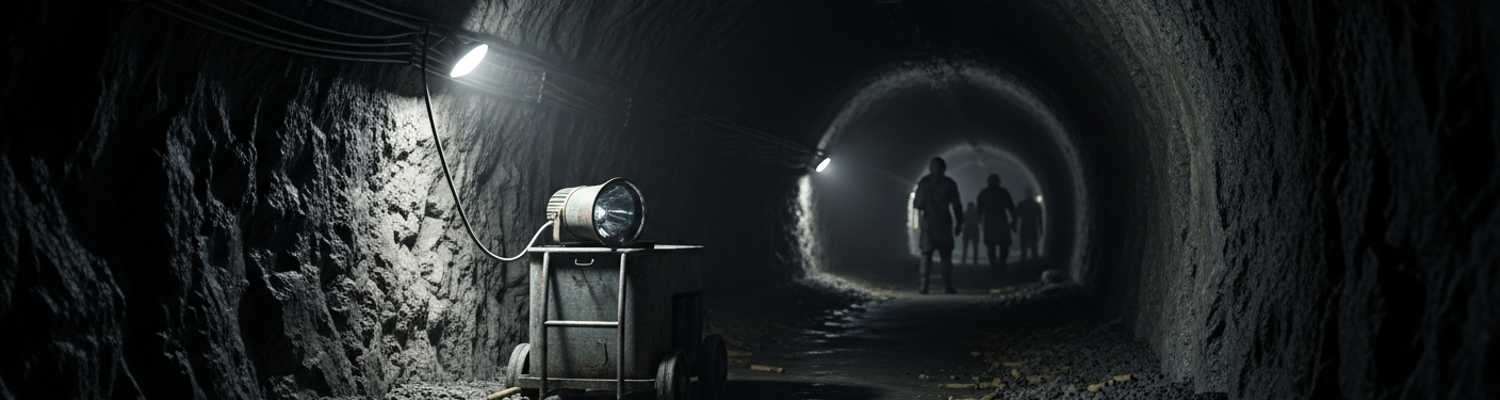
The concept developed was known internally as tunnel cavalry. Archival evidence from Fort Belvoir planning groups reveals the tactical thinking. Small, highly mobile, self-sufficient teams would conduct rapid, covert ground incursions into the enemy’s subterranean networks. The operational model was a direct analogue to 19th-century cavalry raids. Speed, shock, and a focus on disruption over occupation. The units designated for this role, the 11th and 14th Special Operations Pioneer Battalions, were composed of combat engineers, infantrymen, and signals intelligence operators. Their primary transport for insertion was the Subterranean Incursion Vehicle (SIV), a narrow-chassis, electric-powered cart designed for speeds up to 30 kilometers per hour. The SIVs were lightly armored with ceramic composites to save weight and maximize battery life. Each team was equipped for 72 hours of autonomous operation, carrying re-breather apparatus, drilling equipment, and chemical contamination payloads.
Speed was the central pillar. The doctrine mandated that teams penetrate a minimum of five kilometers into a target network within the first 90 minutes. This pace was intended to bypass initial defensive chokepoints and overwhelm command-and-control nodes before a response could be mounted. The operational tempo placed an extreme strain on communications and navigation. Line-of-sight laser communication arrays and inertial navigation units were experimental and highly susceptible to the geological composition of the tunnels. Iron ore deposits caused significant magnetic interference during field exercises. The SIV’s battery life was calculated based on this rapid advance, leaving almost no power reserve for a slow, contested withdrawal.
Tunnel Rat Unit Recruitment Challenges
Personnel requisitions for the 11th and 14th Special Operations Pioneer Battalions reveal a major operational hurdle. There was no pre-existing soldier profile suited for SOP 910.34. The tunnel cavalry concept demanded a combination of traits not typically found in a single soldier. Recruitment directives from this period show screeners searching for candidates who scored in the lowest percentiles on claustrophobia indexes yet demonstrated high markers for aggression and independence under duress. The ideal psychological profile was a soldier who would not panic when buried alive but possessed the cold initiative to make lethal decisions far from any command structure. This led to the rejection of many disciplined soldiers who performed well in team environments but tested poorly on lone-operator stress simulations. The mental toll was high, with many candidates washing out from the exhaustion of constant, high-stakes decision-making in sensory deprivation.
Physical requirements were even more restrictive. Planners for SOP 910.34 determined that a powerful, muscular soldier was a liability underground. Archival medical screening criteria (per Directive 79-4) specified a maximum height of five feet six inches and a body weight not to exceed 150 pounds. These were rigid operational necessities dictated by the SIV chassis and the even tighter confines of enemy tunnels. A smaller, wiry frame consumed less oxygen, a key factor when relying on closed-circuit rebreather systems. Unit quartermasters were issued tailor’s measuring tapes to record chest circumference and shoulder breadth. An excess of a few inches was grounds for immediate disqualification.
To forge these recruits into weapons, the program established a specialized training center known only by its designation, The Pipeyard. Located in abandoned mine shafts in the Nevada desert, this facility became a crucible for confined space combat. Trainees navigated miles of concrete and corrugated steel tunnels. Many sections were intentionally constructed too narrow, forcing soldiers to fully exhale and contort their bodies to pass. Live-fire drills were conducted in these same spaces using frangible ammunition that disintegrated on impact to prevent ricochets but did little to lessen the disorienting muzzle blast in a narrow passage. Instructors induced deliberate equipment failures, plunging sections into total darkness or silence to force a reliance on other senses. Soldiers learned to fight by sound, by the feeling of air pressure changes, and by touch.
Navigation and sensory isolation training were often considered more grueling than combat drills. With GPS nonexistent and inertial navigation units proving unreliable, recruits were drilled relentlessly in dead reckoning. Training scenarios involved being sent into The Pipeyard’s labyrinth with deliberately falsified maps and compromised compasses, forcing teams to count their paces and develop an intuitive sense of direction. The most infamous phase involved extended stays in fully anechoic, lightless chambers to acclimate soldiers to the profound sensory isolation expected in deep-earth operations. Post-action debriefs from the few surviving teams consistently noted that this utter void was more psychologically damaging than direct enemy engagement.
Critical Intelligence Assessment Failures
Intelligence packages provided to the 11th and 14th Special Operations Pioneer Battalions show a total underestimation of enemy capabilities. The primary failure stemmed from an over-reliance on technical collection methods. NATO’s seismic and radar assets were effective at identifying the large-scale excavation of main arteries but were blind to the small-scale, manual labor used to emplace thousands of individual defensive measures. Planners in Fort Belvoir assessed a probable booby-trap density of one device every fifty meters. The reality encountered by the lead platoon of the 11th Battalion was a density approaching one device for every two meters. These were not simple tripwires. Warsaw Pact combat engineers had developed systems to counter the SIV. Low-profile pressure plates, constructed of non-metallic polymers, were calibrated to the exact weight of a loaded SIV, inert to foot traffic but lethal to the vehicles. Acoustic-triggered mines, tuned to the high-frequency whine of the SIV’s electric motors, were embedded into tunnel walls. Chemical traps, utilizing glass vials of nerve agents, were designed to silently defeat the closed-circuit rebreather systems.
The intelligence was wrong.
This misjudgment extended to enemy counter-infiltration doctrine. American planners, steeped in the SOP 910.34 ethos of high-speed breakthrough, assumed the Warsaw Pact would employ a forward defense. Wargaming models predicted a single, decisive fight at the mouth of the complex. The enemy had no intention of fighting at the entrance. Their strategy was one of defense-in-depth, designed to welcome the incursion and then annihilate it. Archival logs from the lead SIV teams of the 14th Battalion describe penetrating more than three kilometers with almost no resistance. This lack of contact was a deliberate tactic. At pre-designated points, enemy sapper teams used shaped charges to collapse the tunnel behind the advancing American column, sealing the only route of withdrawal. Concealed, reinforced-concrete bunkers, impervious to the light arms carried by the Pioneer teams, opened fire. These were purpose-built subterranean blockhouses with interlocking fields of fire from heavy machine guns, sited to turn straight sections of tunnel into inescapable killing grounds.
The enemy strategy directly attacked the foundations of SOP 910.34. The tunnel cavalry concept was predicated on speed as a substitute for armor. The SIVs possessed a battery life calculated for a rapid 90-minute penetration and immediate exfiltration, leaving no power for a prolonged fight. Warsaw Pact doctrine exploited this weakness. By trapping the Pioneer teams deep within the complex and forcing them into a static battle against prepared fortifications, they turned the SIV’s limited battery into a death sentence. The vehicles, now immobile, became coffins. The enemy only needed to delay them long enough for their batteries to die, leaving them stranded in absolute darkness miles from the surface.
Deep Tunnel Infiltration Hazards
A review of post-operation interviews with survivors from the 11th Battalion’s Alpha Company details the violent sensory shift upon entering the target complex at grid coordinate 48.781, 8.339. The change was immediate. Crossing the threshold from the Black Forest into the tunnel entrance was a plunge into an artificial environment. Heavy steel blast doors scraped shut behind the four-vehicle SIV column. The world was reduced to the high-frequency whine of electric motors and the narrow, bouncing beams of forward-mounted floodlights. The air itself changed, becoming cold and tasting of damp stone and ozone. For soldiers acclimated to open air, the immediate sensory deprivation was a documented shock. The absence of natural sound or light created an oppressive blanket of silence, broken only by mechanical noises.
The psychological impact was amplified by the physical confinement of the SIVs. Soldiers sat shoulder-to-shoulder in the cramped chassis, unable to stand or shift position. Their world was defined by a ten-foot-wide circle of light cutting through absolute blackness. Post-action debriefs consistently report a quickly developing sense of temporal distortion. Minutes felt like hours in the unchanging procession of rough-hewn rock walls. Reliance on technology became total. The laser-link comms system, bouncing a signal between vehicles, was their only connection. Any flicker or interruption, often caused by dust, felt like a catastrophic failure, momentarily severing a team from the column.
The advance of Alpha Company’s lead platoon was halted 1,100 meters from the entrance. The halt was not from enemy action but from a failure in intelligence assessment. The SIV, designed for smooth tunnels, encountered a crudely excavated section where the floor was a mess of loose rock and mud. The lead vehicle’s left-side drive wheels lost traction in slick clay, causing the cart to slew sideways and become wedged against an outcropping of granite. The tunnel cavalry concept had no contingency for this mundane obstacle. The entire column was forced into a stationary, vulnerable position. Pioneer teams dismounted, their light entrenching tools inadequate for clearing tons of rock and mud in a confined space.
It was during this attempt to free the lead SIV that first contact occurred. Helmet-camera footage from the second vehicle’s commander shows the moment a single Warsaw Pact sapper appeared from an unmapped fissure in the tunnel wall 30 meters ahead. The sapper fired a single, unaimed burst from a PPS-43 submachine gun before disappearing. The effect was disproportionate to the threat. In the tight confines, the sound of gunfire was a physical blow. Bullets sparked off the rock walls, creating a storm of ricochets. One round struck the forward floodlight of the lead SIV, plunging the work party into near-total darkness. Another punctured a hydraulic line on the second vehicle. No one was hit, but the attack confirmed the tactical nightmare outlined in the mission’s risk assessment. The enemy knew they were there, and they held every advantage.
Uncharted Tunnel Network Engagement
With the primary route blocked, the platoon leader of Alpha Company’s lead element, Lieutenant R.J. Miles, authorized a flanking maneuver. A review of the last coherent data transmission from the platoon command SIV shows the decision. 2nd Squad was to dismount and enter the unmapped fissure from which the enemy sapper had appeared. It was a textbook infantry solution applied to an alien environment. The five-man team was equipped with suppressed short-barreled rifles and AN/PVS-7 night vision goggles, technology that provided a narrow, grainy, monochromatic view. Their objective was to clear the side passage, emerge behind the enemy, and neutralize the threat. The core assumption, unsupported by intelligence, was that the fissure was a simple connector between larger passages.
This assumption was wrong.
The squad entered the fissure on foot. The passage was immediately different from the main artery. A forensic analysis of the point man’s recovered helmet camera shows smooth, pre-fabricated concrete walls, forming a perfect tube approximately four feet in diameter. It was too uniform to be improvised. The squad was forced into a compressed single file, unable to raise their weapons, their bodies scraping the cold walls. Sound was deadened to the rasp of their own breathing and the scuff of boots on gritty concrete. Fifty meters in, the tube executed a perfect ninety-degree turn to the left. This was an engineered feature of Warsaw Pact subterranean doctrine, designed to break lines of sight and channel attackers into a prepared engagement area.
The point man, Private First Class M. Chen, was killed instantly. The helmet camera footage shows a single, blinding flash before cutting to static. The narrow tube terminated directly into the firing port of a heavily fortified, concrete-and-steel bunker. The flash was the muzzle blast from a DShK 12.7mm heavy machine gun. Inside a four-foot concrete tube, its effect was absolute. The concussive overpressure alone caused massive barotrauma to the lead soldiers. The heavy slugs did not need to be aimed. They struck the concrete walls, disintegrating into a storm of supersonic metal fragments and concrete spall that shredded everything in the corridor. The squad’s suppressed 5.56mm rifles were useless against the bunker’s hardened facade.
Trapped in the narrow approach with no room to maneuver, the rest of 2nd Squad was systematically annihilated. The DShK gunner fired short, methodical bursts, the rounds chewing through the bodies of the lead men to strike those behind them. Secondary firing ports, invisible until they opened, unleashed streams of AK-74 fire into the packed corridor. The entire engagement, from the moment PFC Chen rounded the corner to the final shot, lasted less than thirty seconds.
Booby Traps and Confined Space Casualties
After-action reports from the 14th Special Operations Pioneer Battalion’s abortive assault show the Warsaw Pact’s defensive strategy was not based on direct confrontation but on weaponizing the environment. The density and sophistication of explosive devices turned the tunnel complex into a lethal puzzle box. Point men from Charlie Company described encountering tripwires made of microfilament, nearly invisible to the naked eye and AN/PVS-7 night vision goggles, strung at ankle, waist, and neck height. These were not attached to simple grenades. They initiated directional MON-50 mines packed into crevices in the rock walls. When triggered, these mines propelled a fan-shaped pattern of steel ball bearings down the tunnel axis, eviscerating anything in the ten-meter kill zone. The confined space amplified the effect, as ball bearings that missed would ricochet wildly off the rock surfaces.
The most effective traps were designed to counter the SIV. Forensic analysis of the wreckage of Charlie Company’s third SIV shows it was destroyed by a magnetically triggered plate charge. The device, a shallow-buried, non-metallic pressure plate combined with a magnetic fuze, was calibrated to ignore a dismounted soldier but detonate under the metallic mass of an SIV. The resulting explosion was channeled upward, punching through the vehicle’s light ceramic floor and killing the driver and two pioneers. The blast wave, unable to dissipate, traveled down the tunnel as a compressed wall of force. This overpressure wave was powerful enough to rupture eardrums and cause internal injuries to personnel hundreds of feet away.
The high casualty rate was a direct consequence of the environment’s hostility to organized combat. When a device was triggered, the enclosed space made effective medical aid nearly impossible. A single MON-50 detonation in 2nd Platoon’s lead element wounded four men simultaneously in a passage only five feet wide. The blast plunged the tunnel into darkness and filled it with dust and screams. Medics, crawling forward over the bodies of their comrades, could not establish triage or see the extent of injuries. The tight confines prevented the application of tourniquets. More than 60% of documented casualties in confined spaces occur among would-be rescuers. Any attempt to extract a wounded soldier turned the rescuers into a stationary, bunched-up target for a second, deliberately placed device.
Unit cohesion disintegrated. Following doctrine meant abandoning the wounded to maintain momentum, an act that shattered platoon morale. Halting to render aid meant certain death. Helmet-camera audio from a surviving squad leader in 3rd Platoon captures this breakdown. The log contains a twenty-minute argument between the platoon leader and his sergeant over whether to help a man whose legs were shredded by a tripwire. The argument only ended when a second explosion, likely a pressure-sensitive mine triggered by one of the men attempting aid, silenced the entire forward fire team.
910.34 SOP Doctrine Reevaluation
The chaotic withdrawal of the 11th and 14th Special Operations Pioneer Battalions reveals a complete failure of contingency planning. The order to retreat, issued by a battalion headquarters that was itself under fire, was a fantasy. For the teams trapped deep inside, their SIVs either destroyed or immobile with dead batteries, there was no organized withdrawal. It was a desperate, disconnected flight for survival on foot through an environment engineered for their destruction. The Warsaw Pact’s defense-in-depth strategy meant the path back to the surface was as heavily booby-trapped as the path in. Surviving pioneers had to navigate this gantlet with failing equipment and mounting casualties. The limited battery life of their AN/PVS-7 night vision goggles began to expire, plunging squads into absolute, disorienting blackness. The closed-circuit rebreathers, designed for a 72-hour mission profile, had their operational life drastically shortened by high physical exertion, leading to carbon dioxide buildup and impaired judgment.
Casualty evacuation was a near-impossibility. A single wounded man could block a passage, and moving him required at least two others, creating a slow, vulnerable cluster. Enemy sappers, moving through their own unmapped network of smaller passages, hunted these groups. The result was a breakdown in unit cohesion. Squads, cut off from communication and command, were forced to decide between attempting to carry their wounded and increasing their own speed in a bid for survival. Post-operation analysis of recovered helmet-camera footage shows multiple instances of platoon and squad-level command structures dissolving completely, with small groups of survivors abandoning equipment and wounded alike. The extraction was not a military operation. It was a four-kilometer crawl through a series of interlocking traps.
The systemic failure of SOP 910.34 forced a permanent doctrinal shift. Analysis by the Fort Belvoir planning groups concluded that the core principles of the doctrine were fundamentally incompatible with the realities of a prepared subterranean defense. The Subterranean Incursion Vehicle program was terminated immediately. Its failure highlighted a critical flaw in planning: an over-reliance on a single technological solution and an underestimation of the enemy’s ability to counter it. The belief that speed could substitute for armor was proven disastrously wrong. The 11th and 14th Special Operations Pioneer Battalions were quietly disbanded, their operational records sealed for decades.