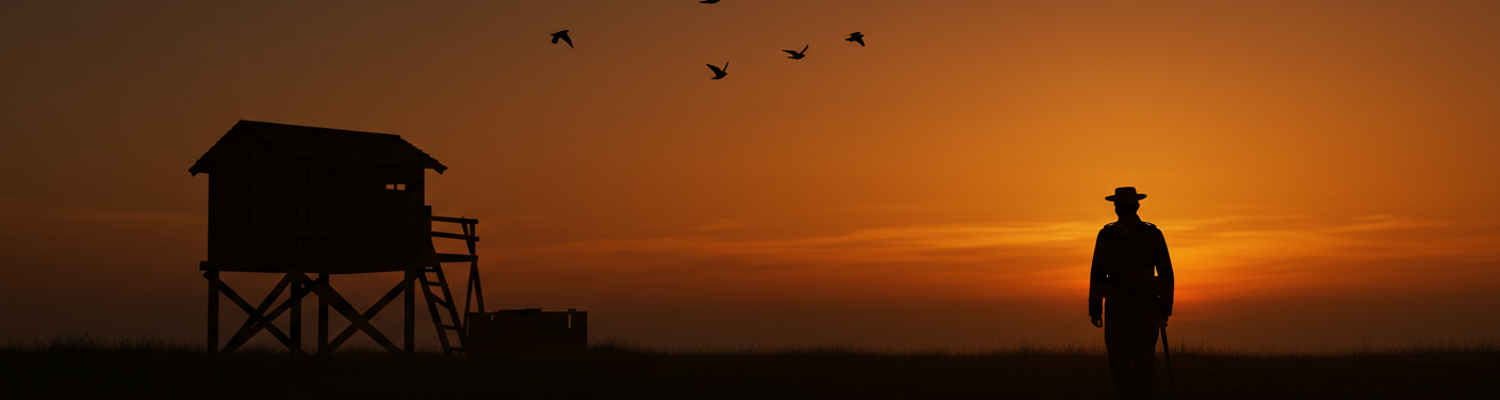

The American frontier of the late 19th century was a landscape of immense distances and profound silence, a silence regularly broken by conflict. For the United States Army, tasked with projecting force across these vast territories during the Reconstruction and Gilded Age, communication was a constant, often insurmountable, problem. Telegraph lines, the era’s technological marvel, were lifelines of wire stretched thin across hostile terrain. They were vulnerable to sabotage by Native American warriors, destruction by prairie fires, and the sheer logistical difficulty of their construction and maintenance. A single cut wire could isolate a frontier post for days or weeks, leaving its garrison blind and its patrols in peril. Into this communication void, the Army looked to an ancient solution, given new impetus by the wars of modern Europe. It was a solution not of copper and electricity, but of feather and instinct.
A Parisian Lesson in Airborne Signals
The Franco-Prussian War of 1870-1871 provided a dramatic demonstration of the military potential of the homing pigeon. During the brutal siege of Paris, with the city completely encircled and all land-based communications severed, the French turned to the skies. Balloons carried pigeons out of the city, releasing them to fly back bearing messages miniaturized on collodion microfilm. This airborne postal service proved effective, delivering hundreds of thousands of official and private messages past the Prussian blockade. European general staffs took immediate notice. The humble pigeon, long the domain of fanciers and racers, became a serious tool of statecraft and military planning. Armies across the continent, particularly the Belgians and Germans, began investing heavily in military pigeon lofts, known as colombiers.
The U.S. Army, then under the innovative leadership of Chief Signal Officer Brigadier General Albert J. Myer, was a keen observer. Myer, a surgeon by training and an obsessive tinkerer with communication systems, had already revolutionized battlefield signaling with his ‘wig-wag’ flag system. He was a proponent of leveraging any available technology, from heliographs to field telegraphs, to solve the problem of command and control. The success of the Parisian pigeon post was not lost on him or his contemporaries. Official reports on European military advancements landed on desks at the War Department, and the concept of a self-propelled, living telegraph found fertile ground within the Signal Corps. The first formal U.S. Army experiments with homing pigeons for military purposes began in 1878, directly influenced by these European developments and driven by the hard realities of frontier operations.
Initial efforts were modest and methodical. The Signal Corps established small, experimental lofts at key coastal and frontier posts. These early installations were designed to test the feasibility of pigeon communication in the unique environments the Army operated in. Lofts were constructed at places like Key West, Florida, where birds were trained for ship-to-shore messaging, a mission of growing importance. Other lofts appeared at isolated frontier garrisons in the Dakota Territory and at Fort Mackinac, Michigan, where the threat of severed telegraph lines during the ongoing Indian Wars was a pressing reality. Each loft was a small investment in a concept, a test of whether these birds could provide a reliable, living, and self-propelled alternative to the fragile copper wire. The birds themselves were often sourced from top Belgian racing stock, their pedigrees carefully recorded in official ledgers as if they were cavalry mounts.
Proving Grounds on the Northern Plains
The vast, undeveloped terrain of the American West became the primary proving ground for the Army’s nascent pigeon service. During the latter stages of the Sioux Wars, and in the decades of continued low-intensity conflict that followed, the Signal Corps deployed pigeons to some of its most isolated and vulnerable outposts. The challenge was immense. Unlike the relatively short, predictable flights over European landscapes, pigeons on the frontier had to navigate hundreds of miles of prairies, mountains, and badlands, often in extreme weather and under threat from natural predators. The Signal Corps needed to know if the birds could perform under such conditions.
One of the most significant test beds for the service was Fort Keogh, Montana. Established in 1876 by Colonel Nelson A. Miles near the confluence of the Yellowstone and Tongue Rivers, Fort Keogh was a critical forward base in the campaigns against the Sioux and Cheyenne. It was from here that the Army projected power into the heart of the northern plains. Communication was a constant struggle. A message from Fort Keogh to departmental headquarters could take days by courier, time that could mean the difference between reinforcing a besieged patrol and recovering its remains. The Signal Corps detachment at Fort Keogh, likely elements of the 15th Company, established a pigeon loft to test the birds' reliability in this unforgiving environment. Reports from the pigeoneers, the enlisted men of the Signal Corps tasked with caring for and training the birds, detailed flight times, bird losses, and the impact of weather on performance. A bird released from a cavalry patrol 20 miles from the fort was expected to cover the distance in under 30 minutes, carrying a small, rice-paper message in a capsule attached to its leg. These messages contained vital intelligence like the location of a hostile band, a request for supplies, or a report on grazing conditions for the cavalry’s mounts.
The reliability of the feathered messengers was a subject of intense study. Success rates often exceeded 90 percent in good conditions, but a sudden plains thunderstorm, a prairie fire, or a hunting hawk could mean the loss of both bird and message. The soldiers’ trust in the system was built on experience. A cavalry trooper, miles from the nearest telegraph station and deep in hostile territory, developed a unique relationship with the birds carried in wicker baskets on a pack mule. Releasing a pigeon was an act of faith, watching it circle once to gain its bearings and then streak toward the horizon, a living arrow aimed at the one point of safety and communication in a hundred square miles.
Personal accounts from Signal Corps soldiers reveal a mixture of professional duty and genuine connection to their charges. The ‘pigeoneers’ were specialists. Their daily duties involved meticulous record-keeping in logbooks, a strict feeding regimen designed to keep the birds healthy and motivated to return home, and a training process that gradually increased the distance and difficulty of flights. They became experts in avian husbandry and amateur meteorologists, understanding that the success of their mission depended on the health of their flock and the whims of the sky. For these men, the birds were not just assets. They were comrades, each with a name and a personality, their coos a familiar sound in the stark environment of a frontier fort. They knew which birds were fastest, which were most reliable in poor weather, and which had the grit to evade a predator. The loss of a bird was not just a tactical failure, it was the loss of a known individual.
The Wagon Loft and the Wicker Basket
The greatest obstacle to the widespread use of pigeon communication was not the birds’ reliability but the logistical challenge of deploying them. A pigeon’s homing instinct is fixed on a single location: its loft. To be effective, the Army needed the ability to send messages from mobile units back to a fixed base, or even between two moving units. This necessity spurred a wave of innovation within the Signal Corps, focused on creating a truly mobile pigeon service. The problem demanded a mechanical solution.
The most significant development was the mobile loft, a concept championed by Signal Corps Captain G.S. Gallup. These were specially designed wagons, built on a standard quarter-ton chassis that could be drawn by horses or mules. The interior of the wagon was a compact, efficient pigeon coop, complete with nesting boxes, perches, and a feeding system. A critical feature was the ‘settling cage,’ a wire-mesh enclosure that could be extended from the wagon, allowing the birds to see their new surroundings and acclimate to the loft’s current location before being released for training flights. A Signal Corps pigeoneer described the process:
the pigeons were trained from the trailer, which was their only home and source of food. By moving the trailer short distances each day, the birds learned to home to a movable location, spotting the specially painted wagon from the air.
This allowed a column on the march to maintain communication with its base or with other moving elements.
Transporting the birds with patrols also required specialized equipment. The standard method was a wicker basket, often called a 'Gallup Basket' after its proponent. These were designed for ventilation and to prevent the birds from damaging their flight feathers. The baskets were carried by pack animals or, for short-range reconnaissance, by individual soldiers. The design of these baskets was refined over time to be as lightweight and durable as possible, a critical consideration for cavalry units that prized mobility above all else. Every ounce of gear was scrutinized, and the pigeon and its basket had to justify their weight against extra ammunition or rations. The baskets were constructed with separate compartments for each bird and a small trough for water, ensuring the messenger arrived at its release point in good condition.
Care and feeding on the frontier presented their own set of problems. The Signal Corps developed standardized feed mixtures, usually a high-protein blend of Canadian peas, corn, hemp, and wheat. Procuring high-quality grain at a remote outpost was difficult. Burlap sacks of feed were susceptible to moisture, mold, and rodents, requiring constant vigilance from the pigeoneers. The health of the flock was paramount, and the Army’s Veterinary Service became involved in establishing protocols for disease prevention and treatment. Predators were a constant threat. The skies of the American West were ruled by hawks and eagles, which saw a lone pigeon as an easy meal. Soldiers attempted various countermeasures, sometimes flying the pigeons in small groups to offer safety in numbers, or timing their release to coincide with periods when birds of prey were less active. There was no perfect solution, and losses to predators were an accepted cost of operations.
Despite these challenges, the Gilded Age pigeon service represented a vital chapter in the history of military communications. It was a system that relied on a unique partnership between soldier and animal, a gritty, hands-on solution to the timeless problem of sending a message home from the edge of the map. It was a bridge between the ancient art of the messenger and the dawn of electronic warfare, carried on the wings of a bird, until the wireless telegraph finally rendered it obsolete.