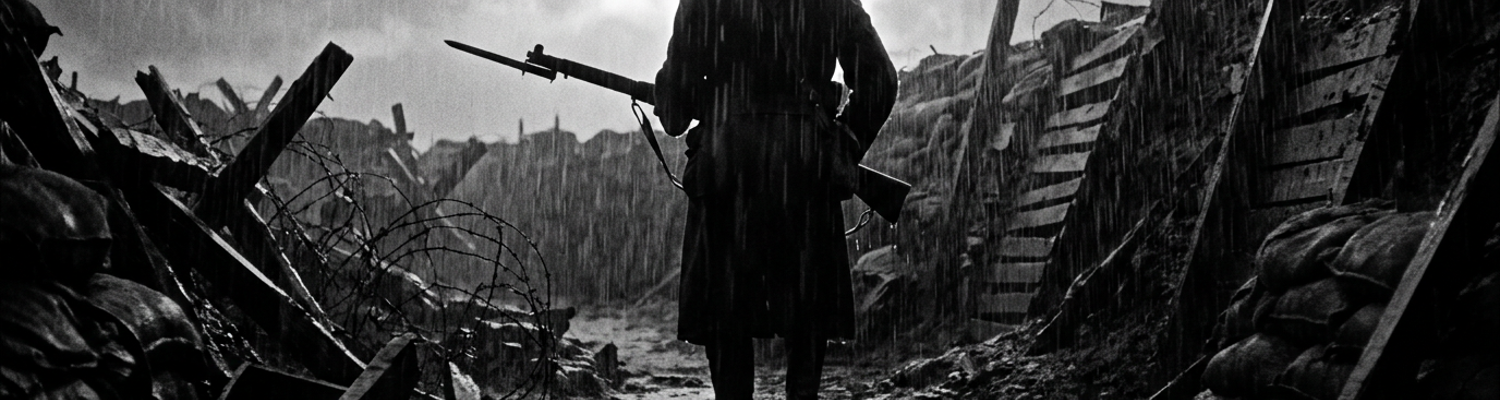

Post-Mortem of the Romanovka Outpost Disaster
June 25, 1919. 0400 hours local. Coordinates 43 degrees 14 minutes North, 132 degrees 27 minutes East. Sector Romanovka, Maritime Province, Siberia. Low morning mist obscured the rail spur connecting the Suchan coal branch to the main line. Gunfire broke out across the bivouac. Archival evidence shows that seventy-two enlisted men and officers of Company A, 31st Infantry Regiment, lay asleep inside standard M1916 pyramidal canvas tents. They were pitched at the base of an open slope. Over four hundred red partisans under Yakov Tryapitsyn occupied the crest above them without being detected. They trained bolt-action Mosin-Nagant rifles and heavy machine guns into the camp bowl. Confusion spread immediately through the rows of canvas. Enlisted men caught in their bedrolls took rifle fire before they could buckle cartridge belts. Many failed to chamber rounds into their M1903 Springfield rifles.
Canvas shelters offered zero protection against high-velocity rifle fire.
Defenders found their defensive perimeter utterly compromised. Exposed fire pits and a lack of barbed wire entanglements sealed their fate. A close review of operational logs indicates that garrison planners omitted standard field fortifications after occupying the village outskirts two weeks earlier. Not a single spool of concertina wire had been requisitioned from the American depot at Vladivostok (NARA Record Group 338). Tripwire and boundary fencing were entirely absent. Rifle pits dug by the infantrymen sat along the lower reverse slope without overhead cover. Sandbag parapets were missing. The positions were completely exposed to direct observation from the dominant ridgeline five hundred yards away. Trenching tools and pickaxes sat idle near the company supply wagon. They should have been used to excavate continuous connecting trenches. Crawling men attempting to seek shelter inside these shallow depressions discovered a fatal flaw. The dirt embankments provided zero defilade against plunging fire from above. Hostile marksmen directed aimed shots down into each open depression. They killed riflemen as they flattened themselves against the floor of the pits. Unhindered by wire obstacles, partisan rifle squads advanced at a run across the open flats. They tossed improvised tin-can explosives directly into the fighting holes.
No physical barrier prevented the enemy from overrunning the perimeter.
Company A of the 31st Infantry suffered twenty-four dead and twenty-five wounded during the dawn assault at Romanovka. Casualty tallies compiled by regimental surgeons confirm a high attrition rate. Nearly seventy percent of the seventy-two defenders were struck in under forty minutes of sustained combat. Early in the assault, First Lieutenant Lawrence Butler took a 7.62x54mmR round through the jaw. The impact shattered bone and destroyed his speech. The company commander was forced to direct defensive fire by pointing and waving while propped against wooden ammo crates. Men fell where they stood. They attempted to assemble a firing line behind an exposed stack of cordwood near the rail depot. Private Emmett Lunsford operated a Browning automatic rifle from an unfortified position. He sustained three separate bullet wounds while expending drum magazines to keep the eastern flank from collapsing. Nineteen soldiers perished within the first ten minutes. Their bodies were riddled before reaching functional weapons. First-aid packets carried on soldier belts were exhausted almost instantly. The detachment lacked sterile gauze to pack catastrophic chest and head wounds.
When examining the historical record of the subsequent evacuation, surviving sergeants discovered a severed escape route. Partisan demolition squads had already wrecked the wooden trestle bridge spanning the nearby river gorge. Stretcher-bearers carried the twenty-five wounded across the boulder-strewn canyon bed by hand. They moved under intermittent sniper fire. Relief locomotives dispatched from the coastal base halted miles short of the battle zone. Displaced track blocked their path. The company surgeon treated open abdominal trauma on a dirt platform using unsterilized tools and unboiled water.
Allied Mine Guard Operations Along Suchan Railroad
Archival evidence shows that on June 7, 1919, Major General William S. Graves directed the 31st Infantry Regiment to assume operational control over the Suchan coal mining district. This fell under the Inter-Allied Railway Agreement. Headquartered in Vladivostok, American command dispatched roughly one thousand two hundred infantrymen into the mountainous interior of the Maritime Province. Official dispatches designated this force as the Allied Mine Guard. The objective centered on five state-owned extraction shafts clustered around Suchan settlement. This location sat roughly seventy miles northeast of the coast. Operational field orders split the 1st and 2nd Battalions into isolated company and platoon commands. They boarded requisitioned Russian boxcars at the Vladivostok rail yards before steaming inland. Field officers encountered immediate administrative friction. Local Russian railway managers and White Army commanders contested American jurisdiction over the pitheads. The Americans carried standard M1903 Springfield rifles and water-cooled M1917 Browning machine guns. Three days of field rations were packed in canvas haversacks. They stepped off the train at Suchan without transport wagons or mules. Topographical maps of the surrounding forested hills were completely absent.
The entire regional rail system depended on this single source of fuel.
A close review of operational logs indicates that the Suchan mines produced over twenty-five thousand tons of semi-anthracite coal each month. This provided the primary thermal source for the Ussuri Railway and the eastern terminus of the Trans-Siberian corridor. Without these specific deposits, the broad-gauge Baldwin and Kolomna steam locomotives operating out of the Nikolsk-Ussuriysky depot ground to a dead halt. Steam ships docked across Golden Horn Bay relied on the same railcars to bunker their engines for maritime crossings. Defending this output required keeping a sixty-mile spur line functioning through deep mountain ravines. Civilian miners walked off the job repeatedly over currency disputes. Shafts flooded with groundwater as pumps failed for lack of electrical power. American garrison detachments spent long hours manually clearing mine shafts. They guarded boiler houses against domestic saboteurs instead of fortifying defensive perimeter lines.
Platoons held isolated stations with zero tactical depth.
When examining the historical record of track distributions, the 31st Infantry stretched its rifle platoons across thirty separate outposts. These sat along the single-track rail corridor between Kangauz and the mining terminus. Second Lieutenant William Shuman established his detachment at Novitskaya. He placed twenty-eight riflemen in a converted freight warehouse bordered by steep cliffs on three sides. Between these fixed posts, American squads patrolled on open pump handcars. They were fully exposed to small-arms fire from the forested hillsides fifty yards above the roadbed. Partisan fighters targeted the physical rails. They used simple monkey wrenches to unbolt track fishplates and pull iron spikes on blind mountain curves. Wooden culverts and timber trestles across the Sititsa River offered easy targets. Simple kerosene fires were set under cover of darkness. Field telephone wires strung along rough birch poles were cut daily. Outpost commanders were forced to rely on single-engine liaison locomotives. These frequently struck severed rails or fell into washouts. By mid-June, individual squads guarded rail bridges at Milepost 24 and Milepost 37 with fewer than eight men each. They were separated from immediate rifle support by hours of mountainous marching.
No armored rail cars had been allocated to patrol the corridor.
Company commanders filed emergency supply requisitions for motor trucks and field signal wire. The division supply depot in Vladivostok simply could not provide them. The single standard-gauge supply train sent down the branch line on June 22 carried bulk dry beans and damaged Lewis gun drums. It entirely lacked the sandbags, entrenching tools, and telephone switchboard batteries requested by the perimeter posts.
Defensive Decay and Soil Saturation in Trenches
Archival evidence shows that torrential summer deluges began sweeping through the Suchan River valley during the first week of July 1919. The rain converted the loose shale and clay around the coal mines into deep slurry. Company M, 31st Infantry, occupied defensive redoubts positioned along the steep ridges above Mine No. 2. Soldiers had excavated breastworks directly into uncompacted mine tailings. Field engineering manuals dictated a sixty-degree reverse slope supported by sandbags. Supply manifests confirm that regimental headquarters in Vladivostok had shipped zero burlap sacks to the mountain outposts (Quartermaster File 44-A). Falling rain pooled in open fire bays before washing away the unsupported parapets. Within seventy-two hours of the first downpour, entire segments of the outer earthworks slid into the forward rifle pits. Mud seeped over weapons racks. It fouled M1903 Springfield bolt actions and filled water jackets on M1917 Browning machine guns with gritty silt. This jammed internal feeder mechanisms.
Standing water rose eighteen inches above the trench duckboards.
A close review of operational logs indicates that the garrison had cut drainage ditches along the uphill contours. They did this without calculating water runoff volumes from the higher mountain slopes. Torrential runoff bypassed these shallow ditches. It cascaded into the fighting positions occupied by the second platoon. Silt-laden water filled the communication trenches connecting the perimeter outposts to the company command bunker. Runners were forced to wade through waist-deep mire while carrying written dispatches. Earth embankments constructed to deflect partisan rifle fire from the northern ridge softened. They could no longer stop incoming rounds. Bullets penetrated over two feet of water-saturated soil without deforming. American sentries were wounded through what officers had presumed were bulletproof parapets.
The unreinforced parapets washed out into the surrounding ravines.
When examining the historical record of defensive construction around Mine No. 1, garrison commanders had attempted to shore up collapsing walls. They used unseasoned timber felled from local birch and pine stands. This was supplemented by rotted mine timbers pulled from abandoned extraction shafts. These untreated wooden revetments absorbed thousands of gallons of surface water. Their deadweight quadrupled. The saturated clay hillside behind them exerted massive lateral hydrostatic pressure. Support uprights snapped along natural grain lines. Rotten spruce planks gave way under the shifting mud. Tons of wet earth dumped onto riflemen crouching below the firing line. Privates assigned to forward listening posts were pinned against the trench floor. Squadmates had to dig them out using bare hands and broken mess kit pans. Partisan marksmen fired into the collapse zone from three hundred yards away.
Mud wall collapses completely immobilized twenty-four men across two outposts in forty minutes.
Platoon leaders found themselves commanding detachments reduced to twelve functional rifles. Trench foot and bacterial infections spread rapidly in the waterlogged pits. Wet canvas uniforms rotted on the soldiers. Saturated cardboard ammunition boxes dissolved. Loose .30-06 cartridges scattered into the silt floor. Moisture seeped past primer pockets to ruin gunpowder charges. Field telephones failed after water penetrated splice points on uninsulated ground lines. Contact with regimental artillery elements at Kangauz was severed. First-aid logbooks show that Sergeant James Miller recorded his squad spending twelve continuous hours bailing muddy runoff with empty hardtack tins. They defended a collapsed breastwork against partisan skirmishers armed with carbines. By July 12, four separate redoubts defending the Suchan railhead sat half-submerged in standing water. Their timber supports were fractured. Defenders were unable to step onto firing benches without sinking to their knees.
Red Partisan Swarming Tactics at Kazanka
Archival evidence shows that on the morning of June 22, 1919, red partisan units executed simultaneous swarming strikes. They hit the 31st Infantry guard post at Kazanka station. This facility was located at coordinates 43 degrees 17 minutes North, 133 degrees 04 minutes East. Operating in fragmented terrain where steep, pine-covered ridges pressed directly against the single-track rail line, partisan commanders deployed over three hundred irregular fighters. They moved against an isolated twenty-man detachment from Company B. Tactical assault groups emerged from blind defiles on three sides at once. The attackers dispersed into four-man skirmish cells instead of massing in conventional formations. They advanced through drainage ditches and thick scrub. They maintained steady rifle fire with 7.62mm Mosin-Nagant bolt actions. Water-cooled Maxim machine guns set up on the high bluffs poured plunging fire onto the corrugated tin roofs of the station house. The sandbag bunkers guarding the water tower were hammered. American sentries firing M1903 Springfield rifles burned through their cartridge belts within twenty minutes. They were unable to establish interlocking sectors because the outposts sat in dead ground beneath the surrounding knolls. Partisans systematically encircled the outer observation shack. They hurled bundle grenades made from fused dynamite sticks into the slit trenches. The garrison could not depress its Browning automatic rifle mounts low enough to engage targets crawling through the weeds.
Every defensive pocket was split into an isolated survival island within fifteen minutes.
When examining the historical record of regional communication breakdowns, partisan demolition squads targeted the mechanical lifelines connecting Kazanka to the regimental staging base at Kangauz. They did this hours before opening fire. Teams equipped with forged iron claw bars, Russian track wrenches, and pole climbers severed every copper telegraph and telephone strand strung along the right-of-way. They sliced the wires at the glass insulators and dragged three-hundred-foot segments into the timber brush. This prevented rapid line-splicing by American signalmen. Saboteurs focused specifically on blind curves and steep gradient cuts near Milepost 38 and Milepost 41. Working with Simplex ratcheting track jacks and heavy sledgehammers, the partisans unbolted the steel fishplates linking seventy-pound rails. They extracted the track spikes along sixty-foot sections of trackbed and pried the outside rails outward by four inches. Ballast gravel was packed into the vacated spike holes to mask the structural distortion from approaching train crews. On the wooden trestle spanning the Kazanka River tributary, demolition teams soaked structural timber bents in lamp kerosene. They ignited the understructure. Charred cross-ties were left suspended over an eight-foot drop without ballast support.
The steel line simply ended in empty air.
A close review of operational logs indicates that these track disruptions completely halted the armored relief train dispatched from Suchan. The train was sent to extract the besieged Kazanka garrison. Pushing an open flatcar loaded with sandbags and armed with two M1917 Browning machine guns, the Baldwin-built coal-fired locomotive struck the spread rails at Milepost 41 at twenty miles per hour. The front trucks jumped the track. The pilot wheels plunged deep into the soft railbed mud and sheared the locomotive primary brake pipe. Trapped on a blind curve inside a forty-foot rock cut, the crew found themselves boxed in. Plunging rifle fire from partisan marksmen perched along the upper shale ledges rained down. American mechanics inside the steel-plated cab attempted to set rerailing frogs under the drive wheels. Concentrated fire through the boiler viewport killed the lead engineer and shattered the steam injector valves. Relieving infantry companies marching on foot along the rail ballast arrived forty-eight hours late. They had walked twelve miles through waist-deep mountain creek crossings. They carried three-inch mortar tubes and ammunition cases on makeshift pole litters.
Isolation and Starvation of American Redoubts
Archival evidence shows that by July 14, 1919, partisan bands had cut every overland wagon trail and secondary pack route. These paths connected the Suchan redoubts to the maritime depot at Vladivostok. At Mine No. 2 and the Novitskaya branch outpost, sixty-four riflemen of the 31st Infantry subsisted on less than four ounces of hard bread and spoiled salt pork per day. Canned corned beef stocks were completely consumed by the fifth day of the encirclement. Scurvy and dysentery spread through the waterlogged rifle pits as clean water supplies failed. Soldiers were forced to drink untreated surface runoff channeled through abandoned wooden flumes. Medical panniers carried by the platoon corpsmen were depleted within forty-eight hours of the initial perimeter isolation. Company surgeons ran out of tincture of iodine, morphine ampoules, and clean cotton bandaging. They redressed infected shrapnel lacerations with soiled shirt linen stripped from dead Russian mine laborers. Pack mules dispatched from Kangauz with medical crates were ambushed in the narrow Sititsa defile. Twelve pack animals were left dead. Three tons of field dressings were scattered in the ravine mud.
Starvation incapacitated the forward redoubts within seven days.
A close review of operational logs indicates that ammunition deterioration accelerated inside the flooded dugouts. Quartermasters had stored wooden crates containing .30-06 Springfield cartridges directly on bare rock floors. Tarpaulin covers and timber pallets were absent. Saturated pine sawdust and rotting cardboard packing sleeves turned to paste. This exposed brass casings to constant standing moisture. Green verdigris corrosion formed around the copper primer pockets within five days of continuous rain. Sentries attempted to fire on partisan probes along the perimeter fence. Water-logged powder charges generated squib loads that lodged 150-grain spitzer bullets directly inside the rifle barrels. Soldiers cleared barrel obstructions with steel cleaning rods while lying prone under hostile fire. Damp ammunition misfired three times out of five. Water-cooled Browning machine guns sat dry of cooling liquid. Water jackets had cracked from overpressure or filled with silt. The company automatic firepower was reduced to intermittent bolt-action rifle fire.
Riflemen saved their last three dry rounds for close-quarters fighting.
When examining the historical record of Siberian expeditionary deployments, the inability to sustain static fortified positions exposed a deep vulnerability. American theater command had deployed the 31st Infantry in a dispersed linear alignment spanning over sixty miles of rail track. Thin outposts were expected to protect industrial infrastructure against an irregular enemy that held the surrounding terrain. Irregular partisan units under local Bolshevik commanders refused to assault these fixed positions frontally. They chose instead to sever the links between them. Redoubts built to overlook coal shafts and railway switches could neither protect the surrounding peasant villages nor project offensive force beyond the range of their own rifle trenches. Each isolated strongpoint held twenty to forty men. They were pinned down behind timber breastworks. They were incapable of maneuvering to relieve adjacent posts only five miles down the track. The cordon defense tied down over twelve hundred American soldiers in static positions. Active field battalions were turned into immobile targets. They depended entirely on vulnerable single-track rail corridors for food and ammunition.
Static perimeter lines surrendered all tactical initiative to the surrounding irregulars.
Field reports sent to regimental headquarters recorded that by July 18, defensive cohesion had ceased across the upper Suchan sector. Platoon commanders at Mine No. 1 and Mine No. 3 burned non-essential paper records. They smashed field telegraph keys with sledgehammers. Heavy machine-gun tripods were buried in the mud to prevent capture. Relief parties moving out from the central rail terminus were pinned down by sniper fire before marching eight hundred yards. The isolated outposts were left to exhaust their final twelve rounds per man on the perimeter wire.