
The Vicksburg Campaign of 1862 and 1863 remains a foundational study in military engineering and logistical friction. It is a stark examination not of grand, sweeping battlefield maneuvers, but of a grinding, thankless war against terrain, disease, and the physics of supply. Major General Ulysses S. Grant’s ultimate success was not a foregone conclusion decided by force of arms alone. It was purchased with the labor of thousands of soldiers and freedmen, the ingenuity of a handful of engineers, and a command decision to accept immense risk. The campaign serves as a powerful warning about the enduring challenges of complex terrain, the necessity of combined arms operations, and the absolute primacy of sustained engineering efforts in a contested environment. The earth itself can be a more formidable opponent than any army, and victory often belongs not to the swiftest, but to the most persistent and best sustained.
The Watery Maze North of the City
Before Grant could fight Lieutenant General John C. Pemberton’s army, he first had to reach it. The Confederate fortress sat atop high loess bluffs, its guns commanding a hairpin turn in the Mississippi River. A direct amphibious assault was suicidal, and the terrain to the north, the Yazoo Delta, was a near-impenetrable morass of swamps, bayous, and rivers. During the water-logged winter of 1862-1863, the Union Army of the Tennessee transformed into a massive construction force, undertaking a series of ambitious bypass operations. These were not peripheral efforts; they were central to Grant’s strategy, absorbing immense resources and manpower in a desperate search for a viable approach.
The Lake Providence expedition was the first major attempt. The plan, assigned to Major General James B. McPherson’s XVII Corps, was to cut a canal from the Mississippi River into Lake Providence, seventy miles above Vicksburg. This would allow Union vessels to navigate a 400-mile chain of bayous and rivers, including the Tensas, Black, and Red Rivers, to re-enter the Mississippi far south of the fortress. The objective was purely logistical: to move an army into position on dry ground. The engineering challenge was immense. Soldiers and hired freedmen, working with basic picks and shovels in thigh-deep mud, labored to connect the waterways. The steam-powered dredge Hercules was brought in to assist, but the route proved too shallow, winding, and obstructed for naval transports. Though a channel was eventually cut, the expedition was abandoned as unworkable.
Simultaneously, a more direct effort was the Yazoo Pass Expedition. On February 3, 1863, Union engineers blew a hole in the Mississippi levee, unleashing a torrent of water into an old channel that connected to the Coldwater, Tallahatchie, and eventually the Yazoo River. This route flowed past Vicksburg’s northern defenses at Snyder’s Bluff. A flotilla of ironclads, including the USS Chillicothe and USS De Kalb, under Lieutenant Commander Watson Smith pushed into the tangled waterway. The expedition quickly bogged down. Confederate forces, alerted to the plan, felled massive trees into the narrow channel, creating impassable snags. Sharpshooters harassed the Union work parties tasked with clearing the obstructions with saws and axes while under constant fire. Confederate engineers, meanwhile, hastily constructed a fortification of cotton bales and earth, dubbed Fort Pemberton, at a key juncture where the Tallahatchie and Yalobusha rivers met. The Union ironclads, unable to maneuver in the tight confines of the river, could not bring their firepower to bear effectively and were repulsed. The expedition was another failure, demonstrating how a determined, low-tech defense could defeat a technologically superior force in complex terrain.
Forcing the River Gate
With the bayou expeditions having failed, Grant made a decision that carried immense operational risk. He would march his army down the Louisiana side of the Mississippi, west of the river, while Rear Admiral David Dixon Porter’s naval fleet ran past the Vicksburg batteries at night to rendezvous south of the city. This was an all-or-nothing move. Once downstream, the powerful river current would make it nearly impossible for Porter’s ironclads to return past the batteries. Failure would leave Grant’s army stranded on the wrong side of the river, its supply lines severed and its purpose defeated.
On the night of April 16, 1863, the maneuver began. Porter’s fleet, consisting of seven City-class ironclads and three army transports, prepared for the ordeal. Their engines were muffled, and all lights were extinguished. Vulnerable points on the wooden transports were packed with bales of cotton and hay to absorb shell fragments. Coal barges were lashed to the starboard sides of the vessels, facing the Vicksburg guns, to provide fuel and additional protection. The flotilla, led by Porter’s flagship USS Benton, moved silently downriver.
Confederate lookouts spotted the fleet as it rounded De Soto Point. The riverfront erupted in a torrent of artillery fire. Southern batteries, positioned on the bluffs and at the water’s edge under the direction of Major General Martin L. Smith, opened a furious bombardment with their 10-inch Columbiads and rifled cannon. To illuminate their targets, Confederates set fire to buildings and bales of cotton soaked in turpentine, casting the river in a terrifying, flickering light. For over an hour, the Union vessels endured a concentrated fire. Porter’s orders were to hug the Vicksburg shore, a counterintuitive move that correctly gambled the high-angle Confederate guns would overshoot at close range. The ironclads returned fire, their heavy guns shaking the city. Despite being hit repeatedly, the armored gunboats proved resilient. The unarmored transport Henry Clay was set ablaze and sank, but the others made it through. Union casualties were light, with only a dozen wounded and no one killed.
Six nights later, on April 22, a second flotilla of six transports and twelve barges laden with supplies made the same perilous run. This time, the Confederates were better prepared, and the results were more damaging. One transport and six barges were sunk, a significant loss of vital supplies. Yet, the passage was a strategic success. It proved that Grant could get not only his soldiers but also the necessary food, ammunition, and forage across the river. It enabled the largest amphibious operation in American history up to that point, as Porter’s vessels began ferrying Grant’s 22,000 soldiers from the Louisiana shore to a landing at Bruinsburg, Mississippi, on April 30. The army was finally on dry ground, east of the river, with a secure, albeit tenuous, supply line.
The Science of Strangulation
After a series of swift victories that drove Pemberton’s army back into the Vicksburg defenses, Grant’s forces made two major assaults on May 19 and May 22. Both were repulsed with heavy losses, proving the strength of the Confederate fortifications, which had been expertly designed by Major Samuel Lockett. Grant concluded that the city could not be taken by storm and ordered his army to lay siege. What followed was a 47-day exercise in military engineering, a slow, methodical process of strangulation that ultimately won the campaign.
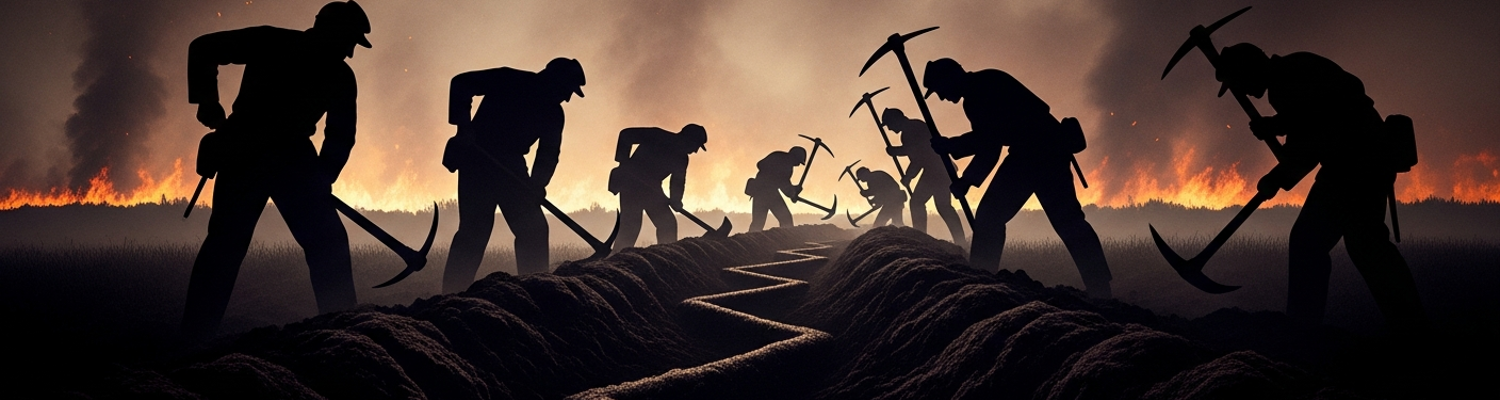
The Union Army of the Tennessee, though containing few professional engineers, effectively became an army of sappers and miners. Under the direction of the army’s chief engineer, Captain Frederick E. Prime, and corps engineers like Captain Andrew Hickenlooper of the XVII Corps, the soldiers began constructing a massive network of siege works. Thirteen major approach trenches, or saps, were dug toward the Confederate lines. These were narrow, zigzagging trenches that protected the digging parties from enemy fire. Infantrymen from units like the 45th Illinois were detailed to work in shifts, using picks and shovels. The work was grueling and dangerous, conducted under the constant threat of Confederate sharpshooters and artillery. To protect the lead diggers, soldiers fabricated sap rollers, which were large, mobile shields made of woven cane and packed with earth, pushed ahead of the trenching party.
The most advanced engineering operation of the siege took place at the 3rd Louisiana Redan, a major Confederate fort guarding the Jackson Road. Here, under Hickenlooper’s direction, Union soldiers pushed a sap to within yards of the fort’s ditch. From there, they began to tunnel underneath the earthen wall. Confederate defenders, hearing the digging beneath them, attempted to sink a counter-mine to intercept the Union tunnel but failed. On June 25, 1863, the Union mine, packed with 2,200 pounds of black powder, was detonated. The explosion tore a massive crater in the redan’s wall, and Union infantry surged into the breach. A savage, 26-hour battle ensued in the crater, with soldiers fighting hand-to-hand with clubbed muskets and bayonets before the Federals were driven back. A second, larger mine was exploded on July 1, but it was not followed by an assault. These mining operations, while failing to achieve a decisive breakthrough, demonstrated the inexorable, scientific progress of the siege and had a devastating effect on Confederate morale.
The logistical challenges of sustaining the siege were immense. A steady stream of food, ammunition, and engineering materials had to be brought to the front lines. Once Grant had secured the Yazoo River north of the city, he established a massive supply base at Snyder's Bluff, shortening his supply lines dramatically. Disease, exacerbated by the summer heat, poor sanitation, and contaminated water, caused more casualties than combat. Both armies suffered, but the Union’s control of the river and its growing supply base ensured it could outlast the besieged garrison. For the Confederates, cut off from all supplies, starvation became a reality. The Union victory at Vicksburg was not won in a climactic battle, but through the relentless application of engineering and logistics. The Confederates were not starved out; they were dug out. Vicksburg’s fall was a victory of applied science and sustainment over a static defense, a brutal reminder that the path to victory is often paved not with daring charges, but with the shovel, the axe, and a secure supply line.