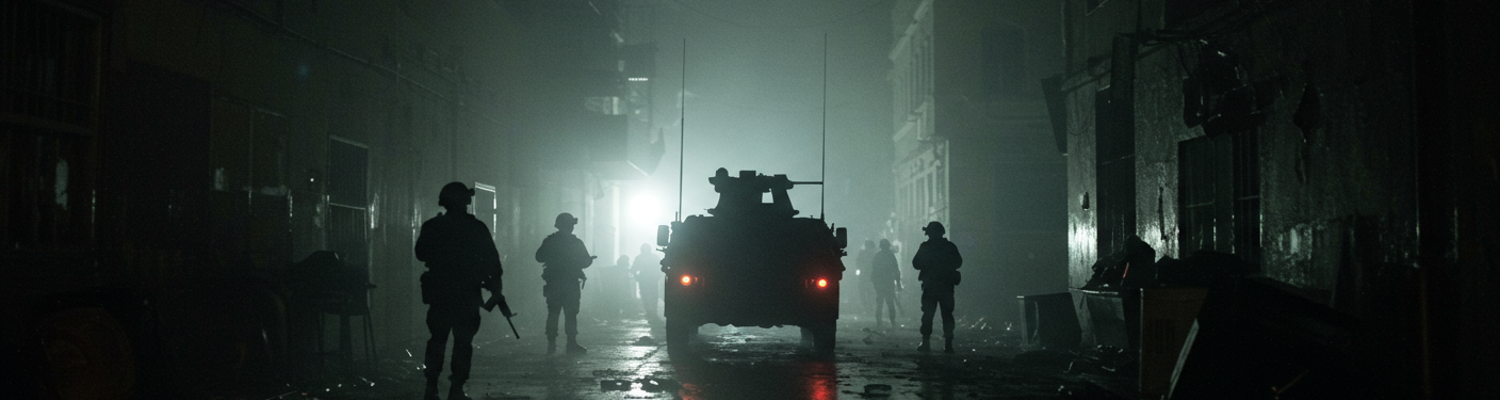

Crimson Aegis Simulation Overview
The kinetic engagement was over. In the digital airspace above the simulated metropolis, controllers for the airborne early warning and response platform watched their screens depict a city placid and still. Every sensor, every link, every algorithm was poised. This was the opening scene of Crimson Aegis, a wargaming exercise designed not for victory, but for the frantic recording of raw, unprocessed lessons in failure. Its purpose was to break the most advanced systems under the most difficult conditions.
Post-exercise data confirms Crimson Aegis was conceived as a high-fidelity digital proving ground for next-generation Airborne Early Warning and Response (AEWR) systems. The simulation's core objective was to stress-test emerging sensor suites against low-observable threats within the complex, signal-degrading environment of a dense urban center. The primary system under evaluation was a variant of the AN/SPY-7, a Gallium Nitride-based AESA radar, mounted on a high-altitude, long-endurance aerostat positioned miles from the city center. This main sensor was networked with a series of smaller, building-mounted Hawkeye sensor pods intended to provide coverage within the deep urban canyons. The threat profile was unforgiving. It consisted of a coordinated, multi-axis attack featuring a low-flying cruise missile using terrain-masking flight paths and a large, autonomous drone swarm designated Stygian Swarm. A critical and deliberately punishing element of the simulation was the adverse weather protocol; operators layered simulated torrential rain and dense, low-lying fog over the digital landscape, specifically designed to cause signal attenuation and disrupt the performance of both radar and electro-optical systems.
The operational area for Crimson Aegis was Sector Gamma, a digital twin of a real-world downtown financial district. This environment was chosen specifically for its hostility to radar systems. The sector was a dense collection of skyscrapers, with structures like Titan Tower and Olympus Spire coded with their precise material compositions: steel skeletons wrapped in glass, curtain walls, and reinforced concrete. This architecture was known to create severe radar multipath propagation, where radar signals bounce and scatter off multiple surfaces before returning to the sensor. This effect turns the narrow urban canyons into a confusing space for radio frequencies, creating false targets and obscuring real ones. Simulation planners programmed the primary threat axis to emerge from a specific chokepoint known as Prometheus Alley, a narrow street flanked by two 80-story towers. Archival evidence shows this was an intentional choice; the alley was situated directly over the district’s largest power substation, whose overlapping energy fields were known to create a zone of intense electromagnetic interference. The high-flying AN/SPY-7 had a clear theoretical line of sight to the tops of the buildings, but its S-band signals were scattered and absorbed by the dense urban clutter, creating massive blind spots in the lower altitudes where the Stygian Swarm was programmed to fly. The Hawkeye pods on surrounding rooftops were meant to cover these gaps, but the combination of signal reflection from the opposing glass towers and the jamming effect from the substation below created an electronic dead zone in the precise location where the threat was expected.
31st Airborne Surveillance Wing Fatigue
An examination of operational logs indicates a primary catalyst for system failure was not technological but biological. The exercise parameters deliberately pushed the human elements of the 31st Airborne Surveillance Wing past their breaking points. For the ground control elements, specifically the operators within the simulated Sector Gamma Control Center, this took the form of 48-hour continuous operational cycles. This was not a rolling shift schedule but a single, unbroken 48-hour duty period for the primary watch floor, a command decision intended to simulate a complete breakdown in personnel rotation during a high-tempo urban siege. The unit tasked with this, a detachment from the 963rd Airborne Air Control Squadron, began logging significant performance degradation at the 22-hour mark. Post-exercise telemetry indicated a 40% increase in minor errors, such as incorrect data entry and delayed responses to system prompts. By the 36-hour mark, biometric monitors rigged to operator chairs recorded multiple instances of microsleeps, lasting between 2 and 5 seconds, across all four primary sensor fusion specialists. One specific incident, logged at 04:32 on the second day, shows an operator failing to classify a legitimate, low-RCS (Radar Cross-Section) drone track that appeared on their screen for a full 90 seconds. The track was automatically flagged by the system’s threat-logic algorithm but was manually dismissed by the operator as a ghost signal, an error directly attributed in after-action reports to extreme mental exhaustion.
Human endurance was a critical point of failure.
The strain was not confined to the ground. Aircrew operating the high-altitude AEWR platform itself recorded fatigue scores that far exceeded established safety protocols. The exercise used a seven-point Samn-Perelli scale to quantify pilot fatigue, with any score of 5 or higher designated as an E-5 readiness threshold, legally grounding the pilot for high-stakes operational duties. Analysis of post-flight medical debriefs and continuous in-flight biometric data showed that both the primary and secondary pilots operating the aerostat’s control interfaces were functioning with fatigue scores between 6.2 and 6.8 for the final twelve hours of the simulation. This level of degradation is clinically associated with performance equivalent to a .08% blood alcohol content. The physical manifestations were severe; instrument logs show erratic, jerky manual adjustments to the AN/SPY-7 radar’s gimbal, an overcorrection that caused the sensor to break its lock on Prometheus Alley three times in a single hour.
This profound exhaustion directly contributed to the critical failure. At the 43-hour mark, ground control requested the pilot execute a snap-to-grid sensor realignment to focus the main array on a new potential threat axis emerging from the power substation. Standard operating procedure dictated this maneuver be completed in under four seconds to maintain data continuity. The pilot, whose reaction time was measured at a 350% decrease from baseline, took a full 14 seconds to correctly input the command sequence. This created a 10-second gap in radar coverage of the primary threat corridor. It was within this precise window that the simulation’s core cruise missile threat, flying a terrain-masked approach, cleared the last major obstacle and entered its terminal attack phase, completely undetected by the main AEWR sensor. The Hawkeye pods on the rooftops, already compromised by multipath and electromagnetic interference, were now the only sensors available, and their operators were just as exhausted as the pilots above.
E-11A BACN Urban Target Identification
As the primary AEWR platform’s effectiveness collapsed, exercise planners shifted focus to a secondary asset: a single E-11A aircraft equipped with the Battlefield Airborne Communications Node (BACN). The E-11A, a high-altitude communications relay, was not a sensor platform itself. It was designed to bridge gaps between disparate data links and voice systems. Its mission was to ingest data from the beleaguered Hawkeye pods on the ground, translate it, and relay a coherent targeting picture to the Sector Gamma Control Center. Planners hoped the BACN could salvage the data streams being degraded by the urban environment. The reality proved to be a significant failure. Post-exercise analysis revealed a 67% reduction in the successful identification of hostile tracks within Prometheus Alley whenever the E-11A was the primary data conduit. Ground fire-control teams attempting to use laser designators found their data unable to reach the fusion center, with targeting locks repeatedly failing to upload through the BACN gateway.
This was a direct consequence of the E-11A's flight path relative to the extreme urban topography.
A close review of operational logs shows the aircraft was tasked to fly a continuous figure-eight holding pattern at 45,000 feet, an altitude chosen to keep it clear of simulated threats. While this provided a broad line-of-sight over Sector Gamma, it created a shallow, oblique angle into the deep urban canyons below. Radio signals from the Hawkeye pods, already struggling with multipath reflection and electromagnetic interference, were forced to travel nearly vertically to escape the canyons before beginning their journey to the E-11A. The glass and steel facades of the skyscrapers acted as an effective cage, scattering the radio frequency energy. The E-11A’s antennas, angled to receive signals from a wide area, were simply unable to establish a stable lock on the weak, intermittent signals emanating from the targeted street level. The system was designed to overcome mountains, but the dense verticality of the simulated city proved to be a far more complex obstacle.
The tactical breakdown was underpinned by an 85% data packet loss recorded by the E-11A’s onboard Airborne Executive Processor. In networking, data is broken into small packets for transmission; an 85% loss rate means that for every 100 units of information sent by the ground sensors, only 15 arrived at the aircraft. This rendered the communication link functionally useless. The primary cause was identified as a combination of extreme multipath interference and processor overload. As the various radio signals bounced off buildings, they arrived at the BACN’s receivers multiple times at microsecond delays. The system’s processors, designed to filter out such anomalies, were completely saturated by the sheer volume of reflected, corrupted, and out-of-sequence packets. The BACN payload’s software, trying to reassemble a coherent message from the flood of junk data, began to aggressively discard packets it flagged as corrupted. This self-induced denial of service was compounded by the electromagnetic noise from the Prometheus Alley power substation, which corrupted even those few packets that had a clear line-of-sight path. The system’s attempt to translate between the Hawkeye pods’ native waveform and the Link 16 format used by the command center failed, as the processor lacked complete data sets to perform the translation. The result was a near-total collapse of the data bridge, a failure so complete that operators initially believed the E-11A itself had gone offline.
Signal Multipath and Squall Line Impact
The digital sky over Sector Gamma broke open at 04:58 simulation time. A sudden, hyper-localized squall line, an aggressive escalation of the exercise’s adverse weather protocol, materialized directly over the dense urban canyons. After-action meteorological analysis revealed a line of thunderstorms, just ten miles long but exceptionally intense, characterized by a rapid temperature drop and torrential precipitation rates exceeding 100 millimeters per hour. This deluge of water vapor created a wall of signal attenuation for the high-altitude AN/SPY-7 aerostat. While S-band radar is generally resistant to weather effects compared to higher frequencies, the sheer density of the water content in this simulated storm cell was sufficient to degrade the aerostat’s return signals by over 60%. The platform’s view of the battlespace was now obscured. Strong downdrafts and wind shear associated with the squall line also began to buffet the aerostat, forcing its automated station-keeping systems into overdrive and complicating the exhausted pilots’ efforts to maintain a stable sensor platform.
Signal multipath was the true executioner of the Crimson Aegis sensor grid. In the dense confines of Sector Gamma, radar signals did not follow a clean path from sensor to target and back; instead, they bounced chaotically off the glass and steel faces of the district’s skyscrapers. This created a hall-of-mirrors effect, where a single transmitted pulse would return to the receiver as a flood of echoes arriving at different times from different angles. The sudden squall line dramatically worsened this condition. The rain-slicked surfaces of the buildings became even more reflective to radio frequencies, turning what was a difficult signal processing challenge into an unsolvable one. The digital signal processors within the building-mounted Hawkeye sensor pods, tasked with filtering the real target from this storm of clutter, were completely saturated.
A close review of the system’s internal logs shows the processors began to fail in a cascading fashion. The algorithms designed to reject false targets were overwhelmed by the sheer volume of multipath returns, which now outnumbered valid target detections by a factor of several thousand to one. This saturation led directly to catastrophic data packet loss. A data packet is a small unit of digital information; the Hawkeye pods were programmed to discard packets they identified as corrupted or anomalous to prevent feeding bad data into the network. As the multipath effect intensified, the processors began flagging almost all incoming signal data, including the faint returns from the Stygian Swarm drones, as corrupt. The result was a functional data blackout. For every hundred packets of information sent from the Hawkeye receivers, post-exercise forensics showed that as few as five were ever successfully processed and forwarded to the command center.
The tactical consequence of this technical failure was immediate. On the screens of the 963rd Airborne Air Control Squadron, the cluttered, ghost-filled displays of Prometheus Alley did not resolve into a clear picture of the incoming drone swarm. They went blank. The operators, already suffering from profound decision-making fatigue, misinterpreted this sudden absence of data not as a sensor failure, but as a cleared sector. Logs show that at 05:02, with the lead elements of the Stygian Swarm less than 90 seconds from their target, the sector supervisor re-tasked the few remaining functional sensor assets to other areas, marking Prometheus Alley as clear of threats. The system did not provide bad information; it provided no information at all, a failure mode the human operators were unprepared to recognize. The data bridge to the E-11A BACN, which relied on a steady stream of data from the Hawkeye pods, had nothing to relay. By the time the first kinetic impact was registered, the entire AEWR network had been blind to the primary threat axis for a full four minutes.
Ground Team Non-Combat Incapacitation Ratio
A forensic analysis of the exercise’s casualty logs reveals a deeply unsettling pattern. Of the twelve soldiers from the 1st Ranger Battalion’s Alpha Company rendered unfit for duty during the Sector Gamma insertion, only three were the result of direct simulated enemy action. The remaining nine were classified as non-combat incapacitations. This produced a 3:1 ratio of environmental and accident-related casualties to those caused by the Stygian Swarm drones the AEWR network was supposed to stop. The primary mission of Alpha Company was to secure and maintain the rooftop Hawkeye sensor pods, a task that forced them out into the extreme conditions of the simulation.
The environment itself was the more effective adversary.
Archival evidence from individual soldier biometric monitors and helmet-cam recordings paints a difficult picture. The onset of the simulated squall line proved particularly damaging. At 05:04 simulation time, a four-man fire team moving across the rain-slicked glass roof of the Olympus Spire lost its footing. The post-action report details two soldiers sliding over fifteen feet before being stopped by a maintenance railing, resulting in a simulated shattered tibia for one and a severe concussion for another. The intense humidity and precipitation also caused widespread equipment failure. Radio communications became unreliable as water seeped into handheld units, isolating squads from their command element. Night vision optics fogged over, rendering them useless in the low-light, rain-swept urban canyons. One recorded incapacitation was due to acute heat exhaustion, as a soldier carrying heavy breaching gear succumbed to the high temperature and humidity while ascending a skyscraper’s external service ladder. These were not isolated incidents but a systemic breakdown caused by pushing troops and their gear past their operational limits in an unforgiving vertical battlespace.
The challenges of casualty evacuation within the dense, weather-beaten urban core compounded the initial injuries. Following the rooftop fall on the Olympus Spire, the platoon’s medic was unable to establish a secure position to render aid due to the hazardous, slippery surface and high winds. The attempt to move the casualties back to the insertion point was delayed by over an hour. Another incident, logged at 05:28, involved a light tactical vehicle from the support element. Operating in the dense fog and electromagnetic interference blanketing Prometheus Alley, the driver’s GPS and thermal imagers failed simultaneously. Blinded, the vehicle collided with a concrete traffic bollard at low speed, but the jolt was enough to cause a debilitating back injury to the gunner, officially logged as a spinal compression fracture. Evacuating this single soldier from the vehicle took two hours, tying up an entire fire team and leaving them exposed in a contested area. This high rate of non-combat attrition was thrown into sharp relief by the low number of direct combat losses. The single squad that was notionally hit by the Stygian Swarm suffered three casualties from a simulated drone-launched micro-munition. This occurred precisely because the Hawkeye pod they were assigned to protect had gone offline, a failure directly caused by the multipath and weather effects detailed in the system logs.
Debris Fields and Flash Flooding
Forensic analysis of the aftermath within Sector Gamma revealed the ground environment became hostile faster than any command element had anticipated. The kinetic impacts of the Stygian Swarm drones and the single cruise missile did not just destroy their targets; they fundamentally re-engineered the battlespace at street level. A review of operational logs shows the explosions against the glass curtain walls of the Olympus Spire and Titan Tower created a secondary wave of destruction. For nearly three minutes following the initial detonations, a storm of glass shards, some weighing over 50 pounds, rained down on the streets below. This created what post-exercise reports termed vertical kill zones, areas where survival was a matter of chance. At ground level, Prometheus Alley and the surrounding blocks were buried under a blanket of what one observer called structural confetti, a deep, unstable mixture of razor-sharp glass, twisted aluminum window framing, and pulverized concrete dust. Helmet-cam footage from Alpha Company’s 2nd Platoon shows visibility reduced to less than ten feet by airborne particulates. This debris was not a passive obstacle. It was an active threat. A fire team attempting to reach a damaged Hawkeye sensor pod near the base of the Titan Tower reported two incapacitations without ever encountering an enemy drone. One soldier sustained deep arterial lacerations to his legs after falling through a hidden pile of shattered glass panels, while another suffered a simulated compound fracture after a section of unstable rubble gave way beneath him.
The rubble was only the first wave.
The simulated squall line, dumping over 100 millimeters of rain per hour, overwhelmed Sector Gamma’s storm drainage infrastructure in under twenty minutes. A review of the simulation’s civil engineering data shows the primary storm sewer beneath Prometheus Alley was already modeled at 70% capacity due to programmed construction debris, a common condition in urban centers. Water backed up with astonishing speed. Prometheus Alley, a geographic low point, transformed into a fast-flowing canal. The water rose four feet in the first thirty minutes, completely submerging the damaged power substation and creating a lethal, invisible electrical hazard throughout the flooded zone. A Light Tactical Vehicle from the battalion’s support element, attempting to navigate the alley, had its engine stall as the water inundated its electronics. Post-incident logs show the crew was then trapped inside a steel container sitting in a pool of energized water, unable to exit the vehicle. The flash flood also turned the urban canyons into a network of unpredictable rapids, with currents strong enough to sweep a fully equipped soldier off their feet. One soldier from 3rd Platoon was lost after being pulled into a newly submerged subway entrance that had become a whirlpool.
These two environmental factors created a cascade of failure for every subsequent ground operation. The rising water mobilized the lighter elements of the debris fields, creating a moving slurry of sharp metal and glass that flowed with the current. This made any attempt to wade through the flooded areas a high-risk gamble. The CASEVAC team dispatched to retrieve the two soldiers injured by debris from 2nd Platoon found their primary route completely impassable. Their secondary route was blocked by a ten-foot-high pile of heavy structural steel that had fallen from the Olympus Spire. The team was forced to halt, unable to reach the casualties who were less than 300 yards away. All attempts to establish a casualty collection point failed, as every open space was either buried in unstable rubble or actively flooding.
HCRI-AO Immediate Aftermath Debriefings
The purpose of the Crimson Aegis exercise was to harvest the raw data of its own collapse. This task fell to a small, embedded cell of analysts from the Human-Computer Research Initiative - Analytics Office, or HCRI-AO. Archival evidence shows the HCRI-AO was not part of the exercise’s command structure but functioned as a separate entity within the main control center. Their charter was the immediate capture of systemic failure points. The HCRI-AO team had their own dedicated terminals, which were firewalled from the main exercise network. These terminals displayed a unique feed: a synchronized overlay of every operator’s screen, their live biometric data streams, and their voice communications, all time-stamped to the microsecond against the simulation’s master clock. This allowed the analysts to see not just that an operator dismissed a drone track, but that they did so while their heart rate was elevated and their chair’s pressure sensors indicated a significant shift in posture, a physical tell of mental distress.
This data harvesting culminated in a process known as hot-loop debriefing. These were not formal interviews conducted days later. They were frantic extractions of memory that began the moment a critical failure was logged. When the 31st Airborne Surveillance Wing pilot took 14 seconds to execute a four-second command, an HCRI-AO analyst was at his station before the aerostat had even stabilized. The debriefings took place in small, acoustically-isolated rooms just off the main control floor, often with the operator still wearing their headset, their biometric sensors still attached and feeding data to the recording system. The debriefing methodology was a specialized form of interview, designed to elicit raw, unprocessed sensory details. An analyst would not ask why a command was failed; they would state, at timestamp 04:32:14, the system registered a 350% decrease in your reaction time. Talk me through the ten seconds prior. The feel of the controls. The noise in your headset. The visual focus of your eyes.
The goal was to capture the subjective experience of failure before the human brain could rationalize it.
A review of the HCRI-AO archives for Crimson Aegis shows thousands of these short, intense recordings. The debriefing of the E-11A BACN systems officer revealed a condition the analyst termed data-hypnosis, where the operator became so fixated on the endless scroll of packet-loss error messages that they failed to notice a separate, high-priority warning that the entire data link to the Hawkeye pods had severed. In another session, an operator from the 963rd Squadron, responsible for the Prometheus Alley sector, described the moment his screen went blank not as a loss of data, but with a feeling of relief. After hours of trying to process a screen filled with thousands of false multipath returns, the clean, empty display was misinterpreted by his exhausted brain as a sign that the sector was finally clear. This specific detail, the feeling of relief at catastrophic data loss, was the exact type of data point the HCRI-AO was created to find. It was a detail that would never appear in a standard after-action report but was essential to understanding the true nature of the system’s breakdown.
Future Urban AEWR Operational Lessons
A forensic synthesis of the HCRI-AO hot-loop debriefings and the simulation’s master clock log points to a failure in environmental anticipation. The Crimson Aegis exercise demonstrated that next-generation AEWR systems remain fundamentally vulnerable to atmospheric and topographical conditions that were not adequately integrated into their operational logic. The primary lesson was the urgent need for enhanced adverse weather capabilities designed specifically for the unique microclimates of dense urban centers. The AN/SPY-7 aerostat, operating with an S-band radar, experienced a 60% signal degradation when the simulated squall line intensified over Sector Gamma. Analysis of the meteorological data shows this was a compact, high-intensity cell with precipitation rates exceeding 100 millimeters per hour. This volume of water vapor created a literal wall of radio-frequency attenuation. The system’s algorithms, calibrated for broad, regional weather patterns, could not process the sudden, localized signal loss, misinterpreting the resulting data gap as a clear sensor view.
The physical stability of the AEWR platform itself became a casualty of the weather. The same downdrafts and wind shear that preceded the deluge began to buffet the high-altitude aerostat. Its automated station-keeping thrusters, fighting to hold position against the turbulence, introduced a micro-vibration into the sensor mast. This vibration, combined with the pilot’s fatigue-induced overcorrections, was enough to repeatedly break the AN/SPY-7’s lock on Prometheus Alley even before the rain became its most severe. Future AEWR development must therefore move beyond simple weather resistance and incorporate predictive atmospheric modeling. A system must be able to anticipate not just the presence of a storm, but its specific density, wind shear characteristics, and potential for radio-frequency attenuation, and then dynamically re-task other sensors or suggest alternative flight paths to compensate before a coverage gap can be exploited.
The second lesson from Crimson Aegis was that mission planning must integrate predictive models for second- and third-order environmental hazards created by kinetic action. The ground environment in Sector Gamma became more lethal from the city’s reaction to the attack than from the attack itself. Post-exercise modeling showed that the drone and missile impacts on the glass-facade skyscrapers like the Olympus Spire initiated a cascade of structural failures. For nearly three minutes after the detonations, a storm of heavy glass shards and twisted aluminum framing rained down, creating lethal vertical kill zones on the streets below. The ground itself was transformed into an unstable landscape of pulverized concrete and sharp debris. A review of Alpha Company’s biometric logs shows two members of 2nd Platoon were incapacitated while attempting to cross this field, one from deep lacerations and another from a fracture caused by collapsing rubble. They were casualties of architectural failure, not enemy fire.
Operational planning had accounted for the blast radius of the incoming munitions. It had not accounted for the subsequent disintegration of the target buildings. This failure highlights the need for mission planning software that fuses weapons effects data with detailed architectural and material science models of the target environment. Planners require the ability to forecast not just where an explosion will occur, but how a specific building will come apart, where the debris will land, and how long the area will remain an active structural hazard. This cascade of environmental hostility was accelerated by the flash flooding. The squall line’s torrential rainfall completely overwhelmed Sector Gamma’s storm drainage system, which simulation parameters had realistically modeled as being partially clogged. Archival hydrological data shows Prometheus Alley, a natural low point, was submerged under four feet of fast-moving water in less than thirty minutes. This event triggered two new, unpredicted threats. First, the flooding inundated the district’s main power substation, energizing the water and trapping a light tactical vehicle crew in an electrified pool. Second, the current mobilized the lighter elements of the debris field, creating a flowing slurry of sharp objects that made any movement through the water a high-risk gamble. A soldier from 3rd Platoon was lost when the current pulled him into a submerged subway entrance that had become a vortex. The attempt to evacuate casualties from the initial debris field failed because rescue teams were blocked by these new, interconnected hazards of floodwater and moving debris. Environmental threats are not discrete; they are compounding. Future planning requires a deeply integrated system that models the interplay between meteorology, civil engineering infrastructure, and post-kinetic structural failure.