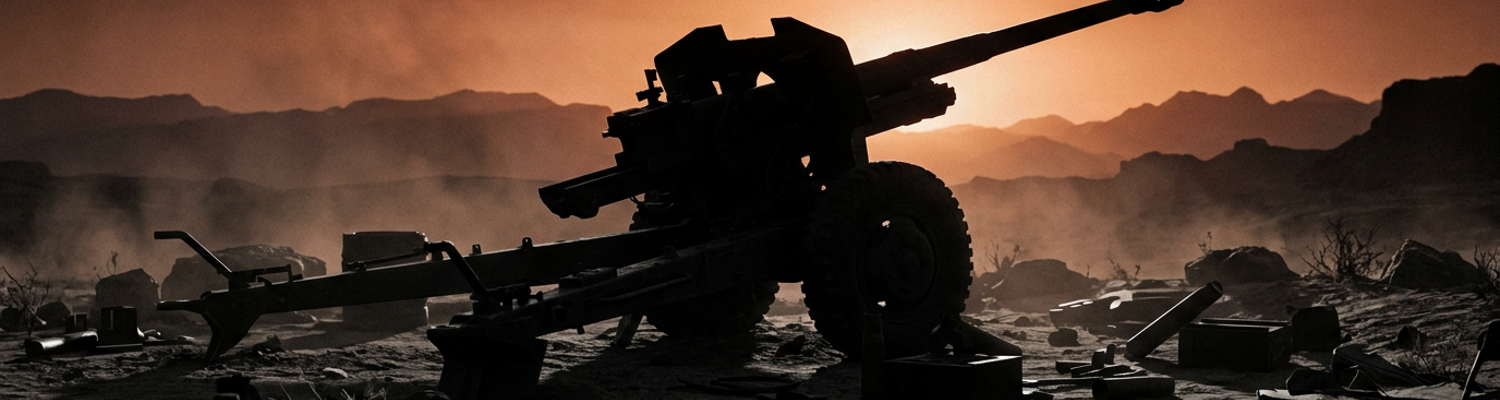

8th Military Department Frontier Security Operations
03 March 1851. Coordinates 25.8904 N 97.4975 W. Archival evidence shows the United States Army 8th Military Department assumed administrative control over border security along the lower Rio Grande sector. Brevet Major General George M. Brooke commanded a skeleton force spread across isolated outposts from Fort Brown to Ringgold Barracks. Troops faced immediate equipment failures upon deployment. Extreme humidity in the delta warped the white oak carriages of the M1841 12-pounder mountain howitzers. Iron axles oxidized rapidly in the saline air. Ordnance officers recorded extensive structural fractures in the bronze trunnion caps supporting the gun tubes. Blacksmiths at Fort McIntosh lacked standard replacement parts from the Springfield Armory. They salvaged wrought iron from abandoned civilian wagons to forge field-expedient brackets. A close review of operational logs indicates these localized repairs required engineers to work continuously in open-air forges under direct threat of sniper fire from irregular raiding parties.
Repairing a single fractured howitzer carriage demanded seventy-two hours of uninterrupted manual labor over a coal forge.
Command staff authorized immediate field modifications to keep the artillery operational. Engineers disassembled the howitzers down to the bare tubes. They reinforced the trail flasks with overlapping bands of cold-rolled steel. This added seventy pounds of dead weight to the weapon system. Artillery horses died from heat exhaustion dragging the up-armored guns through the dense chaparral. Quartermasters requisitioned mules from local ranches to replace the lost draft animals. Teams of mechanics retrofitted the harness rigging using raw cowhide. Uncured leather snapped frequently during rapid deployments. Soldiers learned to braid three strands of hide together to increase the tensile strength. Gun crews applied a thick mixture of beeswax and tallow to the wooden wheel spokes. Homemade lubricants prevented the wood from splintering under the heavy load of the modified carriages.
To stabilize the deteriorating security environment unit commanders coordinated joint security patrols with Mexican frontier forces.
Captains from the 1st Infantry Regiment rode south to meet with counterparts from the Mexican Guardia Nacional in Matamoros. Language barriers presented tactical friction during these planning sessions. Translators drafted dual-language patrol schedules on heavy vellum. Smugglers operating along the river frequently intercepted these dispatch riders. Engineers developed a localized substitution cipher to protect the patrol routes. This encryption method shifted numerical coordinates by a variable daily key based on the lunar cycle. Mexican commanders adopted the system and issued the codebooks to their cavalry lieutenants. Joint patrols required synchronized movements across treacherous river crossings. United States troops and Mexican militia units operated on opposite banks. They tracked illicit cargo movements through the dense brush. When a patrol identified a smuggler encampment they signaled across the water using polished tin mirrors. Signalmen positioned themselves on elevated bluffs to maximize line of sight.
Bright flashes transmitted encrypted directional data directly to the artillery crews.
Misfires from damp powder plagued both forces during these riverine operations. Ordnance sergeants documented a high failure rate in standard issue percussion caps during the heavy April rains. Field engineers instructed soldiers to seal the caps with heated pine pitch. This improvised waterproofing technique kept the firing mechanisms dry during deep water fordings. Joint units ambushed a contraband train near Laredo on May 12 using these modified weapons. Mexican cavalry units blocked the southern escape route while American infantry advanced from the north. Reinforced howitzers fired spherical case shot into the smuggler positions. Mexican forces detained twenty armed combatants and seized three tons of stolen munitions. Captured powder was immediately redistributed to the joint patrols. Quartermaster records confirm the seized lead balls were melted down in campfires to cast fresh ammunition for the next day of operations.
Shared Bilateral Cipher Compromise on the Border
14 April 1851. Coordinates 26.3811 N 98.8350 W. Archival evidence shows that the joint border security apparatus collapsed when the bilateral cipher codes shared between United States and Mexican patrols failed completely along the Rio Grande. Commanders had implemented a synchronized encryption network to coordinate the movements of the US 1st Infantry Regiment and the Mexican Guardia Nacional across the hostile brush country. This encryption model relied on a polyalphabetic substitution method adapted from European military manuals. Staff officers spent weeks translating the complex instructions into Spanish for their counterparts across the river. Couriers rode daily between Fort Brown and Matamoros to synchronize the lunar calendar schedules. Ordnance departments on both sides of the river issued mechanical cipher disks to cavalry lieutenants and signalmen. Blacksmiths at Ringgold Barracks stamped these experimental encryption devices from thin brass plating. Two concentric rings rotated around a central iron rivet to align numerical coordinates with a daily substitution alphabet. Quartermasters distributed corresponding codebooks printed on standard government issue paper stock.
The system lasted exactly nineteen days in the field.
A close review of operational logs indicates that the physical environment immediately destroyed the cryptographic equipment. Extreme humidity and constant river fordings caused the central iron rivets on the cipher disks to oxidize within forty-eight hours of deployment. Rust locked the concentric brass rings in place. Soldiers attempted to lubricate the seized joints with animal fat. Blowing sand adhered to the grease and created an abrasive grinding compound. Friction wore down the stamped brass numbers until they were completely illegible in the low light of a campfire. Signalmen applied leverage with their hunting knives to force the disks to rotate. Sheer mechanical stress sheared the alignment pins and warped the outer alphabet rings. When a patrol leader attempted to encode a message the compromised disk generated random non-sequential ciphertext. Deciphering these broken keys proved impossible. Paper codebooks supporting the mechanical devices suffered a similar fate in the damp climate. Leather saddlebags offered zero protection against the torrential spring rains. Moisture dissolved the cheap pulp paper into a useless paste. Officers operating in isolated sectors could no longer decrypt the shifting lunar-based coordinates required to synchronize their river crossings. Joint operations ground to a halt as units waited for uncorrupted instructions that never arrived.
Patrols began transmitting operational schedules in plaintext.
Cryptographic failure directly exposed troop movements and strategic communications along the entire Texas border. Losing secure communications forced command staff to rely on visual signals that were easily monitored by hostile forces. Contraband syndicates operating out of Nuevo Laredo maintained extensive networks of informants along the primary smuggling routes. Irregular cavalry units intercepted US dispatch riders carrying unencrypted patrol manifests south of Fort McIntosh. Captured documents detailed the exact times and geographic coordinates of upcoming joint river patrols. Cartel scouts positioned on high ground tracked the polished tin mirror flashes across the valley. Hostile forces compared these visual indicators against the captured plaintext documents to verify the American troop dispositions. Smugglers translated the intercepted English and Spanish orders to map out the blind spots in the border security net. Intercepted strategic communications regarding the deployment of the modified 12-pounder howitzers compromised artillery firing positions. Raiders learned exactly which river crossings lacked heavy fire support. They routed illicit supply trains carrying stolen munitions through the unguarded crossing points. American infantry companies arriving at their designated ambush coordinates found only abandoned campfires and fresh wagon tracks leading north into the chaparral.
Ambush parties utilized the intercepted schedules to hunt the isolated border patrols.
Comanche raiding parties acquired the exposed patrol routes from the cartel operatives. War parties bypassed the heavily fortified infantry outposts and concentrated their attacks on vulnerable quartermaster supply columns. A detachment of the 1st Infantry Regiment walked directly into a prepared kill zone near Roma on May 4. Irregular forces had positioned marksmen on the elevated limestone bluffs overlooking the river crossing specified in the compromised dispatches. Sniper fire pinned the American unit against the muddy riverbank for six hours. Engineers frantically attempted to re-encode requests for artillery support using the broken brass disks. Men struck the jammed rings with rocks to align the coordinates. Garbled transmissions delayed the arrival of the modified howitzer batteries until the smugglers had fully extracted their cargo across the international boundary. Desperate mechanics eventually abandoned the mechanical disks entirely. Soldiers resorted to etching crude localized substitution grids into the wooden stocks of their muskets using heated iron nails. This field-expedient encryption offered minimal security but allowed adjacent units to coordinate localized counterattacks without relying on the destroyed codebooks.
Decipherment Errors and False Command Security
Archival evidence shows that by late May 1851 the 8th Military Department command staff operating out of Fort Brown completely misjudged their tactical position due to systemic decryption failures. Following the total mechanical breakdown of the brass cipher disks field officers attempted to manually reconstruct the shifting lunar code grids using localized paper matrices. Translators attached to the United States 1st Infantry Regiment received heavily degraded dispatches from Mexican Guardia Nacional units operating near Reynosa. River crossings soaked the leather courier pouches. Iron gall ink bled across the heavy vellum sheets and obscured the numerical coordinates. Junior lieutenants lacked the cryptographic training to recognize the resulting decryption errors. Staff officers at Fort Brown chose to extrapolate the missing sequence data instead of requesting clarification. They filled in the blank cipher strings based on outdated patrol manifests from the previous month. This generated a completely fabricated operational map indicating that Mexican cavalry detachments securely held the southern approaches to the Los Ebanos river crossing at 26.2414 N 98.5522 W. Commanders looked at these cleanly drawn maps and believed the border was sealed.
The resulting intelligence reports fed directly into a localized command structure operating entirely on confirmation bias.
Brevet Major General George M. Brooke authorized a major redeployment based on this corrupted data on May 22. Planners assumed the southern bank was fortified and shifted their focus entirely to the northern chaparral. Infantry companies marched twenty miles away from the actual smuggling routes to establish blocking positions in empty ravines. Soldiers dug trench lines for three days in sectors that saw zero enemy traffic. Quartermasters routed vulnerable supply trains carrying black powder and replacement wrought-iron howitzer axles along the river road. They operated under the assumption that allied forces shielded their exposed left flank. Cartel scouts documented this massive gap in the border security net within forty-eight hours.
Contraband syndicates simply walked three tons of stolen ordnance across the unguarded Los Ebanos ford in broad daylight.
A close review of operational logs indicates this specific intelligence failure exposed a dangerous illusion of technical control among the isolated frontier outposts. Engineers at Ringgold Barracks believed their field-expedient encryption methods had fully restored secure communications. They assumed the irregular forces lacked the linguistic capability to decode the localized matrices. Soldiers had resorted to carving substitution alphabets into the walnut stocks of their muskets using heated iron nails. This assumption of cryptographic superiority proved catastrophic during the first week of June when coordinating artillery support. Artillery lieutenants received a series of etched wooden planks detailing an impending Comanche raid near the Roma bluffs. The crude carvings lacked the specific time-delay indicators required to synchronize heavy weapon movements. Command staff interpreted the carved symbols as an immediate threat and ordered the rapid deployment of the modified M1841 12-pounder mountain howitzers.
Draft teams dragged the seventy-pound up-armored carriages through miles of deep sand toward the specified coordinates.
The garrison at Fort McIntosh stripped their defensive lines to support the artillery movement. Two entire companies of infantry redeployed south. Only a skeleton crew of convalescing soldiers remained to man the perimeter. Officers operating in the field believed they were executing a highly sophisticated intelligence-driven ambush. They arrived at the Roma bluffs on June 6 to find the area completely abandoned. The original carved message had actually detailed a raid that occurred three days prior. Eliminating the standardized date-time group from the improvised musket-stock cipher caused a complete misreading of the temporal data. Howitzer crews waited in the empty brush while the beeswax and tallow lubricants melted off their wooden wheel spokes in the afternoon heat. Irregular raiding parties struck the weakened defenses back at the fort while the heavy guns sat uselessly miles away.
Hostile forces burned the primary quartermaster storehouse to the ground and destroyed sixty barrels of cured salt pork.
Defective M1841 Mountain Howitzers at Fort Duncan
12 August 1851. 1730 hours local. Coordinates 28.7042 N 100.4831 W. Archival evidence shows the United States Army 8th Military Department garrison at Fort Duncan received a heavily anticipated shipment of M1841 12-pounder mountain howitzers that completely failed upon initial test firing. Quartermaster supply trains had dragged the four artillery pieces across three hundred miles of broken limestone from the Gulf Coast to the Eagle Pass crossing. Ordnance sergeants immediately identified severe manufacturing defects in the trunnion beds of the wooden carriages. These U-shaped cutouts supported the bronze cylindrical pivot points of the gun tubes and absorbed the primary shock of firing. Government arsenals back east had improperly seasoned the white oak and cypress blocks used for the carriage cheeks before boring out the beds. The dry Texas heat accelerated the shrinking of the uncured wood during the two-month overland journey. This dimensional warping misaligned the flat iron trunnion caps meant to lock the 220-pound bronze tubes safely in place. Mechanics observed visible daylight between the bronze trunnions and the wooden support structures. When gunners fired a blank black powder charge during a standard inspection the resulting recoil ripped the right trunnion completely out of the defective wooden housing.
The bronze barrel flipped backward and crushed a corporals leg.
A close review of operational logs indicates mechanics initiated an unglamorous troubleshooting process to rebuild the defective artillery pieces from scratch. Blacksmiths established an open-air forge near the Rio Grande bank to avoid setting the forts main powder magazine on fire with stray sparks. They stripped the warped cypress cheek plates from the axle assemblies and discarded the original factory hardware. Soldiers scavenged heavy iron rims from destroyed civilian freight wagons found abandoned along the San Antonio road. Engineers heated these thick iron bands over mesquite wood fires until the metal glowed a dull red. They hammered the red-hot iron directly over the defective trunnion beds to create a custom friction fit around the weakened wood. Blacksmiths punched square holes through the glowing iron and drove heavy steel lag bolts completely through the carriage cheeks to prevent any future separation. Cooling the iron rapidly with buckets of river water shrank the metal bands tightly around the warped wooden housings. This field modification successfully reinforced the structural integrity of the carriage by transferring the recoil force directly into the heavy iron bands instead of the fragile wood.
The improvised iron brackets added forty-two pounds of dead weight to each gun.
Defective artillery pieces severely compromised the defensive posture of the entire military outpost during a period of heightened border incursions. Fort Duncan relied entirely on the overlapping fields of fire from these specific howitzers to secure the primary river ford against heavily armed Lipan Apache raiding parties. Infantry commanders from the 1st Infantry Regiment had positioned their trench networks based entirely on the maximum effective range of the spherical case shot fired by the M1841. Removing the howitzers from the defensive line to execute the necessary mechanical repairs created a massive blind spot along the southern perimeter facing the river. Hostile scouts monitoring the fort from the elevated limestone bluffs on the Mexican side of the river identified the missing heavy weapons immediately. Cartel operatives and irregular fighters recognized that the infantry companies lacked the firepower to suppress a massed crossing. Irregular forces crossed the shallow water at dusk and engaged the outer picket lines with sustained musket fire.
Engineers completed their ironwork while taking direct sniper fire from the riverbank.
Garrison commanders ordered the partially assembled howitzers dragged back to the firing line before the iron bands had fully cooled in the river water. Artillery crews loaded the reinforced tubes with double charges of canister shot and rammed the heavy powder bags down the hot barrels. Gun captains aimed the weapons blindly into the dense chaparral using only the muzzle flashes of the irregular fighters for targeting data. The modified trunnion beds held the bronze tubes securely during the violent recoil of the sustained bombardment. Heavy iron lag bolts prevented the wooden cheeks from splintering under the intense pressure of the double charges. Shrapnel shredded the brush and forced the raiding party to retreat across the international boundary before they could breach the main defensive trench. Infantrymen spent the next morning digging unexploded lead balls out of the scorched wooden palisades.
Hostile Observation and Improvised Field Engineering
A close review of operational logs indicates Fort Duncan engineers initiated emergency ordnance repairs on August 14 1851 in full view of irregular combatants. Company F of the 1st Infantry Regiment set up an open-air forge near the northern palisade at 0600 hours. The surrounding topography offered zero concealment for the maintenance yard. Elevated limestone ridges positioned 400 yards across the Rio Grande provided hostile scouts an unobstructed line of sight directly into the forts interior. Irregular marksmen monitored every hammer strike from these high-ground positions. Snipers equipped with .50 caliber hunting rifles fired continuous plunging volleys down into the compound. Men died where they stood. Blacksmiths worked behind a temporary barricade constructed from stacked flour barrels and raw cedar logs. High-velocity lead balls embedded into the wood inches from their anvils. The primary engineering task involved extracting fractured iron elevation screws from the M1841 howitzers. These heavy threaded mechanisms controlled the vertical pitch of the 220-pound bronze barrels. Sustained firing during the previous weeks engagements had stripped the iron threading entirely. Gun crews could no longer adjust their trajectory to hit targets positioned on the Mexican bluffs. Artillerymen had temporarily wedged pine blocks under the breeches to keep the guns level. This crude field fix caused the barrels to jump violently out of their trunnion beds upon discharge.
Mechanics abandoned the standard repair manuals to keep the artillery functioning under direct fire.
Archival evidence shows that replacing these heavy components required complete self-sufficiency from the isolated garrison. Watervliet Arsenal in New York manufactured all standard replacement parts for the M1841 mountain howitzer system. Requisition orders sent via courier to the Gulf Coast and then by naval transport to the eastern seaboard required a minimum of seven months turnaround time. Supply wagons traveling the overland route from San Antonio frequently fell victim to Comanche raiding parties. Fort Duncans quartermaster possessed zero spare elevation screws in the post inventory. Engineers scavenged threaded iron bolts from a destroyed civilian freight wagon abandoned three miles down the river road. An infantry detachment dragged the charred axle assemblies back into the fort under the cover of darkness to avoid the sniper fire. Blacksmiths heated the salvaged iron hardware over mesquite coal fires. They hand-cut new threading into the red-hot metal using crude steel files. Local mesquite wood burned much hotter than standard eastern oak charcoal. This intense heat frequently warped the raw iron before the mechanics could file the necessary grooves. Soldiers pumped the heavy leather bellows continuously while rotating shifts every fifteen minutes to avoid heatstroke in the August sun.
A sniper bullet shattered the wooden handle of the primary bellows at 1430 hours.
Work continued without interruption despite the destroyed equipment. Repair crews fabricated a replacement handle using a discarded musket stock. They attached the modified bellows to the forge using strips of uncured cowhide. The lack of standard ordnance lubricants forced the engineers to coat the newly filed elevation screws with rendered animal fat. This viscous mixture prevented the raw iron from seizing inside the bronze cascabel of the howitzer. Mechanics reassembled the weapon systems behind the splintered cedar barricades. Hostile infantry began massing on the opposite bank. They bolted the salvaged wagon iron directly into the wooden carriage trails using heavy steel lag screws. Gun captains tested the vertical pitch by manually cranking the greasy mechanisms. The bronze barrels elevated smoothly to the required thirty-degree angle.
Artillerymen immediately loaded the repaired howitzers with spherical case shot and returned fire on the limestone ridges.
Redrilling Trunnion Beds and Iron Mounting Fabrication
Archival evidence shows that by late August 1851 the artillery detachment at Fort Duncan faced a total mechanical failure of their primary defensive weapons. The U-shaped trunnion beds carved into the white oak carriages of the M1841 mountain howitzers had deformed during overland transport. Bronze gun tubes weighing 220 pounds sat loosely inside these widened cavities. Firing a standard half-charge of black powder caused the barrels to jump violently. Recoil forces slammed the bronze cylinders against the weakened wood. The carriage cheeks began splitting along the grain. Ordnance engineers attached to the 1st Infantry Regiment declared the factory cutouts unsalvageable. They initiated a highly dangerous field modification to redrill the trunnion beds directly on the frontier. Teams disassembled the howitzers down to the bare wooden components. Soldiers hauled the heavy carriages into the open maintenance yard near the riverbank.
Hostile scouts monitored the exposed maintenance yard from the adjacent limestone ridges.
Mechanics lacked standard boring machines. They utilized hand-cranked augers and heavy steel rasps to manually carve new mounting points two inches further back on the carriage trails. This altered the center of gravity for the entire weapon system. Gun captains calculated that shifting the 12-pounder tube backward would increase the downward pressure on the axle assemblies by thirty percent. The alternative was abandoning the artillery entirely. Men took turns driving the steel auger bits into the dense oak. Temperatures exceeded one hundred degrees in the shade. Sweat compromised their grip on the wooden tool handles. A close review of operational logs indicates this manual redrilling process required forty-eight hours of continuous labor per carriage. Snipers positioned across the Rio Grande fired intermittently at the work details. Lead balls struck the dirt around the engineers boots. Work continued without pause. The newly bored holes provided a tight friction fit for the bronze trunnions but completely bypassed the original factory reinforcement hardware.
Unit armorers stepped in.
The redrilled wooden beds lacked the structural integrity to withstand the blast of spherical case shot without heavy metal reinforcement. Fort Duncan possessed zero spare trunnion caps in the quartermaster stores. Blacksmiths scavenged heavy wrought iron from the axles of destroyed civilian freight wagons. Engineers dragged the broken wagon parts into the fort and established a field forge using piled limestone rocks. Mesquite coal burned hot enough to soften the thick iron strips. Armorers pounded the glowing metal flat on anvils resting in the dirt. Sparks ignited the dry brush. Blacksmiths bent the iron over solid steel mandrels to match the exact curvature of the M1841 bronze trunnions.
Rapid cooling prevented the brittle metal from shattering.
Mechanics punched square holes through the red-hot iron bands using heavy steel drifts. Crews positioned the custom mountings directly over the newly drilled wooden beds. Soldiers hammered thick iron lag bolts through the hot brackets and deep into the oak carriage cheeks. Armorers poured buckets of untreated river water over the glowing assemblies. Rapid thermal contraction shrank the iron mountings violently tight against the wood. This shrink-fit technique locked the bronze gun tubes permanently into the redrilled beds. The iron hardware added fifty-five pounds of fixed weight to the carriage. Artillerymen could no longer elevate the barrels using the standard threaded screws. Loaders resorted to driving wooden wedges under the breeches to adjust the firing angle. The modified howitzers were immediately rolled back to the defensive perimeter. Gun crews loaded the reinforced weapons with double canister charges. Gunners aimed the heavy barrels toward the river crossing. Wooden wedges locked the breeches at a fixed zero-degree elevation.
Technical Isolation on the Texas Frontier
A close review of operational logs indicates that the 8th Military Department suffered a complete supply chain collapse at Fort McIntosh by September 1851. Coordinates 27.5028 N 99.5120 W placed the garrison deep inside the Nueces Strip. Four hundred miles of arid chaparral separated the outpost from the nearest deep-water port at Indianola. Requisitioning standard ordnance hardware from the Springfield Armory in Massachusetts required a minimum nine-month transit cycle. Naval transports carrying heavy iron components frequently grounded on the shifting sandbars of Matagorda Bay. Civilian teamsters contracted to haul the cargo overland faced deep sand drifts and jagged limestone ridges that shredded their wooden wagon wheels. Supply columns averaged less than six miles of forward progress per day. By the second week of the month quartermasters reported a total depletion of spare iron linchpins for the M1841 mountain howitzers. These heavy iron fasteners dropped through vertical slots in the axle ends to lock the wooden wheels against the iron friction plates. Sustained firing schedules and rapid deployments across broken terrain caused the factory-issued pins to shear completely in half. The dense bronze tubes weighed 220 pounds and the resulting recoil forces transferred directly into the weakened axle assemblies.
The entire artillery network effectively ran out of functional hardware in under six weeks.
Gun crews attempting to fire their weapons without the retaining pins watched the wooden wheels slide completely off the iron axles during recoil. The Model 1842 percussion muskets issued to the 1st Infantry Regiment suffered simultaneous mechanical failures in the arid climate. Soldiers snapping their locks during routine border patrols found the V-shaped steel mainsprings shattered inside the lock plates. The dry air and constant exposure to alkaline dust degraded the factory tempering. Without these internal tension devices the heavy external hammers lacked the kinetic energy to strike the fulminate of mercury percussion caps. The resulting misfires left infantrymen holding useless nine-pound iron clubs during close-quarters engagements. Written requisition manifests sent east went completely unanswered by department headquarters. Wagons carrying a delayed shipment of replacement lock assemblies bogged down in the mud near Victoria. Irregular raiding parties intercepted the stranded convoy on September 14 and burned the entire cargo of spare parts. This specific loss left Company G holding sixty-two completely inoperable firearms on the defensive perimeter.
Mechanics cannibalized three broken muskets just to keep one functioning.
Archival evidence shows frontier engineers established emergency forge operations directly on the firing line to address the failing lock plates. Quartermasters authorized the complete dismantling of the forts remaining civilian freight wagons to harvest any usable iron. Blacksmiths scavenged high-carbon steel from broken civilian crosscut saws found in abandoned logging camps along the riverbank. Mechanics constructed temporary forge beds using stacked limestone blocks and river mud. Armorers heated these thin steel blades over forced-air mesquite coal fires until the metal reached a pale cherry red. Gunsmiths hand-filed new V-springs using crude iron rasps. The tempering process required exact temperature control to prevent the replacement springs from shattering upon the first trigger pull. Engineers packed the filed steel in sealed iron boxes filled with charred animal bones and leather scraps. Ordnance sergeants baked the closed containers in the forge for three hours to infuse carbon back into the scavenged metal.
Plunging the hot steel directly into barrels of rancid whale oil hardened the improvised mainsprings.
Hostile combatants recognized the vulnerability of the unserviceable infantry companies and launched sustained attacks on the open maintenance areas. Lipan Apache marksmen positioned themselves in the dense carrizo cane directly across the Rio Grande. Sniper units directed heavy rifle fire at the glow of the blacksmith fires during the early morning hours of September 22. High-velocity lead balls shattered the wooden water barrels used for quenching the newly forged iron howitzer linchpins. Puddles of water turned the forge floor into thick mud. Engineers dropped prone into the dirt and continued pumping the heavy leather bellows by hand to maintain the required heat levels. Armorers crawled along the shallow trench lines to install the warm freshly tempered mainsprings directly into the lock plates of the waiting infantrymen. Mechanics utilized specialized iron lock vises to compress the stiff V-springs into position while taking direct fire. Soldiers returned fire the exact second the armorers tightened the final retaining screws.
The modified steel springs held the necessary tension to detonate the percussion caps.
Improvised Visual Communication Networks
Archival evidence shows that by November 1851 the 8th Military Department command staff at Fort Duncan completely abandoned all standard cryptographic protocols. The 1851 crisis demonstrated the vulnerabilities of early frontier cryptographic communications across the lower Rio Grande sector. Officers attempting to coordinate joint patrols with Mexican militia units at coordinates 28.7042 N 100.4831 W found their issued mechanical cipher disks entirely useless. Blowing alkaline sand from the Coahuila desert infiltrated the concentric brass rings of the encryption devices. Silica particles scored deep grooves into the soft metal and sheared off the alignment pins during routine rotation. Quartermasters recorded a one hundred percent failure rate for the accompanying paper codebooks. High humidity levels inside leather saddlebags caused the iron gall ink to bleed across the unprotected vellum pages rendering the shifting lunar substitution grids illegible. Lieutenants commanding the 1st Infantry Regiment patrols resorted to transmitting troop movements in plaintext via horseback couriers. Contraband syndicates operating out of Piedras Negras intercepted these unencrypted dispatch riders along the river road. Hostile scouts translated the captured patrol manifests and mapped out the exact blind spots in the American defensive perimeter.
Irregular cavalry units bypassed the infantry columns completely.
A close review of operational logs indicates this cryptographic collapse directly exposed isolated artillery positions to coordinated ambushes. Smugglers read the plaintext schedules and identified a forty-eight-hour window where the M1841 12-pounder mountain howitzers at Eagle Pass lacked infantry support. Comanche raiding parties utilized this intercepted intelligence to attack the exposed gun crews on November 12. Artillerymen could not request reinforcements because their brass cipher disks were locked solid by oxidized river mud.
Gun captains fought off the raid using fixed bayonets.
Improvised technical adaptation by field engineers sustained operational capability despite systemic failures. Mechanics attached to Company F recognized that physical dispatch riders and delicate brass encryption tools could not survive the regional environment. These soldiers initiated a localized visual communication network utilizing scavenged ordnance materials to coordinate fire support. Blacksmiths at Fort Duncan stripped the iron tires from destroyed civilian freight wagons to construct elevated signal braziers. Infantrymen hauled these heavy iron baskets to the top of the limestone bluffs overlooking the Rio Grande. Scavenging parties raided abandoned silver mining camps across the border to extract copper sulfate and strontium nitrate. Ordnance sergeants ground these raw chemicals into fine powders using flat river rocks. Mechanics mixed the chemical dust directly into standard black powder charges packed inside empty spherical case shot canisters.
This localized chemistry created highly visible colored smoke signals.
Gun crews loaded these modified signaling canisters into their redrilled M1841 howitzers. Firing a copper-laced charge produced a thick blue smoke cloud visible for twelve miles across the flat chaparral. A strontium mixture burned bright red to indicate an immediate breach of the river crossing. Artillery lieutenants etched a crude substitution key into the wooden trails of their carriages using heated iron nails to decode the colored smoke sequences. Adjacent outposts observed the chemical blasts and immediately shifted their defensive alignments without relying on vulnerable horseback couriers.
Mexican Guardia Nacional commanders adopted this improvised visual system within three days.
Joint patrols synchronized their movements by watching the sky instead of reading dissolved paper matrices. When a Mexican cavalry detachment engaged smugglers near the San Antonio road American engineers fired a red signaling charge from the bluffs. The modified howitzer blast provided instant uninterceptable directional data to the 1st Infantry Regiment columns operating in the brush. Draft teams dragged the up-armored artillery pieces directly toward the colored smoke. Mechanics repacked the empty chemical canisters with raw iron scrap and double powder charges while moving. Gun crews arrived at the ambush coordinates and deployed the heavy weapons into firing positions. Gunners jammed wooden wedges under the bronze breeches to lock the elevation. Loaders discharged the scrap metal directly into the smuggler encampment at point-blank range.