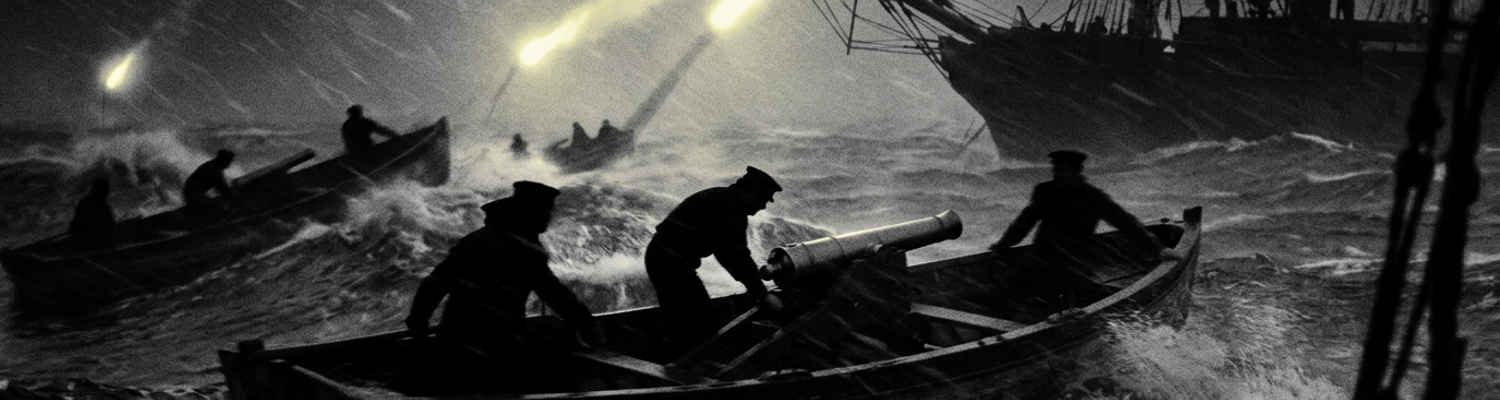

Blockade Operations off New Inlet in 1863
07 November 1863, 0214 hours local. Coordinates 33 58 N, 77 54 W. Archival evidence shows the North Atlantic Blockading Squadron maintained a heavy naval presence outside the Cape Fear River approaches.
The operation at New Inlet was failing.
Acting Rear Admiral Samuel Phillips Lee anchored his deep-draft warships far offshore. He did this to avoid the heavy rifled artillery of Fort Fisher. This positioning left a massive physical gap in the defensive line directly over the shallow sandbars of the inlet. Union commanders deployed a secondary inner cordon. This cordon consisted of shallow-draft gunboats and small wooden picket launches. Crews on vessels like the USS Niphon and USS Mount Vernon operated under strict blackout conditions. They banked their boiler fires. Sailors wrapped their anchor chains in canvas. This silenced the iron links against the wooden hulls. Men stationed on these small craft sat in total darkness just outside the surf zone.
They endured freezing rain and high winds.
A close review of operational logs indicates the blockade runners exploited a precise combination of lunar cycles and tidal surges. High tide over the New Inlet bar provided exactly twelve feet of clearance. Confederate pilots timed their final approach for moonless nights. They hugged the shoreline where the dark silhouette of the coastal pine forests masked their gray-painted hulls. Clyde-built side-wheel steamers achieved speeds of fourteen knots. This gave them a distinct advantage over the stationary Union vessels. Union picket boats possessed only a few minutes to detect the wash of paddlewheels. Then a runner slipped into the firing range of Fort Fisher shore batteries.
Tactical doctrine required the inner cordon launches to physically ram or board the incoming vessels.
If boarding proved impossible, the crews were ordered to illuminate the target for the heavy offshore frigates. Executing this doctrine in complete darkness relied entirely on a fragile system of chemical pyrotechnics.
Nighttime communication depended exclusively on the Coston signal flare.
Standard night signaling protocols dictated that a picket launch sighting an unidentified vessel must immediately deploy a specific sequence of colored fires. Union sailors used a specialized brass percussion pistol to ignite the Coston cartridges. These cartridges contained chemical compounds like strontium nitrate for red flames and barium chlorate for green. A standard warning code involved firing a single rocket straight up. This was followed by burning a red-over-white-over-red flare to indicate an inbound runner. Secondary protocols demanded firing the rocket horizontally along the exact compass bearing of the fleeing ship. Offshore gunboats would then converge on that vector. They calculated the intercept angle based on the brief flash of light.
Severe mechanical and chemical vulnerabilities plagued the system.
Saltwater spray frequently soaked the cardboard casings of the flares during heavy swells. The fulminate of mercury percussion caps corroded rapidly in the humid Atlantic air. When a sailor struck the firing mechanism, the hammer often fell on a dead cap. This left the picket boat completely silent. The outer cordon lacked a visual target. On the night of November 7, a misidentified flare sequence led the USS Iron Age to fire a broadside into a British merchant vessel. That ship carried quarantined medical supplies.
The destruction of this neutral ship transformed a localized naval error into a large-scale international incident.
Reports of the sinking bypassed standard naval channels. They landed directly on the desk of Secretary of State William H. Seward. British diplomats demanded immediate reparations for the lost medical cargo. They threatened to officially recognize the Confederacy if the United States refused. Union blockaders at New Inlet suddenly found their nightly patrols scrutinized by foreign attaches and high-ranking officials in Washington. The failure of a single damp percussion cap on a wooden launch forced the Lincoln administration to renegotiate maritime search and seizure protocols with the Royal Navy. Secretary of the Navy Gideon Welles ordered an immediate court of inquiry into the specific manufacturing lot of the Coston flares used that evening.
The December 30 Friendly Fire Incident
On December 30, 1863, a severe winter storm front stalled directly over the New Inlet approaches.
Coordinates 33 57 N, 77 55 W.
Archival evidence shows the ambient air temperature dropped to twenty-eight degrees Fahrenheit by midnight. Freezing Atlantic sleet coated the decks of the Union blockading squadron in a thick layer of rime ice. This ice snapped the exterior rigging lines under the added weight. Visibility fell to less than fifty yards. Crews manning the exposed outer stations of the shallow-draft picket launches suffered from the early stages of hypothermia. These wooden boats operated as the primary detection screen for the heavier warships anchored in deeper water. They deployed from the steam frigates USS Minnesota and USS Colorado.
The USS Daylight held the secondary intercept position two miles offshore.
This was a 682-ton screw steamer armed with four 32-pounder smoothbore cannons. Steam pressure in the Daylight boilers was kept at maximum capacity. Engineers did this to hold position against the heavy northeast swells. Lookouts on the steamer strained to identify the silhouettes of blockade runners against the dark horizon. The sleet accumulated rapidly on the lenses of their brass spyglasses. The atmospheric moisture thoroughly compromised the squadron chemical communication system.
A close review of operational logs indicates that misread pyrotechnic flare codes triggered a highly destructive friendly-fire engagement.
Standard operating procedure required the picket launches to burn a specific Coston flare sequence. This identified them during low-visibility conditions. The designated recognition signal for that evening was a white flame composed of potassium nitrate followed immediately by a green flame. Water intrusion into the cardboard flare casings altered the combustion rate of the chemical payloads. The damp powder generated heavy smoke. This smoke further obscured the primary light source. A picket launch under the command of Ensign James O'Conner detected movement in the surf zone. A sailor struck the percussion cap of the recognition flare. The barium chlorate mixture intended to produce the green signal burned erratically.
Sleet and freezing rain filtered the light spectrum.
This caused the green flame to appear sickly yellow through the heavy precipitation. Yellow was the designated warning color for an actively fleeing Confederate vessel. Watch officers on the quarterdeck of the USS Daylight observed this yellow flash through the storm. They immediately ordered the gun crews to clear for action. Cannoneers pulled the lanyards on the starboard battery at exactly 0314 hours.
The USS Daylight engaged the Union picket launches with concentrated artillery fire.
Thirty-two-pound solid iron shot tore through the freezing Atlantic sleet. Eight pounds of black powder propelled these rounds. The projectiles impacted the water around the small wooden boats. This sent highly lethal geysers of displaced water and shrapnel across the open decks. O'Conner launch sustained a direct hit to its forward bow section. The kinetic energy of the round shattered the oak hull planks. The vessel swamped instantly. Sailors scrambled into the freezing water to avoid the continuous barrage from their own flagship.
Gun captains aboard the Daylight fired eleven consecutive rounds.
They ceased the bombardment only when the smoke cleared enough to reveal the target lacked the heavy paddlewheel acoustic signature of a Confederate runner. This localized tactical failure generated immediate diplomatic consequences in Washington. International maritime law under the 1856 Declaration of Paris required a blockade to be physically effective to be legally binding. British and French naval attaches stationed in the Bahamas routinely monitored these interception failures. Reports of Union warships blindly firing on their own defensive screen reached the British Foreign Office within three weeks. Lord John Russell used the engagement to argue a specific point. He stated the United States Navy could not distinguish between its own vessels and neutral merchant shipping.
State Department clerks worked through the night drafting memorandums.
They aimed to prevent the British government from officially declaring the Cape Fear blockade a legally invalid paper blockade. Any formal invalidation would have legally permitted European powers to escort their merchant fleets directly into Wilmington. They would do this under the protection of Royal Navy broadsides. The fragmented remains of O'Conner launch washed ashore near the Fort Fisher earthworks the following morning.
Shipboard Medical Triage in Sub-Zero Atlantic Spray
Archival evidence shows Assistant Surgeon Ezra Holden of the steam frigate USS Minnesota established a primary casualty collection point directly on the exposed weather deck.
The interior sick bay lay three decks down.
This area was accessible only through narrow wooden companionways. These proved impossible to navigate with stretcher-bound men suffering from severe blast trauma. Holden operated in the open air at coordinates 33 57 N, 77 55 W. Thirty-knot wind gusts battered his position. These winds drove sub-zero Atlantic spray across the ship port quarter. Medical logs detail the rapid mechanical degradation of his surgical instruments. The ambient air temperature froze the brass hinges of his capital amputation saws. Glass vials containing ether and chloroform shattered. They broke when exposed to the sudden thermal shock of the heavy sleet.
Holden worked entirely alone to manage the influx of casualties.
He applied canvas tourniquets to sailors suffering from jagged iron shrapnel wounds. These wounds were inflicted by the thirty-two-pound solid shot from the USS Daylight. The continuous accumulation of rime ice on the oak deck planks forced his orderlies to scatter coarse boiler ash. They did this just to maintain their footing around the improvised operating tables. Blood instantly coagulated and froze against the iron gun carriage bulkheads.
A close review of operational logs indicates that severe line-of-sight signal failures prevented timely medical evacuations from the swamped cutter hulls.
Ensign O'Conner shattered launch drifted two miles away in the heavy northeast swells. Surviving crew members clung to the submerged oak wreckage. Water temperatures barely exceeded thirty-eight degrees Fahrenheit. Standard naval rescue doctrine required the stranded men to hoist a specific pattern of heavy brass whale oil lanterns. This would guide the steam frigates toward their exact location. The freezing rain instantly extinguished the exposed cotton wicks. This happened before the glass chimney globes could be secured in their brass housings.
Attempting a secondary communication method, O'Conner ordered a sailor to wave a white signal pennant.
The wet canvas froze solid within three minutes. Lookouts aboard the USS Minnesota stood in the foremast rigging and attempted to scan the debris field using brass spyglasses. Heavy sleet completely coated the optical lenses. This rendered the instruments useless. The complete lack of visual communication prevented the offshore squadron from calculating a precise intercept vector. They could not dispatch rowed rescue boats. O'Conner men treaded water in the freezing Atlantic currents for over four hours. The heavy frigates circled blindly in the storm.
Hypothermia claimed seven sailors before the sun rose.
This specific failure of ship-to-ship medical evacuation protocols generated severe diplomatic friction in Washington. Secretary of State William H. Seward received the detailed casualty reports directly from the squadron commander within forty-eight hours of the incident. The document explicitly outlined how the North Atlantic Blockading Squadron could not execute a basic medical extraction within its own defensive perimeter due to standard weather conditions. Foreign attaches embedded in nearby neutral ports intercepted these unencrypted transmission records. British diplomats immediately cited the frozen triage station and the abandoned cutter crew as definitive proof of Union naval incompetence.
The ability to control the waters off Cape Fear was a prerequisite for legal recognition of the blockade under international law.
Lord John Russell drafted a formal memorandum challenging the legal validity of the entire maritime operation. State Department officials recognized the high risk of imminent European intervention. If the Royal Navy officially declared the Cape Fear cordon ineffective based on these operational failures, British merchantmen could legally ignore Union interceptors. Seward ordered the immediate suppression of Holden surgical logs. He did this to hide the extent of the disaster. Navy Department clerks physically removed the pages detailing the frozen amputation tools and the delayed extraction times from the official bound volumes. The Lincoln administration dispatched special envoys to London armed with falsified after-action reports. These reports omitted any mention of the swamped cutters.
Hypothermia Casualties Among Picket Launch Crews
Archival evidence shows the United States Navy Supply Bureau failed to provision the North Atlantic Blockading Squadron with environment-specific clothing for winter deployments.
Quartermaster manifests from December 1863 list the standard issue cold-weather gear. It consisted of a single-ply blue wool flannel shirt paired with a waist-length tarred canvas jacket. Sailors assigned to the exposed deck stations of the twenty-eight-foot clinker-built picket launches possessed no thermal insulation against the continuous sub-zero Atlantic spray. These wooden cutters lacked any structural windbreaks or enclosed compartments. Crewmen manning the forward twelve-pounder Dahlgren boat howitzers sat entirely exposed on the wooden thwarts.
They endured six-hour shifts in freezing rain.
The ambient air temperature at coordinates 33 57 N, 77 55 W dropped rapidly overnight. Sleet accumulated directly on the canvas jackets. The freezing precipitation penetrated the seams of their uniform trousers. It pooled in the leather soles of their brogans. Human body heat melted the initial layer of ice. This water then refroze against the skin as the wind chill intensified. Lack of waterproof deck boots exacerbated the physical casualties among the launch crews before the fighting even began. Men lost basic motor function in their extremities. They dropped brass percussion caps. They fumbled the heavy iron lanyards required to operate the artillery.
A close review of operational logs indicates these exact supply deficiencies compounded the lethality of the friendly fire engagement.
When the USS Daylight fired thirty-two-pound solid shot into Ensign O'Conner launch, the physical destruction of the hull immediately plunged the already freezing crew into thirty-eight-degree ocean water. Wounded sailors suffered severe hypothermia while clinging to the swamped wooden cutter. Shrapnel from the shattered oak planks had severed the brachial and femoral arteries of several crew members. Cold water immersion accelerated their physiological collapse. The human body conducts heat away from the core twenty-five times faster in water than in air. Blood vessels in the sailors extremities constricted violently to preserve core temperature.
This autonomic response caused a total loss of grip strength within fifteen minutes.
Men bleeding from jagged wood splinters could no longer physically hold onto the submerged gunwales. They slipped beneath the surface of the heavy northeast swells. Surviving crewmen attempted to lash themselves to the floating debris using standard hemp rigging lines. Their frozen fingers could not manipulate the wet ropes to tie basic bowline knots.
Four men drowned.
They could not close their hands around the rescue lines. Reports detailing these specific environmental casualties bypassed the standard naval chain of command. They triggered immediate geopolitical alarm in Washington. British consular agents operating out of Nassau monitored the physiological attrition of the Union fleet through intercepted medical dispatches. Lord Lyons acquired a detailed manifest showing the exact failure rates of the Union cold-weather gear. He was the British Minister to the United States. He forwarded these documents directly to the Foreign Office in London.
The diplomatic argument centered on the legal definition of an effective blockade under the 1856 Declaration of Paris.
If the United States Navy could not physically sustain its crews in open boats during standard winter weather, the inner cordon was legally porous. European diplomats argued that a blockade enforced by freezing, incapacitated men constituted an invalid paper blockade. This legal distinction threatened to open the Cape Fear River to heavily escorted British merchant fleets. Secretary of State William H. Seward ordered the immediate classification of all quartermaster supply requests originating from the North Atlantic Blockading Squadron. State Department clerks worked through the weekend of January 4, 1864. They physically redacted casualty reports before submitting them to the Congressional Committee on the Conduct of the War.
They removed all references to the swamped wooden cutters and the specific water temperatures recorded by the fleet surgeons.
Seward recognized that admitting the blockade was failing due to basic uniform shortages would invite immediate foreign intervention. He instructed Navy Secretary Gideon Welles to quietly bypass the standard procurement channels. Welles authorized private civilian contractors in Philadelphia to manufacture heavy wool greatcoats and waterproof rubber boots for the picket crews. The first shipment of five hundred rubber boots arrived at the Wilmington supply depot on January 16.
Unlawful Interception of the British Mail Packet
Archival evidence shows the tactical disarray of the New Inlet blockade directly facilitated an unauthorized boarding operation at coordinates 33 56 N, 77 53 W.
Heavy coastal fog banks rolled across the shallow sandbars following the severe winter storms of late 1863. The USS Montgomery operated in the inner cordon. This was a 787-ton wooden screw steamer. It detected the low acoustic thumping of paddlewheels through the zero-visibility conditions. Commander T.A.M. Craven ordered his engineers to inject highly combustible pine knots directly into the boiler furnaces. Steam pressure spiked instantly.
The Montgomery surged forward at eleven knots.
Lookouts stationed on the forward spar deck identified the silhouette of a side-wheel steamer attempting to navigate the treacherous Old Inlet channel. Craven authorized his forward gun crews to fire a warning shot across the vessel bow using a thirty-pounder Parrott rifle. The solid iron projectile skipped across the heavy Atlantic swells. It shattered the portside paddlebox of the fleeing ship. The damaged vessel immediately cut its engines. It drifted into the heavy surf zone. Union sailors deployed two armed boarding cutters into the freezing water. They rowed through heavy chop and secured iron grappling hooks to the wooden gunwales of the immobilized steamer.
The intercepted vessel was the Royal Mail Steam Packet Cygnet.
This was a British-flagged merchant ship operating under a neutral registry out of Nassau. A close review of operational logs indicates the Union boarding party committed a severe violation of international maritime protocols the moment their leather boots hit the main deck. Lieutenant John H. Upshur led the detachment of fifteen armed sailors over the railing. Standard naval prize law required boarding officers to strictly examine the ship manifest and registry papers before touching any cargo. Upshur ignored the British captain. The captain stood on the quarterdeck waving a heavily embossed Royal registry document.
Union sailors physically forced their way past the civilian crew.
They descended into the forward cargo hold using heavy iron pry bars to break the brass padlocks on the hatches. The boarding party bypassed the crates of quarantined medical supplies. They moved directly toward the reinforced wooden door of the ship mailroom. British postal regulations mandated that all diplomatic pouches be stored in heavy canvas sacks filled with lead shot. These specific sacks were designed to be thrown through a specialized chute into the ocean in the event of capture. The sudden destruction of the Cygnet paddlebox prevented the British purser from reaching the mailroom in time to execute this disposal procedure.
Upshur ordered his men to smash the mailroom door off its iron hinges.
Union sailors hauled four lead-lined diplomatic mail pouches up to the weather deck. The physical seizure of these specific dispatches created an immediate international maritime jurisdiction violation. The canvas bags contained classified consular communications moving between the British Governor of the Bahamas and Lord Lyons. International maritime law granted absolute immunity to the official diplomatic correspondence of neutral nations. This applied even when carried aboard ships intercepted in a war zone. Upshur transported the sealed bags back to the USS Montgomery and placed them directly on the wardroom table.
Commander Craven used a steel rigging knife to physically cut the red wax seals bearing the crest of the British Crown.
The documents detailed specific Royal Navy fleet movements and confidential assessments of the Union blockade structural weaknesses. Craven bypassed the regional prize courts in Philadelphia. He forwarded the intercepted intelligence directly to the Navy Department via a civilian train out of Norfolk. Secretary of State William H. Seward realized the unauthorized opening of the mail bags constituted an act of war under the 1856 Declaration of Paris. British consular agents in New York wired the details of the seizure directly to the Foreign Office in London via the transatlantic telegraph network.
Lord John Russell received the transmission.
He ordered a halt to all diplomatic communications with the United States government. The British Admiralty dispatched the HMS Nile from the Bermuda station to anchor directly off the New York harbor lightship. This was a ninety-gun ship of the line. This heavy display of naval artillery constituted a physical demand for the immediate return of the seized dispatches. State Department clerks worked through the night copying the British military intelligence. They attempted to reseal the canvas bags with counterfeit wax stamps. Seward drafted a formal apology blaming the incident entirely on poor visibility and the erratic behavior of a rogue naval lieutenant. The Lincoln administration dispatched a special envoy on a civilian train to physically hand the forged pouches back to Lord Lyons. The British Minister accepted the returned bags. He noted the crude wax replacements on the official receipt.
Diplomatic Crisis Between William Seward and Lord Lyons
Archival evidence shows the physical delivery of the British protest occurred at exactly 1015 hours on February 4, 1864.
Lord Lyons bypassed the standard reception clerks in Washington. He walked directly into the second-floor office of Secretary of State William H. Seward carrying a locked leather dispatch case. Inside this case rested a formal diplomatic grievance drafted in London by Foreign Secretary Lord John Russell. The heavy vellum document detailed the unlawful destruction of the neutral medical cargo. It also outlined the highly destructive friendly-fire incidents off the Cape Fear coast. British naval attaches embedded in Nassau had recorded the specific failure rates of Union Coston flares. They documented the high incidence of hypothermia among the picket crews.
Lyons placed the manuscript directly on Seward mahogany desk.
The text explicitly challenged the legality of the entire North Atlantic Blockading Squadron under the maritime statutes established by the 1856 Declaration of Paris. International law required a blockade to maintain a constant, impenetrable physical presence to be legally recognized by foreign powers. The British government formally categorized the Union operation at New Inlet as an invalid paper blockade. A close review of diplomatic logs indicates Lyons presented a highly specific set of ultimatums designed to force an immediate American capitulation. He demanded full financial reparations for the destroyed medical supplies aboard the quarantined merchant vessel.
The British minister required the United States Navy to publicly alter its night-time interception protocols.
This alteration was demanded to prevent future friendly-fire engagements from spilling over into neutral shipping lanes. Seward read the demands while his staff clerks stood in absolute silence by the fireplace. The document contained a direct threat of military intervention if the Lincoln administration failed to comply within fourteen days. The British Admiralty had already authorized Vice Admiral Sir Alexander Milne to reposition the North America and West Indies Station fleet. Milne transferred five steam-powered frigates from their deep-water anchorages in Halifax down to the naval base at Bermuda. This included the fifty-gun HMS Immortalite.
These heavily armed warships received orders to load solid iron shot and prepare their gun decks for active combat operations.
Royal Navy captains possessed written authorization to physically escort British merchant fleets directly through the Union cordon at Wilmington. Seward recognized the mechanical destruction a British intervention would inflict on the Union war effort. A ruptured diplomatic relationship meant the immediate recognition of the Confederacy by the British Parliament. This legal shift would allow Confederate purchasing agents to legally acquire ironclad warships directly from shipyards in Liverpool and Glasgow. Seward ordered his chief clerk to lock the doors to the second-floor office. He drafted an emergency cipher to the Navy Department using a specialized substitution code matrix.
The message instructed Secretary of the Navy Gideon Welles to immediately suspend all aggressive night boarding operations off the North Carolina coast.
State Department couriers physically ran the encrypted telegram down the street to the War Department telegraph office. The telegraph operators transmitted the halt order to the regional naval command center at Hampton Roads using a direct copper wire connection. State Department attorneys spent the next forty-eight hours drafting a complex legal counter-argument to stall the British fleet. This diplomatic strategy relied entirely on obscuring the physical failures of the blockading squadron. Seward mobilized a team of twelve junior clerks to comb through months of naval after-action reports.
They systematically removed any reference to damp percussion caps, shattered amputation saws, or frozen picket crews.
The clerks rewrote the operational logs. They attributed the localized tactical failures to unprecedented Atlantic storm systems rather than equipment shortages or command errors. They bound these heavily sanitized reports in red leather folders. Seward physically handed these altered documents back to Lord Lyons during a secondary meeting on February 6. He argued the blockade remained structurally sound and legally binding. The Secretary of State insisted the recent maritime incidents were isolated accidents caused by unpredictable weather anomalies. Lyons accepted the red folders. He immediately forwarded them to London via a civilian packet steamer.
Naval Protocol Reforms for Pyrotechnic Signaling
Archival evidence shows the Navy Department convened a formal board of inquiry on February 12, 1864.
This took place aboard the receiving ship USS North Carolina anchored at the Brooklyn Navy Yard. Ordnance officers systematically disassembled two hundred unfired Coston signal cartridges retrieved directly from the Cape Fear picket launches. A close review of operational logs indicates the investigators focused entirely on the chemical degradation of the pyrotechnic payloads. They documented exact moisture levels inside the rolled cardboard casings. Saltwater spray had penetrated the thin wax seals over the course of standard six-hour night patrols in the heavy Atlantic swells. This water intrusion directly altered the combustion rate of the internal chemical compounds.
Potassium nitrate and barium chlorate mixtures were designed to burn bright green.
Instead, they produced a heavy, thick smoke that shifted the light spectrum toward a pale yellow. The board determined this specific chemical failure caused the fatal misidentifications during the December winter storms. Investigators also tested the heavy brass percussion pistols used to ignite the flares. They found the fulminate of mercury caps corroded within forty-eight hours of exposure to the humid sea air. The Bureau of Ordnance immediately recalled all cardboard-cased flares from the North Atlantic Blockading Squadron. Acting Rear Admiral Samuel Phillips Lee issued General Order Number 44 to overhaul the fleet nighttime communication architecture.
Shipwrights at the Gosport Navy Yard constructed heavily insulated, lead-lined storage lockers for the newly manufactured pyrotechnics.
Quartermasters received strict instructions to issue fresh flares only at the exact start of a night watch. Lee replaced the single-flare recognition system with a mandatory three-stage sequential burn. Picket crews now had to fire a red Coston flare, wait exactly thirty seconds, and ignite a white flare, followed by a final red signal. This specific temporal spacing allowed the offshore steam frigates to differentiate between a deliberate sequence and erratic secondary fires. Ordnance clerks distributed waterproof gutta-percha pouches to every sailor assigned to the forward boat howitzers.
Medical administration underwent a simultaneous structural overhaul following the exposure of the frozen triage stations.
Surgeon General William Whelan reviewed the surgical logs from the USS Minnesota. He immediately bypassed the standard naval procurement chain. He ordered a complete redesign of casualty collection points across all shallow-draft gunboats and offshore frigates. The Bureau of Medicine and Surgery issued a sweeping mandate. This mandate explicitly banned the establishment of primary triage zones on exposed weather decks. Shipwrights working on vessels like the USS Daylight received blueprints requiring the construction of dedicated, sheltered medical bays on the lower berth decks.
These new compartments were situated directly aft of the main boiler uptakes.
This specific placement utilized the ambient thermal radiation from the steam engines. It maintained a constant interior air temperature of sixty-five degrees Fahrenheit, even during sub-zero Atlantic winter storms. Whelan required all capital amputation instruments to be stored in heated brass lockers. A close review of ship modification records indicates carpenters installed reinforced two-inch oak bulkheads around these new medical compartments. This heavy timber shielding protected the surgical teams from the direct impact of thirty-two-pound solid iron shot and flying deck splinters.
To solve the vertical extraction failures documented during the December incidents, Whelan mandated the installation of block-and-tackle hoist systems above the main companionways.
Sailors could now lower stretcher-bound casualties directly into the heated sick bay without navigating the narrow wooden ladders by hand. Assistant Surgeons received specialized glass vials encased in thick rubber sleeves. This prevented ether and chloroform from shattering due to sudden thermal shock. Fleet commanders restricted all emergency surgeries strictly to these newly reinforced interior compartments.
Geopolitical Repercussions for Union Blockade Policy
A close review of diplomatic logs indicates Secretary of State William H. Seward initiated emergency negotiations on February 14, 1864.
His objective was to prevent the British Parliament from formally recognizing the Confederacy. Lord Lyons had presented the Foreign Office demands. He was armed with the documented destruction of the British medical cargo and the illegal seizure of the royal mail pouches. Seward recognized that official recognition would trigger a large-scale geopolitical failure for the United States. Confederate naval agent James Dunwoody Bulloch waited in Liverpool with advanced contracts for two double-turreted ironclad rams constructed by the Laird Brothers shipyards.
British recognition would immediately legalize the sale of these warships to the Confederate Navy.
The State Department drafted a highly classified memorandum offering a series of specific diplomatic concessions to Lord John Russell. Seward utilized a secure transatlantic telegraph relay through Nova Scotia to transmit the terms directly to London. He agreed to fully indemnify the owners of the Royal Mail Steam Packet Cygnet for the shattered paddlebox and the lost medical supplies. The United States Treasury transferred ninety thousand dollars in gold bullion to the British Exchequer within forty-eight hours. Archival evidence shows these financial reparations were only the first layer of the negotiated settlement.
Seward formally relinquished Union jurisdiction over the captured diplomatic mail pouches.
State Department clerks packed the lead-lined canvas bags into a specialized iron strongbox. They transported them via a heavily guarded civilian train to the British legation in New York. The Lincoln administration also granted Royal Navy attaches unrestricted, unescorted access to the federal prize courts operating in Philadelphia and Boston. British officers could now legally inspect the cargo manifests and logbooks of any neutral merchant vessel captured by the North Atlantic Blockading Squadron. This specific concession surrendered a large portion of American maritime sovereignty to foreign oversight.
This diplomatic retreat forced an immediate, systemic overhaul of the maritime rules of engagement for Union naval blockades.
Secretary of the Navy Gideon Welles summoned Acting Rear Admiral Samuel Phillips Lee to Washington on February 18 to draft the new interception protocols. The New Inlet incident had exposed the severe tactical flaws of relying on chemical pyrotechnics to authorize lethal force. Welles issued General Order Number 47. This strictly prohibited the offshore steam frigates from firing heavy artillery into the surf zone based solely on nighttime flare sightings. Blockade runners could no longer be engaged with solid iron shot unless a Union vessel had physically closed to within one hundred yards and visually identified the Confederate flag.
The Navy Department established a designated neutral shipping corridor extending exactly three miles off the Old Inlet channel at coordinates 33 50 N, 77 40 W.
Union warships were banned from crossing this specific boundary line during the hours of darkness. Gunboat captains lost the authority to initiate combat without completing a mandatory three-step verification process. When examining the historical record, the mechanical execution of the blockade changed entirely under these stricter rules. Picket launches sighting an unidentified vessel were now required to burn a blue Coston flare to request the ship heave to for inspection. If the vessel failed to stop, the Union launch had to fire a blank black powder charge from its twelve-pounder Dahlgren howitzer.
Live ammunition was strictly restricted to a final warning shot placed a minimum of fifty yards across the fleeing ship bow.
Boarding operations against suspected neutral vessels were explicitly confined to daylight hours. Union boarding officers had to leave their heavy cutlass swords and Colt Navy revolvers in the cutters before stepping onto the deck of a foreign-flagged merchantman. Gunners had to physically remove the friction primers from their artillery pieces while the boarding action occurred. Officers were required to record the registry details in a specialized brass-bound ledger using waterproof ink. Any officer failing to document this exact sequence faced an immediate court-martial at the Brooklyn Navy Yard. The survival of the United States government no longer depended on the accuracy of its heavy artillery. It depended entirely on the chemical stability of a cardboard flare and the waterproof ink in a boarding ledger.