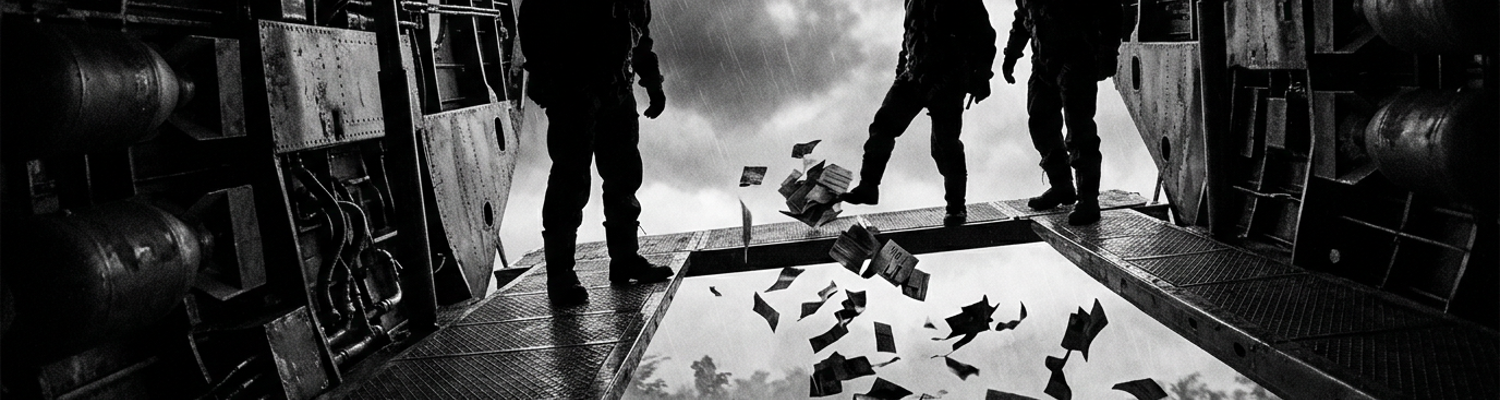

ATIS Exploitation of Imperial Japanese Rosters
Archival evidence shows that along the swollen banks of the Driniumor River in July 1944, Allied screening forces faced an overwhelming concentration of hostile manpower. Lieutenant General Hatazo Adachi had secretly assembled twenty thousand Japanese infantrymen in the dense jungle east of Aitape. This force outnumbered the isolated American cavalry and infantry pickets by nearly three to one. Outposts from the 112th Cavalry Regiment and 32nd Infantry Division manned scattered machine-gun emplacements along the river line. An entire three-division army corps prepared to tear through the front. The 20th, 41st, and 51st Divisions formed the core of this assault force. The impending assault threatened total annihilation for the defenders pinned against the Pacific coast.
Behind the frontline perimeter, Allied intelligence personnel exploited an asset that reversed this numerical advantage. Allied Translator and Interpreter Section linguists translated captured Imperial Japanese Army 18th Army personnel manifests. They gathered granular order-of-battle intelligence. Working through footlockers of soaked administrative paperwork captured at Hollandia and Aitape, the linguists reconstructed the exact command hierarchy of Adachi's force. These registers detailed specific company rosters, weapon serial tallies, ration distributions, and replacement rosters down to the squad level.
Paper records compromised the offensive before the first mortar fired.
When examining the historical record of the Psychological Warfare Branch, tactical messaging worked directly from this translated intelligence. Staff officers coordinated with field interrogators to weaponize raw physical exhaustion against Japanese assault units. Heavy monsoon downpours turned the Driniumor floodplain into knee-deep mud. This severed the coastal supply trails running east to Wewak. Japanese supply echelons were stranded in the trackless interior. Soldiers in the 20th and 41st Divisions were subsisting on five ounces of rotting rice per day. Malaria, bacillary dysentery, and beriberi infected more than sixty percent of front-line combatants.
Psychological warfare personnel drafted targeted tactical surrender passes customized for starving Japanese echelons isolated along the Driniumor River. Printed on water-resistant paper with deep red borders, these passes gave step-by-step instructions for approaching Allied sentries with empty hands raised. The Japanese text promised immediate doses of liquid quinine, dysentery serums, and hot field rations at coastal dressing stations near Tadji airfield.
Severe intestinal infection and empty ammunition pouches dictated front-line behavior far more than Tokyo's imperial doctrine.
A close review of operational logs indicates that Allied psychological warfare teams abandoned generic appeals in favor of aggressive individual profiling. Linguists cross-referenced names extracted from captured 18th Army personnel manifests. They targeted isolated Japanese rear-guard units stranded south of Afua. Surrender messaging leveraged specific officer names and unit designations to erode morale among cut-off rear-guard units. Air-dropped leaflets addressed company commanders from the 78th, 79th, and 80th Infantry Regiments by their actual family names. The text informed rear-guard troops that their senior regimental officers had already retreated east toward the Torricelli Mountains.
By naming specific deceased platoon leaders alongside their exact company numbers, the leaflets proved to junior soldiers that American headquarters possessed complete knowledge of their dispersed formations. Cut off from radio links and left without field rations, rear-guard riflemen discovered that Allied intelligence knew their exact identities. They knew their missing officers. They knew their dwindling ammunition counts.
Fifth Air Force A-20 Havocs dropped fifty thousand customized slips over the Afua pocket on July 14 alone.
Field Ordnance Modifications at Tadji Airfield
Archival evidence shows that psychological warfare at Aitape depended entirely on improvised engineering in depot workshops.
Depot logs from July 1944 confirm that Fifth Air Force and USAFFE quartermaster depot personnel at Aitape salvaged obsolete ordnance casings and M10 aerial smoke tanks for leaflet conversion. Standard high-explosive ordnance could not safely release thin tactical leaflets over the Driniumor front line without shredding the documents. Dedicated cluster leaflet bombs were completely absent from local supply manifests (NARA Record Group 338). Ordnance repairmen dragged empty M38A1 practice bomb shells and discarded seventy-five-gallon M10 tanks from coastal salvage dumps behind Tadji's fighter strips. Armorers sliced off the internal liquid spray manifolds using oxyacetylene cutting torches.
Mechanics welded internal sheet-metal dividers into the hollowed tanks to prevent cargo shifting during high-speed low-altitude flight. They retrofitted the chemical-agent fill necks with hinged aluminum payload doors. Depot welders attached reinforced suspension lugs to the cylindrical tank skins. Ground crews could then hoist the modified containers directly onto the external bomb racks of A-20 Havocs and P-40 Warhawks. By clearing out the caustic sulfur-trioxide residue with pressurized gasoline washouts, technicians turned surplus poison containers into high-capacity leaflet dispensers. These dispensers were capable of carrying forty thousand documents per sortie.
Unprepared field supplies dissolved in the coastal rain.
When examining the historical record, extreme moisture immediately threatened these converted payloads. High humidity and tropical mold at Tadji Airfield threatened to decay stored paper bundles. This required rapid adaptation of waterproof liners. Aitape averaged more than one hundred inches of rainfall annually. Relative humidity rarely dropped below ninety percent inside coastal storage tents. Freshly printed surrender passes drawn from shipboard presses began absorbing ambient water within thirty minutes of exposure to open air. The cellulose paper swelled. It smeared the red Japanese lettering. It encouraged the growth of aggressive jungle fungus that bound individual sheets into solid blocks of wet pulp.
Drop tests confirmed that moisture-fused paper bundles failed to open in flight. They plunged through the jungle tree canopy as solid masses instead of scattering across Japanese foxholes. Quartermaster workers stripped waterproofing materials from crated artillery ammunition packs and aviation engine crates. Armorers lined the inner walls of the modified casings with asphalt-impregnated tar paper. Sheet metal workers fabricated heavy-gauge vulcanized rubber interior wraps. They sealed the exterior paper seams with melted paraffin dipped from medical packaging stores.
A leaflet bundle that failed to open cleanly in midair was useless scrap.
A close review of operational logs indicates that ground armorers faced severe ballistic timing problems over the jungle. Depot armorers engineered static-line release lanyards and improvised fuzes to ensure mid-air leaflet casing separation. Standard delayed-action bomb fuzes routinely misfired in the heavy air. They often buried the metal casings deep in the swamp mud before functioning. To solve this, depot technicians removed the mechanical vane assemblies from obsolete M111A2 nose fuzes. They replaced the delayed booster charges with shaved black-powder squibs wired to electrical ignition circuits.
Other conversion teams bypassed fuzes entirely by designing mechanical rip-cords. Armorers anchored five-sixteenth-inch aircraft steel cable to the bomb shackle hardpoints on the underside of A-20 wings. They looped the opposite end directly to spring-loaded cotter pins on the casing doors. Pilots released the converted tanks at three hundred feet altitude. The trailing static lanyards snapped the retaining pins loose as the canister fell through the prop wash. The slipstream forced the hinged casing doors wide open within two-fifths of a second of release. This dumped the waterproof bundles into the air current before the metal container cleared the aircraft tail assembly.
Depot mechanics at Tadji completed the final fuze calibration test on July 18, 1944. This occurred three hours before the dawn strikes.
Low-Altitude Ingress over the Afua Sector
Archival evidence shows that on 10 August 1944, a modified Douglas A-20G Havoc light bomber from the 3rd Bombardment Group descended directly toward the jungle canopy south of Afua at 0912 hours. Flying at an indicated airspeed of two hundred and twenty knots, the pilot leveled the twin-engine aircraft barely twenty-five feet above the ironwood tree line. Dropping leaflets into dense rainforest required extreme proximity. High-altitude dispersals simply scattered the light paper sheets into the upper foliage. The paper hung suspended in the banyan branches sixty feet above the ground without ever reaching the Japanese soldiers below.
Ordnance technicians at Tadji had secured twin converted M10 chemical canisters to the external bomb shackles on the underside of the wings. These were loaded with fifty thousand Japanese-language surrender notices. Flying at tree-top level allowed the aircraft to exploit the violent slipstream of two Wright R-2600-23 radial engines. The downdraft drove the paper downward through gaps in the teak and breadfruit leaves. Flight instruments registered severe mechanical strain as branches clipped the ventral radio antenna mast.
A flight at tree-top level left zero margin for recovery.
A close review of operational logs indicates that Japanese anti-aircraft installations and concealed infantry positions along the riverbank engaged the low-flying Allied aircraft with concentrated small-arms fire. Entrenched remnants of the 20th Division's 78th Infantry Regiment and naval landing personnel occupied revetted fighting holes along the eastern bluffs. These positions were camouflaged with palm fronds and cut banana stalks. At 0914 hours, two Type 96 25mm twin-barrel automatic anti-aircraft cannons opened fire from cleared firing pits four hundred yards downstream from Afua. They tracked the A-20 across the water.
Hundreds of Japanese infantrymen raised Type 38 and Type 99 bolt-action rifles. They fired coordinated volleys of 6.5mm and 7.7mm ball ammunition directly into the nose and engine nacelles of the approaching bomber. Rifle rounds punched neat holes through the duralumin skin behind the forward pilot armor. The bullets severed the hydraulic line leading to the starboard wing flaps. Fluid sprayed across the right wheel well. This triggered an immediate drop in auxiliary reservoir pressure on the cockpit gauges.
Tracers ripped through the floorboards.
When examining the historical record, severe turbulence and limited forward visibility over the Driniumor River bend complicated pilot alignment on the target drop coordinate. The Driniumor snaked through an oxbow canyon south of Afua. Steep jungle-covered ridges flanked the river. These ridges funneled rising midday thermals directly into prevailing coastal rain squalls. Heavy cloud cover hung at two hundred feet. The clouds blended with morning river mist and smoke rising from smoldering mortar impact zones. Navigating this channel required the pilot to bank the heavily loaded bomber forty degrees while clearing submerged sandbars and overhanging riverbank trees.
Thermal updrafts slammed into the wings. The wind shoved the airframe vertically by thirty feet in less than two seconds. The pilot had to fight the control yoke with both hands to prevent an immediate stall. Forward vision through the salt-crusted Plexiglas windscreen dropped below one hundred yards as the nose pitched into driving precipitation.
The aircraft banked sharply into the river corridor.
At 0916 hours, the navigator identified the northern perimeter marker of the 112th Cavalry outposts through a momentary clearing in the mist. The pilot aligned the nose with the designated drop coordinate at the bend of the Driniumor. He stabilized the aircraft four seconds before reaching the release point. Activating the cockpit toggle switch sent an electrical pulse through the modified wing harnesses. This snapped the static-line release lanyards and blew the rear hinges off the M10 canisters. Fifty thousand leaflets burst into the prop wash. A white cloud of paper blanketed the riverbank positions occupied by the 78th Infantry Regiment. The pilot immediately pulled back on the yoke to clear a sixty-foot ridge. The aircraft cleared the jungle canopy by eight feet as ground fire ceased. The bomber climbed through the cloud layer toward the coast. The crew logged twenty-eight bullet strikes across the fuselage and an empty hydraulic reservoir at 0917 hours.
Mechanical Lanyard Failure in the Bomb Bay
Archival evidence shows that precisely at 0915 hours, five minutes before the scheduled drop threshold south of Afua, the primary release sequence failed inside the bomb bay of the A-20 Havoc. Pilot actuation of the cockpit release switch sent an electrical charge into the bomb rack solenoids. The heavy steel shackle mechanism jammed halfway through its throw. Fifth Air Force depot crews at Tadji had rigged an external five-sixteenth-inch aircraft steel static lanyard between the bomb bay structural frame and the converted M10 canister cluster. This improvised steel cord was engineered to pull the spring-loaded safety cotter pins free as the cluster dropped into the airstream.
Instead, the high tension warped an unhardened guide bracket against the port bomb door track. The converted M10 canister dropped only four inches before catching on the bent retaining arm. This wedged eighty pounds of modified steel and fifty thousand compressed leaflets crosswise across the open bay. Suspended directly in the internal turbulence, the heavy container vibrated violently against the hydraulic lines that controlled the aircraft's landing gear and rudder cables.
Rigid steel cable bound the container against the bomb bay bulkhead.
A close review of operational logs indicates that the suspended ordnance posed an immediate catastrophic hazard to the airframe. Depot mechanics had modified the M10 canisters with field-built fuzes. These fuzes incorporated shaved black-powder squibs and friction-wire igniters extracted from obsolete M111A2 assemblies. The friction primers had already been armed when the cluster slipped its first four inches off the shackle. The internal powder trains were burning down a three-second pyrotechnic delay.
Should the bursting charges detonate inside the enclosed belly instead of out in the clear slipstream, the blast would blow the sheet-metal divider apart. It would instantly discharge thousands of tightly packed leaflets into the fuselage cavity. Uncontained within the interior, the high-density paper mass would ingest straight into the open ventral turret well. The paper would wrap around the exposed rudder control cables. It would choke the aircraft's internal elevator linkages. Simultaneously, the burning black powder threatened to ignite residual aviation fuel fumes lingering near the auxiliary tank connections behind the cockpit bulkhead.
Fifty thousand sheets of loose paper inside an enclosed fuselage meant instantaneous loss of flight control.
When examining the historical record, the flight crew faced an immediate tactical choice. They could abort the run. They could send a crewman directly into the bay under continuous ground fire. Japanese anti-aircraft crews from the 20th Division's 78th Infantry Regiment held clear visual tracking on the low-flying bomber from the eastern bank of the Driniumor. They peppered the lower duralumin skin with coordinated Type 96 25mm cannon salvos and Type 38 rifle fire. Aborting the run meant executing a steep climb over the Afua tree line with an open bomb bay and armed ordnance. This exposed the unarmored belly to concentrated machine-gun fire from the river bluffs.
The alternative demanded sending the flight engineer onto the twelve-inch-wide metal catwalk running above the open doors. The engineer would have to lean out into the seventy-mile-per-hour bay draft. He would have to disconnect the snagged lanyard by hand. He would have to strike the jammed suspension lug with an emergency hand sledge while bullets punctured the fuselage skin around his head.
Rifle bullets punched twelve holes through the starboard bomb bay door within four seconds.
Staff records confirm that the engineer moved onto the catwalk without a chest parachute. He braced his boots against the interior structural ribs. Working with a steel pry-bar kept beside the hydraulic hand pump, the crewman hammered against the warped guide bracket. The pilot held the aircraft level twenty feet above the jungle canopy. Three rapid hammer strikes sheared the binding cotter pin just as the black-powder train burned to its final millimeter of casing. The cluster broke clear of the shackle at 0917 hours. It tumbled through the bay opening into the prop wash and scattered fifty thousand leaflets across the 78th Infantry's forward entrenchments. The empty canister casing slammed into a sandbar two hundred yards south of the Afua bend.
Manual Ordnance Jettison Under Hostile Fire
Archival evidence shows that at 0916 hours, the secondary bundle release failed inside the bomb bay.
A close review of operational logs indicates that two crew chiefs entered the unpressurized bomb bay without safety harnesses or parachutes. They braced against the twelve-inch catwalk frame. The violent slipstream rushing through the lowered bomb doors reached speeds over one hundred and eighty miles per hour. This wind threatened to pull the men down into the open void. Moisture-bloated leaflet packages had wedged tightly between the lower door guide tracks and the external shackle rails. These packages were swollen from the ninety-percent humidity at Tadji Airfield.
Cockpit manual release controls had failed to trip the auxiliary safety catches. This left the sixty-pound compressed packs half-suspended inside the fuselage draft. Using standard-issue M3 fighting knives, the crewmen hacked through three-ply hemp binding ropes while maintaining footing on the grease-slicked catwalk. With their hands locked around overhead structural stringers, the crew chiefs repeatedly kicked the heavy bundles with their combat boots. They forced the expanded paper blocks past the bent aluminum door flanges.
Loose hemp lines snapped across the bomb bay catwalk under two hundred pounds of boot impact.
When examining the historical record, Japanese defensive positions along the Driniumor River bluffs exploited the aircraft's fixed flight path. They concentrated automatic fire into the open undercarriage. Entrenched gunners from the 20th Division's machine-gun companies engaged the low-flying A-20G with sustained bursts of 7.7mm Type 99 light machine-gun fire from distances under eighty yards. Armor-piercing 7.7x58mm rimless rounds sliced cleanly through the unarmored 0.032-inch aluminum fuselage skin lining the bomb bay compartment.
Projectiles fragmented against the internal longerons. They punched jagged holes through the radio rack support frames barely six inches above the crew chiefs' heads. Sparks from the bullet impacts ricocheted across the metal bulkheads. The narrow walkway filled with hot spall and the sharp chemical odor of burnt powder. Several copper-jacketed rounds severed auxiliary electrical conduits behind the port engine firewall. This disabled the cockpit indicator lights and showered the open bomb bay with copper wire fragments.
The aluminum floor skin peeled backward under continuous automatic fire.
Operational logs confirm that the physical force of the final kicks dislodged the wedged containers into the belly slipstream at 0917 hours. Improvised black-powder squib fuzes had already burned through their paper casings. They activated the internal separation charges two seconds after the bundles cleared the aircraft doors. Bursting charges detonated cleanly in the prop wash. The explosion instantly shredded the rubberized tar-paper wrappers and ejected tens of thousands of red-bordered surrender passes into the wake of the twin Wright R-2600 radial engines.
Spreading across an eight-hundred-yard corridor, the resulting paper cloud coated the defensive trenches, supply dugouts, and camouflaged foxholes of the 78th and 80th Infantry Regiments situated south of the river bend. The pilot pulled the control column back with maximum physical force. He hauled the bomber upward at twenty-five degrees to clear the seventy-foot Afua tree line by less than four feet. Foliage from the uppermost ironwood branches whipped across the lowered bomb bay doors as the aircraft climbed through the morning fog toward the Bismarck Sea.
Tactical Consequences for the 18th Army
Archival evidence shows that across the sodden undergrowth east of the Driniumor, soldiers of the 20th and 41st Divisions crawled from their revetments to collect the scattered red-bordered slips. Starving infantrymen from the 78th and 80th Infantry Regiments picked the paraffin-sealed sheets directly out of the standing swamp water and mud-churned root networks. Scattered riflemen of the 41st Division's 237th Infantry joined them. Many of these men were running fevers above one hundred and three degrees from falciparum malaria. Their body weights had dropped by forty percent after weeks on four-ounce daily rice rations.
Japanese non-commissioned officers initially threatened immediate field execution with Type 94 pistols for any subordinate caught touching the Allied paper. The physical rot of dysentery proved far more compelling than army doctrine. Conscripts stuffed the damp passes into the pockets of their sweat-soaked tropical tunics. They hid them under the wooden stocks of their Type 38 rifles. They rolled them inside empty canvas ammunition bandoliers. Individual riflemen discovered their own platoon designations printed in clear Japanese katakana. They read the names of their fallen company captains. They memorized specific compass bearings leading to coastal aid stations.
Starving soldiers traded hidden paper passes for handfuls of dry sago palm pith inside the Afua perimeter.
A close review of operational logs indicates that Allied Translator and Interpreter Section debriefing teams at the Aitape coastal collection enclosures registered an immediate spike in surrenders over the seventy-two hours following the leaflet drops. Interrogation transcripts filed by ATIS linguists at Tadji recorded that entire squads from the 20th Division began dissolving. Enlisted men slipped away from their fighting pits during nighttime rain squalls. Allied field observers watched Japanese riflemen crawl toward perimeter pickets with their hands held high. They brandished the damp leaflets while repeating phonetic English phrases provided on the back of the flyers.
Captive soldiers detailed how mutual trust had shattered inside the 18th Army's foxholes. Hungry men feared sleeping near comrades who might execute them for hoarding surrender materials or desert in the dark. Several captured non-commissioned officers from the 41st Division admitted to interrogators that junior officers had abandoned routine patrols. Frontline troops simply refused orders to advance westward into the Driniumor crossing points. Intelligence staff cross-referenced prisoner serial cards with captured order-of-battle ledgers. They identified thirty-two distinct company fragments where command authority had ceased to function.
Prisoners arrived at the Tadji stockades carrying copies of their own unit rosters torn from dead couriers.
When examining the historical record, Allied commanders exploited this internal collapse to push combat patrols across the riverbed and permanently secure the eastern bank. Infantrymen of the 127th Infantry Regiment alongside troopers from the 112th Cavalry advanced through knee-deep mud and abandoned machine-gun emplacements. They established an interlocking line of defensive works six hundred yards east of the Driniumor River. Combat engineers from the 114th Battalion brought forward pneumatic tools, sandbags, and barbed wire spools. They erected defensive bunkers on the high ground overlooking the Afua trails.
Heavy M1917A1 water-cooled machine guns were locked into fixed final-protective-fire lines across the river shoals. These were supported by pre-registered 105mm artillery coordinates laid down by the 120th Field Artillery Battalion. Japanese defensive resistance along the eastern bluffs degenerated into disorganized, piecemeal counterattacks. Isolated groups of three to five men were easily broken by concentrated automatic-weapons fire. American patrol sweeps through the sector between Afua and the Driniumor mouth found dozens of empty foxholes. These fighting positions were littered with discarded Type 99 rifles, empty ammunition boxes, and hundreds of torn surrender passes trampled into the mud.