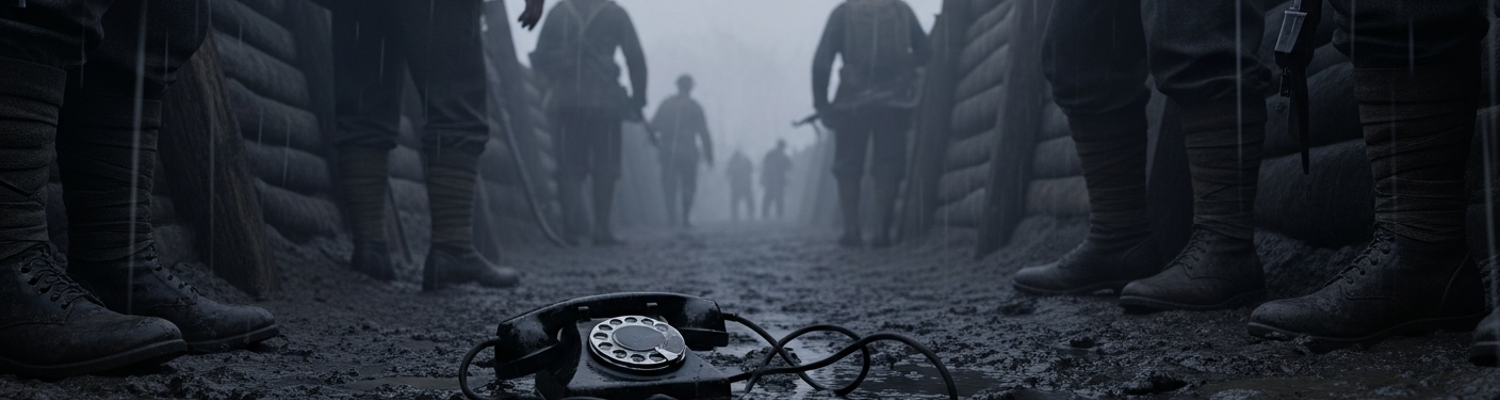

The American Expeditionary Forces were given ten days. Ten days to move hundreds of thousands of men and their equipment from the St. Mihiel salient to the new front for the Meuse-Argonne Offensive. The timeline, set by Allied high command, established a crisis before the first shots were fired on September 26, 1918. The offensive was the southern pincer of a massive effort to break the Western Front. Its objective was the capture of Sedan and the severing of the Carignan-Sedan-Mézières rail line. This railway was the primary supply artery for the majority of German armies in France. Its capture would force a large-scale withdrawal or surrender.
The German command understood the line's importance. They had spent four years turning the region into one of the most formidable defensive zones on the front. The terrain was a natural fortress of dense forests, steep ravines, and commanding heights along the Meuse River. Within this area, the German Fifth Army, under General Georg von der Marwitz, manned a defense-in-depth system of layered trench lines, concrete machine-gun pillboxes, and pre-sighted artillery positions. This was the final bastion of the Hindenburg Line.
The Signal Corps was tasked with providing the communication and intelligence functions for this million-man American force. The physical task of maintaining communications was a constant struggle. Signal Corps linemen were responsible for laying and maintaining thousands of miles of telephone and telegraph wire, often under direct artillery fire. A review of operational logs (NARA Record Group 120) shows these lines were the principal form of communication for division, brigade, and regimental headquarters. They were, however, exceptionally exposed. A single shell could sever communication between a frontline battalion and its artillery support. Repairing these breaks was perilous work, with linemen crawling through mud and shell craters, hunting for severed wires while exposed to machine-gun and sniper fire. Beyond wires, the Signal Corps also operated primitive radio sets, which were often unreliable and insecure, and managed the network of runners and carrier pigeons that served as a last resort. On the intelligence front, specialized Signal Corps units operated listening stations and goniometric direction-finders to intercept German radio traffic and pinpoint enemy command posts.
Yet the most actionable intelligence came from human sources. AEF G-2 (Intelligence) officers depended on the flow of information from prisoner of war interrogations, captured documents, and direct observation from infantry patrols. AEF intelligence regulations from October 1918 identify prisoners as one of the most productive sources of information. A captured German soldier could provide the name and strength of his unit, identify its boundaries, describe recent movements, and give an assessment of morale. The process was a race against time. A prisoner captured in a morning raid would be moved quickly to a divisional intelligence officer for questioning. Alongside prisoners, captured documents were invaluable. A letter, a diary, or a discarded field order could reveal enemy intentions or supply shortages. This raw data, once collected and analyzed by G-2, had to be disseminated to commanders. The Signal Corps was then tasked with transmitting these urgent summaries over the same exposed wire and radio networks, creating a cycle where a delay could render battlefield intelligence obsolete.
As the AEF massed for the offensive, a concurrent biological event was reaching its apex. The second wave of the 1918 influenza pandemic, a virulent H1N1 strain, swept through the crowded military camps. Its spread was explosive, facilitated by the troop movements and high-density staging areas. The virus exhibited a shocking lethality against healthy young adults. The packed barracks and transport trains moving soldiers into the muddy, confined spaces between the Argonne Forest and the Meuse River became incubators. Sickness rates during the autumn of 1918 were high, with some estimates suggesting that 20 to 40 percent of all U.S. Army and Navy personnel became ill. The onset was rapid. A soldier could be healthy in the morning and by evening be prostrated by high fever and a cough signaling severe pneumonia. Medical records from the period show that hospitals were quickly overwhelmed. During the Meuse-Argonne campaign, the AEF chief surgeon reported that influenza was epidemic in all sectors.
This pattern of infection was a defining feature of the 1918 pandemic. The AEF was an army of men in their physical prime, the exact demographic the virus attacked most aggressively. Modern analysis suggests the virus triggered a cytokine storm, an overreaction of the body’s own immune system, which is strongest in healthy young adults. This immune response became a liability, causing severe inflammation in the lungs that led to rapid respiratory failure. The mortality rate for those aged 15 to 34 was twenty times higher than in previous flu seasons. Within the AEF, entire platoons were rendered non-effective almost overnight. During the war, influenza and its subsequent pneumonia killed more American soldiers and sailors than all enemy weapons combined. About 45,000 American soldiers died from influenza, a figure that rivals the 26,277 combat deaths of the Meuse-Argonne offensive.
The incapacitation of the Signal Corps created an intelligence blackout. The Corps’ Radio Intelligence Section, small and highly specialized, was responsible for intercepting German radio communications from listening posts near the front lines. These teams, numbering only around 500 men across the entire AEF, were tasked with radio direction finding, traffic analysis, and decryption. When influenza struck these technically proficient soldiers, it removed irreplaceable skills from the battlefield. Archival evidence shows that signal intelligence units were already stretched thin. The sudden loss of trained operators to the flu meant that listening stations went silent. German radio messages went unheard. This loss of signal intelligence directly impacted the AEF’s ability to conduct effective counter-battery fire and to anticipate German counter-attacks.
The machinery for processing human intelligence (HUMINT) ground to a near-halt. A core component of the G-2 intelligence cycle depended on the swift interrogation of captured German soldiers. This was a systematic process. Prisoners were sent back to regimental and then divisional collection points. From there, they were moved to larger Corps-level Prisoner of War Enclosures, such as the one at Rarecourt, for in-depth questioning by specialist intelligence officers. These interrogators were a scarce resource, often German-American soldiers or academics whose linguistic knowledge was irreplaceable. As the Meuse-Argonne offensive began, these enclosures became epicenters for the Spanish Flu. The virus found a perfect breeding ground in the crowded stockades. The result was a dual problem: the German prisoners were too sick to be questioned, and the AEF intelligence officers tasked with debriefing them were themselves incapacitated. The flow of tactical information, including unit identifications and counter-attack plans, dwindled.
This breakdown extended to clandestine operations. The AEF’s Corps of Intelligence Police (CIP) was tasked with running agents behind German lines and debriefing civilians and refugees. These sources provided a more strategic layer of information concerning supply depots and troop rotations far behind the front. The pandemic crippled this network. AEF medical records from the period show that specialist units like the CIP were not spared. Agents preparing for missions fell ill, forcing postponements. The experienced intelligence officers who debriefed returning assets were sidelined by the disease. An agent’s raw report was only as valuable as the analysis applied to it. With skilled debriefers out of action, the task fell to less experienced personnel. The quality of intelligence degraded, becoming vague and less actionable for commanders.
The direct operational consequence of this HUMINT failure was a lack of clarity regarding the German order of battle. American intelligence officers estimated that the German Fifth Army could rush nine new divisions to the front within three days of the initial attack. Tracking the arrival of these reserves was a primary function of prisoner interrogation and agent reporting. With both sources compromised, AEF G-2 sections were often operating with incomplete information. Divisions like the 79th, which had only been in France for seven weeks, were thrown against fortified German positions around Montfaucon with an incomplete picture of the enemy’s strength. The failure to identify the shifting of German reserves resulted in American units advancing into well-prepared counter-attacks. An analysis of after-action reports from October 1918 reveals instances of infantry battalions being struck by fresh, unidentified German units whose presence on the battlefield was a surprise. This intelligence gap forced commanders to rely more heavily on artillery barrages and frontal assaults, contributing to the offensive's high casualty rate.
The AEF's ability to command its army depended almost entirely on thousands of miles of telephone wire. Signal Corps linemen, often working under continuous artillery fire, were tasked with spooling out and maintaining these thin, rubber-insulated copper wires. Operational logs from October 1918 reveal that German artillery barrages were systematically aimed at communication chokepoints. A single shell burst frequently cut a frontline unit off completely. The