
Early 1968. Intelligence estimates from III Corps Tactical Zone painted a grim picture. People’s Army of Vietnam (PAVN) and Viet Cong main force regiments were massing in and around Phuoc Long province, threatening to overwhelm the thinly spread ARVN defenders. This buildup, a precursor to the Tet Offensive, stretched American logistical and command infrastructures to their breaking point. The 272nd Military Police Company was ordered directly into this volatile situation. They were a unit trained for security and law enforcement, not for front-line combat in the rugged highlands.
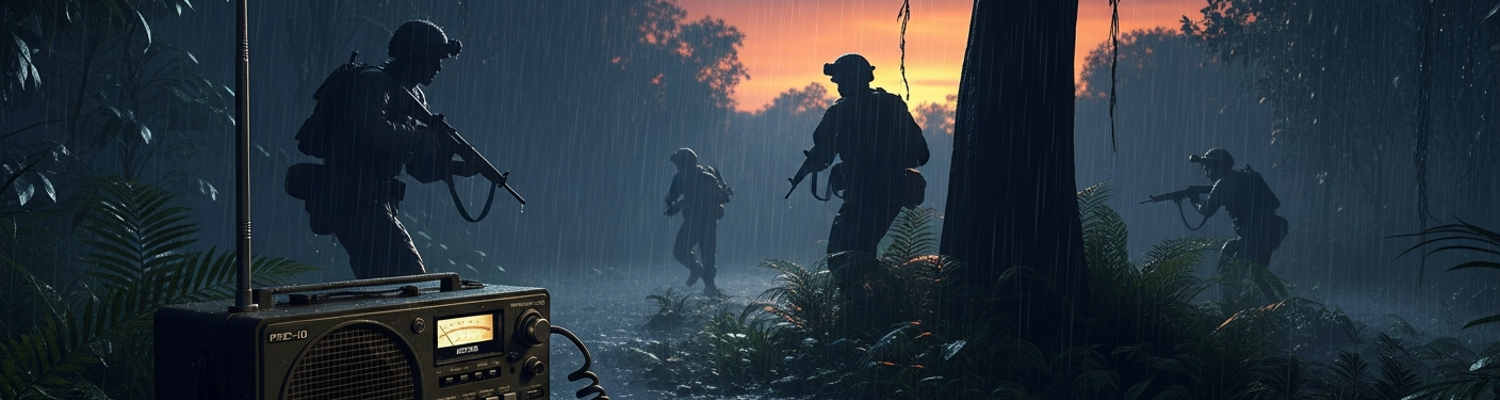
The order originated from the 18th Military Police Brigade headquarters. The 272nd was to deploy to the mountainous border region of Phuoc Long. Their mission was to secure a treacherous stretch of road through Echoing Pass, a chokepoint surrounded by dense jungle and soaring limestone karsts. This was not a standard MP assignment. It was an infantry mission, and the company was poorly equipped for it. Compounding the problem was a severe shortage of modern communications equipment. A close review of operational logs from the 18th MP Brigade (NARA Record Group 472) reveals an urgent requisition request. It was not for the newer, transistorized AN/PRC-25 radios. It was for pallets of the older AN/PRC-10.
These were relics.
The AN/PRC-10 was a vacuum-tube set from the Korean War era, weighing a burdensome 26 pounds with its harness and battery. It had been largely superseded by the PRC-25 by 1966. Depots in Long Binh and Da Nang, however, still held crates of them in various states of repair. The requisition was a stopgap measure born of desperation. The massive influx of combat units into III Corps had absorbed the entire theater supply of PRC-25s. For the 272nd, it was the PRC-10 or nothing. The radios arrived just hours before deployment, many still bearing depot maintenance tags. They were heavy and fragile. They were powered by the BA-279/U dry battery, a complex power source providing multiple voltages and known for its short operational life in the humid climate of Southeast Asia. The radio's 16 vacuum tubes were highly susceptible to damage from shock, a constant hazard in the rough terrain. The manual, continuously tunable frequency dial was far less precise than the crystal-controlled channel selectors of modern sets.
This technological step backward was set against the 272nd's deployment into the Phuoc Long mountains. The unit's authorized strength in 1968 was just 161 personnel. They were now responsible for a vital pass against a numerically superior and well-entrenched enemy. The terrain was an adversary as much as the PAVN. Triple-canopy jungle reduced visibility to a few meters. Steep, muddy slopes made movement exhausting. Monsoon rains were constant, threatening to flood positions and ruin sensitive equipment. The PRC-10, with its vacuum-tube circuitry, was particularly vulnerable to moisture. The men of the 272nd, trained for convoy escort and base security, were now isolated infantrymen.
The final, decisive factor was the communications environment. The AN/PRC-10 operated in the 38.0 to 54.9 MHz VHF band, a segment of the radio spectrum reserved for tactical ground forces. By 1968, this band was an electronic cacophony. Dozens of American and ARVN battalions operated in close proximity, all competing for a limited number of frequencies. The airwaves were hopelessly congested. Signal Operating Instructions changed daily, but the sheer volume of traffic made effective communication nearly impossible. A platoon from one battalion attempting to call its company headquarters would often find its transmission drowned out by the traffic of an adjacent artillery battery. The PRC-10's less-selective receiver was particularly prone to this interference. American commanders had long underestimated the enemy’s signals intelligence capabilities. PAVN and Viet Cong units were known to possess captured American radios. They were adept at monitoring unsecured FM transmissions for tactical intelligence. The men of the 272nd MP Company, isolated in Echoing Pass with their antiquated radios and speaking in the clear on a chaotic party line, were broadcasting their every move into the jungle.
American command consistently held an incorrect assumption about PAVN signals intelligence. They believed it was primitive. Declassified intelligence reports confirm that by 1968, PAVN intelligence units were a disciplined and effective apparatus. These teams, often part of specialized tactical reconnaissance battalions like the 47th, were outfitted with a combination of captured American equipment and adapted Soviet-bloc intercept gear. While captured PRC-25s were prized, PAVN SIGINT platoons also relied heavily on rugged Soviet and Chinese equipment. Post-war analysis of captured material (NARA RG 472, Captured Materiel Technical Reports, 1970-1972) reveals the common use of Chinese R-139 receivers. Even commercially available Sony or Panasonic radios were modified to monitor the U.S. tactical VHF band. These sets were paired with directional antennas, often simple long-wires strung high in the jungle canopy, connected to concealed underground bunkers packed with radio equipment. The NVA demonstrated a high degree of technical proficiency, modifying their gear for jungle warfare, powering it with captured batteries, and training operators to be fluent in the nuances of American radio chatter and slang.
They were listening from above.
Archival evidence shows that PAVN intelligence took full advantage of dominant terrain features for signals interception. In Phuoc Long province, the ideal location was Nui Ba Ra, a mountain that offered a commanding view of the entire operational area, including the chokepoint of Echoing Pass. At an elevation of over 900 meters, Nui Ba Ra provided NVA intercept teams with a perfect line-of-sight antenna platform. It allowed them to monitor low-power VHF transmissions from dozens of kilometers away. During the war, the mountain was a constant point of contention, with both sides controlling different parts of it at various times. While U.S. forces maintained a communications relay station on the peak, PAVN and Viet Cong forces controlled the labyrinth of caves and tunnels that honeycombed its slopes. It was from within these concealed positions that SIGINT teams operated. Their antennas were camouflaged among the dense foliage. These were not temporary outposts; they were hardened operational centers, allowing teams to listen to American radio traffic around the clock, safe from all but the most determined ground assaults. The strategic value of the mountain was undeniable, serving as a permanent and secure base for gathering intelligence on all American and ARVN activity in the region.
The unencrypted, predictable chatter from the 272nd MP Company's antiquated AN/PRC-10 radios was a source of high-value tactical information. The American belief that the speed of their operations would render any intercepted intelligence useless was a flawed assumption. NVA logbooks captured later in the war prove that operators were meticulously recording and analyzing everything they heard. Operating in the 38.0 to 54.9 MHz band, the PRC-10s broadcast every call in the clear. The sheer volume of traffic from different units created a chaotic environment where lax radio discipline became the norm. NVA listeners became experts at traffic analysis. They quickly identified call signs, mapped the 272nd’s company and platoon structure, and learned the rhythms of their daily operations. Idle chatter between radio operators about resupply schedules, patrol routes, ammunition status, and the timing of meal breaks was logged and exploited. On several occasions, PAVN forces were even able to communicate directly on Allied radio nets, calling in friendly artillery or air strikes on American units. For the isolated MPs in Echoing Pass, this meant their enemy knew their plans, their strength, and their vulnerabilities before they even left their positions.
A close review of operational logs from the 272nd Military Police Company reveals a patrol scheme for Echoing Pass that was, on paper, designed to be unpredictable. Platoon-sized elements were to conduct sweeps on a staggered schedule. They utilized a combination of vehicle-mounted and dismounted patrols along different segments of Highway 14 and the treacherous hills overlooking it. The core assumption was that this variation would prevent PAVN forces from anticipating their movements.
This assumption was disastrously wrong.
The unencrypted and constant radio traffic generated by the company’s PRC-10s provided an open window into their operational rhythm. From their high-altitude listening posts on Nui Ba Ra, signals intelligence teams of the PAVN 47th Technical Reconnaissance Battalion patiently logged every transmission. Over weeks of analysis, the seemingly random patrol schedule revealed its underlying patterns. NVA analysts identified the call signs for each MP platoon, noted the timing of their departures from firebases, and tracked their progress reports. The very procedures meant to ensure safety, such as radio checks every thirty minutes, reports on reaching phase lines, and updates on ammunition and fuel status, created a detailed, audible map of American activity. The staggered routes were, in fact, limited by the terrain and the mission requirements. This larger logic became obvious through sustained traffic analysis. The NVA did not need to break a code. They simply had to listen to the constant, clear-text chatter and plot the data points on a map until the 272nd’s entire operational playbook was laid bare.
The illusion of security was total.
American commanders in the region operated under the belief that terrain masking would protect their low-power VHF radio transmissions. The deep valleys and limestone karsts surrounding Echoing Pass were expected to block and scatter the signals from the man-portable PRC-10s, creating a natural shield against interception. This was a fundamental misunderstanding of radio physics when faced with a well-positioned enemy. The PAVN intercept teams on Nui Ba Ra were not on the same ground level as the MPs. They were positioned nearly a thousand meters above the valley floor. This elevation gave them a direct, unobstructed line-of-sight to the American patrols below. Signals that were too weak to bend over a hill and reach a friendly company command post just a few kilometers away traveled perfectly upward to the enemy’s receivers. The very terrain features that the 272nd believed were providing cover were in fact acting as a funnel, channeling their vulnerable transmissions directly to the enemy’s antennas. Because the communications were entirely in the clear, every word spoken into a PRC-10 handset was perfectly intelligible to the NVA listeners.
This detailed intelligence picture allowed PAVN forces to move from passive listening to active operational planning. The most significant vulnerability they identified was the scheduled movement of civilian evacuation columns along Highway 14. These convoys, often consisting of dozens of trucks and buses filled with refugees fleeing the conflict zones, required heavy security details from the 272nd MP Company. The coordination for these escorts was conducted over the same compromised radio nets. Captured PAVN logbooks show their intercept operators noting the specific timings for convoy assembly, departure from designated grid squares, and the call signs of the MP platoons assigned to lead and rear security. By correlating this information with their already-complete map of patrol schedules, PAVN commanders could calculate with precision the exact moments when the 272nd’s combat power would be most thinly dispersed along the pass. They knew which sectors would have reduced patrol coverage and for how long. The civilian convoys, intended as a humanitarian effort, became a predictable indicator of tactical weakness, providing the PAVN with a clearly defined window of opportunity to mass their forces for an assault.
Based on weeks of intercepted radio traffic, the commander of the PAVN battalion tasked with the assault had a complete operational picture of the 272nd MP Company’s movements. Archival analysis of captured PAVN documents shows their ambush doctrine was flexible. For an attack on a road-bound target like a convoy, the preferred method was the L-shaped ambush. On Highway 14, this involved positioning the main body of the attacking force parallel to the road, concealed in dense vegetation on the high ground. This element, consisting of multiple machine-gun nests and dozens of infantry armed with AK-47s, would form the long leg of the L. A smaller, more heavily armed blocking force would be positioned perpendicular to the road at the far end of the kill zone, often centered on a sharp curve or narrow bridge that would slow the convoy. This blocking element was typically equipped with B-40 rocket-propelled grenades (RPGs) and command-detonated mines designed to stop the lead vehicles and trap the entire column. For the Echoing Pass ambush, PAVN sappers spent two nights carefully concealing directional mines along the shoulder of Highway 14, with wires running back to a concealed firing position. The main assault element moved into position hours before dawn, achieving complete surprise.
The ambush was initiated with precision.
The target was not the head of the column, where the MP gun jeeps were strongest, but the vulnerable center. This section contained the bulk of the civilian evacuees, packed into unmodified commercial buses and thin-skinned cargo trucks. The PAVN intelligence profile had identified this as the convoy’s softest point, where an attack would sow maximum chaos and draw the MP escort elements away from their mutually supporting positions. The ambush began when the lead bus entered the designated kill zone. The command-detonated mines were fired, shredding the front tires of the bus and a following 2.5-ton truck, bringing the middle of the convoy to a dead stop. Simultaneously, the blocking element fired a volley of B-40 rockets, destroying the lead MP jeep of the center escort group. From the high ground, a storm of machine-gun and rifle fire swept the length of the trapped vehicles. The specific targeting of civilian buses was a known PAVN tactic, designed to break morale and bog down escorting forces in rescue efforts under fire. Panic erupted as civilians attempted to flee the vehicles, only to be caught in the interlocking fields of fire from the long leg of the PAVN ambush line.
An MP platoon at the rear of the convoy was the first to react, attempting to push forward into the kill zone. They were immediately cut off. A secondary PAVN force, positioned specifically to isolate any counter-attack, engaged the platoon from a flanking position. The platoon leader’s attempts to coordinate a response were crippled by his equipment. His PRC-10 radio, weighing over 25 pounds with its BA-279/U battery, could not establish a clear signal to the company commander. A review of the radio’s technical specifications reveals a vacuum-tube design with a manually tuned frequency dial, highly susceptible to signal drift and interference from the jungle terrain and the sheer volume of other radio traffic. As the platoon leader tried to call for artillery support, his transmissions were drowned out by the noise and the overlapping chatter on the congested net. His broadcasts were ineffective. The platoon was pinned down, its radioman struggling to maintain a connection while swapping out the notoriously short-lived batteries. The men were forced to fight as isolated individuals, their primary tool for command and control rendered useless by a combination of antiquated technology and sophisticated enemy planning.
The collapse of security in Echoing Pass sent an immediate shockwave through the III Corps command structure. Heavy casualties among the civilian evacuees and their 272nd MP Company escorts created a public relations and operational crisis that could not be ignored. After-action reports document a scene of total devastation. Burned-out buses and trucks littered Highway 14, effectively blocking the artery. The evacuation effort was not merely stalled; it was shattered. The PAVN assault, by deliberately targeting the civilian vehicles in the convoy’s center, had maximized the chaos and forced the surviving military police into a desperate, localized fight for survival, completely disrupting their ability to function as a cohesive unit. For hours, the only priority was the extraction of the wounded under fire, a task made nearly impossible by the enemy’s control of the high ground overlooking the kill zone.
This was a tactical disaster demanding a strategic response.
The initial calls for support from the ambushed convoy were lost in the electronic chaos of the PRC-10 radio net, but as the scale of the attack became clear, a frantic diversion of combat assets began. A review of operational logs from II Field Force, Vietnam, shows that the nearest available reaction force was a mechanized infantry battalion of the 1st Infantry Division. This unit was, at that moment, engaged in screening operations along the Cambodian border as part of Operation Quyet Thang, a massive multi-division effort to pacify the provinces surrounding Saigon following the initial Tet Offensive. The battalion was ordered to disengage from its primary mission of interdicting PAVN infiltration and force-march toward Echoing Pass. This decision, born of necessity, pulled a significant combat element away from a critical sector.
The ripple effect was immediate. The diversion also demanded air assets. Helicopter gunships and medevac choppers from the 1st Cavalry Division were retasked, pulling them from scheduled combat assaults planned further north. A company from the Army of the Republic of Vietnam (ARVN) 5th Division, which had been providing flank security for American units participating in Quyet Thang, was also redirected to approach the ambush site from the south. Each of these diversions represented a hole punched in the broader operational screen. The PAVN had not just mauled a convoy; they had forced the allied command to react, pulling vital pieces off the strategic chessboard and concentrating them on a single, bloody square on the map.
This concentration of force to address the Echoing Pass crisis directly undermined the larger interdiction campaign against North Vietnamese infiltration routes. Operation Quyet Thang, which began on March 11, 1968, was designed specifically to find and destroy the numerous Viet Cong and PAVN battalions that remained a threat to Saigon after the initial Tet attacks were repulsed. The operation involved nearly every major American and ARVN unit in III Corps, including the 1st, 9th, and 25th Infantry Divisions, the 11th Armored Cavalry Regiment, and multiple ARVN divisions. The core objective was to sweep the areas north and west of the capital, preventing the very kind of enemy troop movements that supplied attacks like the one in the pass. By pulling a 1st Infantry Division mechanized battalion and its supporting elements from this mission, a significant gap was opened in the operational screen north of Saigon. Enemy units that were being actively hunted now had breathing room. The official PAVN history of this period notes that Operation Quyet Thang and its successor, Toan Thang, caused a great many difficulties for their units trying to approach their targets for the planned May 'Mini-Tet' Offensive. The diversion of assets from this screening operation, even for a 24 to 48-hour period, relieved some of that pressure, allowing enemy forces to reposition and resupply.