
Admiralty Radio Silence and Postwar Fleet Mandates
Headphones clamped over the young telegraphist ears hissed into total silence as the high frequency radio link between our offshore clearance detachment and the British Admiralty failed. Salt spray had penetrated the radio shack antenna lead during the rough morning transit, severing communication with the International Central Mine Clearance Board operating out of Whitehall. London held the central master charts and tactical directives, yet no fresh orders could reach our detachment through the thick sea fog covering the Dover Strait. Radiomen worked frantically with spare fuses and dry rags to coax a signal from the dead receiver, but only dull crackles came through the speaker. Command authority settled entirely upon our small group of sweepers rocking in the tidal swell, forcing us to make immediate operational choices on our own. Logbooks spread across the damp chart table showed our flotilla drifting near the northern approaches to the narrows, where inbound cargo vessels were already queuing up for safe passage.
Freighters waiting at the boundary of the channel depended entirely on the North European and Mediterranean Route Instructions framework to steer clear of uncharted minefields. Navigation charts issued under this international agreement laid out narrow commercial corridors that allied sweepers had to clear and mark with buoys before deep draft traffic could deliver food and fuel to European cities. Maintenance of these vital shipping corridors had fallen dangerously behind schedule because the International Central Mine Clearance Board in London was locked in bitter diplomatic paralysis throughout 1947. Soviet delegates on the board repeatedly blocked revisions to sweeping boundaries and refused to share technical clearance data with British, American, and French officers. Western representatives could not break the deadlock around the Whitehall conference table, and their administrative standoff froze all official updates to the regional route orders. Political gridlock hundreds of miles away meant nothing to civilian captains waiting in the fog, leaving our frontline detachment to keep the international shipping lanes open by our own initiative.
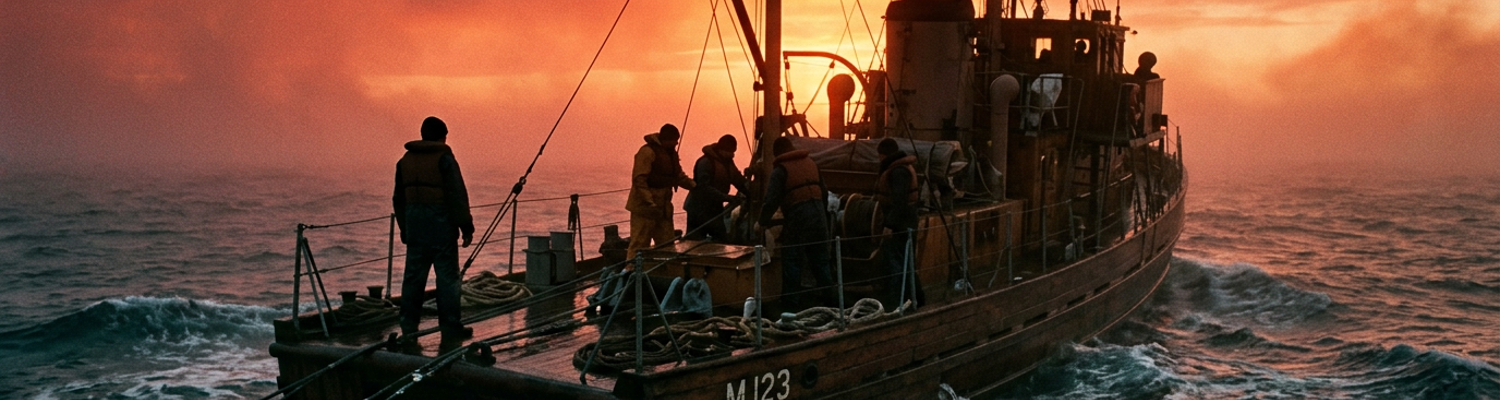
Sweepers in our formation turned their bows toward the designated commercial corridor and began deploying mechanical sweep gear into the chop. Steam winches rumbled on the stern decks as sailors fed out heavy serrated wire into the green tide without waiting for delayed Whitehall authorizations. Strained cables shrieked against the iron fairleads as the sweep paravanes plunged beneath the surface, dragging the cutting jaws down to their assigned operating depth. Deckhands braced their boots against the wet deck plates, listening intently for the sharp metallic snap of severed mine moorings. Diesel fumes hung heavy in the damp air as our engines held steady revolutions, keeping the ships spaced evenly across the swept channel. Tension mounted with every yard of water we crossed, because wartime magnetic, acoustic, and moored contact mines still lay scattered across the seabed beneath our hulls.
Lookouts stationed along the open bridge wings scanned the sea mist for dark floating spheres released by our cutting wires. Gunners stood ready beside the light deck guns with orders to detonate any horned mine that bobbed to the surface before it could drift into the freighter lanes. Shuddering vibrations from distant accidental underwater explosions rippled through our steel hulls, reminding everyone on watch how quickly a stray current could push a drifting explosive into our path. Helmets and cork life jackets felt heavy on our shoulders as we navigated purely by dead reckoning, magnetic compass bearings, and lead line soundings in the blinding fog. Navigators plotted our track inch by inch across paper charts, calculating tidal sets while listening for the blast of approaching merchant sirens. Bridge officers kept their hands near the engine telegraphs, ready to reverse the screws the instant an unswept mine broke through the foam ahead.
Rigging Oropesa Sweeps in North Sea Fog
Telegraph levers clattered against their brass stops to hold our sweeper at a steady four knots while the aft deck party deployed the Oropesa sweep gear. Enlisted seamen swung the massive steel kite over the stern bulwarks, letting the heavy frame plunge into the wake to force the tow line down beneath the surface chop. Riggers then swung the multi ton otter board out on the boom davit, releasing the angled hydrofoil into the green sea to drag the entire mechanical sweep sideways away from the ship path. Steel sweep wire fed through the stern blocks under rising tension as crewmen clamped pairs of serrated wire cutters at fixed intervals along the line. These heavy cutting jaws trailed through the water column with hardened steel edges, ready to catch and sever the thick mooring cables of submerged naval mines. The red Oropesa surface float splashed into the foam last, bobbing through the grey swell to mark the outer flank of our spread gear.
Steel sweep wire ground against the iron fairleads with harsh screeching as the full hydrodynamic pull of the otter board hauled the cable taut. Enlisted deck crews fought the severe grinding of salt abrasion and friction along the winch drums as hundreds of fathoms of wire unspooled into the current. Seamen shoveled coarse sand across the wet deck plates to maintain footing on the grease smeared iron while applying tallow to the revolving rollers. Damp channel fog swallowed the horizon within yards of our counter, hiding the surface float completely and leaving the winch brake operators to judge line tension entirely by the high pitched vibration of the cable. Broken strands of wire, peeled back by severe friction, tore at the sailors heavy leather mittens and shredded canvas work coats. Winchmen kept their bodies low against the deck coaming to stay clear of the lethal recoil path if the high tension steel cable snapped under the strain. Petty officers monitored the brake drums with hand levers raised, prepared to pay out slack the moment an underwater obstruction snagged the sweep.
Sandbanks along the Dover maritime approaches threatened that exact disaster as the variable shoal contours rose abruptly beneath our hulls. Navigators called out rapid changes in water depth from the sounding machine, forcing our deck team to alter the depth regulation settings on the Oropesa kites. Sailors adjusted the towing pennants and set the angle plates on the kites to raise the sweep line clear of the submerged sand ridges. Sweeping too deep would drive the multi ton otters into the hard sand and rip the towing winches from their deck mounts. Sweeping too shallow would permit moored mine cases to float untouched beneath the serrated cutters, leaving the explosive spheres anchored in the commercial fairway. Bridge officers consulted the tidal tables every ten minutes, adjusting ship heading to counter the cross channel rip that pushed our gear toward the shallows.
Helmsmen spun their spoked steering wheels against the tidal push while deck crews heaved on the winch brakes to reset the towing wire length. Enlisted men cranked the steel drum ratchets by hand through dense fog, hauling the vibrating wire inboard to shorten the sweep radius around the shoal edge. Cold sea water sluiced across the deck plates as the multi ton otter planed steadily at its new regulated depth, keeping the serrated cutters tracking twenty feet above the seabed. Wire cutters closed cleanly over their first unseen target three hundred yards astern, releasing a dull jolt along the towing cable as a severed mooring parted. The severed contact mine bobbed into view through the grey mist, floating freely on the surface and confirming that our mechanical sweep was tracking true through the shipping channel.
Neutralizing Submerged German GY Contact Mines
Seamen on the stern rail tracked the dark steel casing as the German GY contact mine rolled sluggishly in our wake. Barnacles and brown channel weed encrusted the spherical mine, which carried five lead Hertz chemical horns across its upper hemisphere. German naval ordnance workshops had fitted each hollow lead horn with a sealed glass vial filled with potassium bichromate electrolyte positioned directly over carbon and zinc plates. Bending or crushing the soft lead casing against an iron hull fractured the glass ampoule, instantly flooding the dry battery cell and establishing a live galvanic circuit. An electrical charge surged through internal copper wiring into the central primer, detonating the main charge of three hundred and thirty pounds of cast hexanite inside the buoyant steel sphere.
Gunners rushed to their firing stations on the open bridge wings and stern deck to destroy the floating hazard before the tide carried it into the waiting merchant traffic. Deck watchstanders raised their bolt action Lee Enfield service rifles, aiming carefully through the swirling fog at the thin steel plating of the floating ball. Riflemen fired steady single rounds into the target, attempting to punch clean holes through the air chamber so seawater would flood the interior and sink the mine safely to the sea floor. Choppy coastal waves tossed the buoyant sphere wildly, deflecting solid rifle bullets off the curved iron skin and leaving the buoyant mine fully armed on the surface. Petty officers then ordered the gun layer on the stern twenty millimeter Oerlikon cannon to train his barrels onto the target. The gunner strapped his shoulders into the harness mounts and opened fire, sending bursts of explosive tracer shells across the vessel wake directly into the cluster of chemical horns.
Shells from the Oerlikon struck the base of a lead horn, shattering the internal glass vial and triggering an instant high order detonation three hundred yards astern. A column of black smoke and white foam rose eighty feet into the overcast sky as the blast wave expanded outward across the narrow channel. Confined coastal shallows amplified the underwater shock, driving an intense hydraulic shock wave through the water directly into our sweeper steel hull. Severe structural reverberations slammed upward through the keel plates with a loud metallic crash that threw deckhands flat against the wet iron grating. Engine room frames shuddered violently under the impact, knocking steam pressure gauges loose from their bulkheads and loosening pipe flanges along the auxiliary condenser lines. Helmsmen gripped their brass wheel spokes as the entire hull vibrated under the prolonged resonance, testing every welded seam and rivet in the ship bottom.
Engineers hurried through the lower compartments with battery lanterns to inspect the double bottom and ensure the underwater shock wave had not sprung any hull plates below the waterline. Bilge pumps hissed across the deck plates as mechanics tightened leaking valves, confirming that the framing remained watertight despite the severe concussion. Deck officers on the bridge verified our compass heading, realigning our position between the channel buoys as the steam winches pulled the Oropesa wire taut once more. Lookout teams rotated on the bridge wings, wiping salt crust from their binoculars to spot fresh wakes and drifting horns in the mist ahead. Winchmen kept their hands firmly on the brake levers, bracing for the next metallic jolt as our serrated sweep cutters dragged through the submerged minefield.
Generators and Magnetic Cable Sweeping
Deckhands locked the mechanical winch brakes and secured the cutting gear to prepare our sweeper for the heavier hazard resting silently on the channel floor. Riggers lowered the bow mounted Kango acoustic hammer into the sea on its steel gantry to target acoustic ground mines buried under feet of shifting silt. Electric power surged into the heavy casing, driving an internal steel striker repeatedly against a thick bronze diaphragm submerged beneath our stem. Rapid metallic clanging reverberated directly through our forward hull frames, sending harsh rhythmic vibrations through the iron deck plates and into the soles of the crew boots. This continuous underwater sound simulated the deep engine rumble of loaded merchant ships to trigger sensitive acoustic firing mechanisms hidden inside the seabed mud well ahead of our keel. Sonar ratings monitored the hydrophone sets with padded earphones, tracking the rhythmic pounding of the hammer while listening through the static for sudden changes in underwater pressure.
Electricians in the aft hold timed their work to that acoustic cadence, throwing the heavy knife switches to energize the buoyant magnetic sweep cables trailing hundreds of yards behind our stern. These buoyant rubber encased cables floated directly on the surface wake behind our counter, carrying high amperage direct current generated by auxiliary diesel dynamos running at maximum output. Heavy automated contactors snapped shut every few seconds on the generator flat, sending pulsed direct current surges of three thousand amperes through the twin conductor loops to project an intense magnetic field downward into the sea. That artificial magnetic field washed across the seabed contours to trick the magnetic dip needles inside delayed action German ground mines before any commercial freighter could pass over them. These complex bottom weapons carried internal clicker mechanisms and electrical delay clocks designed to count dozens of ship passes before arming their main firing pins, demanding hours of relentless pulsing across the narrow shipping fairway to neutralize every circuit. Engine room stokers braced their boots against the deck plates and gripped the handrails as the auxiliary diesels groaned under the brutal cyclic strain of the electrical surges.
Ground mines exploded three hundred yards astern when one of those pulsed electrical surges tripped an armed firing circuit in forty feet of water. The primary blast instantly triggered sympathetic seabed detonations among neighboring charges buried closely together in the hard sand of the commercial fairway. A violent wall of compressed water pushed upward from the shallow bottom, throwing a massive geyser of grey mud, ruptured metal, and foaming spray high into the morning mist. Severe hydraulic force lifted our wooden and composite hull entirely out of the water, slamming the timbers upward before dropping the ship back into the hollow trough of the channel swell. Heavy keel timbers groaned and caulking popped out from hull planking along the engine spaces as structural fastenings sheared under the violent vertical whip of the underwater shock. Helmsmen fought the fierce kick of the steering wheel to hold our line through the shipping channel, while carpenter mates ran below with pine plugs, wedges, and oakum to seal the weeping hull seams.
Whitehall Paralysis and Autonomous Channel Navigation
Carpenters drove pine wedges into the sprung frames along the bilge spaces while bridge officers confronted the sudden silence of our wireless receivers. Salt damp had ruined the antenna lead, cutting off centralized hydrographic broadcast updates from London and depriving our detachment of the daily notices to mariners issued by the Admiralty. That breakdown in communications meant our small flotilla had to chart shifting mine drift patterns independently, using grease pencils, lead line soundings, and estimated tidal sets to track where strong channel currents carried dislodged explosives. Navigators spread damp paper plots across the chart table, marking reported sightings from passing trawlers alongside our own dead reckoning calculations to guess where deep underwater surges were pushing loose contact spheres. Watchstanders logged every dark silhouette bobbing in the chop, noting wind shifts and water depths to recalculate the danger zones across the fairway. These handmade plotting sheets quickly replaced our official London routing guides, forcing the bridge team to predict mine movements by reading the surface chop and tidal rips as the sea dragged our sweepers closer to foreign waters.
Charts spread beside the ship compass revealed contested maritime boundaries and conflicting allied lane designations between British and French coastal jurisdictions. Navigational guidelines published in Whitehall routed inbound merchant convoys through coastal corridors that French maritime authorities had already declared hazardous and closed to commercial traffic. Neither government had resolved who held legal jurisdiction or operational control over the central channel fairways, leaving tactical officers with two sets of clashing coordinates for the same shallow shipping lanes. French patrol boats occasionally flashed challenge signals with directional lamps through the sea mist, warning our detachment away from their coastal boundaries while British merchant freighters blared foghorns as they steamed blindly along our wake. Helmsmen steered through these overlapping jurisdictions by manual compass bearings, constantly altering course to avoid running aground on unbuoyed shoals or fouling French fishing nets with our trailing wires. Crewmen on the open bridge watched both shorelines fade into the drizzle, knowing that any navigational error across these disputed borders could strand our vessels or guide an unsuspecting merchantman directly into live ordnance.
Commanders aboard our isolated sweepers executed self directed sweeps around unmapped wartime barrier fields without surface escorts to shield them from hidden explosives or approaching merchant ships. High command had withdrawn the fleet destroyers and armed motor launches weeks earlier, leaving our solitary division of wooden hulled vessels to probe dense defensive minefields laid in the early years of the war. Bridge lookouts scanned the grey swell for rusted contact horns and submerged mooring floats, knowing that no auxiliary radar or support vessel was present to warn us of drifting hazards. Winchmen kept their boots braced against the wet deck plates, ready to slip the towing brake the instant an uncharted deep water mine snagged the serrated wire cutters. Deck officers guided the formation forward through the cold fog at three knots, monitoring the hydrophone audio for the distinct scrape of mooring cables along our hull timbers. Helmsmen held their compass headings steady through the blinding spray as our lead ship crossed the outer perimeter of the unrecorded barrier.
Route Certification and Sweeper Casualties
Steel sweep wires hummed under brutal friction as our formation began the first of ten required verification passes across the contested fairway. Strict route certification standards under the North European and Mediterranean Route Instructions framework demanded this relentless repetition before any maritime lane could be declared safe for commercial merchant traffic. Navigators had to steer the flotilla across the exact same stretch of water ten to sixteen times, alternating between mechanical wire sweeps to sever moored mines and magnetic or acoustic sweeps to detonate ground weapons. Delayed action ship counters inside German seabed ordnance were engineered to let up to thirty vessels pass overhead before arming, making these exhaustive sweeps an absolute operational necessity. Watchstanders logged each completed pass in damp ledger books, knowing that declaring a route safe required independent check sweepers to retrace the entire lane without uncovering a single live contact.
Minesweepers sustained severe material losses and heavy crew casualties while executing these repetitive verification runs through volatile coastal waters. Wooden motor minesweepers and converted steel trawlers operating across the Dover Strait, the North Sea shoals, and French coastal approaches struck unmapped ordnance with horrifying regularity. Violent underwater detonations shattered wooden hulls, throwing watchstanders overboard into freezing swells and slamming engine room ratings against iron bulkheads with bone breaking force. Ruptured steam lines scalded stokers trapped below decks, while flying shrapnel and sheared rivets cut down deckhands hauling sweep gear at the stern. Hundreds of Allied seamen lost their lives or suffered disabling blast injuries in these coastal mine clearing zones during the two years following the end of hostilities.
Surgeons tended to fractured limbs and chemical burns in cramped sickbays while surviving sweep crews confronted the immense scope of the continent wide clearance effort. Allied minesweeping flotillas, working alongside surrendered German naval personnel organized into mine clearance units, eventually accounted for the neutralization of over five hundred thousand naval mines across postwar European waterways. Sweeping commands had to systematically search hundreds of thousands of square miles of ocean, from the Baltic coast and the English Channel to the Mediterranean and the Black Sea, to remove the explosive debris of six years of industrial warfare. Every single neutralized weapon represented hours of nerve shattering mechanical passes, dangerous explosive counter mining, or hazardous rifle fire to explode floating contact spheres before they could drift into merchant traffic. Crews endured months of constant hull vibrations, deafening near miss concussions, and relentless fog to eliminate this submerged hazard and reopen international trade routes.
Winchmen heaved on the stern tackle to bring our sweeper around for the final certification run through the Dover fairway. Deck officers checked the compass alignment against the coastal shoals, logging our tenth clean sweep through the designated shipping channel. Riggers prepared the red marker buoys on the open quarterdeck, securing heavy concrete sinkers and wire moorings to mark the certified boundaries of the swept corridor. Helmsmen held the rudder steady as the lead ship dropped the final channel marker into the foaming wake, confirming that the fairway was now open for incoming merchant convoys.