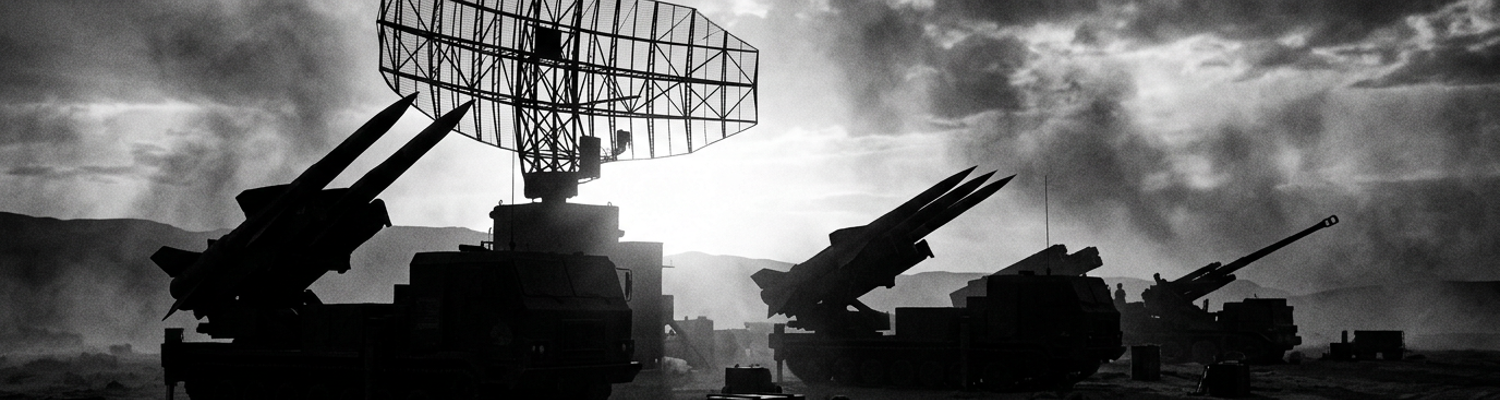

BQM-74C Drone Preparations Near Arar
Staff Sergeant Daniel Evans wiped kerosene and grit from a stripped retaining pin beneath the wing root of drone serial number 89-0412. Red lens flashlights illuminated the aluminum casing of the Williams International J400-WR-404 turbojet engine. Desert wind drove fine quartz dust into exposed hydraulic fittings. Temperatures had plunged toward freezing across the northern Saudi plateau. This stiffened rubber gaskets and caused thread lock to cure prematurely on the zero-length launcher pins. Evans worked bare-handed against the cold steel to thread a locking wire through the exhaust fairing. A torque wrench slipped across an anchor bolt. It sliced his knuckle to the bone.
Silica dust fouled three pneumatic igniters before technicians could finish pre-flight electrical checks.
A close review of operational logs indicates that ground crews assigned to the 4468th Tactical Reconnaissance Group spent forty-eight hours establishing improvised launch complexes twelve miles south of the border outpost at Arar. Without fixed runways or reinforced concrete pads, personnel anchored steel-beam launch rails directly into compacted desert scrub using cross-driven ground spikes. Flatbed transports hauled dozens of Northrop BQM-74C Chukars across unpaved tracks from supply depots at King Khalid Military City (NARA Record Group 338). Each airframe was fitted with solid-propellant MK 53 rocket-assisted takeoff boosters. Mechanics assembled wings, horizontal stabilizers, and booster rings in open revetments protected only by desert camouflage netting. Launch crews calibrated directional gyros by hand while diesel generators sputtered against the cold air.
The modification process required specific technical adjustments.
Archival evidence shows that mobile technical teams modified the Chukars specifically to simulate the radar cross-sections of inbound coalition strike aircraft. The standard BQM-74C presented an authentic radar signature of less than 0.1 square meters. This is roughly equivalent to a small seabird. Technicians retrofitted each airframe with internal Luneburg lenses. These dielectric spheres bent and reflected incoming electromagnetic energy straight back to source emitters. Crews spliced active radio-frequency amplifiers and traveling-wave tube repeaters into the nose cones and internal ballast cavities. These active electronics picked up scanning pulses from Soviet-built Iraqi acquisition systems and broadcast amplified return spikes along identical azimuths. When ground radar pulses struck the small drone, the electronic reflection appeared to tracking stations as a fully loaded F-15E Strike Eagle or an F-4G Wild Weasel carrying heavy ordnance.
Operational flight planners scheduled these drone waves to cross into Iraqi airspace precisely twenty minutes ahead of the main allied strike packages. Tactical commanders designed the timing to saturate the automated French-built Kari air defense network. Sector Operations Center 2 located near western air bases was the primary target. When the drone swarm broke across the border at 400 knots, Iraqi radar tracking screens lit up with dozens of apparent attack formations converging on Baghdad and surrounding airfields. Radar operators at missile batteries switched on Spoon Rest and Flat Face target-acquisition emitters to guide surface-to-air missiles against non-existent cockpits. Iraqi crews burned through their primary frequency allocations. This exposed their radar positions to trailing F-4G Wild Weasel crews carrying AGM-88 High-speed Anti-Radiation Missiles. They depleted ready racks of SA-2 and SA-3 interceptors before any piloted coalition aircraft entered weapons range.
The battery at Mudaysis fired four missiles into empty sand dunes.
Radar Baiting and Integrated Air Suppression
A close review of operational logs indicates that precisely at 0300 local time on January 17, 1991, thirty-seven BQM-74C drones and tactical air-launched decoys crossed the border berms into the southern and western air defense sectors of Iraq. Inside the hardened command bunker of Sector Operations Center 2 at H-3 air base, automated consoles interpreted the swarm as three full wings of low-altitude coalition strike aircraft bearing down on western ballistic missile sites and airfields. Standard doctrine formulated by the Iraqi Air Defense Command required operators to maintain strict emission control until an attack was confirmed within lethal range. Confronted by dozens of synthetic radar returns displaying velocities of 400 knots, console supervisors issued immediate override commands. Orders went out over landlines to break radar silence across the perimeter.
Within minutes, Soviet-built P-12 Spoon Rest and P-15 Flat Face acquisition radars flared to life from al-Qaim to Salman.
Their rotating antennas radiated high-frequency electromagnetic pulses across the desert floor. Fire control crews engaged their targeted tracking systems. They spooled up Fan Song guidance arrays for SA-2 missile batteries and Low Blow tracking radars for SA-3 sites. By illuminating the night sky with active radio frequencies, these crews exposed every concealed battery position across both sectors to electronic surveillance. Orbiting F-4G Wild Weasels of the 35th Tactical Fighter Wing and naval strike aircraft were loitering just beyond the Iraqi detection horizon. Their APR-47 electronic warfare systems cataloged each emitter the exact microsecond it began broadcasting. Weapons officers in the rear seats of the F-4Gs fed target coordinates directly into the guidance computers of AGM-88 High-speed Anti-Radiation Missiles mounted on underwing pylons.
Once released, the rocket motors pushed the two-ton missiles past Mach 2 within seconds of ignition. Each AGM-88 adjusted its solid-state control surfaces to follow the incoming radio-frequency beams directly into the Iraqi transmitter horns. Over sixty missiles impacted Iraqi radar installations in the first twenty minutes of the engagement. Fragmentation warheads detonated against parabolic dish reflectors. The blasts shredded vacuum-tube circuitry inside mobile control vans and severed main antenna masts. Even when operators scrambled to execute emergency shut-down sequences, the passive memory circuits inside late-model HARMs guided the warheads down onto the last recorded coordinates of the emitter trailers.
Iraqi radar consoles suddenly went blank.
When examining the historical record, this saturation tactic successfully masked genuine coalition attack corridors entering Iraqi airspace from Saudi Arabia and the Persian Gulf. Behind the expendable decoys and the shock wave of anti-radiation ordnance, eight discrete ingress routes opened through the disrupted air defense perimeter. Heavy formations of F-15E Strike Eagles, British Tornado GR1s, and American A-6E Intruders navigated these corridors at altitudes under three hundred feet. They flew without detection past silent missile sites that had either exhausted their ready munitions on unmanned targets or lost their fire-control radars entirely. Stripped of early warning feeds, the automated KARI air defense network collapsed into localized confusion. Regional command nodes lost the capacity to correlate tracking plots. This left centralized operations centers blind to the real strike packages sweeping toward leadership bunkers, ministry headquarters, and telecommunications nodes.
Command Datalink Latency and Flight Path Drift
A close review of operational logs indicates that severe datalink latency disrupted communications between the mobile ground launch vans of the 4468th Tactical Reconnaissance Group and the orbiting E-3A Sentry airborne early warning aircraft. Operating out of air-conditioned shelters mounted on five-ton trucks south of Arar, technicians attempted to relay telemetry updates to AWACS controllers. They used directional ultra-high-frequency antennas and encrypted KY-58 audio links. Atmospheric thermal inversions over the cold desert floor scrambled the digital handshakes between ground equipment and the radar processing racks of the aircraft. Every digital packet sent between the desert floor and the radar plane had to pass through multiple analog-to-digital signal converters. This created a persistent processing buffer that choked data transfer speeds.
Data packets crawled across the network with delays reaching up to four full minutes.
Ground crews tracking the launches on cathode-ray monitors watched drone positional updates freeze. Aircraft controllers fifty miles away observed ghost tracks offset by several kilometers. The radar consoles inside the Boeing E-3A struggled under the raw volume of targets. Mission specialists simultaneously tracked frontline strike packages, combat air patrols, and dozens of synthetic decoy signatures across western Iraq. Archival evidence shows that these prolonged command-and-control communication delays allowed several unmonitored drones to drift off planned flight corridors.
The Northrop BQM-74C relied on internal directional gyroscopes and fixed-program logic cards to maintain its course when remote radio-control guidance dropped. Without active command corrections from the ground stations near Arar, the lightweight airframes had no mechanism to calculate real-time wind drift. Strong crosswinds sweeping out of the southwest at fifty knots pushed the small jet-powered drones northward faster than their mechanical flight computers could compensate. Because the AWACS crews were working with heavily delayed positional data, flight controllers did not see the deviations as they happened.
By the time an orbital track update rendered on the screen inside the radar cabin, the physical drones were already fifteen miles north of their assigned corridors. Ground operators attempting to send emergency pitch and yaw override commands found their UHF transmitter frequencies jammed by signal reflection off the desert floor. Four Chukars completely missed their scheduled dogleg turn toward the Iraqi radar stations at H-3. The errant flight trajectories carried target drones directly toward sovereign Jordanian airspace.
King Hussein had declared neutrality in the conflict. He warned Washington and Baghdad that any unapproved military aircraft entering Jordanian skies would be engaged immediately by national air defenses. Running at full throttle with their J400 turbojets burning JP-4 fuel, the rogue decoys followed unintended vector headings that pointed northwest across the tri-border desert expanse. The active Luneburg lenses inside the noses of the drones beamed massive synthetic radar signatures. This made each sixteen-foot drone look like a multi-ship strike package of F-15E Strike Eagles to border sensors. Jordanian air defense commanders at the Royal Jordanian Air Force operations center in Amman picked up the incoming radar contacts near the border town of Ruwaished.
Diplomatic Friction and Sovereign Airspace Alarms
A close review of operational logs indicates that at 0314 local time, perimeter search antennas across eastern Jordan began painting multiple high-speed targets scraping across the border buffer zone near Ruwaished. Operating from hardened revetments at Mafraq and Safawi, radar crews with the Royal Jordanian Air Defense Directorate watched three distinct electronic returns emerge from the low-clutter bands of their AN/FPS-117 three-dimensional sensor arrays. Flying at less than four hundred feet above the basalt plains, these small contacts mirrored the velocity and elevation profiles of penetrating low-level attack jets.
The active Luneburg lenses mounted inside the BQM-74C airframes artificially boosted their radar reflectivity by thirty decibels.
The returns registered on the consoles as heavy combat aircraft carrying external stores rather than sixty-pound reconnaissance decoys. The unexpected vector track crossed right through the established twenty-kilometer demilitarized buffer separating Jordanian, Saudi, and Iraqi territory. Jordanian sector supervisors immediately placed two MIM-23B Hawk batteries at the 5th Air Defense Brigade on launch alert. They spun up continuous-wave illuminators to lock onto the inbound tracks before they could penetrate deeper into sovereign airspace. Target acquisition alarms sounded across four separate missile sites along the Zarqa defensive line.
Archival evidence shows that rapid-response communications flashed between the National Military Command Center of the Pentagon and the American embassy compound in Amman within eight minutes of the initial tracking anomaly. Defense Department officials recognized that Jordanian interceptors or surface-to-air missile batteries firing upon the decoys risked drawing Amman into direct kinetic confrontation with coalition forces. Under-Secretary of State for Political Affairs Robert Kimmitt coordinated with the State Department operations center to secure a direct encrypted audio link to the Royal Palace and the Jordanian Armed Forces General Headquarters. American defense attaches delivered urgent operational advisories confirming that the radar blips tracking across the desert were unarmed Northrop Chukars diverted by wind drift.
They were not manned strike aircraft targeting Jordanian ground positions.
Pentagon liaison officers passed precise transponder interrogation codes and altitude ceilings to Jordanian air force controllers. They attempted to deconflict the errant drone routes from scheduled Jordanian fighter patrol tracks over the Azraq basin. Technical teams scrambled across telephone and secure facsimile links to exchange geographic coordinates before Jordanian surface-to-air missile batteries could launch. The military attache in Amman spent twelve minutes dictating telemetry frequencies over an unsecure telephone line.
When examining the historical record, Jordanian military and political leadership lodged vehement diplomatic protests regarding the breach of their territorial airspace during active hostilities. King Hussein and his general staff argued that saturating the border zone with deceptive electromagnetic decoys stripped neutral nations of their legal right to verify incoming sovereign air traffic. Senior Jordanian defense representatives summoned American diplomats in Amman before dawn. They pointed out that an accidental engagement of American military hardware by Jordanian missile batteries would have triggered immediate diplomatic crises and invited coalition counterstrikes against neutral installations.
Declassified Intelligence Reviews and Strategic Aftermath
Declassified files transferred to the CIA Center for the Study of Intelligence recorded the diplomatic repercussions before the ground crews at Arar had recovered their launch rails. When examining the historical record, declassified articles published in the Central Intelligence Agency journal Studies in Intelligence revealed how the tactical deception triggered severe geopolitical panic among regional observers (Document ID CIA-RDP90-00530R000300450005-9). Analysts reviewing radar plots and intercepted diplomatic cables documented that foreign intelligence stations across the Middle East misinterpreted the sudden electromagnetic surge along the Saudi-Iraqi-Jordanian frontier as an unannounced multi-axis regional invasion.
In Amman, Damascus, and Tel Aviv, military watch officers observed dozens of heavy radar signatures moving at high subsonic speeds without corresponding public transponder identification.
Syrian air defense tracking stations at Sweida initiated rapid-readiness alert cycles. They suspected an uncoordinated Israeli or American deep penetration vector across southern Syria. Israeli defense planners in Tel Aviv placed Northern Command interceptor squadrons on runway standby after detecting anomalous electronic signatures near the Jordan Valley. The intelligence reviews emphasized that the sheer density of artificial radar returns generated by Luneburg lenses stripped neighboring capitals of their ability to distinguish between controlled tactical strikes and wide-ranging regional escalation. Embassy officials in Riyadh spent thirty-six hours decoding frantic queries from regional ministries demanding explanations for the electronic signatures that had saturated their air defense tracking systems.
None of the thirty-seven Chukars launched from the northern plateau carried a self-destruct command receiver.
A close review of operational logs indicates that post-conflict analyses prepared by the Air Force Operational Test and Evaluation Center prompted structural reforms requiring positive abort mechanisms on unmanned military decoys. The original BQM-74C target drone doctrine assumed that every vehicle would either draw enemy missile fire or exhaust its seventy gallons of aviation fuel over hostile territory. Engineers had omitted secondary radio-frequency command-destruct decoders and mechanical fuel shut-off valves to shave payload weight and lower unit acquisition costs below fifty thousand dollars. When crosswinds pushed serial number 89-0419 into sovereign Jordanian airspace, launch controllers at the Arar battery possessed no technical method to terminate the flight or command a controlled ditch into unpopulated terrain.
The drone continued flying on internal autopilot until complete fuel exhaustion forced an unguided glide into the desert floor seventeen miles east of Mafraq.
Following formal reviews by the Tactical Air Command at Langley Air Force Base, military procurement directives mandated that all future autonomous decoys incorporate encrypted two-way positive termination datalinks. Defense engineers redesigned the flight control logic to ensure that loss of carrier signals from command ground units would immediately trigger an irreversible fuel cutoff and parachute deployment sequence. Pre-programmed decoy routes crossed directly into sovereign airspace held by non-belligerent states. Archival evidence shows that the tactical success near Arar exposed significant vulnerabilities in coordinating autonomous platforms within politically fragile coalition airspaces. Joint task force planners had organized the airspace control order around predictable human-piloted strike packages governed by established rules of engagement.
Pre-programmed drones could not respond to manual redirect orders from sector air defense commanders. They could not maneuver around the sensitive sovereign boundaries defining the tri-border region. When the decoys deviated from their approved low-level corridors, coalition liaison officers assigned to the Royal Saudi Air Force operations center in Riyadh had to manage emergency communications across multiple uncoordinated command structures. Saudi air defense authorities grew alarmed when regional early warning radars showed unidentified high-speed tracks skirting their northern buffer zone without active Mode 4 transponder responses. Central Command pulled future unmanned decoy mission coordination directly under centralized Air Tasking Order supervision. This stripped local ground launch detachments of independent launch authorization. Ground crews of the 4468th packed up their rail launchers and departed the Arar perimeter on January 19, 1991, leaving sixty-two unlaunched Chukars secured in transport crates.