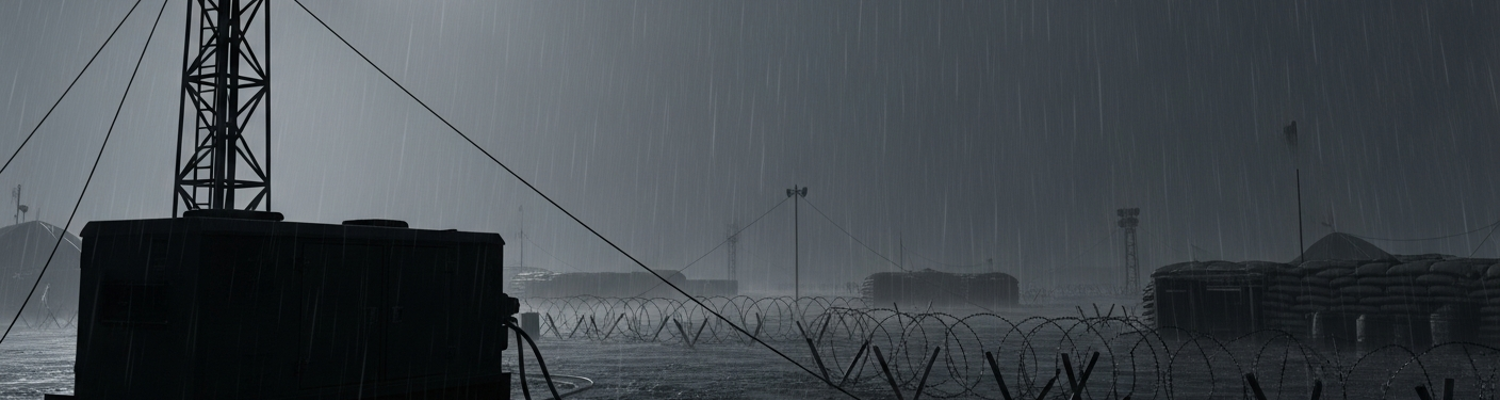

The starter cord on the 10-kilowatt generator felt slick with a mix of rainwater and diesel fuel. A young Marine from the 3rd Battalion, 26th Marines, gave it another pull, his knuckles scraping against the wet metal housing. The machine coughed a plume of oily smoke into the gray air and died again. Its silence was swallowed by the percussive drumming of the northeast monsoon. It was late 1966. His entire battalion had been thrown into Quảng Trị, the northernmost province of South Vietnam, with breathtaking speed.
The unit’s command chronology simply notes its arrival in South Vietnam on December 11th, following a period as the Special Landing Force. Six days later, on December 17th, it moved by road from the relative security of the Đông Hà Combat Base into the Co Bi-Thanh Tan corridor. This was the start of Operation Chinook. The rapid commitment was a direct response to U.S. intelligence confirming the People's Army of Vietnam (PAVN) 324B Division was not just present but actively working to establish permanent dominance south of the Demilitarized Zone (DMZ). The grunts on the ground were moved like chess pieces, airlifted and trucked into positions that were little more than hastily cleared patches of jungle, their arrival dictated by strategic necessity, not logistical readiness.
The entire operational concept was balanced on a razor's edge.
A close review of operational logs from the period reveals a supply chain stretched to its breaking point. The primary ground artery, National Route 9, was a treacherous path winding through hills and valleys, offering countless opportunities for enemy ambushes. Convoys were slow, vulnerable, and frequently delayed. The alternative was air transport, but the monsoon season, which begins in earnest around October, rendered this option a high-risk gamble. Thick, low cloud ceilings and torrential downpours frequently grounded C-130 cargo planes and, more importantly, the helicopter fleets that served as the true lifeline for forward-deployed units. Marine Aircraft Group 16 and other aviation units flew constantly when the weather permitted, but archival records show these windows were often brief and unpredictable. This created a constant state of scarcity at the forward operating bases dotting the landscape near the DMZ, places like Con Thien, Gio Linh, and the Rockpile. The shortages were not just ammunition or C-rations. Materials needed to build a defense, sandbags, timber, steel PSP matting for helicopter pads, and endless spools of concertina wire, were just as constrained. Every bag of cement and every roll of wire had to be prioritized and fought for, either hauled by truck through ambush alley or dropped from a chopper fighting through violent squalls.
This logistical situation unfolded against an immediate and overwhelming threat. The 3rd Marine Division’s primary mission during Operation Prairie, which had commenced in August 1966, was to find and destroy the NVA 324B Division before it could establish a major operating base in Quảng Trị. This was not a shadowy guerilla force. It was a well-trained, multi-regiment conventional army division, and it was digging in for a long fight. After-action reports from preceding operations like Hastings had confirmed the enemy fought from heavily fortified bunker systems, often requiring direct fire from tanks to reduce. For the newly arrived 3/26 Marines, this meant an urgent, desperate need to construct a defensive perimeter from scratch while under constant enemy observation and pressure. The monsoon aided the enemy’s efforts. The rain and mud made construction a nightmare, collapsing trenches and flooding fighting holes as quickly as they could be dug. The persistent dampness corroded weapons and ruined sensitive equipment. The long, moonless nights, cloaked in impenetrable cloud cover, belonged to the NVA sappers and reconnaissance teams, who relentlessly probed the new Marine positions, testing for weaknesses and gathering intelligence for the larger attacks they knew were coming.
The doctrinal solution for conquering the night in static defensive positions was the portable illumination set. For Marine units like 3/26, this meant man-handling skid-mounted generator and floodlight systems, often referred to in operational records by designations like M1097, into their perimeters. The core of this capability was typically a gasoline-powered generator, such as the MEP-016A. This 6-horsepower, air-cooled unit was designed to produce 3 kilowatts of power, weighed nearly 300 pounds, and was mounted in a tubular steel frame. It was started manually with a pull rope. This generator powered arrays of floodlights, which could include powerful but fragile models like the AN/TVS-3 xenon searchlight, a 30-inch diameter unit capable of producing a beam of up to 1.3 billion candlepower. In theory, a few of these systems could bathe a perimeter in artificial daylight, exposing any enemy attempt to probe or assault the wire. The lights were intended to provide overlapping fields of illumination, turning the jungle fringe into a kill zone.
This was the theory.
Archival evidence from the Department of Defense shows the entire family of mobile electric power systems was plagued by a fundamental disconnect between design and application. The generators were procured in a rush as American involvement deepened after 1965, with planners discovering that power requirements in Vietnam were five times greater than anticipated for a theater of operations. The result was a flood of different models into the supply chain, complicating maintenance and repair parts logistics. Many of these systems were designed with a conventional European conflict in mind, not the environmental realities of Southeast Asia. The constant, penetrating humidity of the monsoon season wreaked havoc on electrical components. Condensation would form inside generator housings and on light fixtures, leading to short circuits. Tropical fungi would grow on wire insulation and potting compounds, literally eating away at the system’s integrity. The accelerated equipment replacement cycle during the war, dropping from an expected eight years to just two, is a stark indicator of the operating conditions. There was no time for methodical operational integration. Units like 3/26 arrived in-country and were thrown into the fight, their crews learning the harsh limitations of their equipment on the job.
Maintenance logs and after-action reports reveal a litany of field failures. The MEP-016A generator, a 3600-RPM machine, was notoriously loud, a distinct acoustic beacon that enemy mortar teams could easily locate and target during the night. Its gasoline engine was susceptible to fuel contamination, a common problem with bulk fuel stored in a primitive logistical environment. The pull-starters were a frequent point of failure. The AN/TVS-3 searchlights, while immensely powerful, were also maintenance-intensive, requiring a liquid coolant that was difficult to procure in-theater and possessing delicate xenon arc lamps that could cost thousands of dollars and were rated for only a few hundred hours of use. More common incandescent floodlight bulbs were easily shattered by the concussion of outgoing artillery or incoming mortar rounds. When a generator failed or a light array went dark, it did not just reduce visibility. It plunged a sector of the defense into sudden, disorienting blackness, creating new shadows and blind spots that a prepared enemy could exploit instantly. This unreliability turned a tool of security into a source of constant, nerve-wracking uncertainty for the Marines on the line.
The persistent failure of factory-standard illumination equipment under the extreme environmental and combat stresses of I Corps forced the engineers and technicians of the 3rd Battalion, 26th Marines into a state of continuous, desperate innovation. Official maintenance protocols were often the first casualty of contact with the enemy. A close review of operational logs from similar units indicates that the MEP-016A generator, a machine whose loud, 3600-RPM engine served as an acoustic bullseye for NVA mortar crews, demanded immediate and unorthodox silencing. Marines would construct thick-walled revetments from sandbags and earth around the generator skids, a modification that suppressed the noise but also trapped engine heat, leading to frequent overheating in the humid air.
This was only the first layer of problems.
Engineers assigned to support infantry companies discovered that the complex voltage regulators on the generators were exceptionally prone to failure from vibration and moisture. Lacking replacement parts, they developed methods to bypass the regulator entirely, a risky procedure that could produce unstable current but was deemed necessary to get a light turned on. For the powerful but delicate AN/TVS-3 searchlights, technicians improvised Faraday cages from common chicken wire to shield the sensitive electronics from electromagnetic interference. Daily maintenance became a ritual of necessity. Records from analogous units show that spark plugs on the gasoline engines would become so fouled by low-quality fuel and high oil consumption that they required daily removal and cleaning just to ensure a start.
The struggle to simply power the illumination arrays was a constant, draining element of life on the firebases. The gasoline-powered generators, particularly the MEP-016A model, were notoriously inefficient. This thirst ran headlong into a supply chain stretched to its breaking point. Every gallon of fuel had to be trucked over ambush-prone roads or flown in by helicopter, competing for space with ammunition, water, and medical supplies. The bureaucratic chaos was amplified by the sheer variety of power systems in-theater. Army logistical assessments from the period show that the initial equipment flood included 145 different commercial generator models, creating a nightmare for ordering and distributing the correct fuel and lubricants. For the Marines of 3/26 in their positions near the DMZ, this high-level dysfunction translated into a grim, daily calculus. A week of monsoon weather grounding helicopters or a single destroyed fuel truck on Route 9 could mean the lights went out. Commanders were forced to ration generator time, sometimes to only a few hours per night, creating predictable periods of darkness that enemy sappers could, and did, exploit.
If fuel was the system’s blood, then spare parts were its bone and sinew, and they were perpetually in short supply. The massive, rushed procurement effort that sent a deluge of equipment to Southeast Asia completely outpaced the capacity to stock repair components. This resulted in an extraordinarily high rate of deadlined equipment. Illumination systems, often designated in planning documents by generic terms like M1097, were especially vulnerable. A single broken wire in a control box, shaken loose by the constant vibration of the engine, could render a generator useless. The specialized, liquid-cooled xenon lamps for the high-intensity AN/TVS-3 searchlights were not only expensive but had a service life measured in mere hundreds of hours, with replacements being a low priority in the strained supply system. The situation forced units into a policy of institutionalized cannibalization. It was not uncommon for a battalion’s motor pool to have three or four broken generators stripped for parts just to keep a single machine running. The supply system was so overwhelmed that a special priority channel, the Red Ball express, had to be implemented to rush even basic repair parts to the front. A review of Force Logistic Command records (NARA Record Group 127) shows that between January 1966 and September 1967, its facilities had to process work orders on over 77,000 items of combat equipment.
The northeast monsoon transformed the laterite-rich soil of Quảng Trị Province into a liquid slurry. This constant, driving rain saturated the ground, causing the walls of trenches and fighting positions to slump and dissolve. For the Marines of 3/26, hastily constructing defenses for their deep penetration support positions, this environmental assault was catastrophic. A close review of after-action reports from similar Marine operations in I Corps reveals a constant battle against collapsing earthworks. Bunkers, framed with scavenged timber and armored with sandbags, would become waterlogged, their earthen roofs slowly subsiding and threatening to cave in on the occupants. More critically, the integrity of wire obstacles was systematically compromised. The waterlogged soil lost its ability to anchor the steel pickets that held the dense tangles of concertina wire in place. Entire sections of the wire barrier would sag, collapse, or be washed away in minor mudslides, creating unintentional gaps in the defensive perimeter.
This physical degradation of the perimeter placed an even greater premium on observation and illumination.
The consistent failure of the generators was a tactical disaster. When a gasoline engine sputtered to a halt from fuel contamination or a voltage regulator failed from moisture, a sector of the perimeter was plunged into absolute blackness. These were not random occurrences. They were predictable points of failure. The high operational tempo and strained logistics meant that fuel and spare parts were perpetually scarce. A single disabled fuel truck on Route 9 or a week of monsoon weather grounding helicopters could force a firebase commander to ration generator time, creating scheduled periods of darkness that an observant enemy could map and exploit. Operational logs from units in the DMZ area show that entire sections of a battalion’s defensive wire, often stretching hundreds of meters, would go unlit for hours at a time. This created disorienting blind spots and deep shadows where none had existed moments before, rendering the overlapping fields of fire from machine-gun positions ineffective. The darkness was a weapon, handed to the enemy every time a generator went silent.
The soldiers of the North Vietnamese Army’s 324B Division were methodical and patient observers. Their sapper units, the elite field engineers of the NVA, specialized in infiltrating American bases to destroy high-value targets like command posts and artillery positions. A review of their tactics shows a clear pattern of extensive reconnaissance, often lasting for days, to identify weaknesses before an attack. The predictable blackouts caused by failing American illumination systems were a significant vulnerability they learned to exploit. Under the cover of the monsoon and the artificial darkness created by a dead generator, sapper teams would crawl up to the compromised wire obstacles. With their path often eased by collapsed earthworks, they could approach the perimeter undetected. After-action reports from firefights along the DMZ frequently note the discovery of cut wire and disabled tripflares at dawn, evidence of nightly probes. These were not always precursors to an immediate, large-scale assault. They were intelligence-gathering missions, where sappers would map bunker locations, listening posts, and crew-served weapons positions. They moved through the unlit sectors, sometimes within grenade range of Marine fighting holes, gathering the precise data needed to make a future attack devastatingly effective.
A repair operation on a deadlined M1097 illumination set began with a calculated risk. A close review of operational logs shows that when a generator failed, the decision to attempt a repair fell to company-level commanders who had to weigh the tactical cost of a dark perimeter against the danger of exposing a maintenance team. The work itself was agonizingly slow, performed in near-total blackness to avoid drawing sniper fire. Maintenance personnel, often combat engineers or motor transport mechanics cross-attached to infantry units, would crawl out to the silent generator, communicating in whispers. Their world shrank to the feel of a cold wrench on a seized bolt and the smell of spilled gasoline. A common procedure involved manually clearing a fouled fuel line or attempting to bypass a failed voltage regulator, a delicate task made nearly impossible by the conditions. These mechanics worked with minimal light, often just a helmet-mounted flashlight with a red lens, its beam carefully shielded with a poncho. The constant threat of enemy observation was palpable. The metallic click of a tool dropping on the generator’s steel frame could seem as loud as a gunshot, a potential beacon for an NVA mortar team that had already plotted the generator’s position during its noisy operational hours.
Every silent generator was a tactical crisis. The impact of these frequent failures on perimeter defense was immediate and severe. A single non-operational M1097 unit could plunge a 100-meter sector of the wire into disorienting blackness, creating a perfect infiltration lane. After-action reports from firefights along the DMZ repeatedly note that NVA sapper attacks were often initiated against these suddenly unlit portions of the defense. The elite soldiers of the PAVN’s 409th Sapper Battalion and similar units were masters of exploiting such weaknesses. They conducted extensive reconnaissance, mapping the predictable patterns of generator failure and the scheduled blackouts forced by fuel rationing. Dressed in minimal clothing and covered in mud or grease to defeat the wire, these commandos would crawl through the gaps, cut tripflares, and prepare paths for larger assaults. For the individual Marine in a fighting hole, the sudden death of a floodlight was a moment of intense psychological stress. The familiar, illuminated battlespace would vanish, replaced by impenetrable darkness and the unnerving sounds of the jungle. This uncertainty eroded morale, leaving Marines to stare into a black void, acutely aware that the enemy was using that same darkness as cover.
The system was simply not designed for the environment.
The troubled service history of the M1097 family of generators and lights was a direct result of a procurement process that failed to account for the conditions in Southeast Asia. A Department of Defense study initiated in late 1965 confirmed that the military was facing a power requirement in Vietnam five times greater than planners had anticipated, forcing a massive and rushed procurement of existing generator models. Systems like the gasoline-powered MEP-016A were designed for a different war and a different climate. The constant humidity corroded electrical contacts, while vibration and rough handling led to frequent failures of sensitive components like voltage regulators. The logistical chain for spare parts was overwhelmed, leading to widespread cannibalization where three or four deadlined units would be stripped to keep one running. This entire class of equipment was ultimately rendered obsolete by its own unreliability. The experience in Vietnam directly led to a post-war push by the Department of Defense to develop a new, more durable and efficient family of military generators. This effort prioritized diesel engines for their reliability and improved fuel efficiency over the gasoline consumption of models like the MEP-016A. The result was the gradual introduction of systems like the MEP-016D, which retrofitted a reliable Yanmar diesel engine onto the older generator frame, and eventually the all-new Advanced Medium Mobile Power Sources (AMMPS) generators, which were designed from the ground up for the ruggedness and fuel efficiency demanded by expeditionary warfare.