
Soviet Rail Interdictions at Marienborn Checkpoint
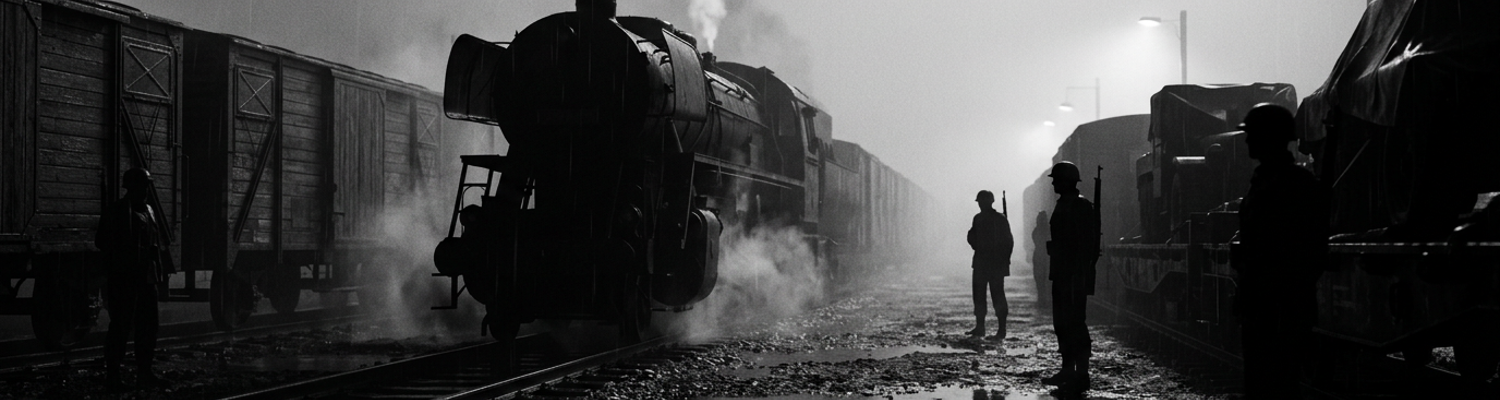
Steam hissed through the pressure release valves of stationary locomotives. The noise cut through the heavy silence hanging over the switch tracks just west of the Soviet boundary line. Train crews sat in unlit passenger coaches. They listened to the metallic pinging of cooling boiler tubes. They watched the shadowed trackbeds through rain-streaked glass. Every man inside the cab kept both hands clear of the window ledge. Across thirty meters of crushed ballast stood Soviet border guards. These men remained motionless beside the signal gantries. They carried carbines unslung across wool coats. They waited for the clock to clear the final minutes of daylight.
Doctrinal handbooks drafted at Fort Leavenworth trained quartermasters for volume distribution along friendly corridors. They offered no guidance for static standoffs against an ally on occupied soil.
A close review of operational logs indicates the crisis crystallized late on March 31, 1948. Soviet deputy military governor General Mikhail Dratvin delivered an ultimatum to the American liaison offices in Berlin. Effective at twenty-four hundred hours, Soviet transport authorities asserted unilateral inspection rights across all Allied military rail traffic. This applied to trains threading into the Soviet occupation zone through the Marienborn rail checkpoint. The directive ordered armed Soviet personnel to board western trains. They were to examine travel credentials of military personnel. They were to inspect accompanying passenger baggage. They were to verify individual freight manifests against local customs ledgers. Quartermaster staff officers found their administrative authority severed at the boundary line. Army Field Manual 10-1 promised orderly supply transfers governed by standardized rail waybills. It relied on uncontested corridor rights negotiated in late 1945. Local Deutsche Reichsbahn dispatchers received direct orders from the Soviet Military Administration in Germany. They dropped switch signals to red. They physically barred any western train whose commander refused Soviet inspectors entry into the train cars. General Lucius Clay responded by radio. He instructed train commanders to deny Soviet personnel access beyond the coach vestibules under all circumstances.
Orders from Berlin collided with cold steel on the siding rails within hours.
Archival evidence shows the immediate breakdown when four United States Army trains crossed past the Helmstedt border line. These consists included freight and passenger stock. They rolled straight into the Marienborn inspection yards. Two of these trains carried replacement troops bound for the Berlin command. The other two hauled boxcars filled with military rations. At five minutes past midnight, Red Army track crews diverted the four consists onto isolated holding sidings. They used manual hand-throw switch levers. This dead-ended the trains fifty kilometers deep inside the Soviet zone. Soviet infantry armed with PPSh-41 submachine guns deployed directly along the ballast. They established a hard security cordon around the wheels and coupling gear. Train guards from the 759th Military Police Battalion secured coach doors from the inside. They followed Clay's explicit standing directive to block Soviet boarding parties. American train commanders requested Reichsbahn engine crews to reverse the locomotives back toward the British zone. Soviet military railway controllers removed the German locomotive drivers. They cut steam pressure lines. They posted armed sentries on the locomotive footplates.
For two days, the train crews lived on emergency field rations. They distributed these from internal baggage cars. They drank water boiled down from boiler feed tanks. Field radios established intermittent contact with the 7708th War Department Overhead detachment at Helmstedt. No recovery train could enter the closed sector without accepting Soviet inspection tags. On April 2, 1948, the United States command authorized German civilian switch engines to pull the stranded consists backward into the British occupation zone. They abandoned rail transit over the corridor.
Peacetime Property Accountability and Field Vulnerability
A close review of operational logs indicates the physical paralysis at Marienborn triggered an administrative crisis. This crisis was rooted in peacetime military law. Under War Department Technical Manual 38-205, every United States European Command train commander held personal financial liability for the rolling stock assigned to his manifest. Army Regulation 35-6600 reinforced this requirement. These junior Quartermaster officers were frequently lieutenants. They signed individual shipping receipts at the Bremerhaven port of embarkation. They were bound by strict property accountability standards. These standards made no legal exception for hostile foreign encirclement short of an open state of war. If a railcar seal broke without an authorized Report of Survey, the War Department extracted the monetary value directly from the officer's monthly pay voucher. Field manuals instructed these officers to protect cargo manifests with physical custody. War Department directives strictly prohibited them from drawing sidearms against Soviet personnel.
Paperwork bound men where combat doctrine gave no instructions.
Archival evidence shows this bureaucratic trap pinned down high-value freight across tracks four and seven of the Marienborn yard. The exact coordinates were fifty-two degrees eleven minutes north and eleven degrees six minutes east. Inside six Deutsche Reichsbahn covered wooden boxcars sat sensitive Signal Corps communications components. These included AN/GRC-9 transmitter-receivers. They included cryptographic maintenance spares consigned to the Berlin military district. Single-strand lead wire seals secured the doors. Behind these wagons sat twenty open gondola cars. They carried tons of raw brown coal mined in the Ruhr. Four drafty freight vans stacked roof-high with five-ply paper sacks followed the coal cars. These sacks contained quartermaster bulk baking flour. Sleet gathered on the canvas tarpaulins. Red Army sentries from the 138th Guards Rifle Regiment watched from elevated switch towers less than forty yards away. Soviet intelligence officers methodically recorded the stencil marks on every freight car using tripod-mounted binocular periscopes. They noted serial ranges. They recorded axle loadings. They logged cargo classifications painted onto the exterior wooden planks. Coal dust blew across the open switch plates. It clogged the mechanical point-rods as track temperatures dropped near freezing.
One broken seal meant a career ruined by financial debt.
Field records of the 7708th War Department Overhead unit reveal train commanders refusing to step away from their railcars. They lacked food. They lacked fresh water. They lacked heat. Quartermaster instructions required physical tallies against original waybills before any freight car could be decoupled. Soviet rail yard inspectors refused to sign western documentation. Train commanders walked the frozen ballast every forty-five minutes with flashlights. They inspected the physical integrity of the car door hasps. They wrote status logs on clipboard tally sheets. The physical presence of seven armed Military Policemen per train consist provided no offensive capability against the surrounding Soviet rifle company. Their function was strictly to verify that locks remained untouched across cargo doors. Rail manifests recorded 140 metric tons of wheat flour absorbing atmospheric moisture on the dead sidings. The lowest layer of paper sacks burst under hydraulic swelling. Not a single sack left the siding.
Isolated Train Crews and Red Army Cordon Friction
A close review of operational logs indicates the primary tactical vulnerability at Marienborn lay in the immediate breakdown of operational signal paths. Second lieutenants serving as train commanders were equipped for administrative route coordination along cleared civilian lines. They were not equipped for defensive tactical deployments inside hostile sectors. Red Army rail controllers halted the consists at the Marienborn yard switches. These junior officers possessed no direct radio communication link to European Command headquarters situated three hundred and fifty kilometers away in Frankfurt. Doctrine dictated reliance on Deutsche Reichsbahn landline circuits. It required station-to-station teletypes to file movement updates with the 7708th War Department Overhead railway group. Soviet transport detachments cut these overhead copper lines within forty minutes of the initial yard interdiction. This isolated the sidings from western telephone switchboards. Portable vehicular radio sets like the SCR-508 operated strictly within line-of-sight frequencies. They failed completely to push high-frequency voice signals across the rolling Harz mountain terrain toward the American zone. Train commanders were cut off from the Frankfurt chain of command. Field officers could neither transmit casualty data nor request armored support.
Isolation was total by three in the morning.
Archival evidence shows Quartermaster personnel responded to this tactical blackout by locking down the administrative assets under their immediate physical custody. Soviet rail inspection teams repeatedly approached the vestibules of the halted American passenger and freight cars. Captains from the Soviet Military Administration in Germany headed these teams. They demanded full production of shipping manifests. They demanded passenger baggage clearance lists. They demanded individual transit passes. Quartermaster freight clerks and train commanders refused to yield entry. They followed standing orders radioed from Berlin prior to the signal line severing. Junior officers slid heavy interior iron door bolts into place. They physically chained the coach vestibules shut from within. Form 55 shipping tickets and classified War Department rail waybills were packed into canvas courier pouches. Quartermaster staff padlocked these into steel field dispatch chests. They strapped them directly to their own chests underneath heavy winter overcoats. Soviet boarding parties climbed onto the car footplates. They hammered on the glass partitions with pistol holsters. The train guards stood directly behind the wire-reinforced window panes. They held loaded M1 carbines at port arms. Not one inspector crossed the threshold.
Paper determined territory.
Field reports of the 759th Military Police Battalion detachment emphasize the static nature of the friction on track three. Red Army guards from the local garrison encircled the four stranded consists at five-pace intervals. Their bayonets were fixed to Mosin-Nagant Model 1944 carbines. Temperatures plummeted to two degrees Celsius. Condensation froze against the interior walls of the unheated wooden passenger coaches. The Reichsbahn switch engines exhausted their boiler water. This prevented steam heat lines from circulating through the consist. Soviet officers brought mobile carbon-arc searchlights onto neighboring trackage. They directed blinding white beams straight into the American sleeper compartments. This prevented the soldiers inside from sleeping or observing yard movements. Quartermaster officers maintained four-hour perimeter watch shifts on the open coach platforms. They checked car seals by torchlight. They kept both hands inside their woolen gloves to prevent skin from tearing away against the frozen steel handrails.
Tension hung on frozen metal.
British rail liaisons at Helmstedt managed to push a single civilian telephone message across the border wire at dawn on April 1. This confirmed three hundred and seventy-five American personnel were barricaded inside the Marienborn sidings. Soviet authorities offered coal and food baskets if train commanders permitted passenger coach inspections. The Quartermaster lieutenants rejected the transfer on the ballast. Train crews sustained themselves exclusively on boxed C-rations stowed in the baggage holds. They rationed biscuits and instant coffee while waiting for switch clearance. At thirteen hundred hours, Soviet yard controllers uncoupled the water tender from locomotive forty-two zero zero one. They left the consist without boiler feed water.
The 61st Troop Carrier Group Little Lift Response
A close review of operational logs indicates the physical collapse of the Marienborn rail corridor forced an immediate tactical shift within European Command headquarters. General Lucius D. Clay faced the total shutdown of Deutsche Reichsbahn rail traffic on April 2, 1948. He initiated a ten-day aerial supply operation known as the Little Lift. This operation circumvented severed ground corridors. Clay rejected Washington recommendations to withdraw military dependents and non-essential administrative personnel from the isolated enclave. He contacted Lieutenant General Curtis LeMay at United States Air Forces in Europe headquarters in Wiesbaden. He instructed LeMay to assemble every available twin-engine transport on the continent. Army Field Manual 100-5 contained no protocols for sustaining a fortified garrison solely through narrow air corridors. Clay committed military transport squadrons to maintain the western sectors regardless of doctrine. Staff officers calculated the six thousand American soldiers and Allied civilians stationed in Berlin required thirty tons of daily dry rations. They required medical consumables. They required vehicle spare parts to avoid surrender to Soviet inspection regimes. Initial flight manifests were authorized on emergency vouchers. This bypassed standard Quartermaster property requisition procedures that typically required two weeks of administrative review.
Flight crews had eighty minutes to calculate fuel burns and wheel weight distributions.
Archival evidence shows the burden of this aerial transfer fell squarely upon the Douglas C-47 Skytrains of the 61st Troop Carrier Group. These aircraft were stationed at Rhein-Main Air Base outside Frankfurt. Pilots belonging to the 14th Troop Carrier Squadron flew round-the-clock cargo missions directly into Tempelhof Airfield. The 15th and 53rd Squadrons joined them. The destination coordinates were fifty-two degrees twenty-eight minutes north and thirteen degrees twenty-four minutes east. Aircraft departed the tarmac at ten-minute intervals. They followed the 270-mile southwestern flight corridor. They carried maximum gross loads of three metric tons. Approaching Tempelhof demanded low-altitude descents over dense civilian apartment blocks in the Neukolln district. Pilots dropped landing gear at steep angles onto pierced steel plank runways. The physical wear on the twin Pratt and Whitney R-1830-90C radial engines mounted rapidly under the continuous flight cycle. Ground crews at Tempelhof documented cylinder head temperatures climbing past 230 degrees Celsius during repeated high-manifold climbs. Brake shoes glazed over from emergency stops on the slick steel runway matting. Neoprene hydraulic seals ruptured under repetitive hard touchdowns. They sprayed flammable mineral fluid across the wheel wells.
Tarmac maintenance crews worked without replacement hydraulic fittings.
Maintenance ledgers of the 61st Troop Carrier Group flight line show aircraft mechanics improvised repairs. They scavenged parts from decommissioned airframes parked along the grass taxiways. Turnaround times at Tempelhof were compressed to forty-five minutes per airframe. German labor details cleared cargo bays by hand under the supervision of Quartermaster sergeants. Five-ply paper sacks containing dehydrated potatoes and flour repeatedly ruptured against aluminum cargo tie-down rings. This scattered fine white dust into cockpit radio racks and engine air filter intakes. Flight engineers often kept the propellers turning at idle to prevent spark plug fouling from leaded aviation gasoline. They refused to shut down the radial engines between flights. Soviet Yak-3 and Lavochkin La-9 fighters buzzed the transport corridors at matching altitudes. They conducted mock firing passes within fifty meters of the unarmed transports. They recorded tail numbers. They attempted to rattle American crews. Radio signals from the Tempelhof low-frequency homing transmitter suffered frequent interference from Soviet jamming stations situated in the surrounding sector. Pilots relied on ground-controlled approach radar operators to talk them down through dense spring overcast.
At twenty-three hundred hours on April 12, 1948, the 61st Troop Carrier Group logged its final mission of the initial ten-day operation. Flight logs recorded three hundred and twelve completed round-trip sorties between Rhein-Main and Tempelhof. They moved nine hundred and ninety-two metric tons of flour. They moved powdered milk. They moved field medical supplies. Not a single airframe was lost to structural failure. Maintenance rosters listed thirty-two C-47 transports deadlined on the Frankfurt dispersal pads requiring engine overhauls. Quartermaster supply depots in Berlin held forty-five days of boxed rations in reserve.
Doctrinal Deficiencies in Peacetime Rail Manuals
A close review of operational logs indicates the administrative failure at Marienborn originated years earlier inside the doctrine drafting rooms of the Army Service Forces. War Department manuals written during the rapid expansion of 1942 operated on a strict binary system. Revisions made after the collapse of Nazi Germany maintained this binary approach. Textbooks like Field Manual 100-10 and Army Service Forces Manual M-409 provided explicit instructions for moving freight along friendly communication lines in liberated nations. They provided instructions for coordinating combat engineering units to rebuild pulverized rail yards during active shooting campaigns. Not a single page of doctrine provided contingency procedures for contested logistics short of open warfare. Logistics planners envisioned train commanders handling cargo through standard civil-military shipping arrangements under cooperative local management. They envisioned them advancing behind armored cavalry spearheads that blasted through enemy switch points. Red Army track workers threw manual track levers at Marienborn to trap western trains without firing a shot. Junior Quartermaster lieutenants opened their doctrinal field manuals and found a blank slate.
Field regulations recognized only complete peace or general war.
Archival evidence shows this doctrinal void left officers on the ground without authorized tactical options during static confrontations with foreign military cordon teams. Under peacetime doctrine, train crews could not deploy weapons to clear obstructed tracks. They could not legally surrender control of military rolling stock to unauthorized foreign inspection teams. The manuals assumed any foreign disruption to supply trains would constitute an act of open war. This automatically triggered tactical support from division combat commands. Second lieutenants in the Marienborn sidings faced uncooperative Soviet rail inspectors who cut locomotive boiler feed lines. These inspectors remained technically within non-belligerent occupational agreements. The manuals provided no gray-zone instructions for maintaining physical security while deadlocked on foreign trackage. Officers defaulted to physical obstructionism. They chained vestibules shut. They sat inside darkened passenger cars for fifty hours.
Paper procedures superseded tactical judgment on the ballast.
European Command communications throughout early April 1948 reveal the paralysis at the border crossing triggered an immediate institutional crisis. General Lucius D. Clay and his logistics staff realized existing War Department property transfer rules penalized logistics officers for adapting to foreign intimidation. These rules were anchored in Army Regulation 35-6600 and Technical Manual 38-205. Train commanders remained bound by personal financial liability for every missing rations crate or broken boxcar seal. This liability lasted until an authorized depot receiving officer signed Form 55 shipping tickets at the final destination. The Marienborn incident forced European Command to overhaul rigid property transfer protocols for forward-deployed logistics units. Clay directed European Command headquarters in Frankfurt to draft emergency administrative circulars. These circulars stripped personal pecuniary liability from train commanders facing coercive foreign inspections. Revised directives permitted logistics officers to sever train consists. They permitted officers to divert rolling stock back to western staging yards. They permitted the abandonment of commercial rail freight on isolated sidings without requiring an advance Report of Survey from regional depot inspectors.
The army modified administrative law to match the rail siding standoff.
Logistics staffs rewrote these movement regulations during the second week of April 1948. They created provisional corridor manifests. These manifests removed individual officers from the financial chain of custody between Helmstedt and Berlin. New theater standing operating procedures authorized train commanders to verify physical car seals at the point of origin in Bremerhaven. They transferred custodial liability directly to the European Command Provost Marshal upon entering border transit corridors. Soviet authorities tightened rail restrictions into the complete blockade of Berlin two months later. Quartermaster detachments were operating under overhauled emergency transit regulations by that time. These regulations bypassed peacetime line-item custody rules.