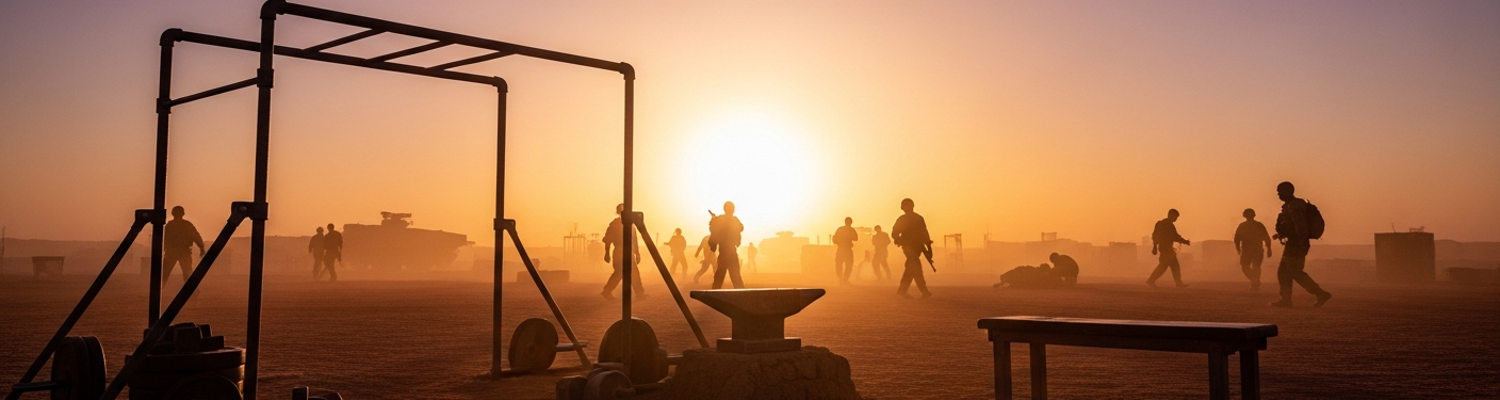

The Unrelenting Tempo in Ramadi
A close review of operational logs from 2007 reveals the unrelenting tempo faced by American units in Ramadi. Before the full weight of the Surge was felt, US forces in January were weathering an average of 35 distinct enemy attacks per day. The arrival of the 1st Brigade Combat Team, 3rd Infantry Division, known as Task Force Raider, marked a significant escalation in offensive operations. This unit, on its third deployment to Iraq, immediately initiated a series of high-intensity clearing operations. Over the next six weeks, the brigade launched three major offensives targeting Al-Qaeda strongholds within the city, followed by two more just outside its limits. The operational pressure was continuous. Soldiers and Marines found themselves in a near-constant cycle of patrols, raids, and defensive actions with minimal downtime. This sustained combat was a core component of the strategy. Its goal was to establish a permanent presence in contested neighborhoods by setting up a network of more than 22 joint security stations and smaller, more vulnerable Combat Outposts (COPs) deep within enemy-held territory. This strategy deliberately placed troops in daily, close-quarters contact with insurgent forces.
Ramadi’s urban terrain presented a complex and lethal challenge that heavily favored the fanatical insurgent defenders. Al-Qaeda in Iraq (AQI) had transformed districts like Mal'ab and Sofia into fortresses, so thoroughly saturated with booby traps and fighters that they were often designated no-go zones. The city’s geography, with its dense warren of narrow streets, multi-story buildings, and subterranean utility tunnels, was methodically weaponized. Insurgents used these features to their full advantage, creating layered defenses that were nearly impossible to penetrate without incurring casualties. After-action reports indicate that AQI operated in small, decentralized cells that communicated via couriers, making them highly resistant to signals intelligence. The resistance was characterized by a willingness to fight to the death and the systematic use of human shields to complicate engagement rules for US forces. This created a psychological battlefield where every civilian could be a potential threat and every building a potential ambush site. The fight for Ramadi was not against a conventional army but against an enemy woven into the fabric of the city.
For ground units, the most persistent and psychologically corrosive threats were the constant, indiscriminate attacks from Improvised Explosive Devices (IEDs) and small arms fire. The road networks were so thoroughly predictable to the enemy that almost every patrol or convoy moving through the city center was attacked multiple times. Insurgents employed a deadly variety of IEDs, from simple artillery shells with remote triggers to sophisticated, armor-penetrating Explosively Formed Projectiles (EFPs) and chlorine bombs. The threat was so pervasive it bred a specific behavioral response where any piece of roadside debris was treated as a potential trigger. This was compounded by the unending threat of sniper fire. A single, well-placed marksman could halt operations for hours, inducing a state of high anxiety and forcing units to move cautiously through exposed areas. Coordinated ambushes combining IEDs with machine gun and RPG fire were a common tactic, designed to inflict maximum casualties and sow chaos. During one period in February 2007 alone, US forces encountered over 20 IED detonations and safely disposed of another 50, all while engaging in more than 40 separate direct-fire engagements with enemy fighters. This lethal pressure from unseen enemies defined the daily existence of every soldier and Marine in the city.
Doctrinal Disconnect and DoDI 1015.10
The formalization of Department of Defense Instruction 1015.10 in May 2011 represented a watershed moment in the codification of Morale, Welfare, and Recreation (MWR) standards. This 54-page document was the culmination of years of disjointed, service-specific approaches to troop welfare, establishing a comprehensive framework that mandated minimum standards for everything from fitness centers to libraries. It reissued and updated previous versions, creating a unified policy applicable to all DoD Components. The instruction categorized MWR programs, assigning priorities for funding. It designated certain programs as Category A for mission sustainment and Category B for basic community support, authorizing the use of appropriated funds (APF) for their operation. This was a significant bureaucratic shift, designed to ensure that even in remote and isolated locations, service members would have access to a baseline of support. The document was a detailed administrative tool, prescribing procedures for managing both appropriated and non-appropriated funds (NAF) and assigning specific responsibilities for implementation and oversight.
This bureaucratic standardization was completely misaligned with the MWR environment experienced by ground units in high-threat areas like Ramadi in the years prior to 2011. Before the instruction was solidified, MWR was often an afterthought, a luxury that could not penetrate the wire of forward operating bases and combat outposts. For soldiers and Marines in the thick of the fight in Anbar Province between 2004 and 2007, MWR was a concept that existed on the large, secure bases far from the front lines. On the ground, where units were in a constant cycle of patrols, raids, and defensive actions, recreational opportunities were almost entirely self-generated. Unit logs and after-action reports from this period reveal a near-total absence of formal MWR facilities. Morale was sustained by makeshift weight sets constructed from vehicle parts, worn-out DVDs watched on Toughbook laptops, and mail. The mail itself was often unreliable. A 2004 Government Accountability Office report (GAO-04-905R) noted that despite official data showing timely mail delivery to Iraq, over half of the 127 interviewed service members reported waiting at least four weeks for letters and packages, with some items never arriving. These delays had a direct negative impact on the morale of deployed troops. Mail was often the only link to family and home.
The disconnect was a product of institutional oversight, where policy written in the Pentagon failed to account for the operational conditions in Iraq. While DoDI 1015.10 and its predecessors existed on paper, their implementation was fundamentally broken at the tactical edge. The funding and logistical chains required to establish and sustain MWR programs were not prioritized for units in active combat zones. Resources were overwhelmingly directed toward operational necessities like ammunition, vehicle maintenance, and fortifications. A 2007 GAO report highlighted the immense costs of military operations, with the largest increases going to operation and maintenance expenses, but these funds were for services directly tied to combat, not soldier welfare programs. The system was designed to support large, static installations, not the small, dispersed, and constantly threatened outposts that defined the counter-insurgency fight in Ramadi. Enclosure 7 of DoDI 1015.10 even contained provisions for designating installations as remote and isolated, which would authorize increased appropriated funding for MWR programs. The procedural requirements to secure this designation were channeled through military department headquarters, creating a bureaucratic barrier that was often insurmountable for a rifle company commander focused on immediate threats. The policy assumed a level of security and logistical stability that did not exist.
The military’s administrative apparatus was ill-equipped to project soft services into a non-permissive environment. The priority for commanders on the ground was kinetic. A 2007 operational summary for Task Force 1-9 Infantry in Ramadi detailed the seizure of massive weapon caches and the constant pace of clearing operations, reflecting a command focus dictated by immediate survival and mission accomplishment. MWR, in this context, was a subordinate concern. Reports from the period show that even fundamental support like postal services were plagued by poor coordination between military branches and a lack of singular authority to resolve problems. The Military Postal Service Agency, for example, lacked the authority to compel different service branches to cooperate, leading to systemic inefficiencies. If the system could barely manage the delivery of mail, it had little chance of implementing the more complex and resource-intensive programs outlined in MWR doctrine. The result was a deep chasm between the stated policy of providing for soldier well-being and the lived experience of the infantrymen at the tip of the spear.
Combat Outpost Austerity in Anbar
For soldiers and Marines pushed deep into Ramadi's urban sprawl, the digital link to home was the first casualty of forward deployment. The larger, more secure installations like Camp Victory or Al Asad Airbase enjoyed a robust communications infrastructure, complete with contractor-operated internet cafes and reliable phone centers. At the small Combat Outposts (COPs) and Patrol Bases (PBs) that formed the backbone of the counter-insurgency, such amenities were non-existent. Unit logs show that connectivity was a function of security and logistics, both of which were in short supply. The primary means of internet access, when available at all, was through a shared, over-taxed satellite system intended for operational traffic. The limited bandwidth was prioritized for patrol briefs, intelligence reports, and casualty evacuation requests. Personal use was a distant secondary concern, often restricted to a few minutes per soldier per week. The technical fragility of these systems was a constant issue. A single damaged cable or a misaligned satellite dish could sever the connection for days, and the hazardous resupply routes meant that technicians and replacement parts were not readily available. This electronic isolation had a direct, corrosive effect on morale, severing the one thread that allowed troops under immense psychological pressure to see and hear their families.
The digital void was matched by a physical one.
The concept of a recreation center was alien to the environment of a COP in Anbar. While major hubs boasted well-equipped gyms, movie theaters, and swimming pools, the men at COPs like Steel or Grant had only what they could build or carry. After-action reports and soldier accounts from units like the 1st Battalion, 505th Parachute Infantry Regiment, describe the construction of makeshift gyms as a mission-essential task for maintaining sanity. These were not facilities in any formal sense. They were collections of scavenged and improvised equipment. Pull-up bars welded from scrap metal, weights made from ammunition cans filled with dirt, and worn-out truck tires used for strength training. There was no air conditioning, no specialized flooring, and no variety. The absence of formal recreation centers was a direct consequence of the tactical situation. With every square foot of a COP dedicated to fighting positions, ammunition storage, or cramped sleeping quarters, there was no room for non-essential structures. The constant threat of mortar and sniper fire made any outdoor gathering, even for exercise, a calculated risk. The contrast between the amenities available on large bases and the spartan conditions at the outposts created a perception of two different armies fighting the same war.
Beyond the lack of internet and gyms, other MWR provisions were severely curtailed or entirely absent. The postal system, officially the most reliable link to home, was fraught with delays and losses at the tactical edge. While DoD statistics might have shown acceptable delivery times to the theater, the 2004 GAO report, based on interviews with deployed troops, revealed that more than half waited at least four weeks for letters and packages. For units in Ramadi, postal Marines had to travel on convoys through some of the most dangerous routes in Iraq to deliver mail to the COPs, a journey that was often delayed or cancelled due to enemy activity. Even the availability of basic sundries was a significant issue. Organizations like Support the Troops existed specifically because troops at COPs and PBs could not get basic items like toiletries and snacks from the exchange system. The logistical chain was geared toward delivering ammunition, water, and food. Anything else was a luxury that the system was not designed to handle at the platoon and company level in a high-intensity conflict zone.
Command Diversion of Mission Assets
Operational logs and supply requests from units in Ramadi reveal a command-level adaptation to the systemic failure of MWR support. Company and platoon leaders, faced with the rapid psychological decay of their troops, made the calculated decision to divert mission-critical assets to address basic human needs. This was not a centrally-planned effort. It was a ground-up response born of necessity. A welder from a maintenance platoon, whose primary function was to repair cracked armor on MRAPs and Humvees, would be unofficially tasked to fabricate a pull-up bar or a squat rack from the salvaged metal of a destroyed vehicle. Plywood and lumber intended for reinforcing fighting positions were instead used to construct benches and small tables, creating a makeshift space for soldiers to decompress between patrols. The diversion extended to personnel. A generator mechanic might be pulled from servicing tactical power units to fix the one generator powering a Toughbook laptop for a movie night. These leaders understood that without these small, unauthorized comforts, the combat effectiveness of their formations was at risk from extreme combat fatigue and stress.
This was a direct trade-off between material readiness and mental resilience. The decision to redirect resources carried significant operational costs. Every hour a skilled mechanic spent welding a weight rack was an hour a patrol vehicle sat waiting for battle damage repair, potentially impacting the next day’s mission planning. Some officers later noted that they spent an inordinate amount of time and energy trying to source items as simple as a functioning DVD player or a new set of speakers. This was cognitive effort that was diverted from intelligence analysis and patrol rehearsals. A review of maintenance logs from forward units often shows a subtle but persistent lag in routine equipment repairs, a direct consequence of these ad-hoc MWR projects. The operational tempo did not slow, but the capacity to sustain it was internally degraded. A company from the 1st Brigade Combat Team, 3rd Infantry Division might be scheduled for three patrols in a 24-hour period. If a key vehicle was non-mission capable because its mechanic was otherwise occupied, that schedule became difficult to meet, forcing other squads to take on additional risk. The command dilemma was acute: maintain 100% of the unit’s equipment at peak readiness, or allocate a small fraction of that capability to keep the human component from breaking down.
These choices were made against a backdrop of extreme environmental hardship at the Combat Outposts. The challenge was not just the absence of recreational facilities but the struggle for basic quality of life under constant threat. At COPs established deep within former insurgent strongholds, there was no physical safety. Any soldier moving from a sleeping area to a makeshift latrine was exposed to potential sniper fire. Running a generator for light or a fan created a noise signature that could mask an enemy’s approach and a thermal signature that could attract mortar fire. Food was often limited to MREs for weeks on end, and field sanitation was a constant battle, leading to health issues that further degraded unit strength. The logistical chain, already strained to deliver essentials like ammunition, water, and batteries, had no capacity for non-essential items. This failure of the larger military system to project even the most basic support into the COPs forced junior leaders to become self-sufficient, cannibalizing their own operational capacity to create a survivable human environment.
Soldier-Led Morale and Welfare Solutions
In the digital vacuum of Ramadi’s Combat Outposts, the most sought-after piece of contraband was not a weapon, but a satellite dish. The formal communication architecture, reliant on over-subscribed military satellites, prioritized operational traffic, leaving personal communication as a low-density, high-latency privilege. Soldier accounts and archived online forums from the period reveal a widespread and technically sophisticated effort to circumvent these restrictions. Enterprising soldiers, often with pre-deployment backgrounds in information technology, orchestrated the purchase and covert installation of bootleg internet systems. Squads and platoons would pool funds to acquire commercial-grade BGAN (Broadband Global Area Network) terminals or civilian satellite dishes, sometimes buying them from departing units or having components shipped from home disguised in care packages. The technical challenge was significant. A small dish had to be mounted in a location that was both hidden from senior leadership and had a clear line of sight to the correct satellite, all while avoiding becoming a target for enemy observation. Cables were run through existing conduits or buried shallowly, leading to a single, hidden laptop or router that acted as the platoon’s illicit digital portal to the outside world. This was a high-risk endeavor. Discovery meant a serious reprimand for violating operational security, as unsecured networks could theoretically be exploited. For many junior leaders, the risk was outweighed by the immediate and observable improvement in their soldiers’ morale.
This ingenuity was a physical reality. The absence of formal fitness centers on the COPs was met with a burst of industrial creativity. Makeshift gyms became a standard and essential feature of outpost life, constructed entirely from battlefield scrap and locally sourced materials. Unit photography from places like COP Grant or the security stations in the Ma'Laab district shows a consistent pattern of innovation. Welders attached to maintenance sections, whose primary job was repairing battle-damaged vehicles, were frequently tasked with fabricating gym equipment. Pull-up bars and dip stations were welded from the steel frames of destroyed HESCO barriers or scavenged piping. Squat racks and benches were built from lumber intended for shoring up bunkers. The most striking innovations were the weights themselves. Spent artillery casings, ammunition cans filled with sand, sections of tank track, and discarded vehicle brake drums were all repurposed for strength training. Paratroopers from the 1st Battalion, 319th Airborne Field Artillery Regiment were documented building their own equipment from tomato cans, cement, and steel bars to avoid crowded official gyms. These scrap-metal gyms were more than recreational spaces. They were an outlet for processing the extreme stress of daily combat operations and maintaining a sense of physical readiness and personal control in a chaotic environment.
Beyond individual needs for communication and fitness, grassroots initiatives emerged to fill the broader welfare void left by the institutional MWR system. Small-unit leaders effectively became logisticians of morale. A common practice was the establishment of an informal company store run from a desk or a corner of a shipping container. These were stocked not by the official exchange system, but by a coordinated effort with family readiness groups back in the United States. Soldiers would compile lists of desired items, specific snacks, drink mixes, workout supplements, chewing tobacco, which were then purchased by families and sent in a constant stream of care packages. This bottom-up supply chain was often more reliable and responsive than the official logistical tail. Social events were also entirely self-generated. Poker tournaments with MRE components as the buy-in became a nightly ritual. Some units organized fight nights, essentially boxing smokers with strict rules and supervision, to provide a controlled outlet for aggression. Unit histories show that these initiatives were often quietly endorsed by company and battalion commanders who recognized their importance, even if they operated outside of official sanction.
Enduring Psychological Impact of MWR Failures
Archival evidence from Ramadi points to a direct, mechanical link between the absence of Morale, Welfare, and Recreation outlets and the acceleration of psychological fatigue. For ground units operating from Combat Outposts, the tactical environment provided no off switch. A soldier returning from a multi-hour patrol, drenched in sweat and still processing the adrenaline of an IED detonation or a near-ambush, re-entered a perimeter where the stress continued unabated. There was no physical space for decompression. The makeshift gyms, while a product of soldier innovation, were themselves located in exposed areas, still within the arcs of potential mortar or sniper fire. The lack of reliable internet severed the single most effective release valve available: connection with family. This digital isolation compounded the physical isolation, creating a closed loop of stress where soldiers were perpetually immersed in the threat environment. The institutional failure to project even basic MWR services into these forward areas removed the tools necessary for psychological maintenance. Without these outlets, the human component of the war machine was left to run without coolant, leading to a predictable degradation of function, emotional regulation, and unit cohesion under the unrelenting pressure of daily combat operations.
This condition was a direct result of the operational tempo. The intensity and character of the fighting in Ramadi created a state of perpetual hypervigilance from which there was no escape. Enemy forces, primarily Al-Qaeda in Iraq, employed tactics designed to maximize psychological erosion. The constant threat of IEDs transformed routine movements into high-stakes ordeals, forcing soldiers to analyze every piece of roadside debris as a potential trigger. Snipers could lock down entire sectors for hours, inducing a specific anxiety tied to open spaces. The resistance was fanatical, with insurgents often fighting to the death and utilizing the urban population as shields, which added a layer of moral injury and complicated the rules of engagement for US forces. This unrelenting exposure to life-threatening situations neurologically rewired soldiers, sharpening their reaction times to threats while simultaneously dulling attention and memory for non-threatening events. A Department of Veterans Affairs study later confirmed these neuropsychological adaptations, noting that while combat-deployed soldiers had faster reaction times, they performed worse on tasks requiring sustained attention and memory. This was the brain adapting to survive in a lethal environment.
It came at a high cost. The lack of any decompression mechanism during deployment had a direct and lasting impact on soldiers long after they returned home. The hypervigilance and dampened emotional responses learned as survival tools in Ramadi were not easily discarded. Studies on OIF veterans show that the number of soldiers reporting mental health issues and relationship problems quadrupled in the months following their return from deployment. The brain, conditioned for a year to operate at maximum threat alert without any MWR-provided outlets to practice de-escalation, struggled to recalibrate to the safety of civilian life. This manifested as chronic anxiety, irritability, sleep disorders, and an inability to connect with family. These are symptoms often preceding or co-morbid with a formal PTSD diagnosis. Research indicates that as many as 29% of veterans who served in Iraq experienced Post-Traumatic Stress Disorder, with rates climbing for those exposed to high-intensity combat and multiple deployments.