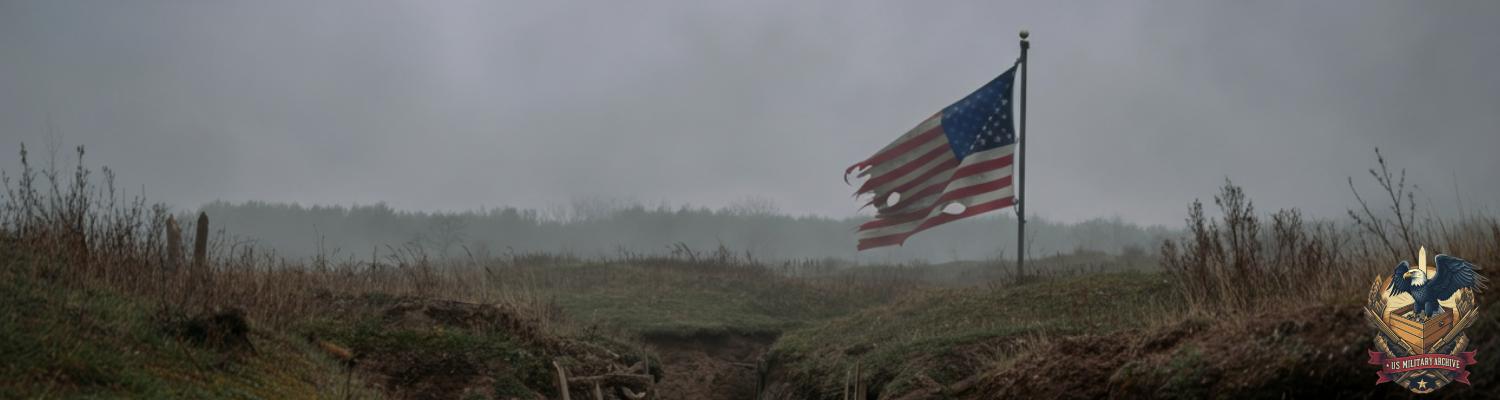

A War Fought With Paper and Ink
The Union’s victory was paid for with blood and treasure, but its currency, the 'greenback', faced a post-war insurgency of its own. By 1865, the financial system was septic with counterfeit paper. Contemporary estimates placed the volume of fake money as high as one-third of all currency in circulation. This was not a peripheral crime. It was a systemic attack on the nation's economic foundation. Every transaction, from a farmer buying seed to the government paying a veteran's pension, was suspect. Public trust, the bedrock of any economy, was dissolving. Merchants consulted weekly gazettes filled with diagrams of the latest forgeries, hoping to avoid financial ruin with each customer. The threat was so pervasive that it risked triggering a complete collapse of the fragile Reconstruction-era economy before it could even begin to heal.
Washington recognized the danger. The government needed a new weapon, one designed not for the battlefield but for the back alleys and clandestine print shops where this financial war was being waged. On April 14, 1865, the very day he would be assassinated at Ford's Theatre, President Abraham Lincoln met with Secretary of the Treasury Hugh McCulloch. Lincoln gave verbal assent to McCulloch's proposal for a new bureau dedicated to hunting the counterfeiters. The idea survived the President's death. Following through on the directive, the Secret Service Division was formally chartered within the Department of the Treasury on July 5, 1865. Its initial mandate was stark and narrow. It would find, infiltrate, and destroy the networks poisoning the nation’s currency. It was an acknowledgment that national security was inextricably linked to economic stability.
Forging Operatives from Army Veterans
The new division needed a unique kind of soldier for this new kind of war. The mission demanded men capable of navigating the criminal underworld, gathering actionable intelligence, and operating with lethal autonomy. They needed the discipline of a soldier fused with the cunning of a spy. The government found its raw material in the recently demobilized ranks of the Union Army. The initial recruitment strategy deliberately targeted former soldiers, detectives who had worked for agencies like the Pinkerton National Detective Agency, and intelligence operatives who had honed their skills in the crucible of the Civil War.
This was a calculated transfer of human capital. An army veteran understood chain of command, operational security, and the execution of coordinated action. They knew how to conduct reconnaissance, survive in hostile territory, and follow orders under pressure. The war on counterfeiting simply redefined the operational theater, swapping the Virginia countryside for the sprawling urban labyrinths of New York or the isolated towns of the Ohio River Valley where criminal enterprises flourished. The army's indirect influence was therefore foundational. It provided not just the men but the operational mindset that shaped the new agency. These recruits were not traditional lawmen. They were investigators and operators, tasked with proactive missions against organized opponents.
At the head of this new force was its first Chief, William P. Wood. Wood was a formidable and controversial figure, a man perfectly suited for the task. He had served as the superintendent of the Old Capitol Prison in Washington D.C. during the war, a position that put him in charge of Confederate spies, political prisoners, and other high-value detainees. He was a known associate of the aggressive Secretary of War Edwin Stanton and had earned a reputation as a relentless investigator and man-hunter. Wood was not a desk-bound administrator. He was an active participant in the field, known for his use of disguises and his willingness to personally lead raids. He understood that to defeat sophisticated criminal networks, he needed operatives who were just as resourceful and ruthless. His force of former soldiers and spies gave him exactly that.
Hunting the Coney-Men
Under Chief Wood's aggressive leadership, the Secret Service launched its campaign immediately. The organization's methods were novel for federal law enforcement at the time. Wood institutionalized the use of sustained surveillance and deep undercover infiltration as primary tools. This was exceptionally hazardous work. Operatives, as they were called, would adopt criminal personas and spend months earning the trust of the very gangs they were sent to destroy. Discovery meant mission failure and, very often, a violent end for the agent.
The counterfeiters were not amateur criminals. They were organized syndicates with national reach. The most dangerous rings employed master engravers and utilized advanced lithographic and photographic printing processes to create notes of alarmingly high quality. These organizations functioned like shadow corporations. They had manufacturers who produced the plates and printed the bills, wholesalers known as 'coney-men' who moved bulk product, and street-level distributors called 'shovers' or 'passers' who introduced the fake money into circulation. They exploited the patchwork of state and local jurisdictions, operating across state lines to frustrate pursuit.
One of the agency's signature tactics was the 'roper' operation. An operative would pose as a criminal looking to purchase a large quantity of counterfeit bills, known as 'coney'. The objective was to methodically work up the supply chain, using a purchase of 'soft' (low-quality fakes) to gain access to a seller of 'hard' (high-quality fakes), and ultimately to the source. This required immense nerve and a deep understanding of the criminal lexicon and culture. A single misstep, a wrong word, or a moment of hesitation could expose the agent. Despite the risks, the successes mounted quickly. In its first year, Wood's small agency, numbering fewer than thirty operatives, arrested over two hundred counterfeiters and seized numerous printing presses, making a tangible dent in the flow of bogus currency.
Specific cases demonstrated the scale of the challenge. The long pursuit of William E. Brockway, an artisan forger who specialized in government bonds and was known for his technical genius, occupied the agency for years. Dismantling entire counterfeiting communities, like the notorious ring based in Brookville, Indiana, required a different strategy. Here, a significant portion of the local economy and population were complicit in the illegal trade. Agents had to infiltrate not just a gang, but a whole town. These early operations were a brutal, hands-on education in the realities of fighting organized crime on a national scale.
A Blueprint for Federal Enforcement
The Secret Service's initial campaign against the greenback forgers provides a compelling case study in the evolution of American security institutions. The lessons forged in this silent financial war had direct implications for the future of both law enforcement and military development. The agency's creation established a successful model for a small, adaptable, and elite federal investigative body. It proved that a dedicated force, operating with a clear national mandate, could effectively counter a domestic security threat that fell outside the traditional purview of the military.
The deliberate recruitment of military veterans was a cornerstone of this success. It proved the direct transferability of military skills, discipline, and ethos to a domestic security mission. The ability of these former soldiers to operate with initiative, conduct clandestine intelligence gathering, and maintain operational security was instrumental. This provided a blueprint for leveraging the human capital forged in military service for broader national security goals. The army’s indirect influence was profound, providing the personnel and the operational doctrine that defined the new agency from its inception.
The operational tactics themselves, particularly the emphasis on intelligence-led infiltration and proactive investigation, set a new standard. Before the Secret Service, federal law enforcement was largely reactive and hamstrung by jurisdictional boundaries. Wood’s operatives demonstrated the power of a federally coordinated, intelligence-driven approach to dismantling criminal networks that spanned the continent. This created a template that would inform the structure and methods of future national agencies, including the eventual Federal Bureau of Investigation. The early successes of the Secret Service offered a powerful validation. A focused, well-led, and properly resourced organization could contain and degrade a persistent national security threat, even one operating within the nation's own borders. The threat of financial crime would evolve, but the core lesson was established. The model of a highly trained, intelligence-driven force, born from the fusion of military discipline and investigative cunning, provided an enduring framework for confronting the asymmetrical challenges of the future.