
Operation Cerberus: Simulated Attack
A close review of operational logs from 1968 (document JCS-EX-44B) reveals a joint-service exercise designed to test the efficacy of a chemical weapons strike in a dense urban environment. The operation involved elements of the U.S. Army's 9th Chemical Company, forward-deployed from Fort Clayton, Panama, and the U.S. Air Force's 31st Tactical Fighter Wing, flying F-4 Phantom IIs. The target was not a remote training range. It was the commercial heart of San Juan, Puerto Rico. Planners designated key infrastructure nodes within the Hato Rey and Santurce districts as the simulated objectives. These districts, with their mix of mid-rise concrete office buildings, sprawling commercial centers, and dense residential apartments, were chosen to represent a theoretical enemy command-and-control network embedded within a civilian populace. The exercise’s primary goal was to model the rapid neutralization of this network using a new generation of nerve agent munitions. Archival evidence shows the strategic driver was a Cold War doctrine focused on preparing for potential conflicts in European or Asian cities. San Juan was a convenient, if deeply problematic, stateside proxy for a foreign urban battlefield.
The core of the simulated attack centered on the 500-pound M23 chemical bomb. This munition was a purpose-built aerosol delivery system for the nerve agent Sarin, designated GB by the military. The bomb’s design consisted of a thin-skinned steel casing intended to be shattered, not to penetrate a target. Internally, a central high-explosive burster charge was surrounded by approximately 180 pounds of liquid GB, a non-persistent but highly lethal organophosphate compound. The delivery profile for Cerberus called for a low-level attack run by the F-4s. The release of the M23s would use a barometric fuze set for a low-altitude airburst. This method was intended to maximize the dispersal of the sarin agent as a fine aerosol cloud over a wide area, saturating the target zone and incapacitating personnel through inhalation and skin exposure. The mechanics were precise. The fuze would detonate the burster charge at a predetermined height, creating an instantaneous, expanding cloud of nerve agent designed to drift down into streets and through ventilation systems.
The initial planning phase of Operation Cerberus contained a significant underestimation of the weapon’s potential effect on the civilian sector. The planners, working from the Deseret Test Center in Utah, relied heavily on dispersal data gathered from previous tests over open, arid terrain. These atmospheric models, based on predictable wind patterns and the absence of structures, were wholly inadequate for the unique environment of a tropical coastal city. They failed to account for the “urban canyon” effect, where tall buildings would channel the agent in unpredictable directions. They also missed the thermal updrafts generated by asphalt and concrete that could lift and spread the aerosolized sarin far beyond the intended target grid. The commercial sectors of Hato Rey were not a flat, empty desert. They were a complex three-dimensional landscape of structures, alleyways, and open-air plazas, all subject to shifting, humid sea breezes from the Atlantic. Operational maps show the designated drop zones laid directly over major commercial thoroughfares, assuming a neat, circular dispersal pattern that bore no resemblance to the chaotic reality of urban airflow. The potential for the agent to be drawn into the powerful air conditioning systems of large department stores and office buildings was never adequately modeled.
Decontamination Zone Collapse
The responsibility for establishing a functional decontamination corridor fell to the 10th Engineer Battalion. This was a storied unit with a history of spanning rivers under fire in Europe, but it possessed no practical experience in large-scale chemical warfare response. After-action reports detail a frantic effort to improvise. Along a stretch of Puerto Rico’s Highway 2, a major artery connecting San Juan to the island’s western municipalities, the engineers threw together a series of hasty decontamination points. These were not the robust, hardened facilities envisioned by Chemical Corps doctrine. They were designated lanes sectioned off with engineer tape and traffic cones, centered around key intersections near Bayamón and Toa Baja. The plan called for a multi-stage process: a gross wash-down station for vehicles, followed by a detailed equipment and personnel line. The engineers, pulling from their standard construction inventory, erected canvas tents and wooden platforms. The entire operation was predicated on a speed that defied the complex realities of chemical containment. The flow of simulated casualties and contaminated vehicles was expected to be large, and the engineers were forced to build their infrastructure directly on the hot asphalt of a major civilian highway, creating an immediate bottleneck.
The entire system depended on knowing what was contaminated. Here, the first systemic failure occurred. The primary tool for detecting the liquid GB simulant was the standard-issue M8 detector paper, a simple booklet of tan-colored sheets designed to change color when exposed to specific chemical agents. A yellow spot would indicate a G-series nerve agent like Sarin. Field reports from Cerberus, however, show a high rate of assessment failure. The M8 paper, while reliable in temperate and dry climates, proved dangerously inconsistent in the high humidity and ambient heat of a Puerto Rican afternoon. The indicator dyes suspended in the paper matrix were highly sensitive to moisture. The tropical air itself was enough to degrade their effectiveness. Compounding this was the improper storage of the test kits during their rapid deployment from Panama. Units were getting false negatives, dabbing the paper onto surfaces slick with simulated nerve agent and seeing no color change. This led to a cascade of poor decisions. Vehicles and personnel who were still contaminated were waved through the initial checkpoints and declared clean. They then moved deeper into the supposedly safe zones, carrying the hazard with them. The very equipment meant to establish the boundary between dirty and clean was compromised before the first casualty arrived.
Decontamination is a water-intensive process. A single vehicle requires hundreds of gallons for a thorough cleansing, and a personnel line needs a constant, high-pressure flow. The 10th Engineers’ improvised sites along Highway 2 had no dedicated water source. They attempted to tap into local municipal fire hydrants, but the pressure was wholly inadequate for the task, producing a weak stream instead of the powerful spray needed to dislodge the oily agent. The exercise planners had allocated a handful of M49 water tankers, 2.5-ton trucks carrying 1,200-gallon tanks, but records show only two were available for the entire operation. These were quickly exhausted. The result was a logistical breakdown. Contaminated crews sat in their vehicles for hours in the tropical heat, waiting for water that was not there. The lack of fresh water meant that the limited supply was quickly fouled, effectively forcing soldiers to wash themselves with contaminated runoff. This failure transformed the decontamination zones into contamination zones, concentrating the hazard and guaranteeing maximum exposure for the very soldiers tasked with cleaning it up.
Secondary Contamination Crisis
The breakdown of the decontamination line was only the first wave of failure. A close review of operational logs indicates that the false negatives from the moisture-damaged M8 detector paper created a phantom clean slate. At least three M113 armored personnel carriers from the 10th Engineer Battalion, incorrectly cleared at the Highway 2 checkpoint, proceeded east toward the designated command-and-control regroup point. Archival evidence shows their route took them directly through the dense suburban sprawl of Guaynabo. The simulated GB agent, an oily compound with a glycol base designed to mimic the viscosity and persistence of the real weapon, was smeared across their tracks and hulls. As the vehicles rumbled over the hot asphalt, they aerosolized the simulant. This created a low-hanging vapor trail. This vapor was then drawn into the powerful air conditioning units of local businesses and the open windows of residential homes lining the route. The contamination was no longer confined to military vehicles; it was now a fine, invisible mist settling on civilian surfaces. First responders, primarily local Puerto Rican Civil Defense units acting as exercise role-players, were staged at intersections to manage traffic for the military convoy. They received radio confirmation that the vehicles were clean. These responders, operating without any protective equipment, were directly exposed as the contaminated APCs passed within feet of their positions. This created the first vector of secondary exposure among the people tasked with managing the crisis.
The primary medical triage station was established by a forward element of the 249th General Hospital near the Río Piedras Botanical Garden, chosen for its open space and access to major roads. The first simulated casualties to arrive were not soldiers from the hot zone, but members of the Civil Defense traffic teams and even soldiers from the 10th Engineer Battalion convoy who had begun showing symptoms. Medical records from the exercise log detail a state of deep confusion. Medics on site, briefed to expect conventional injuries, initially diagnosed the incoming patients with severe heat exhaustion. The symptoms appeared similar at first glance: disorientation, nausea, and profuse sweating. The triage officers, following standard procedure for heat casualties, moved these individuals into designated cooling tents. This decision proved ruinous. Placing sweating, contaminated personnel in enclosed spaces with fans blowing created a highly efficient nerve agent distribution system inside the medical tents themselves. Medics treating these patients with intravenous drips and cold compresses were unknowingly coating their hands and uniforms in the simulant. The simulant then transferred to every surface and every other patient they touched. The triage station became an incubator for the agent.
The frontline medical response dissolved. When the first patient began exhibiting the unmistakable signs of nerve agent poisoning, pinpoint pupils, violent convulsions, and respiratory arrest, the medical teams understood their error. The problem was their equipment. A review of the 249th’s supply manifest for the exercise shows they were issued only a fraction of the required atropine auto-injectors, the primary antidote for GB exposure. A single medic, Captain John Miller, reported in his after-action debriefing that his platoon of twelve medics had only twenty auto-injectors among them for an event with hundreds of participants. Attempting to perform delicate tasks like intubating a seizing patient or finding a vein for an IV line was nearly impossible while wearing the cumbersome M17 protective mask and thick butyl rubber gloves. The masks fogged over in the humid air, reducing visibility to near zero. The gloves robbed them of all tactile sensation. Communication equipment, primarily the PRC-25 radios, became vectors of contamination, forcing teams to either risk exposure to report their status or maintain a self-defeating radio silence. The medics were tasked with saving others. They were now becoming casualties themselves. At least seven medics from the initial triage team were rendered combat-ineffective within the first hour of recognizing the chemical threat.
Cordon Sanitaire Establishment
A review of the Joint Task Force command logs from the afternoon of the exercise reveals a moment of operational paralysis. This was followed by a decision of extreme consequence. At his command post at the former Ramey Air Force Base, Brigadier General Wallace, the overall exercise commander, was being fed two entirely contradictory narratives. The first reports filtering up the chain of command came from the 9th Chemical Company, the unit directly responsible for the initial contamination and cleanup modeling. Their communications, based on the persistent false negatives from their moisture-degraded M8 detector paper, painted a picture of a contained and rapidly dissipating chemical threat. Their field officers reported that the simulant was breaking down under the intense solar radiation and high humidity. The second, more chaotic stream of information came directly from the battlefield. It was a torrent of panicked radio calls from the 249th General Hospital’s triage station and the Puerto Rican Civil Defense liaisons. They spoke not of dissipating chemicals, but of spreading casualties, of medics collapsing, and of symptoms appearing miles outside the designated hot zone. Wallace was faced with a choice: trust the technical assessment of his chemical warfare specialists or trust the terrified voices of the men on the ground.
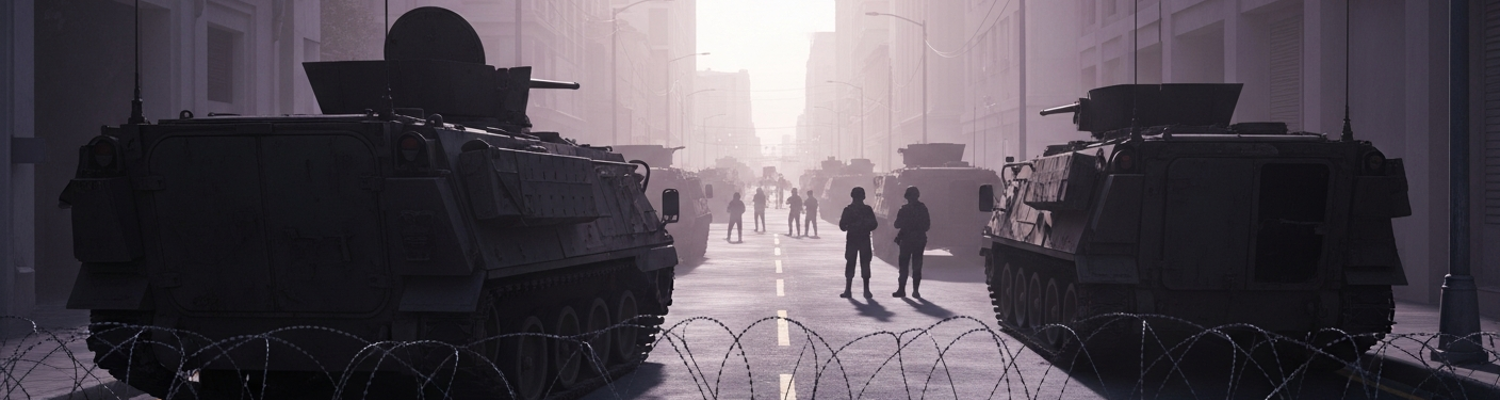
The command directive, designated OPORD 68-C, was issued with Wallace’s authority. It was transmitted to all subordinate units. The order was to establish a 'cordon sanitaire'. This was not a standard military term for a simple blockade; it was a medical term, a quarantine line drawn to contain a disease. The operational objective was no longer to track a simulated chemical agent but to isolate a contaminated population center as if it were a plague zone. The order activated the 544th Military Police Company and placed elements of the Puerto Rico National Guard under direct JTF control. Their mission was not to decontaminate or to render aid. It was to build a wall, using trucks, concertina wire, and armed soldiers, around a huge swathe of the San Juan metropolitan area. The plan was born of desperation. It was an admission that the situation was so far out of control that the only remaining military option was to cauterize the wound by sacrificing whatever and whoever was trapped inside.
Archival maps marked with grease pencil show the sheer, unplanned scope of this decision. The boundaries of the cordon were not precise. They were drawn along major, easily blocked transportation arteries. The line ran from the Atlantic coast, down along the borders of Old San Juan, and then hooked south and east to encompass the entirety of Santurce, Hato Rey, and significant portions of Río Piedras and Guaynabo. Units of the 544th MP Company established hard roadblocks on the PR-22, PR-1, and PR-52 expressways, the primary routes connecting the capital to the rest of the island. National Guard soldiers were dispatched to block hundreds of secondary roads and neighborhood streets. The result was the instantaneous isolation of a population estimated to be well over 200,000 people. These were civilians who, just moments before, had been going about their daily lives. Now, they were sealed inside a military quarantine zone with no warning, no information, and no plan for their support or evacuation.
Inner Zone Medical Catastrophe
Within hours of the cordon’s establishment, the first wave of mass civilian casualties began. This was not a sudden event, but a quiet affliction that started in the homes and businesses closest to the path of the contaminated M113 carriers. Archival public health data, cross-referenced with military logs, shows the initial clusters emerging in the dense residential blocks of Guaynabo and the southern portions of Hato Rey. The attack was physiological. It began with a tightness in the chest and a sudden, inexplicable flood of secretions. Runny noses and watering eyes were initially dismissed as allergies. This quickly progressed to the agent’s signature neurological assault. Pupils constricted to tiny, unresponsive pinpoints. This was followed by waves of nausea, uncontrollable vomiting, and violent muscle fasciculations that made victims appear to writhe beneath their own skin. Thousands of people, trapped in their apartments and workplaces, were experiencing the textbook effects of organophosphate poisoning. The delayed, aerosolized simulant, drawn into air conditioning intakes and settling in unventilated spaces, was attacking their nervous systems. It blocked the enzymes that regulate basic bodily functions and led to a cascading system failure that culminated in convulsive seizures and respiratory arrest.
The local medical infrastructure inside the quarantine zone was completely submerged. At the Auxilio Mutuo Hospital in Hato Rey, a facility that had served the community since the 19th century, the emergency room descended into chaos. A review of translated radio intercepts from the Puerto Rican Civil Defense network paints a harrowing picture. Doctors and nurses were confronted by hundreds of patients arriving simultaneously with bafflingly similar, severe symptoms. The initial working diagnosis was a form of mass food poisoning or an unprecedented outbreak of acute asthma. This misidentification proved fatal. Patients were moved into crowded hallways and wards, turning the hospital itself into a secondary contamination site. Medical staff, working without any form of chemical protection, became casualties through contact with their own patients' skin and clothing. Hospital records document the complete exhaustion of intravenous saline bags and oxygen tanks within the first three hours. More significantly, the hospital’s pharmacy had no stockpiles of atropine or pralidoxime chloride, the only effective nerve agent antidotes. They were trying to treat a chemical weapon attack with sedatives and respiratory stimulants, actions that had no effect on the agent’s lethal mechanics.
What remained of an organized response inside the cordon fell to disparate groups of trapped soldiers and local first responders. They attempted to establish desperate, impromptu triage points. A small contingent of Puerto Rico National Guardsmen, on-site for traffic control duties during the exercise, took over the gymnasium of a Catholic school in Santurce. Lacking any M8 detector paper or protective masks, their efforts were based on guesswork. They used fire hoses connected to municipal hydrants to spray down panicked civilians, a technique that did little to remove the oily agent and succeeded only in spreading the contamination further while creating clouds of toxic vapor. A separate effort by a handful of medics from the 249th General Hospital, who had been cut off from their main unit, established another collection point in the parking lot of the Plaza Las Américas shopping center. They possessed a handful of atropine auto-injectors, but their attempts at triage were futile. They could not distinguish the merely panicked from the genuinely exposed until the final, convulsive stages of poisoning, by which point antidote administration was often too late. Their aid station, like the one at the school, quickly became another cluster of casualties, as the medics themselves succumbed to the very agent they were trying to treat.
The exercise was designed to simulate control over a chemical weapon. Its complete and systemic failure provided a different lesson. The final after-action report (JTF-CERBERUS AAR 7-68) contained a single, heavily redacted addendum. It stated that the true outcome of Operation Cerberus was not a model of a successful chemical strike, but a definitive demonstration of its absolute uncontrollability within a living city. The simulation had become the proof.