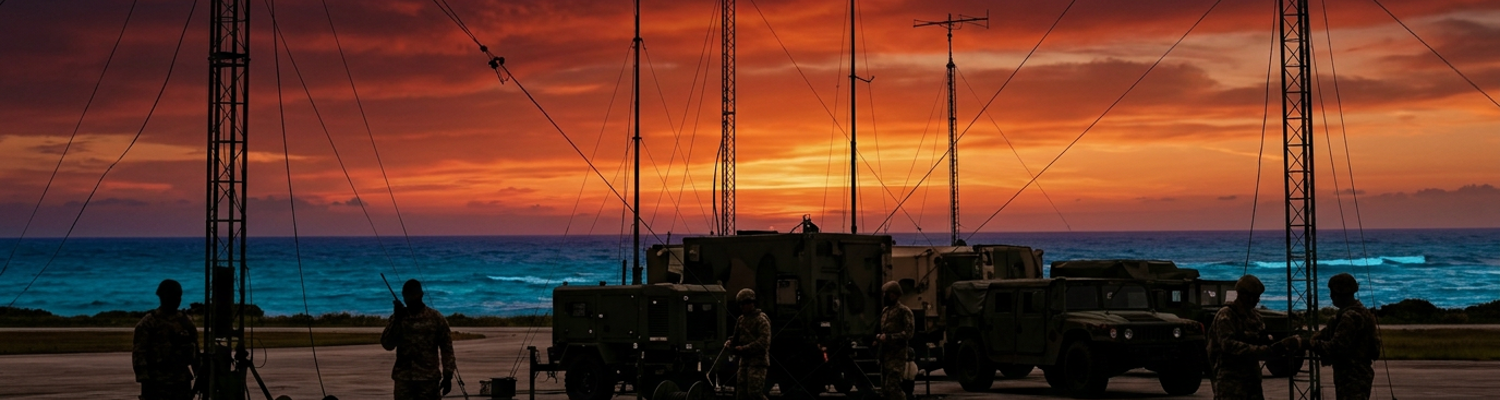

Terminal Staging and Logistics
Radio operators inside the concrete terminal at Beirut International Airport detected a complete loss of transmission signals across the primary naval tactical net. Captains and field dispatchers leaped toward the radio bench to trace the dead carrier frequency back to the main antenna mast. Airborne commanders on the tarmac demanded immediate contact with the Sixth Fleet command ships anchored offshore. Incoming transport planes carrying the 24th Airborne Brigade were already descending through low clouds without radar coordination. Task Force 201 commanders ordered their signal staff to bypass normal protocols and force a secondary link across shortwave channels before approaching aircraft committed to the landing pattern. Technicians cranked heavy diesel emergency generators to sustain the weak carrier signal to prevent heavy air transports from entering uncoordinated holding patterns over hostile terrain.
Signal Corps detachments wrestled with these strained diesel generators while confronting crippling transport shortages that had stranded their heaviest long-range radios at airbases in West Germany and Turkey. Planners organizing Task Force 201 had prioritized infantry battalions and recoilless rifles over heavy signal vans during the initial airlift. Communication specialists stood with bare equipment on the exposed concrete runways of Beirut in July 1958. Bureaucratic delays between European Command in Frankfurt and Mediterranean shipping depots held up essential replacement parts and directional antenna towers. Soldiers spent critical minutes running basic telephone wire through baggage tunnels and across taxiways by hand to bridge gaps between isolated terminal rooms. Operators improvised physical wire splices under intense Mediterranean heat to compensate for missing switchboards and antenna couplers.
Wire splices offered temporary relief across the airport perimeter as operators struggled to push voice signals out to Sixth Fleet command ships riding at anchor several miles from the coast. Salt air and differing military radio standards between the Army and the Navy scrambled voice packets into bursts of squealing noise. Radiomen tapped physical Morse keys frantically on high-frequency channels to bypass jammed voice frequencies and pass flight schedules to fleet air controllers. Navy signal officers on the command deck of the USS Taconic strained to decipher the faint hand-keyed pulses coming from the airport tower. Air controllers tracked the arrival of 24th Airborne Brigade aircraft every few minutes through these faint static signals. Command staffs realized that ground forces lacked the continuous line of sight links needed to coordinate air traffic or request immediate naval gunfire support.
Riggers hauled an AN/GRC-19 radio set onto the flight control rooftop to establish a direct line of sight over the sandy coastline. Two young corporals lashed the whip antenna to a steel water pipe using canvas cargo straps while ignoring sweat and sniper warnings from the surrounding olive groves. Hand adjustments on the receiver dial aligned the ground signal with the naval task force frequency just as the lead transport entered its final approach glide. Clear voice confirmation suddenly answered from the bridge of the flagship to give the runway tower clearance to land the airborne troops. Task Force 201 officers grabbed the handset to confirm safe touchdown zones and lock down airport logistics.
Microwave Radio Relays and Information Warfare
Signal Corps crews wheeled AN/TRC-24 microwave radio relay sets onto the airport perimeter to establish multi-channel links between the newly secured airhead headquarters and tactical command posts pushing into Beirut. Technicians bolted heavy directional antenna masts to steel mounts beside the main runways and aimed the microwave reflectors toward forward observation sites on the high ground overlooking the capital. These multi-channel radio sets replaced the fragile field telephone wires that ground vehicles repeatedly crushed on the taxiways. Operators worked inside metal shelter vans under intense Mediterranean heat that threatened to overheat the sensitive vacuum tubes. Technicians swapped out blown power components to keep all twelve communication channels running and eliminate the coastal radio interference. This unbroken transmission path gave headquarters staff the reliable reach needed to direct psychological operations units preparing to counter hostile rumors across the city.
Leaflet specialists used that steady data flow to draft clear appeals for calm and ran Army presses around the clock to produce hundreds of thousands of bilingual informational leaflets. Air crews loaded the heavy bundles of Arabic and English paper slips into the cargo holds of low-flying transport planes. Pilots flew repeated sweeps directly over the insurgent stronghold in the contested Basta district. Loadmasters kicked the unbound stacks through open fuselage doors into the air stream to scatter thousands of individual sheets across rebel barricades and narrow cobblestone alleyways. The printed messages assured Lebanese civilians that American troops had entered the country solely to support legitimate authority and protect international peace. Militia fighters in the Basta quarter gathered the fallen papers from the streets and lowered their rifles as air observers reported a noticeable decline in sniper fire along the urban perimeter.
Loudspeaker trucks from the psychological operations detachment exploited this sudden drop in firing by rolling directly toward the militia checkpoints along the neighborhood boundary. Specially fitted utility vehicles carried high-wattage amplifiers and directional speakers on their roofs to broadcast recorded and live de-escalation messages in Arabic. Drivers kept their engines running in low gear while bilingual interpreters spoke into hand microphones to urge local fighters to keep their gun barrels pointed at the ground. Operators in the truck cabs kept their own weapons out of sight to prevent accidental skirmishes and relied on clear voice instructions to de-escalate confrontations at each barricade. Crewmen maintained continuous radio contact with airport relay stations through their vehicle antennas to report shifting rebel positions back to tactical operations officers. Insurgent sentries behind the sandbags gradually stepped back from their defensive parapets to allow American reconnaissance patrols to establish safe buffer checkpoints along the boulevard.
M24 Chaffee Armor Confrontation
U.S. Marines advancing past the initial beachhead braked their lead vehicles to an abrupt halt when Lebanese Armed Forces tanks swung their main guns across the roadway. The American airborne infantrymen had stepped directly into an armed checkpoint where Lebanese tank crews traversed their turrets and chambered high-explosive rounds. Soldiers from the lead airborne platoon scrambled off the tarmac into roadside ditches and leveled their rocket launchers at the steel hulls of the light tanks. Commanders desperately motioned for both sides to hold their fire while company officers grabbed their field telephone handsets to contact Task Force 201 headquarters. The earpieces gave off only dead silence as the officers attempted to report the armed confrontation.
Telephone wires linking the forward airborne vanguard back to the airport operations center had snapped beneath the heavy civilian traffic pouring out of Beirut. Signal Corps detachments had run lightweight field wire along open street gutters and through jagged rubble because heavy cable-laying trucks remained stranded in European staging depots. Civilian buses and American tactical transports repeatedly crushed the fragile plastic insulation against sharp curbs to sever the thin copper conductors inside. Urban masonry walls and low concrete buildings formed severe physical obstacles that simultaneously blocked tactical radio signals. Lead paratroop commanders stood isolated on the hot asphalt and remained unable to request orders or warn the approaching main body of infantry.
Linemen from the battalion signal section leaped from the trailing command vehicle into the dust and raced toward the severed field wire. Lebanese tank gunners tracked their movements through optical sights as the sergeants stripped frayed wire ends with pocket knives. Two paratroopers hoisted the insulated lines onto utility poles to clear the wheels of passing vehicles while the sergeants clamped fresh field splices together. Specialists in the roadside ditch simultaneously assembled a portable tactical radio and hoisted its flexible whip antenna onto a metal signpost to push a voice carrier wave over the intervening rooftops. Static burst across the radio speaker precisely four minutes into the standoff to carry the voice of the airport operations officer. The forward airborne captain shouted coordinates into the handset to demand that Lebanese military liaison officers order their armor crews to power down their engines.
Radio transmitters at the Lebanese defense ministry flashed immediate stand-down orders across the tactical tank net less than sixty seconds later. Lebanese tank commanders raised their hatch lids and gave hand signals to their drivers to cut their tank engines. American paratroopers eased their fingers off their rocket launcher triggers and slowly climbed out of the drainage ditches. Signalmen secured the elevated telephone wire to the utility poles with friction tape and established a permanent wire checkpoint beside the idling tanks. Marine infantry platoons formed into column formation along the road shoulder and moved past the parked Lebanese tanks toward their assigned defensive sectors around the edge of the capital.
Switchboard Wire Patch Execution
Riflemen advancing into the southern approaches of the city encountered immediate friction at a dusty crossroads where barricades of overturned trucks blocked the road. Militia fighters leveled bolt-action rifles from adjacent rooftops while an uncoordinated convoy of field ambulances from the improvised airport hospital sped directly toward the intersection. Drivers in the medical column had no knowledge that the crossroads had become an active combat zone. Forward checkpoint commanders reached for their field telephones to divert the convoy and discovered that the tactical line had gone completely dead. Heavy truck tires had dragged the freshly laid wire across the sharp corner of a concrete culvert and cut the copper strands clean through. Both sides had exactly five minutes before the medical vehicles entered the blind kill zone.
Linemen from the brigade signal platoon dropped onto their stomachs and crawled directly beneath the sightlines of armed irregulars to reach the severed break. Technicians pulled portable crimping pliers and rolls of black rubber tape from their canvas pouches while snipers tracked their helmets from second-story window frames. Sergeants checked their wristwatches against the two-minute mark as the linemen scraped away frayed vinyl coating with utility blades to expose fresh metal. Technicians twisted the bare conductors together and hammered emergency splices into place to seal the exposed joints with waterproof friction tape. Field linemen yanked the slack line into the roadside ditch and clipped their test handsets to the repaired core just as the four-minute mark passed on the tactical clock.
Switchboard operators inside the airport terminal seized the restored circuit the instant current registered across the indicator lamps. Signal technicians inserted brass patch cords into a manual switchboard and tied the ground wire from the forward roadblock directly into the transmitter net. Doctors and triage staff had set up operating tables inside the cleared baggage terminal and remained completely unaware that their departing medical evacuation run was barreling straight toward an armed standoff. The electronic bridge allowed voice traffic to jump instantly between wire lines on the city street and the radio waves pulsing into the airport medical station. Airborne officers at the roadblock shouted into their handsets and broke through the receiver speakers at the triage desk seconds before the ambulances crossed the final perimeter bend.
Surgeons at the hospital triage desk grabbed their tactical radio handsets and ordered the ambulance drivers to halt immediately short of the roadblock. Brakes screeched across the pavement as the lead ambulance stopped fifty yards from the barricade to keep the medical team out of the field of fire. Forward airborne officers used the live patch to confirm the identities of both the medical personnel and the militia leaders over the open frequency. Paratroopers and militia fighters lowered their carbines once they recognized that the approaching convoy carried wounded civilians and medical supplies rather than assault troops. Signal crews secured the patched line to concrete lampposts along the avenue and left an open channel between the forward outposts and the airport hospital.
Signal Doctrine and Cold War Readiness
Patrol commanders along the avenue monitored the quiet street through their field binoculars and validated the improvised tactical wire to radio patching under austere crisis conditions. Airborne officers reported to Task Force 201 headquarters that the quick electronic bridge between the switchboard and the medical radio net had saved the approaching ambulances. Linemen kept their test handsets clipped to the spliced wire terminals beside the roadblock and monitored line resistance to ensure the fragile copper strands sustained the continuous voice traffic. Signal sergeants sketched the wiring layout in grease pencils across canvas notebooks on the hood of a command jeep to record the exact battery connections and patch cords. Dispatchers at the airport terminal relayed these tactical sketches directly to logistics planners to confirm that the ad hoc patch had successfully prevented an armed disaster.
Planners compiled those field sketches during technical reviews of Operation Blue Bat to prompt standardized expeditionary signal doctrine for rapid deployment Army brigades. Military evaluators in Washington documented that the early communications failures in Lebanon had stemmed from severe air transport shortages and an overreliance on fragile civilian telephone wire. Doctrine writers emphasized that rapid strike forces deployed to foreign crises could no longer depend on lumbering communications vans that took days or weeks to arrive on sea transports. Senior military planners and communications officers urged the Department of the Army to supply all airborne units with compact radio relay packages that could drop from cargo planes alongside the lead infantry assault waves. Pentagon leadership approved these operational recommendations and published formal readiness directives that established unified communications packages as mandatory equipment for every contingency force.
Engineers at the Army Signal Corps laboratories in New Jersey converted these mandatory directives into physical hardware by designing rugged switchboard patch kits for frontline units. Technicians manufactured durable patch cords and specialized audio connectors that allowed soldiers to hook tactical radios directly into manual field switchboards with a single plug. Linemen in airborne and infantry units received newly reinforced wire lines engineered to withstand heavy truck tires on paved city streets without crushing the internal conductors. Instructors at the Army Signal School incorporated these lessons into combat training programs and required new recruits to practice stringing elevated lines across telephone poles. Drill sergeants timed trainees with stopwatches in field exercises and graded radio operators on their ability to locate severed lines and establish working cross network patches within five minutes.
Quartermaster depots crated thousands of these standardized expeditionary signal kits and shipped them directly to airborne garrisons in West Germany and North Carolina. Riggers lashed the lightweight radio sets and switchboard patch units onto standard wooden cargo pallets and sealed them inside weatherproof canvas covers for immediate loading into transport aircraft. Signal companies assigned dedicated technical teams to ride in the lead planes of every airborne alert force to guarantee that commanders on the ground would have unbroken voice contact. Brigade leaders stacked these prepackaged communications pallets inside designated staging hangars beside the runway flight lines. Technicians remained on round-the-clock alert beside the tied-down gear to maintain immediate deployment capability for future global operations.