
July 12 Strike and Offshore Evacuation Directives
Mogadishu was quiet at 1000 hours on July 12, 1993. Air hung motionless over the concrete villas along Digfer Road. Inside the walled residential compound belonging to Habr Gidr clan leader Abdi Hasan Awale, faction elders and armed militiamen sat gathered in dense clusters. Morning traffic had stalled. No breeze moved inland off the Indian Ocean. Seventeen minutes later, six American attack helicopters broke the calm. They fired sixteen TOW anti-tank guided missiles and over two thousand rounds of 20-millimeter cannon fire directly into the two-story structure. Concrete walls buckled inward under high-explosive overpressure. Roof slabs sheared. Interior rooms collapsed into pulverized rubble.
The strike generated severe casualties requiring immediate specialized surgical intervention.
Blast waves shredded limbs. Concrete fragments blew through flesh. Dozens of occupants suffered penetrating torso trauma while pinned beneath tons of collapsed rebar. Ground security forces securing the perimeter encountered survivors with complex internal hemorrhaging and traumatic amputations. These injuries instantly overwhelmed standard forward medical aid assets. Forward aid stations lacked both whole blood products and sterile operative capacity.
Archival evidence shows that local commanders altered casualty routing to bypass the vulnerable shore installations.
10th Mountain Division aeromedical UH-60 aircrews were tasked with staging casualty evacuation flights across the littoral zone. Flight crews assigned to the 10th Aviation Brigade spun up their twin T700 turboshaft engines on the concrete at Mogadishu International Airport. They lifted off under immediate threat from urban sniper fire. Pilots maintained low-level flight corridors over the shoreline to evade shoulder-fired rocket-propelled grenades. They pushed their aircraft out past the breaking surf into open water.
Army aircrews encountered immediate technical friction during this transition into maritime space.
Salt spray encrusted windshields and air intakes within minutes. Standard Army FM tactical radios failed to establish reliable voice communication with naval air controllers operating across high-frequency and ultra-high-frequency bands. Navigation officers in Black Hawk cockpits had to spot ships visually across rolling ocean swells without surface-search radar displays. Onboard flight medics struggled to control exsanguinating trauma in vibrating passenger cabins. Incompatible radio cryptographic systems left incoming Army aircraft orbiting aimlessly over open water without designated approach corridors.
A close review of operational logs indicates that Fleet Surgical Team 8 aboard USS Wasp (LHD-1) served as the primary offshore medical destination for critical trauma cases.
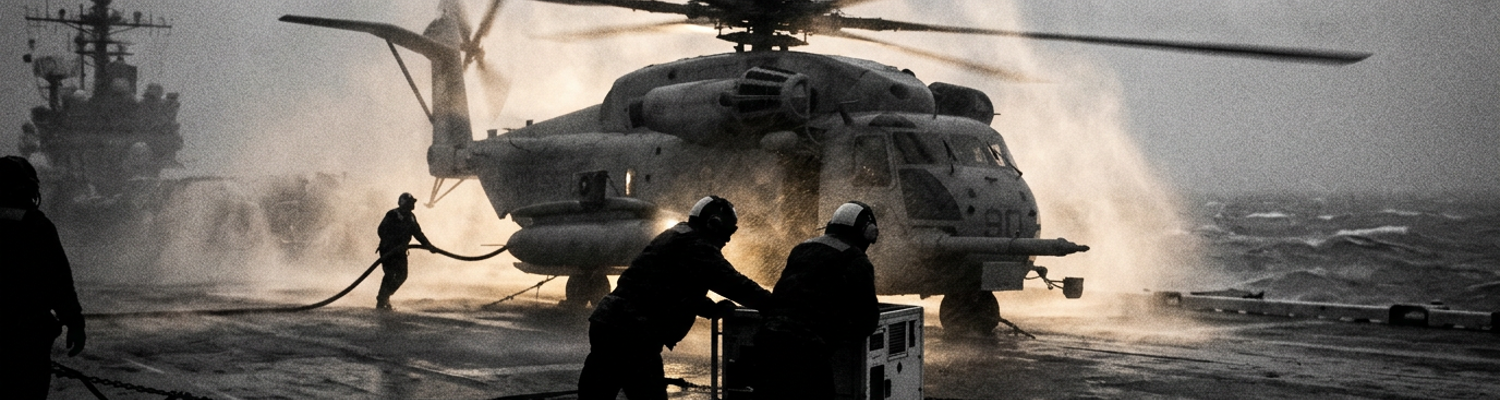
Positioned twelve nautical miles off the Somali coast, the amphibious assault ship housed six fully operational surgical suites. The vessel contained a seventeen-bed intensive care complex and an expansive blood bank. Navy flight deck officers initially stalled landing clearances because the 10th Mountain Division aircrews lacked formal shipboard deck-landing qualifications. This created an administrative delay while patients bled out on litters hundreds of feet above the sea. Once deck clearance was granted, Navy deck handlers had to secure the Army UH-60 airframes with tie-down chains against rotor wash and deck roll.
Fleet Surgical Team 8 medical personnel met the aircraft at the flight line.
They transferred dynamic casualties onto litter racks before rushing them down internal elevator banks into primary surgical triage. Navy trauma surgeons worked through consecutive cycles across multiple operating tables. They debrided wounds packed with pulverized masonry. Surgeons performed emergency exploratory laparotomies alongside complex vascular shunts. By midnight, surgical teams aboard the amphibious carrier had consumed forty-eight units of packed red blood cells.
Deck Landing Qualification Disputes and Air Traffic Bottlenecks
Procedural friction peaked the moment inbound 10th Mountain Division UH-60 Black Hawks crossed the five-nautical-mile control zone boundary around the amphibious ready group.
Inside the Amphibious Air Traffic Control Center aboard USS Wasp, radar controllers monitored four radar targets closing from the coastline at ninety knots. Navy watch officers immediately halted their approaches. Under standard Naval Aviation Training and Operating Procedures Standardization manuals, non-carrier-qualified aviators were barred from executing vertical recoveries onto an active flight deck without explicit flag officer waivers or certified Deck Landing Qualification credentials.
The 10th Aviation Brigade pilots possessed zero shipboard flight hours.
None had completed the requisite carrier-controlled approach evolutions or deck-landing familiarization runs at naval air stations prior to deploying to Somalia. Flight deck controllers instructed the lead Black Hawk to orbit over water at eight hundred feet. They refused to yield landing slots on Spots 4 and 5 while watch supervisors checked naval regulations (NAVAIR instruction 00-80T-105). Shipboard flight handlers would not clear the deck crew until the pilots confirmed their certification codes. This forced Army aviators carrying critical surgical cases to circle open swells while fuel gauges dipped toward emergency reserves.
Red tape held priority over trauma surgery.
This paralysis stemmed directly from a total breakdown in liaison protocols between the UNOSOM II ground headquarters at the former United States Embassy compound and the naval task force afloat. Ground operations coordinators in south Mogadishu assumed that declaring an emergency casualty evacuation automatically superseded naval air space restrictions. UNOSOM operations officers transmitted urgent radio requests over tactical ultra-high-frequency frequencies to clear incoming flights straight to the surgical bays.
Shipboard controllers on the amphibious assault ship operated on standard fleet defense postures.
They demanded formal flight plan filings, Mode II identification codes, and assigned approach corridors before breaking combat air patrols. Radio rooms aboard USS Wasp could not decrypt tactical messages sent across Army secure communications systems. This created twenty-minute gaps where flight coordinators swapped manual coordinates across open, unencrypted frequencies. Headquarters staff on land believed the helicopters were already unloading litters onto the elevators. Aboard the ship, watch captains were still querying higher authority at Amphibious Group Two to verify whether uncertified Army airframes could touch down alongside Marine Corps CH-53 helicopters during active flight operations.
Bureaucracy moved at peacetime speed.
The physical fallout inside the orbiting Black Hawks was severe. Extended holding patterns five miles off the ship forced the aircraft to circle at low speeds. This eliminated the forward ram-air airflow that cooled the cargo spaces. Ambient humidity over the coastal waters hovered near ninety percent. Sunlight striking the dark green fuselage panels drove interior cabin temperatures past one hundred and fifteen degrees Fahrenheit.
The standard medical evacuation configuration for 10th Mountain Division UH-60s lacked auxiliary cabin cooling units or powered blowers.
Litters baked in stagnant heat choked with jet exhaust and airborne salt vapor. Two combat medics assigned to each helicopter fought dehydration while managing dynamic abdominal wounds, chest wall perforations, and severed limbs. Clotting factors failed as patient body temperatures spiked uncontrollably alongside rapid hemorrhagic shock. Salt crust accumulated across exposed open tissue. Wet trauma dressings dried out.
Medics had to cut away blood-soaked uniforms while kneeling on steel floorplates too hot to touch with bare palms.
They burned through their entire stocks of crystalloid intravenous fluids simply to keep carotid pulses detectable. Flight crews burned forty pounds of aviation fuel every ten minutes as they maintained holding turns over the water. They listened to shipboard controllers debate naval safety regulations over the cockpit headsets. Flight medics ran out of clean suction tubing while the helicopters banked through their fifth offshore orbit.
Salt Spray Corrosion and Mechanical System Failures
Environmental contamination struck the aeromedical equipment inside 10th Mountain Division UH-60 cabins within ten minutes of clearing the Mogadishu coastline.
Flight medics were operating Impact Model 750 mechanical ventilators to sustain patients suffering from blast-induced bilateral pneumothorax and severe inhalation burns sustained during the July 12 strike. As the helicopters flew at eighty knots barely one hundred feet above the Indian Ocean swells, heavy offshore sea spray drove directly into the unsealed cabin doors. Aerosolized salt crystals immediately entered the ambient air intakes of the medical equipment.
Sodium chloride deposits accumulated across the external intake filters.
These crystals migrated into the internal silicone flapper valves and flow-transducer diaphragms. Airway pressure readings surged past acceptable tolerances. High-pressure audible alarms tripped across all operating units. These mechanical blockages disrupted the delivery of preset tidal volumes. Oxygen flow to intubated patients dropped as their lungs filled with pulmonary edema. Medics had to disconnect the automated systems mid-flight. They resorted to manual bag-valve-mask ventilation while kneeling over litters slickened by ocean brine.
Salt crust cemented the ventilator relief valves shut.
Rapid environmental degradation equally disabled the defensive armament protecting the evacuation corridors. Crew chiefs assigned to the 10th Aviation Brigade had fired hundreds of rounds through their pintle-mounted M60D 7.62-millimeter machine guns to suppress Habr Gidr sniper positions along the port perimeter. Hot carbon residue coated the gas pistons, operating rods, and barrel extension assemblies. Once the aircraft transitioned across the surf line into eighty-five percent relative humidity, the airborne salt mist chemically bound with the dry powder fouling.
The combination formed an abrasive, caustic paste inside the tight tolerances of the receiver rails and gas cylinders.
Operating rods began binding inside their guide tubes after gunners test-fired short bursts over the water. Cartridge cases failed to extract cleanly from the pitted chambers. Extractor claws sheared through brass rims. Spent casings jammed tight inside hot barrels. Flight crews crossing back toward the beachhead found both side guns completely inoperative. The helicopters lacked suppressive fire capabilities while transiting contested airspace.
Corrosion seized the weapon slides within three miles of the coastline.
The landing of Army airframes on USS Wasp exposed a complete breakdown in shipboard maintenance integration. 10th Mountain Division maintenance personnel who accompanied the aircraft had brought only standard line-replaceable units suited for dry-land operations. The amphibious assault ship carried thousands of aviation supply line items. Naval Supply Systems Command inventories catered exclusively to Marine Corps CH-46 Sea Knights and CH-53 Super Stallions.
Navy supply officers aboard LHD-1 possessed zero replacement diaphragms or intake valve assemblies for Army-issue Impact ventilators.
Requisition forms routed through the automated supply terminals returned invalid national stock number errors (NSN 6515-01-234-5678). Naval medical stores stocked completely different oxygen delivery apparatus. On the flight deck, Army armorers attempting to restore the seized M60D machine guns requested solvent wash tanks and replacement operating rod springs from the aviation intermediate maintenance department. Navy deck personnel denied access. They cited strict shipboard freshwater rationing protocols and safety regulations regarding volatile cleaning compounds in the hangar bay.
Army mechanics were reduced to soaking automatic weapon parts in buckets of turbine engine oil.
They manually scrubbed corroded gas pistons with salvaged wire brushes. Navy supply officers refused to release fleet parts catalogs to Army personnel without a written authorization signed by Amphibious Group Two.
Litter Standardization Disparities and Patient Transfer Delays
Casualties evacuated from the Habr Gidr compound arrived secured to Army-issue rigid-pole folding litters.
These units were built with canvas ducking, fixed aluminum spreaders, and protruding stirrup feet. Army field doctrine designed these stretchers exclusively for horizontal loading into the floor-mounted pan tracks of UH-60 Black Hawks or frontline field ambulances. Flight-deck operations on USS Wasp ran on Naval Sea Systems Command handling standards. These standards were engineered strictly around rigid wire-mesh Stokes litters and Miller body splints. Neither apparatus shared mechanical commonality.
Standard Army litter poles completely lacked the sling attachment grommets and perimeter tie-down eyes required by shipboard flight-deck safety manuals for movement across an active flight line.
Deck crews wheeled out Navy transfer dollies to Spot 4. The wide stirrup feet of the Army stretchers overhung the dolly guide rails by several inches. Forty-knot rotor wash from the still-turning Black Hawk blades threatened to flip the unanchored litters directly off the dollies. Handlers struggled to push them across the flight deck non-skid surface.
Standardization existed only on paper.
Transfer delays worsened the instant casualties reached the primary aircraft and medical elevators leading down to the second-deck triage spaces. Internal medical elevators aboard USS Wasp incorporated built-in channel tracks and spring-loaded locking latches. These were machined specifically to receive the rounded alloy runners of Navy-standard Stokes baskets. Army rigid-pole field litters measured two inches too wide to slide into these deck tracks.
The extended wooden carrying handles exceeded the internal elevator cab clearance.
Safety interlocks prevented the elevator doors from cycling closed while an Army stretcher lay flat on the floor. Elevator operators initially refused to operate the lifts with the doors unsecured. Navy hospital corpsmen assigned to Fleet Surgical Team 8 attempted to tilt the litters at thirty-degree angles to bypass the door sensors. This sharp incline shifted patients suffering from blast-induced spinal trauma and open abdominal wounds. It accelerated hypovolemic shock.
Trauma casualties sat stranded on the open weather deck while shipboard electricians hunted for bypass keys to override the lift safety circuits.
Mechanical latches blocked the surgical path.
Flight deck handlers and hospital corpsmen had to abandon mechanical conveyance systems entirely. They manually transferred hemorrhaging casualties between incompatible carrying platforms. Navy personnel hoisted loaded Army litters by their wooden poles. They carried wounded personnel across wet tie-down fittings without wheeled assistance. To descend into the medical complex, corpsmen were forced to physically unstrap critical trauma patients from the Army canvas.
They slid them onto bare Navy Stokes stretchers right on the flight line.
This delicate physical shift occurred while Black Hawk turboshaft engines blew hot exhaust and salt spray across unhealed, open wounds. Corpsmen struggled to maintain manual cervical spine stabilization. They worked to prevent the dislodgement of central venous lines and protect endotracheal tubes from accidental extubation during the improvised transfers. Several deck teams bypassed the elevator bottleneck entirely by wrapping Army litters in heavy nylon cargo nets.
They used brute physical force to haul patients down narrow, sixty-degree shipboard access ladders.
Two casualties suffered secondary displacements of stabilized femoral fractures before reaching the triage deck.
Vertical Replenishment of Blood and Oxygen Supplies
Combat logistics ships conducting underway replenishment relied on vertical replenishment to deliver medical supplies to USS Wasp.
Stationed fifteen miles off the Somali coast, the amphibious assault ship could not secure alongside standard replenishment vessels like the combat stores ship USNS Concord without breaking its trauma flight deck availability. Standard connected replenishment procedures required tensioned wire spans. These spans locked both vessels on fixed compass headings for hours. This prevented the amphibious assault ship from turning into the prevailing wind to recover incoming casualty evacuation helicopters.
Fleet logistics coordinators assigned Boeing Vertol CH-46 Sea Knight helicopters from Helicopter Combat Support Squadron 8 to shuttle high-priority cargo across the sea gap.
Military Sealift Command civilian crews assembled cargo nets directly onto the forward staging hatches of the supply ships. They staged thousands of pounds of pharmaceutical replenishment boxes on wet, pitching flight decks. Each airframe carried external sling loads suspended from belly cargo hooks across three miles of open water. Pilots battled turbulent coastal thermal currents and salt spray to drop pallets directly onto Spot 2 of Wasp flight deck.
Every offshore replenishment cycle threatened to shut down the surgical air corridor entirely.
Sling-load transfers of pressurized medical oxygen cylinders posed acute safety and handling hazards over open water. Fleet Surgical Team 8 had exhausted its internal oxygen banks within thirty-six hours of the July 12 strike. This demanded emergency transfers of standard commercial G-type and military E-type compressed gas cylinders from maritime prepositioning stocks. Navy ordnance manuals strictly forbade transporting un-crated, pressurized gas cylinders via external helicopter slings due to explosive decompression risks.
Riggers on the replenishment ships lacked purpose-built steel transport cages.
Deck hands lashed high-pressure steel bottles containing two thousand pounds per square inch of compressed gas inside standard nylon pallet nets. Strong maritime updrafts and rotor downwash caused the sling loads to rotate violently beneath the CH-46 airframes during the three-mile open-water transit. A sudden drop in airspeed or an accidental jettison would send the high-pressure bottles plunging into the sea. An uncontrolled impact against Wasp steel flight deck risked shearing the brass regulator valves.
A sheared valve would instantly convert a 150-pound steel cylinder into an unguided projectile.
This projectile was capable of penetrating flight deck plating and igniting adjacent aviation fuel lines. Flight deck safety officers repeatedly waved off approaching supply helicopters as swinging nets drifted within feet of the island superstructure. High-pressure steel cylinders dangled over salt water on nylon straps rated for dry bulk cargo.
Whole-blood shipments faced thermal degradation risks while moving through multi-stage naval supply transfers in tropical operating conditions.
Shock trauma patients aboard Wasp required fresh whole blood and packed red blood cells to counter lethal coagulopathy induced by blast trauma and crystalloid dilution. Supply chains originating at military blood donor centers in Europe and the continental United States routed blood shipments through Germany and the naval staging hub at Diego Garcia. C-141 Starlifter transport planes flew them into Mombasa, Kenya. From Mombasa, transport planes moved the blood to offshore logistics vessels. The units sat waiting for helicopter delivery.
Blood products had to remain within a strict temperature window of one to six degrees Celsius inside standard Styrofoam-lined cardboard shipping containers packed with wet ice.
Deck-level ambient temperatures over the Indian Ocean reached one hundred and four degrees Fahrenheit. This was accompanied by ninety-five percent relative humidity. Wet ice inside the shipping boxes melted after hours of exposure on unshaded supply ship weather decks and hot helicopter cabin floors. Internal temperature monitoring strips turned irreversibly red. This indicated that core temperatures inside the blood bags had climbed beyond eight degrees Celsius.
Navy laboratory technicians aboard Wasp condemned and discarded twenty-two units of packed red blood cells on July 14 alone.
Hemolysis had ruined the cellular structure during the delayed maritime transfer. Shipboard surgeons were forced to harvest fresh whole blood directly from the crew through walking blood banks to replace the spoiled supplies.
Institutional Reforms in Joint Aeromedical Evacuation Logistics
After-action reviews conducted by the Joint Staff J-4 Directorate in late 1993 targeted the command and liaison paralysis that plagued operations off the Somali coast.
United States Central Command records detailed how wounded personnel had circled offshore while the 10th Aviation Brigade and Amphibious Group Two debated airspace boundaries and radio clearances. Pentagon working groups dismantled the segregated service doctrines that governed maritime casualty movements. They drafted formal revisions to Joint Publication 4-02, Doctrine for Health Service Support in Joint Operations. The revised guidance established mandatory joint medical regulation centers capable of coordinating Army rotary-wing assets directly with naval amphibious task forces.
Fleet commands could no longer demand peacetime carrier-control protocols during active littoral trauma transfers.
Tactical air control squadrons aboard amphibious assault ships were legally bound to assign dedicated ultra-high-frequency frequencies for inbound Army airframes. This eliminated the multi-hour cryptographic blackouts that had left flight crews guessing ship headings ten miles off the Mogadishu port. Paperwork barricades gave way to unified doctrine.
Technical standardization became the primary focus of the Defense Medical Standardization Board throughout early 1994.
Joint logistics directors recognized that incompatible equipment had directly degraded patient survivability between the shoreline and USS Wasp. New defense acquisition directives forced Army and Navy medical procurement programs to adopt unified National Stock Numbers across all field trauma gear. Engineers replaced proprietary Army screw-threaded oxygen couplings and naval bayonet regulators with universal quick-disconnect fittings. These were rated for both shore and maritime gas cylinders.
Field ventilators, including the Impact Model 750, were modified with hydrophobic, salt-resistant inline intake filters.
These filters prevented airborne sodium chloride from binding internal flapper valves. Flight-deck elevators and interior transit channels aboard amphibious assault ships were retrofitted with universal litter locking brackets. These mechanical tracks accepted standard NATO folding canvas stretchers without requiring corpsmen to unstrap patients onto Navy Stokes baskets under hot turbine exhaust. Hardware across every service branch was forced into mechanical compliance.
The Joint Chiefs of Staff enacted sweeping modifications to Naval Aviation Training and Operating Procedures Standardization instructions to eliminate the deck qualification impasse.
Under updated provisions integrated into NAVAIR 00-80T-106, the naval directive governing LHA and LHD flight operations, authority to waive Deck Landing Qualifications was permanently stripped from remote flag officers at fleet headquarters. The amended rule granted ship commanding officers and on-duty Air Bosses unilateral authority to issue immediate emergency landing waivers over the 243.0-megahertz military guard frequency.
Land-based Army pilots carrying category-urgent surgical patients were no longer forced to execute holding patterns over open water while watch officers examined qualification logbooks.
Controllers aboard ships like Wasp were required to set an immediate green deck condition upon initial emergency contact. They turned the vessel into the prevailing wind to establish straight-in, wind-corrected final approaches for non-carrier-qualified aviators. The revised flight-deck waiver rule took effect fleet-wide on March 15, 1994.