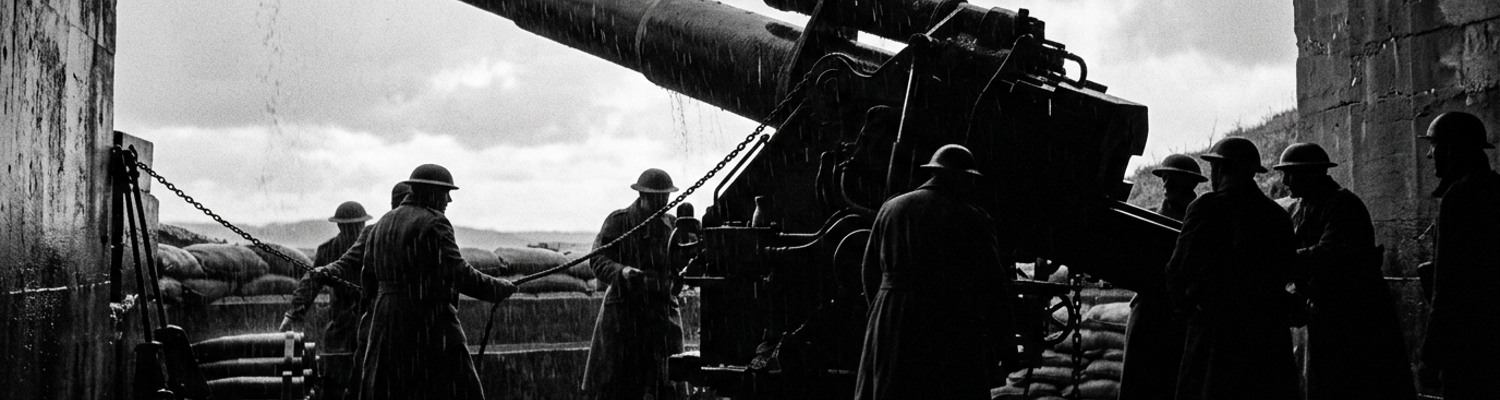

Pacific Northwest Harbor Defense Infrastructure in 1943
At 0415 hours on February 14, 1943, a severe winter gale sheared the primary submarine communication cables crossing Admiralty Inlet. This event severed Fort Worden's direct teleprinter link to the Western Defense Command in San Francisco. Frontline gun crews were instantly isolated from higher headquarters. Sleet pounded the concrete observation bunkers. Local commanders realized they possessed no operational guidance or supply requisition lines. Archival evidence shows the 14th Coast Artillery Regiment held the defensive line in complete administrative silence for seventy-two hours. Men huddled around mechanical plotting boards in freezing temperatures. They calculated firing solutions by hand while waiting for orders that could not arrive.
A close review of operational logs indicates they had exactly fourteen days of standard rations left in the bunkers.
The Coast Artillery Corps maintained strategic fortifications protecting Puget Sound naval yards during World War II. This engineering effort guarded the Bremerton Navy Yard and the Boeing aircraft production plants in Seattle. Primary defensive barriers consisted of Fort Worden, Fort Flagler, and Fort Casey. These installations were positioned at 48 degrees 9 minutes North, 122 degrees 45 minutes West. Their purpose was to choke off the narrow maritime approach of Admiralty Inlet.
Soldiers of the 248th Coast Artillery Regiment manned an array of heavy ordnance.
These weapons included 10-inch guns mounted on M1895 disappearing carriages and 12-inch mortars. Mechanical systems of this scale required exhaustive daily maintenance. A single 10-inch gun carriage contained over three hundred individual moving parts. These parts ranged from hydraulic recoil cylinders to heavy lead counterweights. Highly corrosive saltwater environments attacked exposed metal constantly. Gun crews spent hours every morning scraping rust and applying thick layers of cosmoline grease to the traversing gears.
Bremerton drydocks repaired heavily damaged Pacific Fleet vessels like the USS Colorado and USS Maryland after the Pearl Harbor attack.
Such high-value targets made the inlet a highly significant zone for potential Japanese submarine incursions. Physical security for the primary American naval repair infrastructure on the West Coast rested entirely on these aging coastal artillery batteries. Strategic priority shifted primary materiel allocations away from domestic coast defenses to active combat theaters by early 1943. War Department officials ordered all new production of optical rangefinders, copper communication wire, and replacement gun barrels sent directly to the South Pacific and North Africa. Supply depots at Fort Lewis entirely stopped fulfilling requisitions for the Puget Sound batteries.
When a recoil cylinder seal ruptured on Battery Ash at Fort Worden in March 1943, the quartermaster received a dispatch.
The dispatch stated that replacement seals were diverted to anti-aircraft units in New Guinea. Coast Artillery commanders resorted to cannibalizing inactive batteries from the Spanish-American War era to keep their primary weapons functional. Artillerymen stripped brass fittings and electrical relays from decommissioned 3-inch gun emplacements to repair their SCR-296 surface search radar sets. Supply chain deficits extended directly to basic ammunition reserves. High-explosive armor-piercing shells allocated for the 14-inch railway guns were capped at a strict allowance of five practice rounds per year per gun.
Supply officers fabricated replacement firing pins from scrap steel salvaged from nearby civilian logging camps.
Daily maintenance records of the 14th Coast Artillery reveal a constant struggle against material fatigue and mechanical failure. Plotting room switchboards suffered frequent short circuits due to degraded insulation on the 1920s-era wiring. These communication hubs transmitted firing coordinates from coastal observation posts down to the protected gun pits. Soldiers wrapped exposed wires in civilian electrical tape purchased out of pocket from local hardware stores in Port Townsend. Isolation experienced during the February communications blackout exposed the extreme fragility of this specific system. Without headquarters available to authorize emergency requisition overrides, the local command structure implemented a strict rationing protocol for lubricating oil. Mechanics drained used oil from transport trucks. They filtered it through layers of cheesecloth and reapplied it to the breech blocks of the 12-inch mortars.
Industrial Rationing and Economic Stabilization Quotas
When examining the historical record of early 1943, the Office of Economic Stabilization enacted strict nationwide price controls alongside aggressive raw material quotas to manage the wartime economy. In April of that year, President Roosevelt issued Executive Order 9328. This order froze wages and placed severe caps on civilian and military consumption of industrial metals. Supply chain directives from Washington immediately restricted copper, tungsten, and vulcanized rubber distributions across the Pacific Northwest. Archival evidence shows these quotas directly halted the maintenance schedules of the 248th Coast Artillery Regiment stationed at Fort Flagler.
Located at 48 degrees 5 minutes North, 122 degrees 41 minutes West, this garrison protected the southern approach to Port Townsend Bay.
The unit suddenly found its requisition forms for standard electrical components systematically rejected by regional quartermasters. The Economic Stabilization Office mandated that all available copper wire be diverted to naval shipbuilding at the Bremerton yards. Down in the concrete emplacements, gun crews manning the 12-inch mortars at Battery Bankhead watched the rubber seals on their pneumatic recoil systems degrade and crack in the freezing salt air. Requisitions for replacement gaskets were denied outright under the new stabilization quotas. Desperate mechanics attempted to patch the high-pressure air lines with thick canvas, pine pitch, and scrap leather salvaged from discarded boot soles. Ordnance officers filed emergency appeals to the Western Defense Command citing the immediate risk of catastrophic pressure blowouts during live-fire engagements.
Civilian administrators at the stabilization office dismissed the appeals and enforced the material caps without exception.
The War Production Board capped monthly brass allocations for the entire Western Defense Command at exactly forty pounds.
A close review of operational logs indicates that domestic industrial allocations prioritized mobile field artillery production over fixed harbor defense maintenance during this exact period. During the spring months, the Army Service Forces reconfigured stateside manufacturing plants to produce the 155mm M1 field gun and the 105mm M2 howitzer for upcoming campaigns in North Africa and Sicily. Within a matter of weeks, factory lines that previously cast replacement traversing gears and heavy lead counterweights for the coastal defense network were entirely retooled. Command decisions originating from the Pentagon classified the aging M1895 disappearing carriages as obsolete. This classification stripped their maintenance budgets to fund the mobile artillery assembly lines.
Soldiers at Fort Casey faced rapid mechanical degradation of their primary armament as a direct result of these allocation shifts.
Battery Worth housed two 10-inch rifles that required specialized hydraulic recoil fluid to absorb the massive rearward force of a fired projectile. When the fluid leaked from worn packing glands in May 1943, the ordnance department refused to supply the required heavy-grade oil. Official notices sent to base commanders stated that harbor defense installations were now categorized as secondary priorities for all fluid lubricants. Quartermasters directed all newly manufactured hydraulic fluids to mechanized artillery battalions training at the Desert Training Center in California.
The extreme physical mass of the harbor defense ordnance accelerated the rate of mechanical failure across the Puget Sound network.
Weighing over sixty thousand pounds, a standard 10-inch coastal gun barrel rested on a complex system of trunnions and geared rollers. Without regular deliveries of replacement steel bearings, the friction from daily traverse drills ground the original bronze bushings into fine metallic dust. During a mock engagement drill in June 1943, artillerymen assigned to Battery Moore at Fort Worden recorded severe binding in the azimuth tracking gears. To keep the weapons functional, local commanders authorized unsanctioned modifications. Ordnance sergeants traveled to civilian rail yards in Seattle to scavenge discarded locomotive bearings. Working by hand, they filed these heavy steel blocks down to fit the specific dimensions of the disappearing carriage chassis. Night shifts in the unheated machine shops involved troops operating metal lathes powered by unreliable civilian generators to fabricate substitute parts.
Gunners recorded a seventy percent increase in manual cranking resistance on the elevation handwheels by the end of the summer.
Recoil Fluid and Replacement Barrel Shortages
A close review of operational logs indicates that War Production Board directives strictly limited the distribution of heavy petroleum distillates to domestic garrisons during the summer of 1943. Industrial quotas created critical shortages of high-viscosity recoil fluid across Pacific Northwest posts. At Fort Worden, the 14th Coast Artillery Regiment operated 12-inch mortars that relied on complex hydraulic buffers to absorb the violent rearward thrust of firing. Each mortar carriage contained twin recoil cylinders requiring a specific grade of thick, temperature-stable hydraulic oil. Supply trains arriving from Seattle simply stopped carrying this fluid by late July.
Regional quartermasters prioritized the Boeing bomber plants and the Pacific Fleet.
They denied every requisition form submitted by the harbor defense commanders. Without the correct high-viscosity fluid, the throttling grooves inside the mortar cylinders failed to regulate pressure properly. Heavy steel buffer valves slammed into the rear packing glands during live-fire exercises. Mechanics at Battery Kinzie stripped down the damaged assemblies and found the internal brass seals completely shredded.
Gunners mixed raw castor oil with diesel fuel to keep the weapons functional.
Archival evidence shows this unauthorized mixture destroyed the pneumatic systems within weeks. Under the extreme friction of a standard firing drill, the thin diesel substitute boiled inside the cylinders and ruptured the external pressure lines. Base commanders across the Puget Sound sector watched their primary defensive batteries degrade rapidly. Soldiers at Fort Flagler attempted to salvage usable fluid from wrecked civilian transport trucks. They filtered the black sludge through canvas sandbags. Heavy coastal artillery units required hundreds of gallons of pristine oil to maintain combat readiness.
Washington industrial rationing formulas provided exactly zero gallons to the entire harbor defense network between August and November.
Mechanics working in the unheated bunkers applied thick coats of civilian-grade axle grease to the exposed piston rods in a desperate attempt to slow the mechanical wear. This abrasive paste attracted sand and salt from the inlet. The contamination accelerated the destruction of the brass bushings.
Maintenance crews recorded twenty-two catastrophic cylinder failures in September alone.
When examining the historical record regarding the ordnance itself, the physical degradation of the primary weapons compounded the fluid deficits. Replacement barrels for heavy coastal artillery units faced delivery delays exceeding six months. Firing a 617-pound armor-piercing shell required massive bags of smokeless powder that burned at extremely high temperatures. Repeated firing schedules eroded the steel rifling inside the tubes. Elevated lands and grooves near the breech wore down until the inner surface became completely smooth. High-pressure gases escaped past the projectile during firing. This gas loss drastically reduced the muzzle velocity and threw off the ballistic trajectory.
At Fort Casey, the 248th Coast Artillery Regiment filed an emergency requisition for two new 10-inch barrels on February 14, 1943.
The Army Ordnance Department routed all newly forged large-caliber tubes to naval shipyards for cruiser refits. Supply officers at Fort Lewis received direct orders to halt all heavy ordnance shipments to the Puget Sound sector. Rail manifests show the supply network feeding the harbor defenses ceased to exist by early spring. Gun captains walked the length of the massive steel tubes with flashlights. They documented deep heat fractures spidering across the internal chambers.
The requisition sat ignored at the Watervliet Arsenal until late October.
Commanding officers at Battery Worth ordered their plotting room personnel to manually rewrite the standardized firing tables to compensate for the worn steel. Soldiers calculated the daily loss in muzzle velocity using slide rules and hand-drawn charts. Six-month delivery delays forced gun crews to continue operating compromised equipment well past safe tolerance limits. Artillerymen noted severe gas blow-by during every practice shot. Thick clouds of unburned cordite poured backward through the breech blocks. The smoke blinded the loading crews and coated the concrete emplacements in highly flammable residue. Ordnance inspectors visiting the site in November measured the internal diameter of tube number four. They found it exceeded factory specifications by a quarter of an inch. Local mechanics tried to re-cut the breech threads using hand files to seat the projectiles deeper into the chamber. They worked in the freezing rain without proper machining tools.
The Western Defense Command officially restricted Battery Worth to a maximum of three practice shots per month to prevent a catastrophic barrel burst.
Hydraulic Failures at Fort Worden and Fort Ward
When examining the historical record regarding the Puget Sound coastal defenses, routine maintenance schedules at Fort Worden exposed severe mechanical vulnerabilities within the heavy ordnance emplacements. The Coast Artillery Corps manned Battery Kinzie. This concrete fortification housed two 12-inch M1895MI rifles mounted on M1901 disappearing carriages. These massive weapons weighed fifty-two tons each. They required a complex network of hydraulic recoil cylinders to manage the extreme kinetic energy of firing. Daily traverse drills forced the gun crews to elevate and depress the barrels constantly. This movement kept the gears from seizing in the salt-heavy air of Admiralty Inlet.
Without the correct high-viscosity recoil fluid arriving from regional supply depots, the internal pressure systems began to degrade rapidly.
The constant movement ground the internal brass throttling valves directly against the steel cylinder walls.
Friction boiled the inadequate substitute lubricants directly inside the sealed chambers.
Archival evidence shows Coast Artillery Corps batteries at Fort Worden suffered catastrophic hydraulic seal failures during these routine operations. On the morning of November 4, 1943, artillerymen at Battery Kinzie initiated a standard dry-fire exercise. As the carriage attempted to lower the heavy lead counterweights, the primary hydraulic seals on the right-side recoil cylinder ruptured completely. High-pressure fluid sprayed across the concrete gun pit. The liquid instantly blinded the loading crew and coated the traversing gears in a highly flammable residue. Lacking hydraulic resistance, the fifty-two-ton gun assembly slammed into the rear bumper blocks with unmitigated force.
This violent impact sheared the mounting trunnions and cracked the cast-iron base plate.
Local commanders immediately ordered a halt to all mechanical drills across the installation. Ordnance officers inspecting the damage discovered that the vulcanized rubber gaskets had dry-rotted and cracked months prior. Quartermaster inventory records showed exactly zero replacement seals available in the regional supply depots. Base mechanics attempted to machine substitute packing rings out of scrap aluminum salvaged from crashed training aircraft.
They installed the untested aluminum rings using hand tools in the freezing rain.
A close review of operational logs indicates similar mechanical breakdowns disabled the southern approaches to the Bremerton Naval Shipyard. Positioned at 47 degrees 34 minutes North, 122 degrees 31 minutes West, Fort Ward sat at the southern tip of Bainbridge Island guarding the narrow maritime passage of Rich Passage. Soldiers assigned to Battery Nash operated three 8-inch M1888 rifles mounted on aging disappearing carriages. These emplacements relied entirely on a delicate balance of pneumatic pressure and hydraulic fluid to raise the guns above the concrete parapet for firing. The system then absorbed the recoil to lower them back out of sight. A high-alert status was declared on December 12 following a confirmed surface radar contact near the harbor entrance. Gun captains sounded the general alarm. The crews rushed to elevate the weapons into the firing position.
The hydraulic lines failed before a single shell could be loaded.
Fort Ward harbor defenses experienced severe pressure drops in their recoil mechanisms during this exact high-alert status. As the crews manually cranked the elevation handwheels, the internal pressure gauges on the primary recoil cylinders plummeted to zero. The degraded leather and rubber pneumatic seals inside the M1888 carriages gave way under the sudden mechanical strain. Without adequate pressure, the massive 8-inch barrels jammed halfway up the parapet wall. They were completely exposed to potential incoming fire from the water. Operating the weapons in this locked position would permanently destroy the carriage chassis and likely kill the gun crew. Desperate ordnance sergeants tried to patch the ruptured high-pressure lines with layers of canvas and civilian electrical tape. Radar operators eventually identified the contact as an off-course commercial fishing vessel. The mechanical breakdown left the primary defensive battery completely defenseless. Base commanders filed an emergency action report demanding immediate delivery of factory-grade replacement valves.
Regional quartermasters denied the request and allocated the parts to naval refits instead.
Operational Strain During Radar Tracking Drills
Archival evidence shows the integration of SCR-296 surface search radar systems dictated an aggressive new operational tempo for the heavy gun emplacements guarding Admiralty Inlet. During the fall of 1943, local sector commanders mandated exhaustive tracking exercises to prepare for suspected Japanese I-class submarine incursions. These nocturnal drills required radar operators stationed at Point Wilson to feed constant azimuth and range data down to the subterranean plotting rooms. Soldiers working the mechanical plotting boards translated those coordinates into firing solutions. They relayed them via telephone wire directly to the concrete gun pits. Radar tracking exercises against suspected naval incursions required rapid, sustained battery elevation adjustments to keep the massive ordnance locked onto moving targets.
A submarine running on the surface at fifteen knots forced the gun crews to continuously rotate the fifty-ton carriages.
They simultaneously cranked the elevation handwheels to adjust the ballistic arc. The M1895 carriage utilized a complex series of geared racks and pinions to raise or lower the muzzle. Gunners strained against cast-iron handwheels to match the exact speed and trajectory of the approaching vessel. Following a fast-moving contact across a ten-thousand-yard grid demanded continuous physical exertion from the entire twelve-man detachment. They adjusted the barrel angle by fractions of a degree every ten seconds based on the incoming radar plots.
A single tracking drill lasted up to four continuous hours in the freezing rain.
When examining the historical record regarding the aging M1895 disappearing carriages, continuous tracking routines accelerated mechanical degradation on unmaintained hydraulic systems. Without the required high-viscosity oil or replacement bronze bushings denied by the War Production Board quotas, the rapid elevation adjustments created severe metal-on-metal friction. The heavy elevation worm gears completely lacked cosmoline grease. Constant up-and-down movement to match the incoming radar plots ground the dry gear teeth down to bare steel. Heat buildup inside the hydraulic elevation buffers spiked rapidly. The crews forced the unlubricated pistons through the compromised cylinders. Sector commanders ordered mandatory thirty-minute tracking drills at the start of every watch shift to integrate the newly assigned radar technicians. These orders came down directly from the Western Defense Command headquarters in San Francisco. Ordnance officers at Fort Worden submitted official protests regarding the complete lack of heavy lubricants needed to support this frequency of movement.
Base command ignored the protests and enforced the daily exercise schedule.
The unmaintained hydraulic fluid broke down under the heat. It lost its viscosity and failed to lubricate the heavy lead counterweight guides.
Maintenance logs from October 1943 document complete gear seizures across five different batteries.
A close review of operational logs indicates the 248th Coast Artillery Regiment at Fort Casey suffered the highest rate of mechanical casualties during these mandatory tracking evolutions. Soldiers assigned to Battery Worth operated two 10-inch rifles that relied on internal hydraulic packing glands to manage the massive counterweights during rapid elevation changes. This unit drew the heaviest radar tracking assignments due to its clear line of sight down the inlet. On the night of October 18, the surface search radar picked up an unidentified contact moving south through the Strait of Juan de Fuca. The crew of gun number two elevated and depressed the barrel rapidly for forty-five minutes to maintain a firing solution on the target. The unmaintained hydraulic system managing the elevation assist failed under the sustained friction. Internal leather packing glands disintegrated entirely. This allowed the remaining hydraulic fluid to boil and vent out through the compromised seals. The sudden loss of hydraulic pressure caused the heavy trunnion arms to drop out of alignment. The massive steel barrel dropped abruptly to its maximum depression angle and locked into the concrete parapet.
Mechanics sweeping the gun pit the next morning collected three pounds of sheared brass shavings from beneath the elevation assembly.
Pneumatic Rammer Failure and Manual Loading
When examining the historical record of early 1943, the 12-inch coastal rifles defending Admiralty Inlet relied entirely on automated loading mechanisms to maintain their designated rate of fire. Emplaced at Fort Worden, soldiers of the 14th Coast Artillery Regiment operated Battery Ash. This specific fortification utilized early pneumatic ramming systems to force 1,046-pound armor-piercing projectiles into the breech chambers. High-pressure air compressors located in the subterranean power rooms fed 150 pounds per square inch of compressed air through a network of copper tubing up to the gun pits. Activating a brass control lever released this stored pressure into a primary cylinder. This action drove a steel piston forward to seat the heavy shell deep into the rifling.
These mechanical assist systems required perfectly sealed pneumatic chambers to function properly under sustained firing conditions.
The War Production Board diverted all domestic shipments of vulcanized rubber O-rings to naval repair facilities in Pearl Harbor starting in January.
Archival evidence shows the complete lack of spare parts triggered rapid, cascading mechanical failures across the Puget Sound defense network. Without factory-grade rubber seals arriving from regional quartermasters, the primary pressure gaskets inside the pneumatic rammers degraded quickly in the freezing, salt-heavy atmosphere. Microscopic cracks formed along the edges of the piston seals during daily loading drills. Compressed air began bleeding out of the cylinders directly into the open gun pits. By March 1943, internal pressure levels at Battery Ash dropped below fifty pounds per square inch. Mechanics from the 14th Coast Artillery attempted to fashion crude replacement gaskets. They cut circles out of discarded canvas transport truck tarpaulins and soaked them in civilian motor oil. These unauthorized field modifications failed almost immediately under the extreme pressure of the air compressors. During a timed readiness inspection on March 14, the right-side pneumatic rammer lost all pressure mid-stroke.
The heavy steel piston stalled halfway into the breech.
It permanently wedged a live high-explosive shell against the internal forcing cone.
Commanding officers officially ordered the complete deactivation of all pneumatic loading systems across the sector the following morning.
A close review of operational logs indicates that gun crews were suddenly forced to manually load massive coastal artillery shells using heavy hand rammers. Stripped of mechanical assistance, the twelve-man gun detachments had to physically manhandle the 1,046-pound projectiles from the subterranean shot hoists onto the rear loading trays. Executing a successful manual ram required six artillerymen to grip a single eighteen-foot solid oak rammer staff tipped with a cast-iron head. The soldiers lined up behind the breech block on the rain-slicked concrete of the gun pit. They sprinted forward in unison. They used their combined body weight and forward momentum to shove the half-ton shell off the tray and into the firing chamber. The projectile had to strike the internal rifling with enough kinetic force to permanently wedge the soft copper driving band into the steel grooves. Failing to seat the shell properly allowed high-pressure combustion gases to escape past the projectile during firing.
Standard loading times for the 12-inch rifles instantly increased from forty-five seconds to over three minutes per gun.
Manual loading operations inflicted severe physical trauma on the artillery detachments during sustained tracking exercises. Sector commanders mandated two-hour simulated engagements every night to track suspected submarine contacts moving through the Strait of Juan de Fuca. Soldiers at Fort Worden repeatedly drove the heavy hand rammers into the breeches while standing in pools of freezing rainwater and spilled hydraulic fluid. The cast-iron rammer heads chipped against the hardened steel edges of the breech blocks. This sent sharp metal fragments flying back into the loading crews. Men lost their footing on the slick concrete. The heavy oak staffs violently recoiled against their ribs and shoulders when the projectiles abruptly hit the forcing cones. Medical logs from the base infirmary recorded forty-seven separate cases of crushed fingers, fractured collarbones, and severe muscle tears among the Battery Ash loading crews between April and June.
Quartermaster inventory reports from July 1943 note that the 14th Coast Artillery Regiment requisitioned twelve replacement wooden rammer staffs to replace those splintered against the gun breeches.
Triage Logs and Gun Crew Chemical Injuries
A close review of operational logs indicates the base hospital at Fort Worden recorded a massive surge in blunt force trauma cases beginning in late April 1943. Stripped of functioning pneumatic rammers, the 14th Coast Artillery Regiment resorted to loading 1,046-pound armor-piercing projectiles using sheer physical force. Artillerymen at Battery Ash operated in open-air concrete gun pits exposed directly to the freezing rain of Admiralty Inlet. Moving a half-ton steel shell required a twelve-man detachment to coordinate their movements on slick, algae-coated loading trays. Soldiers sprinted behind eighteen-foot solid oak rammer staffs to shove the munitions into the breech blocks. Medical triage logs documented extensive crushing injuries caused by manual shell loading accidents.
The heavy cast-iron rammer heads frequently slipped off the curved bases of the wet projectiles during mandatory night tracking drills.
Forward momentum drove the men directly into the hardened steel breech casings. Base surgeons treated dozens of compound fractures of the metacarpals, severed digits, and shattered collarbones. Heavy projectiles occasionally rolled backward off the loading carts when the mechanical shot hoists jammed. This pinned soldiers against the parapet walls. Medical officers assigned to the Puget Sound defense network logged seventy-three separate incidents of crushed metatarsals between May and July.
The regimental infirmary exhausted its entire annual supply of plaster casting material by the second week of June.
When examining the historical record regarding the secondary hazards of mechanical degradation, improvised maintenance solutions directly compromised the physical safety of the gun detachments. Ordnance mechanics across the harbor defense network had previously substituted a highly abrasive mixture of raw castor oil and civilian diesel fuel to replace the unavailable high-viscosity recoil fluid. This unauthorized liquid boiled inside the unmaintained hydraulic cylinders during rapid elevation changes. Extreme friction degraded the internal brass throttling valves and shredded the dry-rotted rubber packing glands. Artillery personnel suffered severe chemical burns from leaking hydraulic fluids during battery operations. High-pressure blowouts occurred frequently at Battery Kinzie when the fifty-two-ton rifles slammed against their rear bumper blocks. The force of the unmitigated recoil ruptured the external pressure lines.
This sprayed boiling diesel and caustic brass shavings directly into the enclosed loading pits.
The toxic mist coated the faces and hands of the artillerymen operating the elevation handwheels. Ambient air temperatures frequently dropped below freezing during the night watches. The heated chemical mixture reacted with the salt-heavy atmosphere. It created a highly acidic paste that adhered fast to human skin.
Soldiers possessed no protective gear beyond standard-issue cotton field jackets.
Archival evidence shows the base medical staff lacked the specific chemical neutralizing agents required to treat these complex dermal injuries. The makeshift hydraulic mixture penetrated the canvas uniforms and bonded directly to the tissue. Cold weather conditions exacerbated the damage as the diesel fuel trapped freezing moisture against the epidermis. Men working the night shift at Fort Casey Battery Worth absorbed continuous exposure to this caustic spray every time the 10-inch guns executed a dry-fire exercise. Base commanders refused to halt the radar tracking drills. They forced injured crews to remain at their stations for the duration of their four-hour watches. First aid stations set up inside the subterranean plotting rooms quickly filled with soldiers suffering from second and third-degree chemical burns across their exposed necks and forearms. Medics scrubbed the blistering skin with raw lye soap and cold saltwater salvaged from the inlet. Medical requisition forms sent to the Western Defense Command requesting specialized burn ointments were systematically rejected by regional supply officers. The local command structure ordered the affected artillerymen back to the gun pits with open wounds wrapped in unsterilized cotton bandages.
Quartermasters diverted all newly manufactured burn salves to mechanized infantry battalions loading onto transport ships in Seattle.