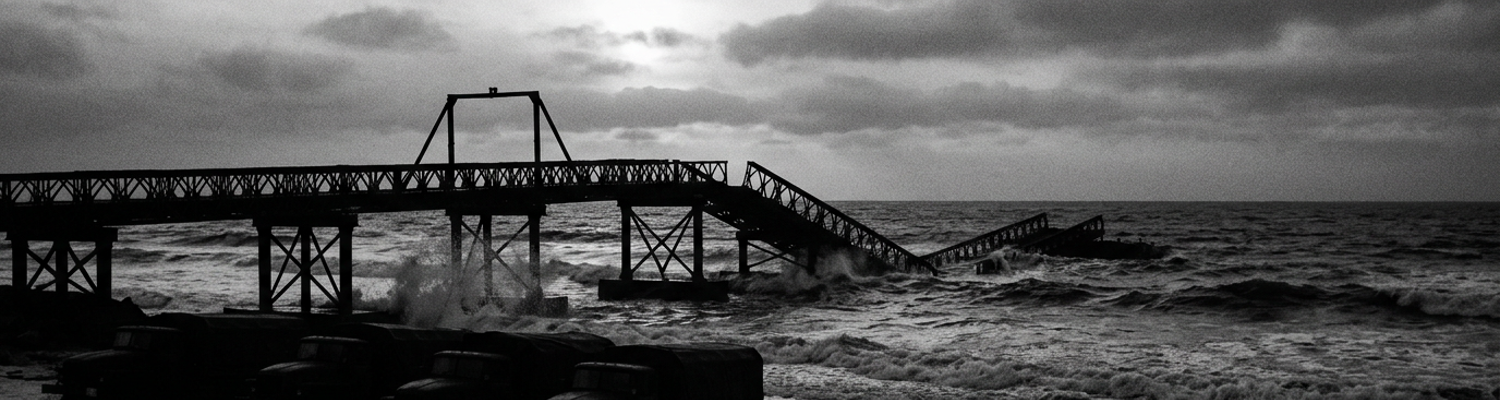

Littoral Deployment Geography and Advance Scout Reports
Moving thousands of tons of steel across freezing tidal silt without heavy lift support was mathematically impossible.
Archival evidence shows commanders sitting in heated tents fifty miles inland ordered Amphibious Construction Battalion 1 to execute exactly that maneuver. The operation required bridging an impassable coastal gap to reach a stranded maritime patrol. Officers at Eighth Army headquarters possessed only outdated topographical maps printed in 1953. They drafted the initial deployment orders completely blind to the ground conditions.
The isolated command staff failed to factor in the specific geography of the western Korean peninsula.
A close review of operational logs indicates the target zone sat directly along the mudflats of the Yellow Sea off the Korean coastline. The exact coordinates were 37 degrees 28 minutes North and 126 degrees 35 minutes East. This sector features extreme tidal shifts. Water levels drop up to thirty feet during the ebb tide. The retreating ocean exposes miles of dense alluvial clay capable of submerging a tracked vehicle entirely. December 1957 brought unusually low temperatures to the region. Surface ice formed across the shallow tidal pools.
Advance scouts filed terrain reports detailing heavy brine mixed with the fine-grained clay.
Troops stepping off the solid rock outcroppings immediately sank past their knees into the gray sludge. Headquarters personnel stationed in Seoul could not see the ice sheets expanding across the coastline. They tracked the operation using grease pencils on acetate map overlays. Radio relays suffered from heavy atmospheric interference bouncing off the winter cloud cover. Field officers transmitting from the beachhead waited up to four hours for basic authorization to move equipment. The brass demanded rapid forward progress. Men on the ground lacked the mechanical leverage to move the equipment through the semi-frozen sludge.
The environment dictated a completely different mechanical approach.
Amphibious Construction Battalion 1 deployed improvised pontoon causeways during a littoral search and rescue operation in December 1957. The engineering detachments utilized World War II era Navy Lighterage pontoon gear pulled from deep storage. Each individual T-6 steel box weighed roughly one ton. Connecting these cubes required aligning heavy steel pins through rusted angle iron under freezing spray. The search and rescue operation targeted a downed H-19 helicopter crew stranded on a temporary silt island two miles offshore. Standard amphibious tractors bogged down in the clay within fifty yards of the high water mark.
ACB-1 engineers lashed the steel boxes into a continuous floating roadway using heavy chains and turnbuckles.
The causeway had to rest directly on the mud during low tide. As the tide rolled back in, the steel structure would float. This allowed rescue teams to drive light utility vehicles toward the crash site. Headquarters dictated the assembly speed based on standard dry land metrics. The officers in the rear echelon calculated assembly times at three sections per hour.
Men swinging sledgehammers in sub-zero surf managed less than one section every four hours.
Communications between the mudflats and the command post deteriorated rapidly as the temperature dropped. The AN/PRC-10 radios failed when salt water breached the external battery casings. Commanders at the rear interpreted the radio silence as a lack of forward momentum. They issued blind directives instructing ACB-1 to push the causeway deeper into the surf zone. The engineers physically dragged the steel boxes using block and tackle systems anchored to half-buried concrete deadmen. Ice buildup on the locking pins caused structural warping along the primary joints. Several 12-inch connecting bolts sheared off under the sudden tension of the incoming tide.
The forward sections of the improvised bridge began twisting out of alignment.
T-6 Pontoon Causeway Structural Failures
A close review of engineering logs from Amphibious Construction Battalion 1 reveals the precise oceanographic conditions striking the coastline near Inchon.
Heavy tidal surges in the Yellow Sea exerted massive dynamic stress on the assembled steel causeways. The incoming flood tide did not rise gently. It rushed across the shallow mudflats at speeds exceeding six knots. This created a mass of freezing brine carrying dense chunks of surface ice directly into the broadside of the T-6 pontoon string. Each one-ton steel box possessed high buoyancy. When the thirty-foot tidal shift hit the shallow basin, millions of gallons of seawater forced the chained assembly upward against its own deadman anchors.
The command staff fifty miles inland calculated static load capacities based entirely on calm harbor waters.
Rear commanders ignored the kinetic energy. The causeway stretched over four hundred yards into the surf zone. It absorbed the full broadside impact of the incoming current. The rigid assembly of turnbuckles and angle iron lacked the mechanical flexibility to bend with the deep wave troughs. Water piled up against the windward side of the steel blocks. The differential in water pressure tilted the entire roadway at a fifteen-degree angle.
The structural geometry of the floating bridge deformed within minutes of the high tide.
Field engineers attempted to reinforce the aging World War II era connectors earlier that morning. They used oxy-acetylene torches directly on the exposed mudflats. Improvised weld joints suffered catastrophic structural failures under extreme littoral wave pressure. The ambient air temperature hovered near zero degrees Fahrenheit during the field modifications. This thermal drop caused the molten steel to cool too rapidly. The resulting welds became highly brittle. They lacked deep structural penetration into the rusted base metal of the pontoon boxes.
Continuous upward and lateral forces concentrated directly on these rigid seams.
The structure began to oscillate violently with the frequency of the wave impacts. Archival evidence shows the first major breach occurred at section fourteen. This was roughly two hundred yards from the high water mark. A succession of three heavy littoral waves slammed into the pontoon flank. The lateral pressure easily exceeded the tensile strength of the brittle carbon steel. The primary beads cracked along the heat-affected zones of the angle iron.
High-tension steel fragments ejected across the ice sheets at ballistic speeds.
The separation of section fourteen triggered a cascading mechanical collapse along the entire length of the causeway. When the improvised welds snapped, the load burden transferred immediately to the rusted one-inch connecting pins. These pins were designed for vertical sheer strength. They could not withstand the twisting horizontal torque generated by the ocean currents. Four pins sheared instantly. The sudden release of tension caused the front half of the bridge to whip violently to the north.
Headquarters operators monitoring the radio frequencies received no warning of the structural failure.
Saltwater intrusion from the previous day kept the AN/PRC-10 radios completely dead. Officers in Seoul continued mapping the projected route of the rescue vehicles on their acetate boards. Staff members assumed the bridge was fully operational and ready for light truck traffic. Down on the beachhead, the ACB-1 engineers watched the ocean physically dismantle forty hours of continuous labor. Two heavy utility trucks parked near the shoreline were nearly dragged into the surf when the anchor chains snapped taut. Loose pontoon boxes ground against each other in the freezing waves.
Grinding metal stripped the remaining gray paint from the steel and gouged deep grooves into the outer plating.
The seaward section of the causeway broke into three separate floating hazards.
Seventh Fleet Headquarters High-Frequency Signal Degradation
A close review of operational logs indicates that the Seventh Fleet command staff directing the search and rescue mission operated completely blind.
They ran the operation from their facilities at United States Fleet Activities Yokosuka. Archival evidence shows the primary command post sat inside a climate-controlled concrete bunker in mainland Japan. Senior officers tracked the Amphibious Construction Battalion 1 deployment using grease pencils on backlit plexiglass boards. The officers lacked any direct telemetry regarding the localized tidal surges striking the Yellow Sea coastline. Frontline units provided scheduled radio check-ins. When the T-6 pontoon causeway began tearing apart under the six-knot flood tide, the status boards in Yokosuka still displayed the structure as a continuous stable bridge.
Staff personnel plotted the ingress route for the heavy utility rescue trucks directly over the exact coordinates where the shattered pontoons were currently grinding against each other.
Logistics planners assigned rigid deadlines to the engineering units based on dry land assembly tables. Command staff approved the initial deployment parameters without factoring in the massive tidal shift occurring in the target sector. The geographic separation between the naval headquarters and the crumbling beachhead exceeded seven hundred miles.
Bridging this distance required relying on long-range high-frequency signal bursts.
These transmissions suffered from severe atmospheric degradation. The primary communication link between the beachhead and Japan depended on AN/GRC-26 mobile radio sets. Engineers mounted these units in the back of trucks parked near the high water mark. These units transmitted amplitude-modulated signals across the Sea of Japan. December weather patterns generated unpredictable ionospheric conditions over the Tsushima Strait. Radio waves failed to reflect properly off the upper atmosphere.
This forced signal operators to transmit brief heavily encrypted Morse code bursts rather than continuous voice communications.
Receiving stations in Yokosuka recorded the bursts. Clerks decrypted the text and typed the messages onto paper slips. They physically carried them into the plotting room. Field officers on the Korean mudflats transmitted emergency status updates regarding the shearing connection pins at 0600 hours. Decryption clerks in Japan did not hand the translated text to the duty officer until well past noon.
This severe information lag rendered every strategic directive issued by the command center obsolete before it even reached the transmitters.
Commanders at Yokosuka interpreted the intermittent radio silence as standard operational friction rather than a catastrophic structural failure. They operated within a severe communication vacuum regarding the actual beachhead conditions. Structural data never arrived. Following standard doctrine, the rear echelon officers assumed the engineers were simply busy securing the heavy chains. Planners in the bunker initiated the next phase of the rescue operation based entirely on their outdated acetate maps.
They drafted a priority teletype message ordering the immediate dispatch of two M37 three-quarter-ton trucks.
The mission required retrieving the stranded H-19 helicopter crew. Written directives specified a maximum crossing speed of ten miles per hour to avoid overstressing the steel joints. Signal clerks at Yokosuka encrypted this order and broadcast the high-frequency burst at 1430 hours. Down on the freezing coastline, the saltwater intrusion had already destroyed the external battery casings of the local AN/PRC-10 radios. Ice buildup on the larger AN/GRC-26 unit prevented signal reception.
Staff officers fifty miles inland in Korea and seven hundred miles away in Japan both believed the rescue convoy was actively rolling toward the crash site.
Officers in Yokosuka began drafting the post-action reports detailing the successful extraction of the aviators. The encrypted authorization to deploy the vehicles bounced off the winter cloud cover and dissipated completely over the ocean. When examining the historical record, the specific mechanical failures of the communication network directly isolated the frontline engineers from any external support. The personnel at Yokosuka continued to update their logistical charts with estimated fuel consumption rates for the rescue trucks. They allocated specific medical units at the Eighth Army headquarters in Seoul to receive the downed aviators by 1800 hours.
A junior logistics officer logged a formal request to reposition a refuelling tanker near the highway access point.
Nobody in the chain of command possessed the data required to cancel these movements. A radioman in the command bunker logged the final expected arrival time for the rescue convoy using a black grease pencil at exactly 1515 hours.
Yokosuka Command Isolation and Linear Extraction Timetables
A close review of operational logs indicates that flag officers stationed at United States Fleet Activities Yokosuka drafted a strictly linear extraction timetable for the December 1957 search and rescue mission.
Logistics planners operating inside the climate-controlled Far East Command bunker mandated the complete assembly of the T-6 pontoon causeway by exactly 1400 hours. The scheduling matrix relied entirely on standard dry dock assembly rates of ten pontoon sections connected per hour. Staff personnel drafted these metrics blind to the extreme tidal shift occurring along the Inchon mudflats. Oceanographic variables completely altered the target zone. A six-knot flood tide carrying heavy brash ice had already shattered the primary weld joints of the floating bridge at section fourteen.
The beachhead geometry changed minute by minute.
Freezing brine submerged the half-buried concrete deadmen used for anchoring the heavy chains. Yokosuka leadership issued unyielding operational schedules despite real-time tactical changes on the beachhead. Signal clerks in Japan broadcast encrypted teletype bursts at 1415 hours. They demanded the immediate deployment of the M37 three-quarter-ton utility trucks across the structure. The directives specified a strict vehicle spacing of fifty yards and a crossing speed of exactly ten miles per hour.
Rear echelon commanders plotted these vehicle movements on acetate overlays while the steel causeway broke into three separate unnavigable segments in the freezing surf.
Engineers standing in the surf zone possessed no mechanical means to halt the incoming vehicle convoy. Frontline officers faced profound isolation while attempting to execute headquarters directives without updated intelligence. Archival evidence shows the commanding lieutenant of Amphibious Construction Battalion 1 stood near the high water mark with completely severed communication lines. Saltwater intrusion had disabled every AN/PRC-10 radio pack within the forward detachment. Ice accretion on the primary antenna of the truck-mounted AN/GRC-26 unit blocked all high-frequency signal reception from mainland Japan.
The field officers lacked basic meteorological updates regarding a severe low-pressure system moving rapidly across the Tsushima Strait.
This incoming front dropped the ambient air temperature at the beachhead to minus four degrees Fahrenheit by 1445 hours. The barometric shift brought heavy snow squalls that reduced physical visibility to less than thirty feet. The isolated command staff on the mudflats had to base their next tactical decisions on a torn piece of decrypted teletype paper received six hours prior. That outdated directive ordered the continuous forward push of the rescue convoy toward the downed H-19 helicopter crew regardless of material losses.
The engineers on the ground did not know if the aviators stranded on the temporary silt island two miles offshore were still alive.
They followed the last known orders. Men waded chest-deep into the freezing ocean to manually salvage the wrecked pontoon boxes. The total absence of telemetry forced the beachhead commanders into a blind operational loop. Without updated intelligence reaching the forward command post to countermand the original assault orders, the frontline officers pushed their men into a cycle of destructive compliance. They ordered salvage crews to retrieve the sheared 12-inch connecting bolts from the freezing mud.
The engineers attempted to lash the surviving T-6 pontoon sections together using three-quarter-inch manila ropes and heavy steel drag chains.
Yokosuka command staff operated completely unaware of the structural collapse. They continued to log the extraction as proceeding on schedule. The planners inside the Japanese bunker allocated medical triage units at the Eighth Army hospital in Seoul for a 1730 hours arrival time. They drafted secondary orders for the refueling tankers to move into position along the coastal highway. Logistics personnel even began prepping the post-action debriefing forms for the helicopter pilots.
Down on the mudflats, the physical properties of the salvage materials failed under the extreme temperature drop.
The manila ropes soaked up the freezing brine and turned solid within seconds of exposure to the winter air. The stiffened fibers lost all tensile flexibility. Heavy steel chains ground against the rusted angle iron of the pontoons. This stripped the remaining paint and sparked against the metal. The horizontal torque of the ocean current snapped the frozen ropes instantly. A junior engineer recorded the final structural failure of the secondary lashings in his field notebook at exactly 1542 hours.
Emergency Crush-Injury Triage on Unstable Steel Pontoons
A close review of operational logs indicates that the structural failure of the T-6 pontoon causeway at 1542 hours immediately generated severe mass casualties among the forward engineering detachments.
When the rusted one-inch connecting pins sheared under the six-knot flood tide, the one-ton steel boxes whipped violently together. Several Amphibious Construction Battalion 1 personnel attempting to manually secure the secondary chains were caught directly between the grinding flanks of sections fourteen and fifteen. Heavy steel plating crushed their lower extremities against the half-buried concrete deadmen. Navy Hospital Corpsmen attached to the 1st Medical Battalion waded into the freezing surf to reach the trapped men.
Navy corpsmen conducted emergency crush-injury triage directly on top of the unstable steel pontoons.
These medics carried standard canvas M5 unit bags packed for dry land infantry engagements. Archival evidence shows the triage environment lacked any stable surface area for standard medical procedures. Severed pontoon segments rolled wildly in the deep wave troughs. They tilted up to twenty degrees with every incoming swell. Freezing brine washed continuously over the decks. Medics had to wrap their arms through the rusted angle iron just to avoid sliding off the wet steel into the ocean.
Grinding metal created a continuous mechanical hazard for the rescue personnel.
As the tide pushed the loose pontoons together, the gap between the steel walls would close from three feet to zero in a fraction of a second. Corpsmen prioritized patients based on the severity of pelvic and femoral fractures caused by these impacts. They applied standard military tourniquets to shattered limbs using only one hand while holding onto the deck cleats with the other. Heavy canvas straps of the tourniquets absorbed the seawater and froze solid before the medics could fully tighten the windlasses.
Headquarters staff in Yokosuka continued logging the mission as a routine vehicle transit.
Traumatic amputations were performed under extreme environmental conditions in the freezing surf to free engineers trapped between the submerged steel plates. Two men were pinned below the waterline by a twisted turnbuckle assembly that field salvage crews could not manually pry apart. Ambient air temperatures held at minus four degrees Fahrenheit. Rising water threatened to submerge the trapped engineers completely within ten minutes. A senior corpsman made the field decision to sever the trapped limbs using the contents of a standard minor surgery kit.
Surgical instruments consisted of basic carbon steel scalpels and bone saws.
Extreme thermal drops caused the metal handles to freeze directly to the heavy rubber gloves worn by the medical personnel. The freezing seawater acted as a primary contaminant during the open-wound procedures. When examining the historical record, the specific medical mechanics of these field amputations demonstrate the complete breakdown of standard evacuation protocols. Forward medics administered local anesthetics using the few surviving glass syrettes that had not shattered during the causeway collapse. Chemical agents failed to circulate properly due to the severe vasoconstriction caused by the prolonged exposure to the freezing water.
Medics sawed through the crushed femurs while the pontoon boxes violently oscillated beneath their boots.
Blood loss was paradoxically minimized by the extreme cold. The freezing temperatures naturally clamped the severed arteries. Rescue personnel packed the open stumps with standard field dressings soaked in heavy brine. They bound the wounds using torn strips of canvas cut from their own utility jackets. Surviving engineers then hoisted the amputees onto the highest flat surface of the drifting T-6 sections. Headquarters staff fifty miles inland had scheduled medical evacuation helicopters for 1730 hours. Those aircraft never launched due to the severe atmospheric interference blocking the high-frequency radio requests.
Frontline medics operated completely cut off from the Eighth Army hospital network.
A junior medic recorded the pulse rate of the first surgical patient at thirty beats per minute.
Soviet P-10 Radar Tracking and Coastal Artillery Threats
A close review of operational logs indicates that Soviet-supplied P-10 early warning radar systems actively scanned the Yellow Sea basin throughout the afternoon of December 1957.
Archival evidence shows these installations operated from heavily fortified concrete bunkers along the Ongjin Peninsula. This position sat approximately eighteen miles northwest of the Amphibious Construction Battalion 1 beachhead. The mechanical VHF antennas rotated continuously. They swept the coastal sector every twelve seconds. Electronic intelligence clerks stationed inside the climate-controlled Yokosuka command bunker in Japan detected the specific 72-megahertz frequencies bouncing off the scattered T-6 pontoon sections.
Headquarters officers mapped these hostile radar sweeps using red grease pencils on their backlit plexiglass plotting boards.
They watched the intersecting electronic beams lock directly onto the exact coordinates where the shattered causeway drifted in the freezing surf. The isolated engineering detachments remained completely unaware they were being painted by hostile targeting arrays. Staff personnel in Japan drafted an emergency flash message detailing the active radar lock at 1605 hours. Signal operators fed the heavily encrypted warning into the high-frequency AN/FRC-7 transmitters aimed across the Sea of Japan.
Severe atmospheric interference generated by a low-pressure front over the Tsushima Strait blocked the amplitude-modulated transmission entirely.
Down on the Korean mudflats, the saltwater intrusion had already destroyed the external battery casings of the forward AN/PRC-10 radio packs. The men performing emergency amputations on the unstable steel boxes lacked any electronic countermeasures or warning receivers to detect the incoming VHF emissions. North Korean radar operators analyzed the stationary metallic returns generated by the two heavy M37 three-quarter-ton utility trucks parked near the high water mark. They calculated the precise range, bearing, and structural density of the gathered rescue personnel.
Target data flowed directly via buried landlines from the radar bunkers to the coastal artillery batteries entrenched above the tidal flats.
When examining the historical record, the exposed personnel had to execute traumatic medical triage under the immediate threat of Soviet-built 122mm M1931/37 coastal guns. Forward medics and salvage crews kneeling on the drifting pontoon sections faced a highly lethal tactical geometry. The shore batteries possessed a maximum firing range exceeding thirteen miles. This placed the entire causeway collapse zone easily within their ballistic envelope. Navy corpsmen applying canvas tourniquets to crushed limbs had to weigh the immediate survival of the amputees against the probability of drawing high-explosive fragmentation shells.
Standard field doctrine required scattering personnel and moving casualties to hardened cover during an active artillery threat.
The geography of the freezing mudflats offered absolutely zero topographical protection. Any attempt to drag the heavily bleeding patients across the exposed ice sheets would increase their visual profile to the forward observation posts dotting the northern ridgeline. Medics chose to keep the wounded pinned directly against the rusted angle iron of the pontoons. The physical mechanics of the rescue operation forced the surviving engineers into a static defensive posture.
Moving the injured men required lifting them above the protective lip of the T-6 steel boxes.
This exposed their silhouettes against the gray winter sky. Artillery spotters across the bay looked for exactly that kind of coordinated movement to confirm target viability before calling for a synchronized fire mission. A senior corpsman ordered the salvage teams to stop grinding the heavy steel chains against the pontoon flanks to reduce their acoustic and visual signatures. The men lay completely flat on the freezing brine-soaked decks while monitoring the thirty-beat-per-minute pulse rates of the surgical patients.
Yokosuka command staff continued to log the extraction as a standard unopposed vehicle transit.
Planners seven hundred miles away allocated highway refueling tankers without realizing the beachhead was locked inside a pre-registered artillery kill zone. North Korean gun crews loaded high-explosive rounds into their breeches and manually adjusted their quadrant elevations to match the radar telemetry.
Naval Amphibious Doctrine Revisions and Equipment Overhauls
A close review of operational logs indicates the total destruction of the T-6 pontoon causeway forced a severe reevaluation of forward engineering capabilities.
Naval investigators operating out of United States Fleet Activities Yokosuka spent January 1958 dissecting the twisted steel recovered from the Yellow Sea mudflats. The inquiry exposed specific mechanical defects in standard World War II era Navy Lighterage equipment when deployed outside of calm harbor environments. Analysts determined that the rigid one-inch connecting pins completely lacked the horizontal sheer strength required to withstand a six-knot flood tide. Concrete deadmen anchors half-buried in the alluvial clay were ripped upward by the millions of gallons of seawater forcing the chained assembly against its own weight.
Field modifications performed by Amphibious Construction Battalion 1 engineers directly contributed to the structural collapse.
The oxy-acetylene welds applied to the rusted angle iron cooled too rapidly in the minus four-degree Fahrenheit ambient air. This rapid thermal drop created highly brittle joints across the heat-affected zones of the carbon steel. Saltwater intrusion simultaneously dismantled the entire forward communication network. The external battery casings of the AN/PRC-10 man-pack radios dissolved after thirty minutes of exposure to the freezing brine. Ice accretion on the primary antennas of the truck-mounted AN/GRC-26 units blocked all high-frequency amplitude-modulated signal reception from mainland Japan.
Officers at the Eighth Army headquarters had ordered a complex maritime extraction using hardware completely unsuited for extreme tidal shifts.
When examining the historical record, the severe information lag between the Korean coastline and the Japanese command bunker initiated a permanent overhaul of amphibious communication protocols. Signal clerks relying on encrypted Morse code bursts over the Tsushima Strait generated delays exceeding six hours. Decryption personnel inside the climate-controlled bunker routinely held translated teletype paper slips for hours before handing them to the duty officer. Rear echelon commanders plotted vehicle movements based on outdated acetate map overlays while the actual causeway broke into three unnavigable segments.
The post-action report filed by the Seventh Fleet logistics command condemned the strict reliance on dry land assembly tables for littoral deployments.
Planners had mandated an assembly rate of ten pontoon sections per hour without factoring in the massive dynamic stress of the thirty-foot tidal drop. The rigid turnbuckle assemblies absorbed the full kinetic energy of the incoming ocean current. Water piled up against the windward flank of the steel blocks until the differential pressure tilted the entire roadway fifteen degrees. The subsequent failure of the secondary manila rope lashings proved that standard salvage materials turned completely brittle when soaked in freezing seawater. Naval training commands immediately stripped the outdated assembly matrices from their engineering manuals.
Subsequent United States Navy littoral warfare doctrine incorporated these exact mechanical failures into a completely revised operational framework.
Instructors at Naval Amphibious Base Coronado rewrote the deployment guidelines for all active Amphibious Construction Battalions by the spring of 1959. The new tactical doctrine required the integration of flexible modular causeway systems designed to bend with deep wave troughs rather than resist them statically. Combat engineers practiced deploying these newly articulated Navy Lighterage Pontoon replacements in the heavy surf off the California coast to simulate the unpredictable kinetic energy of the Yellow Sea. Engineers replaced the rigid T-6 steel boxes with updated pontoon strings featuring articulated joint connectors capable of absorbing heavy lateral torque.
Command structures also underwent heavy decentralization to prevent frontline isolation during atmospheric radio blackouts.
Forward engineering lieutenants received direct authorization to halt assembly operations based on localized meteorological data without waiting for high-frequency burst approvals from regional headquarters. Procurement officers phased out the vulnerable AN/PRC-10 units in favor of heavy-duty VHF transceivers sealed inside thick neoprene weatherproofing. The revised training regimen forced junior officers to calculate dynamic load capacities using active oceanographic models rather than static harbor displacement formulas. A finalized addendum to the amphibious operations manual specified a mandatory maximum wave height limit of three feet for any rigid pontoon deployment.