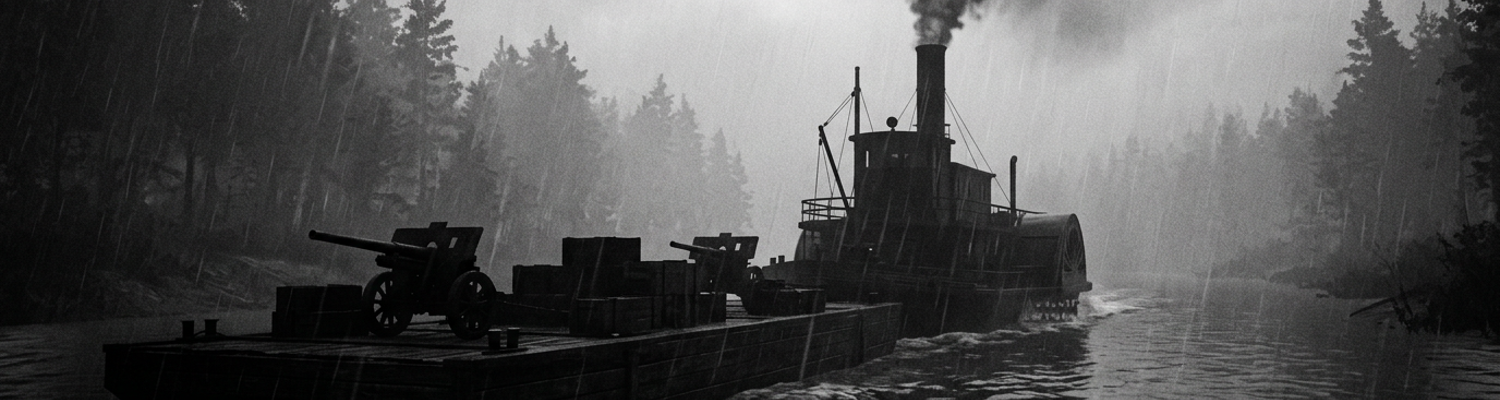

Hollywood Myths versus Archangel Campaign Realities
War Office field manuals printed in 1918 guaranteed an uninterrupted mechanized supply chain extending deep into the Russian interior via armored river flotillas. Soldiers stepping off the transports at Archangel instead found themselves loading ammunition crates onto rotting wooden barges. Commandeered tugboats pulled these flat-bottomed transports. The civilian boilers frequently exploded under military strain. Archival evidence shows a completely different maritime theater than the one planned in London. Royal Navy ships deployed to support Major General Edmund Ironside and his ground troops were entirely unsuited for the hydrography of the region. The Insect-class gunboats HMS Cicala and HMS Cockchafer were originally designed for the deep predictable currents of the Danube River. They immediately struggled against the erratic sandbars and rapidly fluctuating depths of the Northern Dvina. The heavy twin 6-inch guns and triple 12-pounder mounts on their decks caused the hulls to sit significantly lower in the water than the manufacturer specifications outlined.
The entire campaign depended on water levels that dropped by several feet in the summer of 1919.
A close review of operational logs indicates systemic planning failures and the rapid deterioration of standardized naval operations into desperate improvisations. By late May 1919, supply lines stretching south from the White Sea toward the railway junction at Kotlas fractured. British commanders failed to account for the seasonal receding of the Dvina River. Local timber merchants documented this basic hydrological cycle for centuries. This planning oversight left heavier warships trapped in muddy shallows near the forward operating base at Troitsa. Monitors HMS M25 and HMS M27 became permanently marooned as the river narrowed. Each vessel displaced 540 tons. Crews stripped the ships of their secondary armaments and optical rangefinders. They scuttled both monitors with high-explosive charges on September 16 to prevent their capture by advancing Red Army infantry.
Naval commanders frequently ordered standard minesweepers into uncharted river bends without conducting proper depth soundings.
The loss of purpose-built warships forced the deployment of lightly armored single-screw vessels into highly contested zones. HMS Sword Dance struck a submerged Bolshevik contact mine on June 24 while attempting to clear supply channels. The ship displaced 290 tons and carried only a single 6-pounder gun. Her sister ship HMS Fandango suffered the exact same fate on July 3. She sank rapidly with her sweeping gear still deployed. The physical strain directly degraded crew discipline across the remaining flotilla. Sailors on HMS Cicala openly refused orders to patrol the upper Dvina. They cited physical exhaustion and the lack of reliable navigation charts. The continuous threat of machine-gun ambush from the dense tree lines broke their morale. The ship ringleaders faced immediate courts-martial and initial death sentences. Supply shortages worsened continuously as the summer progressed into autumn. Ground troops from the 2nd Battalion Royal Scots and the American 339th Infantry Regiment waiting at advanced blockhouses near the village of Tulgas received shipments of completely incompatible ammunition. Crates marked for British Lee-Enfield rifles frequently contained American-manufactured Mosin-Nagant cartridges. The infantrymen defended their isolated positions using empty ration tins packed with shrapnel and gunpowder salvaged from unexploded mortar shells.
Geography and Constraints of the Northern Dvina
The Northern Dvina River featured treacherous sandbars and extreme seasonal water level shifts. Archival hydrographic surveys detail a highly volatile watercourse. During the spring thaw in May, melting ice swelled the river basin to depths exceeding twenty feet. By late July, the water levels plummeted drastically due to minimal summer rainfall across the Vologda region. The riverbed consisted of loose shifting silt. This sediment formed unpredictable underwater ridges overnight. Hydrographic charts drawn one week became completely obsolete the next. Ships drawing more than four feet of water routinely ran aground on these newly formed obstacles. Engineers aboard the command ships recorded constant scraping sounds. Steel hulls dragged across the abrasive river bottom near the Vaga River confluence. A close review of operational logs indicates that British flat-bottomed barges frequently became wedged on these submerged sandbanks. Tugboat captains attempted to muscle their way through the shallows by running their steam engines at maximum pressure. This caused the cast-iron propellers to churn up thick columns of black mud. The suspended silt bypassed the rudimentary filtration screens and clogged the boiler intake valves.
Engine room pressure gauges dropped to zero in minutes.
Mechanics had to dismantle the intake pipes entirely to scrape out the compacted river mud by hand. Crews physically climbed into the waist-deep freezing water with wooden poles. They pried the 150-ton barges off the sandbars. The exhausting manual labor delayed transit times by days. Supply convoys scheduled to reach forward operating bases in forty-eight hours often took over a week to traverse just fifty miles of the central river corridor. The erratic hydrology forced supply officers to abandon scheduled timetables entirely.
The main navigable channel near the Bereznik junction narrowed from a mile wide to less than three hundred yards in just six weeks.
Allied outposts near Toulgas depended entirely on riverine supply corridors from Archangel. Ground forces stationed at this forward position operated in total isolation from the main expeditionary headquarters. The surrounding terrain consisted of impassable boreal forest and deep peat bogs. These bogs swallowed horses and motorized transport alike. No functional rail lines or paved roads existed on the right bank of the Dvina. The 2nd Battalion Royal Scots and the American 339th Infantry Regiment required a minimum of twelve tons of daily provisions to sustain basic combat operations. This heavy burden included 18-pounder artillery shells and Vickers machine-gun belts. Every single crate had to be loaded onto wooden barges at the Bakaritsa docks in Archangel and towed two hundred miles upstream. Quartermasters at Toulgas organized fatigue parties to manually haul supplies up the steep muddy fifty-foot riverbanks upon the arrival of a convoy. The infantry constructed crude wooden winches from felled pine trees. They dragged heavy ammunition boxes from the barge decks up to the fortified blockhouses.
The complete lack of overland alternatives forced a total reliance on the river current.
When the river levels dropped too low for the primary tugboats to reach the Toulgas piers, the supply chain broke down mechanically. Command at Archangel attempted to transfer cargo to smaller shallow-draft peasant rowboats known as karbasses. These unarmored wooden skiffs carried only a fraction of the required payload. They offered zero physical protection against Bolshevik sniper fire originating from the dense foliage on the opposing riverbanks. Local Russian boatmen hired to row the karbasses frequently abandoned their cargo at the first sound of rifle fire. British supply officers had to assign armed guards to each rowboat to force the civilian crews to continue rowing upstream. On August 12, a delayed shipment of high-explosive ordnance forced the American garrison at Toulgas to ration their remaining 37mm infantry gun shells. They restricted usage to just five rounds per artillery piece.
Improvised Underway Replenishment in May 1919
United States Navy Fleet Regulations printed in 1915 promised ship captains that underway replenishment would occur exclusively via standardized coaling booms. These transfers were designed for steel-hulled colliers matching speeds in calm deep-water columns. Sailors of the US Naval Detachment assigned to the Northern Dvina River flotilla in May 1919 instead found themselves shoveling raw anthracite coal across swaying splintered planks. They executed these transfers while taking accurate rifle fire from the dense taiga.
A close review of operational logs indicates that standard resupply protocols completely collapsed within days of the ice breaking.
Command directives originating from Archangel required the forward artillery barges to maintain constant bombardment positions near the village of Kurgomin at coordinates 62 degrees 50 minutes North. Anchoring to receive supplies turned these vessels into static targets for Bolshevik shore batteries hidden in the tree line. Detachment officers ordered improvised underway transfers of coal and 75mm ammunition. This kept the guns firing without halting the flotilla. The artillery barges consumed two tons of coal daily just to maintain steam pressure for their maneuvering thrusters. US Navy sailors executed these transfers while moving against a six-knot river current. They shoveled loose coal into heavy canvas sacks on the decks of supply boats. Handlers physically passed these eighty-pound bags across open gaps of rushing water to the receiving barges. The sailors wore canvas work gloves that rapidly soaked through with freezing river water and coal dust. The varying draft of the loaded supply boats and the firing barges meant their deck heights rarely aligned. Sailors frequently lost their footing on the wet timber decks and dropped coal sacks directly into the river.
Erratic spring currents routinely forced the adjacent vessels into violent unpredictable collisions.
Deckhands rigged primitive lines between unarmored wood-hulled tugs and the armed river barges to stabilize the transfer process. The tugs consisted of commandeered civilian paddle-steamers drafted from local timber companies. They featured no steel plating to stop small arms fire. Incoming Mosin-Nagant rounds punched easily through the thin bulkheads. The splintering wood acted as secondary shrapnel against the men working the ropes. The barges carried heavy 18-pounder field guns bolted directly to their flat decks. Crews strung three-inch manila hawsers across the twenty-foot gaps separating the vessels. They attached block and tackle pulley systems salvaged from abandoned Archangel warehouses to the makeshift rigging. Mechanics suspended wooden crates containing high-explosive artillery shells from these lines. The pulleys lacked proper marine grease. Friction caused the hemp ropes to smoke under the heavy loads. The civilian tugboats possessed underpowered steam engines that frequently misfired. A single cylinder misfire caused an immediate drop in speed. The heavy armed barges surged ahead in the current. This differential in momentum placed extreme tension on the improvised ropes. The unarmored tugs groaned under the stress as the lines pulled their wooden superstructures sideways.
Severed manila hawsers whipped across the decks and fractured the legs of exposed deckhands.
On the morning of May 24, a major transfer failure occurred near the Bereznik junction. A civilian tugboat engine lost steam pressure during a transfer of artillery fuses and cordite charges. The sudden deceleration caused the rigged lines connecting the tug to a US-manned artillery barge to go completely slack. A suspended wooden crate weighing two hundred and ten pounds dropped below the waterline. The tugboat engineer managed to restart the stalled boiler seconds later. The paddle-steamer lurched forward at full speed. The slack manila line snapped taut instantly. The sheer physical force of the sudden tension bypassed the rusted pulley system entirely. Iron cleats bolted to the rotting wood deck of the tugboat ripped completely out of the hull. Splintered decking and sheared bolts launched into the air. The disconnected ammunition crate sank immediately into twelve feet of thick river mud.
Mechanical Degradation of Wood-Hulled Tugboats
A close review of operational logs indicates that the Royal Navy relied almost entirely on requisitioned civilian paddle-steamers to move heavy ordnance up the Dvina. British supply officers at Archangel commandeered local timber industry tugboats like the Zarya and the Nadezhda in early June 1919. These vessels featured shallow drafts and unarmored wooden hulls constructed from regional pine and oak. Shipwrights originally designed them to pull floating log booms downstream at low speeds. The expeditionary command staff instead ordered civilian captains to tow 200-ton steel barges loaded with 18-pounder artillery shells against a six-knot upstream current. Naval engineers bolted heavy iron towing bitts directly to the rotting deck timbers. They employed an improvised alongside towing method to navigate the narrow shifting channels near the Vaga River confluence at 62 degrees 46 minutes North. Crews lashed the massive steel barges directly flush against the sides of the smaller wooden tugboats using thick iron chains.
The rigid lashings transferred the entire kinetic energy of the heavily laden barges directly into the fragile wooden superstructures.
Wood-hulled tugboats suffered severe structural stress from these improvised towing configurations over the course of the summer. The constant grinding of the heavy steel barges against the wooden sides of the tugs eroded the exterior planking within weeks. Mechanics at the forward operating base near Troitsa recorded extensive warping along the keels of several requisitioned vessels by late July. The extreme lateral tension from the tow chains pulled the internal wooden ribs completely out of alignment. Forged iron fasteners popped out of the hull boards during sharp turns in the river. This severe structural deformation caused the port and starboard paddlewheel shafts to misalign with the main engine bearings. The resulting metal-on-metal friction generated intense heat. Engineers had to shut down the primary boilers mid-transit to prevent catastrophic engine seizures. River water poured continuously through the widened seams in the hull planking well below the waterline.
Engine room crews spent their off-duty hours manually bailing out the flooded bilges with canvas buckets.
The mechanical failures extended from the compromised hulls directly to the primary cargo handling equipment. Archival evidence shows that rusted winch cables frequently snapped during heavy cargo transfers in rough river currents. The steam-driven donkey engines mounted on the supply barges featured steel wire ropes left exposed to the harsh Arctic winter elements for months prior to the campaign. Oxidation severely compromised the tensile strength of the half-inch wire hawsers. Quartermasters from the Royal Army Ordnance Corps ignored basic maintenance protocols. They operated the lifting winches without applying any lubricating grease to the exposed gears or the braided cables. Supply officers routinely exceeded the maximum safe working loads to speed up the unloading process at forward blockhouses. Troops attempted to hoist multiple wooden crates of Stokes mortar rounds simultaneously while the vessels pitched violently in the erratic Dvina currents.
The abrasive friction of the dry cables grinding against cast-iron pulleys generated visible metal shavings on the decks.
On July 18, the 27th Brigade required an emergency resupply of high-explosive ordnance near the Kurgomin defensive positions. A civilian tugboat anchored in the main channel where the river current accelerated to eight knots over a submerged sandbar. Ground crews rigged a rusted wire hawser to a heavy cargo net loaded with four hundred pounds of artillery fuses and cordite charges. The steam winch engaged and lifted the payload twenty feet into the air above the deck. The tugboat rolled sharply to port as a sudden cross-current hit the shallow wooden keel. This violent motion placed extreme shock-loading on the heavily oxidized winch cable. The frayed steel strands sheared completely through at the main pulley block. The severed wire whipped downward across the deck and struck two Royal Navy deckhands in the chest. The disconnected cargo net plummeted directly through the wooden roof of the tugboat wheelhouse and smashed the brass navigation binnacle into fragments.
Silt Accumulation and Swollen Ordnance at Toulgas
Archival evidence shows that the Allied flotilla mechanical breakdown accelerated dramatically as water levels near the Toulgas anchorage at 62 degrees 42 minutes North dropped to a seasonal low in August 1919. Supply vessels relying on river water to cool their condensers and feed their Scotch marine boilers ran directly into highly concentrated suspended sediment. Tugboat captains pushing flat-bottomed ammunition barges upstream fought the six-knot current by running their steam engines at maximum capacity. The heavy cast-iron propellers churned the shallow riverbed into a thick slurry of sand and organic peat. This dense abrasive mixture bypassed the rudimentary brass intake screens located along the lower hulls of the requisitioned tugs. High-pressure feed pumps sucked the mud directly into the internal boiler tubes. The suspended silt settled at the bottom of the water drums where the heat of the furnace baked it into a solid mineral scale. This hardened layer of mud insulated the steel tubes from the cooling water.
Boiler temperatures spiked past safety limits as the internal water circulation ceased completely.
A close review of operational logs indicates that mechanics aboard the supply vessels spent entirely too much time dismantling clogged machinery instead of maintaining forward momentum. On August 14, the primary boiler on a supply tug designated Tug 17 failed completely just three miles south of the Toulgas blockhouses. The abrasive river silt had baked into a three-inch crust inside the copper heating tubes. Engine crews had to shut down the coal fires. They bled the remaining steam pressure through the emergency release valves and waited for the iron components to cool. Mechanics physically removed the heavy steel access plates using oversized wrenches while standing in pooling bilge water. They crawled into the cramped sweltering boiler casings with iron rods to chip the hardened mud out of the pipes by hand. The disabled vessel drifted backward down the Dvina River for two hours before a secondary tug could secure a towing hawser. British commanders at Archangel responded by issuing orders to halt all supply convoys at night to avoid churning up unseen mud banks.
This single administrative decision doubled the transit time for artillery shells reaching the front lines.
The environmental degradation extended deep into the holds of the supply barges moored along the muddy riverbanks. High humidity plagued the Vologda region throughout the late summer. Heavy evening fogs rolled off the surrounding peat bogs and saturated the unventilated cargo spaces of the flat-bottomed transports. Quartermasters stored thousands of rounds of .303 British rifle ammunition and 18-pounder artillery shells inside standard-issue wooden crates manufactured from unseasoned green timber. The British War Office utilized this cheaper wood to meet wartime production quotas. These boxes consisted of porous pine boards held together by iron hinges and simple clasp locks. The raw wood absorbed the ambient moisture trapped inside the damp cargo holds over the course of the two-week transit from Archangel. The timber expanded significantly across the grain as the water content increased.
The swelling warped the structural geometry of the ammunition boxes entirely out of alignment.
When examining the historical record, the physical toll of opening these swollen crates severely compromised combat readiness at the Toulgas blockhouses. Supply officers delivering a shipment of Stokes mortar rounds to the American 339th Infantry Regiment on August 18 found the wooden lids completely fused to the lower casings. The expanding wood clamped down on the metal locking mechanisms with hundreds of pounds of pressure. The iron hinges rusted solid from the trapped condensation. Infantrymen could not pry the boxes open using standard crowbars or their issued bayonets. The swollen wood gripped the metal latches so tightly that soldiers resorted to smashing the corners of the crates with heavy steel entrenching tools. This violent extraction method caused severe damage to the sensitive ordnance packed inside. Errant strikes from the shovels dented the brass primer caps on the mortar shells. The blunt force also fractured the delicate internal timing mechanisms of the artillery fuses.
Gun crews loaded these compromised shells into their firing tubes during a Bolshevik infantry assault the following morning.
The mechanical failure of the ordnance manifested immediately on the battlefield. Seven consecutive mortar rounds misfired and dropped harmlessly into the mud fifty yards from the Allied trenches. The fractured fuses failed to ignite the main explosive charges. American soldiers abandoned their mortar pits and transitioned entirely to rifle fire to repel the advancing Red Army infantry. They encountered identical problems with the small arms ammunition crates. The swollen wood of the .303 cartridge boxes required two men pulling in opposite directions just to break the lid seals. Splinters of wet pine mixed with the exposed brass cartridges. Soldiers had to wipe each individual round on their wool tunics before loading their magazines to prevent the wet wood fibers from jamming the rifle bolts.
Bolshevik Gunboats and Superior 130mm Artillery
Archival evidence shows that the Red Army Northern Dvina Flotilla completely outclassed the Royal Navy expeditionary force in long-range ballistics. British planners at the War Office assumed the Bolsheviks possessed only obsolete field artillery abandoned during the 1917 revolution. Red Navy engineers instead dismantled 130mm/55 B7 Pattern 1913 naval guns from immobilized Baltic Fleet destroyers anchored in Petrograd. They transported these heavy weapon systems via rail directly to the Kotlas riveryards. Mechanics bolted the gun mounts to the reinforced decks of shallow-draft river barges and converted civilian paddle-steamers. The extreme recoil forces of the naval guns threatened to shatter the wooden hulls upon firing. Soviet shipwrights installed heavy iron cross-bracing and poured solid concrete into the bilges to absorb the kinetic shock. The 130mm naval guns fired an eighty-one-pound high-explosive projectile. British artillery barges relied primarily on standard 18-pounder field guns originally designed for trench warfare in France. Standard 18-pounders maxed out at a functional range of roughly 6500 yards. Soviet gun crews easily achieved accurate fire at distances exceeding 16000 yards when elevating their barrels to thirty degrees.
This severe mathematical disparity in ballistics allowed Bolshevik gunners to anchor far beyond the maximum effective range of the British flotilla.
A close review of operational logs indicates the devastating effects of this range advantage during the August 1919 engagements near the village of Seltso at coordinates 62 degrees 33 minutes North. Red Navy artillery barges positioned themselves nine miles upstream around a sharp bend in the river. Soviet gun crews initiated sustained bombardments of Allied supply depots without ever coming into visual contact with British monitors. The 130mm shells descended at steep angles. They penetrated the thin wooden roofs of the Allied forward blockhouses before detonating. These eighty-one-pound projectiles contained high-grade TNT that produced a lethal blast radius of over fifty yards. Jagged steel shrapnel sheared through the surrounding pine trees and showered the entrenched infantry with heavy wooden splinters. British gunners on the decks of HMS Cockchafer attempted to return fire by elevating their 6-inch guns to maximum pitch. Their projectiles splashed harmlessly into the river mud two miles short of the Bolshevik positions.
Allied forward observers possessed no optical rangefinders capable of spotting Soviet muzzle flashes through the dense boreal forest at that distance.
The Red Navy multiplied their ballistic dominance by integrating indigenous navigation experts to exploit the deteriorating summer hydrology. British naval commanders navigated the Dvina using static hydrographic charts printed in London months before the campaign began. Bolshevik flotilla commanders recruited local timber pilots and Pomor fishermen who understood the daily fluctuations of the river basin. These civilian navigators read the surface ripples to identify submerged sandbars forming in real-time. They guided heavily armed Soviet gunboats through secondary channels drawing less than three feet of water. The converted tug Pavlin Vinogradov successfully navigated these routes. British monitors requiring a minimum draft of four feet remained permanently confined to the rapidly narrowing central corridor.
Red commanders routinely bypassed the main shipping lanes entirely to flank Allied convoys from uncharted sloughs.
Allied captains anchored their vessels at dusk to avoid running aground on unseen obstacles. Soviet flotilla commanders exploited this static defensive posture. Local Pomor navigators guided Red Navy gunboats downriver by matching the dark silhouettes of the tree lines against the night sky. They identified deep-water channels by listening to the specific pitch of the water rushing over hidden gravel bars.
This acoustic navigation allowed Bolshevik crews to position their 130mm floating batteries directly adjacent to sleeping British encampments.
Soviet crews executed highly coordinated ambushes by hiding their shallow-draft vessels inside the narrow tributaries feeding into the main river. Local pilots used long wooden poles to measure depths manually while the gunboats idled their steam engines to minimize noise. Dropping heavy iron kedge anchors from the stern allowed them to quickly pivot the 150-foot vessels within the tight confines of the Vaga River confluence. On August 28, a Bolshevik battery utilizing this shallow-water flanking maneuver ambushed a British resupply convoy attempting to reach the Toulgas garrison. Soviet gunners fired three armor-piercing shells from a flooded peat bog completely absent from British maps. One projectile struck the unarmored boiler room of a requisitioned civilian tugboat towing twelve tons of cordite. It bypassed the wooden superstructure entirely and detonated inside the pressurized water drum. High-pressure steam instantly ruptured the cast-iron engine casing and scalded four Royal Navy engineers to death on the deck grating.
Tactical Ambushes on Allied Replenishment Barges
Archival evidence shows that Royal Navy supply officers consistently routed unprotected convoys through the sharpest meanders of the Northern Dvina. The river channel abruptly narrowed at coordinates 62 degrees 43 minutes North near the village of Topsa. Water currents accelerated rapidly around the ninety-degree bend as the riverbed constricted. Civilian paddle-steamers towing heavily loaded ammunition barges struggled violently against the resulting hydrodynamics. Engineers shoveled raw coal at maximum physical capacity. They pushed the overworked Scotch marine boilers to their absolute pressure limits. This extreme mechanical effort generated a forward speed of just two knots against the rushing current. The crawling pace kept the vessels exposed within a highly predictable kill zone for over forty minutes. Bolshevik infantry units exploited these geographical chokepoints. They dragged Maxim M1910 water-cooled machine guns through the deep mud of the taiga. Infantrymen dug fortified firing pits directly into the steep dirt embankments at the exact apex of the river bends.
The unarmored wooden transports possessed no steel plating to deflect the concentrated 7.62mm crossfire.
A close review of operational logs indicates that British navigation protocols actively worsened the vulnerability of the flotilla. Convoy commanders ordered the civilian tugboat captains to hug the shallow inside curves of the meanders to avoid the deep-water sandbars forming on the outer edges. This specific routing decision placed the slow-moving barges within fifty yards of the heavily forested right bank. Red Army gunners waited until the lead vessels reached the exact center of the turn before opening fire from multiple concealed positions. The enfilading fire tore effortlessly through the thin pine bulkheads of the requisitioned tugboats. Incoming rounds shattered the glass windows of the elevated wheelhouses. Bullets severed the exposed brass telegraph cables connecting the bridge to the engine room. Civilian Russian helmsmen suffered fatal gunshot wounds. They collapsed directly onto the wooden steering columns. The sudden loss of helm control caused the paddle-steamers to veer sharply off course as the heavy river current caught their broadsides.
Unmanned tugboats drove their attached barges directly into the muddy riverbanks at full throttle.
These grounded convoys immediately attracted concentrated artillery strikes from Bolshevik shore batteries hidden beyond the tree line. Red Army forward observers utilized field telephones strung through the pine branches to transmit the exact coordinates of the trapped ammunition barges to 76.2mm Putilov field guns positioned three miles inland. Soviet gun crews adjusted their elevation dials. They dropped high-explosive fragmentation shells directly onto the flat wooden decks of the stationary transports. The incoming projectiles pierced the unreinforced cargo hatches instantly. Detonations inside the cramped holds ignited thousands of pounds of stored cordite charges. The resulting secondary explosions vaporized the wooden superstructures of the barges. Flaming debris, shattered hull planks, and unexploded 18-pounder shells fell into the surrounding river channels for hours.
The destruction of these specific cargo manifests severed the only resupply corridor keeping the isolated Toulgas garrisons combat-effective.
When examining the historical record, the loss of these ammunition barges caused immediate tactical paralysis for the forward ground troops. The 2nd Battalion Royal Scots and the American 339th Infantry Regiment relied entirely on these weekly river shipments to repel continuous Red Army probing attacks. Impassable peat bogs and flooded ravines completely blocked any overland supply routes to their fortified blockhouses. A catastrophic ambush on August 29 obliterated a convoy carrying three thousand Stokes mortar rounds and fifty crates of Vickers machine-gun belts. The shockwave from the exploding barge shattered the glass observation slits of the Allied trenches located two miles downstream. Quartermasters at Toulgas conducted emergency inventory checks later that evening by the light of kerosene lanterns. The results proved devastating. The garrison possessed only enough high-explosive ordnance to sustain two days of active combat against a numerically superior enemy. Supply officers immediately restricted the daily distribution of .303 rifle cartridges to ten rounds per infantryman.
Medical personnel at the forward aid stations began washing and reusing blood-soaked canvas bandages because the replacement medical crates burned in the river.
Strategic Collapse of the Planned Siberian Junction
Archival evidence shows that the British War Office built their entire 1919 Russian strategy around a 400-mile mechanized river advance to Kotlas at coordinates 61 degrees 15 minutes North. General Edmund Ironside received direct instructions to push the North Russian Expeditionary Force southeast down the Northern Dvina. Planners expected these units to capture the Kotlas railway hub and physically link up with Admiral Alexander Kolchak and his Siberian White Army. Kolchak reported his right flank was advancing westward from the Ural Mountains toward Vyatka. A close review of operational logs indicates that this grand junction depended entirely on the uninterrupted flow of heavy ordnance and rations via the river. The erratic summer hydrology of the Dvina completely dismantled the timetable. Water levels dropped nearly ten feet between June and August. Requisitioned civilian paddle-steamers towing 200-ton steel barges ran aground on uncharted sandbars near the Vaga River confluence. Cast-iron propellers sheared off on submerged gravel ridges. Mechanics lacked the heavy dry-dock equipment required to replace bent drive shafts in the forward operating zones. The expeditionary supply lines shortened daily as the central channel narrowed to less than two hundred yards.
The complete loss of forward momentum stranded the 45th Battalion Royal Fusiliers at the Troitsa anchorage over one hundred and fifty miles short of their Kotlas objective.
When examining the historical record, the mechanical breakdown of the flotilla severed the only viable communication and supply link between the two anti-Bolshevik fronts. Allied forward observers possessed heavy Marconi wireless telegraph sets designed to coordinate the convergence with Kolchak and his cavalry units. These early radio transmitters required bulky petrol-driven generators to maintain the necessary voltage for long-range transmission. The flat-bottomed barges carrying the aviation spirit and replacement vacuum tubes for the wireless sets became permanently lodged in the thick mud near Topsa. Signal officers attempted to rig emergency aerials in the tops of pine trees using copper wire. The dense boreal forest absorbed the weak radio frequencies. British headquarters at Archangel lost all direct contact with the Siberian forces for weeks at a time. Red Army infantry exploited this exact operational paralysis. Soviet commanders massed their 6th Army divisions around Kotlas without facing any coordinated Allied artillery pressure. They systematically dismantled Kolchak and his overextended vanguard near Perm using armored trains equipped with 107mm field guns.
Delayed intelligence reports confirmed Kolchak and his battered vanguard were retreating in complete disarray.
The total collapse of the Kotlas junction forced Allied commanders to completely abandon their offensive posture and initiate a theater-wide evacuation. General Lord Rawlinson arrived at Archangel in early August 1919 with strict orders to execute an immediate withdrawal of all multinational forces. Brigadier General Lionel Sadleir-Jackson received commands to reconfigure his remaining infantry brigades. They transitioned from planning a deep interior advance to organizing a complex rear-guard action. Planners scheduled a final spoiling attack for August 10 near the villages of Seltso and Borok. This assault served no strategic purpose other than destroying local Bolshevik artillery positions to prevent them from firing on the retreating British troop transports. Quartermasters at the forward supply dumps reversed their entire distribution system. They ordered fatigue parties to manually load thousands of unused 18-pounder artillery shells back onto the surviving wooden barges. The heavily degraded civilian tugboats lacked the boiler pressure to tow these fully loaded transports back upstream against the autumn winds.
Engineers dumped excess crates of .303 rifle cartridges directly into the deepest sections of the Dvina channel to lighten the draft of the escaping vessels.
A close review of operational logs indicates the withdrawal required the deliberate destruction of millions of pounds of military hardware. Ground forces abandoned their reinforced blockhouses at Toulgas and set fire to the wooden support beams using kerosene. Infantrymen disabled their immovable Vickers machine guns by removing the lock mechanisms and throwing the steel firing pins into the peat bogs. Royal Artillery crews executed destruction orders for any 18-pounder field gun too heavy to drag back across the receding sandbars. Gunners packed the steel breeches of their artillery pieces with surplus guncotton. They wired the explosive charges to short-delay chemical fuses. The resulting detonations blew the firing mechanisms completely out of the gun shields.
The fractured steel barrels sank immediately into the abrasive river silt.