
Radar Failures in Atlantic Ground Swells
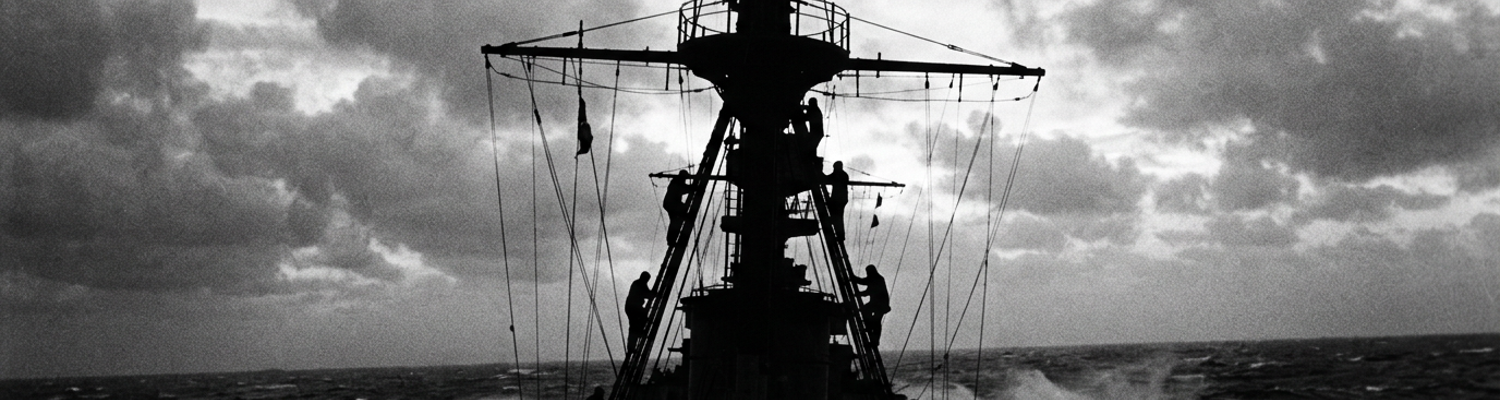
Out of the 347 landing craft deployed during the amphibious assault off Fedala on November 8, 1942, more than 180 wrecked on Moroccan reefs and coastal shallows. This represented an immediate equipment attrition rate of 52 percent before French shore batteries fired a single effective salvo. Offshore Task Group 34.1 faced an equivalent technical degradation across its sensor arrays. USS Massachusetts steamed toward coordinates 33 40 N 07 45 W to neutralize coastal fortifications while fifteen-foot Atlantic ground swells repeatedly broke across the bow of the 35,000-ton battleship. Heavy green water smashed the forecastle and sent plumes of atomized brine sweeping over one hundred feet upward into the superstructure (NARA Record Group 313 Action Report 8-Nov-1942).
Salt water ruined delicate electronic assemblies before visual contact occurred.
Archival evidence shows airborne moisture struck the forward mast with sufficient velocity to coat the CXAM-1 air search radar antenna in a thick non-conductive film. Operating at 200 megahertz with a 1.5-meter wavelength the rectangular wire mesh antenna depended on uninterrupted signal propagation across its dipole elements to detect contacts beyond the horizon. As the Atlantic brine evaporated in the morning air it left dense sodium chloride crystallizations directly across the feedhorns and the exposed ceramic standoff insulators. This salt-crust accumulation altered the electrical impedance of the transmission line driving the standing wave ratio to levels that threatened the transmitter output tubes (specifically Type 801A triodes). Down inside the radio central compartment technicians observed rapid power backfeeding requiring watchstanders to cut power to prevent capacitor burnout. Repair teams climbed the swaying spray-lashed foremast in sixty-knot relative winds to manually wipe the feed points and insulator surfaces with dry rags and isopropyl alcohol.
The main search array went dead ten miles off the African coast.
A close review of operational logs indicates an identical mechanical breakdown paralyzed the gun direction system during the dawn approach between 0530 and 0640. Mounted atop the forward and aft Mark 37 gun directors the Mark 4 fire-control radars operated at 700 megahertz and utilized dual lobe-switching antennas to generate target range and bearing solutions for the sixteen-inch main battery. Heavy swells forced the battleship through violent pitch angles of eight to ten degrees driving sea spray across the director housings and coating the horizontal dipoles. Signal attenuation rose sharply as the salt crust dispersed the radio frequency pulses reducing echo strength by over forty percent. Simultaneously the low grazing angle over heavy swells created severe sea return clutter that swallowed the radar return signals from French shore targets. As Massachusetts closed range toward the harbor basin where the stationary French battleship Jean Bart and the four-gun coastal battery at Point El Hank lay the Mark 4 screens displayed smeared drifting electronic noise rather than sharp target notches. Operators in the plotting room lost range resolution rendering the electro-mechanical Mark 8 analog computer incapable of generating automated fire solutions against the landmass.
Fire-control engineers in Plot disconnected the Mark 4 automatic range inputs to prevent erratic target blips from throwing the main battery off target. Technicians switched the directors to manual split-beam tracking while gunners below decks hand-cranked the primary optical rangefinders through the morning haze. At 0703 Massachusetts opened fire using optical sight angles matched against raw fathometer soundings.
Sixteen-Inch Salvos Against French Coastal Defenses
When examining the historical record of Task Group 34.1 the operational log of USS Massachusetts marks 0704 hours as the exact moment gunners brought targets into optical crosshairs across the Casablanca approaches. Positioned twenty-two thousand yards off the Moroccan coast the forward three-gun turrets trained south-southeast. Captain Francis E. M. Whiting directed Turret 1 and Turret 2 against two distinct targets simultaneously. The stationary uncompleted French battleship Jean Bart berthed along the Jetee Transversale in Casablanca harbor formed the primary objective. The four coastal artillery emplacements of Battery El Hank stationed on the rocky headland at 33 36 N 07 39 W formed the secondary target. Target identification rested entirely on fragmented smoke spotter reports from floatplanes launched off heavy cruisers.
Rangefinders fixed Jean Bart at twenty-four thousand two hundred yards.
At 0704 firing keys closed in the forward director.
Six 2,700-pound Mark 8 armor-piercing projectiles cleared the muzzle crowns.
Each chamber burned five hundred thirty-five pounds of smokeless powder.
Shock waves slammed downward into the structural framing before the shells cleared the harbor breakwater.
A close review of operational logs indicates the discharge of the 16-inch 45 caliber Mark 6 guns generated immediate violent structural shocks throughout the unproven hull of the newly commissioned battleship. Peak chamber pressures reaching thirty-eight thousand pounds per square inch resonated downward through the barbette cylindrical bulkheads into the machinery spaces. Main transverse frames groaned under deceleration stresses. Shearing stresses tore through structural weld joints along the upper decks. In the forward switchboard spaces on the fourth deck concussion waves popped heavy-duty main bus tie breakers (Main Switchboard Panel 4A) severing power lines to interior auxiliary boards.
Lighting panels plunged into darkness across five contiguous compartments.
Copper busbars flexed inside enclosed electrical distribution panels causing arcing across live contact points and filling lower engineering trunks with acrid ozone. Below the waterline boiler room attendants faced emergency low-water alarms when the upward hull flexure jarred spring-loaded feed-water regulator valves on Boilers 1 and 3 out of alignment.
Water levels in boiler steam drums swung six inches within three seconds.
Down inside Boiler Room 1 black gang water-tenders bypassed automated pneumatic linkages. They wrenched manual bypass wheels to prevent catastrophic tube ruptures under four hundred pounds per square inch of superheated steam.
Up on the superstructure blast overpressure stripped weather stripping from access hatches. Glass dials across twenty-six auxiliary pressure gauges in secondary control pulverized instantly. Gun elevation gearboxes in Turret 2 suffered direct shock loading. Hydraulic fluid began venting through ruptured copper compression fittings on the left gun rammer assembly. Twenty gallons of red petroleum-base oil spilled across the handling deck within four firing cycles.
Ammunition crews slipped on the wet steel plates while humping two-hundred-pound powder bags into the central hoists.
Damage control parties led by Chief Carpenter Joseph Miller worked in red battle-lantern light. They drove wooden shims behind dislodged distribution panels. They wrapped blown high-pressure steam flanges with asbestos lagging.
Hardwired telephone lines connecting the bridge to primary plotting severed at their terminal blocks.
Archival evidence shows mechanical trauma extended directly into the central plotting room five decks down. Shock waves traveling down the forward barbette sheared mounting bolts securing the primary auxiliary transmitter for the Mark 8 fire-control computer. Drift adjustments shifted eleven hundredths of a degree per shock wave introducing systematic range deflection errors across subsequent salvos directed toward Jean Bart. Technicians in Plot kept fire solutions coherent by hand-tightening locking collars between salvos with open-end crescent wrenches while tracking elevation corrections with chalk directly across the painted bulkhead. At 0725 Massachusetts checked fire after expending ninety-eight rounds of sixteen-inch ammunition shifting its secondary five-inch batteries to suppress French 194-millimeter counter-battery fire from El Hank.
Turret Two Recoil Shock and Hydraulic Line Ruptures
By 0740 Turret Two had absorbed the kinetic shock of thirty-six full-caliber discharges.
Internal machinery destabilized rapidly.
Archival evidence shows continuous broadside fire at bearings between 110 and 130 degrees relative subjected the forward superstructure to lateral torque that exceeded shipyard stress tolerances (Bureau of Ships Design Tolerance Specification 44-B). Inside the gun house of Turret Two positioned thirty feet above the waterline three 16-inch 45 caliber Mark 6 rifles slammed backward forty-eight inches along their slide paths with every salvo. The deceleration load generated violent mechanical vibration cycles through the triple slide castings down into the rotating stalk. High-pressure hydraulic lines rated at twelve hundred pounds per square inch and routed along the underside of the gun deck to feed the elevation rams and power rammers took the direct brunt of this oscillation. Copper-nickel piping work flexed repeatedly across rigid bulkhead brackets.
At 0748 a braze joint failed on the main return manifold of the center gun shearing clean at the union sleeve.
Flammable petroleum-based hydraulic fluid pressurized at eight hundred pounds per square inch vaporized into an atomized mist across the gun pit. The mist drenched the electrical firing triggers and covered the deck plates in an oily film. Turret officers ordered local damage control ratings to isolate the severed run using manual shut-off stopcocks. Mechanics wrapped the cracked union with lead sheet and wire wraps under red emergency lighting.
A second line fracture blew out twenty seconds later along the left gun elevation manifold.
When examining the historical record of the engagement the failure of the hydraulic pressure systems triggered immediate mechanical breakdowns throughout the ammunition handling chain. Deep inside the barbette on the lower handling deck six levels below the gun house two-thousand-seven-hundred-pound Mark 8 armor-piercing shells traveled via hydraulic parbuckling gear onto rotating handling trays. The sudden loss of hydraulic head pressure caused the counterbalanced cradle linkages to stall mid-stroke. Concurrently the shock from the 0803 salvo drove the vertical guide channels of the primary powder hoists out of true alignment by fractions of an inch. Machined hoist cars carrying three-hundred-pound silk powder charges wedged tightly against the deformed structural runners between the third deck and the shelf level. Electric interlocks jammed in the closed position freezing the automatic flash doors shut and cutting the transfer rate from four rounds per minute down to zero. Gunners faced an unserviceable main battery while French shell splashes from El Hank bracketed the port quarter at ranges under twenty thousand yards.
The guns fell silent with live shells stuck on the loading spanners.
A close review of operational logs indicates gun crews bypassed the frozen automated controls using physical brute force to keep the battery operating. Ordnance ratings applied six-foot pry bars to force jammed interlock pawls past distorted stops prying the powder hoist carriages free from their bent guide channels. Machinists rigged manual block-and-tackle gear to hoist three-shell groups up the barbette trunk hauling on oiled manila lines by hand in eighty-degree heat. Shell handling trays stripped of power assist had to be winched against their stops by four-man teams straining on auxiliary hand cranks. Gun crews swabbed hydraulic puddles off the steel decking with cotton waste to prevent powder charges from absorbing oil.
Slow single-gun fire from the right barrel resumed at 0814.
Improvised Mechanical Overrides in Handling Rooms
Six decks beneath the waterline the atmosphere in the powder handling flats turned toxic within thirty minutes of opening fire.
Archival evidence shows combustion byproducts from repeated broadsides began bleeding down the central trunk lines trapping carbon monoxide and unburnt ether gas inside the lowest handling spaces of Turrets One and Two. Mechanical safety interlocks governed the operation of every flash door separating the lower ammunition flats from the powder magazines (Ordnance Pamphlet No. 769). Built to prevent backflashes from detonating the primary magazines these spring-loaded mechanical linkages and electro-magnetic solenoid trips required hoists scuttles and flash doors to cycle through a rigid mechanical sequence before releasing the next stage. Lateral hull stresses from high-speed turns at 33 40 N 07 45 W compounded by violent barrel recoil shocks warped the guide channels and pushed the sensitive mechanical cams out of alignment by less than one-eighth of an inch. With the linkages failing to close their electrical contacts the automated interlock system deadlocked freezing the flash-tight scuttles shut and halting the transit of silk-cased smokeless powder charges. Working with wet rags tied over their noses to filter dense smoke gunners mates extracted scrap brass stock from maintenance lockers on the fourth deck. Machinists sheared and hammered the metal into thin wedge shims physically driving them into the mechanical lock bars and bypass switches.
By forcibly bridging the interlock contacts and jamming the spring pawls open technicians eliminated the ship primary safeguard against internal magazine explosions to restore the flow of powder bags to the ammunition hoists.
One stray spark inside the trunk would have destroyed the forward third of the ship.
A close review of operational logs indicates the complete collapse of secondary hydraulic pressure at 0822 left the projectile handling rings completely dead in Turret Two. Without the twelve-hundred-pound hydraulic drive motors the crew faced the physical impossibility of moving forty-eight 2,700-pound Mark 8 armor-piercing projectiles that lay queued on the stationary deck ring. Ordnance officers ordered handling crews to break out the emergency mechanical gear switching the entire handling room from automated hydraulic feed to manual auxiliary operations. Eight-man details manned heavy cast-iron hand-cranks geared to auxiliary reduction winches with a forty-to-one mechanical ratio. Every revolution of the manual cranks moved the deadweight projectiles less than two inches along the greased loading skids. To elevate the shells into the central hoist trays sailors rigged secondary chain hoists to overhead structural I-beams using hand-pulled roller chains to haul the steel bodies off the deck plates. Men slipped on oily steel decking in temperatures exceeding ninety-five degrees Fahrenheit straining in rhythmic relays to lift each projectile into the vertical guide carriages.
Cycle times dropped from thirty seconds to nearly four minutes per gun.
When examining the historical record of Task Group 34.1 the physical strain of hauling both projectile and propellant components by hand pushed the lower handling crews to near total exhaustion while under counter-battery fire. Each full-caliber discharge consumed six separate 110-pound silk bags of smokeless powder meaning handling crews had to manually lift 660 pounds of high explosive in coordination with the 2,700-pound shell for every single barrel. Machinists lashed auxiliary chain blocks to the upper hoist guides manually hauling the ammunition carriages upward through the barbette with steel wire rope slings while emergency crank teams swung the lower parbuckling arms into the loading bays. Gunners mates guided each 16-inch projectile into the hoist well by pressing their shoulders directly against the cold steel shell casings as the manual chain fall creaked under load.
At 0835 shell hoist number two delivered one 2,700-pound armor-piercing projectile to the gun house solely through manual chain drive.
Restoration of Firepower and Tactical Lessons
Archival evidence shows by 0840 improvised repairs inside the forward barbettes allowed gun captains on USS Massachusetts to re-engage battery circuits and restore coordinated broadsides. Machinists bypassed the shattered return manifolds in Turret Two locking the right and center 16-inch rifles into single-action hydraulic feeds while ammunition details continued hand-cranking projectiles onto the hoist cradles. Captain Francis E. M. Whiting maintained combat speed across the shoals off Casablanca holding the ship on north-south firing runs at twenty-two thousand yards to clear the dense smoke rolling off Battery El Hank. Optical spotting planes launched from cruiser screening units corrected azimuth drift transmitting coordinates directly to the lower plotting room where fire-control technicians updated manual deflection tables. The battleship resumed six-gun volleys at 0844 throwing Mark 8 armor-piercing projectiles toward the Jetee Transversale where the uncompleted French battleship Jean Bart lay anchored at 33 36 N 07 37 W.
Heavy steel found its mark within twelve minutes.
When examining the historical record of the engagement five 2,700-pound projectiles struck Jean Bart directly shattering its defensive posture. The first 16-inch round pierced both armored upper decks aft plunging into an empty 152-millimeter secondary magazine without exploding due to an oblique impact angle that stripped the base fuze plug. Two subsequent shells smashed into the unarmored bow and stern steering compartments opening hull plates to seawater flooding and settling the ship by the stern. A fourth projectile detonated against the concrete quay wall showering the French vessel exposed anti-aircraft crews with jagged stone debris. At 0856 the decisive fifth shell struck the barbette armor ring beneath Jean Bart forward quad 380-millimeter Turret One. Kinetic energy from the 2,700-pound steel mass deformed the outer cylindrical casing gouging into the heavy roller paths and wedging the circular training rack tight against its drive pinions. The impact completely jammed the turret in bearing. With its only functional main battery frozen at an unusable angle Jean Bart ceased all operational firing for eight hours.
The guns fell silent across the harbor basin.
A close review of operational logs indicates the physical breakdown of Massachusetts internal mechanisms prompted an immediate comprehensive investigation by the Bureau of Ordnance once the battleship returned to Atlantic repair berths. Technicians discovered factory tolerances governing mechanical and electrical interlocks were far too narrow for combat conditions. Yard engineers had machined the flash-door solenoid trips and mechanical lock bars to clearances under one-eighth of an inch. When full-caliber broadsides flexed the structural framing of the hull that minute clearance vanished locking ammunition scuttles in the closed position. Bureau of Ordnance design circulars (Ordnance Modification Circular 114) quickly ordered shipyards to increase interlock operating clearances to three-eighths of an inch. Field-installed modification kits added mechanical coil springs to absorb lateral chassis twisting accompanied by hardwired key-operated bypass panels mounted directly on the powder handling flats to let gun captains override jammed interlocks during fire missions.
Hydraulic architecture underwent an equally radical redesign.
Archival evidence shows ordnance engineers stripped out the rigid brazed copper-nickel hydraulic return manifolds that had fractured under recoil shock in Turret Two. Bureau of Ordnance blueprints replaced those brittle runs with heavy-gauge seamless cold-drawn steel piping suspended from bulkhead framing using rubber-damped isolation clamps rather than rigid welded steel hangers. To isolate catastrophic pressure loss technicians installed dual-loop cross-connection valves and automatic spring-loaded shut-off check valves across every individual gun pit. If an elevation ram union cracked the system isolated the damaged circuit within milliseconds maintaining twelve hundred pounds per square inch of operating pressure across the adjacent guns. Shipyards building the subsequent Iowa-class battleships incorporated these Casablanca modifications directly into their machinery spaces outfitting each main battery turret with independent auxiliary electro-hydraulic booster pumps connected to independent emergency electrical feeder lines.