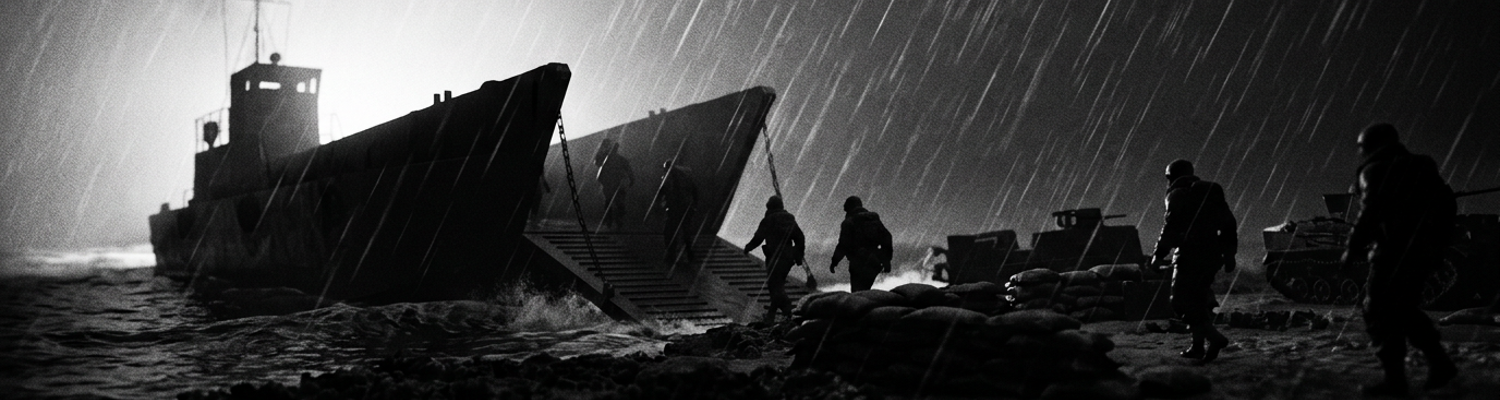

Task Force 7 Engineering on Runit Island
At 06:19 local time on May 6, 1958. The heavy copper landline connecting the forward trench network on Runit Island to command aboard the USS Mount McKinley severed cleanly. The forward garrison dropped into unmonitored isolation. Archival evidence shows this complete breakdown in communications began weeks earlier. Impossible scheduling mandates came down from atoll headquarters. In mid-April 1958, naval construction detachments from Amphibious Construction Battalion 1 deployed alongside radiological defense personnel from Task Unit 7.1.6. They landed on Runit Island. Planners designated this narrow land spit as site Yvonne (coordinates 11 degrees 33 minutes North, 162 degrees 20 minutes East). High-level staff slated the northern tip for Shot Cactus. This eighteen-kiloton surface test would detonate directly against the coral crust. Navy personnel faced an immediate hazard. They had to carve experimental blast revetments and observation trenches into unstable coral sand just three miles from the zero point.
The salt air ate through exposed steel fittings within forty-eight hours.
A close review of operational logs indicates landing craft utility vessels struggled against the lagoon reef during the initial offloading phase. They dumped thirty-five tons of heavy structural timbers and corrugated iron sheets onto the exposed eastern tide flats. Thousands of empty burlap sacks followed. Heavy engineering machinery faltered almost immediately in the tropical environment. Caterpillar D8 bulldozers assigned to scrape coral aggregate overheated rapidly. Fine coral dust choked their radiator grilles. Navy construction crews abandoned heavy plant equipment. They filled sandbags with handheld entrenching shovels in temperatures exceeding 105 degrees. Radiac teams from Task Unit 7.1.6 paced the perimeter with AN/PDR-39 survey meters. They monitored residual contamination hot spots left behind by the 1956 Operation Redwing detonations. They marked the trench perimeter with yellow safety flags. Potable water arrived erratically by motorized barge from Parry Island in rusted fifty-five-gallon steel drums. Ruptured hydraulic lines immobilized the remaining earthmovers. Construction crews carried heavy sandbags manually across the jagged reef rock. They suffered caustic coral lime burns on their forearms and legs.
Command imposed an inflexible seventy-two-hour countdown.
When examining the historical record, this rigid engineering clock began on May 3, 1958. Tight naval gunnery clear-range schedules governed the timeline. Scientific leadership within Task Group 7.1 rejected every request from site engineers for construction extensions. Coral-sandbag trenches and revetted blast walls had to achieve structural completion before technicians initiated the arming sequence. Twelve-hour shift rotations ran continuously under kerosene lanterns and portable diesel floodlights. The Seabees stacked more than twelve thousand sandbags into five-foot-deep trench corridors. They revetted the vertical walls with rough three-by-eight-inch Douglas fir planking. This timber prevented blast overpressure from collapsing the loose sand onto forward occupants. Pneumatic tampers seized up after abrasive sand particles eroded their piston gaskets. Soldiers and sailors compressed the coral backfill using pickaxe handles and sledgehammer flats. Forward bunkers required double-layered overhead sandbag canopies supported by salvaged railroad rails. These canopies protected internal telemetry cables and high-speed framing cameras from intense initial thermal radiation. By May 5, timing technicians from Edgerton, Germeshausen and Grier docked at the northern zero-pier. They threaded copper firing lines into the shot cab. This action permanently barred construction personnel from the blast radius.
At 02:00 on May 6, the zero-station electrical relays initiated their automated firing program.
Static Defense Engineering and Revetment Construction
Archival evidence shows the Department of Defense framed the Shot Cactus installation as an empirical test bed. Planners wanted to determine whether entrenched infantry could survive immediate tactical nuclear overpressures. Armed Forces Special Weapons Project engineers designated specific revetment test sectors (NARA Record Group 374). These sectors ran along a radial axis two to five thousand yards south of surface zero on Runit Island. Seabees did not rely on standard sloped slit trenches. They cut deep traverse corridors into the porous coral sand. They anchored vertical trench walls with corrugated ten-gauge steel sheet piling and heavy three-by-twelve Douglas fir lagging. Unconsolidated coral sand naturally collapses under dynamic blast loads exceeding eight pounds per square inch. This collapse turns defensive pits into burial trenches. Field units drove three-inch steel tie-back rods fifteen feet horizontally into deadman anchor timbers to resist this lateral earth pressure. They buried these anchors beneath packed aggregate backfill. Tactical planners placed mechanical self-recording barographs inside these fortified revetments. They added foil pressure diaphragms and copper-ball accelerometers. These instruments tracked whether the reinforced vertical walls would prevent blast-induced cave-ins. Dozens of anthropomorphic test dummies clad in standard utility uniforms sat strapped along the planked benches. They measured blunt-force kinetic displacement caused by the supersonic shock front.
Steel and timber replaced dirt as the baseline defense against ground-level nuclear blast waves.
A close review of operational logs indicates static survivability rested on preventing the initial thermal pulse from penetrating observation redoubts. The pulse could cook interior air volumes. Cactus would release an instantaneous thermal flash exceeding twenty-five calories per square centimeter across the forward zone. This radiant burst was hot enough to incinerate exposed skin and spontaneously ignite wooden trench supports. Naval construction personnel erected multi-ply neoprene-coated blast tarpaulins over exterior redoubt entrances.They lashed the heavy aluminized canvas to forged eye-bolts set in peripheral concrete footing blocks with quarter-inch steel cables. These blast tarpaulins deflected direct radiant heat. They trapped airborne firebrands before the physical shock wave arrived. Engineers installed forward access hatches behind these fabric heat shields. They constructed these hatches from ten-inch-thick laminated fir balks sheathed on the blast side in sixteenth-inch cold-rolled sheet steel. Technicians fitted these reinforced bunker doors with heavy spring-loaded dog latches and iron slide-bars. The hardware created a tight mechanical seal against scorching gasses and negative-phase suction pulses.
The island heat baked the timber long before the shot cab fired.
When examining the historical record, site inspection teams discovered severe mechanical vulnerabilities in this static defense layout during the final dry-run rehearsals. Exposure to ninety-degree ambient heat and tropical humidity caused the heavy Douglas fir bunker hatches to swell within their welded iron channel frames. Clearances stripped down to fractions of an inch. Fine coral grit blown across the island by trade winds settled into the greased hinge assemblies and sliding dog bolts. This grit converted lubricant into an abrasive grinding paste. The paste resisted manual closure. Pressure tests demonstrated the external blast tarpaulins successfully deflected radiant heat during simulated flash tests. Their tensile tie-downs slackened when soaked by daily equatorial squalls. Fabric edges flapped loose. Field lieutenants tracking the arming schedule faced redoubts where hatches required brute leverage from crowbars simply to drop the latch dogs into locking brackets. Construction detachments from Amphibious Construction Battalion 1 spent the final twenty-four hours before detonation hammering steel shims into loose revetment joints. They braced timber walers against expected dynamic overpressures of ten to fifteen pounds per square inch. They packed moist coral fines into every exterior gap between hatch frames and bulkhead timbers.
The final inspection team secured the forward redoubt dog latches with iron sledgehammers.
Detonation Dynamics of the Shot Cactus Device
At 06:15 on May 6, 1958, the Cactus device detonated against the coral surface of Runit Island. The explosive yield registered at eighteen kilotons.
Archival evidence shows placing the weapon directly on the fragile reef substrate converted ten thousand tons of water-saturated calcium carbonate into immediate mechanical shock. The bomb sat barely three feet above the high-tide line rather than on an elevated shot tower. Roughly eighty percent of its initial kinetic yield coupled straight into the porous limestone basement. High-speed framing cameras positioned across the lagoon recorded an immediate hemispherical shock front. This front expanded at over four thousand feet per second. A dense base surge followed instantly. This ground-hugging aerosol consisted of a thick suspension of pulverized coral silt, superheated steam, and radioactive ocean brine. It swept radially outward along the narrow sandspit at eighty miles per hour. Peak dynamic overpressures reached sixty pounds per square inch within five hundred yards of ground zero. Vertical ground accelerations exceeded twenty gravities in the immediate forward sector. This force liquefied the saturated sand layers. It dislodged heavy timber revetment balks. It splintered structural cross-braces across the entire northern firing line.
The ground shifted four feet to the south in less than a second.
A close review of operational logs indicates this sudden subsurface shear caused the immediate destruction of the entire forward communications array. Deep horizontal ground displacement cracked the coral bedrock across the narrowest traverse of Runit Island. The shear tore through utility infrastructure buried four feet beneath the surface. Armed Forces Special Weapons Project technicians had laid heavy-jacketed RG-8 coaxial telemetry cables and spiral-four telephone lines through shallow sand trenches. They packed them in unreinforced aggregate backfill. The ground shock ripped through the strata. Differential earth movement stretched the copper conductors far beyond their tensile limits. Lead sheaths snapped. Spliced junction boxes mounted to buried fir planks tore open. They filled with wet conductive coral slurry. This slurry grounded out every remaining electrical channel within three hundred milliseconds of zero time. Signal monitors aboard the command ship USS Mount McKinley observed every galvanometer needle slam violently against its peg before dropping dead.
When examining the historical record, this line failure stripped all remote diagnostic capability from the experimental shelters before the initial dust cloud even peaked. Field lieutenants stationed inside the forward revetments two thousand yards downrange lost their AN/GRA-6 wire links to the Task Unit 7.1.6 operations center on Parry Island. Direct-burial WD-1/TT field telephone pairs snapped cleanly at the foundation interfaces. Rigid steel conduits penetrated the shifting bunker bulkheads at these points. External whip antennas for the AN/PRC-10 tactical radios sheared off at their mounting brackets under the kinetic strike of the blast wave. The static test redoubts went completely blind to external air-sampling data or radiological alerts. Electrical current stopped flowing through the remote sensor grid. Automated release solenoids designed to cycle atmospheric intake dampers remained frozen in their default emergency states. Personnel inside the darkened shelter bays heard only the dull thud of collapsing revetment walls. They heard the steady hiss of pressurized coral sand filtering through ruptured gasket seals.
They sat in absolute darkness.
Radiac Sensor Failure and Tactical Wind Shifts
Archival evidence shows Task Group 7.4 flight controllers lost all functional radiological tracking data across the Runit Island sector by H-plus-4 minutes. Unmanned QB-17 drone aircraft orbited at five thousand feet. Navy P2V-5 Neptune patrol aircraft from Patrol Squadron 29 flew nearby. Both platforms encountered ionizing field intensities that instantly disabled airborne telemetry. Specially installed AN/ADR-1 radiac recorder systems and wing-pod ionization chambers suffered complete electronic saturation upon entering the outer perimeter of the cloud stem. High radiation flux created sustained Townsend gas ionization avalanches across the internal detector electrodes. This jammed circuit relays. It forced mechanical gauge needles hard against their stop pins at five hundred roentgens per hour. Telemetry plotting boards aboard the command vessel USS Mount McKinley registered flatline signals from every airborne sensor platform. Flight crews could not distinguish the boundary between the active cloud mass and clean air. Naval observers became incapable of mapping the cloud footprint or calculating its rate of vertical expansion. Reconnaissance pilots attempting visual tracking reported dense coral ejecta had completely obscured the target grid. Their cockpit survey dials stayed locked at emergency thresholds.
Every airborne radiac sensor pegged at absolute maximum scale.
A close review of operational logs indicates this aerial blindness intersected with an immediate breakdown in localized trade wind patterns. Joint Task Force 7 meteorologists on Parry Island had calculated the Shot Cactus detonation window on the certainty of stable easterly trade winds. These winds were supposed to drive the radioactive plume offshore into the northern ocean expanse. At H-plus-5 minutes, an unpredicted thermal shear layer broke apart beneath the three-thousand-foot ceiling directly over Runit Island. Lower atmospheric currents abruptly veered sixty degrees to the south. They swept down the narrow sandspit at twenty-two knots. This wind shift dragged the base surge and the heavy lower portion of the particulate cloud straight across the experimental revetments. Millions of pounds of pulverized coral sand rained downward onto the forward Navy positions. This sand had been scoured from the fifty-foot crater and activated by intense neutron bombardment. The resulting chemical fallout contained lethal concentrations of short-lived fission products and neutron-activated isotopes. These included calcium-45 and sodium-24. The hot alkaline dust coated the revetment sandbags, timber lagging, and outer blast tarpaulins under a suffocating layer.
The equatorial sky turned solid white with descending fallout.
When examining the historical record, this localized atmospheric redirection sealed the isolation of the personnel crouched inside the forward shelters between H-plus-6 and H-plus-9 minutes. Fleet controllers remained entirely unaware of the ground-level contamination pattern. Their reconnaissance aircraft flew blind above the overcast. Down inside the buried shelters, static radiac monitors such as the AN/PDR-27J registered immediate off-scale readings. Ionized dust penetrated timber seams and gasketed bulkhead penetrations. Gamma exposure rates along the trench floors reached eighty roentgens per hour within four minutes of the wind shift. Accumulated coral sand piled against the external hatch bulkheads at a rate of two inches per minute. It wedged fine grit into the iron sliding latches. It covered the emergency release dogs under heavy radioactive silt. Field lieutenants watching battery-powered rate meters recorded internal gamma levels passing thirty roentgens per hour. Particulate concentrations inside the shelter atmosphere doubled every ninety seconds.
Standing Orders and Garrison Isolation
Archival evidence shows an isolated operational crisis gripped the forward observation trenches between H-plus-4 and H-plus-9 minutes post-detonation. The instantaneous collapse of hard-wired communications with rear command echelons triggered this event. Nine personnel found themselves cut off inside Shelter Observation Post 1. This bunker sat dug into the coral sand twenty-one hundred yards south of ground zero. The Joint Task Force 7 staff embarked twelve miles away aboard the USS Mount McKinley. Surface overpressure from the eighteen-kiloton blast had ripped away the exterior whip antennas of the battery-operated AN/PRC-10 tactical radio transceivers. This reduced the primary field circuit to empty static. Direct-burial WD-1/TT field wire lines linked the revetment directly to the radiac analysis hub on Parry Island. These lines parted where the earth had shifted three feet horizontally along the lagoon-side reef shelf. Technicians seated at the shelter auxiliary terminal boards cranked the hand-magneto generators on their EE-8 field telephones repeatedly. Neither current nor voice returned across the open circuits. Command elements offshore lacked any mechanical or visual confirmation of the forward redoubt status. They did not know if it had sustained structural failure, caved in under blast pressure, or flooded from localized wave run-up.
Dead copper lines left nine men entombed under two feet of irradiated sand.
A close review of operational logs indicates this technical silence intersected directly with rigid military standing orders. These orders strictly prohibited tactical displacement or trench abandonment without authenticated flag-level authorization. Forward detachments occupied designated blast zones under condition of absolute physical containment under Joint Task Force 7 Operation Plan 3-58. The task force commander had to release the site via encrypted broadcast. Task Group 7.1 defense annexes specifically ruled out unilateral retreat. They classified any unauthorized evacuation of fortified shelters during an active detonation sequence as desertion under Article 99 of the Uniform Code of Military Justice. Release protocols demanded an authenticated five-digit challenge-and-reply cipher transmitted over secure high-frequency radio channels. Personnel could not unseal bunker entries without this code. Field officers possessed zero discretionary authority to order men out of deep cover. Internal instrument panels warned of immediate danger to life. Fleet headquarters assumed any uncoordinated exit risked exposing troops to direct blast dynamics. They feared dynamic sweep winds and unshielded thermal bursts from secondary weapon effects.
No flag officer on the command ship had issued the release code.
When examining the historical record, this operational stalemate turned catastrophic between H-plus-5 and H-plus-8 minutes. Internal conditions inside the shelter deteriorated rapidly. Radiation rates recorded by the interior AN/PDR-27J survey meter jumped from four roentgens per hour to forty-two roentgens per hour in less than one hundred and eighty seconds. Toxic alkaline coral fallout seeped through cracked fir lagging and unsealed pipe sleeves. The sudden southern wind shift dragged this material downward across Runit Island. It filled the unventilated compartment with fine gray limestone dust. This dust coated uniform fabric and clogged air-intake manifolds. Six hundred pounds of pressurized coral aggregate and collapsed sandbag revetment debris piled directly against the steel-faced exterior door outside the blast hatch. This mass pinned the dog latches into their iron strikes. The lieutenant in tactical command faced a mechanical trap governed by absolute bureaucratic paralysis. Obeying standing doctrine meant holding position in absolute darkness while the ticking needle of the radiac meter climbed past fifty roentgens per hour. Attempting a forced manual breach directly violated flag-level directives written three thousand miles away in Washington.
The forward shelter clock ticked past H-plus-7 minutes. Internal radiation levels doubled every ninety seconds.
Bunker Hatch Failures and Emergency Evacuation
Archival evidence shows the mechanical failure of the primary exit hatch inside Shelter Observation Post 1 on Runit Island became absolute at H-plus-7 minutes. The initial eighteen-kiloton surface burst produced an asymmetric dynamic shock wave exceeding twenty-two pounds per square inch against the exterior blast slab. This kinetic force racked the welded six-inch iron channel frame out of true vertical alignment by three-eighths of an inch. Four-inch forged steel dog latches seized solidly inside their distorted strike plates. Abrasive coral grit during pre-shot squalls had already fouled these mechanisms. Intense thermal radiation coupled with ground-shock compression caused the ten-inch laminated Douglas fir door core to pinch hard within its rebate. Sand displacement finished the mechanical lock. Over six hundred pounds of pulverized calcium carbonate backfill slumped into the outer entry trench. It packed solid against the exterior steel face.
Manual pressure on the iron operating levers accomplished nothing.
A close review of operational logs indicates internal environmental conditions reached emergency thresholds while the hatch assembly remained locked. Exposure rates registered on the interior AN/PDR-27J survey meter jumped past sixty-five roentgens per hour by H-plus-7.5 minutes. Heavy deposition of sodium-24 and calcium-45 fallout washing through ruptured intake sleeves drove this spike. Fine caustic coral dust quickly penetrated the shelter perimeter. It stripped the rubber seals around the emergency overhead scuttle. Personnel struggled to draw air through standard M9A1 field masks. The paper filter canisters clogged within ninety seconds under the abrasive alkaline particulate cloud. Compartment temperatures rose past one hundred and twelve degrees Fahrenheit. The blast wave had slammed the external gravity intake dampers permanently shut. The static redoubt transformed into a toxic heat trap without forced airflow or a usable escape path. The nine occupants faced debilitating doses of ionizing radiation.
Remaining inside meant absorbing a lethal whole-body dose within fifteen minutes.
When examining the historical record, Navy Lieutenant James C. Vance confronted a direct clash between catastrophic exposure and military law. He commanded the forward construction detachment from Amphibious Construction Battalion 1. Standing operational directives under Joint Task Force 7 Operation Plan 3-58 classified any uncoordinated exit from forward bunkers as desertion under Article 99 of the Uniform Code of Military Justice. No flag officer aboard the USS Mount McKinley had transmitted the authenticated five-digit challenge cipher required to authorize withdrawal. Vance recognized the severed landlines made remote authorization impossible. He broke protocol at H-plus-8 minutes. He ordered an immediate manual breach of the jammed entryway. Sailors grabbed a five-foot track-maintenance crowbar and an eight-pound iron sledgehammer from the bulkhead emergency locker. Two sailors battered the upper dog latch. They drove the steel wedge deep into the distorted hinge gap. Vance threw his full weight against the improvised lever. The sheared bronze hinge pins shattered under the concentrated pressure. The reinforced timber balks kicked free into the sandbank.
The distorted metal door collapsed outward into the trench.
Field records show Vance initiated an immediate southward retreat across the open coral flats at H-plus-8.5 minutes. He ordered his eight-man team into an extended five-pace file along the wet intertidal reef. They purposely avoided the inland roadway where residual radiation exceeded eighty roentgens per hour. The detachment covered two thousand yards of broken limestone shelf toward the secondary extraction zone at coordinates 11 degrees 32 minutes North, 162 degrees 21 minutes East. Sailors scrambled past splintered sandbag parapets and burning cable trailers abandoned by Task Unit 7.1.6 along the path. The garrison reached the southern shoreline by H-plus-14 minutes. A mechanized landing craft from Boat Unit 1 dropped its bow ramp into the surf. A beachmaster had sent this vessel forward acting entirely on his own initiative.