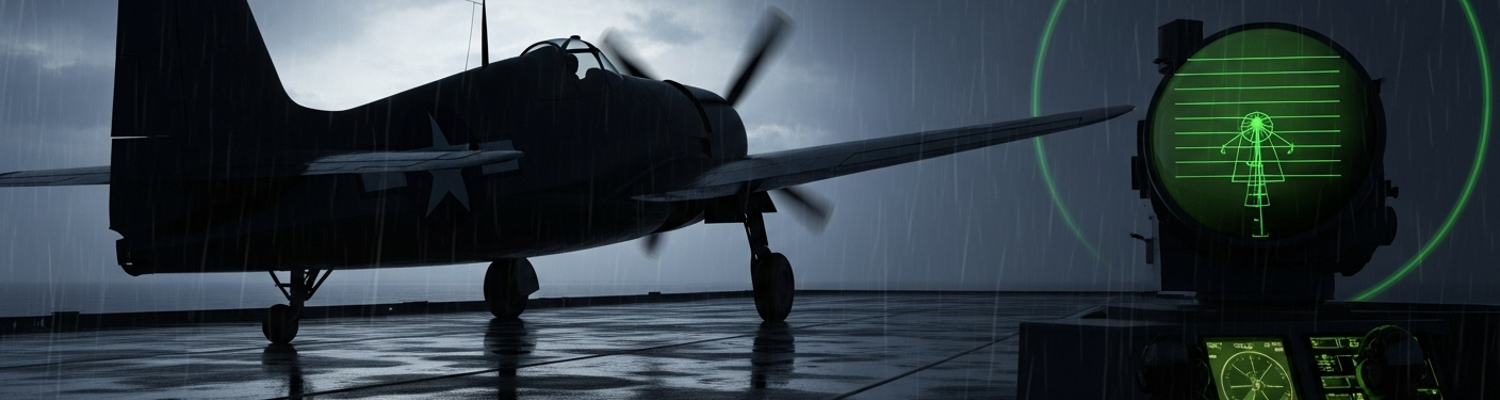

In the summer of 1944, the United States Navy forced a terminal reckoning in the vast expanse of the Philippine Sea. Operation Forager, the American invasion of the Mariana Islands, represented far more than a campaign for strategic airfields. It was the key to unlocking the Japanese home islands for the B-29 Superfortress fleet. Taking Saipan, Tinian, and Guam meant placing American airpower within striking distance of Tokyo. The resulting fleet engagement, a two-day cataclysm on June 19-20 known as the Battle of the Philippine Sea, saw the Imperial Japanese Navy’s carrier airpower systematically dismantled. American aviators, with grim humor, nicknamed the affair the 'Great Marianas Turkey Shoot'. This lopsided victory was no accident. It was the material result of deliberate, interlocking leadership decisions made years earlier. These choices created a superior fighting ecosystem built on three pillars: overwhelming technological advantage, a profound disparity in pilot quality, and the mastery of a new form of electronic warfare.
Designing the Hellcat Advantage
The ascendancy of American airpower in the Marianas was welded into the very airframe of the Grumman F6F Hellcat. The fighter was a direct response to the hard lessons taught by Japan’s Mitsubishi A6M Zero in the war’s opening year. American naval leadership, resisting the impulse to simply copy the agile but fragile Zero, made a pivotal decision. They listened to the brutal feedback of their combat pilots who had survived encounters in the F4F Wildcat. The consensus was clear: do not try to out-turn the Zero, but overpower it with speed, altitude, and ruggedness.
Leroy Grumman’s engineering team, the famed 'Iron Works,' translated this directive into a masterpiece of industrial lethality. They built the Hellcat around the most powerful naval aircraft engine available, the Pratt & Whitney R-2800 Double Wasp. This 18-cylinder radial engine, a 46-liter behemoth, produced over 2,000 horsepower, nearly double that of the Zero’s Sakae engine. This raw power gave the Hellcat a top speed approaching 380 miles per hour and a phenomenal rate of climb around 3,500 feet per minute. American pilots could dictate the terms of engagement, executing high-speed 'boom and zoom' attacks that the lighter Zero could not counter. A Hellcat could dive at speeds that would tear the wings off its Japanese adversary. This performance advantage allowed American pilots to choose when and where to fight, a luxury their opponents did not have.
Leadership’s emphasis on survivability materialized as 212 pounds of cockpit armor, a bullet-resistant windshield, and self-sealing fuel tanks. This design philosophy accepted a weight penalty that made the Hellcat less nimble in a low-speed turning dogfight, but it meant an American pilot could absorb significant damage and return to his carrier. The Grumman reputation for building tough aircraft held true. Japanese pilots, flying lightweight Zeros with virtually no armor protection, had no such luxury. The Hellcat’s armament of six .50-caliber M2 Browning machine guns provided a dense, accurate wall of fire, carrying 400 rounds per gun. This allowed for longer, more destructive bursts than the Zero’s mixed armament of cannon and machine guns. The result of these deliberate design choices was a fighting machine that achieved a staggering 19:1 kill ratio over its service life, effectively clearing the skies over the Marianas.
The Widening Gulf in Pilot Quality
Technology alone did not win the Turkey Shoot. The hands guiding the machine were just as critical, and here, American strategic foresight created an insurmountable gap. At the war's outset, Japan possessed a small corps of the world’s finest and most experienced naval aviators, hardened by years of intense, selective training and combat in China. Their doctrine, Kantai Kessen, the decisive battle, emphasized quality over quantity, creating an elite but brittle force. This leadership decision proved catastrophic. The devastating carrier losses at the Battle of Midway, followed by the grinding attrition of the Solomon Islands campaign, bled this irreplaceable cadre of veterans dry. The experienced air groups of carriers like Shokaku and Zuikaku were gone forever.
The Japanese naval command failed to implement a training system capable of replacing these losses on the necessary scale. Their rigid, pre-war program could not be rapidly expanded. Compounding the problem, a doctrine of keeping veteran pilots in combat until they were killed or wounded meant their priceless experience was never passed down to new trainees. By 1944, severe fuel shortages limited flight time for new pilots. Some arrived at the fleet with fewer than 100 total flight hours, barely enough to safely operate from a carrier, let alone survive in combat. The pilots Admiral Jisaburō Ozawa sortied to the Marianas were a pale shadow of the confident aviators who had struck Pearl Harbor.
In stark contrast, American naval leadership, under the direction of figures like Admiral Ernest King, viewed pilot training as a massive industrial process. Recognizing the war would be one of attrition, the US Navy established a vast and comprehensive training pipeline through programs like the V-5. Tens of thousands of recruits moved through a standardized, multi-stage curriculum. From pre-flight schools that provided academic and physical conditioning to primary and advanced flight training at sprawling complexes like NAS Pensacola and NAS Corpus Christi, the system was designed to produce a steady stream of competent, confident aviators. By the time of the Marianas campaign, an American naval aviator had over 350 flight hours before ever seeing combat. This system provided not just quantity but a consistent quality that the depleted Japanese squadrons could not hope to match. The battle in the skies over Saipan was as much a victory for the flight instructors in Florida and Texas as it was for the combat pilots of Task Force 58.
Masters of the Unseen Battlefield
The third pillar of American dominance was the mastery of electronic warfare through the integration of radar and the Combat Information Center (CIC). This represented a profound leadership commitment to technological synergy and centralized command and control, a concept the Japanese Navy had not fully developed. While Japan possessed radar, their systems and procedures were less advanced and poorly integrated into their tactical doctrine.
By 1944, every American carrier battle group was a node in a sophisticated air defense network. Long-range SK air-search radars could detect incoming Japanese formations over 100 miles away, long before visual contact. This information was fed not to a chaotic bridge, but to the CIC, a dedicated, armored space deep within the ship’s hull. The CIC was a command and control innovation born from hard-won lessons in the Solomons. Here, in a darkened room filled with glowing radar scopes and plotting boards, a team of specialized officers and enlisted men built a complete, real-time picture of the battle space. The Fighter Director Officer, a new breed of warrior, used this information to orchestrate the air battle from miles away.
During the Turkey Shoot, this capability proved decisive. As Admiral Ozawa launched four separate waves of aircraft, the CICs aboard the carriers of Vice Admiral Marc Mitscher’s Task Force 58 detected each one. Radar operators tracked the raids, estimating their size, altitude, and bearing. Fighter-director officers, using the newly developed SM fighter-direction radar, then vectored the fleet’s combat air patrol of Hellcats to optimal intercept positions. Instead of a chaotic melee over the fleet, American fighters met the Japanese waves 50 to 60 miles out, breaking them apart with coordinated, slashing attacks from above. The system allowed American commanders to manage a complex, multi-axis battle with unprecedented efficiency. It turned the sky into a chessboard where they could see every move. Admiral Raymond Spruance, the overall fleet commander, demonstrated his faith in this system by making the controversial but correct decision to prioritize the defense of the Saipan invasion force, trusting his radar and fighters to neutralize the Japanese air threat before it could reach his ships. This fusion of radar technology and the human element of the CIC was the nervous system of carrier dominance, a victory of information over instinct.
The Great Marianas Turkey Shoot was the culmination of these three interconnected streams of development. It was not merely a battle won by better planes or more pilots. It was a systemic victory. The US Navy's leadership had built a machine of war where superior technology, a deep well of expertly trained personnel, and a revolutionary command and control doctrine worked in concert. On June 19, 1944, that machine was fully validated. The Japanese Navy lost over 300 aircraft and the core of its remaining pilot cadre in a single day. The battle effectively ended the Imperial Japanese Navy as an offensive carrier force, paving the way for the final phase of the Pacific War. It was the dawn of true carrier dominance, forged in the skies over the Philippine Sea.