
Caribbean Sea Frontier and Canal Defense Vulnerabilities
Across the black water of Limon Bay at 0300 hours, the silence was absolute. Exhaust stacks on patrol craft sat cold. Coastal humidity and a low cloud ceiling blocked engine noise from the nearby airstrips. Men stationed behind twin .50-caliber water-cooled machine guns at Fort Sherman leaned over their sandbags. They listened for the rumble of diesel engines surfacing beyond the breakwater. Nobody spoke.
German submarines were sinking merchant shipping across the Caribbean Sea.
Archival evidence shows Operation Neuland was a calculated attempt by Karl Doenitz to sever Allied supply lines directly at their source. Five Type IX German submarines entered the Caribbean basin. They carried explicit orders to sink unprotected petroleum tankers outbound from the Dutch refining hubs of Aruba and Curacao. Then they would turn toward the approaches of the Panama Canal. U-156 surfaced off San Nicolas harbor on February 16. Commanded by Werner Hartenstein, the crew shelled oil storage tanks and torpedoed the British tanker Oranjestad in shallow water. Submarine command pushed additional boats into the inner sea passages. U-67, U-502, and U-161 moved into position. Between February and March, the U-boat force sank over 1,000,000 gross register tons of Allied shipping throughout the Caribbean Sea Frontier. Merchant vessels steamed without naval convoys. They ran fully illuminated down established shipping lanes.
The canal defenses were caught entirely unprepared for undersea warfare.
A close review of operational logs indicates Limon Bay formed a dangerous geographic bottleneck for every vessel attempting transit through the Gatun Locks. Extending outward between Toro Point and Manzanillo Point, the natural harbor funnelled deep-draft military transports into a single navigable entry channel. This channel was less than a mile wide. If a U-boat torpedoed an ammunition freighter inside that channel, the Atlantic entrance would be blocked for weeks. Pacific-bound capital ships would be trapped on the wrong side of the continent. Coastal artillery batteries mounted at Fort Randolph and Fort Sherman possessed heavy 14-inch and 16-inch rifled guns. These fixed concrete emplacements were designed to destroy surface dreadnoughts. They had zero capability to track submerged hulls inside the bay. Torpedo nets stretched across the outer harbor entrance tore repeatedly under Caribbean storm swells. Wide passages were left unprotected. A submarine slipping past the breakwater during a tropical squall held a clear firing arc directly toward the Gatun flight of locks. The locks were situated just six miles south.
Air defense assets were fractured.
On February 5, 1942, War Department planners attempted to rectify the structural chaos. They redesignated the Panama Canal Air Force as the Sixth Air Force. Operational tactical control for maritime strike and reconnaissance fell to VI Bomber Command. Headquarters was established at Albrook Field. Stationed personnel inherited a maintenance disaster. Squadrons operating Douglas B-18 Bolos and early-model Boeing B-17Es were spread across primitive dispersion strips at France Field, Howard Field, and Rio Hato. They lacked functional radar sets. They lacked certified airborne depth charges. Ground crews faced a shortage of magnetic mine racks and Mark XVII hydro-acoustic mine conversion kits. Armories were forced to hand-wire internal release solenoids using local electrical components. These components were salvaged from commercial transport hulls. Maintenance crews spent eighteen hours a day in corrugated-iron hangars. They troubleshot cracked hydraulic lines and stripped bomb bay rack fittings under intense heat. Patrol flights dispatched across the Caribbean Sea Frontier logged hundreds of flight hours without sighting a single periscope. Crews flew blind over empty ocean while German torpedoes detonated along the outer shipping approaches. In late February 1942, VI Bomber Command ordered the 40th Bombardment Group to begin hasty tactical trials for defensive aerial minelaying inside the harbor approaches. Twin-engine bombers were assigned to carry ordnance configurations they had never dropped in combat.
France Field Bomber Conversions for Aerial Minelaying
Archival evidence shows that by August 1942, France Field functioned as an improvised industrial repair depot. Ground mechanics assigned to the 40th Bombardment Group stripped Douglas B-18 Bolo and Boeing B-17E Flying Fortress airframes down to bare structural longerons. The work happened inside saturated sheet-metal hangars. Tropical humidity rusted exposed steel rivets within forty-eight hours. The obsolescent B-18s suffered severe structural warping. Originally designed around commercial transport fuselages, the airframes bent when crews attempted to mount ordnance payloads exceeding two thousand pounds. Sheet metal workers cut away internal fuselage bulkheads with hand shears. Acetylene torches severed internal braces to enlarge the bomb bays of the B-17s. This allowed clearance for oversized marine ordnance casings. Welded steel reinforcement plates were scavenged directly from damaged railcars in the Cristobal yards. Mechanics bolted them onto the main bomb racks to prevent structural collapse during high-stress pullouts over the water.
Flight line crews worked round the clock.
A close review of operational logs indicates the physical integration of United States Navy Mark 12 and Mark 13 naval mines triggered an immediate engineering crisis. Army Air Forces bombers utilized standard bomb shackles engineered with fourteen-inch suspension lug spacing. The Navy Mark 12 was a cylindrical one-thousand-pound magnetic influence weapon. The Mark 13 was an elongated aerial mine fitted with tail retarder assemblies. Both featured non-standard lug placements and distinct electrical release requirements. Ordnance specialists at France Field lacked factory-built adapter kits. Machinists hand-lathed custom steel suspension pins from salvaged scrap metal. Armaments personnel jury-rigged twenty-four-volt electrical release solenoids. These improvised solenoids repeatedly shorted out in the damp maritime air. Ground crews hand-filed shackle jaws to fit the wider Navy suspension lugs. They secured the weapons with crude mechanical sway braces bent from structural iron. If an electrical solenoid failed during release, the heavy naval mine would hang half-dropped inside the bay. The drag would pull the bomber downward into the water.
Improvisation kept the planes flightworthy.
When examining the historical record of Sixth Air Force mission orders, flight officers plotted razor-thin trajectories directly across the mouth of the Chagres River. The routes continued along the exposed outer harbor perimeter of Limon Bay. Tactical planners faced severe physical constraints. Dropping the Mark 12 and Mark 13 mines demanded an exact drop envelope. Pilots had to maintain two hundred feet altitude at an indicated airspeed of one hundred sixty knots. Any higher altitude shattered the sensitive hydrostatic firing mechanisms upon water impact. Lower altitudes risked detonating the acoustic arming clocks. Navigators drew their ingress route over the dense jungle surrounding the historic battery ruins at Fort San Lorenzo. The coordinates were 9 degrees 19 minutes North, 79 degrees 59 minutes West. From the river mouth, pilots turned east-northeast directly against prevailing Caribbean gale gusts. They leveled out over the breaker lines without radar guidance or coastal signal lamps. The flight path skimmed past Toro Point. It traced the outer breakwater boundary where submerged reefs created violent air turbulence. Every drop run forced the twin-engine B-18s into flat, low-level turns over pitch-black water. The slightest altimeter error meant instantaneous destruction.
Zero navigational margin separated the bombers from the sea.
Radar Interference and Coastal Guidance Failures
Archival evidence shows coastal air defense tracking collapsed the moment the 40th Bombardment Group initiated low-altitude operations over the water. The Army Signal Corps operated an SCR-270 long-range early warning radar array. It was positioned on the elevated jungle headland at Toro Point, situated at coordinates 9 degrees 22 minutes North, 79 degrees 57 minutes West. The array transmitted high-power pulsed radio waves on a nominal frequency band between 106 and 110 megacycles. Douglas B-18 Bolo and Boeing B-17 bombers entering the Limon Bay approaches relied on newly installed airborne very high frequency radio transceivers. These operated along matching frequency margins. Whenever the radar array rectangular dipole antenna rotated across the bay toward the harbor mouth, raw electromagnetic radiation slammed directly into the unshielded wiring of the aircraft radio sets. Armament technicians had neglected to install copper shielding around the receiver junction boxes. The airborne receiver units were left vulnerable to high-voltage radio frequency induction. Heavy acoustic interference flooded the flight crews headsets with rhythmic, deafening squeals. The noise drowned out all speech. Ground controllers at France Field could not deliver revised approach vectors. The naval harbor defense command at Cristobal could not confirm clear shipping lanes for the outbound bombers.
The airborne transceivers burned out their vacuum tubes under repeated electrical surges.
A close review of operational logs indicates this electromagnetic spillover destroyed coastal direction-finding vectors. Airborne radio compass receivers relied on low-frequency coastal homing transmitters at Fort Sherman and Fort Randolph to calculate accurate ingress headings. These were specifically the Bendix-designed SCR-269 automatic direction finders installed aboard the bombers. Strong electromagnetic pulses radiating from the Toro Point transmitter overloaded the aircraft sensitive loop antennas. Coastal signal reflection bouncing off the sheer coral bluffs compounded the problem. Bearing indicator needles spun erratically on cockpit instrument panels. They fluctuated between false bearings and sudden one-hundred-eighty-degree reversals. Emergency signal lamps on the breakwater remained shuttered under blackout restrictions. This prevented visual confirmation of harbor markers. At the radar control post on the ridge above the bay, technicians watched their oscilloscope screens bloom with massive ground clutter. They were blinded to incoming targets and outgoing friendly strike flights. Navigators were stripped of calculated coastal vectors. They were unable to determine whether an indicated bearing placed their aircraft directly over the deep-water shipping channel or straight toward the submerged coral heads lining the Toro Point shallows.
Cockpit instruments offered zero reliable guidance over the surf.
When examining the historical record of Caribbean weather patterns during late 1942, seasonal tropical squalls turned these technical radio failures into catastrophic flight hazards. Dense rain curtains moving off the open sea dropped cloud ceilings below seventy-five feet. Forward visibility was reduced to zero. Pilots were blinded against the unlit ocean surface. Torrential downpours overwhelmed the mechanical windshield wipers on the B-18s. Uncalibrated pitot tubes swallowed water. Airspeed indicators dropped to zero without warning. Downbursts dragged the heavily loaded twin-engine bombers down toward the crests of the swells. Pilots fought violent control column flutter while flying on artificial horizons that had already tumbled. Violent localized barometric pressure shifts within the squall fronts caused sensitive aneroid altimeters to misread true sea-level clearance by as much as one hundred fifty feet. Wind shear exceeding thirty-five knots slammed across Limon Bay from the northeast. This induced severe crab angles. The heavy, mine-laden bombers were pushed laterally off their planned release tracks. Without visual contact with the Toro Point shoreline or functioning direction-finding radio loops, navigators failed to detect drift rates exceeding twelve degrees. The 40th Bombardment Group crews drifted miles west of their intended mine drop zones into the uncharted outer breakers of the Caribbean shelf. They released ordnance into empty shoals off Fort San Lorenzo.
Flight Line Hazards and Battery Acid Contamination
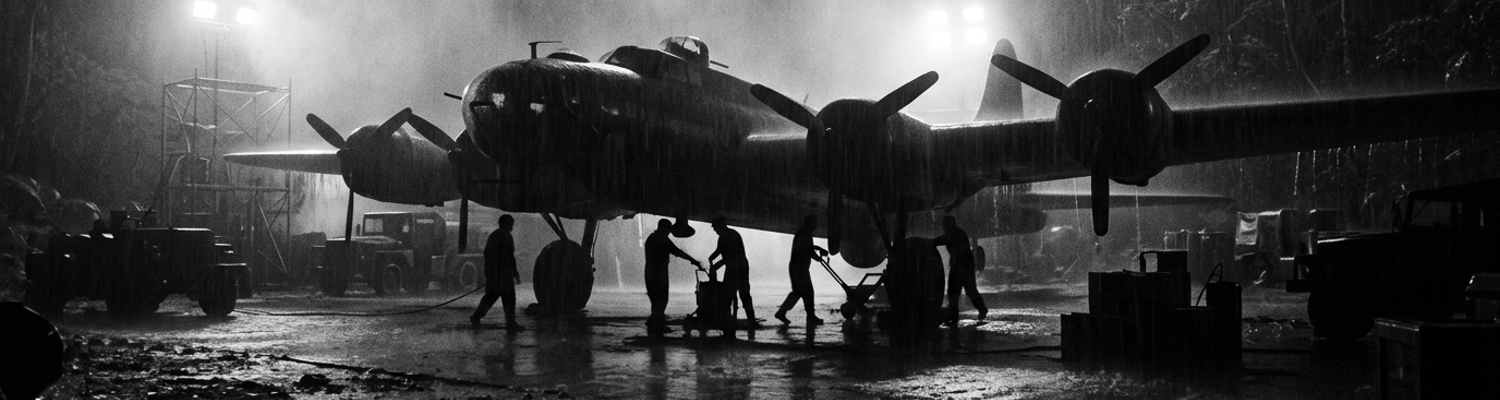
Archival evidence shows torrential downpours across the Atlantic side of the Isthmus during the autumn wet season turned the unpaved dispersal revetments at France Field into standing swamps. The airfield was located at coordinates 9 degrees 21 minutes North, 79 degrees 53 minutes West. Between September and November 1942, localized precipitation frequently exceeded four inches within two hours. The inadequate earthen drainage ditches surrounding the airfield perimeter overflowed. Douglas B-18 Bolo and Boeing B-17E airframes parked in open revetments lacked weather-tight canopy seals and protective canvas tarpaulins. Driven by Caribbean storm winds, sheets of water breached the unsealed bomb bay roof cutouts and upper fuselage skin joints. Water poured downward through interior bulkheads. Standing water collected inside the enclosed ventral compartments, radio sub-floor spaces, and lower fuselage bilges to depths between eight and fourteen inches. Small mechanical scupper drains along the bottom skinning choked on silt, leaves, and peeling interior zinc chromate primer. Trapped rainwater submerged lower flight control cables, rudder bellcranks, and primary electrical distribution terminal blocks. The lower fuselages became flooded cisterns.
Waterlogged airframes could not fly.
A close review of operational logs indicates this ventral flooding coincided with an immediate mechanical failure in the bomber electrical storage systems. Aircraft assigned to the 40th Bombardment Group utilized heavy, twenty-four-volt wet-cell lead-acid aviation batteries. These were secured inside vented structural trays beneath the cockpit floor and radio stations. High-stress landings on France Field rough, waterlogged crushed-coral runway cracked the vulcanized hard-rubber battery casings. Swelling caused by severe tropical heat degraded the internal lead plates. Improvised wooden retaining brackets failed under the violent jarring of overweight naval mine carriage. Sulfuric acid electrolyte, mixed at a specific gravity of 1.280, ruptured through fractured case walls. It spilled directly into the sub-floor bays. Pooling within the standing bilge water, the thirty-percent sulfuric acid solution rapidly dispersed throughout the lower structural framing. Corrosive acid ate through the braided cotton and rubber insulation shielding main twenty-four-volt electrical conduit lines. Bare copper wiring short-circuited against wet aluminum ribs. Sparks scorched inner fuselage skinning. Deep pitting and white aluminum sulfate corrosion bloomed across 24ST duralumin longerons. This weakened the load-bearing keel members holding the improvised bomb shackle installations.
Corrosion destroyed structural strength faster than flight hours.
When examining the historical record of ground operations, maintenance personnel entering these flooded belly compartments encountered an unseen chemical hazard. Armament technicians and sheet metal mechanics stripped to their waists. They crawled through narrow twenty-inch access hatches to troubleshoot jammed mine release switches. They worked by the dim beam of spark-proof brass flashlights. Men lay prone in stagnant pools of water laced with active battery acid. Skin contact produced instantaneous chemical trauma. Mechanics remained inside the dark bilges for hours to clear release linkages before scheduled night missions. Flight line medical personnel from the 40th Bombardment Group dispensary established emergency casualty collection points along the hangar apron. They managed the influx of injured ground crew. Medical officers set up open-top fifty-five-gallon drums filled with clean river water and diluted sodium bicarbonate wash. This rapidly neutralized the acid clinging to maintenance men. Orderlies scrubbed active chemical burns across workers forearms, knees, and chests. They treated deep liquefactive tissue necrosis with sterile petrolatum gauze and sulfanilamide powder before bandaging.
Base flight surgeons at France Field admitted thirty-two mechanics for severe chemical burns and conjunctival acid exposure in October 1942 alone.
Field Modifications of Corroded Electrical Release Solenoids
Archival evidence shows weapon release failures during late 1942 stemmed directly from the rapid deterioration of internal electrical linkages inside the bomb bays of the 40th Bombardment Group Douglas B-18 and Boeing B-17 airframes. Standard Type D-8 and A-2 bomb shackles depended on delicate low-voltage electrical solenoids. These drew twenty-four volts of direct current to actuate the mechanical release sear. These cylindrical electro-magnets were engineered for dry continental conditions. They possessed microscopic operating clearances between the sliding soft-iron armature plunger and its brass sleeve. Limon Bay marine atmosphere was saturated with airborne sodium chloride and ambient humidity averaging ninety percent. This penetrated the unsealed shackle housings within hours of ground installation. Galvanic reaction seized the components. Green cupric carbonate encrusted the internal copper winding leads. Thick layers of iron oxide formed along the moving plungers. When a bombardier depressed the cockpit release switch over the harbor drop coordinates, the low-voltage magnetic field failed to generate the fifteen pounds of linear force required to move the corroded core. Shackles stayed frozen shut. The one-thousand-pound Mark 12 naval mines hung locked to the airframes.
Hangar inventories contained zero replacement solenoids.
A close review of operational logs indicates armament crews stationed at France Field had to dismantle every frozen solenoid by hand. They worked on wooden workbenches behind the flight line. Mechanics pried apart the crimped aluminum solenoid casings using modified screwdrivers and dental picks. They removed the seized iron cores from their housings. Technicians scrubbed oxidized electrical contact points down to bare tungsten and silver alloys. They used strips of crocus cloth, jeweled Swiss files, and solvent salvaged from aircraft cleaning drums. Rebuilding the electromagnetic coils required raw electrical wire that depot supply lines could not provide. Ground crews stripped enameled 28-gauge copper wire from burned-out SCR-274 radio transmitters. They salvaged commercial telephone switchboards abandoned in Cristobal by the Panama Canal Company. They stripped dead truck starter motors. Armament specialists clamped manual hand-drills into bench vises. They jury-rigged improvised winding jigs to spin the empty spool bobbins while guiding the salvaged copper strand by hand to match original factory turn counts. Each rewound coil was insulated with coats of clear aircraft dope. They were baked dry under incandescent lightbulbs in wooden lockers. Technicians tested them for continuity using portable Triplett volt-ohm meters before resealing them inside greased housings.
Every drop run risked turning into a fatal crash landing.
When examining the historical record of VI Bomber Command flight directives, returning to France Field with armed naval mines suspended beneath damaged shackles presented an unacceptable risk of detonating the base. If an electrical circuit severed over the water, pilots faced setting down high-explosive ordnance on a rutted coral runway. Armament officers ordered the immediate fabrication of independent, non-electrical jettison assemblies across the entire bomber fleet. Machinists salvaged flexible steel aircraft control cables from stripped Douglas B-18 rudder systems. They routed the lines along structural longerons from the bomb bay directly into the cockpit. Technicians drilled through aluminum bulkheads. They installed brass guide pulleys and lengths of rigid copper tubing to prevent cable binding under airframe flex. The forward end of the steel line terminated at an improvised wooden handle bolted to the floorboard directly to the right of the pilot pedestal. It was painted international orange for rapid identification. A violent manual pull on the handle exerted fifty pounds of direct leverage across an offset bellcrank. This physically tripped the secondary mechanical shackle pawl. The mine dumped clear of the bomb bay doors without requiring electrical power.
Ground tests conducted across revetments at France Field on November 14, 1942, confirmed these mechanical pull-cables released hung ordnance in under two seconds. They completely bypassed dead twenty-four-volt wiring harnesses. Line crews retrofitted twelve B-18 airframes with dual manual cable lines within seventy-two hours. Cable tension was set at forty-five pounds using spring-loaded tensiometers.
Hydrostatic Fuze Salvage Under Severe Humidity
Water destroyed the weapons before they ever touched the sea.
Archival evidence shows that by late November 1942, ordnance specialists with the 40th Bombardment Group discovered Mark 12 and Mark 13 naval mines staged at France Field were chemically decaying on their storage racks. Saturated maritime air blowing inland from Limon Bay hovered at ninety-eight percent relative humidity. It infiltrated the unpressurized fuze cavities of the weapons within forty-eight hours of uncrating. The primary point of failure centered on the sensitive hydro-mechanical depth fuzes. Specifically, the spring-biased copper-beryllium bellows and brass hydrostatic diaphragm assemblies designed to sense water column pressure. Water condensed against the interior brass casing walls. This initiated aggressive galvanic corrosion where bronze diaphragms contacted cadmium-plated steel lock rings. Green copper carbonate encrusted the internal capillary ports. The external hydrostatic intake channels were blocked. Inside the enclosed fuze housings, moisture dissolved the organic lubricants on the miniature escapement gears of the arming clocks. Steel pinion wire rusted solid against brass bush bearings. The timing trains froze. The fuzes were incapable of advancing from safe to armed status once submerged.
Corroded clockwork turned live aerial mines into dead metal ballast.
A close review of operational logs indicates Base Ordnance Officer Captain Robert Vance ordered the rapid construction of field-expedient reclamation shelters. These were built directly behind the bomb dump revetments at coordinates 9 degrees 21 minutes North, 79 degrees 53 minutes West. Ground crews constructed three timber-frame sheds clad in corrugated galvanized sheet iron and heavy asphalt roofing felt to exclude tropical downpours. Inside these sealed drying chambers, technicians mounted banks of twenty 150-watt incandescent carbon-filament bulbs and continuous-burn kerosene smudge pots. They kept internal temperatures at an unbroken 125 degrees Fahrenheit. Armament mechanics stripped the seized fuze blocks down to individual gears, ratchet wheels, and escapement levers using modified watchmaker tweezers. Workers submerged every gear train into open pans of aviation solvent to dissolve degraded whale-oil grease. They scoured the oxidized teeth with stiff hog-bristle brushes before blowing the assemblies dry with hand-pumped air lines. Before reassembly, technicians coated the mechanical components in refined light mineral oil. They sealed the outer casing seam rings with melted microcrystalline paraffin and brush-applied aircraft shellac to bar moisture ingress.
Every reconditioned fuze demanded a completely non-standard operational depth setting.
When examining the historical record of Sixth Air Force defensive planning, tactical doctrine mandated dropping the salvaged mines across the shallow sandbars flanking the Limon Bay entrance channel. This area was between Toro Point and the East Breakwater. Standard naval depth fuzes arrived from mainland depots calibrated to detonate only after sinking sixty to one hundred feet. These depths exceeded the actual twenty-eight to thirty-six-foot bottom profile of the harbor approaches. Left at factory baseline, dropped mines would settle harmlessly into the bottom mud without ever tripping the primary firing contacts. Ordnance mechanics clamped each stripped diaphragm assembly into improvised bench-mounted test jigs. These were equipped with hand-actuated hydraulic test pumps and commercial pressure gauges scavenged from Cristobal marine repair shops. Technicians loosened knurled compression locknuts with angled spanner wrenches. They manually backed off the internal helical counter-spring tension to reduce the force required to deflect the central diaphragm. By adjusting the spring preload to an exact travel tolerance of 0.015 inches, armaments personnel forced the firing pins to trigger at hydrostatic pressures equivalent to just sixteen feet of seawater. Ground crews verified eighty-four recalibrated hydrostatic fuzes against the bench gauges on November 28. They stamped each brass casing with white zinc stencil ink to indicate shallow-water clearance.
Tactical Impact on Panama Canal Maritime Defense
By December 1942, the Atlantic approach to the Panama Canal was closed to unannounced traffic.
Archival evidence shows between November 28 and December 18, 1942, the 40th Bombardment Group completed thirty-six night delivery sorties across the outer approaches of Limon Bay. Flying Douglas B-18 Bolos stripped of non-essential radio gear to shed dead weight, flight crews laid eighty-four reconditioned Mark 12 and Mark 13 naval mines in four staggered linear belts. These barriers ran from the Toro Point shoal line at coordinates 9 degrees 22 minutes North, 79 degrees 57 minutes West diagonally toward the West Breakwater. They anchored in twenty-six to thirty-five feet of water. Flight crews released the ordnance at altitudes below two hundred feet. They maintained a spacing interval of seventy-five yards between drops to generate an overlapping hydro-acoustic and magnetic barrier. Every dropped casing settled into the bottom mud within sixty seconds. Commercial freighters and military troopships were restricted to a single sweeping channel cleared by Navy minesweepers operating out of the Cristobal Naval Station. This prevented unescorted vessels from straying into live contact zones. Any submarine attempting a submerged run toward the Gatun Locks now faced an underwater grid capable of rupturing a double-hulled pressure casing at a standoff distance of twenty-five feet.
Kriegsmarine skippers suddenly found their near-shore staging zones uninhabitable.
A close review of operational logs indicates Type IX U-boats operating under Befehlshaber der U-Boote had previously used the shallow coastal indentations of the Mosquito Gulf and the reef networks off Portobelo to loiter undisturbed. Submarines had routinely trimmed their buoyancy tanks to sit on the continental shelf during daylight hours. They surfaced after 2200 hours to recharge propulsion batteries on twin diesel engines while monitoring merchant vessel silhouettes exiting the breakwater. Mining the shallow margins of Limon Bay stripped these boats of concealed forward staging positions within twenty nautical miles of the Gatun locks. German commanders like Albrecht Achilles of U-161 could no longer run along the six-fathom contour line without detonating acoustic influence fuzes. The mine barriers forced German submarine patrols back out past the thirty-fathom drop-off into open Caribbean water. VI Bomber Command aircrews operating out of France Field and Howard Field caught surfaced submarines in deep water during daylight hours. They used newly installed British ASV radar sets to track surfaced contacts fifty miles out to sea.
Joint survival compelled two rival branches to rewrite coastal doctrine from the ground up.
When examining the historical record of the Panama Mobile Force and the Fifteenth Naval District, the improvised France Field operations fundamentally altered how the military defended strategic waterways. War Department planners had spent decades maintaining rigid operational separations. Sea mines were reserved exclusively for naval minelayers. Army bombers were restricted to high-altitude kinetic bombing. France Field changed that division permanently. Navy ordnance officers at Cristobal supplied weapons data, technical specifications, and bulk ordnance. Army Air Forces sheet-metal mechanics and armaments personnel hand-built release assemblies, re-engineered electrical solenoids, and adjusted hydrostatic fuzes to function in shallow canal waters. Base commanders formalized these shop-floor expedients into the first integrated tactical standard operating procedure for joint maritime interdiction. VI Bomber Command codified these France Field modifications into Air Technical Service Command bulletins. These were distributed to operational units across the Galapagos Islands, Guatemala, and Aruba. By early 1943, Sixth Air Force doctrine recognized specialized low-altitude aerial minelaying as a primary anti-submarine mission profile. They used standardized dual manual-jettison release cables and shallow-depth hydrostatic settings developed in the wet hangars at Limon Bay.