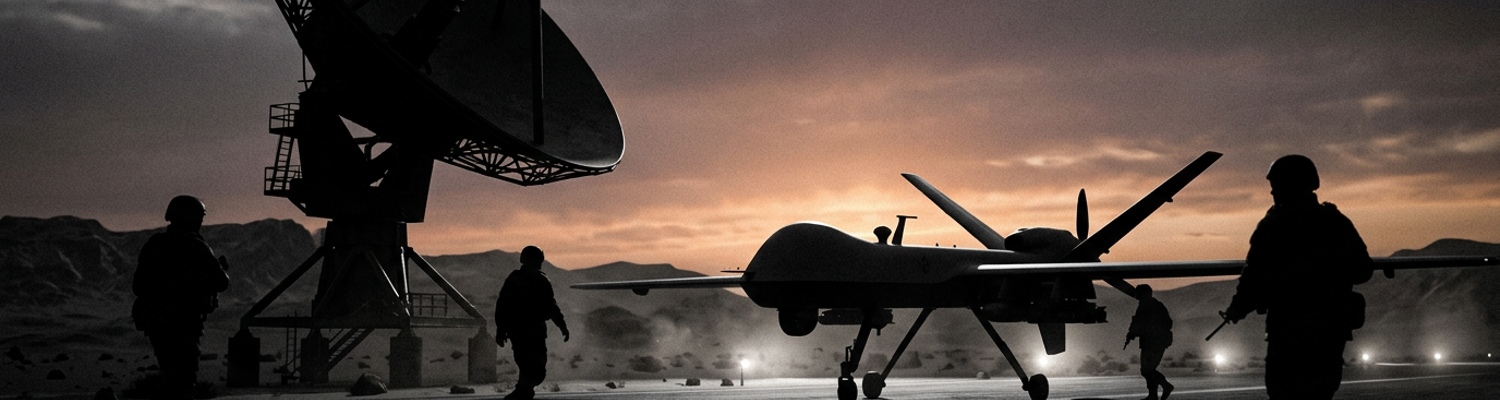

Husaybah Urban Breach Reconnaissance Operations
When examining the historical record of Al Anbar province in late 2005, the sheer volume of entrenched adversary forces presents a severe tactical disadvantage. Intelligence estimates placed heavily armed insurgent networks operating along the Syrian border in the thousands. These fighters possessed stockpiles of rocket-propelled grenades, heavy machine guns, and vast quantities of homemade explosives buried beneath the unpaved roads. Entire city blocks were wired as sequential kill zones. Enemy forces held uncontested control over the smuggling routes. They filtered a constant supply of foreign fighters and munitions directly into the Euphrates River Valley. Marine infantry battalions preparing to push west stared down a fortified urban defense designed specifically to trap conventional forces. Intelligence assessments projected a 40 percent casualty rate for the initial breach.
The ground assault required immediate overhead reconnaissance to survive the first breach.
Archival evidence (NARA Record Group 338) shows Marine Unmanned Aerial Vehicle Squadron 2 deployed to Al Asad Airbase to provide this capability during November 2005. Known as the Night Owls, VMU-2 operated the aging RQ-2B Pioneer drone. Weighing 430 pounds, the Pioneer aircraft was powered by a loud, two-stroke Sachs engine pushing a rear-mounted propeller. Launching these airframes from the dusty tarmac at Al Asad required coordination with a joint-service air traffic control network. That network heavily favored fast-moving jet aircraft. Air Force controllers frequently deprioritized the slow-climbing, analog Marine drones. Squadron commanders spent hours arguing over radio nets just to secure a narrow altitude block for the RQ-2B to transit out of the base. Sensor payloads included a stabilized electro-optical and infrared camera. Telemetry links relied on older C-band line-of-sight transmitters.
Operating these outdated systems in an airspace saturated with advanced electronic warfare platforms caused immediate command friction.
Army and Air Force electronic warfare officers routinely flooded the spectrum with jamming signals to defeat radio-controlled improvised explosive devices. Jamming signals regularly severed the unencrypted telemetry links connecting the RQ-2B to the control vans parked on the Al Asad flight line. Mechanical launch processes added to the strain. The pneumatic rail system frequently suffered pressure drops in the cold November mornings.
The aircraft often flew blind for minutes at a time while ground crews scrambled to reset the data link antennas.
Despite the heavily contested electromagnetic spectrum, the drones managed to push west and provided remote targeting data for frontline Marine assault elements in Husaybah. Operation Steel Curtain kicked off with 2nd Battalion, 1st Marines and 3rd Battalion, 6th Marines breaching the eastern edge of the border town. Husaybah consisted of densely packed concrete structures, narrow market alleyways, and overlapping fields of fire. Orbiting at 5,000 feet, the RQ-2B maintained a continuous watch over the grid. Camera operators back at Al Asad watched insurgent mortar teams setting up on flat rooftops ahead of the Marine advance. Passing the exact grid coordinates down to the infantry proved difficult. Inter-service communication flaws immediately surfaced. Marine ground control stations could not directly feed the video terminal data into the proprietary targeting software used by the joint terminal attack controllers attached to the infantry. Target coordinates had to be manually read over a voice radio channel. Command post personnel copied the numbers on a whiteboard. A designated radio operator then typed the coordinates into a chat program monitored by an Air Force liaison officer. Air Force liaison officers subsequently relayed the target data to loitering strike aircraft.
This convoluted chain took up to twelve minutes per target.
Insurgent mortar teams routinely fired their volleys and displaced into alleyways long before the targeting data reached the strike aircraft. Lacking an onboard laser designator, the drone could only provide coordinates. Strike pilots were forced to visually acquire the target area using binoculars or their own targeting pods.
A close review of operational logs indicates the delay cost the assault elements their primary tactical advantage.
Ground controllers eventually resorted to bypassing the digital network entirely and broadcasting nine-line strike briefs over an open, unencrypted VHF frequency.
Trojan Spirit II Satellite Interference
A review of frequency allocation logs from November 2005 reveals a severe structural flaw in the joint communications architecture at Al Asad Airbase. Army commanders ordered the 513th Military Intelligence Brigade to establish a large-scale data-processing hub on the western taxiway hardstands near coordinates 33 48 N 42 26 E. To support the heavy data load, the brigade deployed Trojan Spirit II satellite terminals (NSN 5895-01-432-1123). These mobile communications systems consisted of 2.4-meter parabolic dish antennas mounted directly onto the reinforced chassis of M1097 Heavy High Mobility Multipurpose Wheeled Vehicles and M1083 Medium Tactical Vehicles. The hardware was specifically engineered to provide secure, high-bandwidth pipelines directly to the National Security Agency and Central Command headquarters. Technicians routed thick bundles of coaxial cables across the dust, wired the terminals to heavy diesel generators, and initiated the boot sequences. The primary operational objective was funneling raw signals intelligence out of the Iraqi theater to analysts stationed at Fort Gordon, Georgia.
The intelligence unit initiated their primary high-power transmissions without notifying the adjacent Marine aviation elements.
Mechanical conflicts immediately materialized across the flight line. The Trojan Spirit II satellite terminals functioned using traveling-wave tube amplifiers that pushed kilowatts of raw radio frequency energy into the atmosphere. This power output generated significant intermodulation distortion and electromagnetic bleed-over across multiple frequency bands. The interference spiked specifically within the 4 to 8 gigahertz range. The heavy satellite terminals overpowered local radio frequency spectrums essential for UAV relays. Marine RQ-2B Pioneer drones relied on unencrypted, analog C-band telemetry links within that exact gigahertz window to pass flight controls and receive video data. Less than a mile away from the Army compound, the Marine ground control stations sat on the same flat expanse of concrete. Highly sensitive directional antennas mounted on the Marine control vans absorbed the excess wattage radiating from the Army dishes. Inside the Marine receiver equipment, low-noise block downconverters experienced severe front-end overload. Physical circuits saturated with background noise. This stripped the carrier waves connecting the operators to the aircraft.
Video feeds from the reconnaissance drones operating over Husaybah instantly degraded into unreadable static.
Marine squadron commanders drove a utility vehicle directly to the 513th Military Intelligence Brigade compound to demand an immediate cessation of the satellite transmissions. Army signals officers holding the rank of Major refused the requests from the Marine Captains. The intelligence brigade was actively uploading terabytes of high-value intercepts required by theater-level commanders to track cross-border smuggling networks. This localized command friction rapidly escalated into a severe bureaucratic gridlock. Joint Task Force frequency managers operating out of Baghdad possessed the administrative authority to deconflict the spectrum and assign new transmission blocks. Their digital request system required a standardized 72-hour lead time and the submission of a Standard Frequency Action Format document for any spectrum modification. Nobody at the local Al Asad command post held the administrative override codes necessary to force the Army terminals to power down or mechanically shift their bandwidth.
Marine avionics technicians attempted to physically shield their receiver antennas by stacking wet sandbags and bolting aluminum panels around the control vans.
The improvised shielding failed completely against the raw electromagnetic output of the Trojan Spirit II amplifiers.
Ground operations in the Euphrates River Valley continued for three straight days with completely severed overhead data links.
The tactical impact on the Al Asad flight line manifested during every launch cycle. Ground crews pushing the Pioneer drones down the pneumatic rail system watched the telemetry lock lights on their consoles extinguish the exact moment the aircraft cleared the runway threshold. Deprived of ground control inputs, the drone autopilot systems automatically kicked into pre-programmed lost-link profiles. The aircraft banked into wide, unguided holding patterns over the western desert at 3,000 feet. Flight engineers manually swapped out burned demodulator cards and receiver circuit boards inside the vans. Army generators hummed continuously across the tarmac, powering the uninterrupted intelligence upload.
Al Asad Commercial Grid Collapse
Archival blueprints of Al Asad Airbase from late 2005 reveal a fragile electrical infrastructure lacking the capacity to power modern expeditionary hardware. The installation grid at coordinates 33 49 N 42 26 E relied on a patchwork of decaying Iraqi civilian wiring integrated with newly imported military generators. When the 513th Military Intelligence Brigade established their satellite compound along the western taxiway, their operations required large amounts of alternating current. Technicians wired the Trojan Spirit II terminals and their heavy-duty environmental control units directly into the base primary commercial power loop. These cooling units drew hundreds of amps upon startup to prevent the server racks from overheating in the desert climate. Air Force engineers from the 432nd Expeditionary Prime Base Engineer Emergency Force Squadron warned the Army commanders that the local substations could not handle the sustained electrical load. Army intelligence officers dismissed the engineering reports outright. They prioritized their high-bandwidth data pipeline to the National Security Agency over the stability of the local grid. The 513th operators initiated cold-starts on all satellite uplinks simultaneously. This excessive power draw compromised local power grid stability at Al Asad Airbase. High-voltage transformers along the flight line overheated rapidly.
Primary circuit breakers protecting the western taxiway tripped offline at exactly 1412 hours on November 8.
Rolling brownouts cascaded across the Marine aviation sector of the base. The sudden drop in voltage caused severe mechanical and electrical anomalies inside the Unmanned Aerial Vehicle Squadron 2 ground control stations. Inside the control vans, the analog telemetry gear processing the RQ-2B Pioneer flight data required a stable 60-hertz electrical frequency to function. When the base grid sagged under the Army power load, the electrical frequency drifted down to 54 hertz. This specific electrical drop triggered a direct frequency disruption within the radio hardware. Phase-locked loops inside the C-band demodulators failed to maintain synchronization with the incoming carrier waves. The internal circuitry could no longer translate the raw radio signals into digital video. This frequency disruption threatened real-time targeting feeds during active combat engagements happening fifty miles to the west. Marine technicians frantically swapped out power supply modules. The unstable base grid kept tripping the internal surge protectors.
The electro-optical video feeds transmitting from the aircraft instantly collapsed into unreadable static.
A close review of operational logs indicates this power grid failure directly impacted frontline assault elements during Operation Steel Curtain. Infantrymen from 2nd Battalion, 1st Marines were actively engaged in close-quarters combat inside Husaybah. Insurgent fighters had pinned down a Marine squad using heavy machine-gun fire from a reinforced concrete structure near Phase Line Smash. Orbiting at 5,000 feet, the RQ-2B Pioneer drone had the building locked in its camera sights. A Joint Terminal Attack Controller attached to the infantry requested the exact grid coordinates to route a section of F/A-18 Hornets for an immediate airstrike. The drone operator at Al Asad prepared to relay the target data just as the intelligence brigade booted up another bank of servers. The resulting voltage sag hit the Marine control van. The telemetry link severed completely. Deprived of the targeting feed, the Joint Terminal Attack Controller canceled the bombing run. The strike pilots banked away from the city. The insurgent machine-gun team reloaded their weapons and fired three more belts of ammunition into the Marine position.
Marine riflemen absorbed heavy fire in the alleyways while Air Force electricians drove across the tarmac to manually reset a blown 500-kilovolt transformer.
Emergency MEP-805A Generator Rebuilds
A close review of supply manifests from early November 2005 reveals the cascading mechanical failures following the Al Asad commercial grid collapse. Marine Unmanned Aerial Vehicle Squadron 2 lost all external electrical support for their primary ground control stations. The unit shifted immediately to their organic expeditionary power systems. The MEP-805A 30-kilowatt Tactical Quiet Generators (Model 805A-TQG) became the sole source of electricity keeping the RQ-2B Pioneer flight consoles operational. These heavy diesel-powered machines were designed for intermittent field use rather than continuous baseload generation. Running these systems non-stop under the heavy electrical load of the telemetry racks pushed the engines past their thermal limits. Fine, pulverized sand from the western Iraqi desert bypassed the primary air filters and clogged the high-pressure fuel injectors. Internal voltage regulators melted under the strict requirement to maintain a perfect 60-hertz electrical frequency for the analog video equipment. Quartermasters attached to Combat Logistics Regiment 25 initiated an emergency sourcing protocol across Al Anbar province to locate highly specific replacement components. Flight operations completely stalled while logistics officers flooded the tactical data network with high-priority requisitions. They targeted regional supply depots at Al Taqaddum and Camp Fallujah for spare fuel pumps, stator coils, and specialized microchips for the generator control panels. The computerized regional inventory showed zero available parts within a two-hundred-mile radius.
Supply clerks resorted to cannibalizing destroyed engineering equipment in a nearby salvage yard to extract compatible alternators.
This mechanical deficit forced command decisions that completely bypassed standard Department of Defense requisition channels. Marine logisticians manifested emergency cargo flights on CH-46 Sea Knight helicopters to transport heavy engine blocks directly over hostile territory to the western taxiway at coordinates 33 48 N 42 26 E. Motor transport mechanics worked continuously through the freezing night under red lens flashlights to rebuild the MEP-805A diesel engines. They replaced sheared fan belts, bled the fuel lines, and swapped out burned circuit boards inside the generator control panels. Once the rebuilt generators started, a secondary physical problem immediately surfaced. The strict physical footprint of the flight line required the running engines to be positioned less than ten feet from the control vans. The proximity of the heavy alternators to the unshielded RS-422 data lines connecting the vans to the external antenna arrays introduced severe electromagnetic ground loops. Raw voltage spikes from the rebuilt generators bled directly into the video feed wiring.
Target telemetry from the reconnaissance drones dissolved into thick horizontal bands of static on the operator monitors.
Archival evidence shows avionics technicians from Marine Aviation Logistics Squadron 29 engineered a physical countermeasure to protect the sensitive targeting data lines. Standard military-issue rubber shielding proved entirely ineffective against the localized interference generated by the MEP-805A engines and the adjacent Army satellite dishes. Technicians physically severed the primary data connections on the tarmac. They rebuilt the external conduits using scavenged aviation materials to construct an improvised Faraday cage around the cables. Mechanics stripped dense copper braiding from grounded CH-53E Super Stallion wiring harnesses and wrapped the exposed coaxial lines in overlapping layers. Mess hall supply sergeants provided fifty-yard rolls of industrial aluminum foil to jacket tightly over the copper mesh. The Marines bound these improvised layers together with heavy-duty polyurethane aviation tape to prevent the desert wind from tearing the foil. They drove solid steel grounding rods directly into the expansion joints of the concrete tarmac using sledgehammers. Heavy-gauge copper wire connected the custom shielding directly to the earth.
The heavily modified data lines were then buried under twelve inches of wet sand to dampen the remaining radio frequency bleed.
Inter-Service Bandwidth Jurisdictional Feuds
Archival evidence shows that the physical proximity of Marine and Army hardware on the Al Asad flight line forced a direct confrontation between unit commanders on November 9. Marine Unmanned Aerial Vehicle Squadron 2 flight operations officers drove a utility vehicle across the cracked concrete of the western taxiway to the 513th Military Intelligence Brigade tactical operations center. The Marine Captains demanded the Army operators immediately power down their Trojan Spirit II satellite terminals to clear the C-band telemetry links required by the RQ-2B Pioneer drones. Inside the heavily air-conditioned command tent, Army signals officers holding the rank of Major categorically denied the request. They cited direct orders from Central Command to maintain an uninterrupted data pipeline to the National Security Agency. The intelligence brigade was actively uploading high-definition surveillance intercepts of insurgent cellular networks operating along the Syrian border. Shutting down the traveling-wave tube amplifiers would sever this intelligence feed. The Marine officers countered that their drone operators were currently flying blind over Husaybah during the opening breach of Operation Steel Curtain. Without the 4.4 to 5.0 gigahertz frequency block remaining clear, the RQ-2B aircraft could not pass targeting coordinates to frontline infantry elements pinned down in the urban center. Unfazed by the tactical situation unfolding fifty miles to the west, the Army commanders refused to manually shift their transmission frequencies or power down their heavy generators.
Neither unit possessed the local administrative authority to override the other.
A close review of operational logs indicates this localized standoff immediately escalated into a theater-wide administrative gridlock. Resolving the frequency overlap required intervention from the Joint Task Force spectrum management office stationed three hundred miles away at Camp Victory in Baghdad. Marine communications officers submitted an emergency frequency reallocation request over the secure internet protocol router network. The digital submission stalled immediately at the theater command level. Spectrum managers utilized a proprietary database called Spectrum XXI to deconflict the thousands of radio signals transmitting across the Iraqi theater. Modifying an assigned bandwidth block during live operations required the requesting unit to submit a Department of Defense Form 1494 (Application for Equipment Frequency Allocation). The standard operating procedure mandated a strict 72-hour lead time for any non-combat-search-and-rescue frequency shift. Planners at Camp Victory refused to bypass this requirement.
The automated software rejected the Marine request entirely because the digital form lacked the correct routing signatures from the 513th Military Intelligence Brigade.
Bureaucratic friction completely paralyzed the technical resolution process while active combat raged in the Euphrates River Valley. Joint Task Force administrators at Camp Victory demanded a teleconference between the Marine aviation combat element and the Army intelligence command to mediate the bandwidth dispute. Scheduling this digital meeting took fourteen hours due to incompatible encryption keys on the inter-service video teleconferencing systems. Back at Al Asad Airbase, Marine avionics technicians attempted to bypass the administrative delay by manually retuning the RQ-2B Pioneer transceivers to a secondary frequency. They opened the drone fuselage on the tarmac and swapped out the primary oscillator crystals. Ground control station operators then reconfigured their low-noise block downconverters to catch the new signal. This localized engineering fix failed instantly. The Trojan Spirit II satellite dishes were pushing so much raw radio frequency energy into the atmosphere that their intermodulation distortion bled across the entire spectrum. These heavy Army amplifiers drowned out both the primary and secondary Marine channels with high-decibel white noise. Requests to have the Army technicians install physical band-pass filters on their satellite feeds were ignored. Army supply officers refused to authorize the mechanical modifications because they lacked the proper engineering change proposals required by their civilian hardware contractors.
Infantrymen from 2nd Battalion, 1st Marines fought block-by-block through Husaybah without overhead reconnaissance for another forty-eight hours.
Joint Spectrum Management Protocol Revisions
Archival evidence shows the Al Asad frequency collision exposed a severe structural deficit in how the Department of Defense managed the electromagnetic spectrum during the early years of the Global War on Terror. The localized standoff between Marine Unmanned Aerial Vehicle Squadron 2 and the Army 513th Military Intelligence Brigade was not an isolated command failure. It represented a systemic breakdown in joint signal management protocols across the Iraqi theater. Theater commanders in 2005 relied on a centralized administrative architecture heavily weighted toward strategic intelligence gathering over tactical infantry support. High-powered national-level assets were frequently dropped directly into the middle of tactical aviation hubs with no local coordination. All frequency deconfliction authority rested with the Joint Task Force spectrum management office operating out of Camp Victory in Baghdad. Local base commanders possessed no administrative power to alter transmission bandwidths on their own flight lines. When the Trojan Spirit II satellite amplifiers overpowered the RQ-2B Pioneer telemetry links, the Marine operators encountered a strict administrative barrier. The digital request system, Spectrum XXI, mandated the submission of a Department of Defense Form 1494 for any bandwidth modification. This paperwork required a strict 72-hour processing window. The automated software physically prevented Marine communications officers from flagging the request as a combat emergency without an authorized signature from the very Army intelligence unit causing the interference. This administrative bottleneck left frontline assault elements blind in Husaybah while headquarters staff hundreds of miles away processed digital forms.
The rigid centralized architecture failed completely under the demands of active urban combat.
A close review of operational logs indicates the severity of the Husaybah communication blackout forced an immediate rewrite of inter-service electronic warfare doctrines. After-action reports generated by the 2nd Marine Division demanded a structural overhaul of how the military handled localized electromagnetic interference. Central Command responded by stripping the exclusive spectrum control away from the Camp Victory headquarters. Planners drafted a new set of revised frequency allocation procedures specifically tailored for joint Marine and Army operations sharing expeditionary airbases. The updated protocols established the Joint Spectrum Interference Resolution framework at the battalion and squadron levels. This directive decentralized bandwidth management. The Pentagon mandated the deployment of dedicated Spectrum Management Officers to every forward operating base housing multiple military branches. These officers carried specialized spectrum analyzer equipment to physically locate unauthorized radio frequency emissions on the tarmac. They were granted the administrative authority to force any non-compliant unit to power down their generators, regardless of the unit strategic mission. This authorized local commanders to bypass the 72-hour paperwork delay during active firefights.
Administrative override codes were distributed directly to the tactical operations centers on the Al Asad flight line.
When examining the historical record of subsequent deployments, the mechanical and administrative changes enacted after November 2005 are highly specific. The Department of Defense rewrote the Joint Restricted Frequency List to enforce strict physical and electronic boundaries between competing hardware systems. Spectrum managers permanently segmented the C-band and X-band frequency blocks. Marine aviation units retained exclusive operational control over the 4.4 to 5.0 gigahertz range for their analog telemetry and targeting feeds. Army intelligence units were forced to recalibrate their heavy traveling-wave tube amplifiers to transmit exclusively within the 7.9 to 8.4 gigahertz window. To prevent intermodulation distortion from propagating across these newly assigned channels, engineers implemented mandatory physical standoff distances. Heavy satellite communication terminals like the Trojan Spirit II were banned from operating within two thousand meters of any unshielded aviation ground control station. Army engineers had to physically uproot their heavy parabolic dishes from the western taxiway at Al Asad. They dragged the M1097 vehicle chassis to an isolated dirt berm on the extreme southern edge of the base perimeter.
Mechanics laid three miles of heavy fiber-optic cable across the desert to reconnect the relocated intelligence servers to the primary grid.